Day 2: Maza Presentation Lecture + Dry Lab
 Call Kai
 Learn
Learn Practice Test
 Spaced Repetition
 Match
Match Flashcards
 Knowt Play
1/145

There's no tags or description
Looks like no tags are added yet.
Name | Mastery | Learn | Test | Matching | Spaced | Call with Kai |
|---|
No analytics yet
Send a link to your students to track their progress
146 Terms
Tissues
Make up organs, and multiple organs form systems
4 types of tissues
Epithelial (tissue), connective, muscle, nerve
Epithelial tissue in relation to cells
Continuous sheets of cells
Organization of tissue
Sub cellular structures —> cells —> tissues —> organs —> organ systems
Each ____ has a distinct appearance.
tissue
Histologically
Structural difefrences
Epithelial cells are _____ to each other.
close
Type of tissue that is continuous sheets that cover body surfaces (external and internal) and have secretory glands
Epithelial
Main roles (+ specialization) of epithelial tissue
Protection, absorption, and/or secretion
Epithelial tissue is described based on (2 things)
Shape of cells
How many layers
Squamous
Flat epithelial tissue
Cubodial
Cube-shaped epithelial tissue
Columnar
Columns of epithelial tissue
Simple
1 cell layer of epithelial tissue
Stratified
1+ cell layer of epithelial tissue
Pseudostratified
Appears stratified at 1st, but all cells rest on basement membrane (floor that epithelial cells sit on but not all cells reach the face of)
Tissue where the cells don’t adhere
Connective
Tissue that’s surrounded by an extracellular matric
Connective
Extracellular matrix
Watery gel (negatively charged —> attracted hydration), fibrous compounds (collagen) —> flexibility/strength, good framework for structures that connective tissue surrounds)
Muscle tissue purpose
For the locomotion of limbs, contraction of visceral organs
Myocytes
Muscle cells that form muscle tissue containing varying amounts and contractile proteins
Contracile proteins
Allow myocytes to shorten
Contractile proteins help muscle tissue to be classified as (2 types)
Striated
OR
Smooth
Striated (Muscle tissue)
If contractile fibers are organized to bands. Skeletal and cardiac.
Skeletal striated
Muscles in musculoskeletal system —> biceps/bronchi
Cardiac Striated
Allows rapid transmission of electrical signals. Coordinates contractions + blood.
Smooth (Muscle tissue)
Striations aren’t visible —> whole cells contracted. Found in topically contracted sphincters (ex. pyloric sphincter) that separates the stomach from the small intestine —> controls gestation)
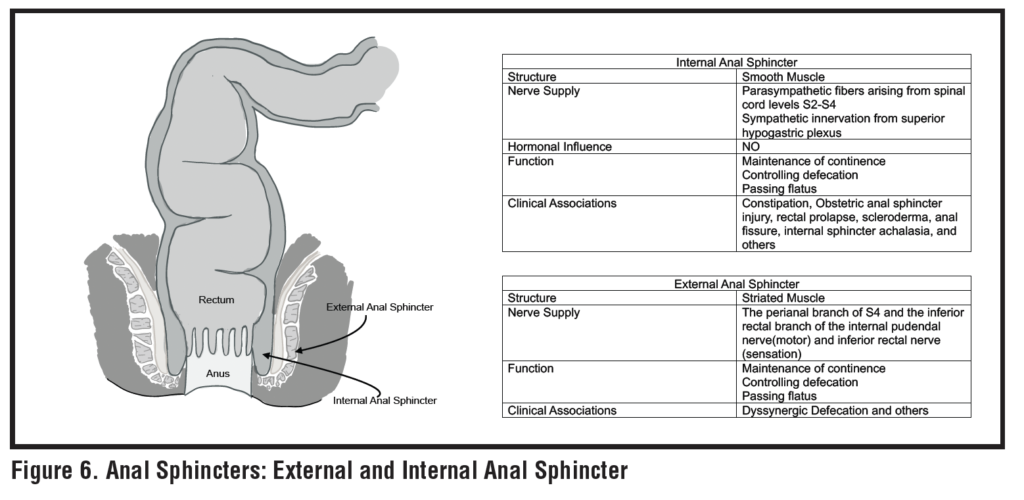
Topically contracted sphincters
Ring-like muscles that remain in a continuous, sustained state of contraction to keep an organ or passage close
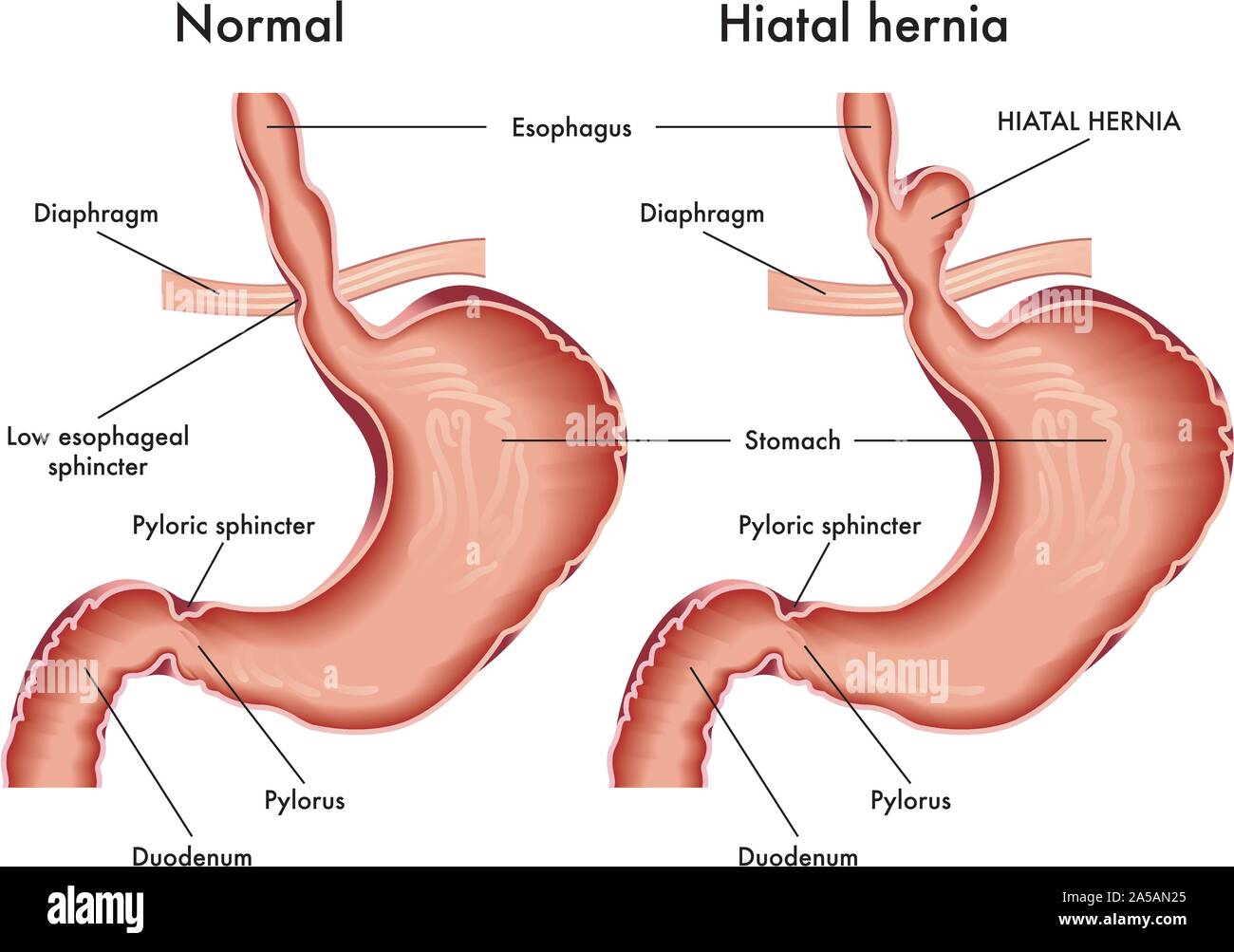
Pyloric sphincter
A band of smooth muscle at the bottom of the stomach that acts as a valve
Nervous tissue commands _____ and ______ responses.
internal, external
Neurons
Receive/transmit electric signals from other cells, cell bodies have nucleus where axon extends to allow signals to travel to end of neuron —> communicates with target cell
Neuroglia
Don’t transmit signals, but structural, metabolic support
CNS (Central Nervous System)
Brain and spinal cord
PNS (Peripheral Nervous System)
Network of nerves outside the CNS that connects the limbs and organs to the brain and spinal cord.
Etiology
Define the disease
Describe the underlying cause of the disease
If idiopathic ("of unknown origin")
Infectious, congenital (a medical condition, trait, or abnormality that is present at or before birth), trauma, etc.
Pathogenesis answers what questions
Describe the disease process
Tell the physiological story, from the underlying cause to the presenting clinical signs
For example, how does parvovirus infection cause lethargy and diarrhea in a puppy?
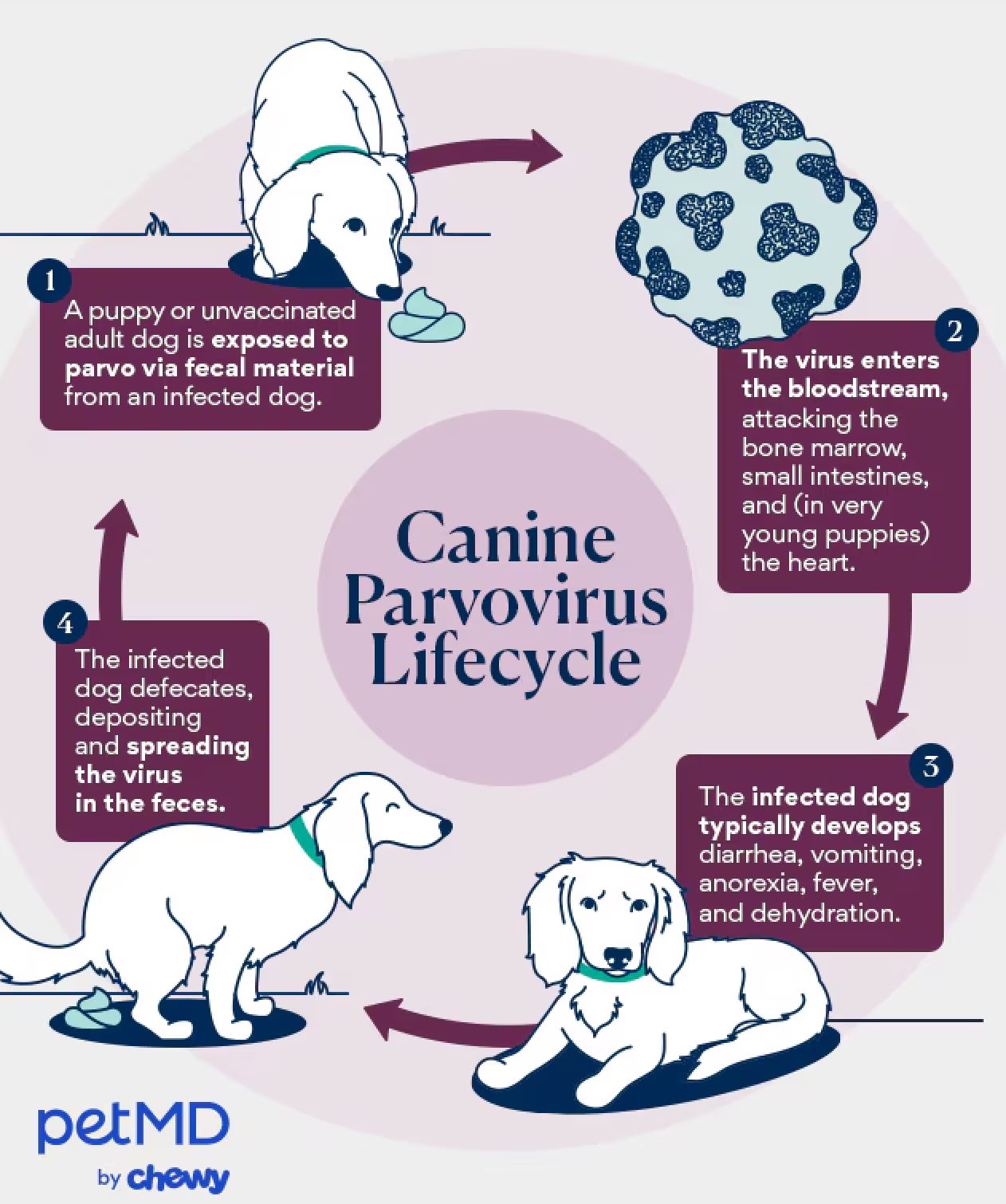
Parvovirus infection
a highly contagious, severe viral disease that primarily targets the rapidly dividing cells in animals—most notably the intestinal tract, bone marrow, and (in young puppies) the heart muscle. It is highly fatal if left untreated, but is largely preventable through routine vaccination.

Lethargy in puppies
an abnormal lack of energy, enthusiasm, or responsiveness. Unlike normal tiredness from active play, a lethargic puppy is unusually sluggish, shows no interest in their environment, refuses food, and is difficult to wake.
Signalment
Age, sex, species, and breed
Castration
any surgical or chemical process that disables the function of the testes in males or the ovaries in females, halting the production of sex hormonesand preventing reproduction.
History
Signs or behaviors preceding presentation reported by the owner
History examples
Owners of dogs affected with GDV have reported that their dog became sick after exercise that followed a meal
Signalment example
2-yo, male castrated, terrier mix
Prevalence
The number of cases of the disease in a given population at a certain time
Exampels of populations that need prevalance
Male/female
Geographic region
Entire species
Certain breed
Clinical signs def
Describe the signs observed in patients suffering with the disease
What are Clinical Signs similar to
“Problem list” associated with the patient suffering with the disease
Physical exams with clinical signs
Physical Exam findings often fit in well with this part of the write-up. PE findings may also fit well with the methods for diagnosis
How does the veterinarian determine that a patient is affected by the disaese?
SNAP, titers, clinical signs, specialized exams, etc.
SNAP
a Spay and Neuter Assistance Program (or Project), which provides low-cost or free services to help control pet overpopulation. The term can also refer to a specific type of rapid health test in veterinary medicine or an action an animal takes.
(antibody) titers
antibody titer is a blood test that measures the concentration of specific antibodies circulating in the bloodstream. It serves as an indicator of an animal’s immune response or prior immunity against specific infectious diseases (like rabies, parvovirus, or distemper).
What to do for Diagnoses
When appropriate, describe how other differentials for the clinical signs are ruled out
Developmental Anatomy
Seeks to understand embryologic form and the structural changes that occur as an organism develops from fertilized oocyte to neonate.
Microscopic Anatomy
Focuses on understanding structure at the cellular level, often by looking at pieces of tissue sliced very thinly, mounted on slides, and stained to allow easier visualization of certain features.
Gross anatomy
Concerned with structure at the level of tissues and organs observable with the naked eye.
The head contains all but the _____ and _____ systems.
renal, reproductive
All body parts contain the _______ system.
muscloskeltal
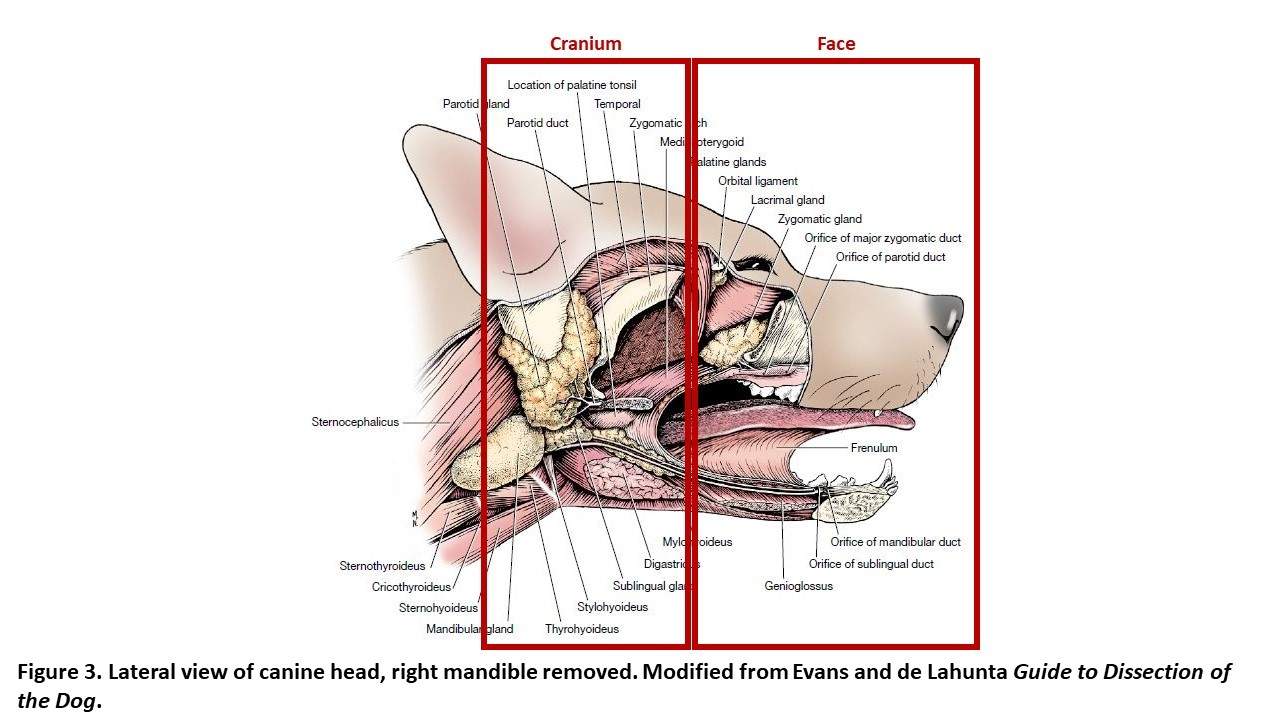
Face
The rostral part of the head. This part is commonly associated with the respiratory and digestive systems.
Cranium
The cranium technically refers to the braincase, but this context refers to the caudal part of the head. Associated with the nervous system.
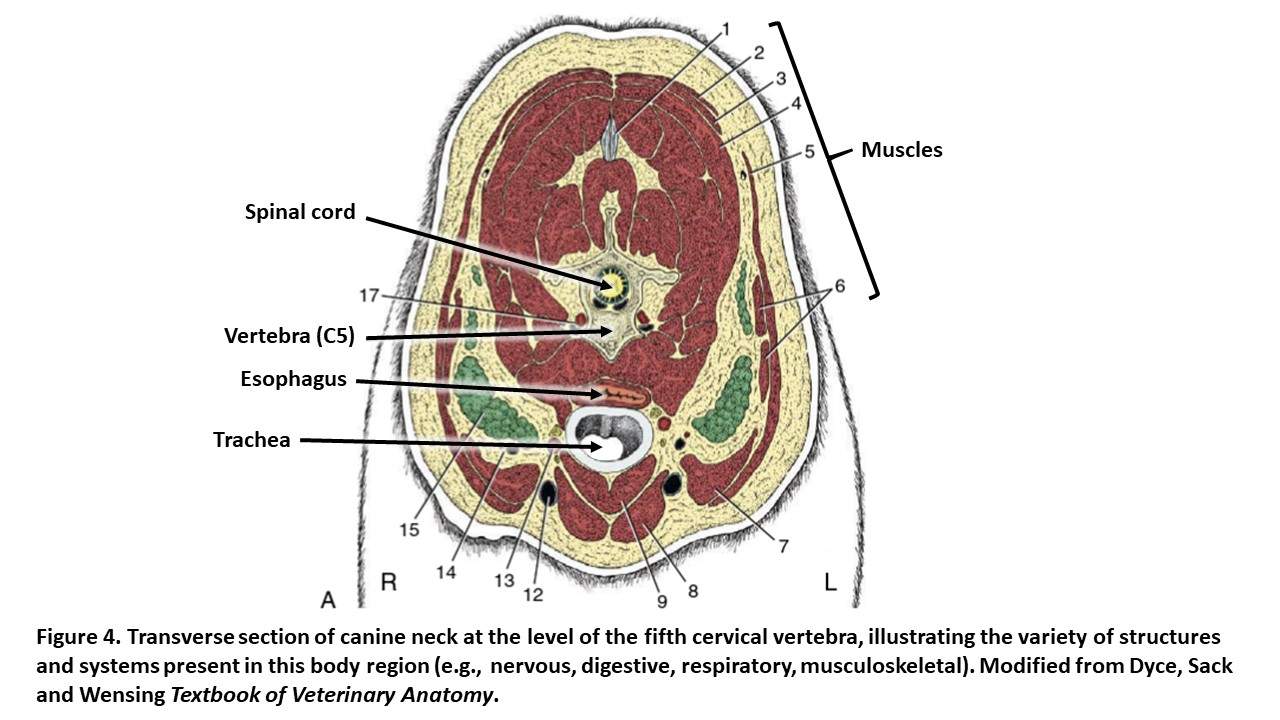
The _____ portion of the neck connects the _____ to the back, that includes the cervical vertebral column and supporting _______. Associated with nervous system.
dorsal, cranium, musclature
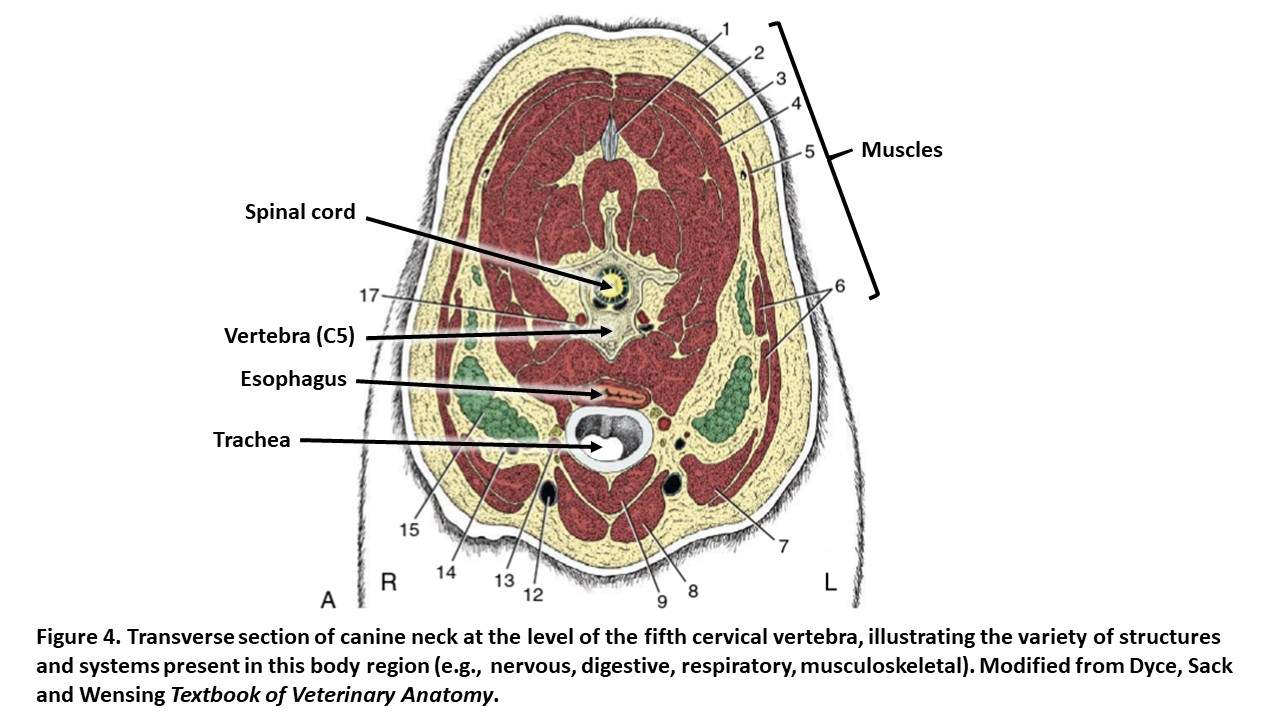
The _____ portion of the neck connects the _____ and digestive systems of the face with the trunk.
dorsal, respiratory
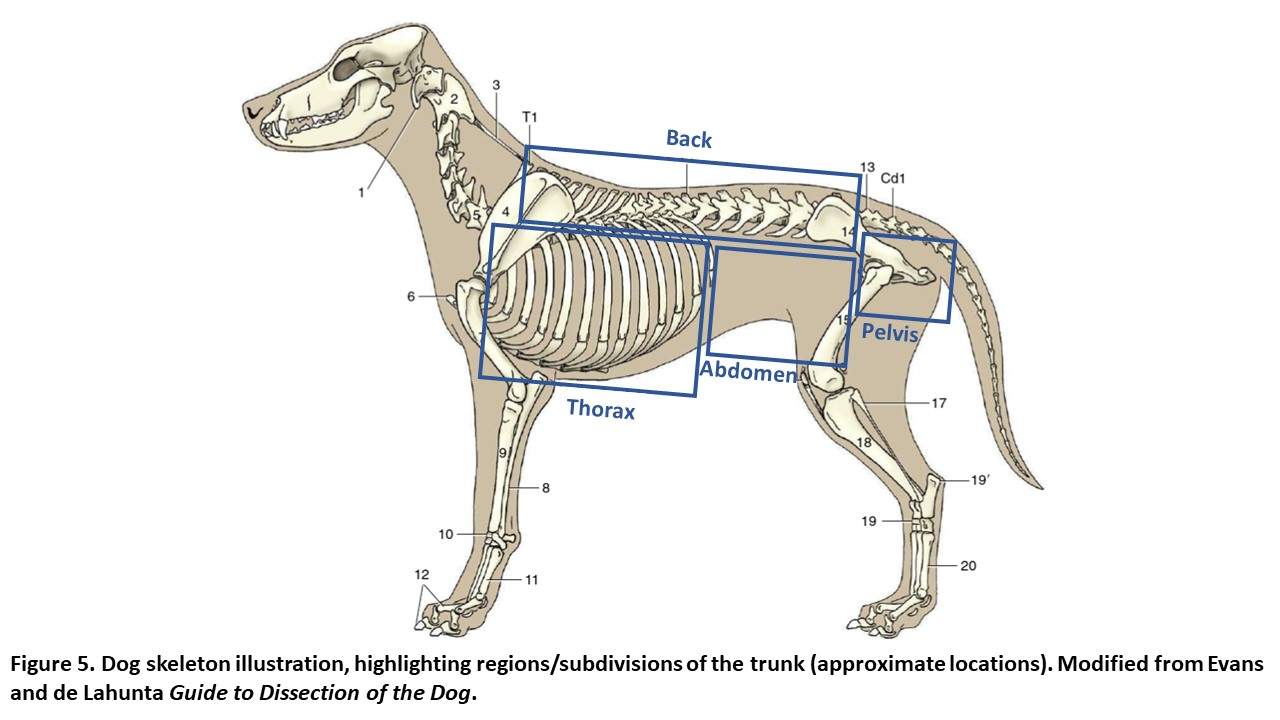
Back
The dorsal part of the trunk that comprises the thoracolumbosacral vertebral column and associated musculature. Associated with nervous system.
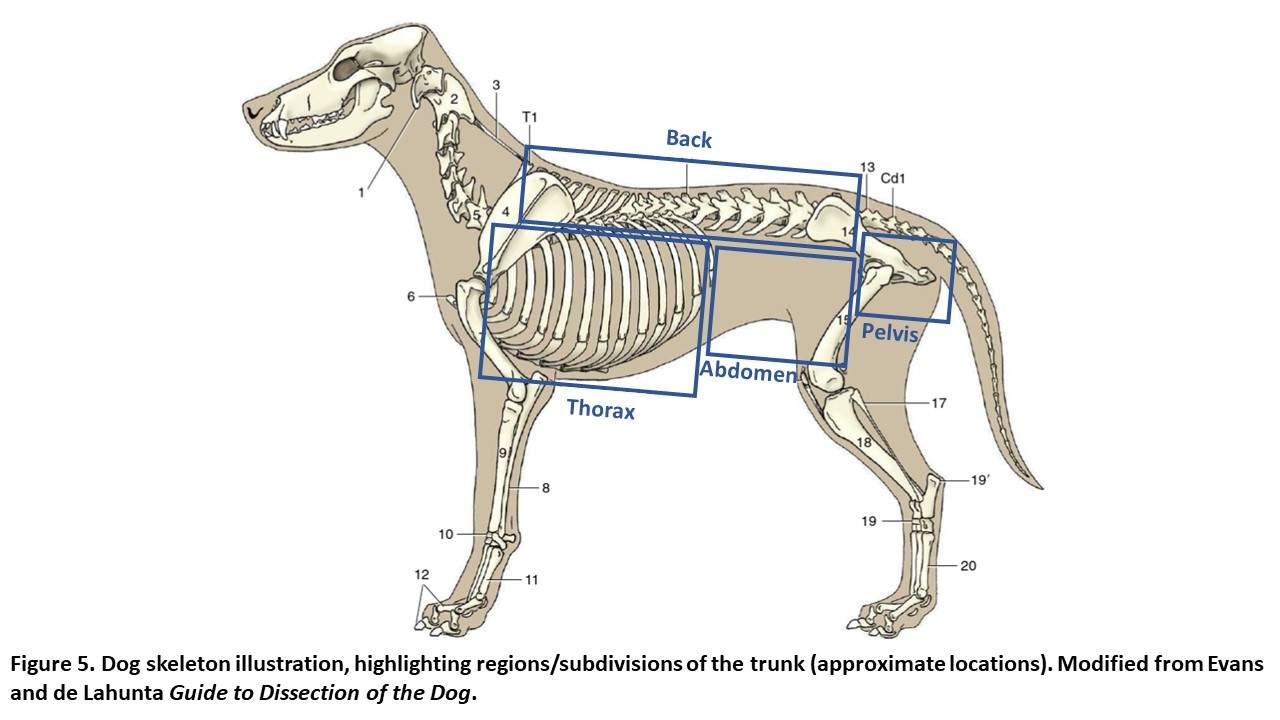
Thorax
Part of the trunk between the neck and abdomen. and includes thoracic cavity and supporting musculoskeletal structures. Associated with cardiopulmonary system.
Trunk
The torso (the main body without the head and limbs) or the proboscis (a long, flexible snout)
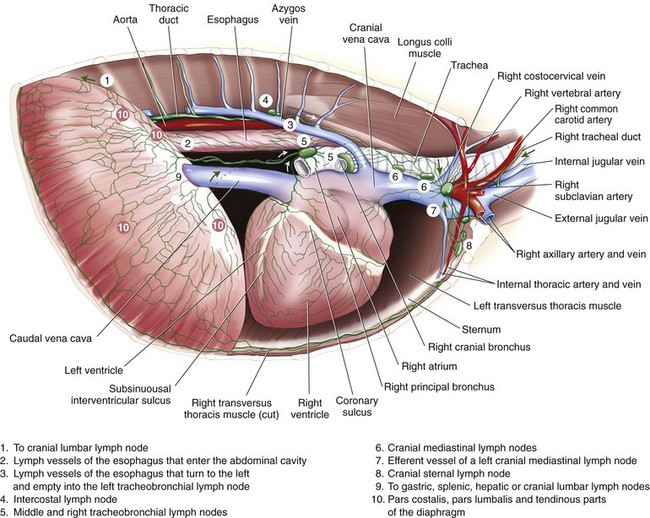
Thoracic cavity
The chamber of the body enclosed by the rib cage, spine, and sternum
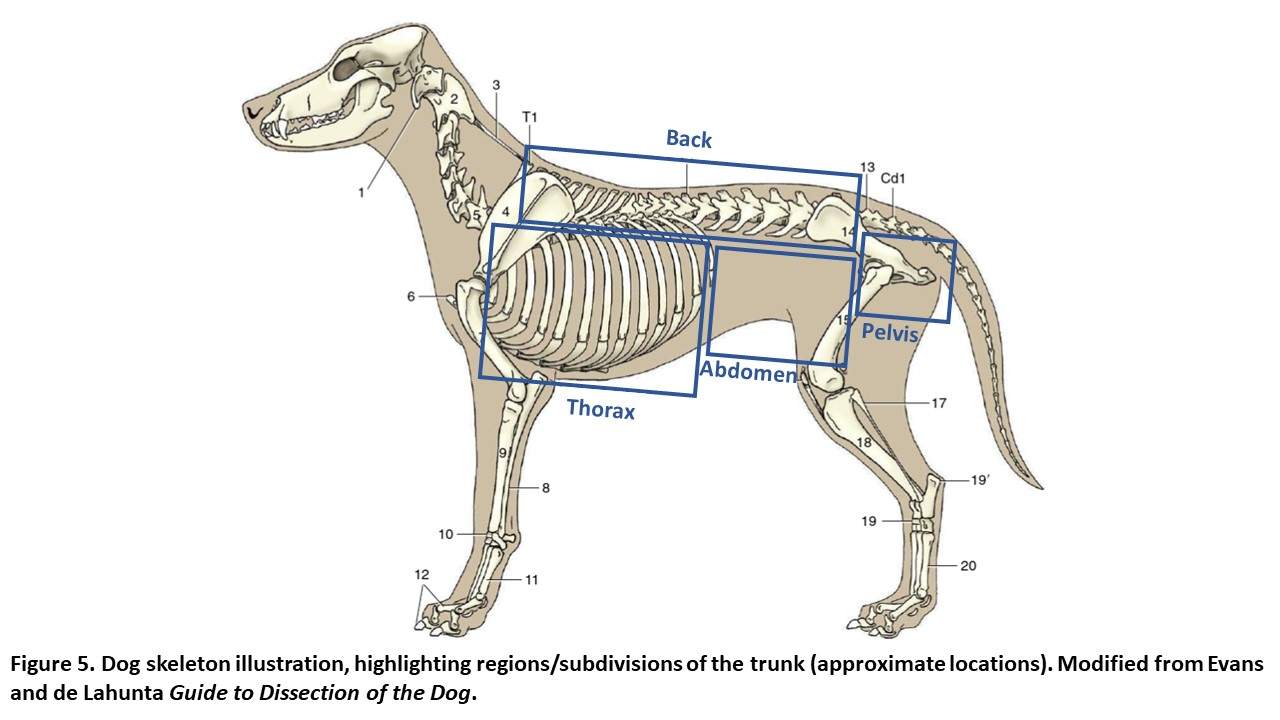
Abdomen
The part of the trunk between the thorax and pelvis that includes the abdominal cavity and supporting musculoskeletal structures. Associated with digestive system.
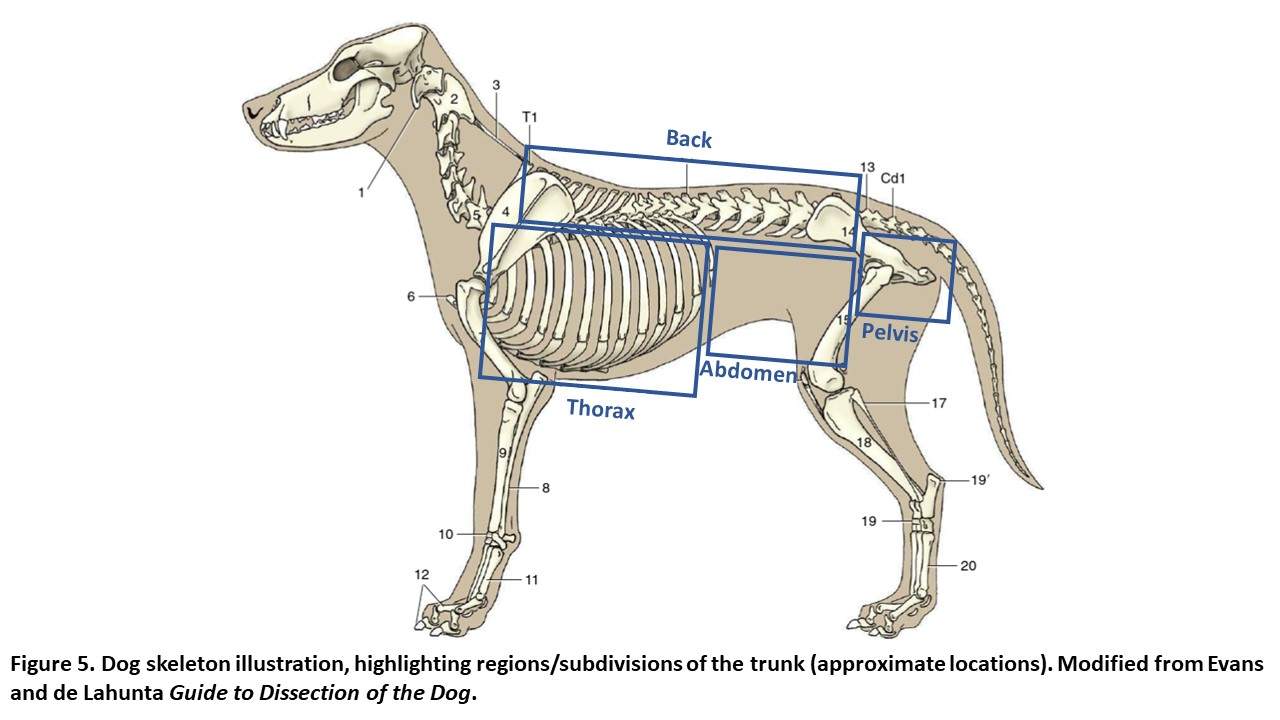
Pelvis
Part of the trunk caudal to the abdomen that includes the pelvic cavity and supporting musculoskeletal structures, including the pelvic girdle (bony pelvis). Associated with the urogenital system.
Urogenital system
Combined anatomical grouping of the urinary system (excretory organs) and the reproductive system (genital organs).
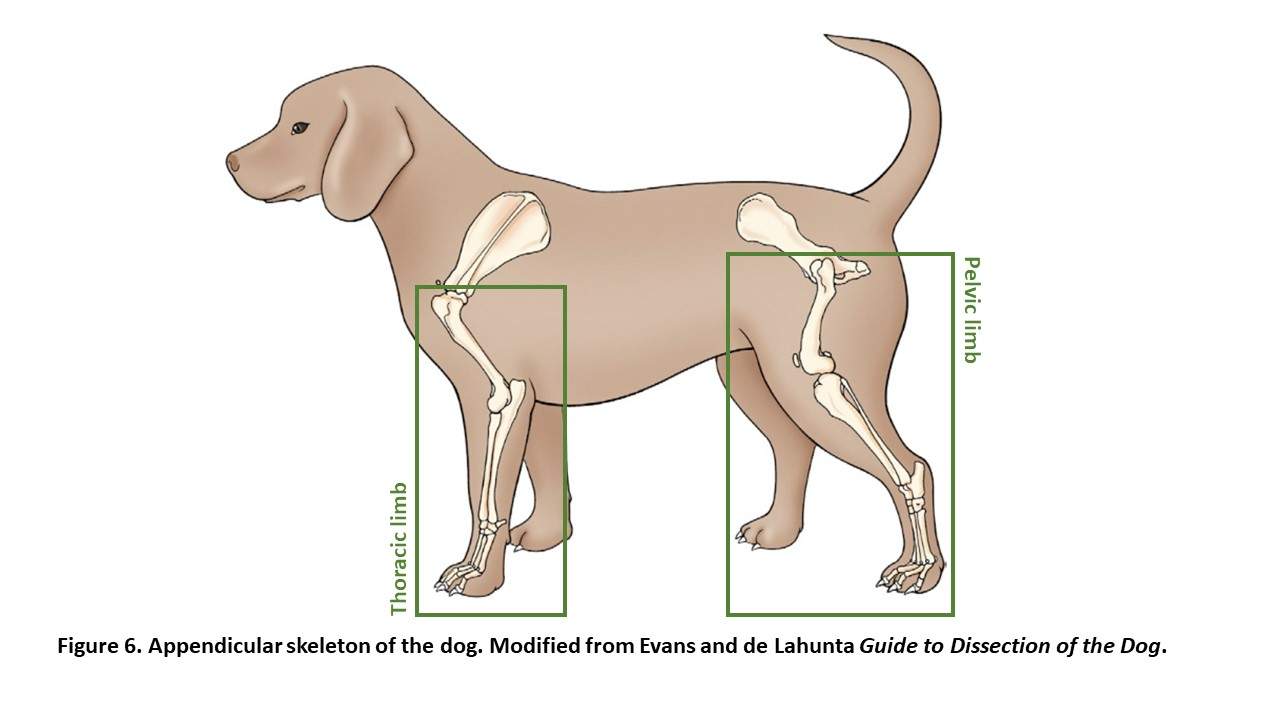
Thoracic limb
What we would refer to as our arm - comprises the axilla, brachium, elbow, antebrachium, and manus
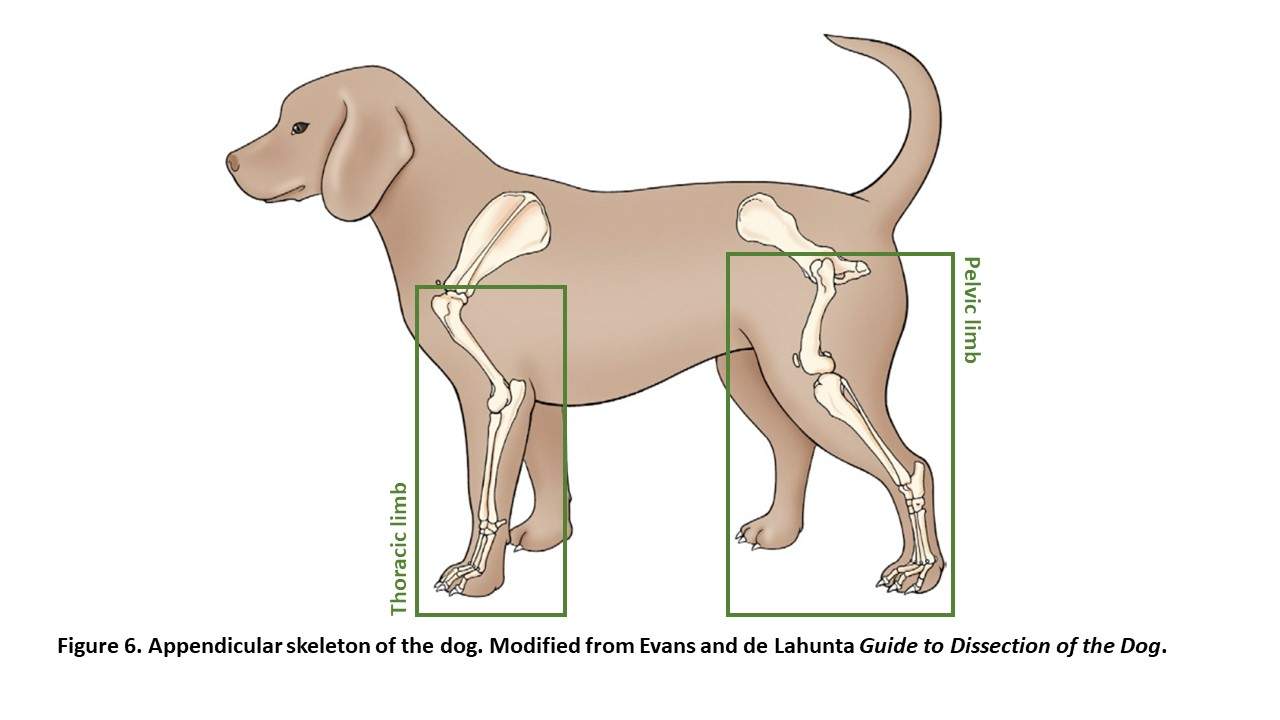
Pelvic limb
What we would refer to as our leg - comprises the thigh, stifle (knee in humans), crus, and pes
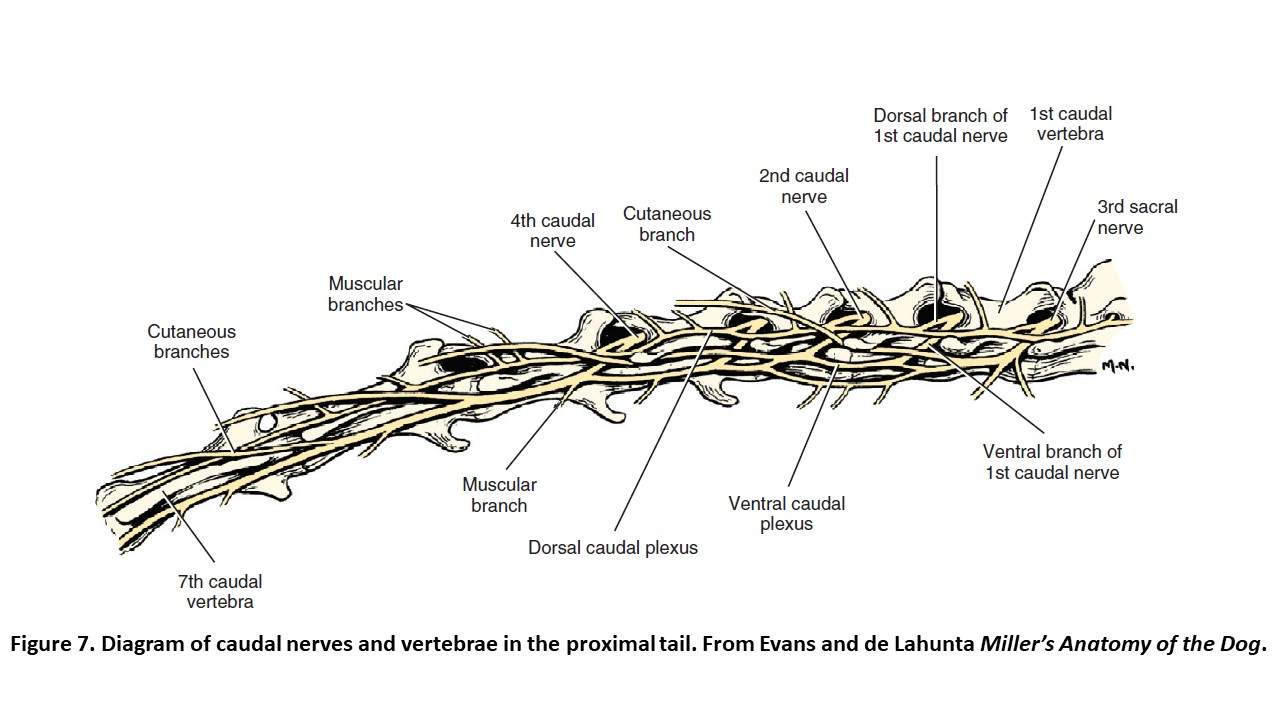
Tail
Caudal-most region of the animal, predominantly includes muscloskeletal structuressuch as vertebrae and associated musculature.
Parts of the trunk (4)
Back
Thorx
Abdomen
Pelvis
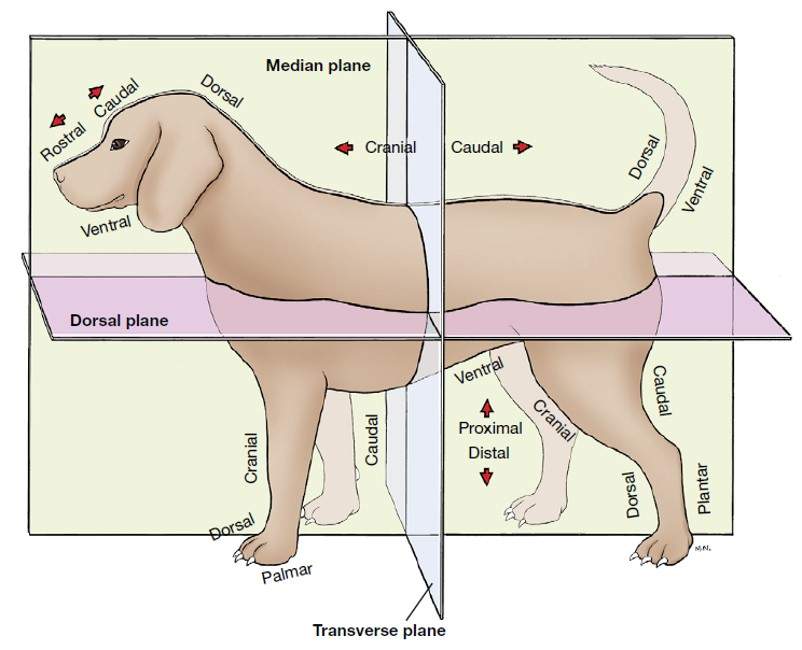
Anatomic planes
Median, transverse, dorsal
At 90 degrees to each other
Divide the body into sections
Planes separate sections into
A head, neck, trunk, and four limbs
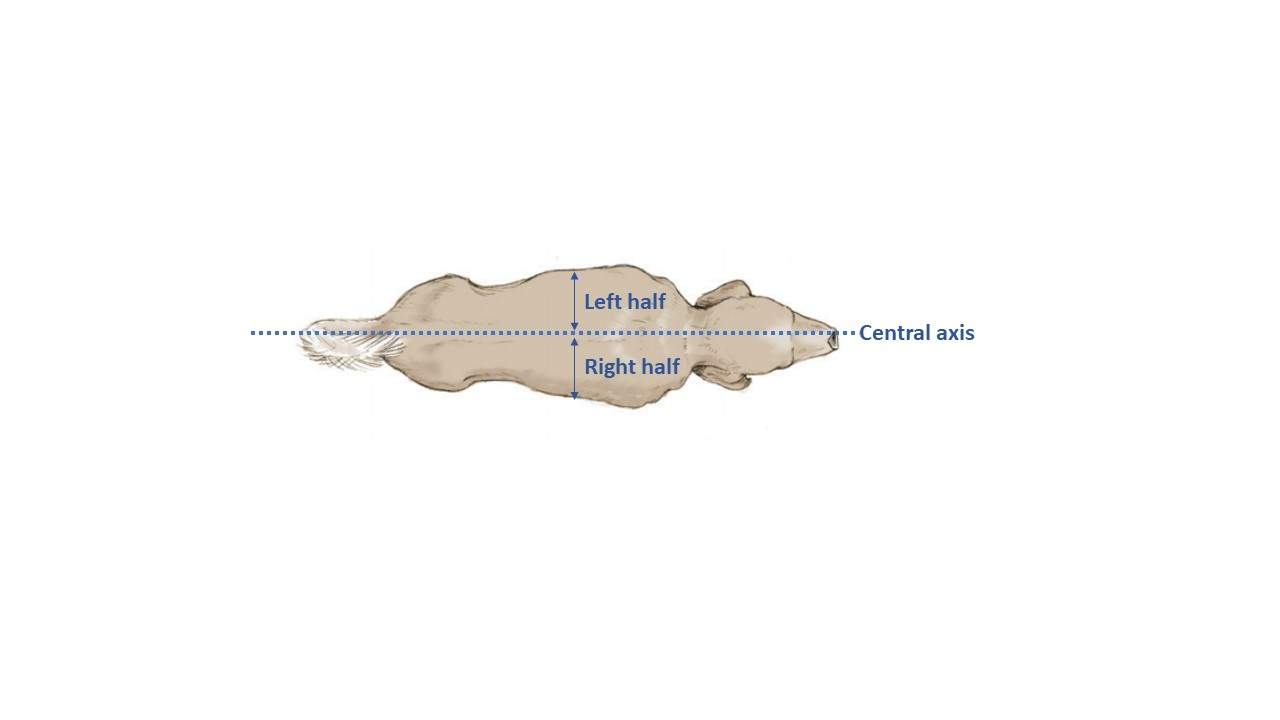
Central axis
Divides the body into symmetric left and right halves (mirroed to esch other)
Morphology of dorsoventral and craniocaudal halves
Asymmetric, with craniocaudal and dorsoventral directionality being est. in embryologic development
Median plane
A plane extending along the central axis, dividing the body into equal (symmetric) left and right halves
Sagittal plane
All planes parallel to the median plane
Transverse planes
All planes perpendicular to the central axis. Divides the body into cranial and caudal sections.
Dorsal planes
All planes perpendicular to both the median and transverse planes; can also be thought of as parallel to the dosum (back) of the animal. Divide the body into dorsal and ventral sections.
Draw where the median plane, dorsal plane, and transverse plane are.
Hopefully you drew this.
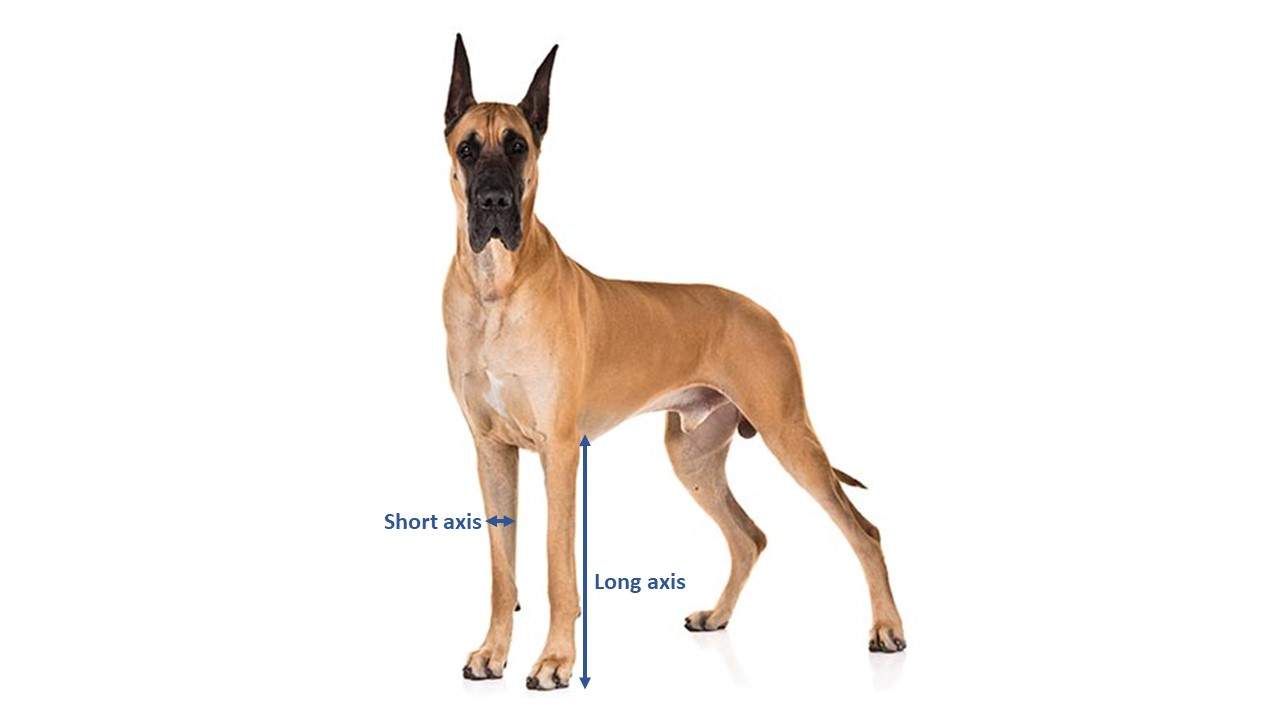
Long axis
Oriented proximodistal (runs along the length of the limb)
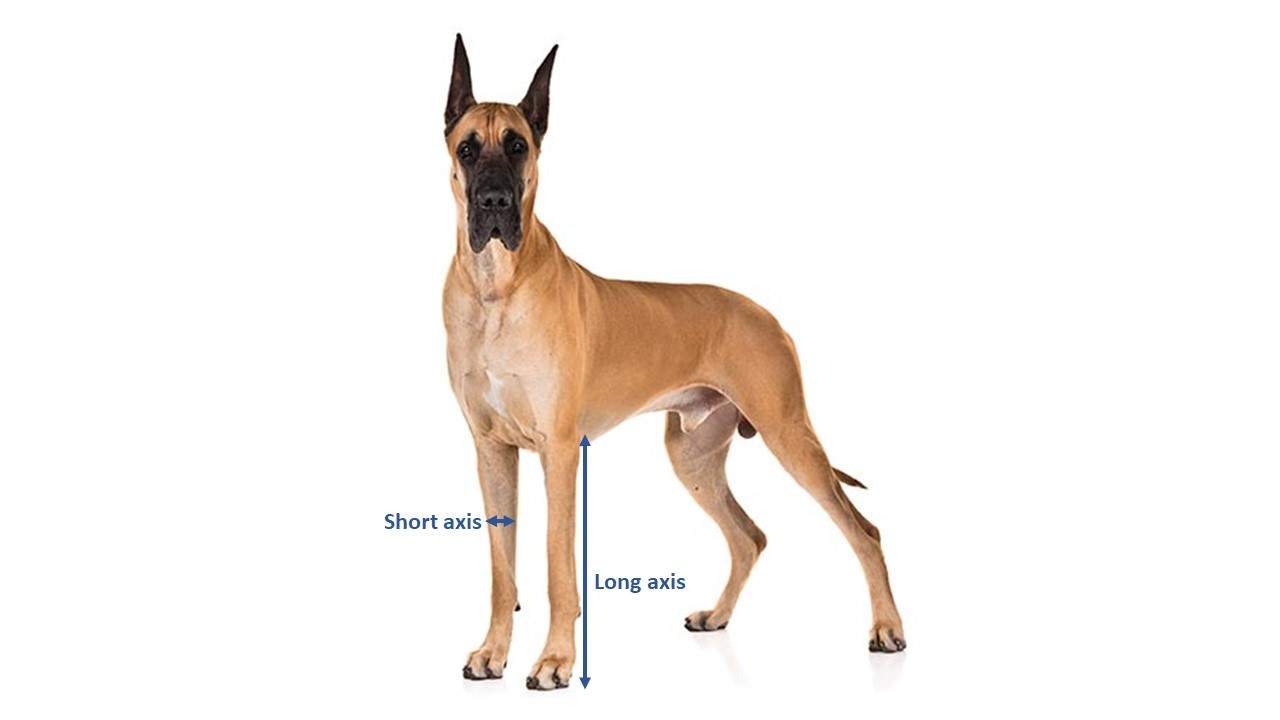
Short axis
Perpendicular to the long axis
Dorsal image
The long axis that divides the proximal limb into cranial and caudal sections—and the distal limb into dorsal and palmar/plantar sections
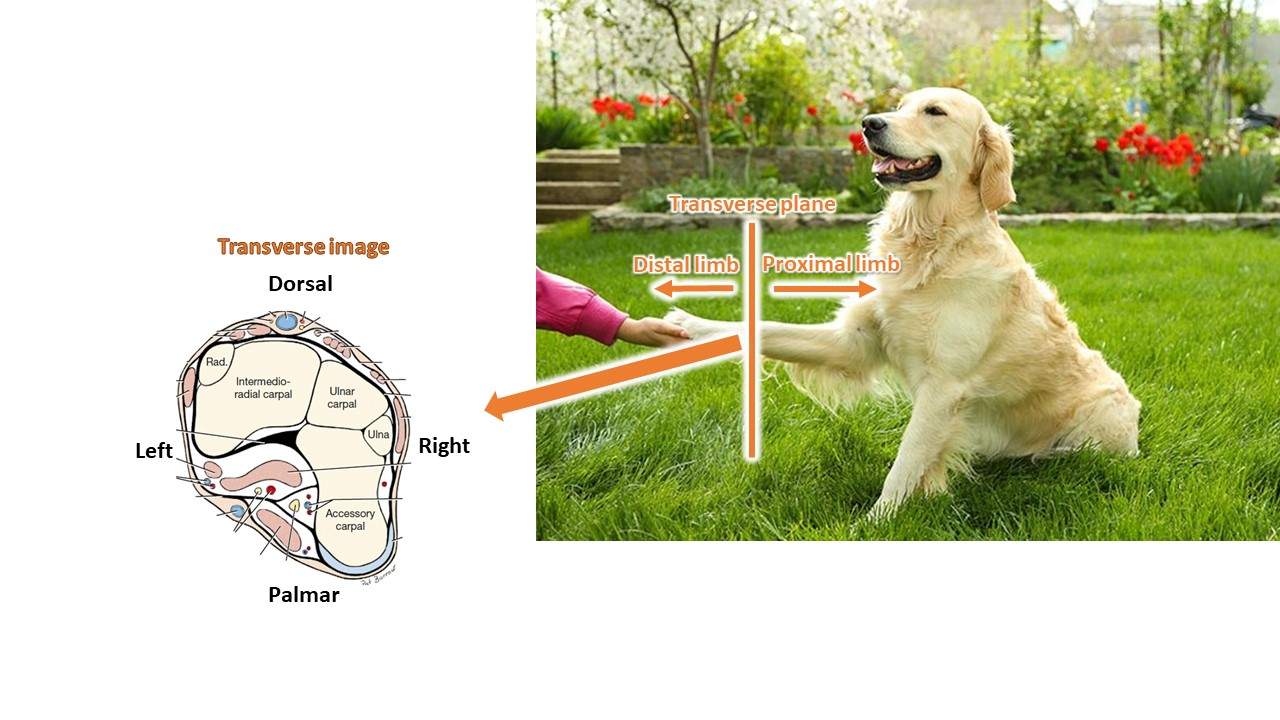
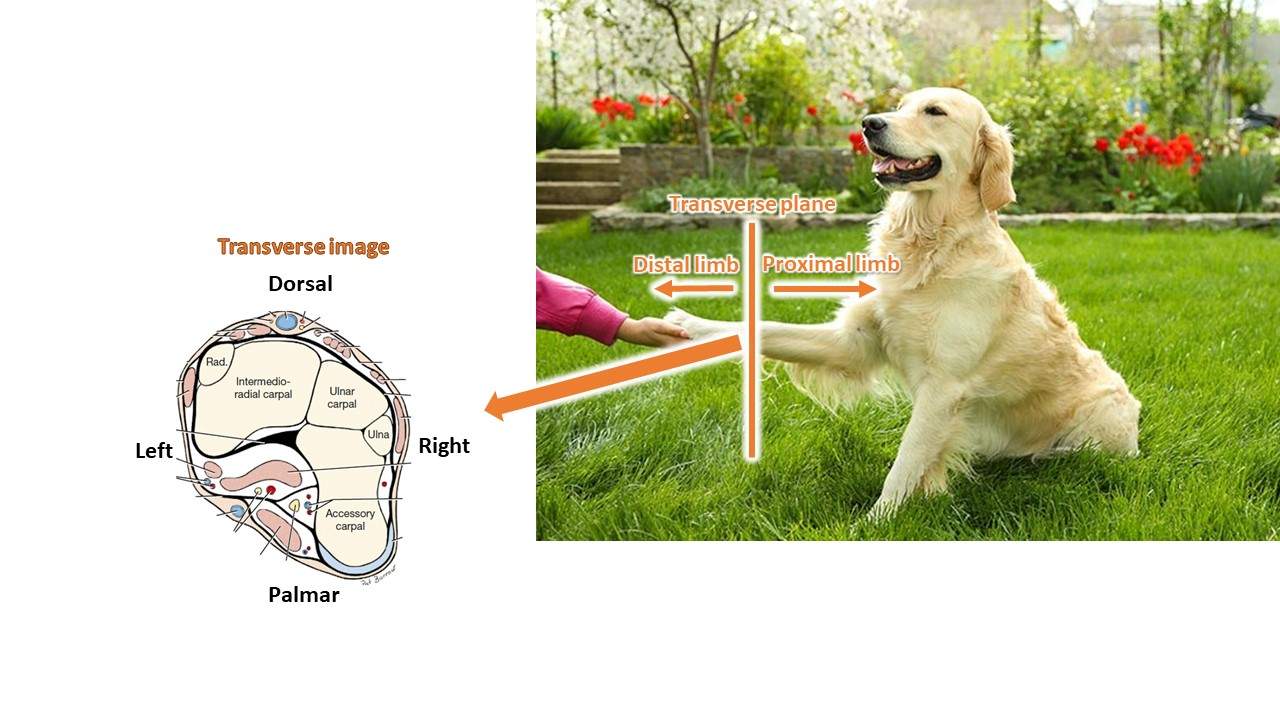
Transversal plane
Divides the limb into proximal and distal sections. Allows differentiation of left, right, dorsal, and palmar/plantar.
Sagittal plane
Divides the limb into left and right sections. Allows differentiation of dorsal, palmar/plantar, proximal, and distal
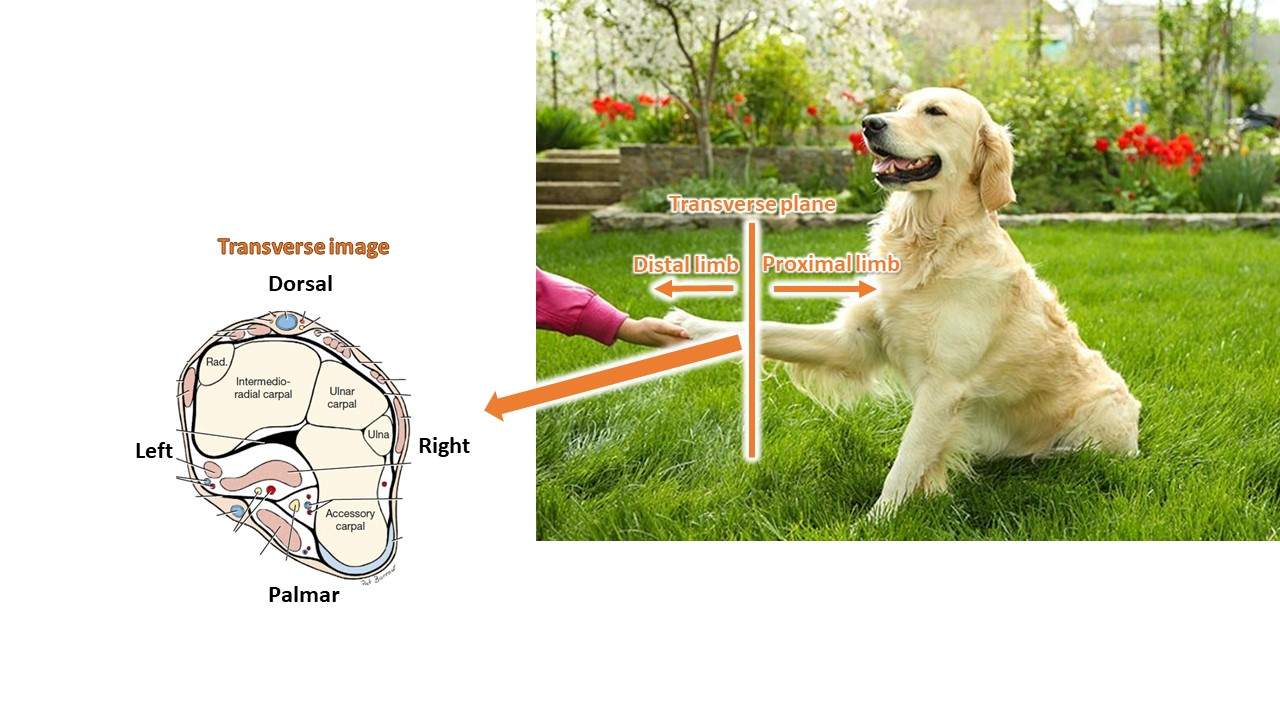
Dorsal plane
Divides the limb into dorsal and palmar/plantar sections. Allows differentiation of left, right, proximal, and distal.
Median
Located in the median plane (the plane that runs along the central axis of the animal’s body and divides it into left and right halves, AKA the midline)
Medial
Close to the median plane
Lateral
Further from the median plane
Intermediate
Between medial and lateral
Sagittal
Located in a plane parallel to the median plane
The ribs are ______ to the lungs.
lateral
The lungs are _______ to the ribs.
medial
Transverse
Located in a plane perpendicular to the long axis (of the body, or body part - depending on location)
Cranial
Closer to the head
Caudal
Closer to the tail
The heart is _____ to the diaphragm
cranial
The diaphragm is ______ to the heart.
caudal