Surg Med - Common Surgical Procedures - Exam 1
 Call Kai
 Learn
Learn Practice Test
 Spaced Repetition
 Match
Match Flashcards
 Knowt Play
1/64

There's no tags or description
Looks like no tags are added yet.
Name | Mastery | Learn | Test | Matching | Spaced | Call with Kai |
|---|
No analytics yet
Send a link to your students to track their progress
65 Terms
Resection
the removal by surgery of all or part of an organ or other body structure
Excision
surgical removal of a piece of tissue or organ
Extirpation
surgical procedure where an organ or tissue is completely removed or eradicated
Debridement
removal of nonviable (dead), damaged, or infected tissue, foreign material, or debris from a wound to promote healing and reduce infection risk
Amputation
intestinal surgical removal of all or part of a limb or other body appendage by cutting through bone (or a joint), typically to treat disease, trauma, or severe infection
Anastomosis
surgical or natural connection between two tubular structures, such as blood vessels, intestines, or other hollow organs, allowing flow between them
Reanastomosis
surgical reconnection of two structures that were previously connected, then separated or disconnected (either surgically or due to injury)
Reconstruction
surgical restoration of the form and/or function of a body part that has been damaged, removed, or is abnormal, using techniques such as tissue rearrangement, grafts, flaps, implants, or prosthetics
Ostomy
surgical procedure that creates an opening (stoma) that connects a hollow internal organ to the surface of the body to allow the passage of waste, fluids, or air
Stoma
the opening on the body surface that connects to an internal organ, allowing the passage of bodily contents (such as stool, urine, or air) to the outside
Enterolysis
surgical lysis of adhesions involving the intestines, performed to free the bowel from abnormal fibrous bands that restrict movement or cause obstruction
Decompression
relief of abnormal pressure within a body compartment, organ, or system by removing or draining air, fluid, blood, or other contents, or by normal anatomy and flow
Detorsion
surgical untwisting of a structure that has become twisted on its axis (torsed) in order to restore normal anatomy and blood flow
Reduction
restoration of a displaced body part to its normal anatomical position (bony fractures, hernias)
Bypass
surgical procedure that creates an alternative pathway for the flow of blood, intestinal contents, or other bodily fluids around an obstructed, diseased, or nonfunctional segment
Diversion
intentional rerouting of the normal flow of bodily contents away from their usual pathway to an alternate route, often to protect, decompress, or allow healing of a downstream structure
Exteriorization
surgical technique of bringing an internal organ or segment of tissue outside the body (through the incision) so it can be directly visualized, treated, or temporarily positioned outside the body cavity
Billroth I (Gastroduodenostomy)
Gastroduodenostomy
Proximal remnant of stomas is re-anastomosed to duodenum after antrectomy
Has one limb
Not performed frequently due to possible obstruction
Billroth II (Gastrojejunostomy)
Gastrojejunostomy
Proximal remnant of stomach re-anastomosed to proximal jejunum after antrectomy
Has two limbs
Roux-en-Y Reconstruction
Jejunojejunostomy forming a Y-shaped figure of small bowel
The free end can be anastomized to a second hollow structure
gastrojejunostomy
stamm gastrostomy
Gastrostomy placed by open surgical incision and tacked to the abdominal wall
Enables feeding and removal of air and fluids from the stomach
Needed when food can’t reach the stomach by normal means due to esophageal stricture, esophageal injury, or perforation
Highly Selective Vagotomy
Transection of vagal fibers to the body of the stomach without interruption of fibers to the pylorus
Does not need a pyloroplasty or other drainage procedure because the pylorus should still function
Nissen fundoplication
Used to treat refractory GERD and/or Barrett's Esophagitis
Reinforces closing function of the LES
-360 degree wrap of the stomach by the fundus around the distal esophagus to prevent reflux
Comp: post-op bleeding, gastric volvulus, hiatal hernia, esophageal stricture
Percutaneous Endoscopic Gastrostomy (PEG)
Endoscope is placed in the stomach which is then inflated with air
A needle is passed into the stomach percutaneously, string is passed through the needle transversing the abdominal wall and gastrostomy is then placed by using the Seldinger technique over the wire
Endoscopic version of Stamm gastrostomy
Heineke-Mikulicz pyloroplasty
Longitudinal incision through all layers of the pylorus, transverse closure to make the pylorus non-functional (after truncal vagotomy)
Graham Patch Repair
Placement of omentum with stitches over a gastric or duodenal perforation
Omentum used to plug the hole
Brooke ileostomy
Standard ileostomy that is folded on itself to protrude from the abdomen approximately 2 cm to allow easy appliance placement and collection of succus
Kocher Maneuver
Dissection of the duodenum from the right-sided peritoneal attachment to allow mobilization and visualization of the back of the duodenum/pancreas
To access posterior duodenum and pancreatic portion of common bile duct, mobilization of second and third portions of duodenum by incising the parietal peritoneum along descending duodenum and retracting it medially
Abdominoperineal Resection (APR)
Removal of the rectum and sigmoid colon through abdominal and perineal incision
Used for low rectal cancers less than 4-8 cm from the anal verge
Patient is left with a permanent colostomy
APR Abdominal Phase
Left colectomy, mobilization of the rectum, avoid left ureter and left gonadal vessel
APR Perineal Phase
Separate prostate from rectum in males and remove lower rectum, closure of anus
Low Anterior Resection (LAR)
Used when rectal cancers affect the proximal ⅔ of rectum
Colon is attached to the anus allowing for normal defecation
Hartmann's Procedure
Surgical resection of the rectosigmoid colon with closure of the rectal stump and colostomy
Used to treat colon cancer or diverticulitis
Use is limited to emergency surgery when immediate anastomosis is not possible
Used palliatively in colorectal tumors
Mucus Fistula
Can be the second of two stomas in a double barrel ostomy, or the second opening in a single loop ostomy stoma
Non-working stoma, it may discharge some mucus
Stoma #1: functioning part of colon; gas & stool excreted
Stoma #2: non-functioning end of colon and rectum
Exploratory laparotomy
Conditions that may be investigated:
Cancer, peritonitis, appendicitis, pancreatitis, abscesses, adhesions, diverticulitis, intestinal perforation, ectopic pregnancy, foreign bodies, internal bleeding
Puestow Procedure
Used in treatment of chronic pancreatitis
Side-to-side anastomosis of pancreas and jejunum (pancreatic duct is filleted open)
Pancreaticojejunostomy
Enterolysis (Lysis of Adhesions)
Surgical division or removal of intestinal adhesions
Formation can change normal anatomy and physiology of affected organ: Infertility, Ectopic pregnancy, Bowel obstruction
Lysis and restore normal anatomy and physiology
Choledochojejunostomy
Anastomosis of the bile duct to the jejunum
Used in treatment of selected patients with:
-Retained, recurrent, and impacted bile duct stones
-Strictures of the bile ducts
-Stenosis of the sphincter of Oddi
-Pancreatitis associated with biliary disease
-Choledochal cysts
-Fistulas of the bile duct
-Biliary obstruction (benign or malignant)
Appendectomy
Gold Standard for treatment of appendicitis is laparoscopy or laparotomy and appendectomy
McBurney's Incision
oblique incision dividing fascia parallel to its fibers, and a muscle-splitting technique
Rocky-Davis Incision
transverse incision in RLQ
used for appendectomy
Laparoscopic Cholecystectomy
Typically outpatient
Small periumbilical incision is made down to the fascia
Remove gallbladder
Open Cholecystectomy
Approach through a right subcostal incision
Dissection to isolate cystic duct and artery
Removal of gallbladder
Pringle Maneuver
A large hemostat is used to clamp the hepatoduodenal ligament interrupting the flow of blood through the hepatic artery and the portal vein and thus helping to control bleeding from the liver
Most useful in trauma and hepatic resections
Pancreaticoduodenectomy (Whipple)
Remove pancreatic head, distal duodenum, distal stomach, distal CBD, GB, and then re-anastomose
Cholecystectomy
Truncal vagotomy
Pancreaticoduodenectomy
Choledocojejunostomy
Pancreaticojejunostomy
Gastrojejunostomy
Whipple Procedure Indication
Operation is performed to treat: cancerous tumors of head of pancreas, malignant tumors involving CBD or duodenum near pancreas
Lumpectomy
Removal of breast mass and axillary lymph nodes
Normal surrounding breast tissue is spared
Patient usually undergoes post-op chemo/radiation
Simple mastectomy
Removal of entire breast tissue, sparing axillary contents
+/- resection of sentinel lymph node
Modified Radical Mastectomy
Removal of breast, nipple, and axillary lymph nodes, but no muscle is removed
Radical Mastectomy
Excision of the entire breast, axillary lymph nodes, and the pectoralis major and minor muscles behind the breast
Reserved for tumors involving pec major or recurrent breast cancer involving chest wall
Transurethral Resection of Prostate
Removal of obstructing prostatic tissue via scope in the urethral lumen
Femoral-Popliteal Bypass
Femoral artery to popliteal artery bypass
Using synthetic graft or saphenous vein
Used to bypass blockage in femoral artery
Carotid Endarterectomy
Removal of material on the inside of the carotid artery
Shunt may be placed
Seldinger Technique
a common medical procedure used to obtain safe access to a blood vessel or body cavity using a guidewire. It is widely used for placing central venous catheters, arterial lines, chest tubes, and other interventional procedures.
Thyroidectomy
Removal of the thyroid gland
Kocher's Incision
right subcostal incision for open cholecystectomy/RUQ surgery
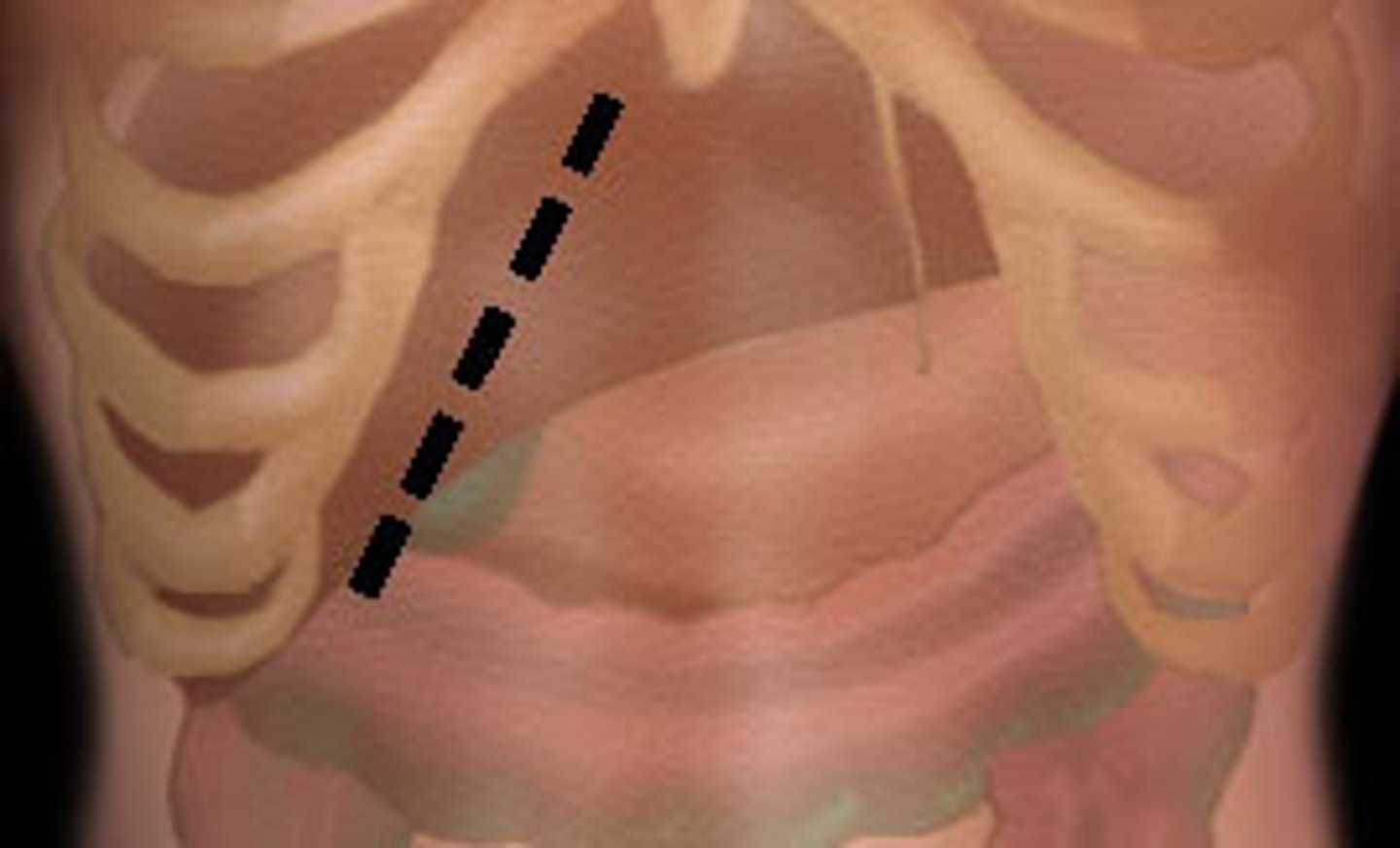
Kidney Transplant Incision
lower quadrant, kidney is placed extraperitoneally
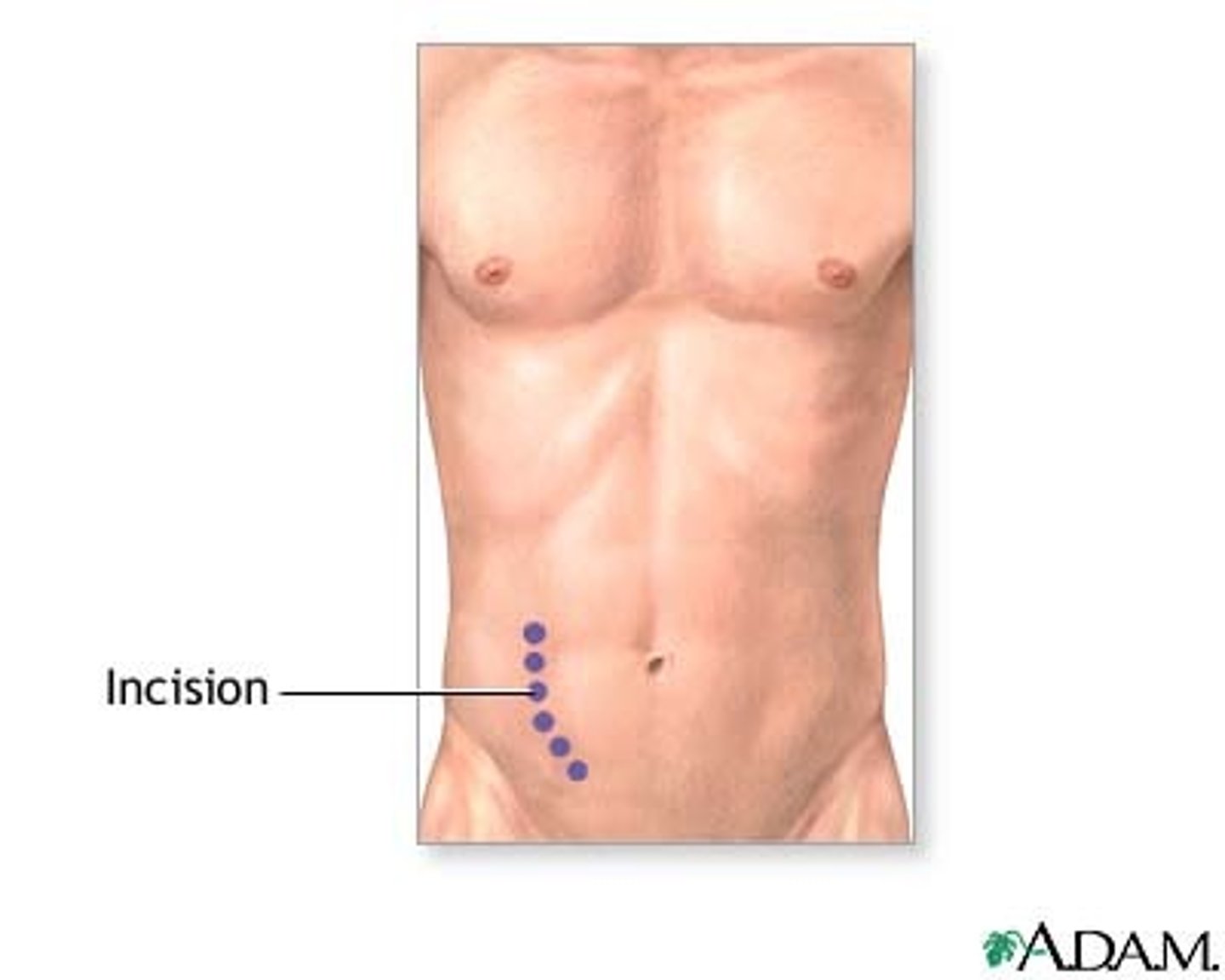
Liver Transplant Incision
Chevron or Mercedes Benz incision in the upper abdomen
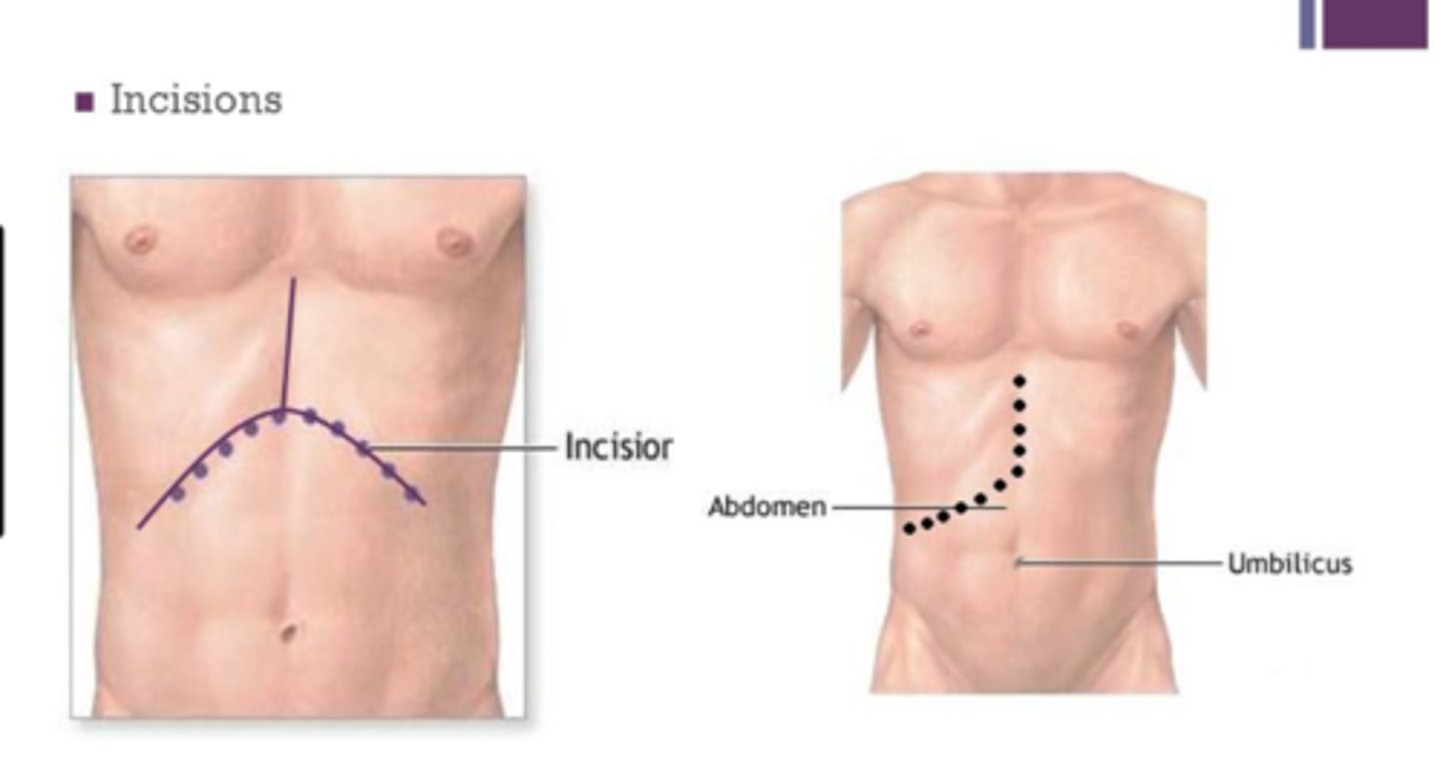
Midline Laparotomy Incision
incision down the middle of the abdomen along and through the linea alba
Surgical work-horse in adults
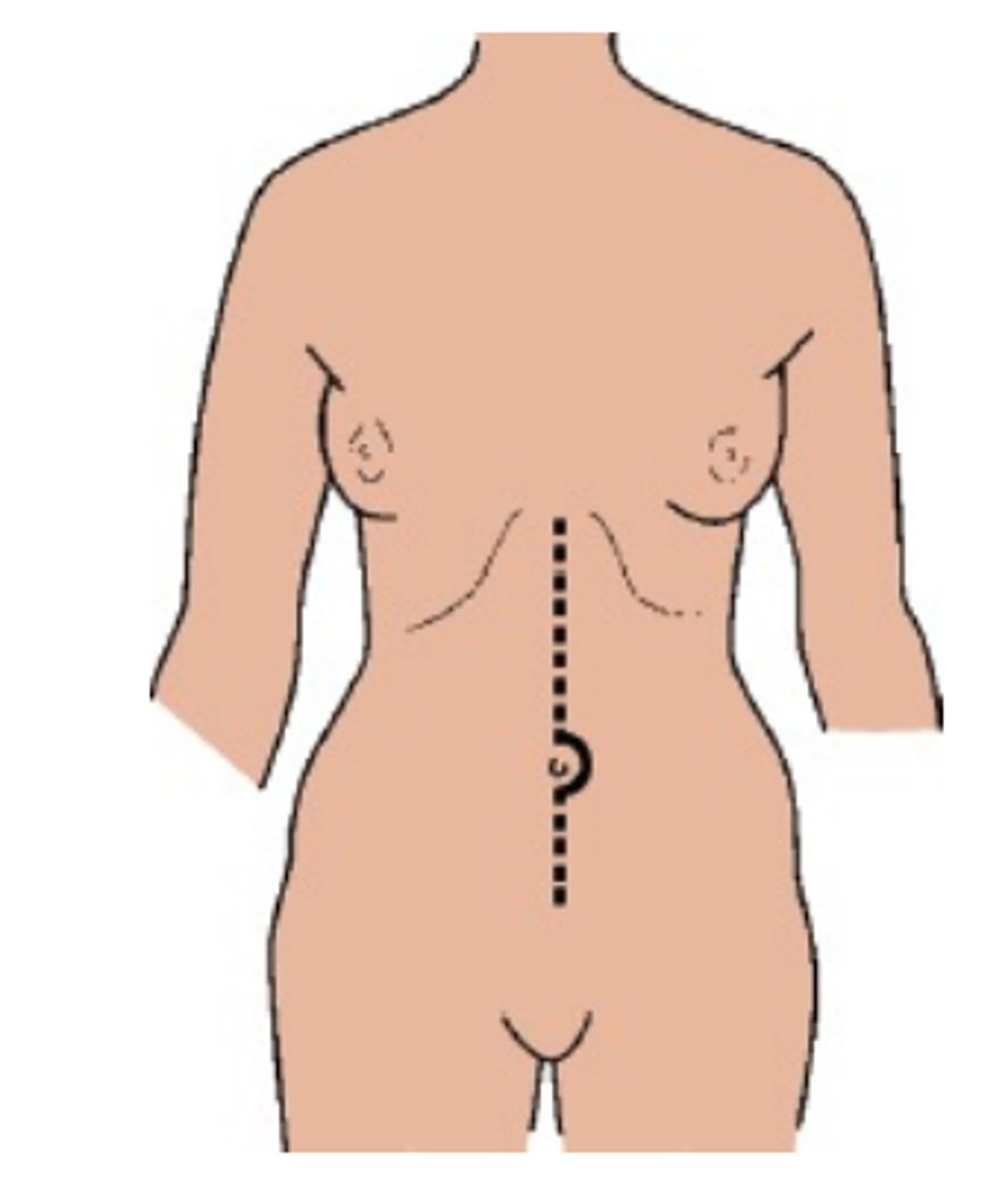
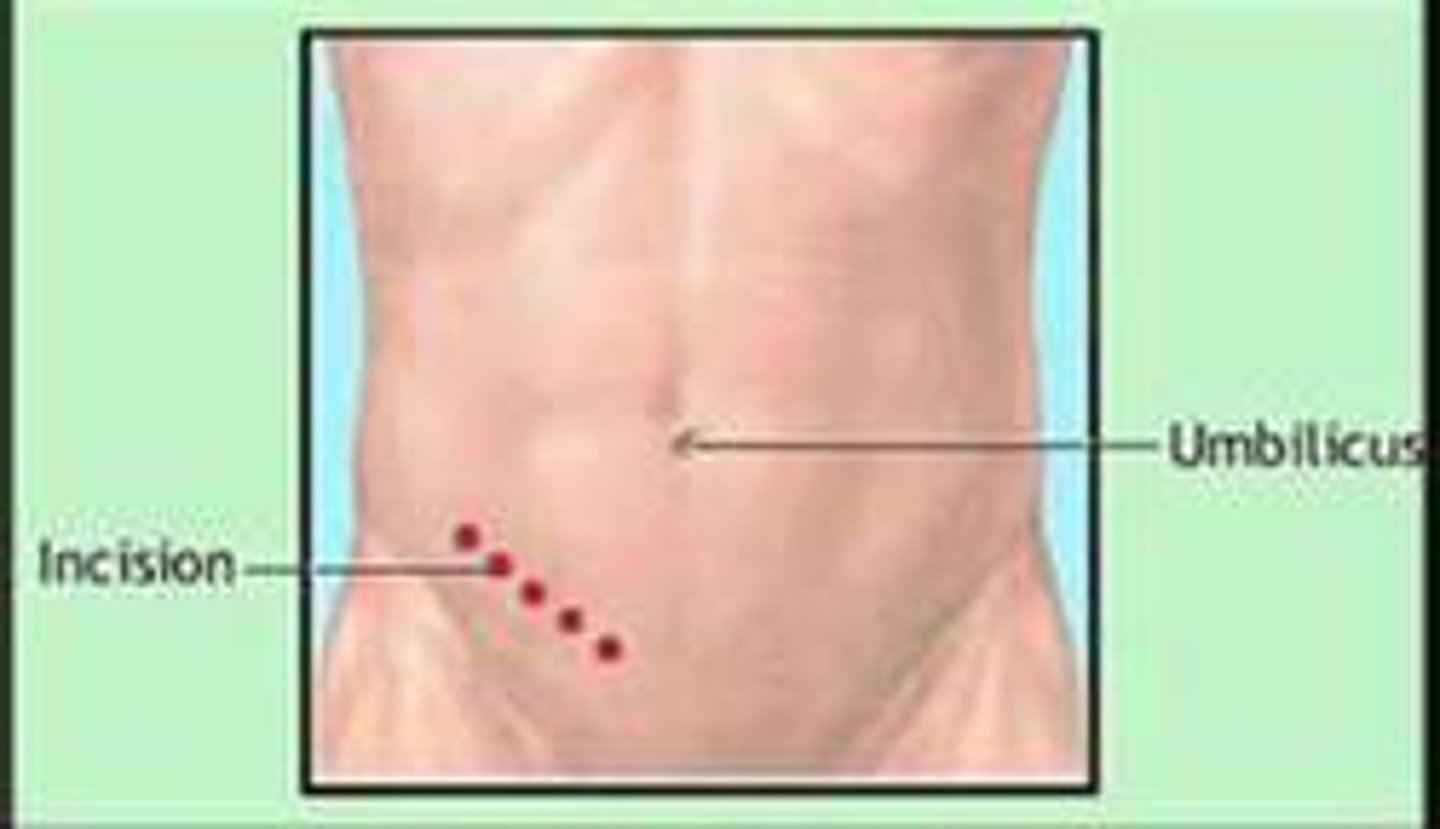
McBurney's Incision
small, oblique, RLQ incision for an appendectomy through McBurney's Point
⅓ from the anterior superior iliac spine to the umbilicus
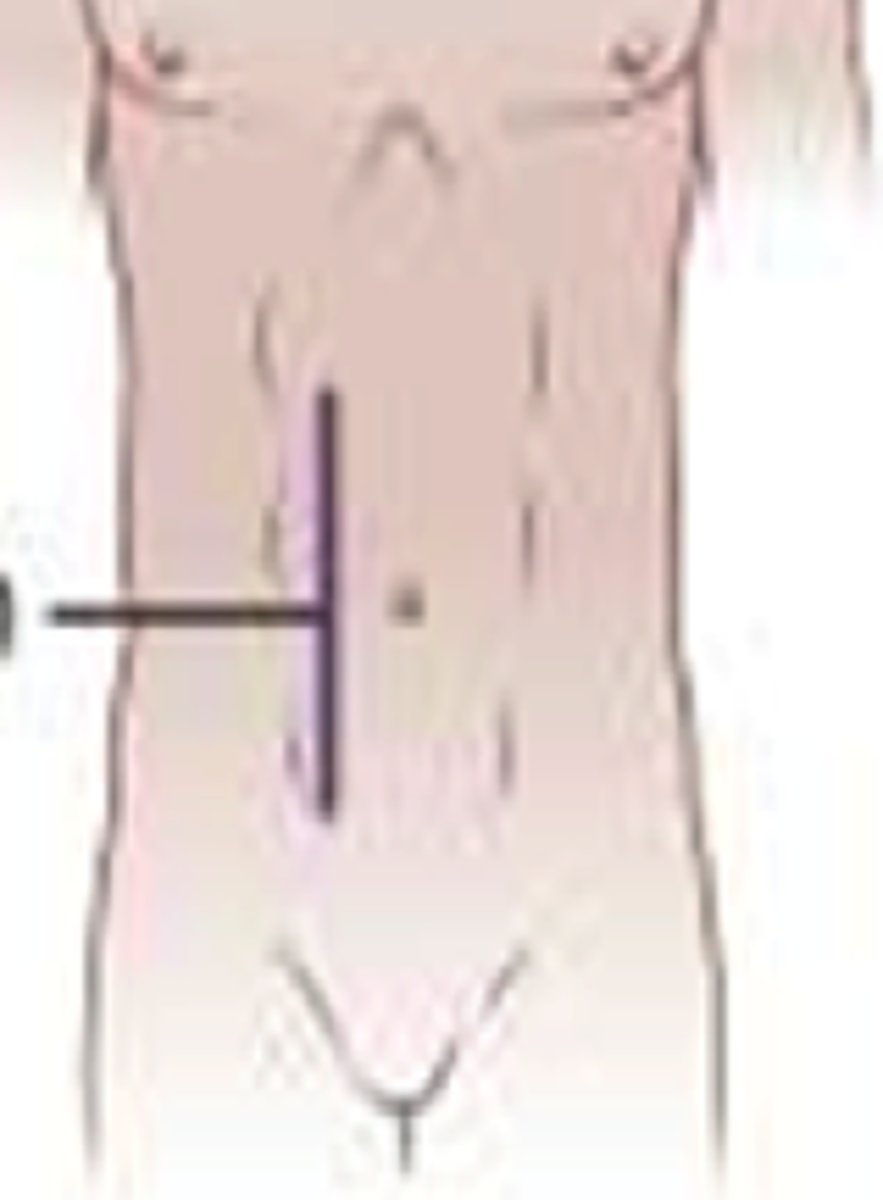
Paramedian Incision
used historically for splenectomies, appendectomies
Slightly off midline, not really used
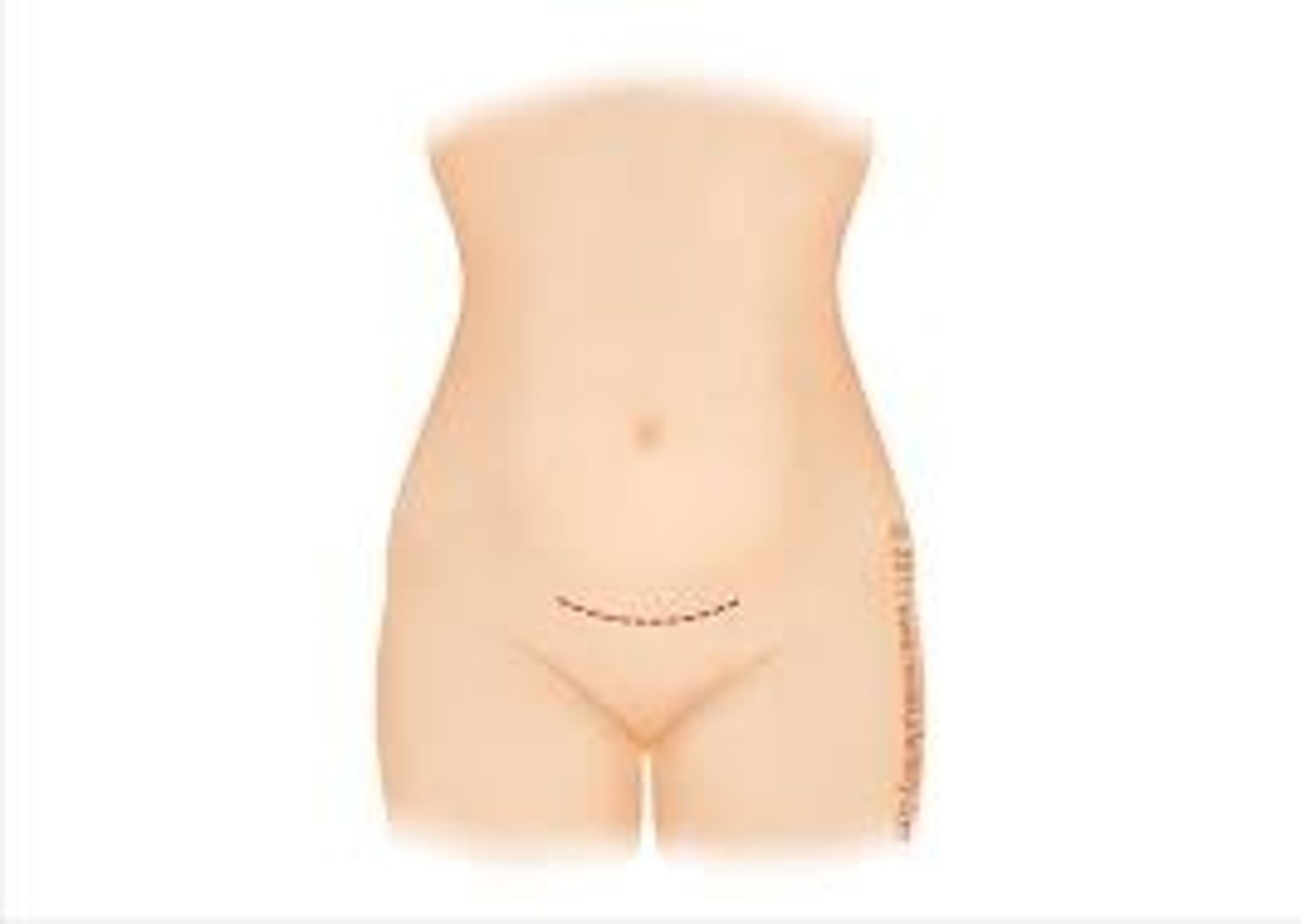
Pfannenstiel Incision
low transverse abdominal incision w/ retraction of the rectus muscle laterally
Most often used in gyno surgeries
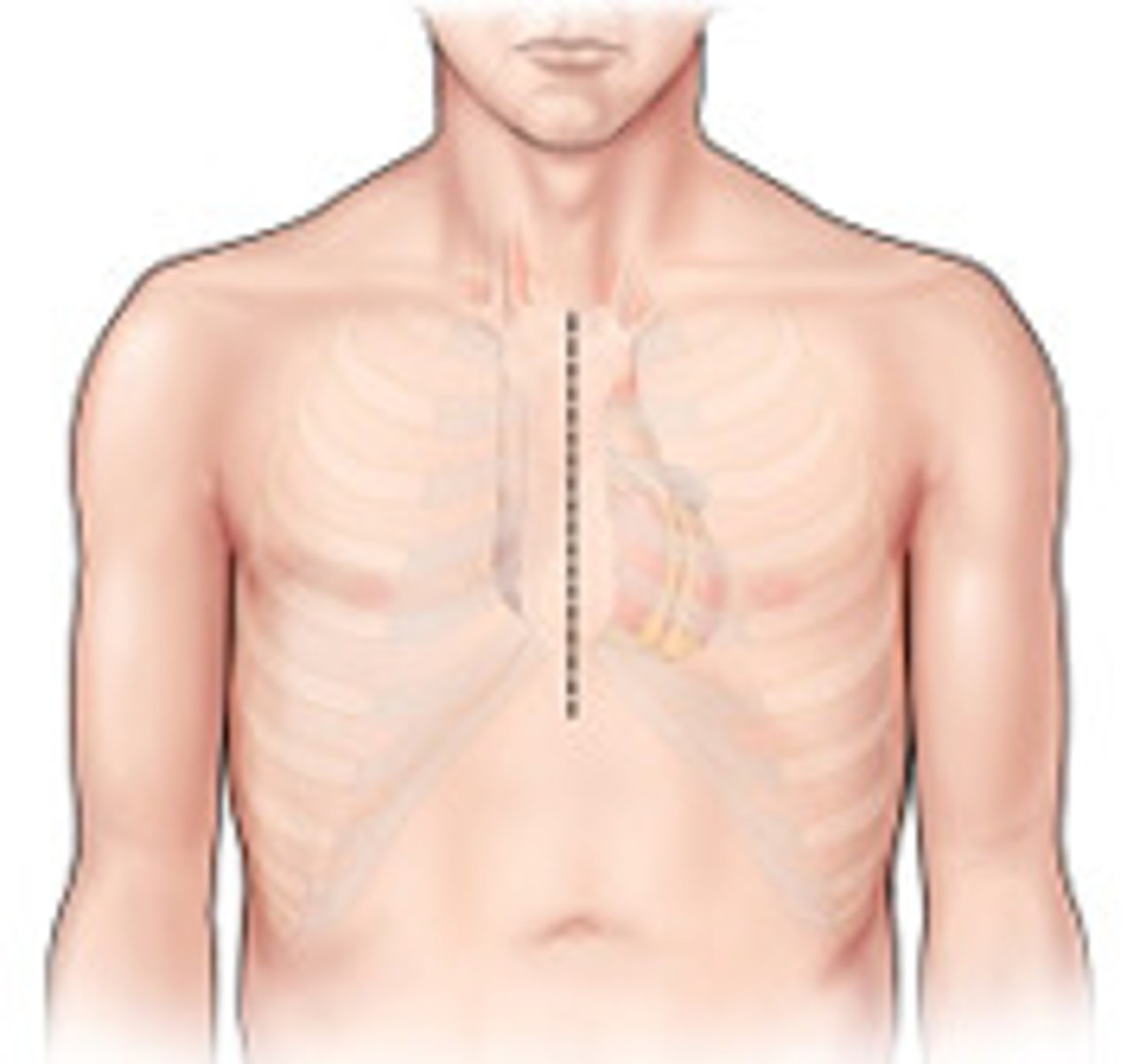
Sternotomy
vertical inline incision made along the sternum
Sternum divided with saw to provide access to the heart and lungs
Heart transplant, corrective surgery for CHD, CABG
Thoracotomy Incision
usually through 4th-5th ICS
May be anterior or posterior lateral incisions
Very painful
May be performed with muscle sparing
Muscle retraction, not muscle transection
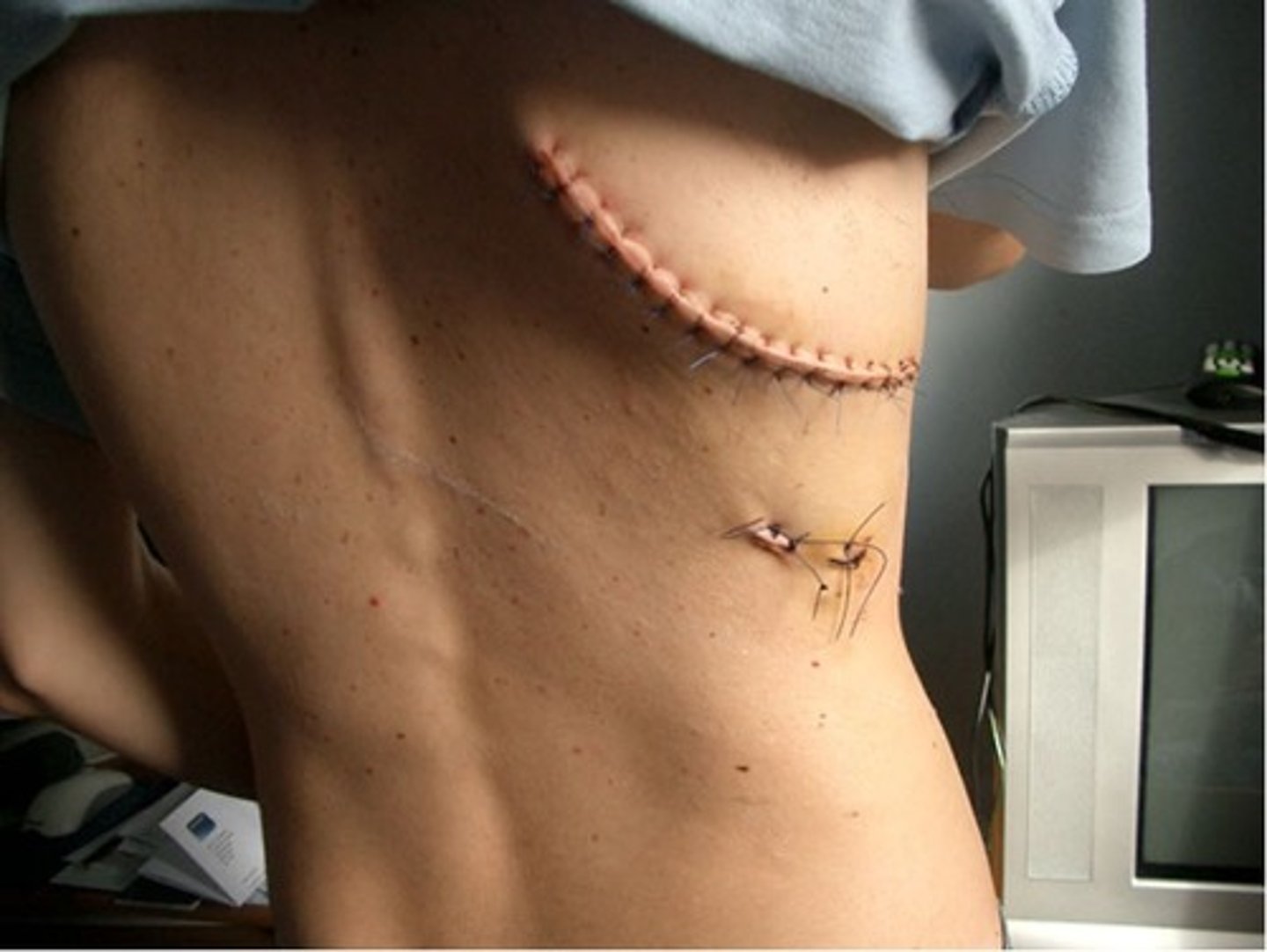
Transverse Abdominal Incision
horizontal surgical incision made across the abdomen, typically following natural skin lines (Langer’s lines), which helps improve healing and cosmetic outcomes