Economics
 Call Kai
 Learn
Learn Practice Test
 Spaced Repetition
 Match
Match Flashcards
 Knowt Play
1/30

There's no tags or description
Looks like no tags are added yet.
Name | Mastery | Learn | Test | Matching | Spaced | Call with Kai |
|---|
No analytics yet
Send a link to your students to track their progress
31 Terms
What will poor quality education and healtcare cause
Low human capital - workers dont have skills or knowledge needed to be productive
This means they will also take lower paid jobs and have a lower income
Chains of reasoning for low productivity
Low human capital → Low productivity → Keeps LRAS to the left → Limits real GDP → Limits economic growth
Low human capital → Low productivity → Low incomes → Less income tax revenue → Less government spending on development → Limits real GDP → Limits economic development
Growing population and issues with development
With a growing population, schools and hospitals have to cater for more and more children and so the quality of education and healthcare will begin to decrease. This will then start to decrease human capital.
Sex education on development
Improved sex education → Decrease birth rate → More time to focus on education/career → Increases incomes → Increases economic development
Savings gap
gap between amount of money held at banks in savings and amount of money that firms want to borrow from banks
main reasons for low savings
low income - people in developing countries dont earn enough to have money left to save
low access to banks - often far away and not always seen as secure
Harrod Domar Model
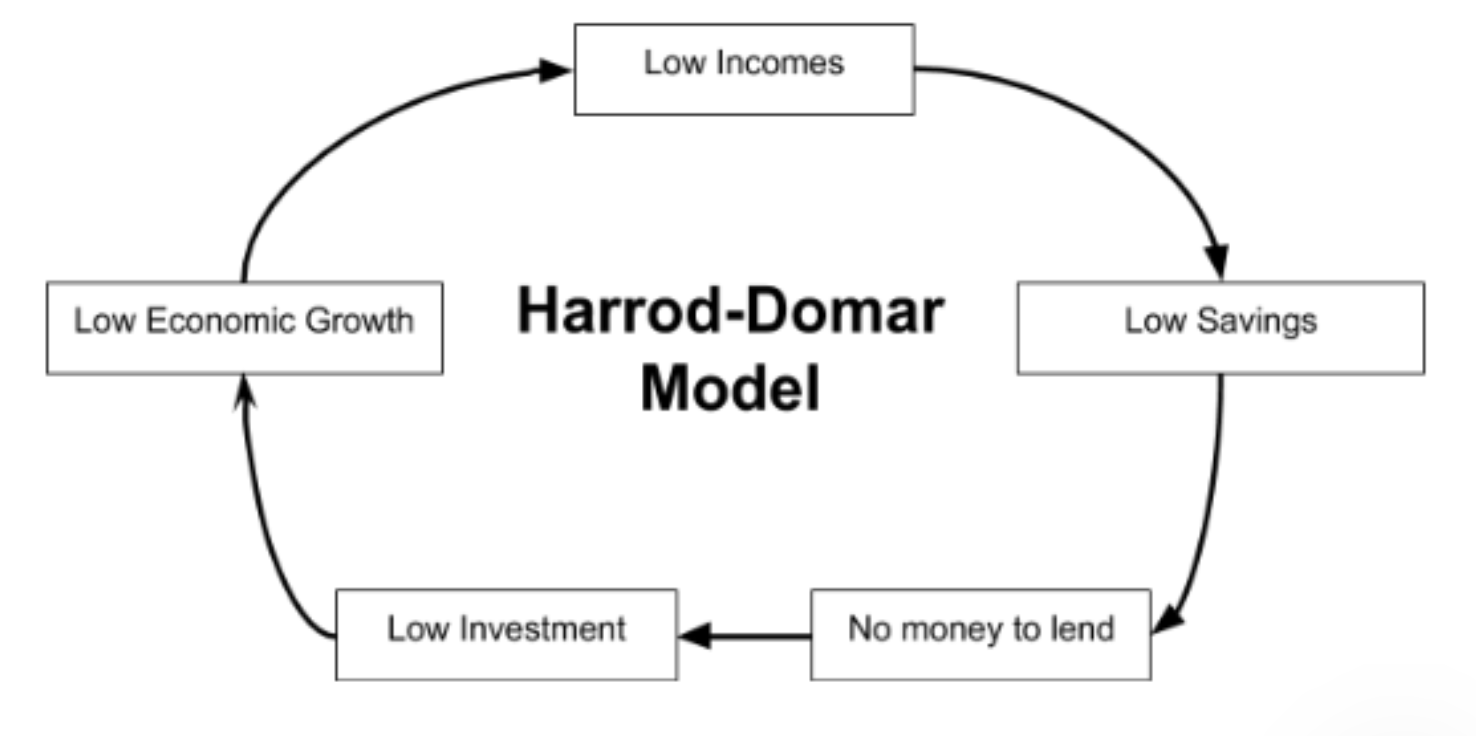
The model which links a savings gap to low economic growth is called the Harrod-Domar model.
The chain of reasoning is:
Low incomes →Low savings→No money in the bank to lend →Low investment→ Low AD and low LRAS → Low economic growth → Low incomes
microfinance meaning
Small loans provided to small businesses who otherwise would have no access to financial services
issues with micreofinance
may charge very high interest rates leading to no extra income
With no extra income, individuals won’t be able to savemoney in the bank. This means that there will still be a savings gapand so firms won’t be able to borrowmore money. As a result, investmentwill stay low. Since investment is a component of aggregate demand, this means that economic growthwill stay limited.
harrod domar model
issues with being unable to take out loans
If firms can’t take out loans they won’t be able to invest. This will keep aggregate demandand long-run aggregate supply low. This will limit real gdpmeaning incomes will stay lowand the savings gapwill persist.
Microfinance loans
When people use microfinance loans to invest into their small businesses, their productivityincreases. This reduces their costs and means they can charge lower priceswhich makes them more competitivemeaning they will earn more in income.
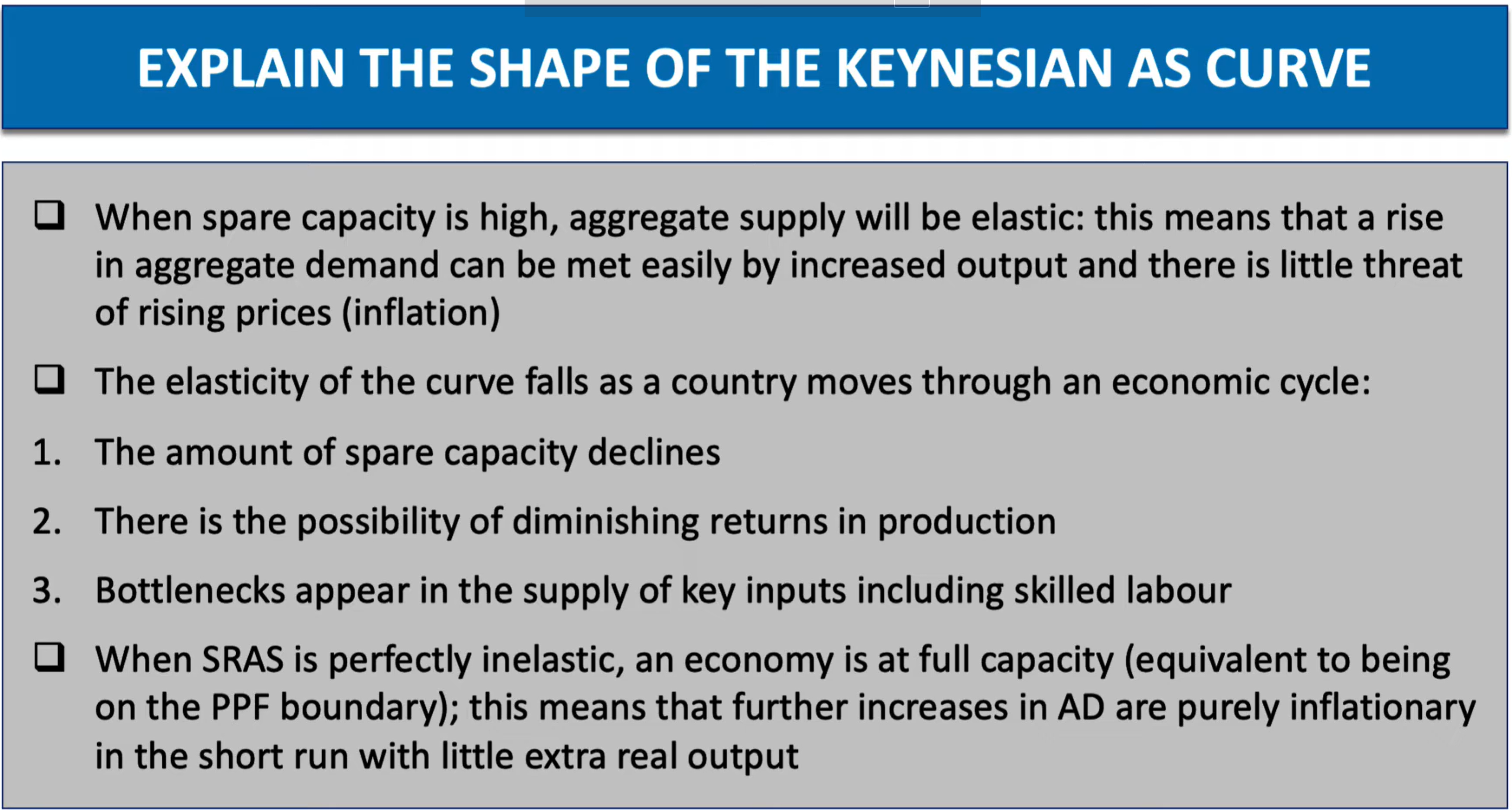
Kenyesian curve
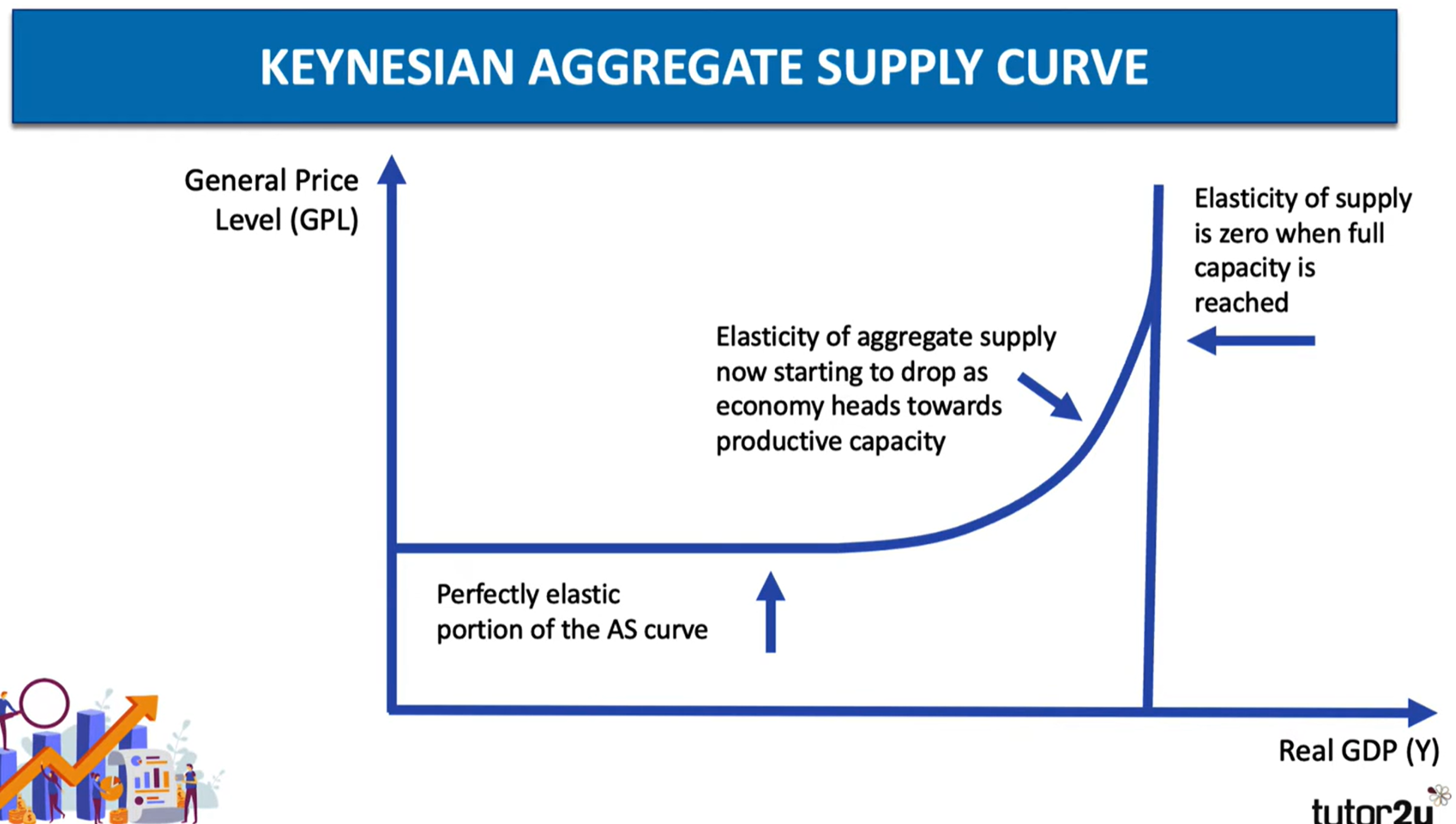
The elasticity of the aggregate supply curve falls as a country moves through an economic cycle:
The amount of spare capacity declines
There is the possibility of diminishing returns in production
Bottlenecks appear in the supply of key inputs including skilled labour
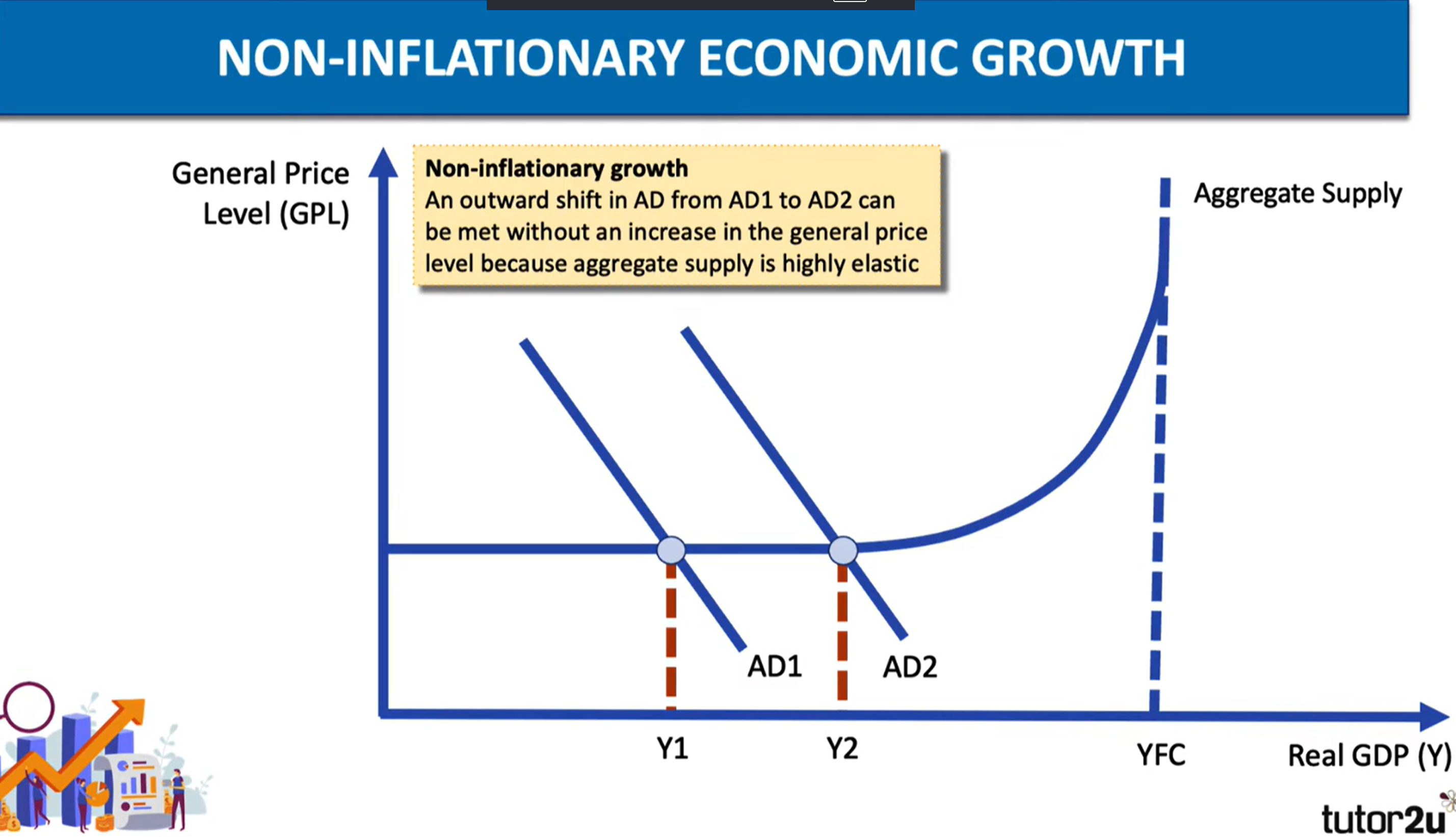
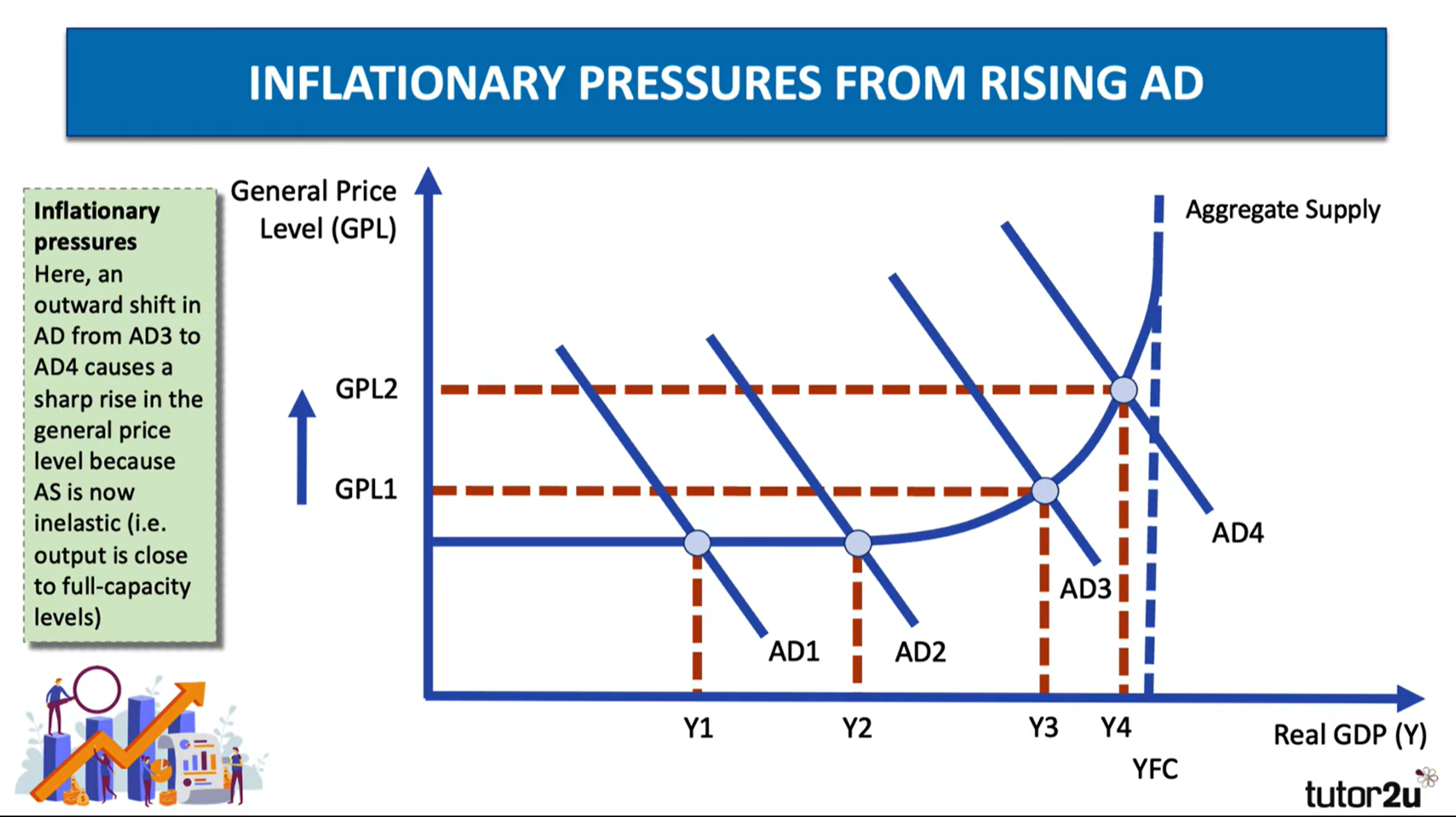
When AS is perfectly inelastic, an economy is at full capacity (equivalent to being on the PPF boundary); this means that further increases in AD are purely inflationary in the short run with little extra real output
Keynesian curve non inflationary economic growth
Keynesian curve inflationary pressures from increasing ad
Explaining shape of keynesian curve
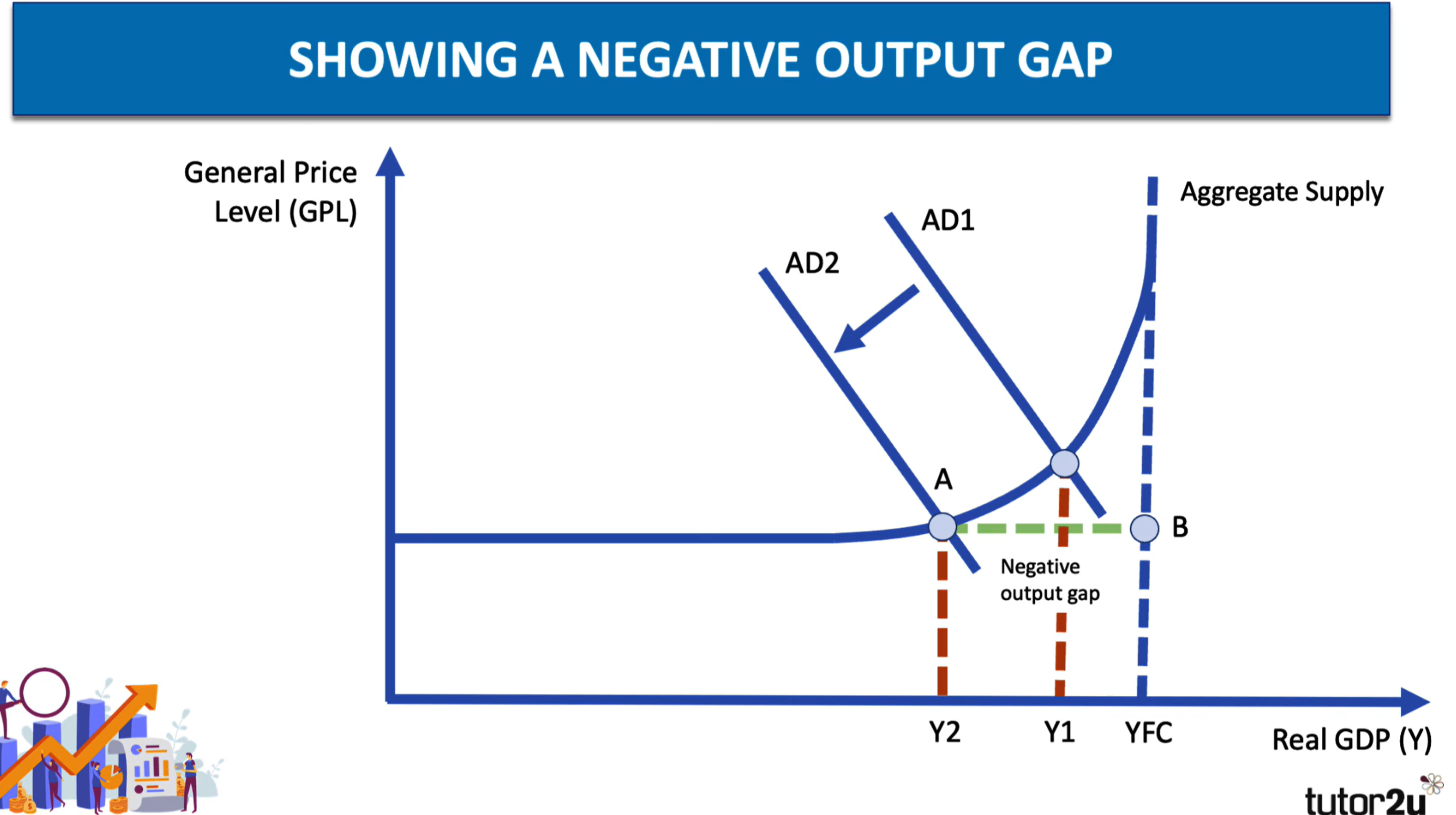
Keynesian curve negative output gap
For a rational, profit maximising firm labour demand is based on …
marginal revenue product
If workers get more productive (increased marginal physical product) or the revenue from selling what they produce (marginal revenue) increases, then the MRP will increase. An increase in productivity/revenue (i.e. an increase in MRP) will cause firms to hire more workers (demand more labour).
Assuming a perfectly competitive labour market, a firm’s demand curve for labour would be derived from its marginal
The firm’s demand curve is derived from its Marginal Revenue product of labour. The demand for workers depends on how much they can produce (marginal product of labour) and how much it is worth (marginal revenue).
Market failure
when price mechanism leads to a misallocation of rescources
4 types for market failure
Negative externalities
positive externalities
public goods
information gaps
A free market economy fails to allocate resources efficiently to the production of public goods because
Public goods are characterised by the free rider problem
Public goods are ..
products or services—such as national defense, street lighting, or public parks—that are non-excludable and non-rivalrous
This means everyone can access them without paying directly, and one person’s use does not diminish another's.
externality
Effects on third-parties outside the price mechanism.