7-12 ELAR 331 Practice test (Reading Comprehension)
 Call Kai
 Learn
Learn Practice Test
 Spaced Repetition
 Match
Match Flashcards
 Knowt Play
1/82

There's no tags or description
Looks like no tags are added yet.
Name | Mastery | Learn | Test | Matching | Spaced | Call with Kai |
|---|
No analytics yet
Send a link to your students to track their progress
83 Terms
Anticipation Guide
a series of statements used to preview and activate prior knowledge before reading a text
Rhetorical Devices
a technique a writer or speaker uses to persuade a reader or listener
Example.
alliteration, repetition, anaphora, analogy, emotional language, etc.
Spatial Order
organizational approach where ideas are arranged according to physical space
Logos
rhetorical appeal focused on the logic a speaker is building
Paraphrase
to express the meaning of a text in different words, often used in research writing
Academic Vocabulary
specialized vocabulary commonly found in an academic setting
Example.
Many academic vocabulary words, like "analyze," "describe," and "reflect", are important and relevant across all content areas.
Problem and Solution
an organizational approach where the author presents a problem and possible solution
Domain-Specific Vocabulary
words primarily used in a specific content area
Example.
ELA: allusion, argumentative, citation, compound/complex
Science: hypothesis, controlled variable, chromosome, mutation
Create (Bloom's Taxonomy)
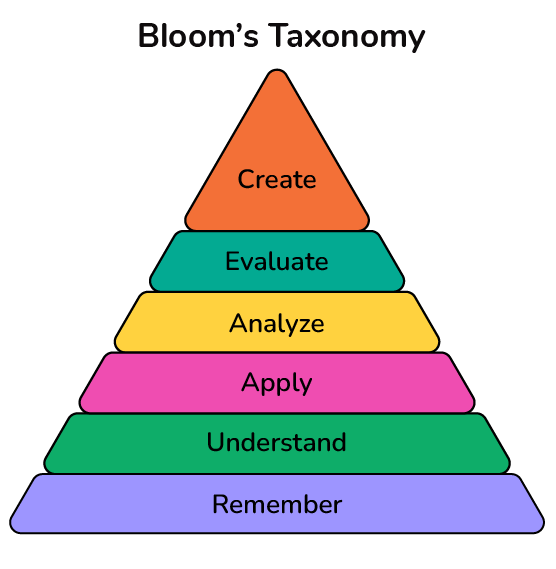
Level 6. Produce original thoughts or work
Example.
Design, author, formulate
Skimming
quick reading to grasp main ideas
I-Chart
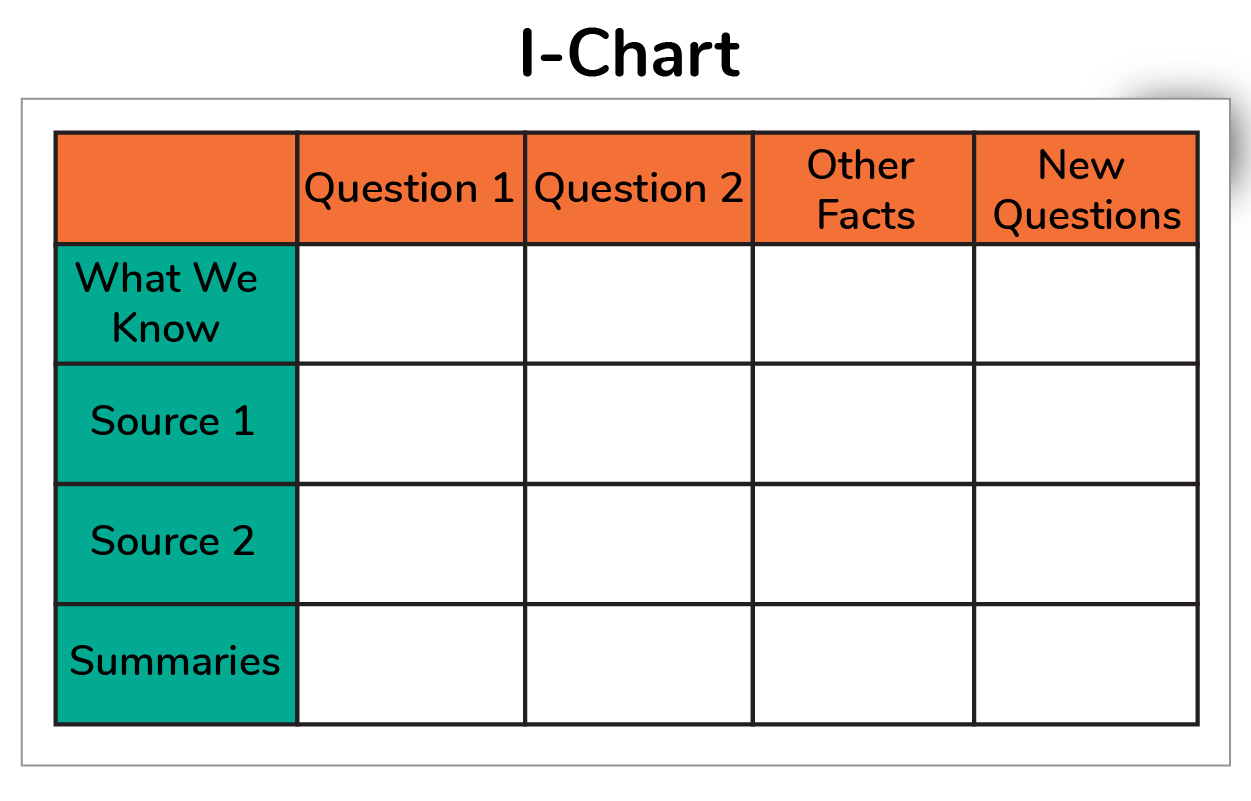
type of graphic organizer used for inquiry and research; organizes information by planning, interacting, and integrating/evaluating
Sentence Stems
common sentence starters provided to students to use when generalizing, summarizing, or transitioning between ideas
Example.
"According to the author..." "We see in Chapter 2 that..." or "While X does this, Y..."
Main Idea
the central point of the passage
Glossary
a list of important words to know along with their meanings
Quantitative Measures of Texts
elements of a text that are too hard for a reader to measure; typically measured by computer software
Example.
word length, frequency of difficult words, sentence length, text cohesion
Literal Comprehension
understanding of the facts in the written text such as stated main idea or specific details
Example.
What were the names of the main character's parents in the story we just read?
Summarizing
briefly restating the main ideas or key points of a text
Background Knowledge
(schema or prior knowledge) information or experience that the student has prior to learning
Example.
When students can connect their background knowledge to the texts they read, it aids their comprehension.
Primary Purpose / Author's Purpose
why the author wrote a text
Example.
Charlie wrote an OpEd for the paper to convince people to stop littering.
Compare and Contrast
an organizational approach where the author provides similarities and differences about two ideas
Bias
prejudiced feelings, outlooks, or leanings toward or against a particular person, race, ethnicity, age, or group, often without considering others' opinions or perspectives
Example.
assuming all English language learners are less intelligent than native English speakers
Interest Survey
questions that ask students the types of books they enjoy reading
Example.
given by the teacher at the beginning of the year to determine what books to assign to meet the interests of the class
Pathos
rhetorical appeal focused on the emotions a speaker is evoking
Rhetorical Analysis
analyzing how a speaker makes their argument and its effectiveness
Summarize
to express the most important ideas about something in a clear and concise way
Active Listening
the focused and intentional act of hearing and understanding what others say
Example.
For example, giving full attention, responding thoughtfully, and asking questions to clarify or expand on ideas.
Two-Column Notes
students write questions on the left side of the column and the answers to the questions on the right side
Criterion-Referenced Tests
tests in which a standard has been set for the test taker to achieve in order to pass the test
Example.
a multiple choice or short answer test on the content of a unit of study in which a 70% is needed to pass
Heading
a title of a section
Evaluative Comprehension
ability to analyze text by questioning whether it is fact or opinion, determining if there is faulty reasoning, and explaining how the characters are developed
Example.
Explain why you think this story is factual or an opinion.
Organizational Structure
text structure can include cause/effect, problem/solution, main idea/details, and/or sequence
Venn Diagram
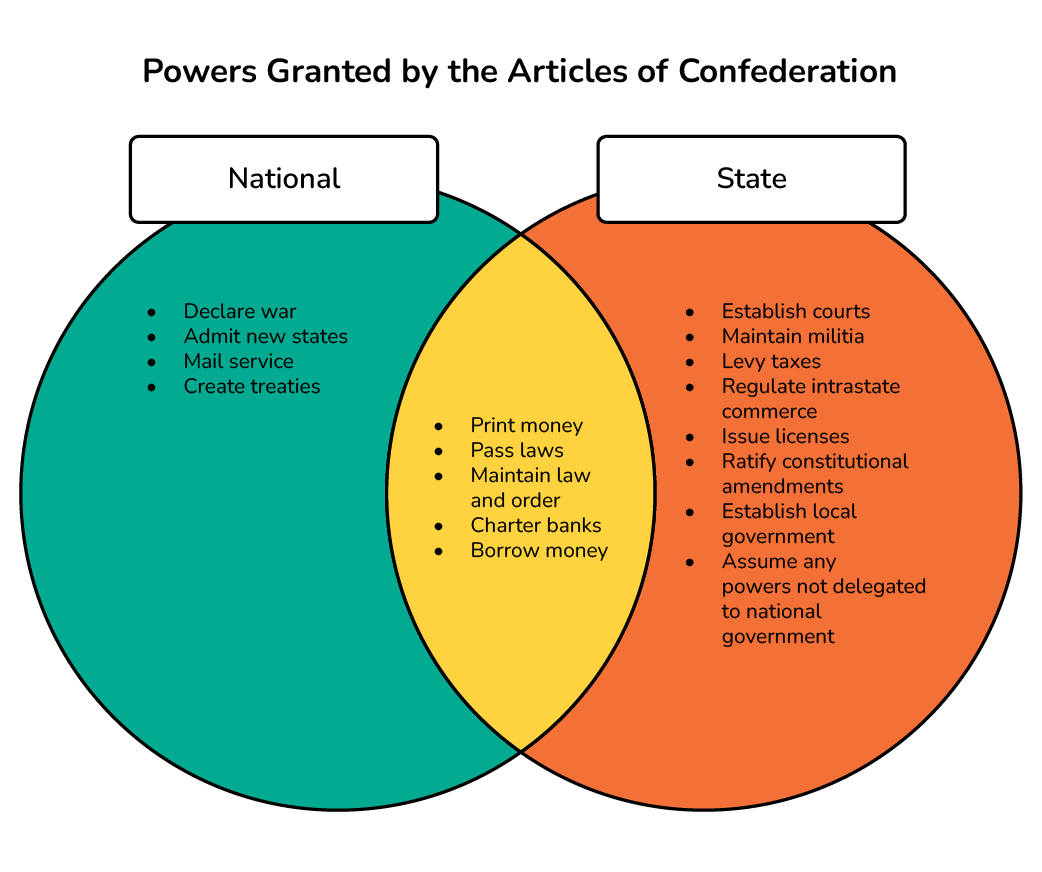
graphic organizer with two or more overlapping circles used to examine similarities and differences between two subjects
Listening Vocabulary
words a listener can recognize when heard
Example.
People typically have a larger listening vocabulary than writing vocabulary, as the meaning of words can be determined from the context.
Bloom's Taxonomy
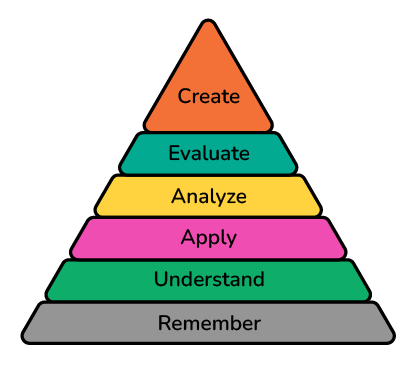
a hierarchy of levels of knowledge; each level has associated verbs teachers can use to start questions
Example.
"identify" is at a lower level than "argue" because it requires a lower level of thinking
Inferential Comprehension
understanding parts of the written text without it being stated explicitly such as determining cause and effect, drawing conclusions, and making predictions
Example.
What was the cause of the children in the story being locked out of their house?
Chronological Order
an organizational approach that follows an orderly progression of events based in time
Reading Comprehension
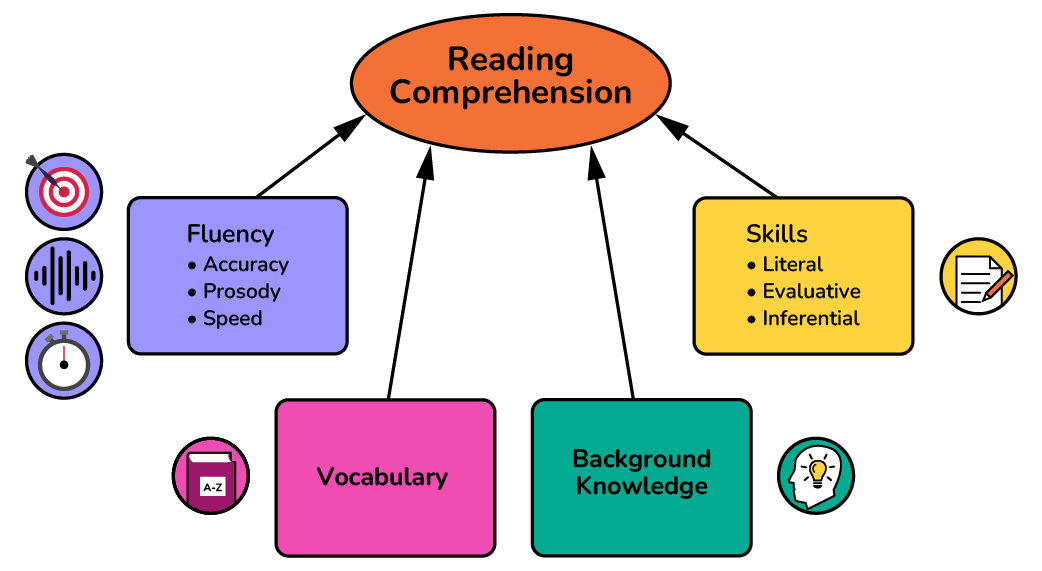
the ability to read a text and understand its meaning
Example.
Jessie read the book and was able to explain to me why the character lied in Chapter 3.
Draw Conclusion
to make final comments/summation of what has been read or written
Metacognition
the awareness and understanding of one's own thought processes, enabling students to monitor, control, and reflect on their learning strategies and problem-solving techniques to enhance their cognitive abilities
Active Reading
engaging with the text through questioning and summarizing
Example.
annotating and highlighting key points while reading a textbook
Reading Fluency
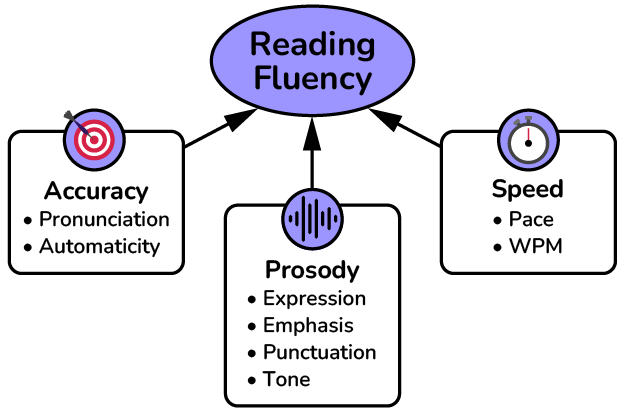
ability to read with appropriate speed, accuracy, and prosody
Annotate
making notes in a text and questioning unfamiliar ideas while reading something new
Writing Vocabulary
all the words known and used by a person in writing
Example.
A students writing vocabulary is typically more formal than their speaking vocabulary.
Utility (in vocabulary)
the frequency with which a word will be encountered
Example.
Vocabulary words with high utlity, are more likely to be remembered by students.
Claim and Refutation
organizational approach where the author argues against a statement, fact, or claim
Think-Aloud
a teaching strategy in which a teacher states his/her thoughts aloud to demonstrate how the students should go about solving a problem or understanding a text
Example.
Math teachers model thinking by reading a problem aloud and verbalizing figuring out what it is asking what needs to be done. Language arts teachers ask themselves questions about the text as they read aloud.
Ethos
rhetorical appeal focused on the speaker's credibility and relatability
Transition Words
phrases and words used to link sentences, paragraphs, and ideas together
Example.
first, next, last, on the other hand
Background Knowledge
(schema or prior knowledge) information or experience that the student has prior to learning
Example.
When students can connect their background knowledge to the texts they read, it aids their comprehension.
Think-Pair-Share
learning activity in which the teacher provides a prompt, the students consider it individually (Think), then pair up and brainstorm responses or solutions (Pair), and then share their results with the class (Share)
Graphic Organizer
Term definition.
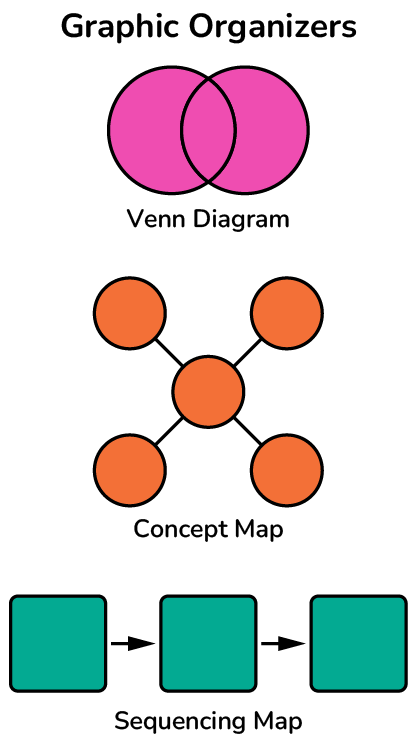
a visual display of the relationships between facts and ideas
Example.
Graphic organizers, such as story maps, timelines, venn diagrams and K-W-L charts, help students organize information.
Cause and Effect
a writing method in which the author explains reasons why something happened or the effects of something that has happened
Example.
A politician's speech in which all of the bad actions of an opponent are listed to argue that the politician should be elected instead.
Evaluate (Bloom's Taxonomy)
Level 5. Justify a stance
Example.
Defend, support, critique
Choral Reading / Echo Reading
a strategy in which students first listens to the teacher read a short passage aloud, and then the class and the teacher all read it aloud at the same time
Qualitative Measures of Texts
elements of a text that can only be measured by a reader
Example.
meaning or purpose, structure, language, conventionality and clarity, knowledge demands
Journaling
a literacy development strategy in which students write personal reflections
Example.
Journaling is an opportunity for students to respond to literature and practice their writing skills.
Caption
short explanations below photos
Analyze (Bloom's Taxonomy)
Level 4. Connect different ideas
Example.
Differentiate, compare, contrast
Reader's Response Journal
a journal in which students record their initial responses to their reading
Example.
Students read a portion of the text and then recorded their thoughts in a Reader's Response Journal before discussing with classmates.
Independent Reading
reading done by students independent of the teacher; can be either assigned or student-selected and is typically silent
Audiobook
a recording of a reading of a book
Index
a catalogue list at the end of the text containing all of the topics discussed
Order of Importance
organizational approach where ideas are arranged with the most important claim at the top or bottom
Reader and Task Considerations
elements of reading a text that relate to the reader or the reader's purpose in reading the text; considerations are determined and measured by teachers based on their professional judgement, knowledge of their students, and knowledge of the subject
Example.
Reader considerations include: motivation, knowledge, experiences; Task considerations include: the complexity of the assignment related to the reading, questions asked about the reading
Genre
various forms of texts including short stories, essays, folktales, fairy tales, poetry, historical fiction, biographies and autobiographies, memoirs, comedies and tragedies
Example.
Night by Elie Wiesel
Modeling
an instructional strategy in which the teacher demonstrates a concept or skill and students learn by observing
Example.
When a teacher encounters a difficult word in a text, she thinks aloud to model how she can use the context clues to discover the meaning.
Text Scanning
previewing a text to look for specific information or keywords
Phonemic Awareness / Sound Awareness
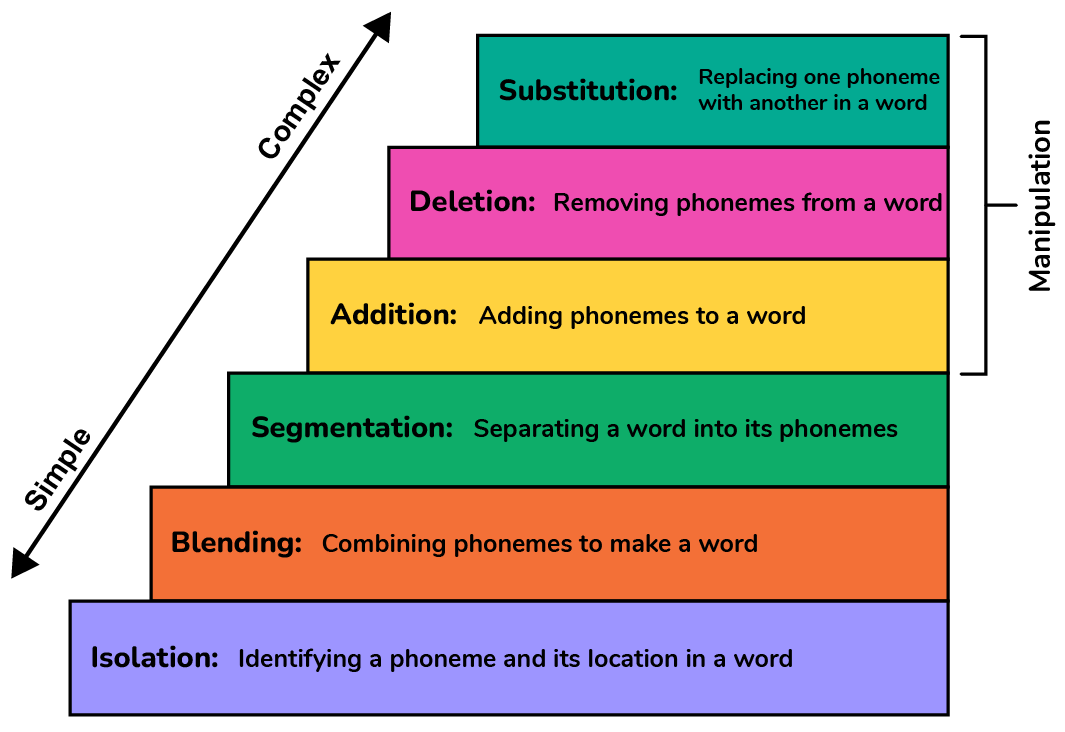
the ability to hear, identify, and re-create individual sounds in spoken words
Example.
A student can hear that /b/ makes first sound in the word blue.
Jigsaw Activity
students work in small groups to learn about different topics and then come together to teach each other what they've learned
K-W-L Chart
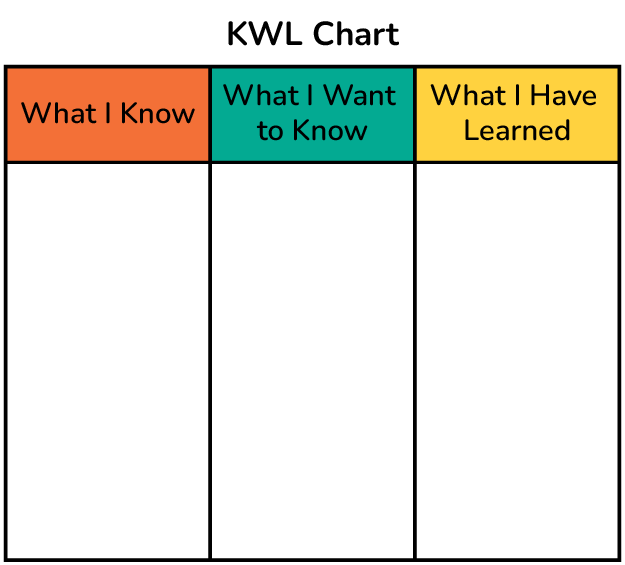
graphic organizer used throughout a unit that shows what students know (K), want to know (W), and learned (L)
Retell
a comprehension strategy in which students retell or tell differently what they have read or listened to
Example.
When students retell a story, they are demonstrating their comprehension of the most important parts
Reading Rate
the speed at which a person reads, usually measured in words per minute (WPM)
Setting a Purpose
students are told why they are reading a text to read and annotate with a purpose
Norm-Referenced Tests
tests that compare an individual's performance/achievement to a group called the "norm group"
Example.
IQ test
Subheading
a title for a smaller portion of text
Graphic Features
charts, graphs, photos, and graphic organizers
Example.
chart
Synthesis
the combination of ideas to form one theory
Annotate
making notes in a text and questioning unfamiliar ideas while reading something new
Schema (Reading)
background knowledge a reader brings to a text
Example.
Someone who plays baseball can use his experience to understand a biography of Babe Ruth.
Table of Contents
a text feature found on a page before the start of a written work that lists chapter names or section titles along with their corresponding page numbers
Grade-Equivalent Scoring
tests that measure an individual in relation to a typical student at a given grade level
Sequential Order
organizational approach following an orderly progression of events, ideas, or steps
Small-Group Reading
reading done by students with teacher support