All 0INAs
 Call Kai
 Learn
Learn Practice Test
 Spaced Repetition
 Match
Match Flashcards
 Knowt Play
1/406

There's no tags or description
Looks like no tags are added yet.
Name | Mastery | Learn | Test | Matching | Spaced | Call with Kai |
|---|
No analytics yet
Send a link to your students to track their progress
407 Terms
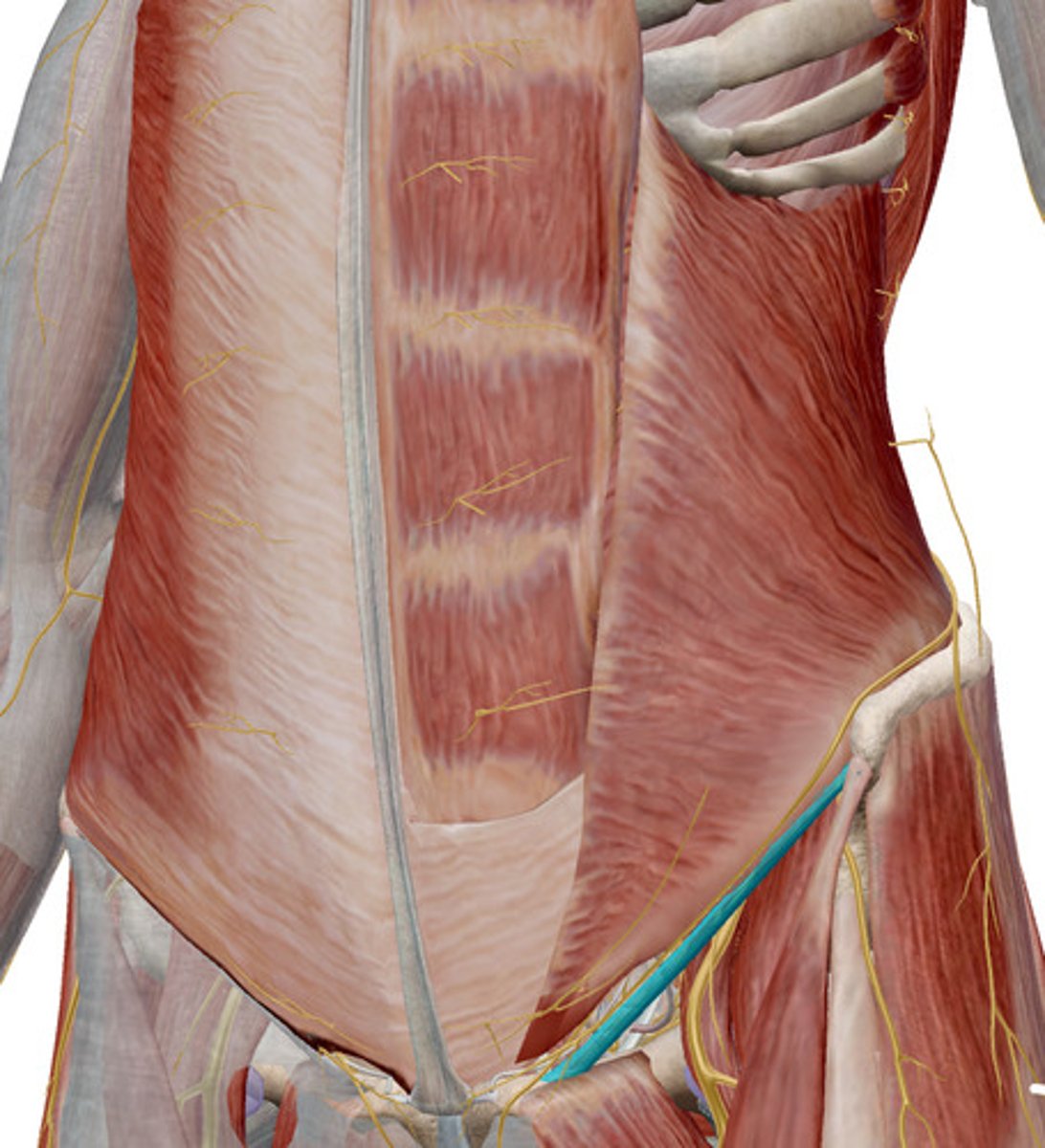
External Oblique
What muscles is this?
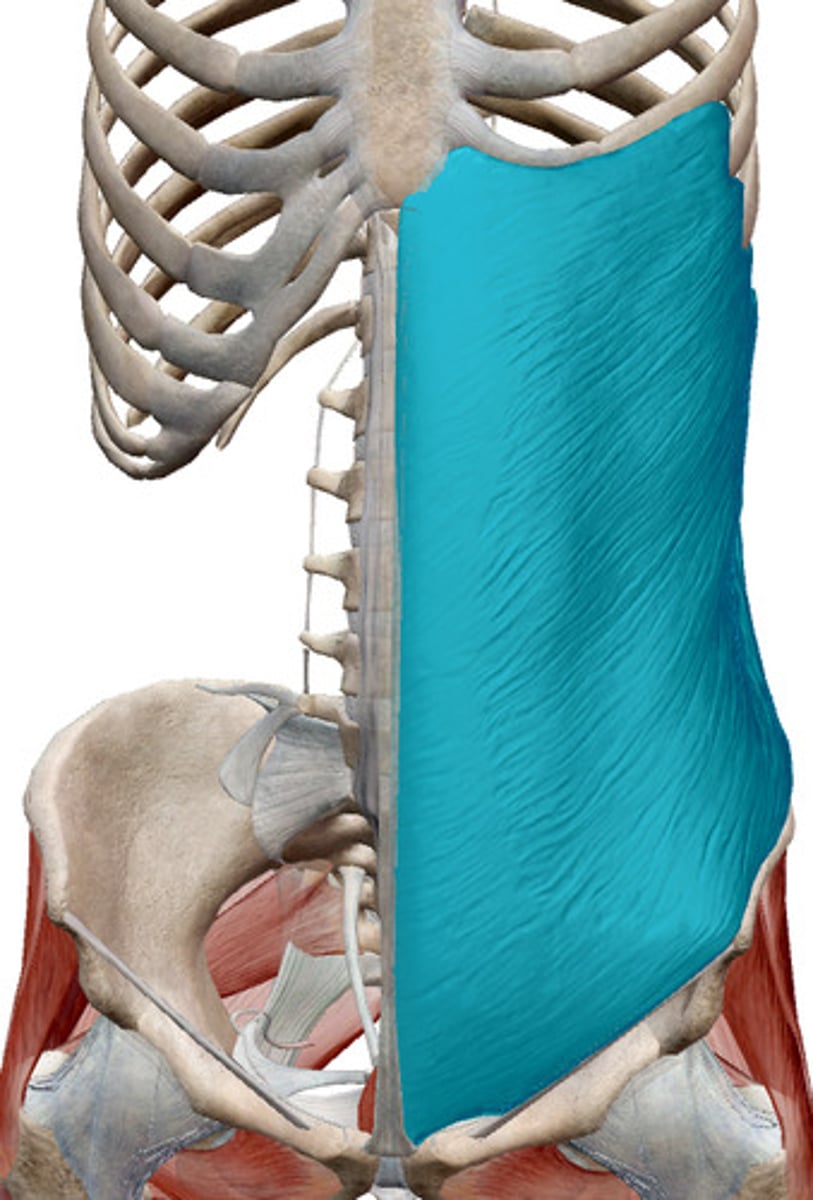
Pectoralis major - clavicular portion
What muscles is this?
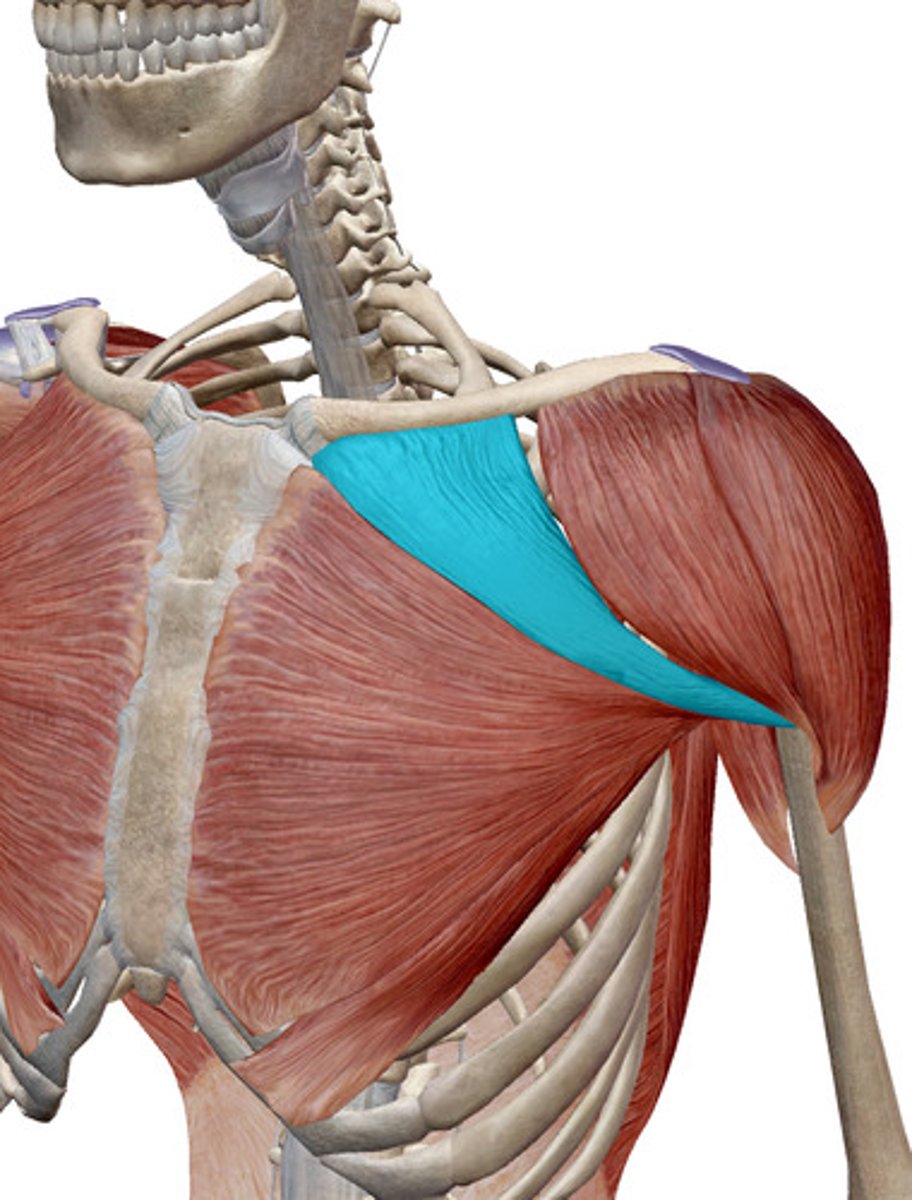
TP of C3-6
Superior attachment of scalenus anterior
scalene tubercle of 1st rib
Inferior attachment of scalenus anterior
anterior rami of spinal nerves C3-6
Nerve innervation of scalenus anterior
lateral flex to the same side, elevate the first rib
Action of scalenus anterior
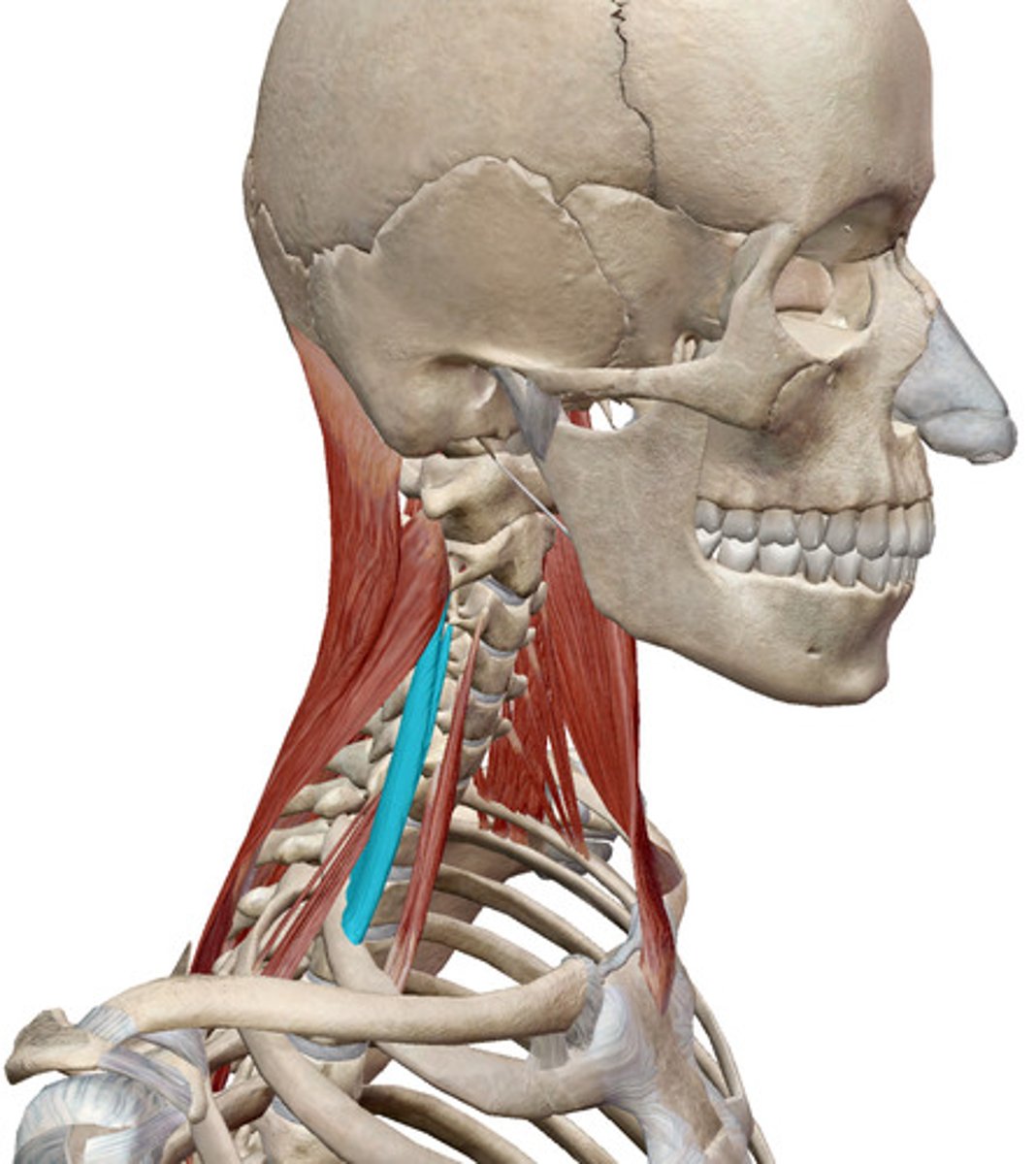
TP of C5-7
Superior attachment of scalenus medius
superior surface of 1st rib
Inferior attachment of scalenus medius
anterior rami of spinal nerves C3-8
Nerve innervation of scalenus medius
laterally flex to the same side, elevate the first rib
Action of scalenus medius
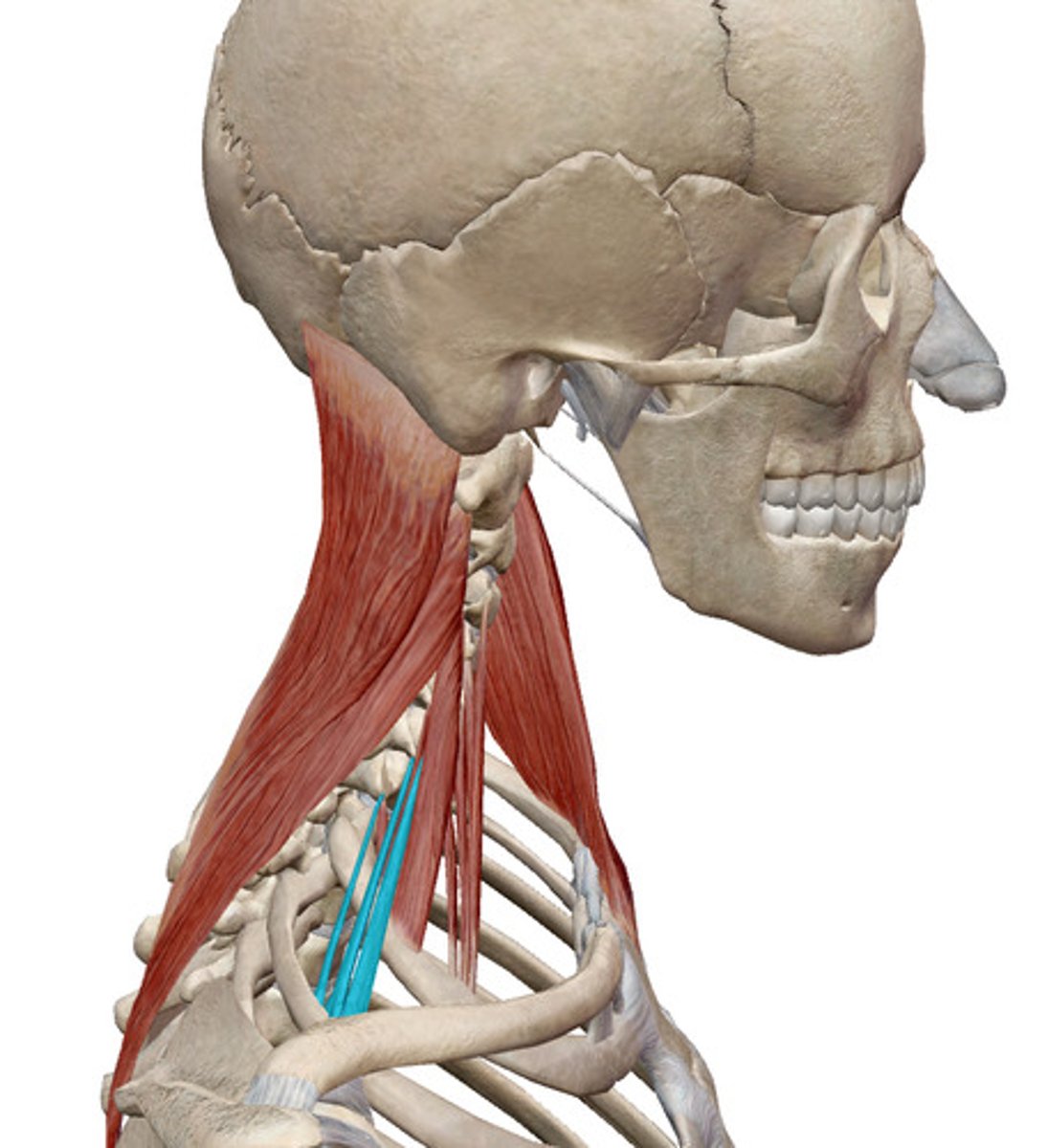
TP of C5-7
Superior attachment of scalenus posterior
external border of 2nd rib
Inferior attachment of scalenus posterior
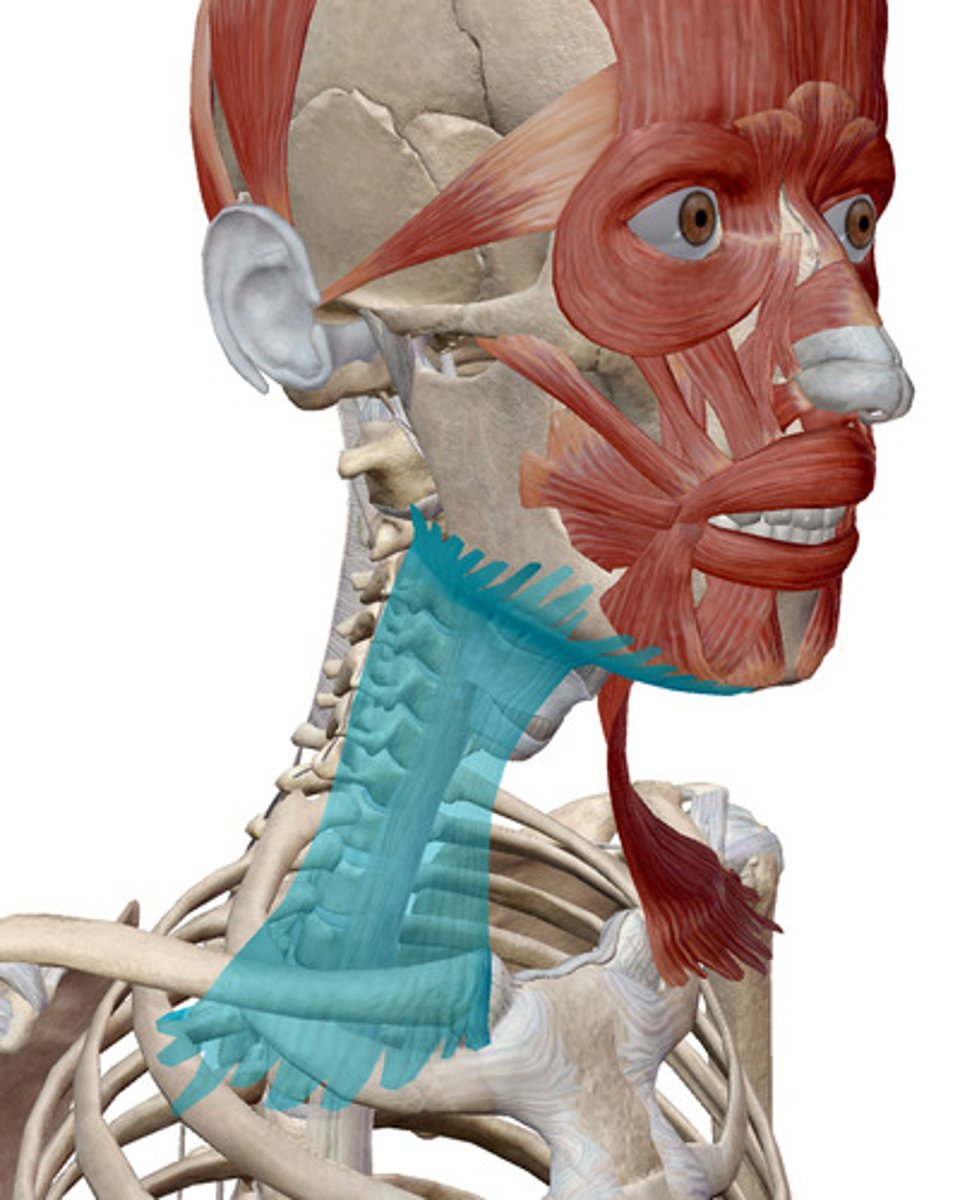
inferior border of the mandible, skin and tissue of lower face
Origin of Platysma
cervical branch of facial nerve (CN VII)
Nerve innervation of Platysma
junction of the 1st rib with costal cartilage
Proximal attachment of Subclavius
inferior surface of medial 1/3 of clavicle
Distal attachment of Subclavius
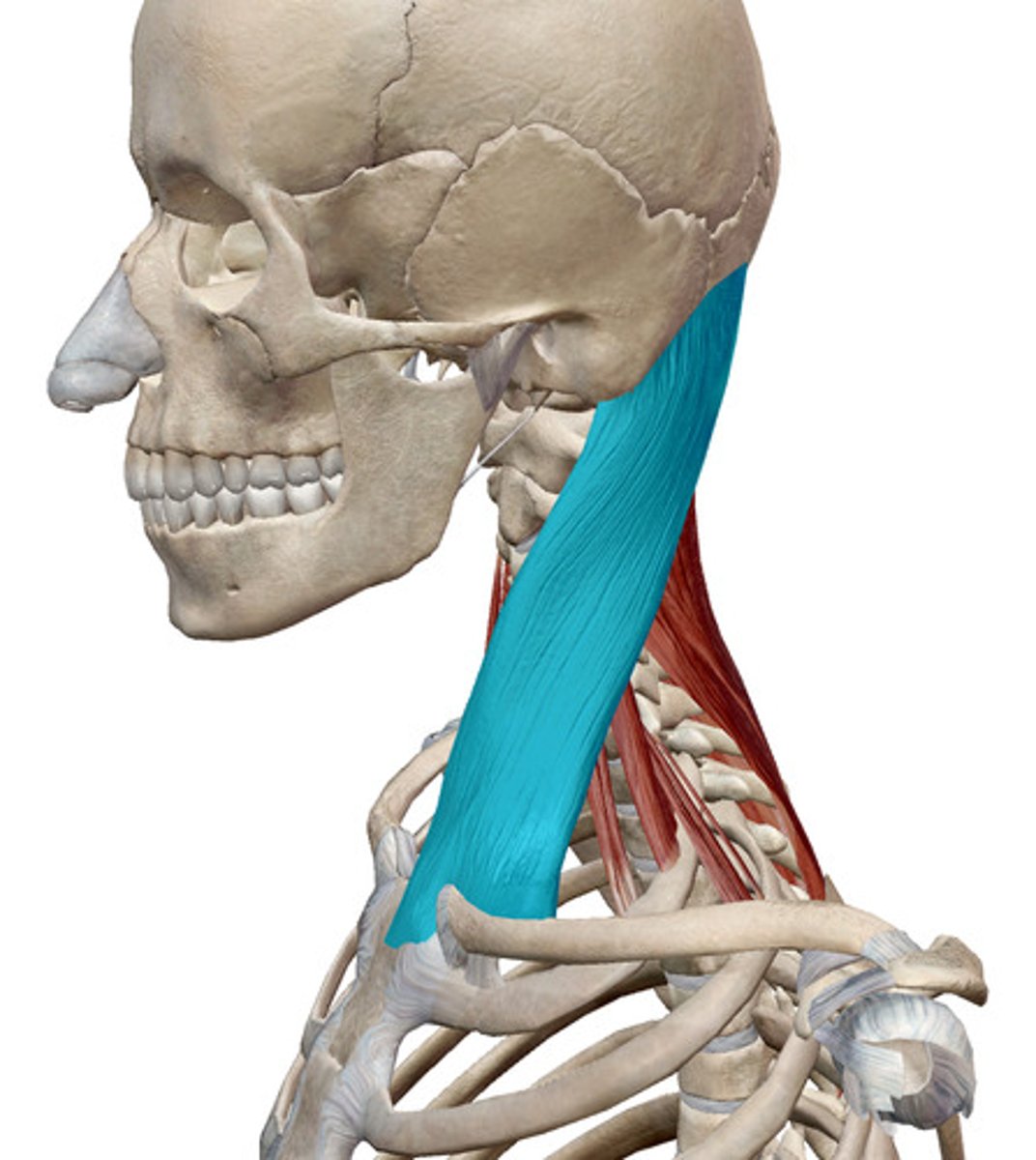
Sternal - anterior surface of manubrium
Clavicular - medial 1/3 of clavicle
Inferior attachment of the sternocleidomastoid muscle
adduct and medially rotate the humerus, draw scapula anterior and inferior
Action of both the sternal and clavicular portion of the pectoralis major together
top and center of the hood (all parts)
Insertion of the diaphragm
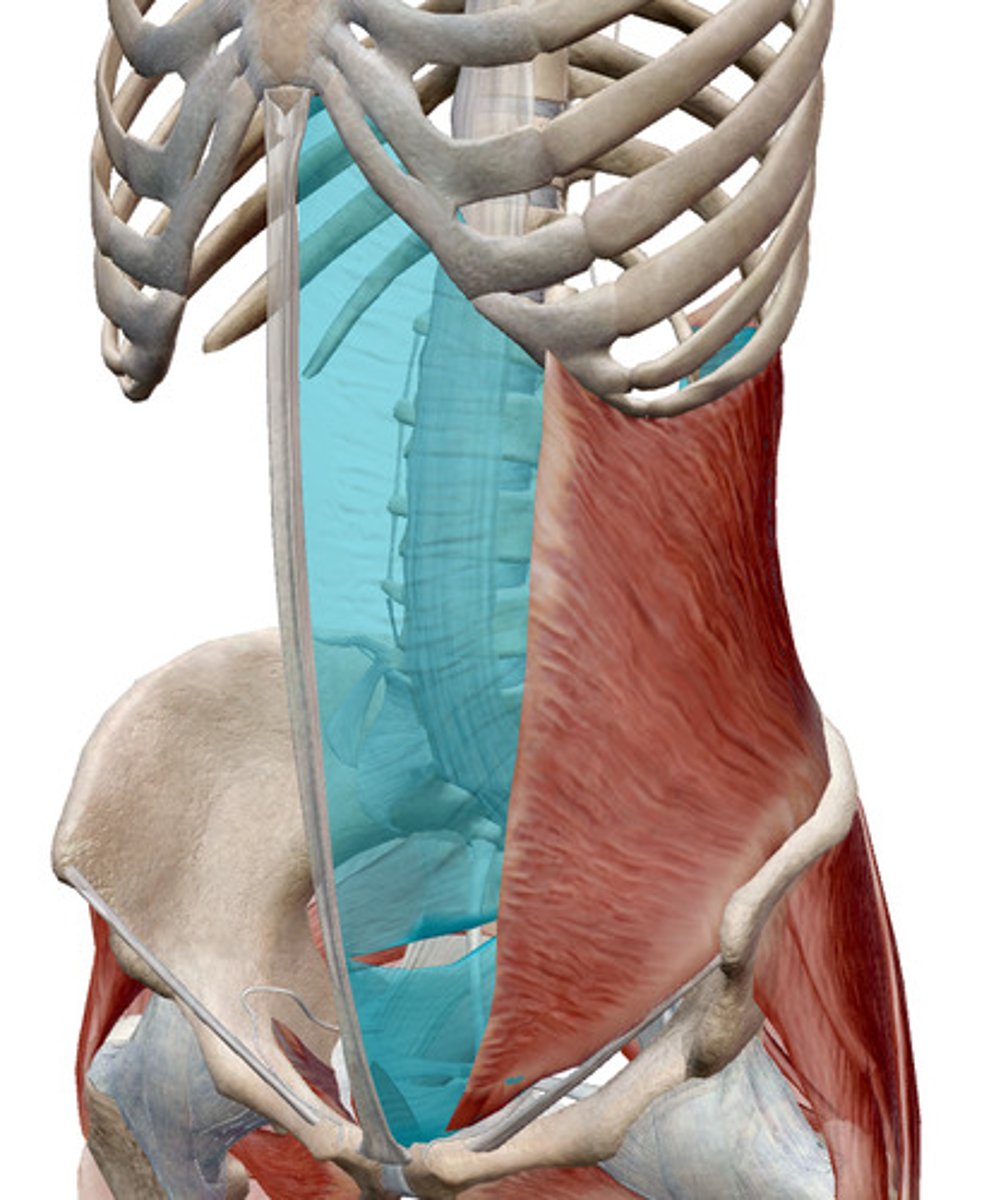
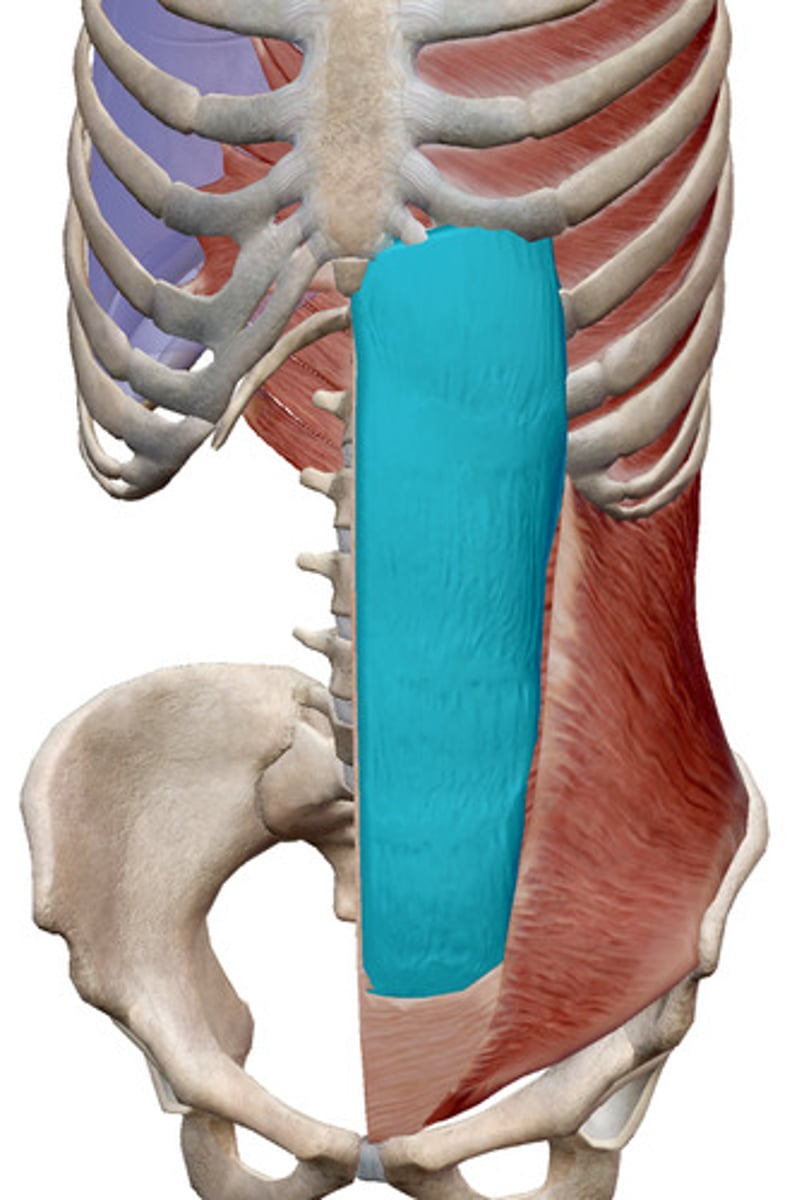
Transversus Abdominis
What muscles is this?
Rectus Abdominis
What muscles is this?
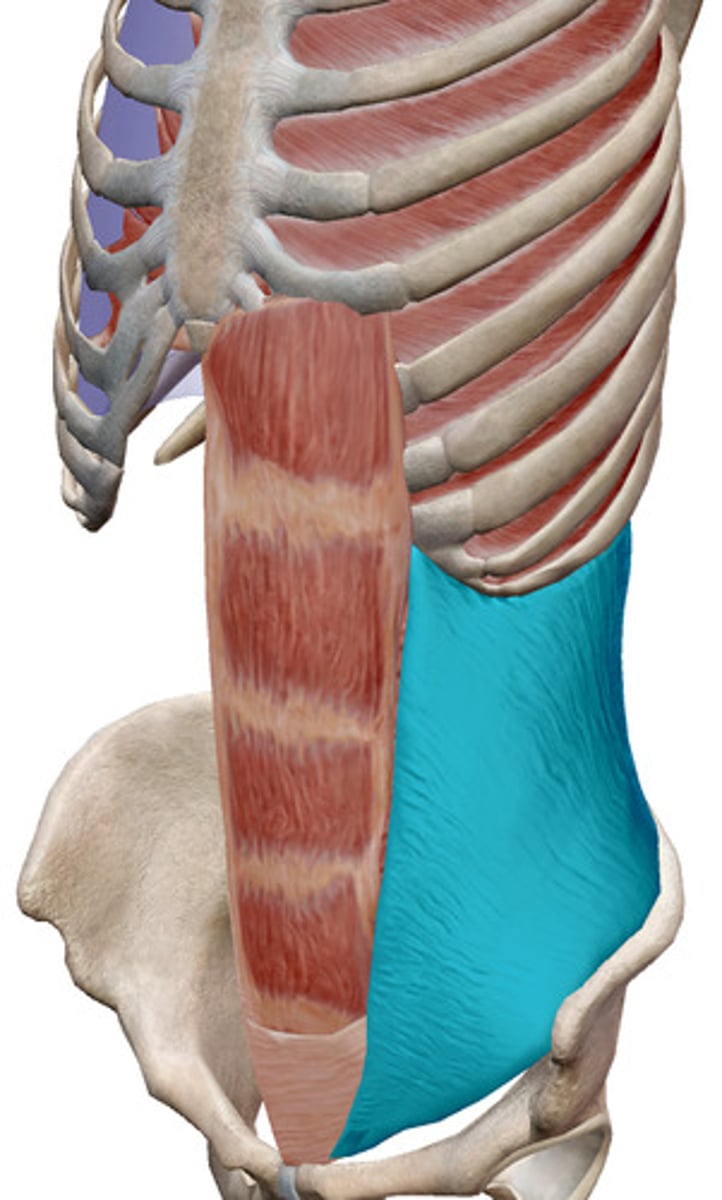
internal oblique
What muscles is this?
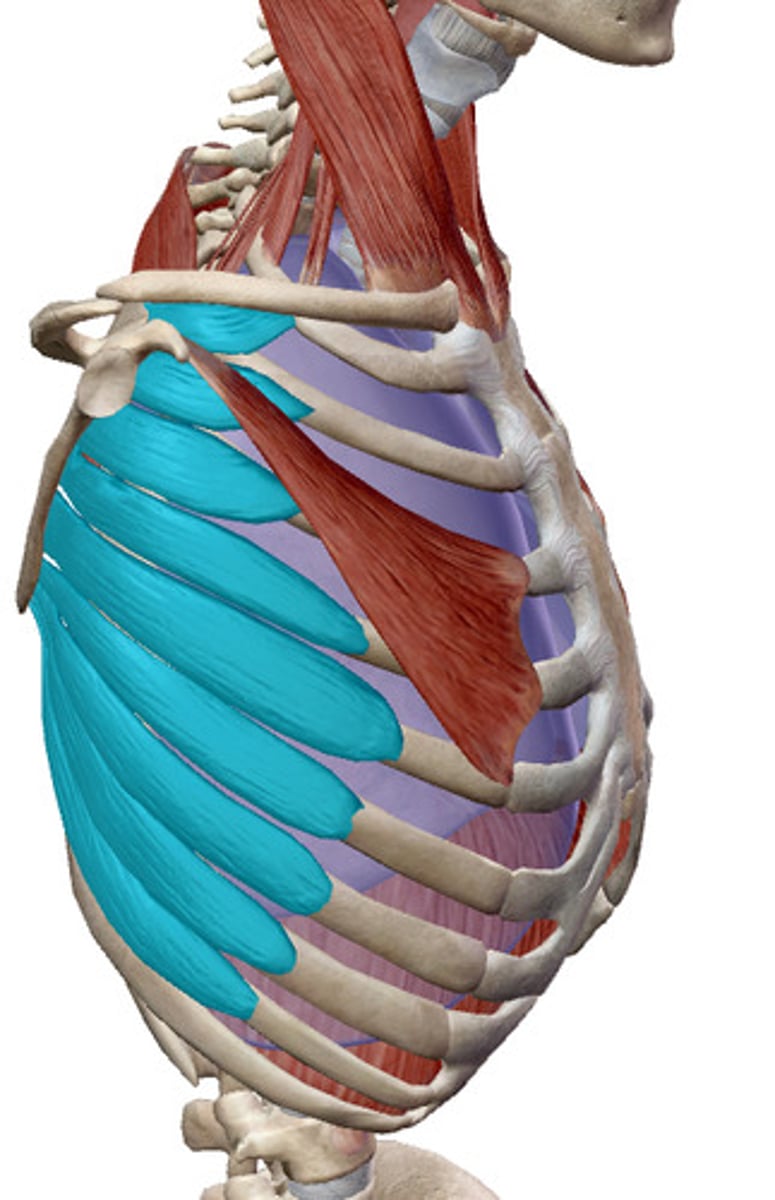
Serratus anterior
What muscles is this?
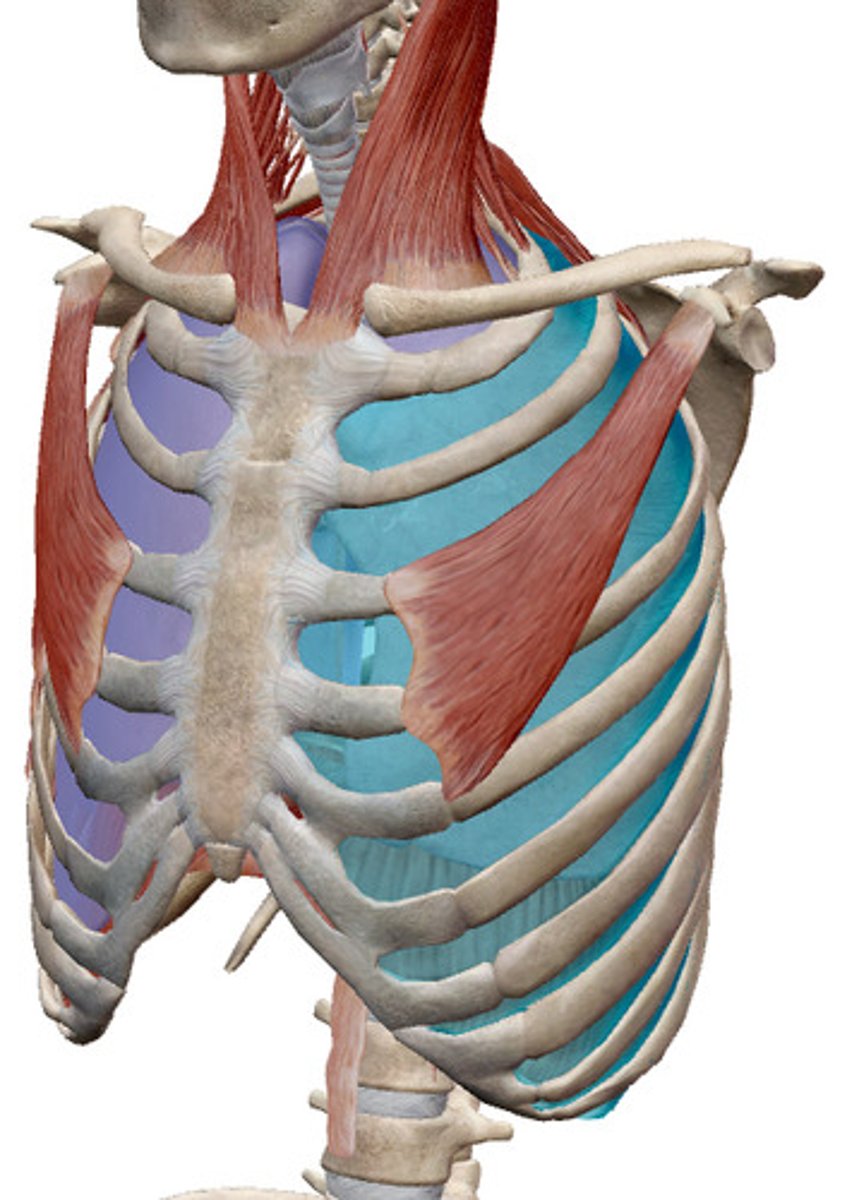
internal intercostal muscles
What muscles is this?
External intercostal muscles
What muscles is this?
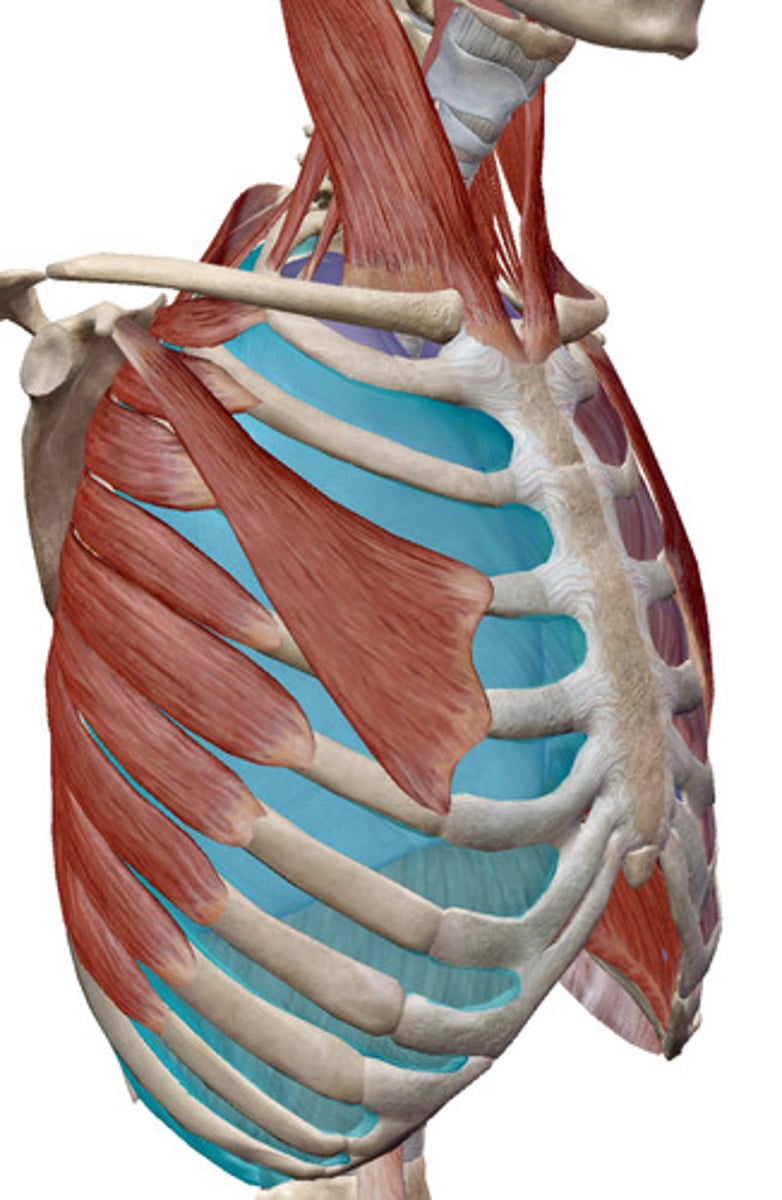
Pectoralis minor
What muscles is this?
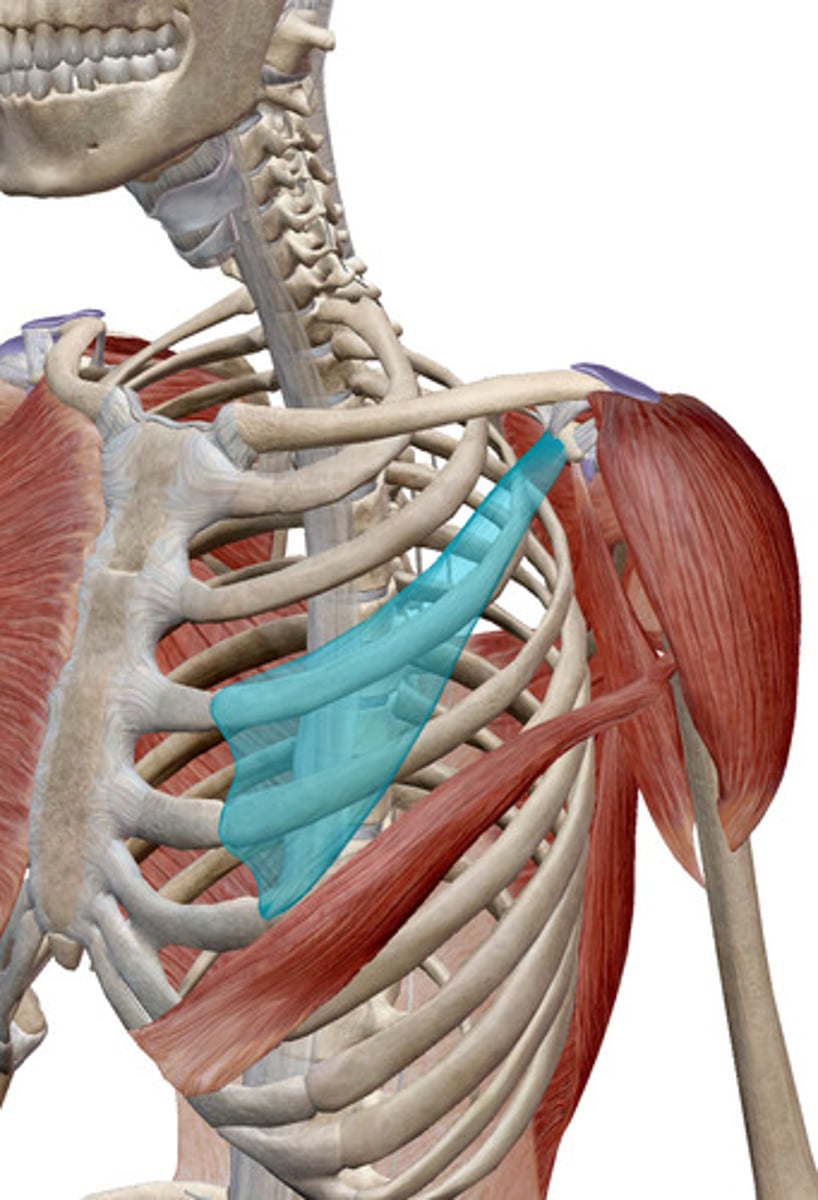
Pectoralis major - sternocostal portion
What muscles is this?
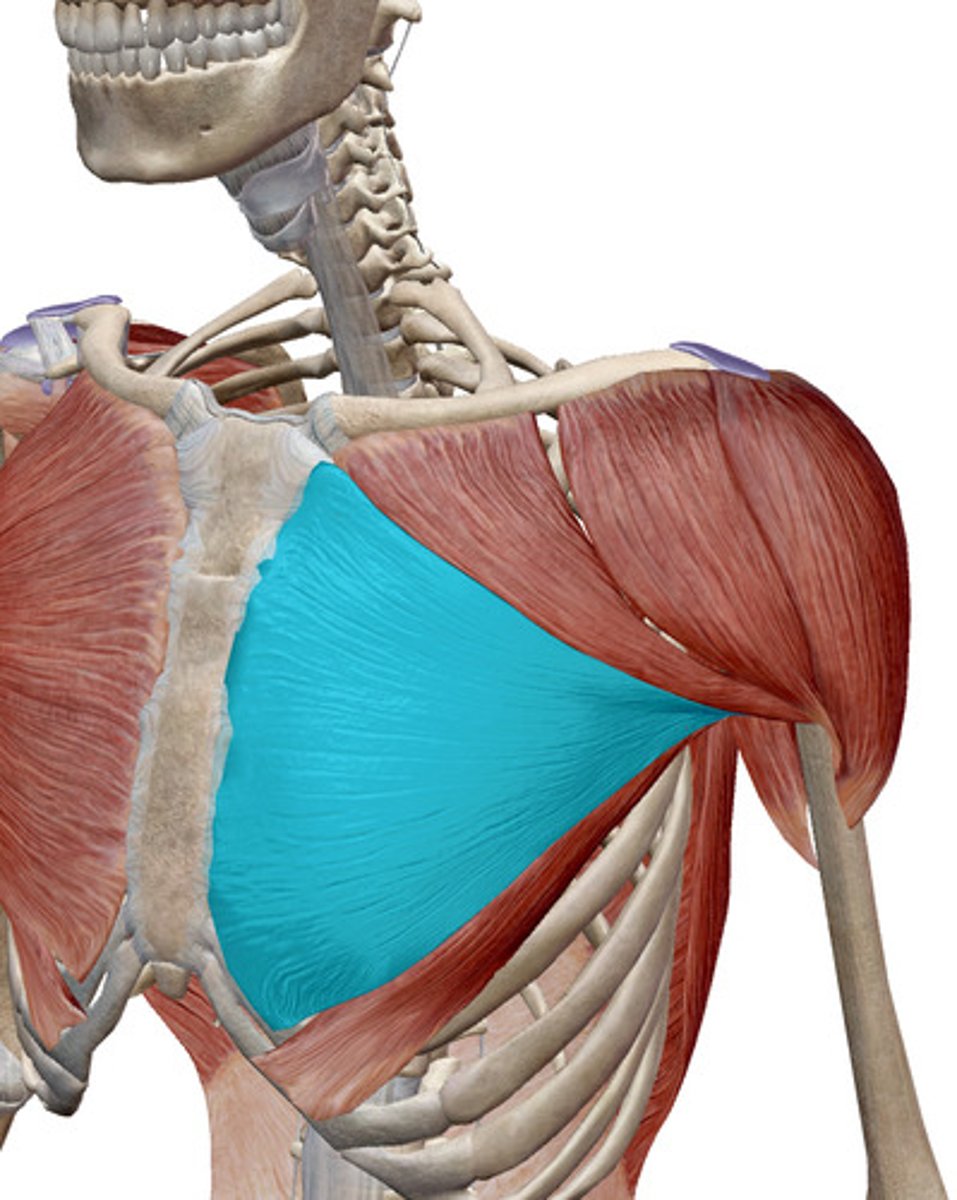
Subclavius
What muscles is this?
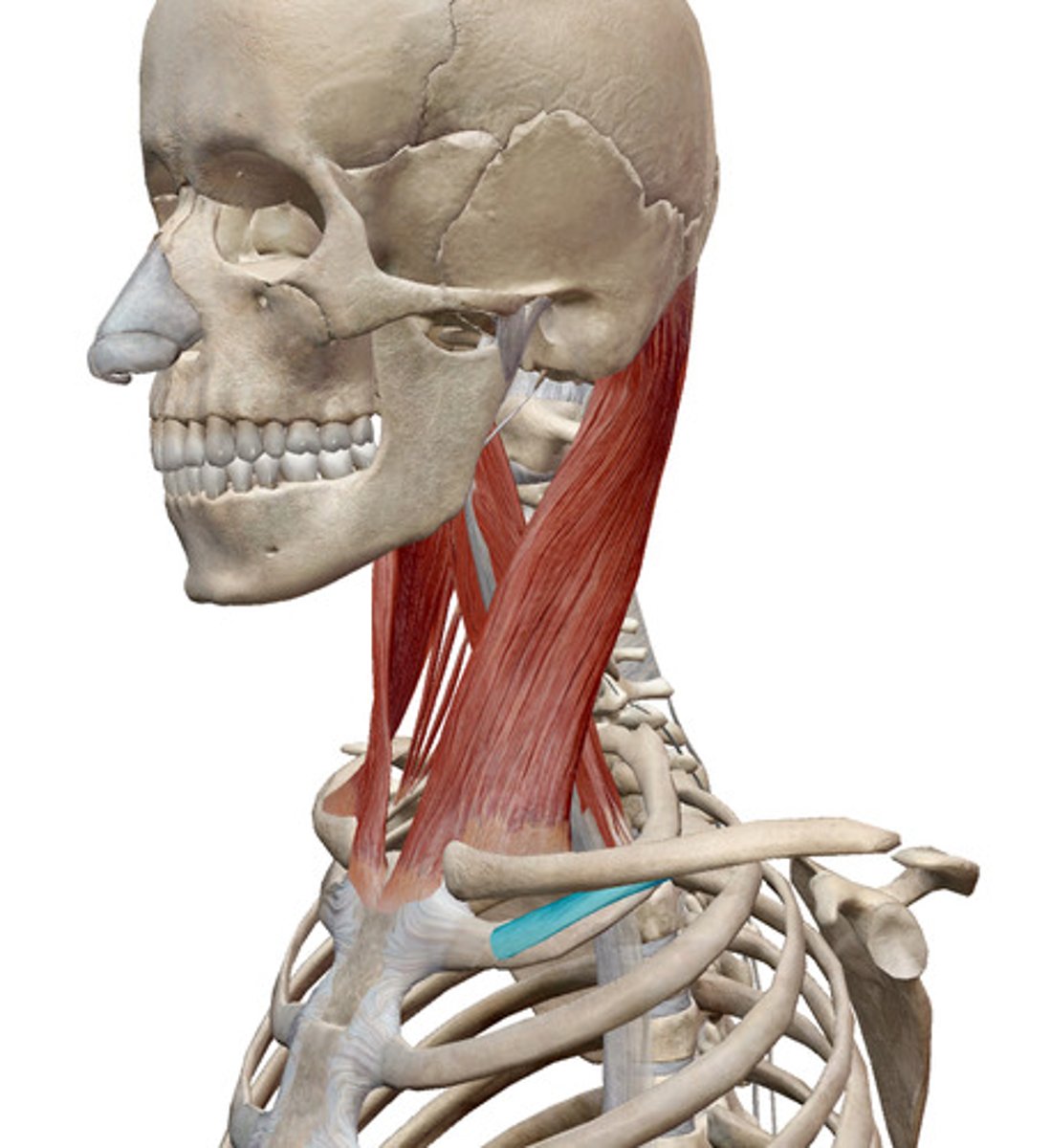
Platysma
What muscles is this?
Sternocleidomastoid
What muscles is this?
Scalenus Posterior
What muscles is this?
Scalenus Medius
What muscles is this?
Scalenus Anterior
What muscles is this?
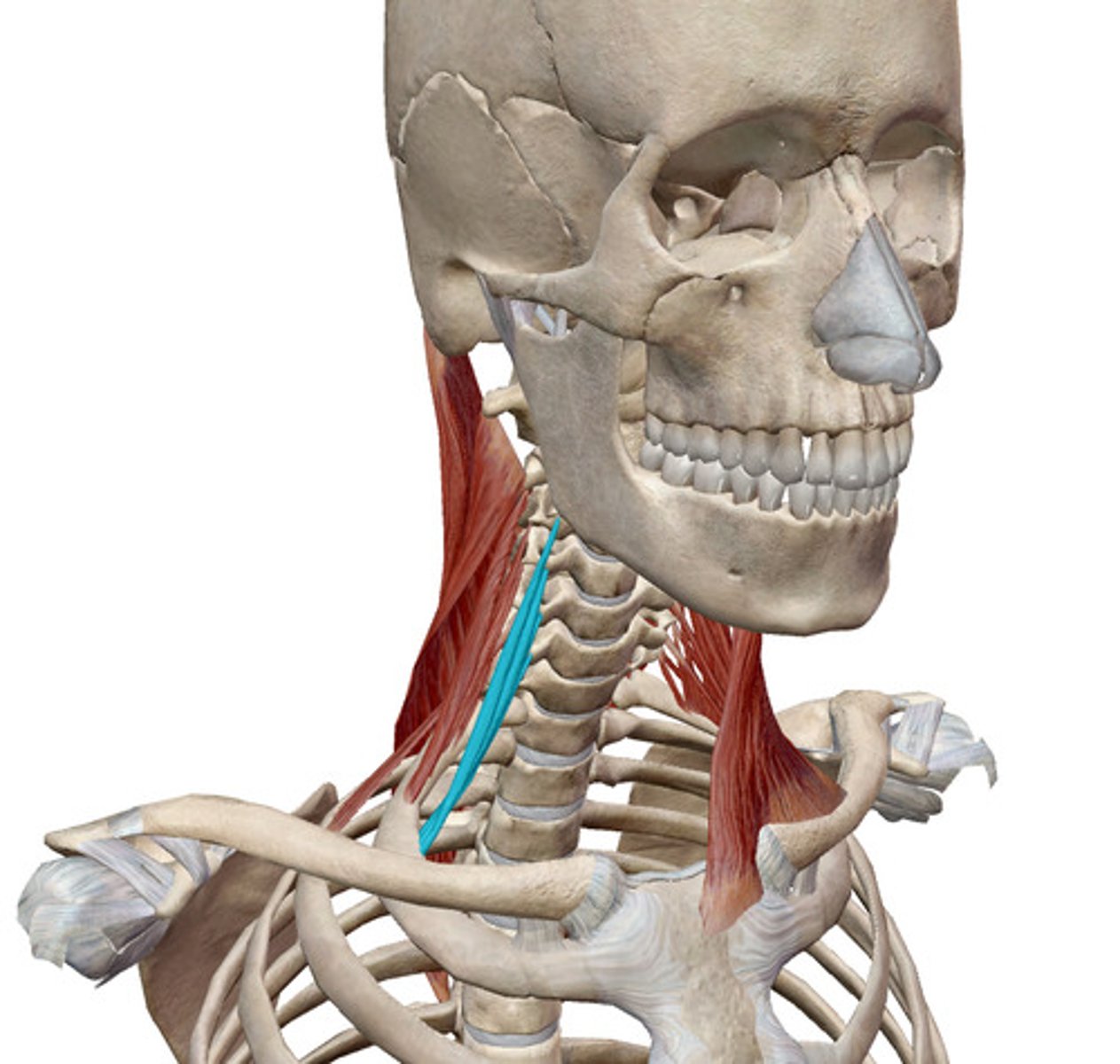
laterally flex to the same side, elevate 2nd rib
Action of scalenus posterior
fascia of deltoid and pectoralis major
Insertion of Platysma
lateral mastoid process, lateral 1/2 of superior nuchal line
Superior attachment of the sternocleidomastoid muscle
long thoracic nerve
Nerve innervation of serratus anterior
forward flexion, compress and support abdominal viscera
Bilateral action of internal oblique
internal oblique
What is 1?
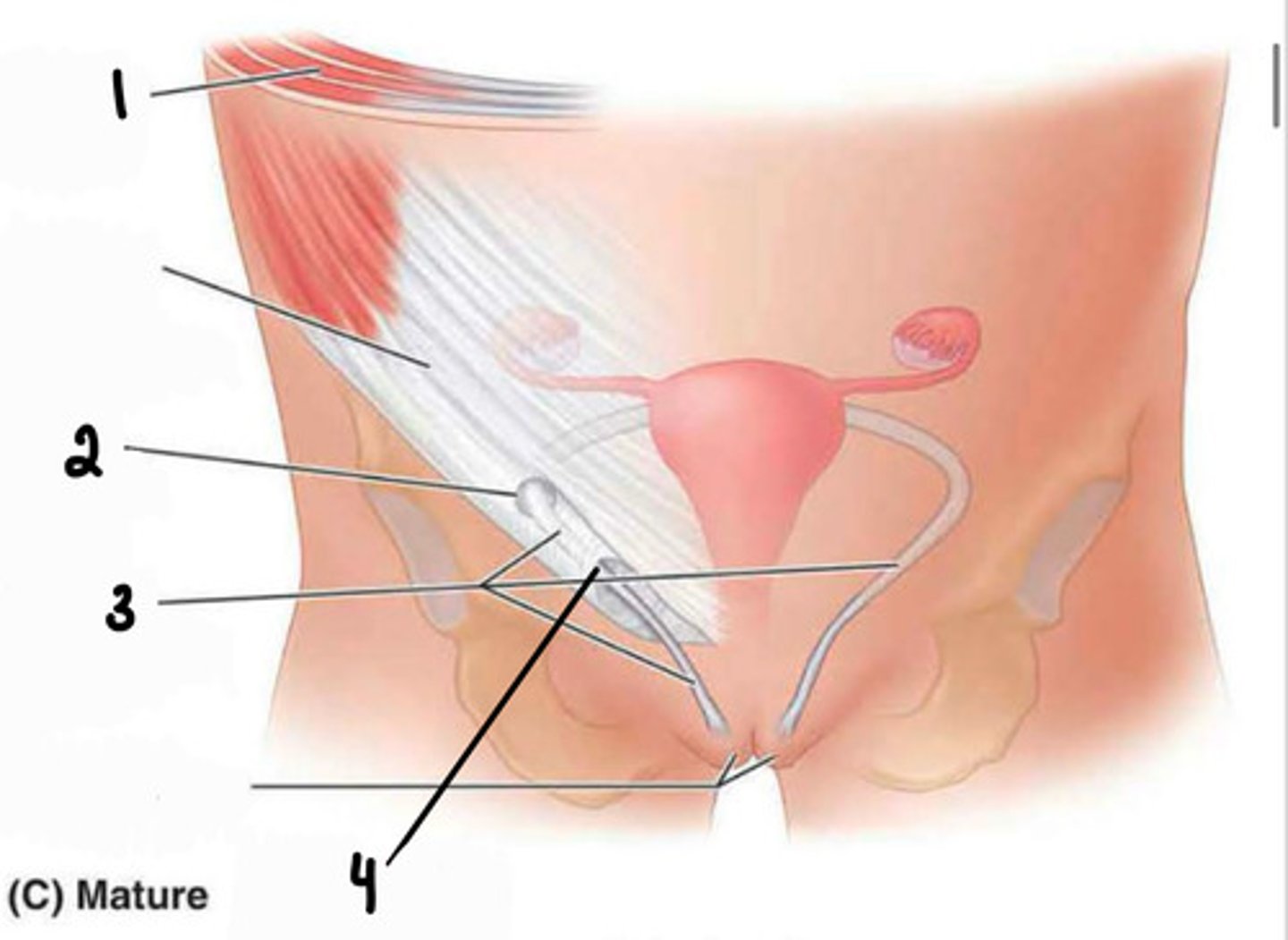
draw down corners of mouth, draw skin superiorly when teeth are clenched
Action of Platysma
anchor and depress the clavicle
Action of Subclavius
Spinal accessory (CN XI)
Nerve innervation of the sternocleidomastoid muscle
ipsilateral flexion and contralateral rotation
Unilateral action of the sternocleidomastoid muscle
chin to chest, thrust chin forward, elevate manubrium and clavicle, thrust chest
Bilateral action of the sternocleidomastoid muscle
medial 1/2 of clavicle
Proximal attachment of the pectoralis major clavicular portion
Intertubercular groove of the humerus
Distal attachment of the pectoralis major clavicular portion
lateral and medial pectoral nerve
Nerve innervation of the pectoralis major clavicular portion
flexes humerus
Action of the pectoralis major clavicular portion
sternum, superior 6 costal cartilages, external obliques
Proximal attachment of the pectoralis major sternal portion
intertubercular groove of the humerus
Distal attachment of the pectoralis major sternal portion
lateral and medial pectoral nerve
Nerve innervation of the pectoralis major sternal portion
extends humerus
Action of the pectoralis major sternal portion
ribs 3-5 near costal cartilage
Proximal attachment of the pectoralis minor
superior border of medial surface of coracoid process of scapula
Distal attachment of the pectoralis minor
medial pectoral nerve
Nerve innervation of the pectoralis minor
stabilize scapula, draw it inferior and anterior to the thoracic wall
Action of the pectoralis minor
inferior border of the rib above
Superior attachment of the external intercostal muscles
superior border of the rib below
Inferior attachment of the external intercostal muscles
intercostal nerve
Nerve innervation of the external intercostal muscles
elevates ribs with forces expiration
Action of the the external intercostal muscles
inferior border of the rib above (from sternum to the angle of the rib)
Superior attachment of the internal intercostal muscles
superior border of the rib below
Inferior attachment of the internal intercostal muscles
intercostal nerve
Nerve innervation of the internal intercostal muscles
active with forced respirations
Action of the internal intercostal muscles
external surface of ribs 1-8
Proximal attachment of serratus anterior
inferior surface of medial border of scapula
Distal attachment of serratus anterior
protracts and hold scapula against thoracic wall, rotates the scapula
Action of serratus anterior
external surfaces of ribs 5-12
Origin of external oblique
linea alba, pubic tubercle, anterior half of the iliac crest
Insertion of external oblique
thoracoabdominal nerves
Nerve innervation of external oblique
contralateral rotation, lateral flexion
Unilateral action of external oblique
forward flexion, compress and support abdominal viscera
Bilateral action of external oblique
thoracolumbar fascia, anterior 2/3 of iliac crest, lateral 1/2 of inguinal ligament
Origin of internal oblique
inferior border of the ribs 10-12, linea alba, pecten pubis via conjoint tendon
Insertion of internal oblique
thoracoabdominal
Nerve innervation of internal oblique
contralateral rotation, lateral flextion
Unilateral action of internal oblique
internal surfaces of ribs 7-12, thoracolumbar fascia, iliac crest, lateral 1/3 of inguinal ligament
Origin of transverse abdominis
linea alba with aponeurosis of IO, pecten pubis via conjoint tendon, pubic crest
Insertion of transverse abdominis
thoracoabdominal
Nerve innervation of transverse abdominis
compress and support abdominal viscera
Action of transverse abdominis
pubic tubercle an dpubic symphysis
Origin of rectus abdominis
xiphoid process and costal cartilages of ribs 5-7
Insertion of rectus abdominis
thoracoabdominal
Nerve innervation of rectus abdominis
forward flexor, compress abdominal viscera, depress ribs, stabilize pelvis tilt while walking
Action of rectus abdominis
arcuate line
What is A?
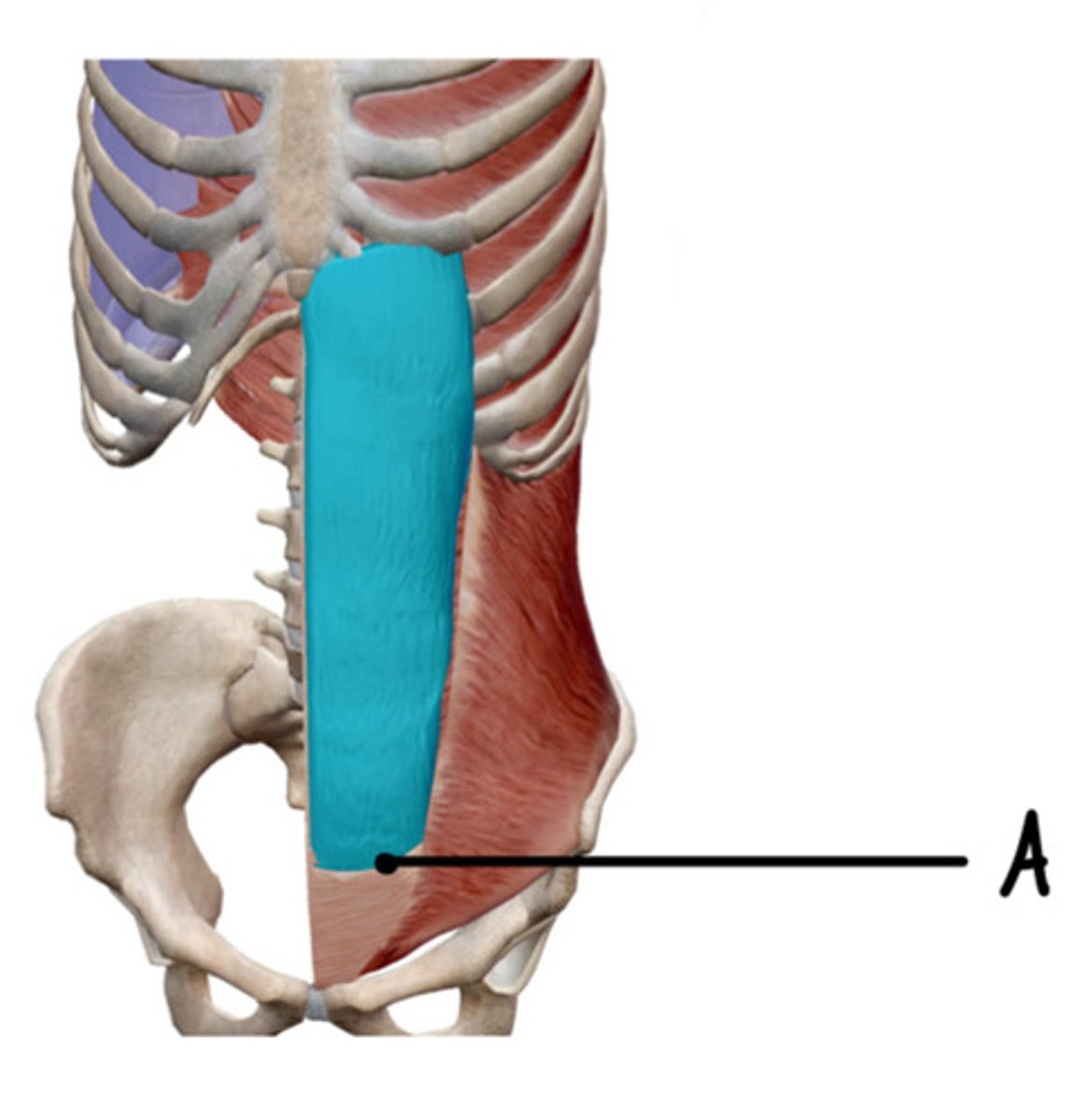
tendinous intersection
What is A?
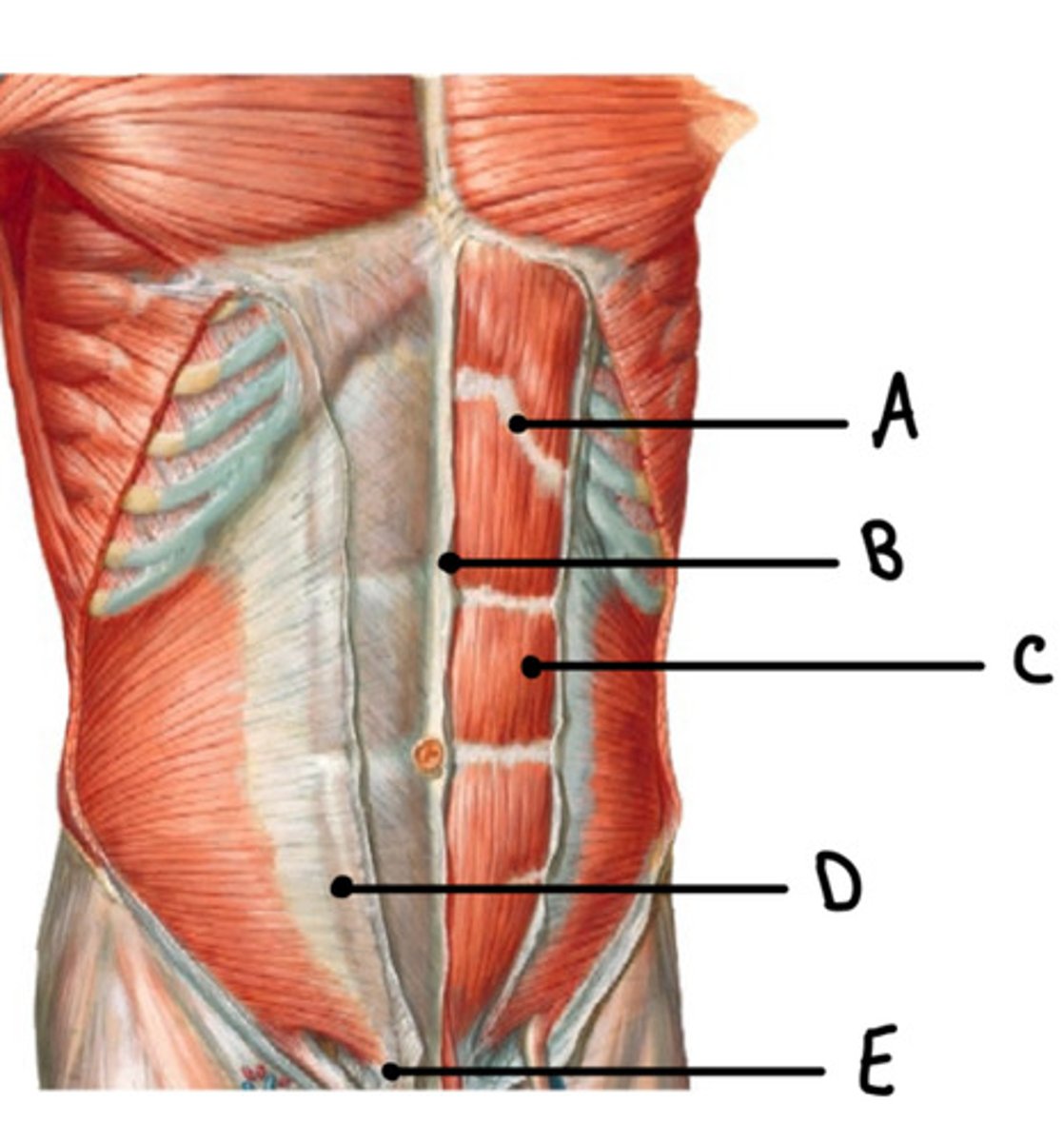
lina alba
What is B?
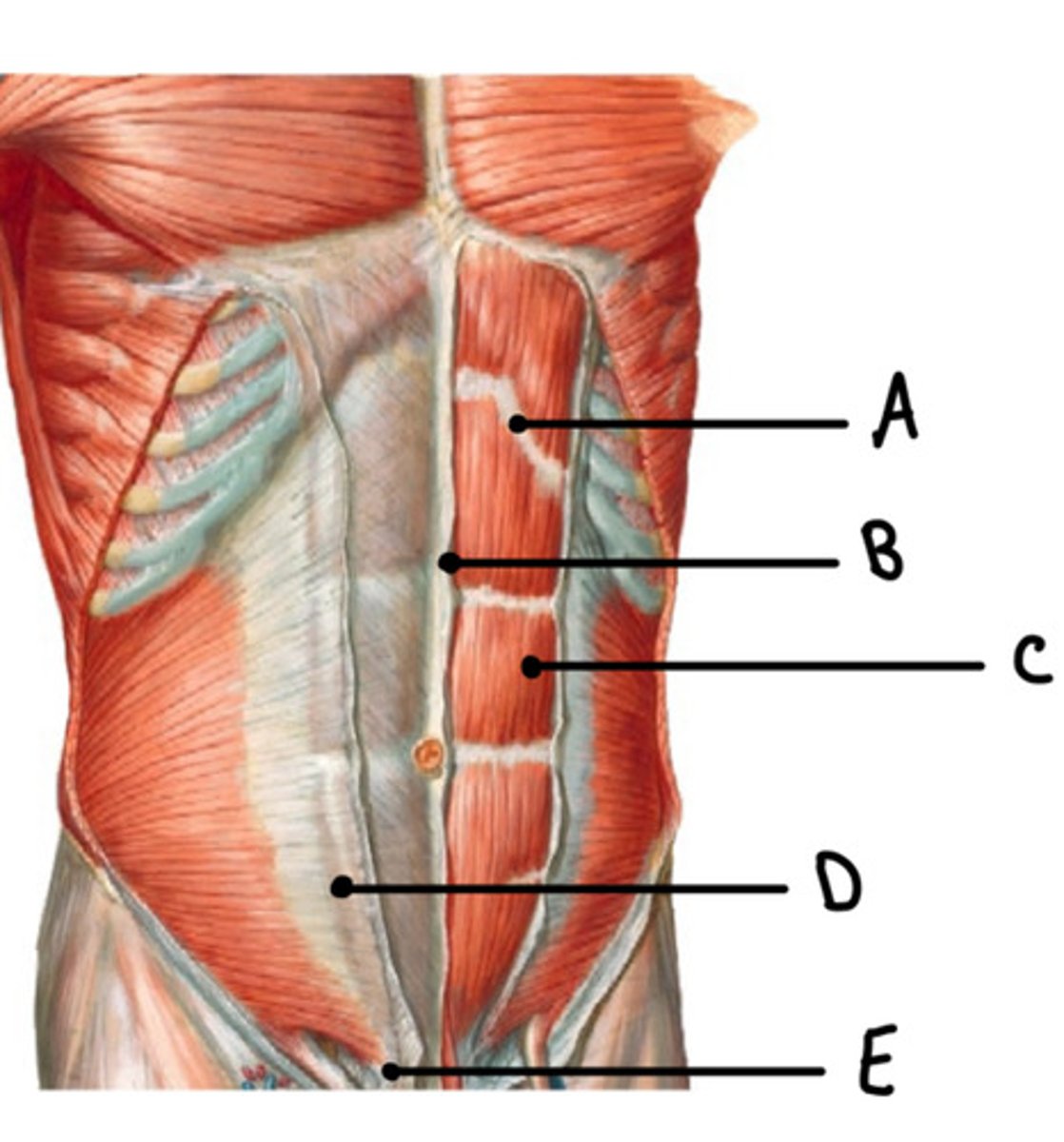
rectus sheath
What is C?
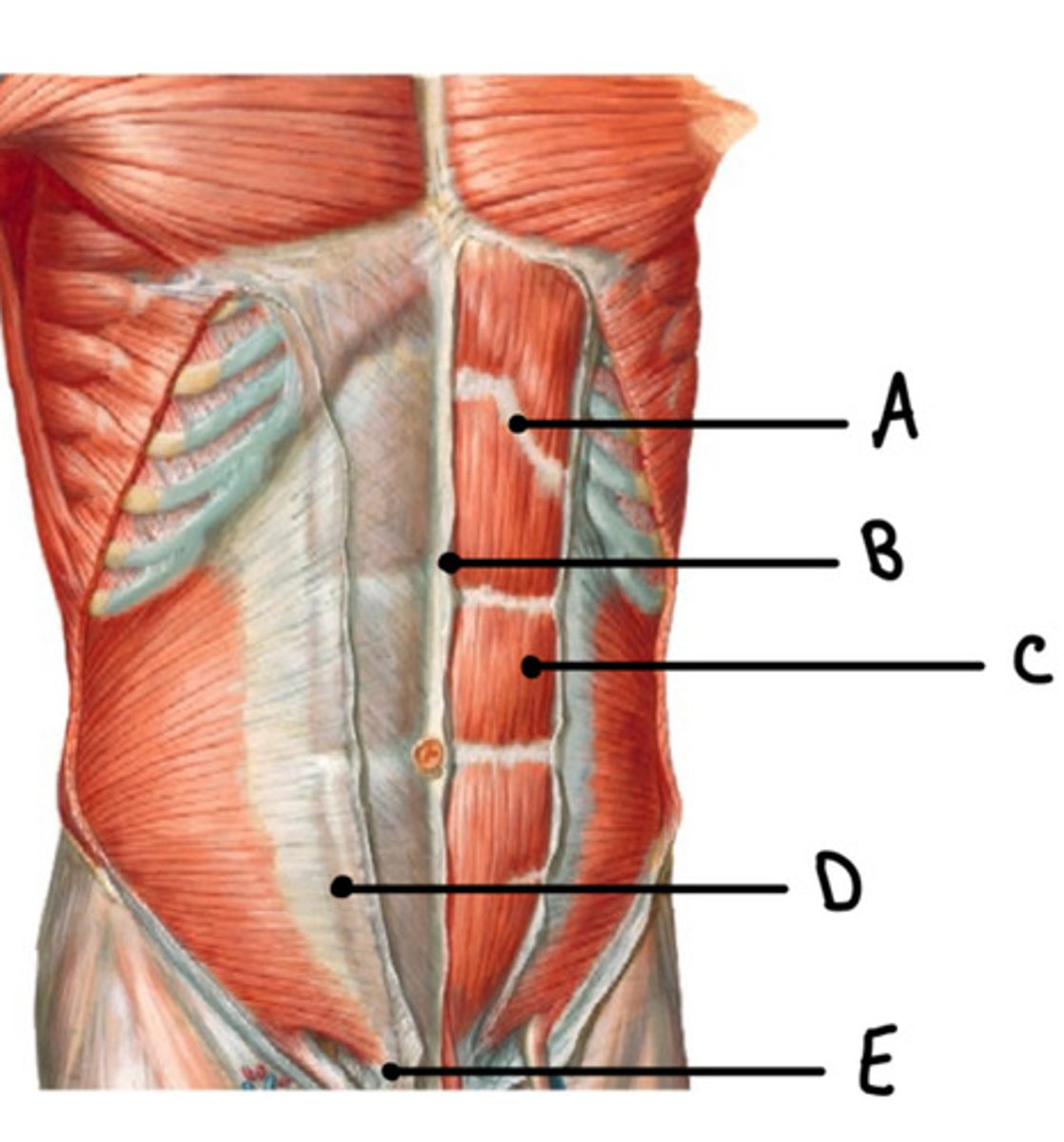
rectus sheath (aponeurosis of the external oblique)
What is D?
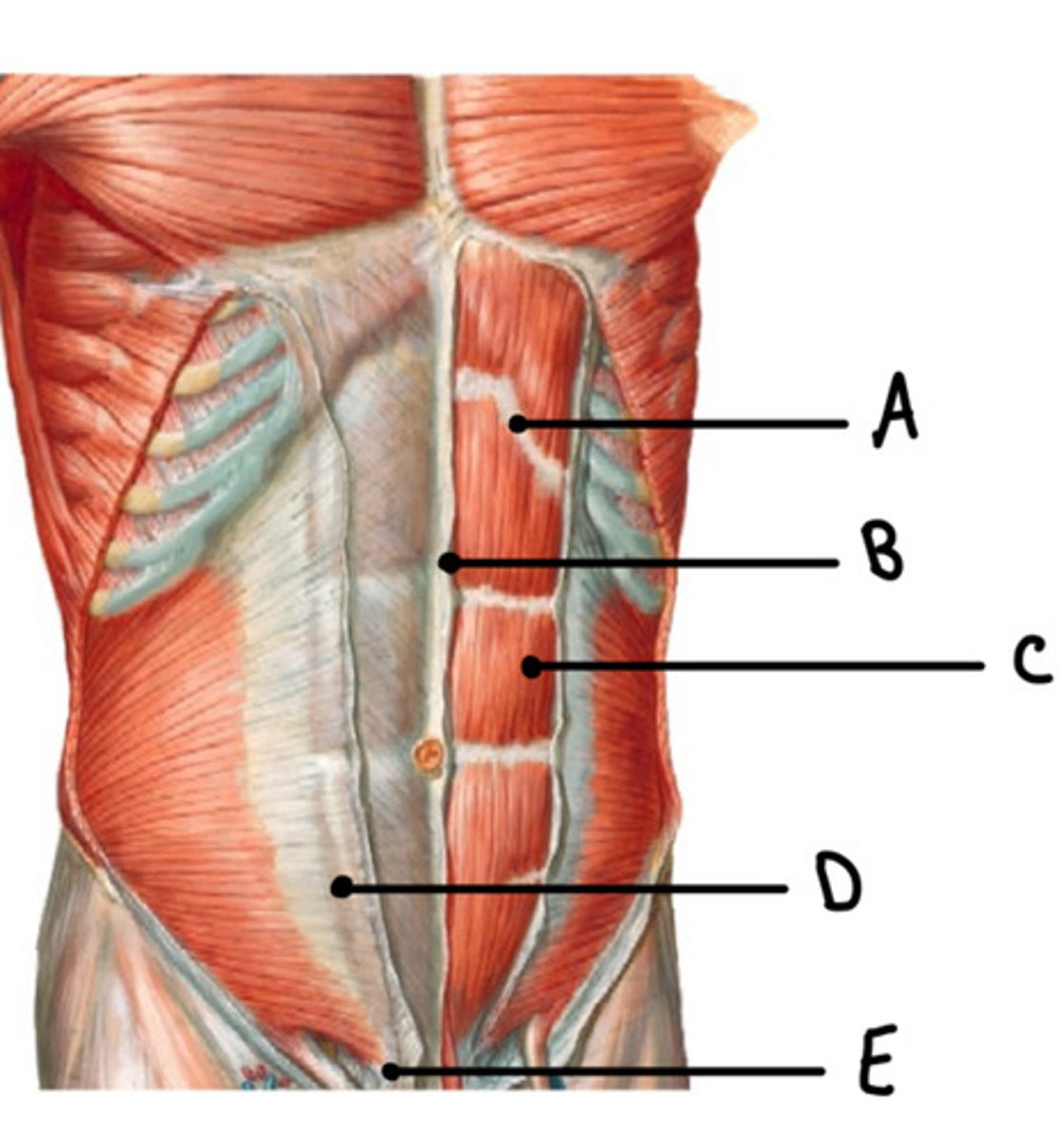
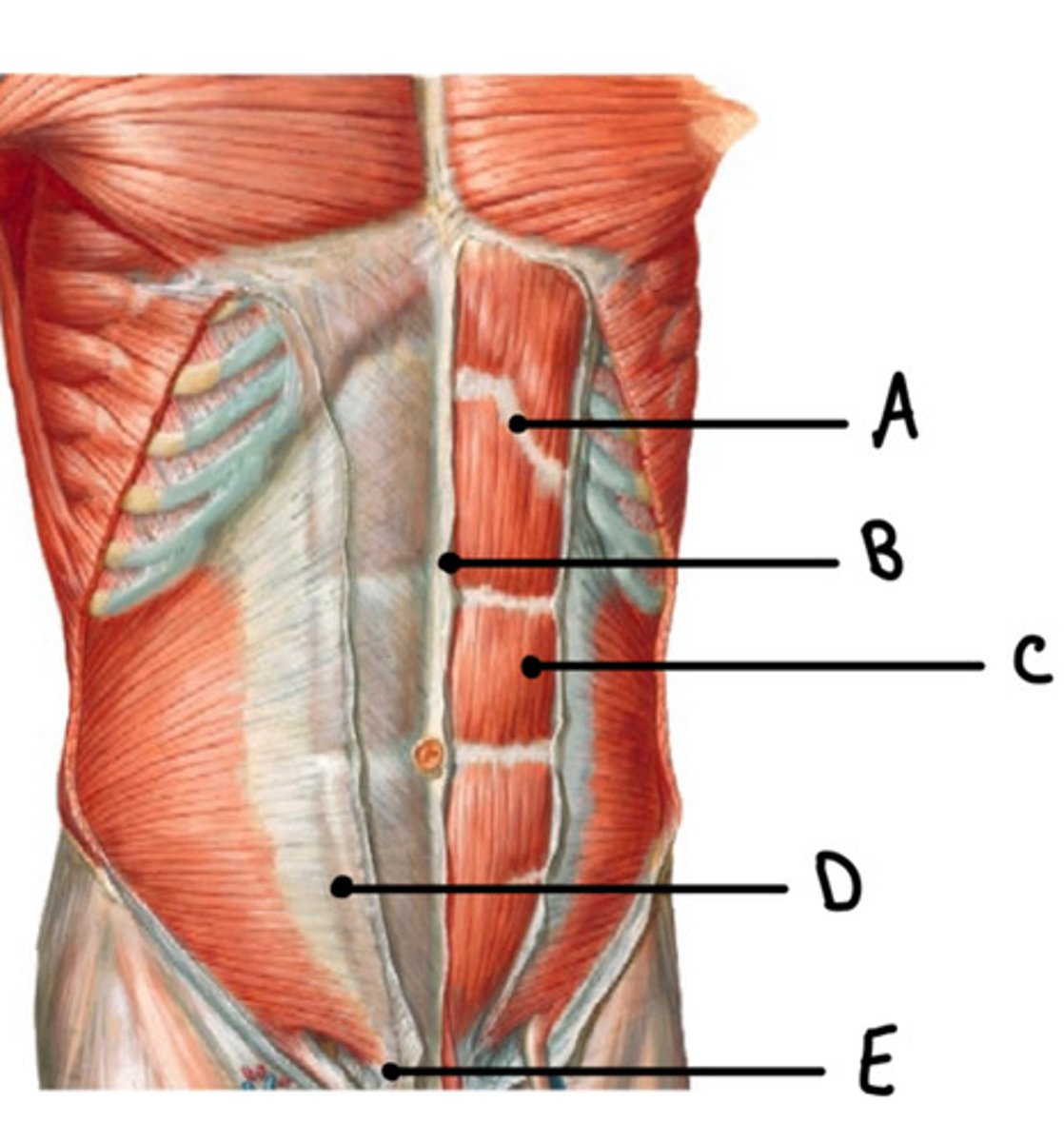
Conjoint tendon
What is E?
Stylohyoid
Digastric
Mylohyoid
Geniohyoid
What are the four suprahyoid muscles?
elevation of the hyoid bone, depression and retraction of mandible
What is the action of the suprahyoid muscles?
Sternohyoid
Sternothyroid
Thyrohyoid
Omohyoid
What are the four infrahyoid muscles?
depress the hyoid bone and mandible
What is the action of the infrahyoid muscles?
2 slps attach to posterior xiphoid
Origin of the sternal part of the diaphragm
slips attach to internal aspect of inferior 6 costal cartilages and adjoining ribs
Origin of the costal part of the diaphragm
musculotendinous bundles attaching to the anterior aspect of bodles L1-L5
Origin of the central part of the diaphragm
phrenic nerve
Nerve innervation of the diaphragm
chief muscle of inspiration, pulls down during contraction
Action of the diaphragm
Inguinal ligament
What is highlighted in blue?