MEAT SCIENCE EXAM 2
 Call Kai
 Learn
Learn Practice Test
 Spaced Repetition
 Match
Match Flashcards
 Knowt Play
1/70

Earn XP
Description and Tags
jajajjajq
Name | Mastery | Learn | Test | Matching | Spaced | Call with Kai |
|---|
No analytics yet
Send a link to your students to track their progress
71 Terms
Gases used in MAP packaging
“High Oxygen – 80% oxygen, 20% carbon dioxide”
“Carbon Monoxide – 0.4% carbon monoxide, 30% carbon dioxide, 69.6% nitrogen”
Antioxidants used to preserve meat color
Vitamin E and Resveratrol
Vitamin E – Prevents ______, slows conversion of myoglobin to metmyoglobin
oxidation
“Resveratrol –________… provides antioxidant and anti-inflammatory benefits”
an extract of grape
Protein responsible for meat color
MYOGLOBIN
Breakdown of lipids (3 steps)
Initiation
“Propagation
“Termination
Initiation –
abstraction of a hydrogen from a fatty acid… forming a fatty acid radical”
Propagation
fatty acid radicals continue to make more fatty acid radicals
Termination
there is nothing left to oxidize
Myoglobin states
Deoxymyoglobin
Oxymyoglobin
Metmyoglobin
Deoxymyoglobin
PURPLE
“No ligand”
Ferrous (Fe²⁺)
Oxymyoglobin
Bright red”
“Oxygen bound”
Ferrous (Fe²⁺)
Metmyoglobin
“Brown”
“H₂O bound”
Ferric (Fe³⁺)
Palatability factors
1. Tenderness
2. Flavor
3. Juiciness
5 basic tastes
Salty,
sweet,
bitter,
sour,
umami
3 components of flavor
Taste
“Aroma
“Trigeminal sensory system
Taste
five basic tastes
Aroma
combination of taste and smell
Trigeminal sensory system
detects irritants in the throat and nose
Why meat turns brown during cooking
When myoglobin is heated, it denatures
When peak tenderness is achieved
Postmortem aging – enzymes
_______ “increase over time to allow for degradation of structural proteins”
Calpains
#1 concern for consumers
Meat tenderness
Shear force testing
used to measure tenderness
An increase in ______ is strongly correlated with increased shear force values in raw meat
collagen
<3.9 = ______
tender
>4.6 = _____
tough
Vacuum packaging
PRO
extends shelf life
oxygen impermeable
Vacuum packaging
CONS
changes meat color
Overwrap
PRO
bright red color
product visibility
Overwrap
CONS
short shelf life (5–7 days)
increased bacterial growth
MAP
PROs
prolong shelf life
maintains strong color
MAP
CONS
induces lipid oxidation
(high O₂ systems)
Deoxymyoglobin
purple (no O₂)
Oxymyoglobin
bright red (O₂)
Metmyoglobin
brown (oxidized)
Low O₂ →
deoxymyoglobin
Oxygen exposure →
oxymyoglobin
Oxidation
metmyoglobin
Papain
papaya → MUSCLE
Bromelin
pinapple → collagen
Ficin
fig → muscle and collagen
pros of plant enzymes
degrade muscles and connective tissues
cons of plant enzymes
too soft or mushy
off flavors
why brahman cattle tend to be more tough
Higher concentrations of calpastatin
prevents calpains from working → less tender
Locomotion muscles
= more collagen = tougher
Support muscles
= less collagen = more tender
Purpose of resting meat
Helps retain moisture and improve eating quality after cooking
Steps of lipid oxidation
Initiation →
Propagation →
Termination
Initiation
Abstraction of a hydrogen from a fatty acid (by a free radical), forming a fatty acid radical
Propagation
Fatty acid radicals continue to make more fatty acid radicals as they “bump” into each other and oxidizing each other
Termination
There is nothing left to oxidize, so lipid oxidation slows and eventually haults
Quantitative
Looking at NUMBERSi
Instrumental color, trained panels
Qualitative
consumer panels
L values
measure lightness
black and white
a values
measures redness
green to red
b value
measure yellowness
blue to yellow
myoglobin has a ______
free binding site
VEAL (myoglobin content)
2 mg/g
Calf
4 mg/g
young beef
8 mg/g
old beef
18 mg/g
tenderness depends on
Actomyosin Effect
Background Effect
“Lubrication” Effect
locomotion muscles
chuck and round
support muscles
rib and loin
_____ animals have a greater amount mature collagen crosslinks
Older
When ______ denatures it shrinks the sarcomere in diameter.
myosin
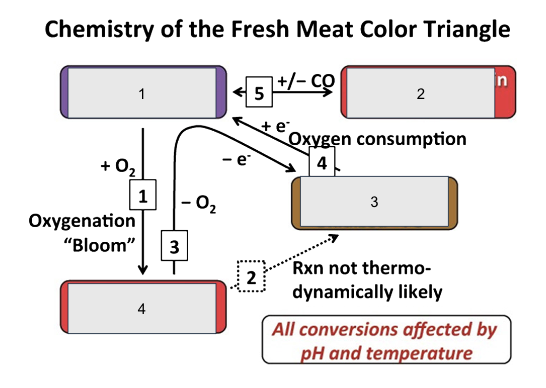
1
Deoxymyoglobin (Fe2+)
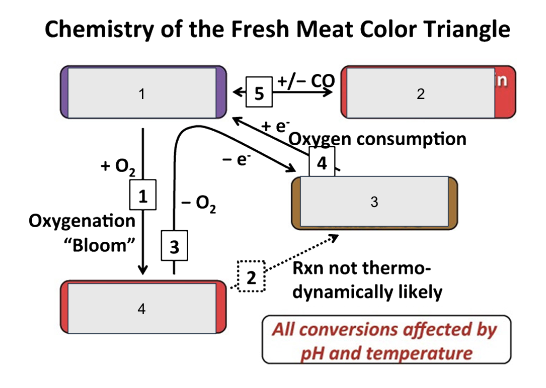
2
carboxymyoglobin (Fe2+)
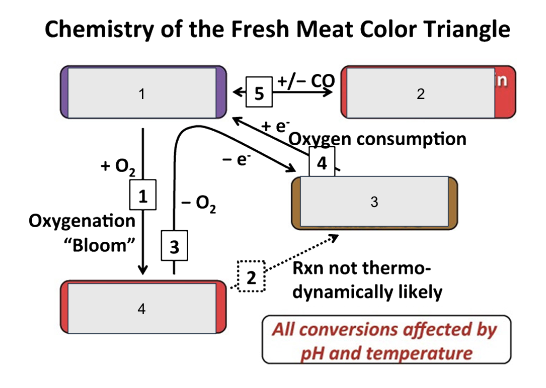
3
metmyoglobin (-Fe3+)
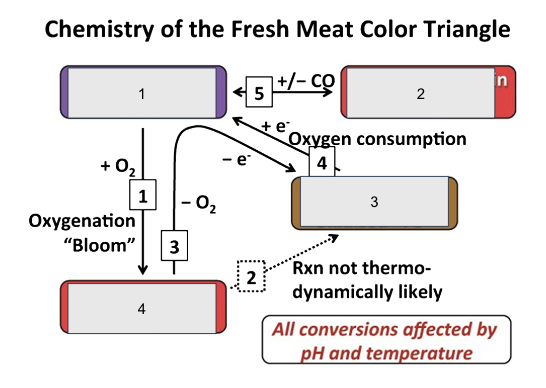
4
Oxymyoglobin (Fe2+)