NUTR 14 (test review)
 Call Kai
 Learn
Learn Practice Test
 Spaced Repetition
 Match
Match Flashcards
 Knowt Play
1/38

There's no tags or description
Looks like no tags are added yet.
Name | Mastery | Learn | Test | Matching | Spaced | Call with Kai |
|---|
No analytics yet
Send a link to your students to track their progress
39 Terms
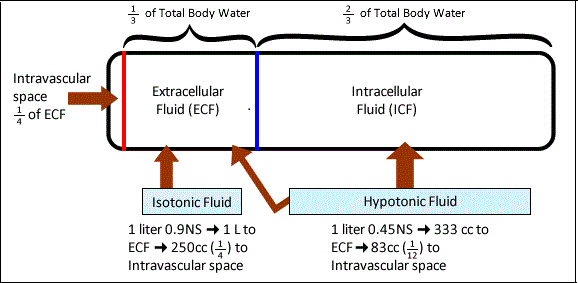
Intracellular fluid (ICF) is located inside cells, containing high concentrations of
potassium (K+), magnesium (Mg 2+), phosphate (PO43-), sulfate (SO42-)
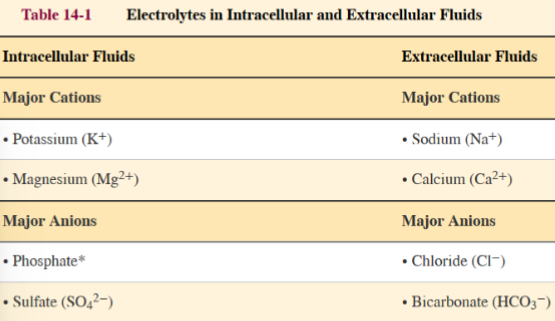
extracellular fluid (ECF) outside cells located in spaces between cells, rich in
sodium (Na+), Calcium (Ca2+), chloride (Cl-), bicarbonate (HCO3-)
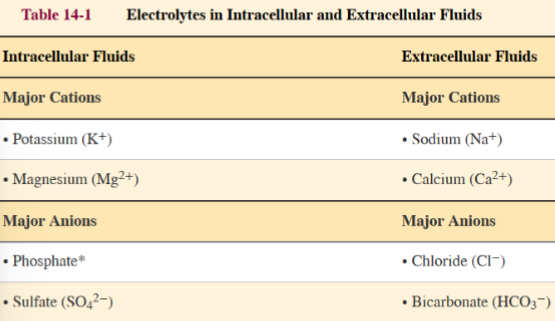
functions of water?
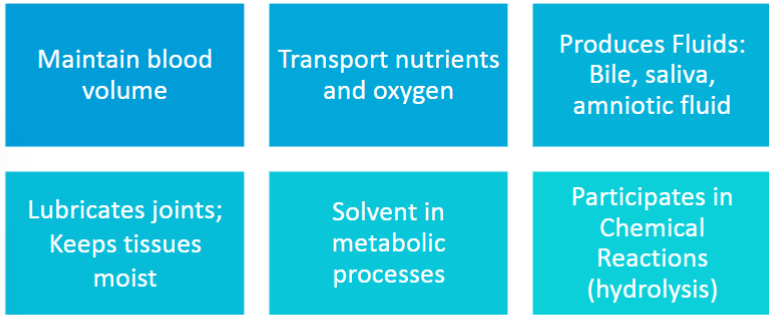
How much of the human body is composed of water, and how does this differ by tissue type?
~55% of adult’s body weight is water
lean ppl have higher % of water than ppl with more body fat
Renin?
released by kidneys when blood pressure drops
renin →
angiotensinogen → angiotensin I → angiotensin II
angiotensin II causes…
constriction of blood vessels and release of aldosterone (from adrenal gland)
functions of antidiuretic hormone (ADH) in regulating water balance?
ADH (antidiuretic hormone) tells kidneys to reabsorb more water
increase blood volume
reduce urine output
amenorrhea =
absence of menstrual periods
amenorrhea indicates low estrogen levels and estrogen is important for…
risk factor of…
maintaining bone density
osteoporosis (bone disease)
Hyperkalemia:
high level of potassium
Hypernatremia
High level of sodium (dehydration or excessive salt intake)
Hyponatremia
Low level of sodium (excessive water overwhelm kidney = dilution of sodium)
magnesium deficiency often caused by conditions that lead to
excessive fluid and electrolyte loss (GI disorders that involve prolonged diarrhea or vomiting)
consequences to magnesium deficiency?
osteopenia (mildly reduced bone capacity) or osteoporosis (severe bone loss)
Potassium-rich foods include…
leafy greens (spinach), root vegetables (potatoes), beans, fruits, fish (salmon)
Magnesium-rich foods include…
plants products (whole grains, beans)
Aldosterone released from the adrenal glands when…
potassium is high (hyperkalemia) or sodium is low (hyponatremia) or blood pressure/volume drops
What is the function of aldosterone in fluid, electrolyte, blood pressure balance
Causes kidneys to retain sodium and chloride = more water retention
What body part regulate potassium?
kidneys
Hormones (like aldosterone) help control potassium levels by
increasing sodium reabsorption (body keeps salt and water → helps blood pressure) and increasing potassium excretion (kidneys dump potassium into urine)
American Heart Associate recommend limit of 1500 mg sodium per day for….
African Americans, people aged 51 or above, people with chronic conditions (high-risk groups)
normal and elevated blood pressure?
Normal: <120/80
Elevated: 120–129 / <80
other than normal and elevated, whats the blood pressure ranges and classifications:
Hypertension Stage 1 (HTN I): 130–139 / 80–89
HTN II: ≥140 / ≥90
organs are affected by prolonged hypertension?
heart, brain, kidneys, eyes
increased risk of hypertension =
nearly __ adults has hypertension
high sodium
1 in 3
average US intake of sodium =
daily value of sodium =
sodium content of table salt (NaCl)?
around 3400 mg/day
2300 mg
40%
overall functions of minearls?
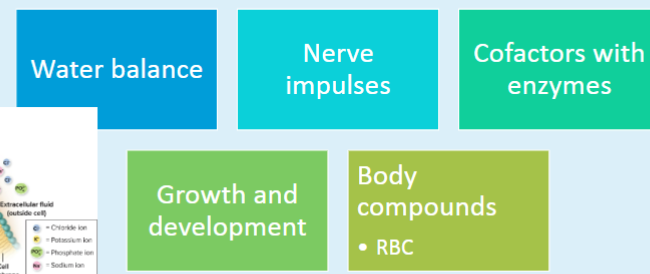
minerals most involved in regulating fluid and electrolyte balance?
sodium, potassium, chloride, phosphate
role of sodium?
conduct nerve impulses in nerve impulse transmission
locations of sodium excretion?
kidneys, sweat (skin), feces (gastrointestinal tract)
excess of potassium excreted in?
urine
unlike vitamins, minerals are ___ elements that cannot be ___ by _____
(hint: minerals leach into water)
inorganic (lack C-H bonds)
destroyed
heat, light, acid
Populations that are in higher needs of calcium?
What affects calcium bioavailability?
teens, pregnant women, older adults
absorption affected by vitamin D (required for calcium homeostatis), age, diet
calcium vs magnesium in bone health and development
calcium build and maintains bones and teeth
magnesium supports bone structure and helps activate vitamin D
Which populations have higher absorption rates of calcium?
children (growing phase) and pregnant women
Which compartment holds the most body water?
intracellular fluid (2/3)
calcium RDA for adults (19-50) and adolescents (9-18)?
adults: 1000 mg
adolescents: 1300 mg
calcium UL for adults (19-50) and adolescents (9-18)?
adults: 2500 mg UL
children: 3000 mg UL