Brainstem and cranial nerves
 Call Kai
 Learn
Learn Practice Test
 Spaced Repetition
 Match
Match Flashcards
 Knowt Play
1/90

There's no tags or description
Looks like no tags are added yet.
Name | Mastery | Learn | Test | Matching | Spaced | Call with Kai |
|---|
No analytics yet
Send a link to your students to track their progress
91 Terms
the only nerve that exits dorsally
trochlear nerve (CN IV)
optic nerve?
CN II
CN II?
optic nerve
oculomotor nerve?
CN III
CN III?
oculomotor nerve
trochlear nerve?
CN IV
CN IV?
trochlear nerve
trigeminal nerve?
CN V
CN V?
trigeminal nerve
abducens nerve?
CN VI
CN VI?
abducens nerve
facial nerve?
CN VII
CN VIII
vestibulocochlear nerve
glossopharyngeal nerve?
CN IX
CN IX?
glossopharyngeal nerve
vagus nerve?
CN X
CN X?
vagus nerve
hypoglossal nerve?
CN XII
CN XII?
hypoglossal nerve
spinal accesory nerve?
CN XI
CN XI?
spinal accessory nerve
CN I Olfactory nerve responsible for
ipsilateral smell
anosmia
loss of smell, associated with aging/dementia
olfaction is the only tract that crosses thru —
thalamus, before cortex
— is the only tract that crosses thru the thalamus
olfaction
axons of mitral cells in olfactory bulb project directly to — — and —
piriform cortex, amygdala (memory/emotion)
CNII optic nerve
axons of retinal ganglion cells
gives visual acuity
light-based responses/perceptions
retinal ganglion cells send their axons from the retina to the — — —, — —, and — —
lateral geniculate nucleus, superior colliculus, pretectal area
lateral geniculate nucleus (LGN)
path for visual info to reach cortex
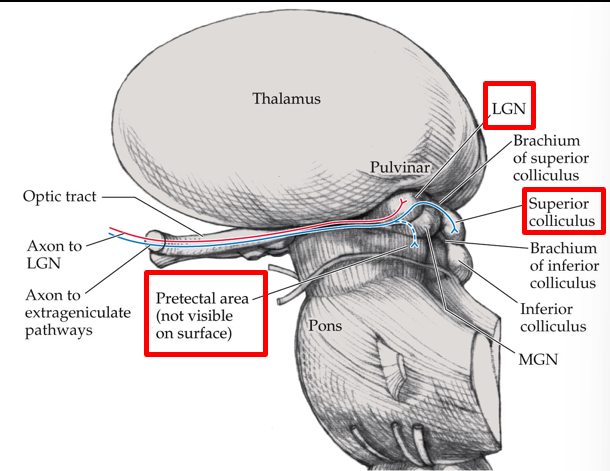
superior colliculus (SC)
involved in directing eye movements
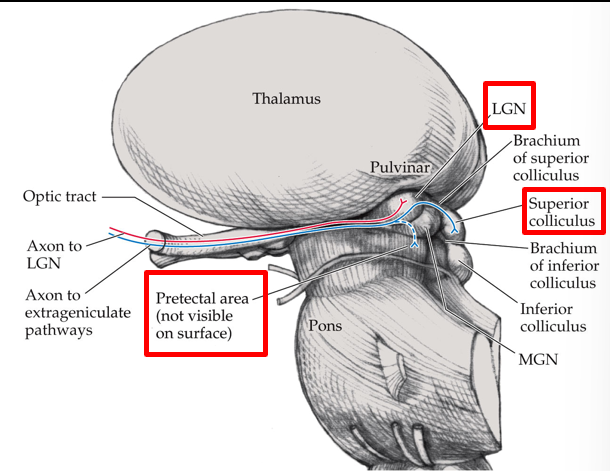
pretectal area
involved in pupillary eye reflex (and other functions)
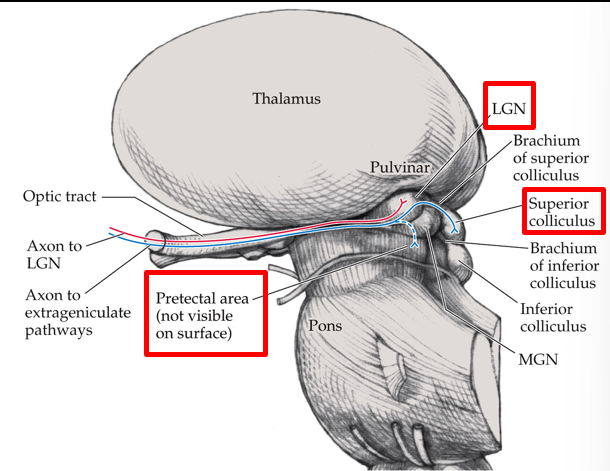
what area is involved in pupillary eye reflex
pretectal area
what area is involved in directing eye movements
superior colliculus
what is the nucleus responsible for transferring visual info (retina) to the visual cortex?
lateral geniculate nucleus
the optic chiasm sits right in front of what gland
pituitary gland
if the patient has pituitry issues whats first thing checked
temporal receptive fields
the extrinsic muscles of eye innervated by what 3 nerves
CN III (oculomotor) IV (trochlear) VI (abducens)
adduct
move medially
abduct
move eye temporal
intorsion
rotate upper pole of eye nasally
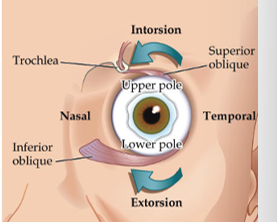
extorsion
rotate upper pole of eye temporally
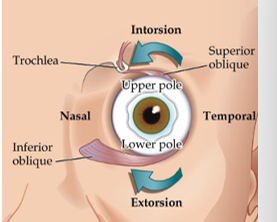
yoking
the coordinated complementary movements of both eyes to avoid diplopia
what is the coord complementary movements of both eyes to avoid diplopia
yoking
CN III oculomotor nerve
moves all extraocular muscles (also elevates eyelid) except superior oblique/lateral rectus
parasymp to pupil constrictor/ciliary muscles for near vision
sign of oculomotor palsy
dilated eyes/unable to move/unable to constrict
eyeball drift down and out, ptosis
cranial nerve III does not innervate
lateral rectus, superior oblique
trochlear nerve CN IV
superior oblique, causes depression and intorsion of eye
because the trochlear nerve exits from the back, what are characteristics
extremely thin and long, easily damaged
trochlear palsy signs
head tilt towards side, eye shoots up towards it
abducens nerve CN VI
lateral rectus, abduction of eye
6th nerve palsy
eye does not go fully to side of lesion
edinger-westphal
parasymp nucleus for pupil constriction
medial longitudinal fasciculus
interconnects eye motor nuclei
crit for yoking eye muscles
MLF syndrome
aka internuclear ophthalmoplegia, lesion in MLF, issues with yoking
anisocoria
condition characterized by an unequal size of the eyes’ pupils
CN V trigeminal nerve
sens of touch, pain, temp, joing pos, vibration of face, moth, anterior 2/3 of tongue, nasal sinuses, meninges
muscles of mastication (jaw) and tensor tympani muscle, mouth anterior 2/3 of tonue/nasal sinuses
trigeminal neuralgia (tic douloureux)
intense pain gen from CNV, ukn cause
pain and temp primary sensory neurons are located in the — — and then project to — — to then join the — —
trigeminal ganglion, Lissauer’s tract, anterolateral system
fine touch synapses on — — — of V, which crosses and joins — —
main sensory nucleus of V, joins medial lemniscus
facial nerve VII functions
facial expression muscles/stapedius muscle/part of digastric muscle
parasymp to lacrimal glands/sublingual/submandibular/all salviary glands except parotid
taste from anterior 2/3 of tongue
sensation from small region near external auditory meatus
facial nerve (VII) stapedius muscles helps
dampen sounds
damage to stapedius muscle causes
hyperacusis
upper motor neuron lesions of the facial muscle nerves tend to spare the top of the face from paralysis. why?
upper facial motor nucleus is bilaterally innervated
if right motor cortex damage, can we raise left eyebrow
yes bc still innervated by other side
anything below the eye is inneervated by
opposite side
muscle groups spared in bell’s palsy
extraocular (CN III, IV, VI)
does bell’s palsy target umn or lmn?
lmn CN VIII
bell’s palsy vs stroke
stoke: full body with neuro signs (can still move eyebrows)
bells: only paralysis of face
what nerve control eyelids
cn III and VII
which nerve closes eye
VIIwh
which nerve opens eye
III
bogorad’s syndrome (crocodile tears syndrome)
motor dyskinesis— instead of making saliva makes tears (facial nerve issue)
vestibulochochlear nerve VIII function
hearing/vestibular
one common cause of vertigo
debris from otoliths settling on hair cells in vestibule
epley maneuver is used for
used to treat paroxysmal positional vertigo
hearing loss in one ear is due to lesions in
nerve level instead of cns
glossopharyngeal nerve IX fucntokn
motor: stylopharyngeus
parasymp: parotid gland
sens: middle ear, meatus, parynx (gag)
special sens: posterior 1/3 tongue taste/sensation
chemo/baroreceptors of carotid
stylopharyngeus muscle
helps to elevate larynx and pharynx
which nerve is resp for gag reflex
CN IX, X
which nerve has no nucleus
glossoparyngeal nerve
nucleus ambiguus
cluster of motor neurons in medulla oblongada responsible for speech and sound production (IX and X)
vagus nerve X functions
motor: pharynx and larynx
parasymp: heart, lungs, digestive tract
sensory: pharynx, meninges, area near auditory meatus
special sens: taste from epiglottis/pharynx, chemo/baroreceptors of aortic arch
how is the CNX damaged
viat intubation damaging the recurrent laryngeal nerve
accessory spinal nerve XI functions
motor control upper shoulders/neck
hypoglossal nerve XII function
intrinsic muscles of tongue
damage to hypoglossal nerve XII does what
tongue points toward lesion
— is the sensory branch of gag reflex and — is motor
CNIX, CNX
nucleus solitarius
taste (received 7, 9, 10), gag
nucleus ambiguus
swallowing, speech
which brainstem nucleus controls lateral gaze
paramedian pontine reticular formation (PPRF)