Chapter 43 Active Reading Guide
 Call Kai
 Learn
Learn Practice Test
 Spaced Repetition
 Match
Match Flashcards
 Knowt Play
1/48

There's no tags or description
Looks like no tags are added yet.
Name | Mastery | Learn | Test | Matching | Spaced | Call with Kai |
|---|
No analytics yet
Send a link to your students to track their progress
49 Terms
conservation biology
the integrated study of ecology, evolutionary biology, physiology, molecular biology, and genetics to sustain biological diversity at all levels
genetic diversity
genetic variation between populations
if 1 population becomes extinct, then a species may have lose some of its genetic diversity that makes microevolution possible
impact of genetic diversity
species diversity
the number of species in an ecosystem/biosphere
extinct species
impact of species diversity
ecosystem diversity
variety of ecosystems
because of many interactions between populations of different species in an ecosystem, local extinction of one species may have a negative impact on other species in ecosystem
impact of ecosystem diversity
Genetic, species and ecosystem diversity
what are the 3 different types of biodiversity?
endangered species
is in danger of extinction throughout all or much of its range
threatened species
considered likely to become endangered in the near future
it's brought about by agriculture, urban development, mining, and pollution and destroys habitats. when no other habitat is available, species may become extinct
how does habitat loss reduce biodiversity?
can disrupt communities by preying on native organisms or outcompeting them for resources
how does introduced species reduce biodiversity?
species are over hunted to the point they face extinction
how does overexploitation reduce biodiversity?
brown tree snake, zebra mussel, kudzu
examples of introduced species
study the processes that cause extinctions once population sizes have been greatly reduced
what do conservation biologists who adopt the small-population approach study?
extinction vortex
downward population spiral in which inbreeding and genetic drift combine to cause a small population to shrink and unless the spiral is reversed, become extinct
the greater prairie chicken species decreased rapidly because of lack of fertility but increased once scientist increased genetic variation by importing 271 birds from larger populations
name one field of study that supports the idea of extinction vortex
focuses on threatened and endangered population that show a downward trend, even if the population is far above it's minimum variable population
on what type of population does the declining-population model focus?
study emphasizes the environmental factors that causes a population decline in the first place
what is the emphasis for study in the declining-population model?
there is an increase because now they have both the forest (to parasitize the nests of other birds) and open fields (where they forage on seeds and insects) available to them to thrive
describe how the increase in cowbirds is related to forest fragmentation
- promote dispersal and reduce inbreeding
- increase exchange of individuals among populations
- good for species that migrate between habitats seasonally
positive effects of movement corridors
spread disease
negative effects of movement corridors
zoned reserve
an extensive region that includes areas relatively undisturbed by humans surrounded by areas that have been changed by human activity and are used for economic gain
nitrogen is the main nutrient lost through agriculture and plowing mixes soil and speeds up decomposition of organic matter, releasing nitrogen that is then removes when crops are harvested
how has agriculture affected nitrogen cycling?
if it goes over the critical load, it will eventually leach into groundwater or into freshwater/marine ecosystems, contaminating water supplies
what are some negative consequences of nutrient enrichment?
biological magnification
process in which retained substances become more concentrated at each higher trophic level in a food chain
the biological magnification of PCBS has been found in the food web of great lakes, where concentration of PCBS in herring gull eggs at the top of the food web is nearly 5000 times that in phytoplankton at base of food web.
discuss an example of biological magnification
greenhouse effect
warming of Earth due to the atmosphere accumulation of carbon dioxide and certain other gases which absorb reflected infrared radiation and reradiate some of it back toward Earth.
the average temperature would be 18 degrees celcius -(0.4 degrees F)
what would life on Earth be like without the greenhouse effect?
burning of fossil fuels
what is contributing to the great increase in atmosphere carbon dioxide?
change the distribution of precipitation
what are the potential effects of the increase of carbon dioxide in the atmosphere
has become depleted because of the accumulation of CFC'S
how is atmosphere depleted?
can be severe for numerous species and result in skin cancer among humans
what are projects effects of atmosphere depletion?
in 1650, there were 500 million people. During the next two centuries, the population doubled to 1 billion, doubled to 2 billion by 1930, doubled to 4 billion by 1975.
summarize human population growth since 1650
demographic transition
the transition from high birth and death rates to lower birth and death rates as a country/region develops from a pre-industrial to an industrialized economic system.
death rates fall first
in demographic transition which falls first, birth or death rates?
because some countries have been industrialized while others haven't
why do infant mortality and life expectancy very so greatly between certain countries?
no because they may not have the resources available to them
can the world's population sustain and ecological footprint that is currently the average American footprint
sustainable development
development that meets the needs of people today without limiting the ability of future generations to meet their needs
biodiversity
A relatively small area with numerous endemic species and a large number of endangered and threatened species.
Biophilia
the urge to affiliate with other forms of life
ecosystem service
A function performed by an ecosystem that directly or indirectly benefits humans.
introduced species
A species moved by humans, either intentionally or accidentally, from its native location to a new geographic region; also called a non-native or exotic species.
minimum viable population (MVP)
The smallest population size at which a species is able to sustain its numbers and survive.
movement corridor
A series of small clumps or a narrow strip of quality habitat (usable by organisms) that connects otherwise isolated patches of quality habitat.
critical load
The amount of added nutrient, usually nitrogen or phosphorus, that can be absorbed by plants without damaging ecosystem integrity.
climate change
A directional change in temperature, precipitation, or other aspect of the global climate that lasts for three decades or more.
ecological footprint
The aggregate land and water area required by a person, city, or nation to produce all of the resources it consumes and to absorb all of the waste it generates.
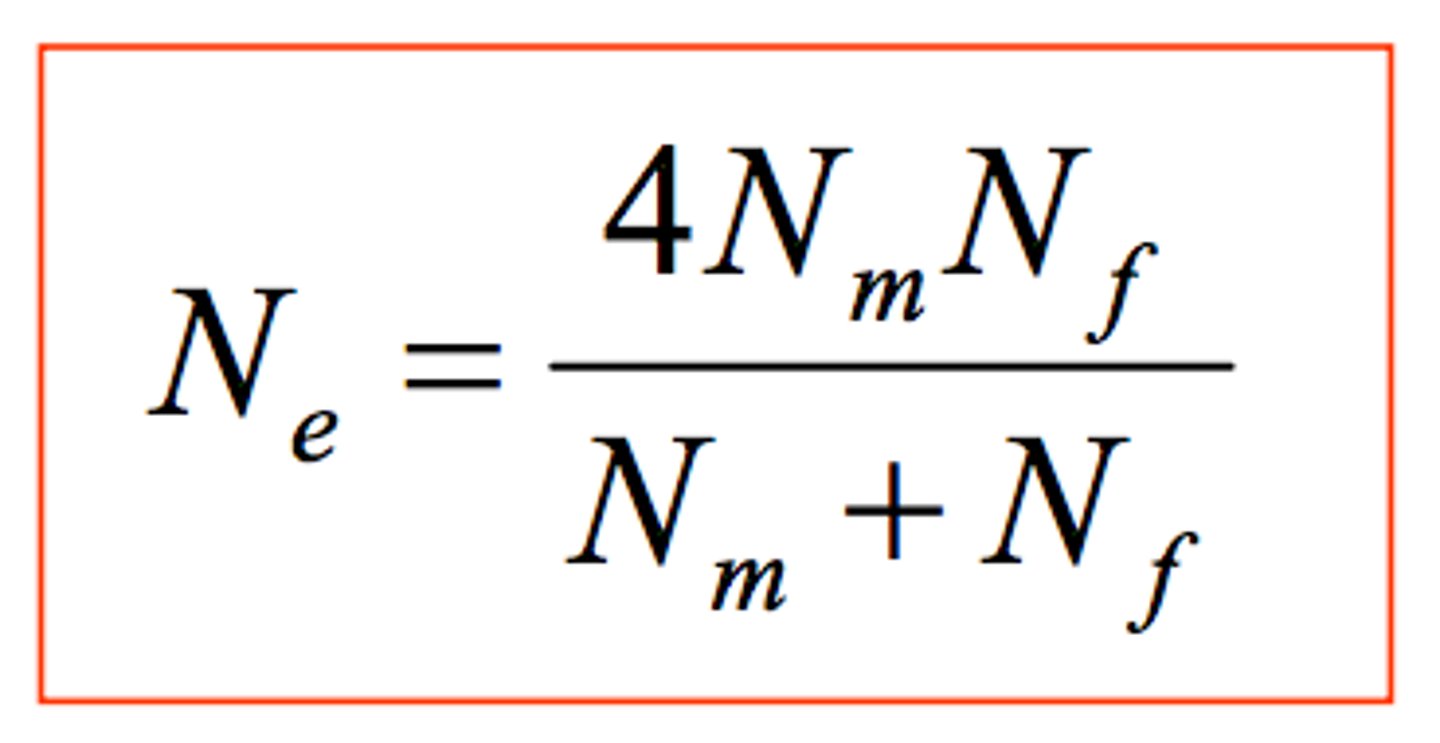
effective population size formula