nature and uses of research
 Call Kai
 Learn
Learn Practice Test
 Spaced Repetition
 Match
Match Flashcards
 Knowt Play
1/25

There's no tags or description
Looks like no tags are added yet.
Name | Mastery | Learn | Test | Matching | Spaced | Call with Kai |
|---|
No analytics yet
Send a link to your students to track their progress
26 Terms
components of a research report
- background
- results
- methods
- conclusions
background
origins of the research question and context for the study
results
presentation of the data and data analysis
methods
participant selection, intervention, instrumentation, outcome measures, etc
conclusions
how the authors believe the finding should be understood and applied to practice
more potentially applicable research artices
reference farming and citations of the article in other works
discerning credibility
- peer review
- journal quality
- author reputation
- funding source
peer review
journal editorial board and review process
journal quality
reputation and impact factor (journal citation reports)
author reputation
credentials of the primary 1st author
funding source
NIH, major private philanthropic org (grant process)
reasons for concern: study lacks clarity in -
- specific variables being studied
- rationale for conducting the study
- treatment or intervention if there is one
- number and characteristics of the subjects
- interactions of the investigator with the subjects
- the setting for the study, particularly for the collection of data
- methods used to collect data
- analysis used to determine the results
reasons for concerns questions to ask
- is the sampling appropriate
- can the study be replicated
- are there conflicts of interest
- are there signs of carelessness
a dozen questions to ask when reading research
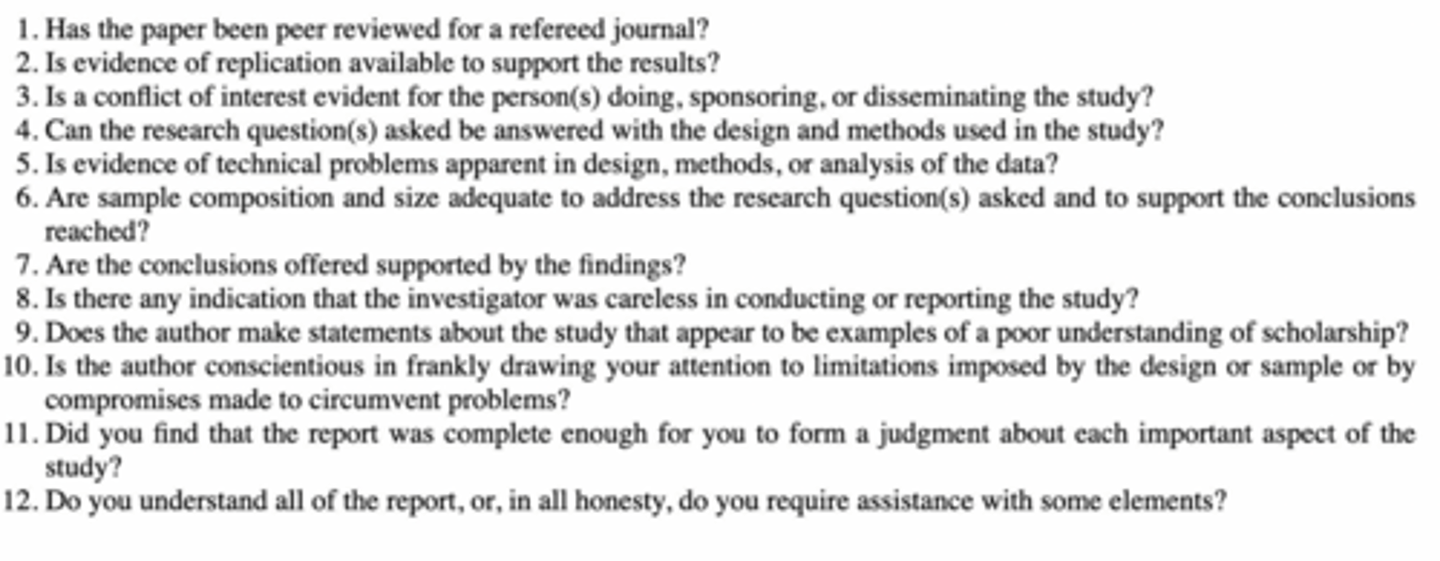
clarifying the problem
identifying the problem through clinical experience, clinical theory, professional literature
research rationale is through
review of literature, theoretical framework, purpose
research rationale: review of literature (what questions to be asked?)
- is there a systematic review or meta-analysis available?
- is the target population represented?
research rationale: theoretical framework (what questions to be asked?)
- what has been established in previous studies?
- specific to patient population? pathology?
what are the types of research?
quantitative, empirical research, qualitative
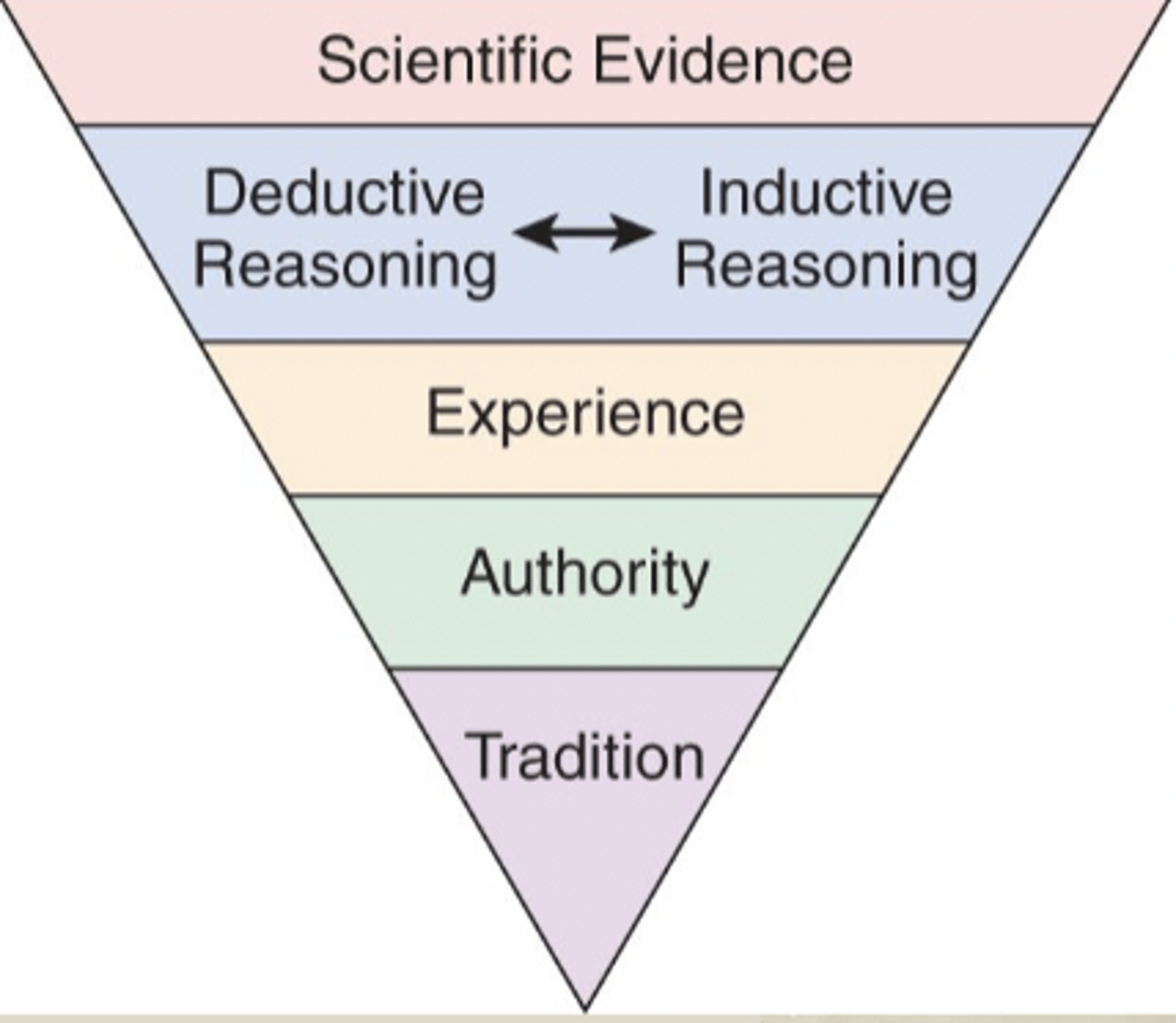
deductive reasoning
acceptance of a general premise upon which inferences can be drawn for specific cases, testable hypothesis
inductive reasoning:
begins with experiences, data gathered informs generalizations, conceptual frameworks created from emerging patterns
PICO question
P: population or problem
I: innervention
C: comparison variable
O: outcomes
PICO example
P: hospitalized patients with grade 2 or 3 pressure ulcers in intensive care
I: insulin dressing
C: normal saline dressing
O: pressure ulcer scale for healing (PUSH), a tool to measure change in pressure ulcer size, exudate amount, and tissue type over time, measured on day 1,4,7
how do we know things?
- tradition: inherited knowledge and accepted precedent
- authority: statements or beliefs or influential leaders
- experience: trial and error in your own practice
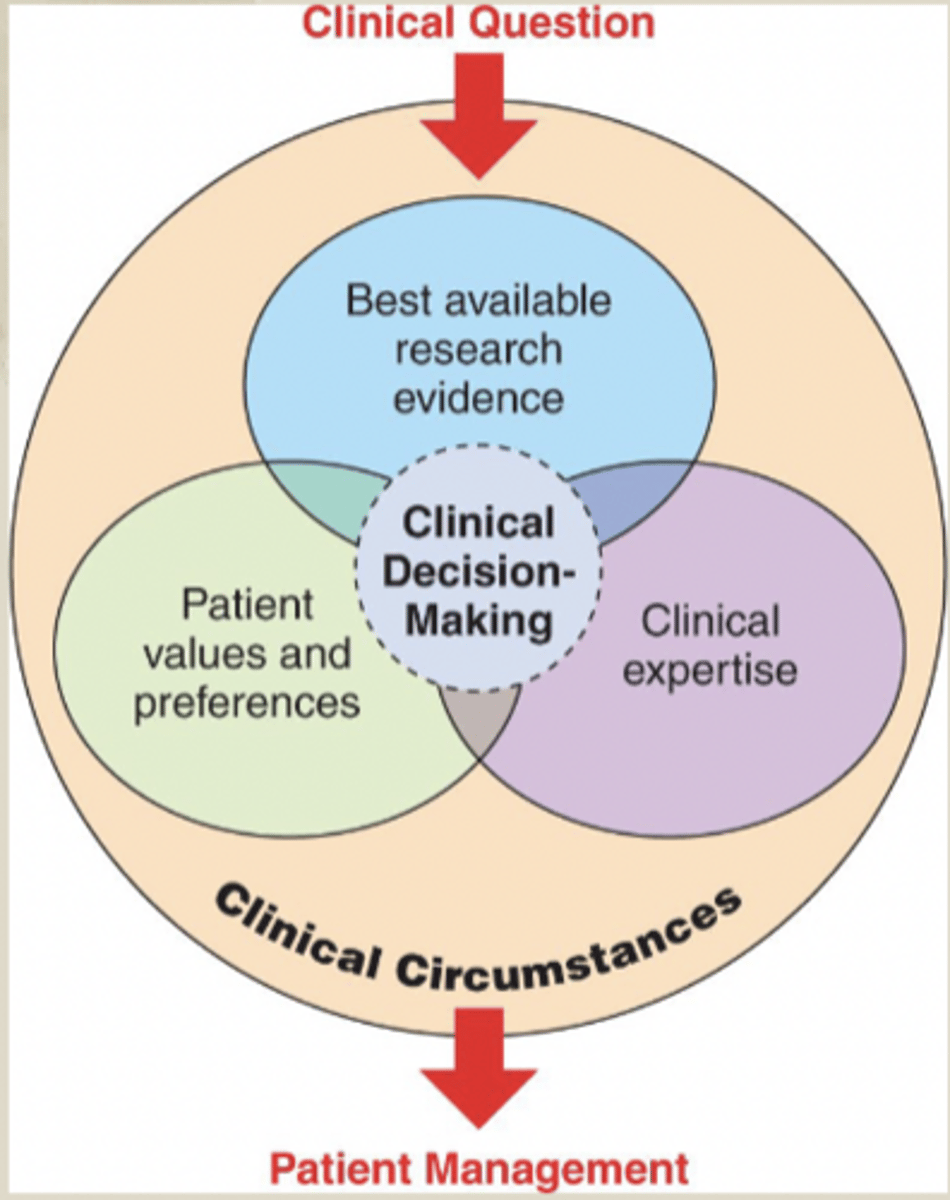
components of EBP as a framework for clinical decision making
- best available research evidence
- patient values and preferences
- clinical expertise
process of EBP
1.Ask
2. Acquire-evidence
3.Appraise-make sure not biased
4. Apply-to patient
5. Assess-check performance