Hydrophonics
 Call Kai
 Learn
Learn Practice Test
 Spaced Repetition
 Match
Match Flashcards
 Knowt Play
1/42

There's no tags or description
Looks like no tags are added yet.
Name | Mastery | Learn | Test | Matching | Spaced | Call with Kai | Chat |
|---|
No analytics yet
Send a link to your students to track their progress
43 Terms
What is hydroponics?
Hydroponics is the growing of plants without soil.
What does soil do for the plant?
Nutrients
Water
Aeration
Anchorage
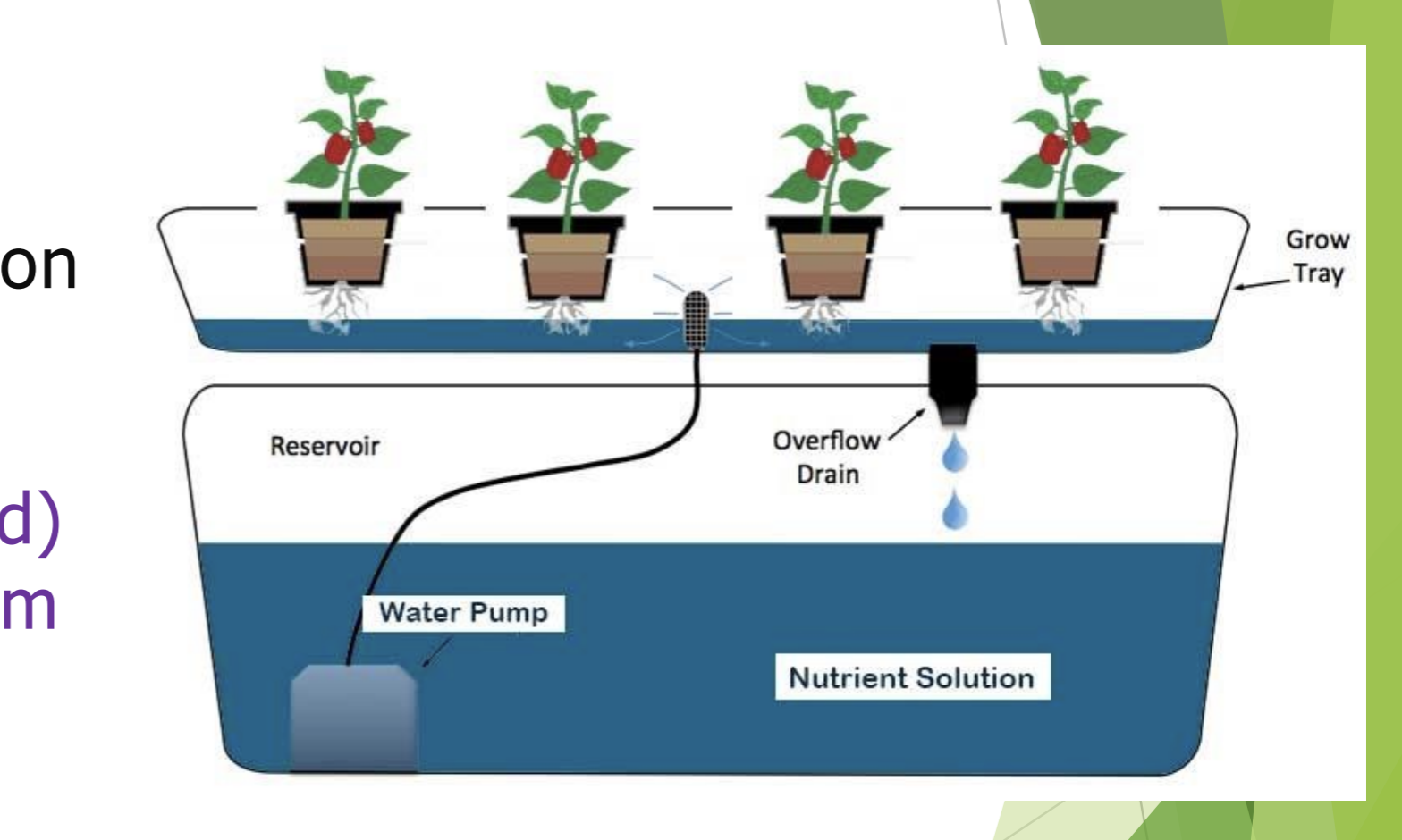
What is part of a typical hydroponic system
Reservoir
Nutrient solution
Grow tray
Pump
Growth medium
Roots
What replaces soil in hydroponics?
Inert media → growth media such as
Perlite
Vermiculite
Horicultural rockwool
sand
Fired clay pebbles
What may happen to rockwool in hydroponics?
Algae growth → turns it green
Why is it bad to use an unopaque tank for hydroponics? (e.g. aquarium tank)
With glass sides, sunlight will pass through into the nutrient solution, and algae will proliferate, competing with the plants for nutrients and oxygen.
What does this growing media do?
Provide porous and well aerated substrate for the anchorage of plant roots
Evaluate the differences between soil and hydroponics in terms of providing physical support and manpower needed
Soil
Physical support for plant roots (+)
Acting as a buffer
Hydroponics
various types of growing media provide porous and well-aerated substrate for the anchorage of plant roots
In the absence of soil, the pH value of the nutrient solution must be checked regularly.
What are the types of systems in hydroponics
Open system
Closed system
What is a open system?
A system in which fresh nutrient solution is introduced for each irrigation cycle
What are the types of open systems?
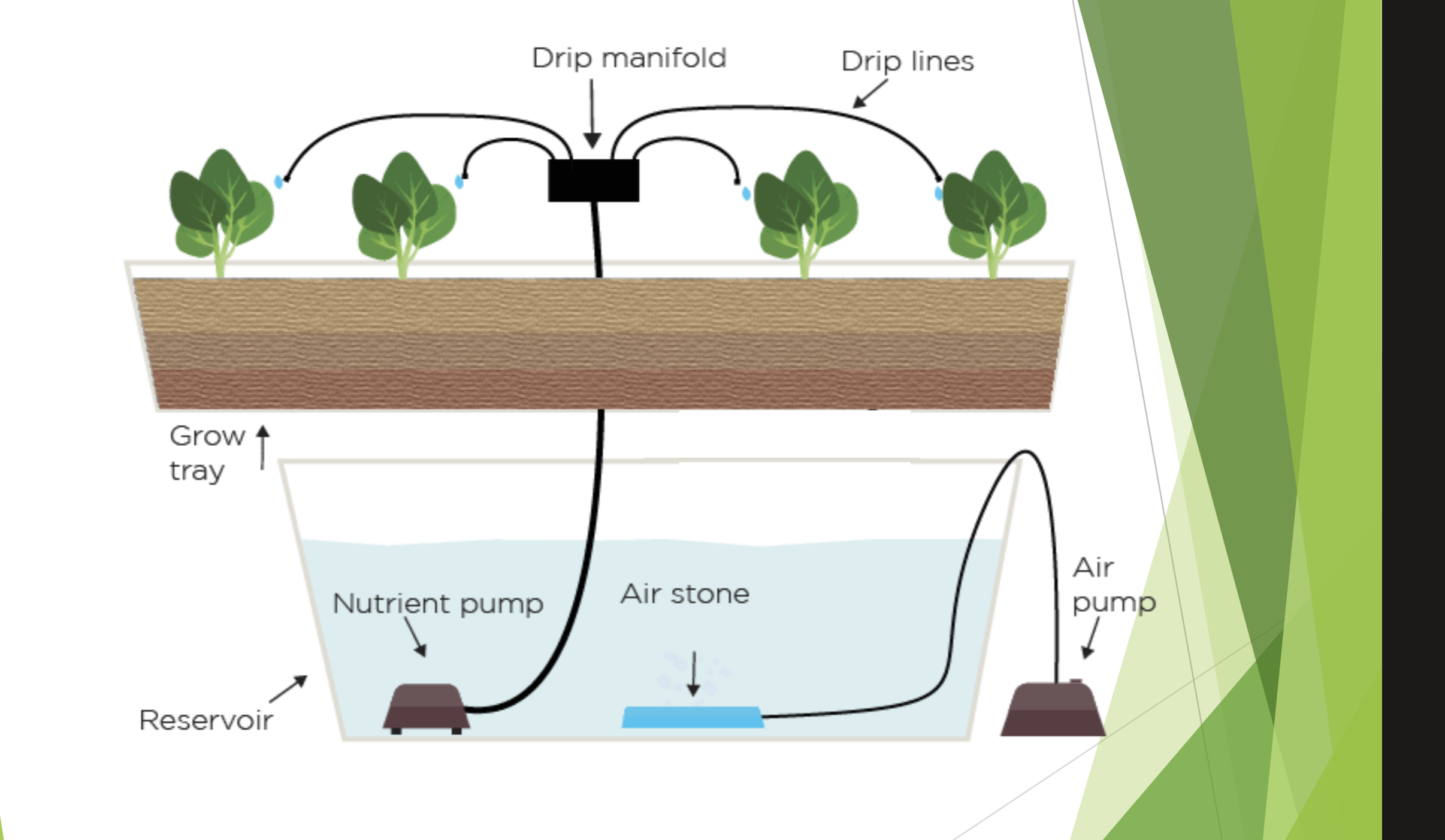
Drip system
Root dipping technique
Explain the drip system + explain what must be needed
It delivers the nutrient solution to the plants via a drip pump
To keep nutrient balance in the root zone of the plants, an ADEQUATE run-off must be maintained in open hydroponic systems.
Explain the root dipping technique + explain what must be needed to sustain this technique
Nutrient solution is placed in a container and a board with holes for pots is placed over it. The plants are grown in some growing medium in pots, and their roots extend into the nutrient solution once the pots are placed into the holes of the board.
There must be adequate air space above the nutrient solution, and only the bottom one-third of the root system dips into the solution to ensure adequate aeration for the roots.
Why is it not advisable to fill the box to the brim with nutrient solution using the root dipping technique?
He should not have filled up the box to the brim with nutrient solution as there must be space for adequate aeration for the plants.
Why is this open system not advantageous?
Replacement of the nutrient solution after each harvest is costly;
runoff from the discarded solution is likely to cause eutrophication in bodies of water in the environment
What are the advantages and disadvantages of the open system
Advantages:
There is no need to incur cost in setting up a pump-system to re-circulate the nutrient solution
The concentration of nutrients and pH of solution need not be checked if a fresh solution is always used; this saves on manpower
Disadvantages:
The cost of regular replacement of the nutrient solution is high
The run-off contaminates the environment as the used nutrient solution can still cause eutrophication in closed water bodies; to process this involves extra cost.
What is a closed system
System in which the same nutrient solution is re-circulated and the nutrient concentrations, together with the pH, are monitored and adjusted regularly
What are the advantages and disadvantages of a closed system
Advantages:
This system recycles nutrient solutions as effectively as possible; this reduces cost of replacing nutrient solutions
There is no contamination of the environment as the solution is recirculated within the system
Disadvantages:
The nutrient solution has to be sampled and analyzed at least once a week to ensure that the nutrient balance is maintained; this is labour intensive
A pump system is needed to re-circulate and oxygenate the nutrient solution (incur higher cost)
What are some examples of a closed system
Nutrient Film Technique
Deep Flow Technique
Aeroponics
What is nutrient film technique (NFT)
System whereby a there is a continuous thin film of nutrient solution flowing over the roots. This provides aeration and nutrients. Plants are grown in channels placed on a gentle slope, and a pump re-circulates the nutrient solution.

What are the advantages and disadvantages of the NFT system
Advantages:
Lower consumption of nutrient solution
Absence of growth medium saves cost and makes it easier to check the health of roots
It is environmentally friendly: minimal potential for localised groundwater contamination
Disadvantages:
The pump must not fail, as even a short period of the pump not functioning can cause plant death
It is not suitable for plants with large tap-root systems as the roots clog up the trough and impede flow of nutrients
What is the deep flow technique (DFT)
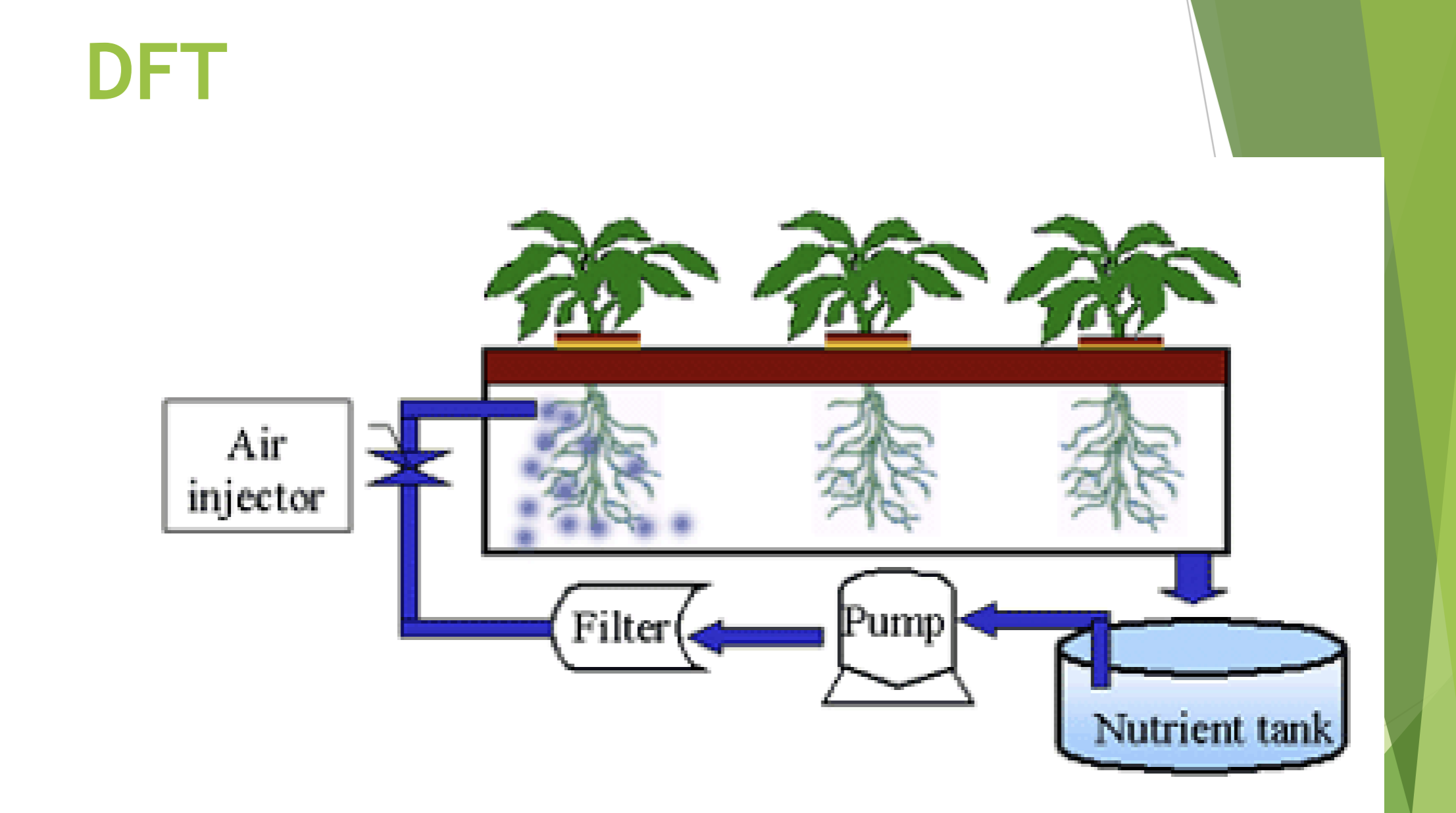
The plants float on a raft (typically a sheet of foam plastics such as polystyrene) in a shallow tank less than 0.3m deep. The tank, or pond, is filled with nutrient solution, and the plant roots hang down into the solution. The nutrient solution is monitored, oxygenated, replenished and recirculated as required.
What is the advantages of a DFT system?
Provides significantly greater buffering than other hydroponic techniques (e.g. NFT)
Changes of nutrient level, pH, temperature, and dissolved oxygen (DO) concentration, are significantly damped.
Ponds can also be used as material movement with minimal mechanisation or physical effort.
Explain aeroponics (high tech)
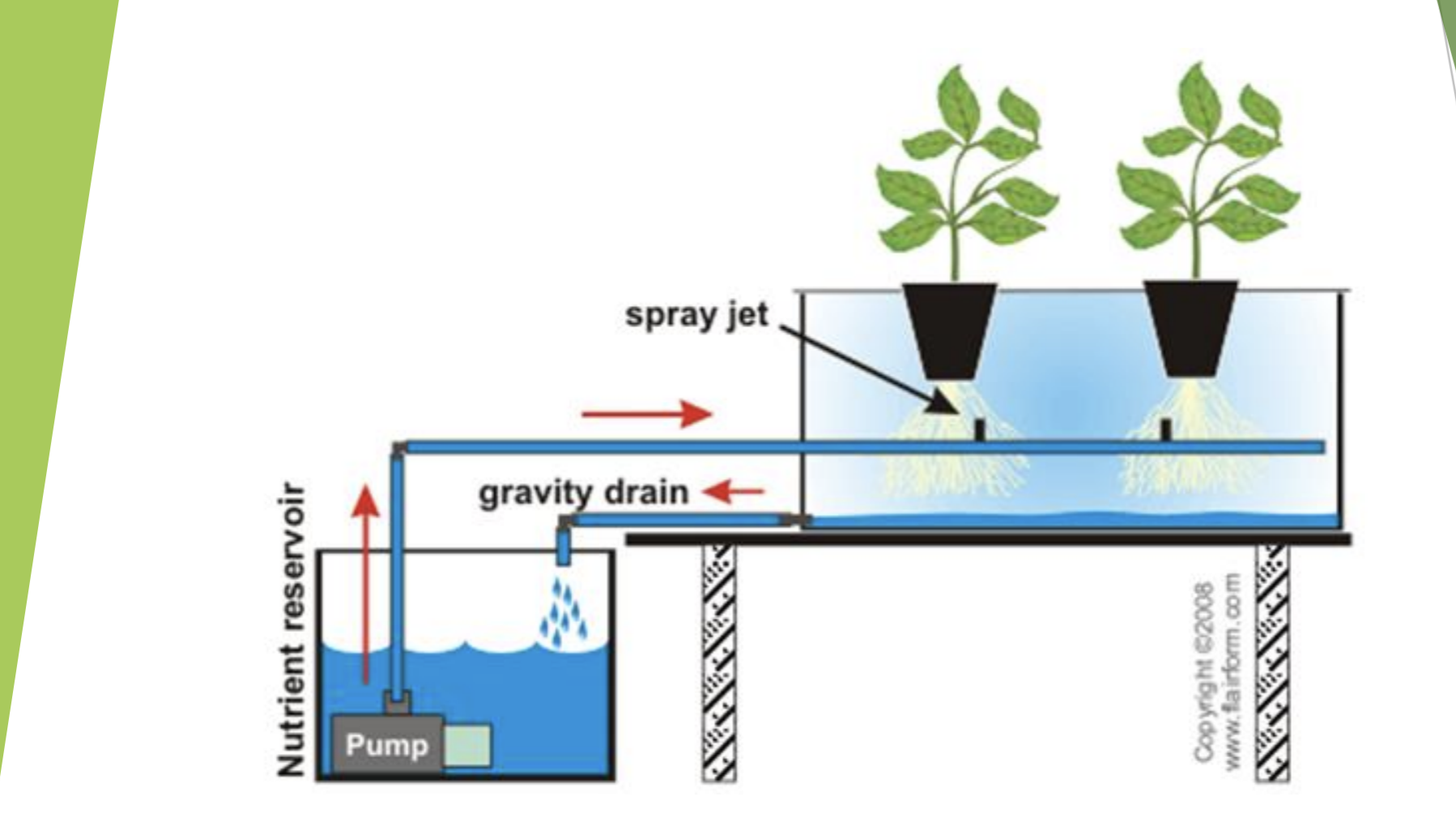
System whereby roots are kept in an environment saturated with a mist of nutrient solution.
What is not needed for aeroponics?
No substrate is needed, and involves growing plants with their roots suspended in a root chamber in which fine mist of atomized nutrients is periodically sprayed.
(nutrients are re-circulated, hence it is a closed system)
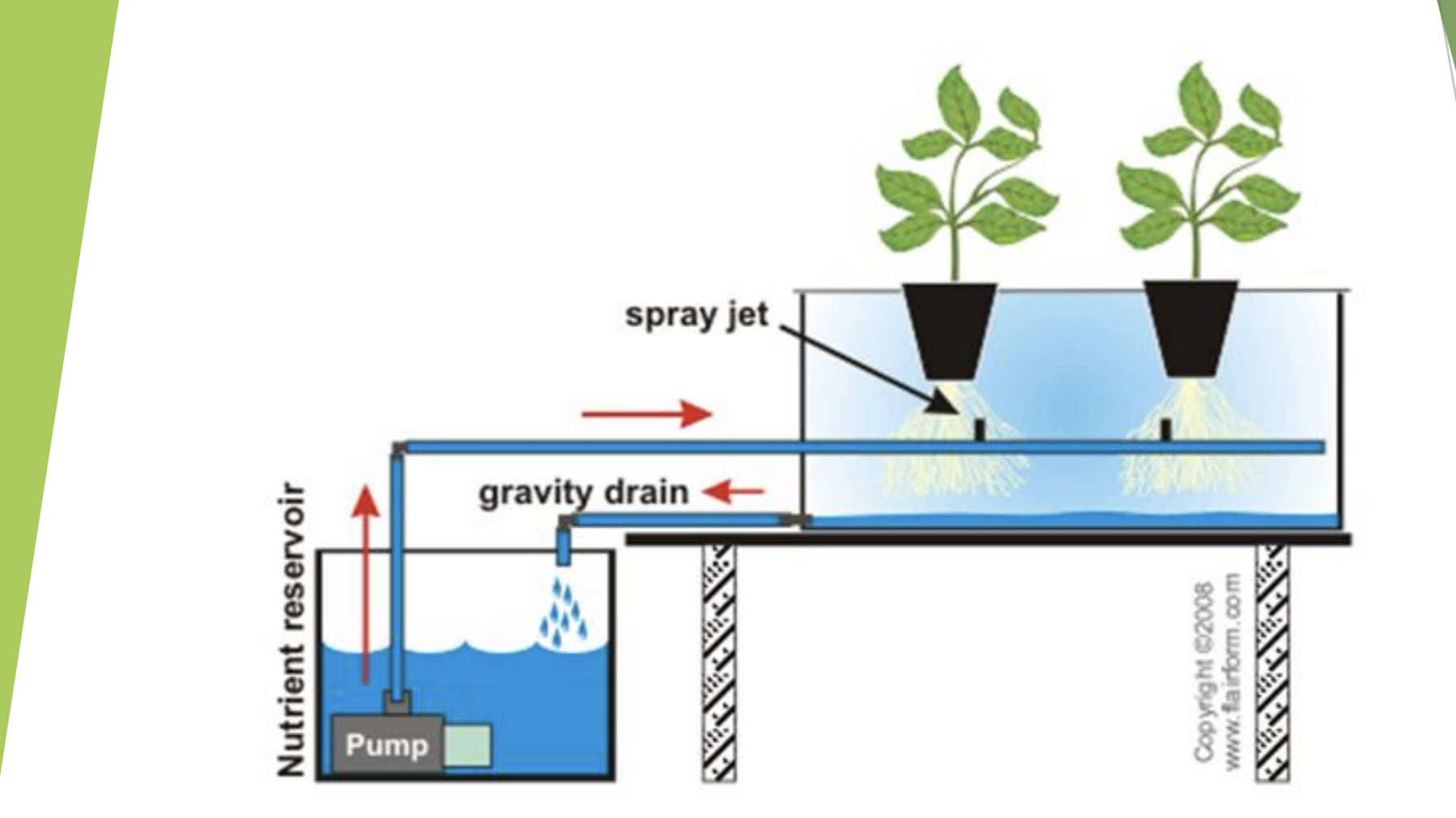
What are the advantages of aeroponics and disadvantages of aeroponics
Advantages:
Roots are well-aerated, leading to faster plant growth
Uses 65% less water and only 25% of the nutrient input compared with hydroponics
Disadvantages:
Dependence on the system — a typical aeroponic system is made up of high-pressure pumps, sprinklers and timers. If any of these break down, the plants can be damaged or killed easily
The root chamber must be disinfected, or diseases may affect the roots.
How can we measure the total concentration of the solution?
Using Electrical conductivity and pH
What does electrical conductivity (EC) measure?
Strength of nutrient solution, measured using an EC meter
What is the limitation of the EC
Indicates only the total concentration of the solution and not the individual nutrient components.
What is the ideal range for hydroponics for EC?
1.5 to 2.5 dS/m
What will happen if there is a higher EC and a lower EC?
Prevent nutrient absorption due to osmotic pressure and a lower EC will severely affect plant health and yield due to lack of nutrients
Why high EC prevents nutrient absorption
Due to osmotic pressure:
Lower water potential in the hydroponics solution as compared to the cytoplasm in the root hair cells due to higher solute concentration in solution
Water will move out of the root and plant will wilt. This reduces the effectiveness of nutrient uptake.
Mineral ions are dissolved in water, reduced water uptake also reduces the transport and absorption of mineral nutrients.
What is pH?
Measure of the acidity or alkalinity of a solution
What does it determine? (pH)
It determines the availability of essential plant elements
What is the optimum pH for a hydroponic nutrient solution?
5.8 and 6.5
What does too high or low of a pH prevent?
>6.5
Fe and Zn less available
<5.8
Ca and Mg less available
Advantages of hydroponics compared to soil farming:
1. Easier to sow and harvest crops due to use of technology in the hydroponic system although it is still labour intensive compared to soil farming
Hydroponics allows plants to receive controlled amounts of nutrients and water, which reduces costs
For closed hydroponic system, the nutrient solution stays in the system and gets recirculated which is useful in dry areas.
For closed hydroponic system, no nutrients are released into the environment, minimising eutrophication.
Since conditions are controlled, there is no limitation in terms of soil fertility which allows growing to be done in regions unsuitable for soil farming.
In a controlled environment, crops can be grown out of season or in
unsuitable climates.
Disadvantages of hydroponics compared to soil farming
Without soil as a buffer, any failure to the hydroponic system will lead to rapid plant death.
pH and EC values need to be checked regularly in closed system, which requires manpower.
Plants are susceptible to pathogens without protection from soil microorganisms.
Aeration may be inadequate and plants can become waterlogged compared to soil farming.
Difference between open and closed systems
Open system → nutrient solution is not re-used
Closed system → nutrient solution is re-circulated
How does an air stone aerate the nutrient solution?
The air stone reduces the size of the air bubbles from the air pump, and this allows for faster dissolving of the oxygen in the solution.
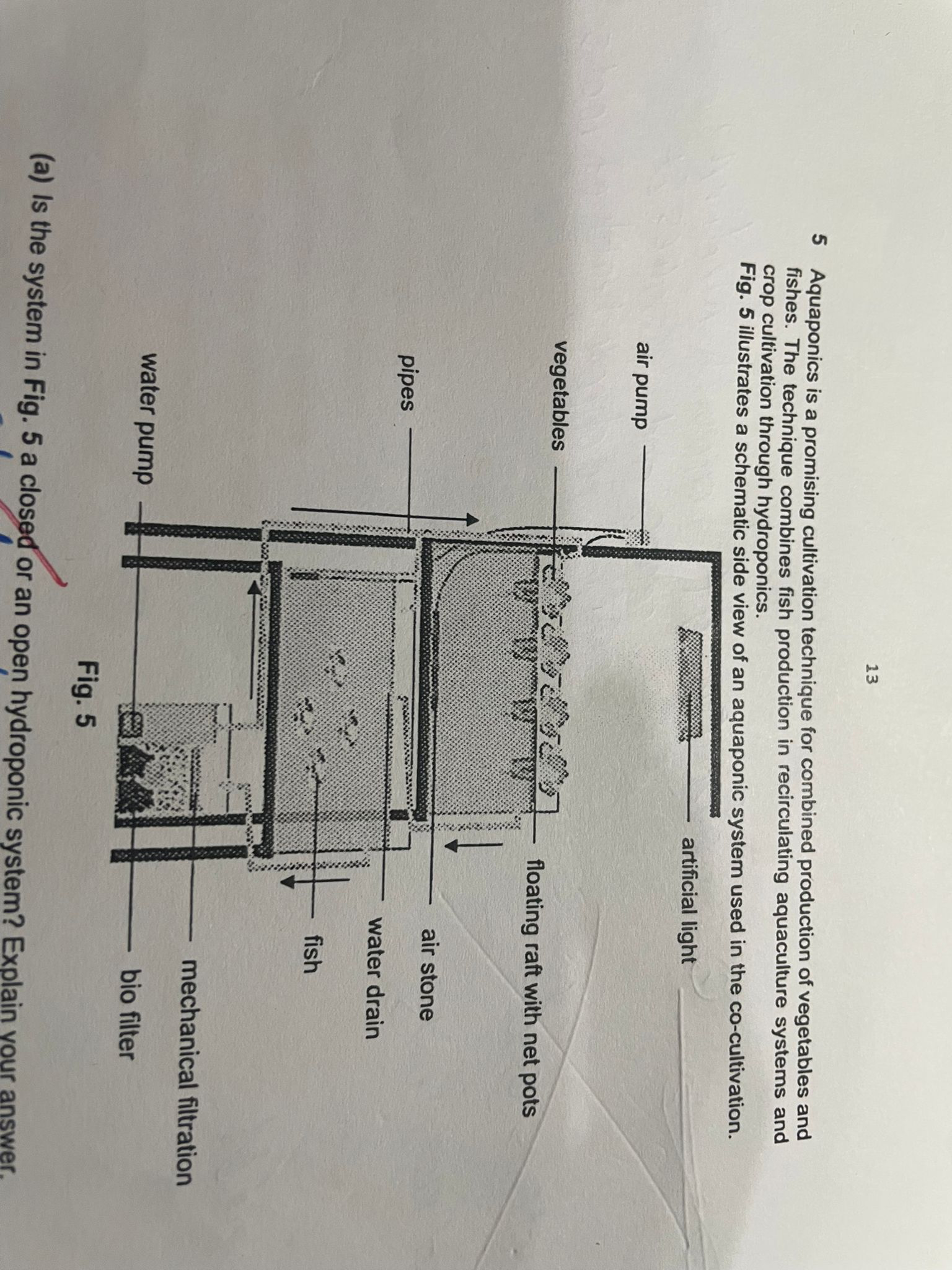
Why is it not necessary to place an air stone in the fish rearing tank?
(Dissolved) Oxygen has already been dispersed in the hydroponic unit which flows into the fish rearing tank.
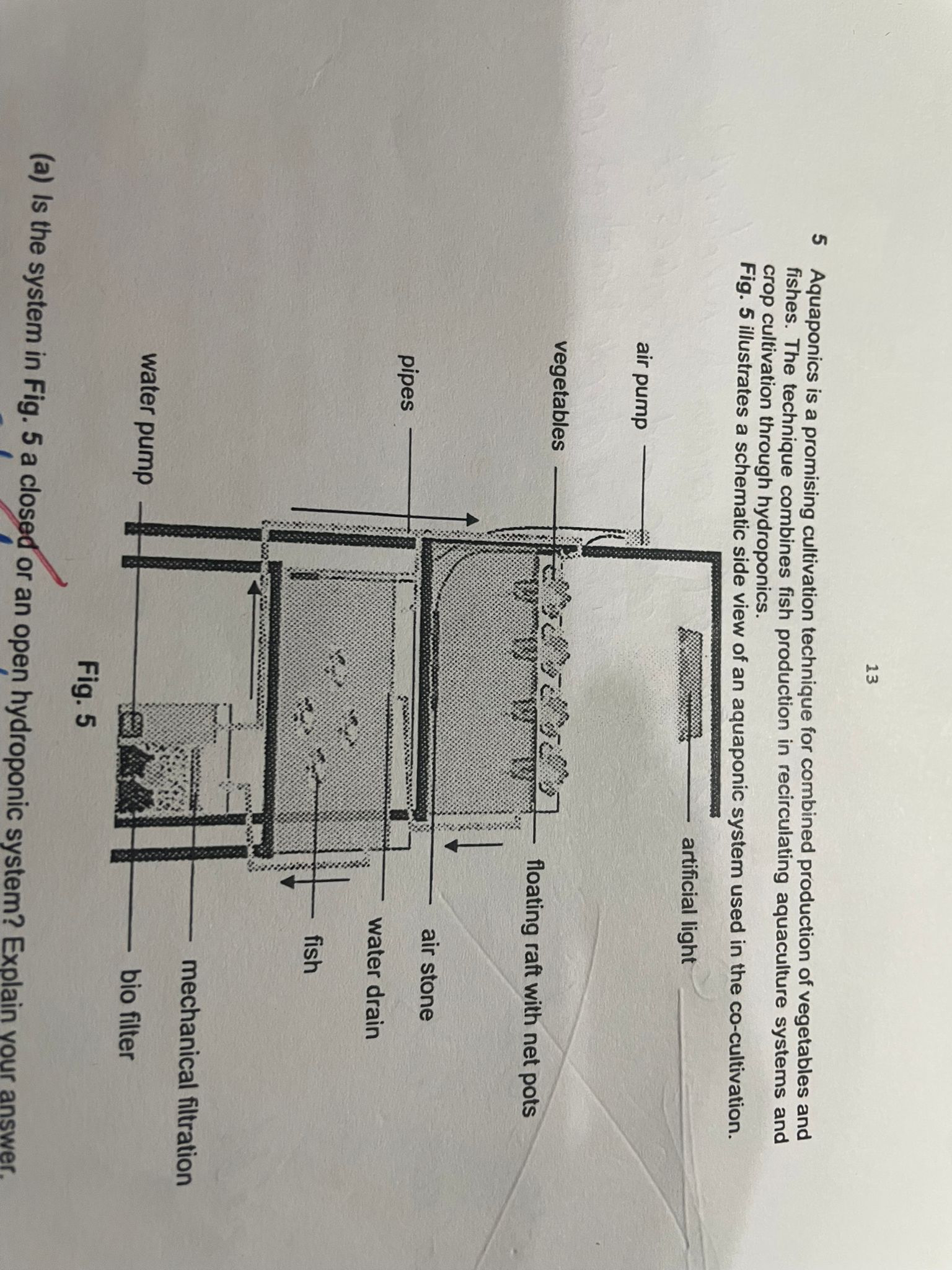
Why would the growth of vegetables be affected if the alkaline ammonia is not removed from the water that drains into the hydroponic unit?
The pH will change affecting the nutrient uptake / growth of the spinach.
What is the importance of having a drainage hole?
A drainage hole allows excess solution to flow out, keeping the solution moving, preventing stagnation and nutrient imbalance
To recirculate the nutrient solution.