PLTW Unit 3.2 - Immune System
 Call Kai
 Learn
Learn Practice Test
 Spaced Repetition
 Match
Match Flashcards
 Knowt Play
1/74

There's no tags or description
Looks like no tags are added yet.
Name | Mastery | Learn | Test | Matching | Spaced | Call with Kai |
|---|
No analytics yet
Send a link to your students to track their progress
75 Terms
Describe Prions
infections, misfolded proteins that act as pathogens without containing DNA or RNA, Non-living, submicroscopic proteins
Example of Prions
CJD, Creutzfeldt-Jakob disease
Describe Virus
Non-living microscopic agents made up of an outer protein shell called a capsid, and either DNA or RNA
Example of virus
Flu
Describe Bacteria
Living, microscopic, single-celled, prokaryotic organisms
Example of bacteria
mycobacterium tuberculosis
Describe Protozoa
Living, microscopic, single-celled, eukaryotic, animal-like organisms
Example of Protozoa
Giardia Lamblia
Describe Parasitic worms
Living, multicellular, eukaryotic worms. Both microscopic and macroscopic varieties exist
Example of parasitic worms
Taenia tapeworm
describe fungi
Living, multicellular, eukaryotic organisms. fungi include yeasts, mildews, molds, and mushrooms. Both microscopic and macroscopic varieties exist
example of fungi
Tinea Pedis (athlete's foot)
main function of epidermis
acts as a protective barrier against external threats, including pathogens, uv radiation, chemicals, and mechanical injury.
main function of dermis
provide structural strength, elasticity, and support to the skin while protecting underlying tissues
main function of subcutaneous fatty tissue
primarily stores energy as lipids, provides thermal insulation, and acts as a cushion to protect muscles and bones from trauma.
describe skin
your biggest organ, so important that moderate burns on 30% of your skin can be life threatening
functions of skin
protection-physical barrier
keeps in water
temperature regulation (sweat)
sensory organ (feeling-pressure, pain, hot, cold)
protects cells from uv radiation
produce and secrete vitamin D
keeping out pathogens

on the diagram what is #1
epidermis

on the diagram what is #2
dermis

on the diagram what is #3
subcutaneous fatty tissue (hypodermis)
what is sepsis?
the body’s immune system overreacting to an infection causing inflammation
what is severe sepsis
organs in the body begin to malfunction, blood pressure is low, and inflammation continues
what is septic shock?
extremely low blood pressure that does not respond to IV fluids
why is sepsis so dangerous
because without treatment it can lead to tissue damage, organ failure, or death
what is the main role of your lymphatic system?
the lymphatic system maintains fluid levels, absorbs fats from the digestive tract, protects the body from pathogens, and helps remove waste from the lymphatic system (lymph).
what is lymph
clear, watery fluid that the lymphatic system transports
explain why your lymphatic system is often lumped together with the immune system
they are grouped together because they work together to fight pathogens and protect the body from invaders
what is the difference between an antigen and an antibody?
an antigen is anything that stimulates an immune response, while an antibody is a protein made by B-cells that works to impair or neutralize pathogens

what is this showing
the relationship between an antigen and an antibody, antigen is the circle with triangles and antibodies is the y shape
compare and contrast antigens and antibodies
antigens:
molecules found on the surface of pathogens (bacteria, viruses, etc)
trigger an immune response
tell the immune system that something is foreign to the body
both:
involved in the immune response
help the body identify and fight pathogens
interact with each other during infection
antibodies:
proteins made by B-cells
bind to specific antigens
help neutralize or mark pathogens for destruction
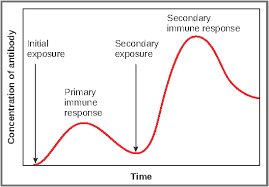
what is happening in this graph
how the body produces antibodies over time. the first exposure causes a slow primary immune response while the second exposure causes a faster and stronger secondary immune response.
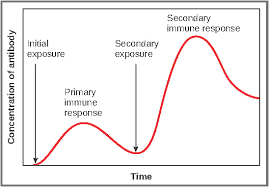
how does this graph relate to vaccines
vaccines expose the body to an antigen so the immune system creates memory cells. this allows the body to respond faster and stronger if the pathogen enters again.
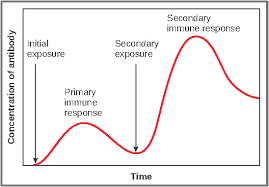
what are the structures in the primary immune response
antigens, B-cells, and antibodies
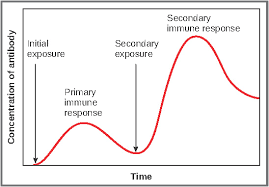
what are the structures in the secondary immune response
memory cells and antibodies that respond faster and produce more antibodies
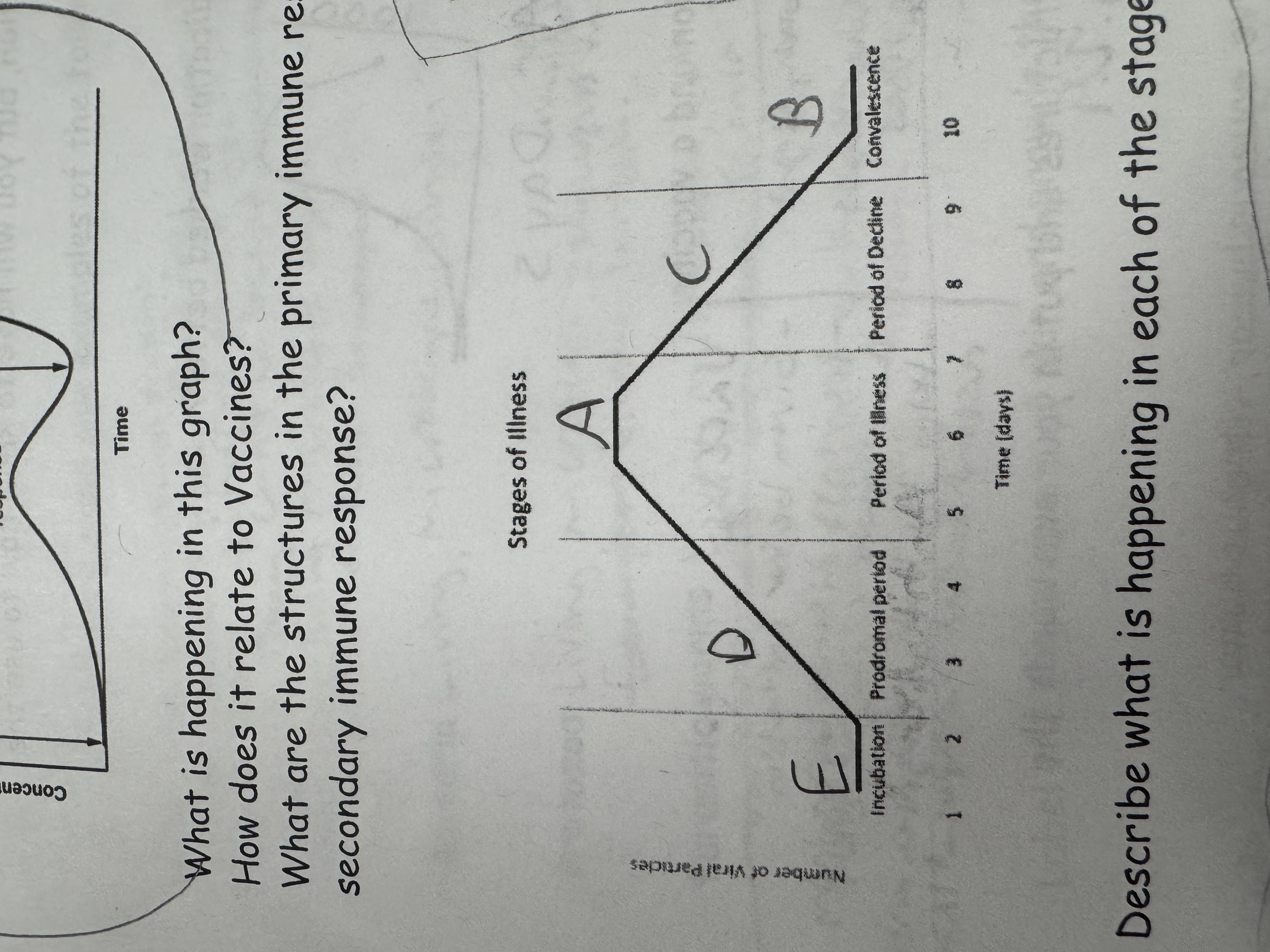
describe what is happening at “E”
the antigen is engulfed by a macrophage and is presented to a helper t cell
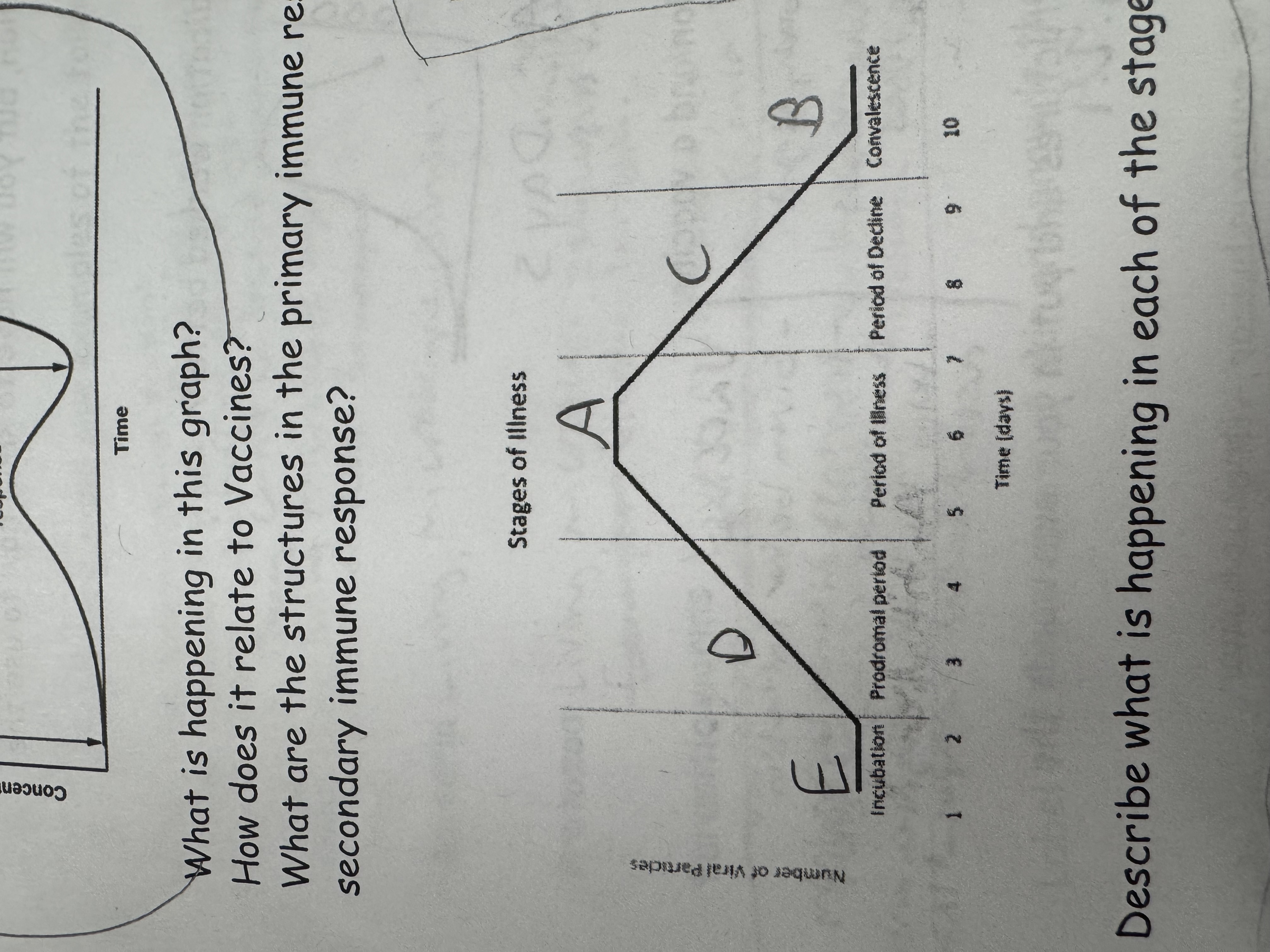
describe what is happening at “D”
the helper t cells shows the antigen to the B cell
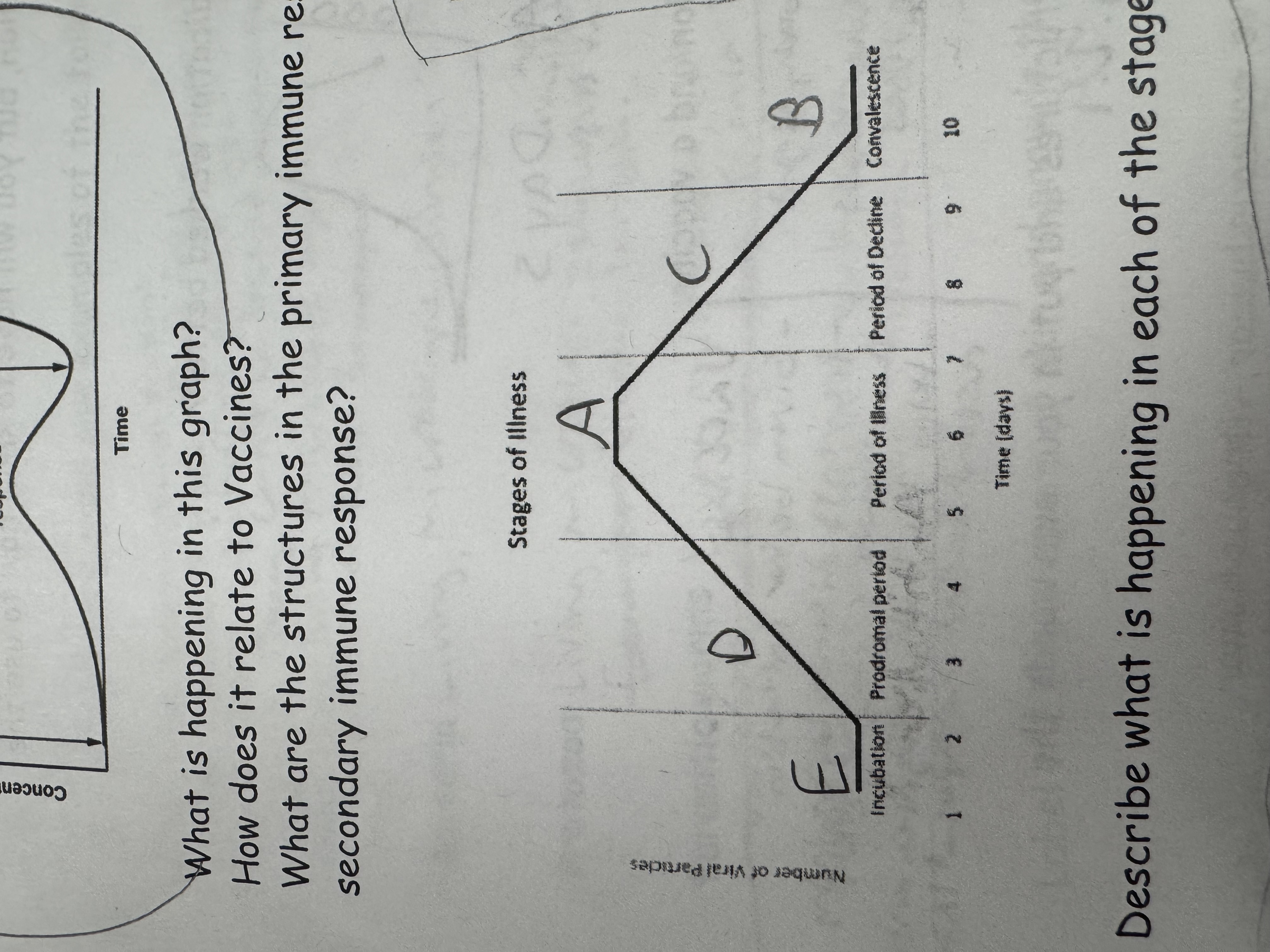
describe what is happening at “A”
B cells copy themselves to make plasma cells that produce antibodies specific to the antigen. Memory B cells form
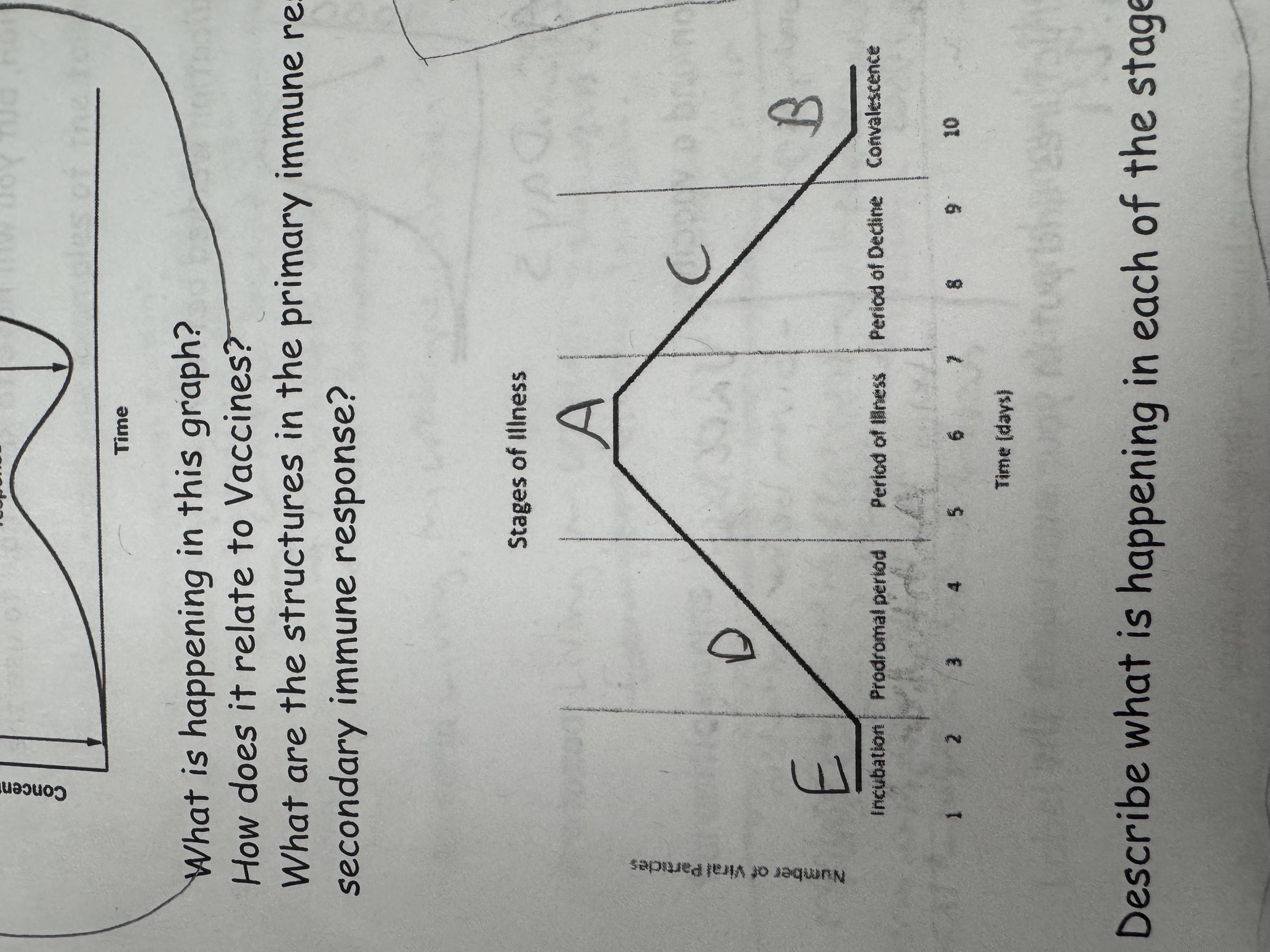
describe what is happening at “C”
antibody concentrations begin to decline
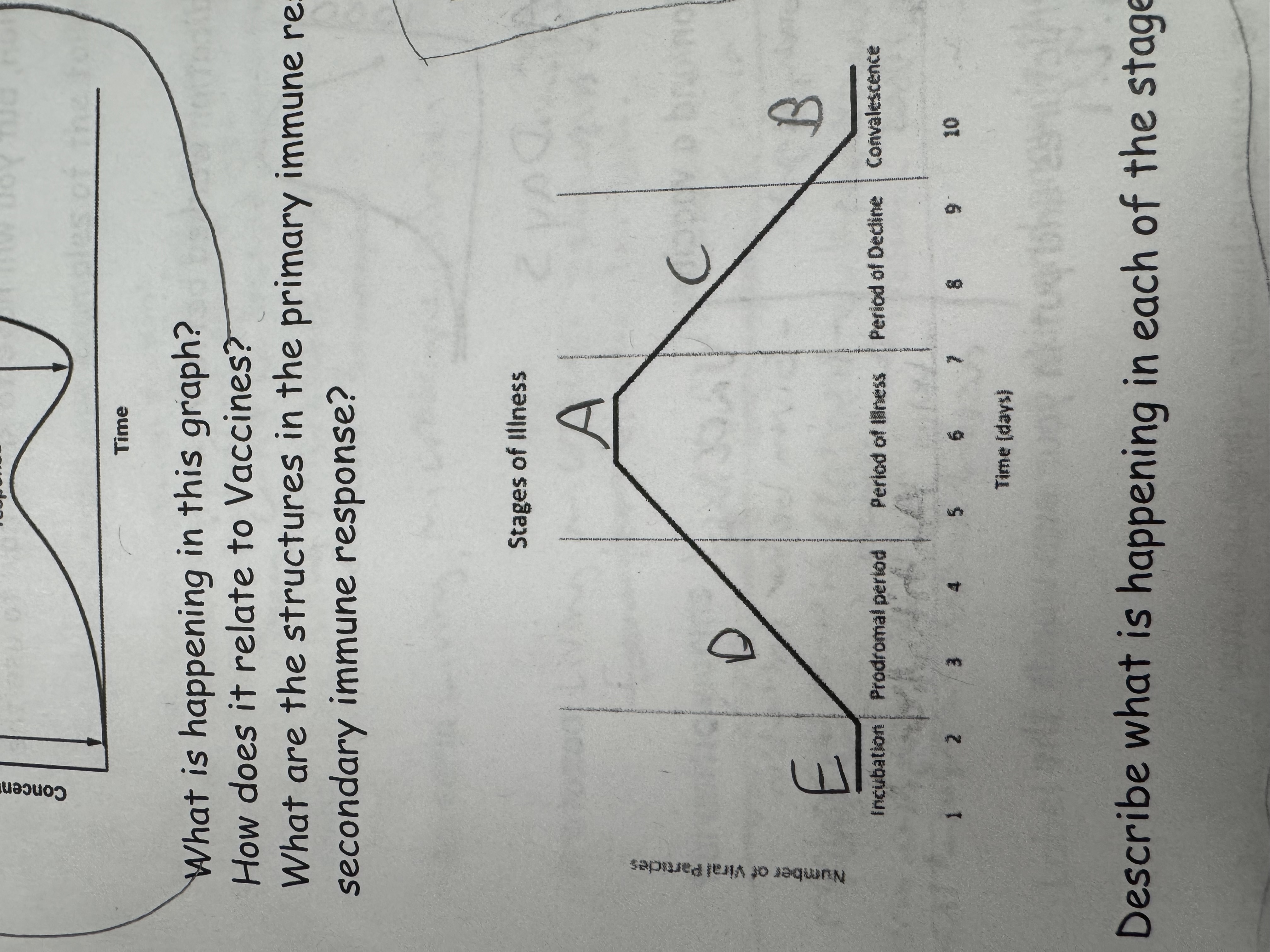
describe what is happening at “B”
Plasma cells stop making antibodies, but memory B cells remain ready for another exposure to the antigen.
how does a vaccine work
a vaccine tricks your body into thinking you are sick by giving you part of the antigen, you make antibodies that are ready to go if you ever encounter the virus or bacteria “again”
why aren’t viruses considered alive
Viruses aren’t considered alive because they cannot grow, reproduce, or carry out life processes on their own.
how do viruses infect our cells
They infect our cells by attaching to a cell and injecting their genetic material, then using the cell’s machinery to make more viruses.
what was the purpose of the plaque assay lab
The purpose of the plaque assay lab is to measure viral load by observing plaques formed when viruses infect and kill cells oon an agar plate. this can be used to evaluate the effectiveness of medications over time.
what questions were we answering for the plaque assay lab
what is the effectiveness of 2 antiviral treatments for 2 different patients?
how does the plaque assay measure viral load
a plaque assay measures viral load by counting plaques on the agar plate. more plaques=higher viral load.
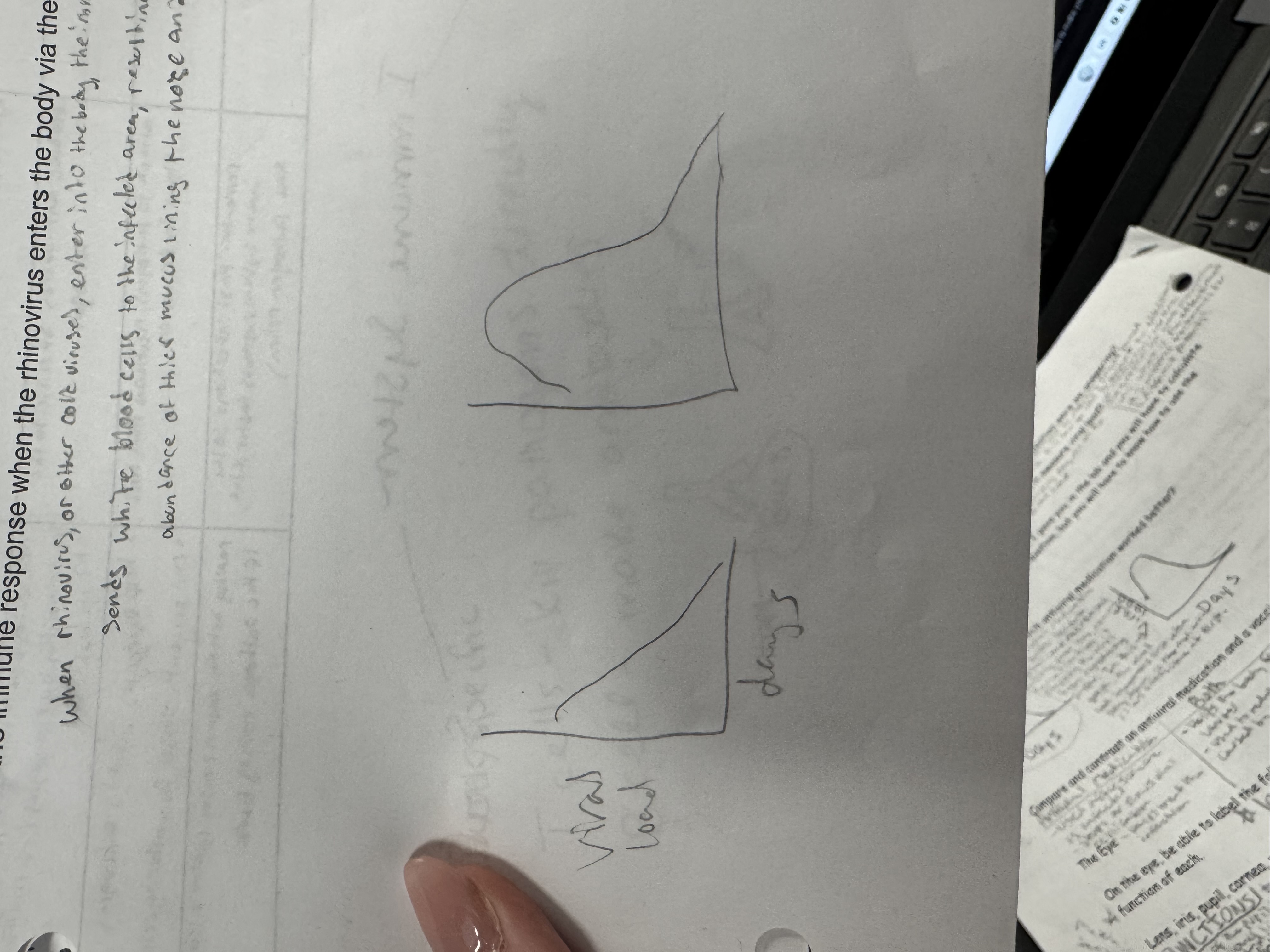
given the two graphs, which antiviral medication worked better
the one on the left
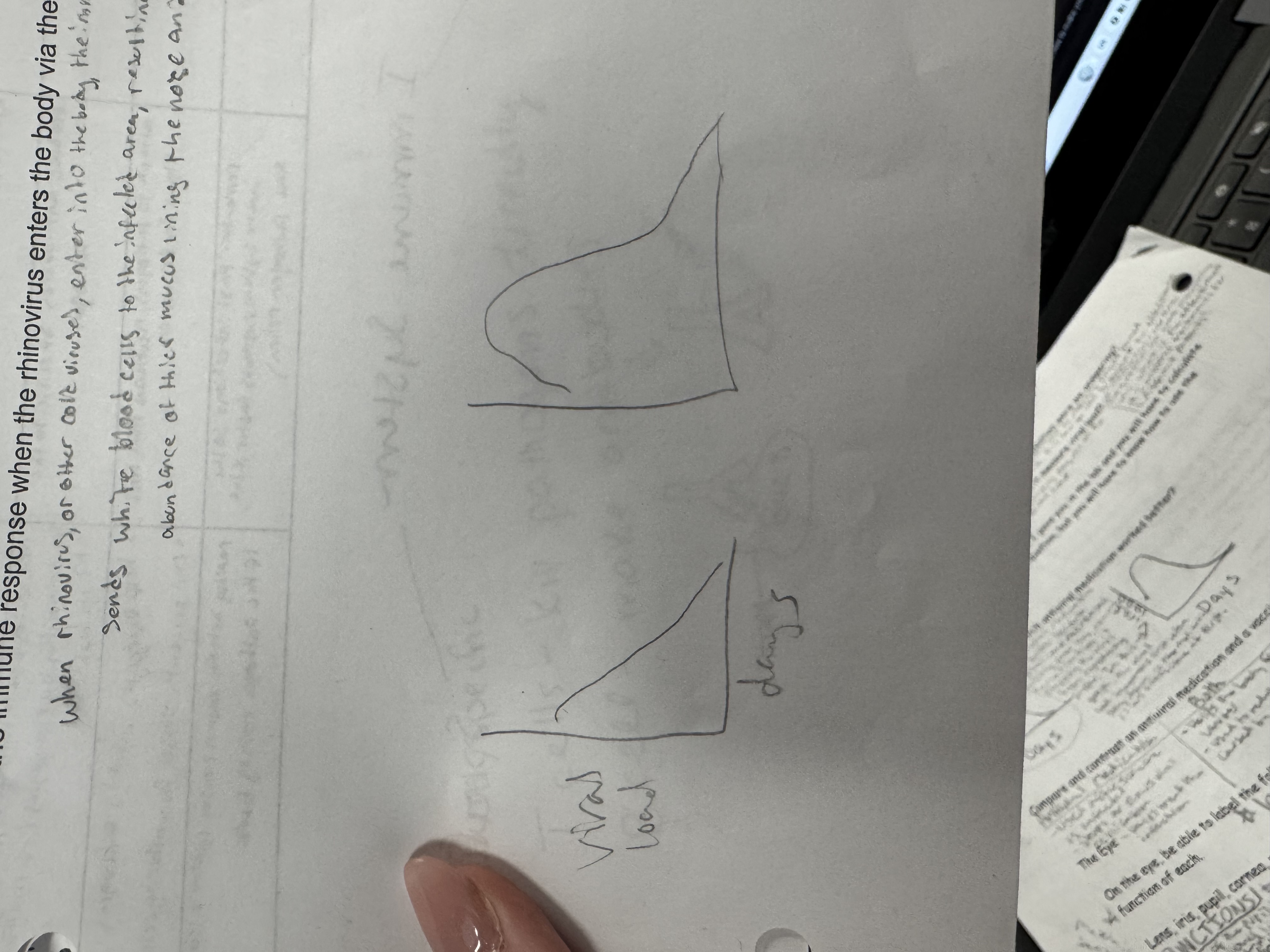
why did the one one the left’s, antiviral medication work better
this antiviral medication worked better because the viral load decreases quickly over time, meaning the medication is stopping the virus from reproducing faster. the graph on the right’s viral load increases first before going down so the medication is less effective at first
compare and constrast an antiviral medication and a vaccine
antiviral medication
used after someone is infected
stops or slows viral replication
helps treat the infection
both
helps the body fight viruses
used to reduce illness caused by viruses
vaccine
given before infection
prevents disease by training the immune system
helps the body recognize antigens and respond faster if exposed later
function of lens
focus light onto the retina so you can see clearly
function of iris
controls the size of the pupil to regulate how much light enters the eye
function of pupil
the opening in the center of the iris that allows light to enter the eye
function of cornea
the clear front surface of the eye that protects it and helps bend light as it enters the eye
function of retina
contains light-sensitive cells that convert light into electrical signals sent to the brain through the optic nerve (rods and cones)
function of optic nerve
carries electrical signals from the retina to the brain, where they are interpreted as images
how does light travel through the eye
light travels through the eye by passing first through the transparent cornea, then the aqueous humor, pupil (controlled by the iris), lens, and vitreous humor before hitting the retina. The retina converts light into electrical signals sent via the optic nerve to the brain.
viral replication decription of attachment
The virus attaches to the surface of the host cell. This attachment is highly specific to each virus, and viruses can attach to cells such as lymphocytes, monocytes, macrophages, and epithelial cells.
viral replication decription of entry
The virus DNA enters the host cell either by endocytosis, where the cell engulfs the virus, or by fusion with the host cell membrane.
viral replication decription of uncoating
Uncoating is the breakdown of the virus capsid, releasing the viral genome so its genes can be transcribed and replicated.
viral replication decription of replication
The virus uses the host cell’s machinery to copy its genome and make viral proteins and additional genome copies.
viral replication decription of assembly
New viral parts assemble into complete virions. Assembly can occur in the nucleus, plasma membrane, or other cell membranes depending on the virus.
viral replication decription of maturation
During maturation, final structural changes occur in the virion, making it fully infectious.
viral replication decription of release
The host cell releases new virions either by lysis (which kills the cell) or by budding, allowing them to infect new cells.
how do vaccines differ from antiviral medications
in timing and purpose
vaccines: prevention - stop infection before it starts
antivirals: treatment - manage and reduce symptoms
what does TIME stand for
Temperature
Infection
Mental Decline
Extremely ill
why is TIME important
T: higher or lower than normal temp
I: signs and symptoms of an infection (swollen lymph nodes)
M: confused, sleepy, difficult to rouse
E: severe pain or discomfort
define innate (non-specific) immunity
born with
ex: skin
work to keep anything outside us from coming in
describe acquired (specific) immunity
not born with
ex: vaccine
acquired over a life time
two forms:
active immunity: acquired after infection and recovery, or from a vaccine
passive immunity: acquired by a child from its mother through the placenta or through breastfeeding
list innate defense mechanisms
tears
mucus & cilia
phagocytes
stomach acid
normal flora
secretions
inflammation
fever
how does the phagocytes mechanism work
these cells patrol the lungs and eat and digest invaders (part of non-specific) (roam through your blood and vacuums/engulfs anything that should be there)
how does the inflammation mechanism work
redness, swelling, pain
histamine-increase in diameter of blood vessels
blood brings WBCs to the area (phagocytes-neutrophils, macrophages, dendritic cells) (those are the three types of phagocytes)
how does the fever mechanism work
caused by infection
macrophages respond
stimulate the hypothalamus to increase the body temp
the immune system cells work more efficiently in warmer temps and to kill the bacteria that is making you sick
benefits of a fever
increase the production of T cells (lymphocytes)
promote tissue repair
increase circulation of blood
intensifies the effect of interferon (proteins that help your body fight viruses)
define antigen
dictates antibody your body will make
anything that stimulates an immune response
how the body recognizes cells and noncells
define B cells
a type of lymphocyte (WBC) that matures in bone marrow and produces antibodies
3 types of pahgocytes
phagocyte: white blood cells that are part of the innate immune system. engulf and digest harmful pathogens.
neutrophil
macrophage
dendritic cell