American Lit' (Comics) L3 S6 LIG
 Call Kai
 Learn
Learn Practice Test
 Spaced Repetition
 Match
Match Flashcards
 Knowt Play
1/34

There's no tags or description
Looks like no tags are added yet.
Name | Mastery | Learn | Test | Matching | Spaced | Call with Kai |
|---|
No analytics yet
Send a link to your students to track their progress
35 Terms
Comics def
A narrative sequence of printed drawings featuring a continuing cast of characters that tells a story in picture (and usually words) over a small but noticeable span of time.
This term is used to indincate newspaper comic strips + comic books
Where do comics come from?
Europe even if today = associated with American Culture
Ancestor:
stained-glass windows (biblical stories) in churches
the Bayeux tapestry (11th century, represents the Norman Conquest).
Hogarth: The Harlot’s Progress (1732) that retraces in 6 gravures the story of an innocent country girl Moll Hackabout who comes to London and becomes a prostitute and dies of syphilis at the age of 23.
Who is generally credited to have consolidated comics?
Rudolph Töpffer (1799-1846)
Swiss teacher of rhethoric
Started composing for his pupils and friends
Used the theory of physiognomy
Transformed what Hogarth’s work by adding words and by creating an interaction between text and image
Physiognomics def
Science of reading characters and feelings from the signs inscribed on their faces
What is Töpffer very first story called? + what he wrote
Histoire de Mr. Cryptogame 1830
Essai de physiognomie 1845
Histoire de Mr. Vieux Bois 1827
Voyage en Zig-Zag 1838
How did Töpffer call his work? This hybrid form between text and image?
Littérature en estampes
Where was Töpffer printed?
USA
Sequentiality def
idea of narrative flow/ creating continuity and progression
Evolution of The Comics in the USA (4 parts)
1900-1920s: period of greatest experimentations
The format became standardizes, so less experimental. At the same time, the storytelling improved. Most memorable heroes: Popeye, Tarzan
Mid 1930s: new sensational form of storytelling, famous character: Dick Tracy, Superman, Captain America…
Mid 1960s: Publication of independant Comics to today (Robert Crumb, Art Spiegelman, Gary Panter)
Emergence of pre-comics in the USA?
1890s
The Yellow Kid
Richard Outcault
Story of Mickey Dugan who wears a yellow shirt and lives in a slum in NY and his head is shed to get rid of head lices.
text printed on his clothes to mock the avertising that was everywhere in NY at that time
Speaks in a slang to portray his social origins + putting forwards the minorities
Published first in Truths (1894) and then in the New York Times
landmark in the history of American comics.
Winsor McCay
Born in Canada in 1869
Childhood in Michigan
Passion for drawing from early age
his father didn’t care for his artistic talent => business school
Dropped school and left
benefited from private lessons by John Goodison
articles and drawings for the “Commercial Tribune”
What is McCay’s first major series?
Little Sammy Sneeze (started in July 1904)
Each me Sammy sneezes he destroys the world around him (simple, relied on the same format: 6 rectangular panels which build up a catastrophe).
= a way to show mvt into a static drawing
Other works from McCay
The story of Hungry Henrietta (1905)
girl constantly fed by her parents
while Sammy = the same for 2 years, Henrietta grows up through the years
Dream of the rarebit Fiend (1904-1911)
changed his name for Silas (contractual reasons)
About nightmares and phobias => Freud interpretation of Dreams
claims that the rarebit is responsible for the headache the character has
Little Nemo in Slumberland (1905)
Three main characters: Nemo (7-8 y.o + is the boy who’s making the dream), Flip (green face + cigar) and the Himp (he belong to a tribe of cannibals)
Always: we are plunged in Nemo’s dreams in the 1st panel and the last one = Nemo waking up and realising it was all fiction
plays with perspective (architectural abstractions)
idea of circularity coming back
McCay’s preoccupa on: instead of focusing on individuals, he drew them in relation to a new landscape.
Jean-Paul Meyer: Bildungstraum
What are the 4 cases possible with comics? And who created it?
Benoît Peeters (belgian critic)
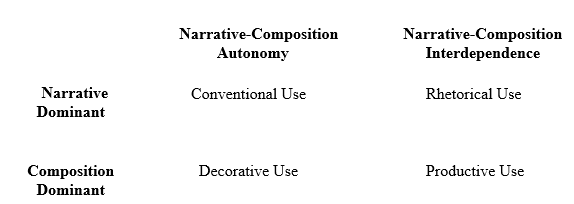
What happened mid 1920s?
new kind of comic strips
influenced by the film dvt in Hollywood with more complex types of characters and settings
TARZAN
1912: Edgar Rice Burrough published Tarzan of the Apes (adapted to movie in 1918)
Harold Foster made it into a comics (1929)
Text: very narrative and descriptive, NO speach and thought bubbles (probably because the roman was already famous)
Was the only adventure, continuity strip comics in the field at 1st
But Foster wasn’t recognised for his work and only Burrough’s name would appear so he decided to create his own comics
Burn Hogarth continued the comics
images more close
more dynamic, the strength and muscular shapes = highlighted
more violence
variations of POV and focuses
Rex Maxon (1931)
only did a few =/ the main artist
less skilled than the others
No expression on the faces
Not a lot of details
What were the inspiration during the 20th?
Greeh mythology
Middle Ages
Arthurian stories
Nibelungen (mit Siegfried)
With supernatural or magical features
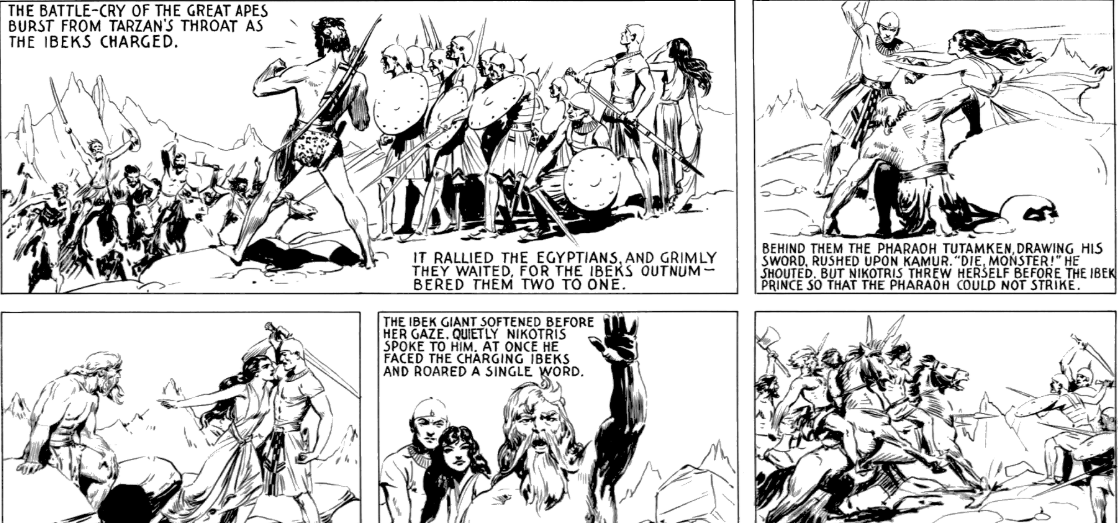
Who’s work is this?
Harold Foster
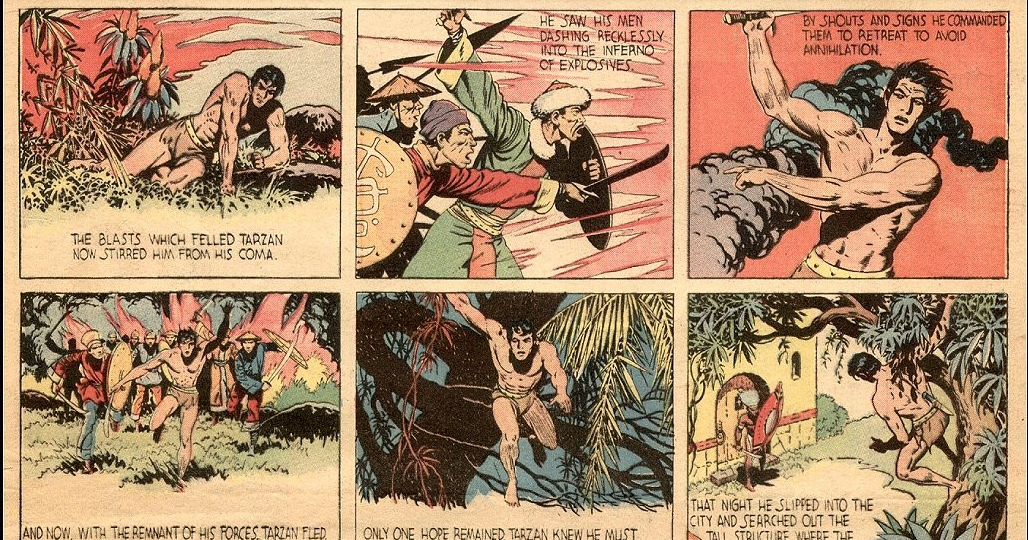
Who’s work is this?
Burn Hogarth
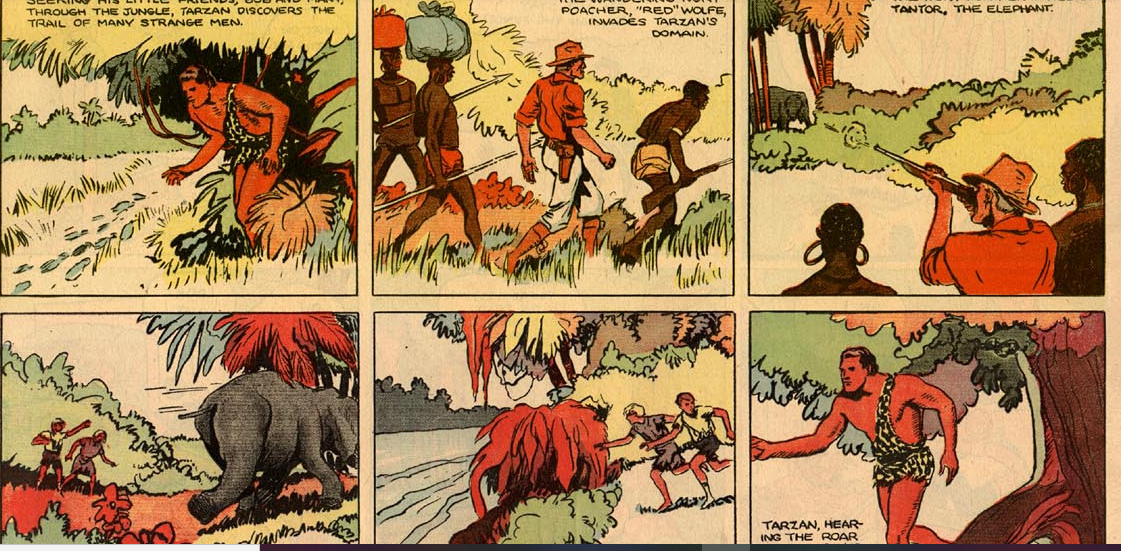
Who’s work is this?
Rex Maxon
With what were associated comics like Tarzan?
Nostalgia for the Golden Ages that were lost
=> WW2 and WW1 and WW2
Notions of:
nature
win of good over evil
When and who created Superman?
Jerry Siegel and Joe Shuster (cartoonist) in 1934
Superman became a comics only in 1939
Nicknamed Man of Steel
What has inspired Superman?
Philipp Wylie’s novel: Gladiator
Lester Dent Doc Savage nicknamed Man of Bronze
Who created Batman?
Bill Finger and Bob Kane (cartoonist)
Who are Superman and Batman?
Superman: born on Krypton planet, Clark Kent, a journalist
Batman: Bruce Wane /!\ =/ superpowers = gadgets and machines to fight his ennemies
Because = same publisher, they encounter
Who is a key component on the evolution of comic strips during the 1930s?
Maxwell Gaines
idea of having a book filled with comic coloured strips but it was hard because the format hat to be adjusted
decided to publish it on his own
1935: comic strips developed
For old comic strips recycled. 2 main syndicate
United Feature (Tip Top comics)
King Feature (King comics)
For New comics:
New Fun Comics
Newcomics.
= DC (Detective comics)
What genre of comics emerged during the 1950s and 1960s?
Underground comix =self-published comic books that are often socially relevant or satirical in nature. They depict forbidden content (drug use, sexuality and violence)
Examples of Underground Comix
Harvey Kurtzman MAD
Parodies of pop culture (superman, Archie, etc)
Imitation (style, artist, genre)
humor
Example of a comics that inspired MAD
George McManus Bringing up Father
3 main characters from working class
their life change as they become rich
Conflict btw the father and the waitress/ daughter because Maggy and Nora want to be accepted by the rich people while Jiggs keeps acting as he alsways did
Harold Grey, Annie (=Fanny)
Mickey Mouse ( =Mickey Rodent) and Donald Duck (=Darnold Duck)
What did Robert Crumb published?
Fuzzy Bunny (1952) as he was 9 and published in 1970
Fritz the Cat (1964)
1965:LSD => Fuzzy head and started to imagine different characters
Zap (1967)
Meatball 1967
Cheap Thrills (1968)
The Many Faces of Robert Crumb 1972
why comiX?
adult content
unknown
X-ray
=> Shows a change in mentality
Underground comics = comix
Where were comix distributed?
in head-shops
= shops specialised in drugs but also counter-cultural art
What’s the plot of Meatball by Crumb?
Americans transformed ( in a good way, life improved) as they get hit by meatballs falling from the sky (=parodies advertising with a quick and great change)
Who was Crumb’s wife? and what did they write together?
Aline Kovinsky (comics artist but not as famous because =/ man)
A day in our beautiful life (1999)
Drawn together (2011)