EECS 3461 - Week 6A: Prototyping
 Call Kai
 Learn
Learn Practice Test
 Spaced Repetition
 Match
Match Flashcards
 Knowt Play
1/35

Earn XP
Description and Tags
Week 6A
Name | Mastery | Learn | Test | Matching | Spaced | Call with Kai |
|---|
No analytics yet
Send a link to your students to track their progress
36 Terms
What are the steps of the Interaction Design Process (DraPE)?
Discovering Requirements
Designing Alternatives
Prototyping
Evaluating
What is a Prototype?
A model of an imagined entity, which can be a variety of things
What are some examples of Prototypes?
Wireframe, Storyboard, Sketch, Mock-up, Working model

Who said this quote on prototypes?
Tim Brown
What are four of the prototype materials?
Paper, cardboard, software, hardware
Why should we prototype (PRE-FACES)?
Puzzle over ideas
Refine ideas
Envision possibilities
Feedback
Alternatives comparison
Communicate ideas
Evaluate designs
Saving of STEAM
What are the prototype types (excluding materials)?
Sketches
Wireframe
Storyboards
Wizard of Oz
What prototype fidelity level is Wireframe considered?
Low-Medium fidelity
What is the overall focus for wireframe and prototype?
The overall focus of wireframe is the overall structure
The overall focus of prototype is the interaction in the final design
Between Wireframe and Prototype, which takes more STEAM (skill, time, effort, attention, money)?
Prototype
What is the aim for wireframe and prototype?
The aim for wireframe is to get an idea across
The aim for prototype is to assess the technical feasibility of an idea
What is the target audience for wireframe and prototype respectively?
Design team members (for brainstorming), users (to test effectiveness and get feedback)
What are the main steps/tips for wireframing?
Focus on structure (layout, hierarchy)
Add basic content
Keep it clean
Be practical
What fidelity prototype level is Sketches?
Low-Fidelity Prototype
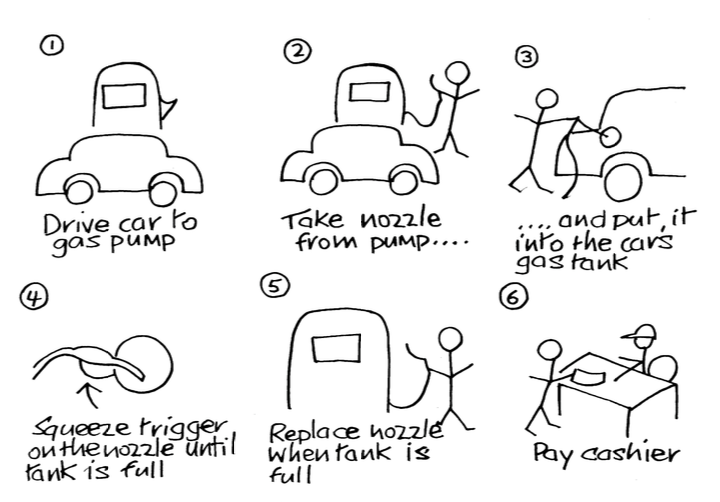
What prototype example is this
Sketches
What fidelity prototype level is this wireframe?
Low
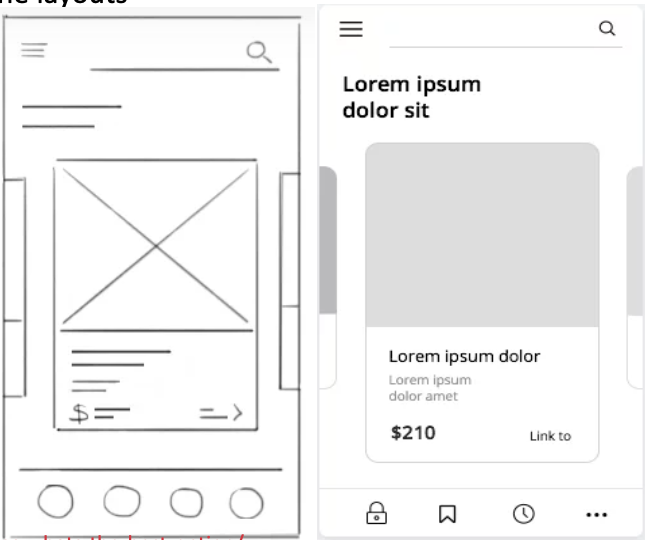
What fidelity prototype level is this wireframe?
Medium
Which prototype fidelity level is used at the advanced stages of the product design cycle, and provides a more realistic look and feel of the final product?
High-Fidelity
Which prototype fidelity level serves as a starting point in the design process, and is usually rough, messy, black and white, and contains only basic shapes?
Low-Fidelity
Out of the three fidelity levels, which of them are most commonly used?
Medium-Fidelity
Which prototype fidelity level serves as a starting point for the development process, and may be created on device templates?
High-Fidelity
What are the two dangers in high-fidelity prototyping?
Users may think the prototype is a fully functional system, and they may be less likely to suggest changes/imagine other possibilities
What are some advantages of Low-Fidelity Prototyping?
Cheap
Helps to identify requirements
Evaluates multiple deigns
Addresses layout issues
Useful communication tool
What are some advantages of High-Fidelity Prototyping?
Supports more functionality
Interactive
Useful for exploration and testing
Has look and feel of final product
Marketing/sales tool
What are some disadvantages for Low-Fidelity Prototyping?
Limited error checking
Poor spec for coding
Limited use
Limited usefulness for user testing
What are some disadvantages of High-Fidelity Prototyping?
Expensive
Time-consuming
Ineffective for requirement gathering
Users less willing to critique
What is the end goal for Low and High-Fidelity prototyping?
Low - Exploring ideas, proof-of-concept, and requirements gathering
High - User feedback for usability improvement
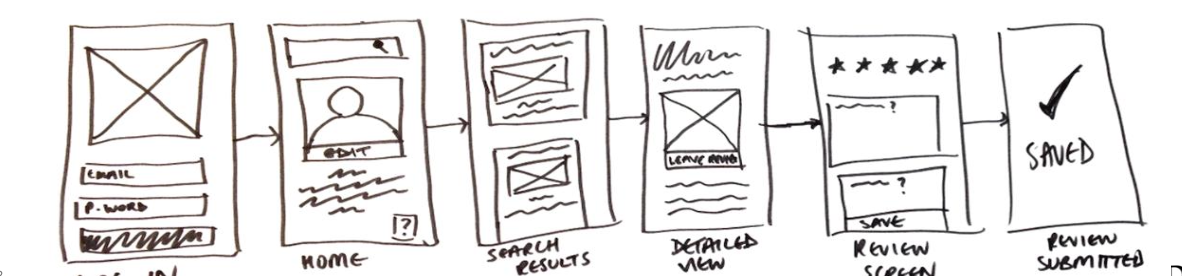
What are Storyboards?
A series of sketches that show how the user progresses through a task within the system
What is the main focus and stage of use for Storyboards?
The main focus of storyboards is to illustrate user interactions with a system in context, and they are used in the early stages of the design process
What are the main components of Storyboards?
Persona
Scenario
Visuals
Caption
What are the steps to create a storyboard?
Collect Data
Decide level
Define persona and scenarios
Plan out panels
Add visuals/captions
Distribute
What is the Wizard of Oz prototype?
A technique where the user imagines interacting with the system, but someone else simulates or controls the system responses
What are the Steps of Data Gathering for the Wizard of Oz Method (The 5 P’s)?
Create the Prototype
Decide Facilitator’s Prompts
Create a Study Protocol
Choose and Prepare the responder
Pilot the study
What are the two common types of compromises in prototyping?
Horizontal - Broad but shallow (only top level)
Vertical - Deep but narrow (few functions)
Which type of compromise in prototyping provides a wide range of functions with little detail?
Horizontal
Which type of compromise in prototyping gives in-depth functionality of a few selected features?
Vertical