Endocrine System Disorders
 Call Kai
 Learn
Learn Practice Test
 Spaced Repetition
 Match
Match Flashcards
 Knowt Play
1/24

There's no tags or description
Looks like no tags are added yet.
Name | Mastery | Learn | Test | Matching | Spaced | Call with Kai |
|---|
No analytics yet
Send a link to your students to track their progress
25 Terms
What is the cause of most endocrine disorders?
result of too little or too much of a hormone
Describe Graves disease
Prototypical autoimmune cause of hyperthyroidism.
mass production of T3 and T4
causes thyroid hyperplasia
can lead to thyrotoxic crisis/thyroid storm and can be fatal'
weight loss, increase appetite
exophthalmos
Would you expect TSH to be high or low in Grave’s disease?
TSH level is very low because the pituitary gland will try to be compensate for the excess T3 and T4 hormones in blood. Pituitary will stop production of TSH
Pathophysiology of exopthalamos
Protrusion of one or both eyes anteriorly out of the orbit due to an increase in orbital contents within the rigid bony orbit. ‘bulging eyes’
Common causes of hypothyroidism
Congenital = lack of thyroid development during fetal life, can lead to cretinism unless treat
Acquired = Deficient hormone synthesis, destruction of thyroid gland, impaired TSH or TRH secretion. Caused by autoimmunity, genetic defects, hashimoto thyroiditis etc
Cause of Hashimoto thyroititis
Autoimmune disorder where your immune system attacks your thyroid
Myxedema
A non-pitting edema caused by hypothyroidism where fibroblasts overproduce proteoglycans that accumulate in tissue and trap water in tissue gel
most severe form of hypothyroidism
Hypothyroidism treatment
Replace deficient hormone, lifelong replacement therapy initiated and increased gradually.
most common drug used is Levothyroxine
Cushing Syndrome
Excess of glucocorticoids-hypercortisolism
women are more likely to develop it
specifically related to pituitary tumors
elevated levels of cortisol —> neg. feedback —> pituitary decrease ACTH
Functions of cortisol
Stimulates glucose production, decreases tissue glucose utilzation, increase breakdown and circulation of plasma proteins, increase mobilization of fats, and prevents the release of chemical mediators that trigger the inflammatory response
Why are glucocorticoids prescribed to treat inflammation?
They are used to inhibit the expression of multiple inflammatory genes and are used to supress inflammation and chronic inflammatory diseases.
long term use leads to:
increased blood glucose
immune supression
osteoporosis
Causes of Cushing’s syndrome
long term high dose use of cortisol like glucocorticoids
development of too much cortisol
Body appearance alteration in Cushing disease:
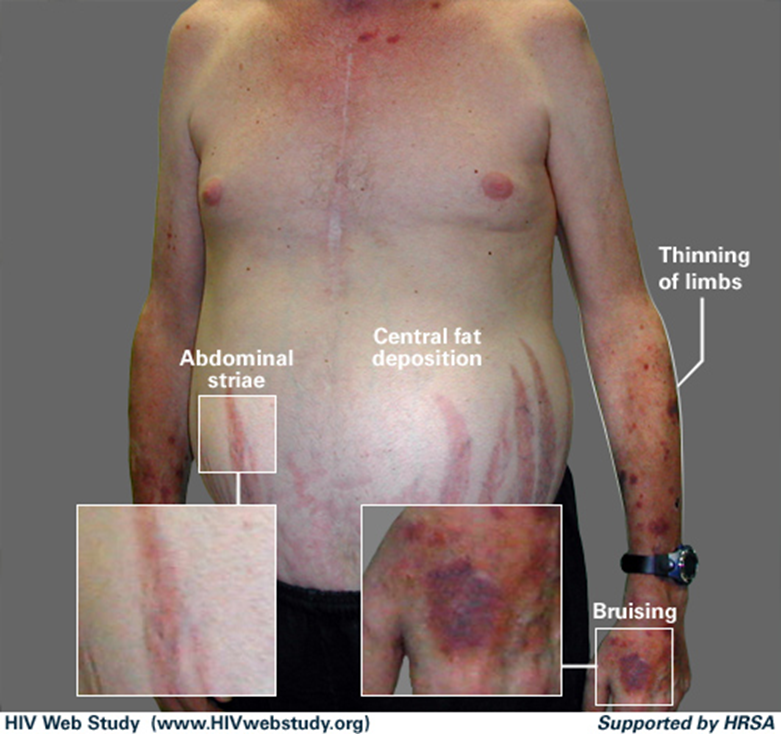
Thin arms and legs, a fatty hump between the shoulders, round face, wide purple stretch marks on abdomen, increase fat around the neck
buffalo hump
striae
Addison’s disease
A disorder that occurs when the adrenal glands don’t make enough of cortisol and other hormones. Autoimmune destruction of adrenal cortex. It can also be caused by the lack of ACTH
increased pigmentation
causes hyponatremia, hypotension, hyperkalemia
3 main types of diabetes mellitus
Type I, Type II, Gestational
Underlying cause type I diabetes
Insulin deficit, 10% of diabetics
Treatment for type I diabetes
Insulin replacement and balanced with exercise
Underlying problem in type II diabetes
Insulin resistance or impaired ability of tissues to use insulin; insufficient insulin in relation to need
What are the 3 Ps?
Polydipsia = excessive thirst
Polyuria = frequent urination
Polyphagia = increased appetite
Diagnostic criteria in type II diabetes
Most individuals are asymptomatic, random or fasting blood glucose measurements. If two fasting blood glucose measurments are over 126 m g/dL, type II diabetes suggested.
Treatment of type II diabetes
Weight control, individualized nutritional consultation, exercise, oralhypoglycemic agents/insulin, goal is to maintain optimal blood glucose levels
Gestational diabetes
Glucose intolerance during pregnancy. Placenta produces HPL which induces sligh insulin resistance in mother.
Outcomes in fetus and newborn if not treated.
Hyperglycemia can lead to large fetus (macrosomia), difficult birth and hypoglycemic crisis after birth. Fetal panceras can over secrete insulin after birth (hypoglycemia from hyperplasia of pancreas), 5-10% have congenital developmental anomalies such as spina bifida or heart defeat
Describe hypo and hyperparathyroidism
Hypoparathyroidism = commonly caused by damage to the glands during thyroid surgery or hypomagnesemia. Low PTH caused neurons to depolarize without usual stimulus, causing spasms and twitches
test with trousseau sign
Hyperparathyroidism = the gland makes too much PTH. Causes hypercalcemia, highblood pressure
Consequences of hypo and hyperthyroidism
Myxedema
protein carbohydrate complexes accumulate in the extracellular matrix drawing water into tissues
non pitting edema tissues