neuroscience of visuo-motor control
 Call Kai
 Learn
Learn Practice Test
 Spaced Repetition
 Match
Match Flashcards
 Knowt Play
1/23

There's no tags or description
Looks like no tags are added yet.
Name | Mastery | Learn | Test | Matching | Spaced | Call with Kai |
|---|
No analytics yet
Send a link to your students to track their progress
24 Terms
automatic visuo-motor beh
signals that do not seem to be under control of the organism
eg phototaxis
we like to think that we are not influenced by this
what is phototaxis
(e.g., moth) - attracted/move towards light
evo of the visual eyes stage 1
Eyes did not start out for vision, simple eyes are just sensory-motor receptors, receptors in the skin/cell wall of single cell organisms that respond to light (eg how skin cells are in sunlight then respond by tanning)
Whatever chemical change is triggered by light is passed onto a muscle cell or cilia, makes it twitch which moves it closer to the light, movement response to light
stage 2
Now also have cerebral photoreceptors - wired up in a way where they inhibit each other
So whichever receptor gets the stronger signal can shut down the opposite one
Means we have a very primitive form of photovision in place
Contrast enhancement - Two stimuli slightly different in intensity will produce a response, weak difference in the actual stimulus is represented in the organism as a stronger difference
stage 3
Then have same internal arrangement, have receptors and some cup shaped skin cells embedded, on top of that is a clear lens - Much better at capturing the photons from the sun
Improved photon collection allows us to become even more sensitive to the visual environment
stage 4
Add motor neurons, sensory neurons now connected to motor neurons as well as muscle.
Allows a switch in the type of movement that happens in response to light
Depending on which motor neurons get more activity, the part of the body that is activated can move towards the light or away from the light (called pos or neg phototaxis)
stage 5
Sea stars have this type of vision
Gets more complex by adding more neurons, eg add many interneurons
All of this step wise improves the complexity of visual computation and processing - eventually allows to integrate visual signals with signals from other modalities (animal might be able to smell or hear)
Now there are so many neurons involved, they can come together and all affect the way the organism sees
stage 6
Can add neurons which process signals at different speeds, allows us to detect motion in the outside world
Eg light that moves slowly/quickly etc
Eventually results in the development of eyes
so what does this tell us about evolution of the eyes
proceeded from simple non-visual to complex visual eyes
phototaxis mechanism
stage 3 is like moths vision
light shines most strongly on the right eye, so right eye gets the stronger signal, which means left muscle is suddenly activated, begins to twitch
If muscle starts twitching, left wing beats harder than it did before, turns in the direction of the light
Results in the right eye becoming more strongly activated, wing beats harder, moth will turn further towards the light
So moth is compelled to circle the light, cant escape the drive
how do we think of ourselves as being different
We like to think of ourselves on not being like that, there arent some signals in the environment that we just have to respond to, we do things because we plan to do them + voluntarily do them
reasons for us not being like a moth
Our brains are a lot more complex, around 80 billion neurons - level of complexity and computation power is 100 000s magnitude bigger
We can do anything we want
How do we want
Or is this actually true - do we do things because we want to do them or are there parts of our behaviour that are still automatic, not fully under our control
Eg ask to put left hand up, just do it, dont actually know why or how - somehow neural signals from speech transmitted into a pattern of signals into motor cortex that made out hand go up
Suggest that most of the things we do are not because we want to do them, but because they happen automatically, we dont know how we do these basic things, eg walking
Automatic processes that are the basis of our day to day life are quite moth like
behaviour without awareness in clinical contexts
visual neglect
blindsight
what is visual neglect caused by
damage to the right parietal cortex (e.g., stroke or accident)
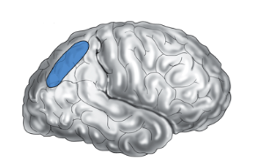
charcateritsics of visual neglect
If not too wide-spread, patient may have no deficit in perception, movement, cognitive skills (eg reasoning), arousal/wakefulness, orientation, motivation, etc.
But may consistently ignore the left half of the world: read only the right half of a page, wash, dress, shave, or apply make-up to only the right side of the body, eat only what’s on the right side of the plate
Selective ‘disinterest’ in the left side, but intact ability to make implicit selective choices based on unacknowledged information
formal tests for visual neglect
line bisection task (explicit)
object comparison task (explicit)
implicit knowledge task
line bisection task
ask pp to cut line in half, neglect: ends up on the far right
object comparison task
show a house with fire
when the fire is on the right, think the pictures are dif
when the fire is on the left side of the house, think its the same
so from the studies so far, suggests they just dont process the left side of their world
implicit knowledge task
dont ask to respond to the feature of interest directly, just ask something which is affected by it
Ask which house would prefer to live
Patient will reliable pick the one that is not on fire
what does this implicit knowledge task suggest
Cant be explained if the fire didnt enter their brain, info has to be there somewhere to make the decision
So can make implicit choice,
Info remains entirely unacknowledged
Eg when ask why they picked the top one they make up a reason, eg prefer shade of yellow better
Conclusion: conscious awareness of the left side is impaired, processing of left-side stimuli as such is not impaired. Making sensible decisions, fully processed without ever entering voluntary decision-making
what is blindsight caused by
Lesion to primary visual cortex causes scotoma (blindness in part of the visual field)
characteristics of blindsight
If part of the brain that receives visual input is damaged, would assume that whatever corresponds to it in the outside world must be gone - brain can’t process it
Patients report not seeing anything in that area (subjective blindness) - shown by black spot
Patients do not respond to stimuli presented in that area (objective blindness)