QUIZ 1: Composite and Bonding
 Call Kai
 Learn
Learn Practice Test
 Spaced Repetition
 Match
Match Flashcards
 Knowt Play
1/32

There's no tags or description
Looks like no tags are added yet.
Name | Mastery | Learn | Test | Matching | Spaced | Call with Kai |
|---|
No analytics yet
Send a link to your students to track their progress
33 Terms
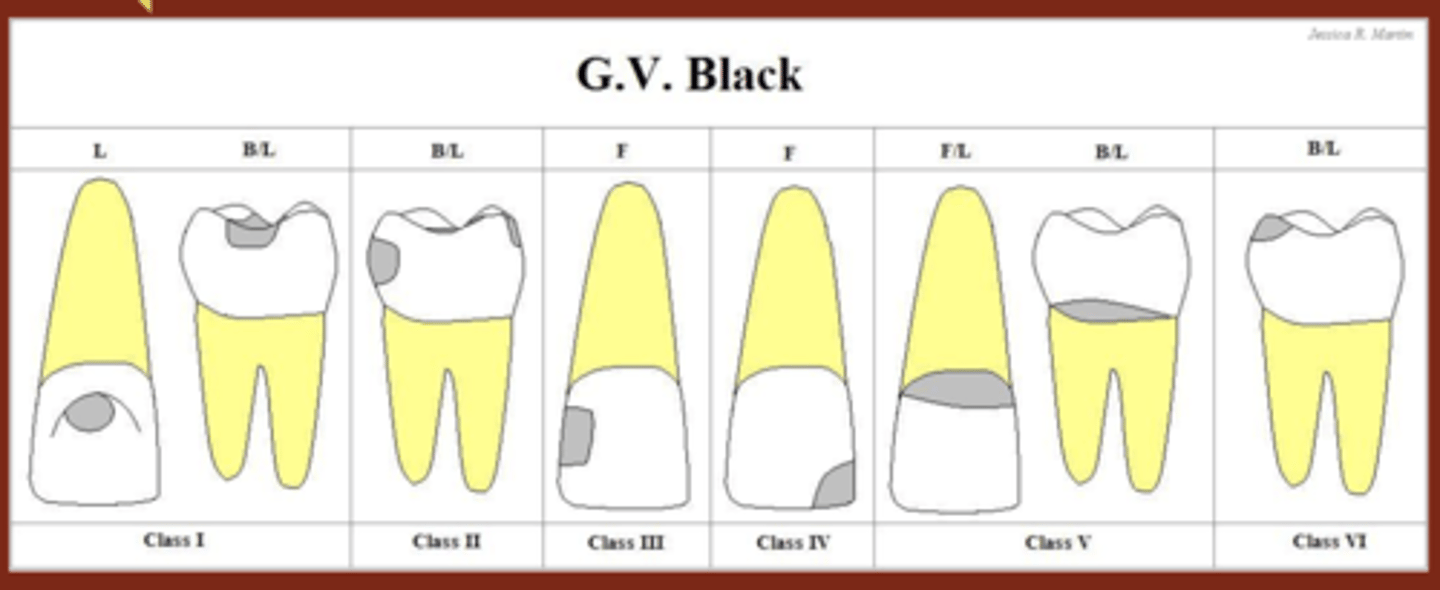
What are the restorative classifications?
Class 1: pits and fissures (we can do this)
Class 2: interprox of posterior teeth (we can do this)
Class 3: interprox of anterior teeth
Class 4: interprox and incisal edge of anterior teeth
Class 5: gingival third (gingival margin) (we can do this)
Class 6: cusp tips
Define adhesive
material that can "stick" flat surfaces together
Define micromechanical adhesion
using small irregularities to bond or stick surfaces together
Define macromechanical adhesion
using large irregularities to bond large surfaces together
What are the benefits of adhesion?
aids for a better bond
Why does composite need a clean work area?
it will not adhere if the area is unclean
debris free, smear layer, remove saliva, and use rubber dam
What is the purpose of acid etch?
remove parts of enamel rods at core and open dental tubules to make the composite adhere best
15 - 30 sec, 37% Phosphoric Acid Etchant
Is acid etch micro or macromechanical adhesion?
micro
What does over etching past the recommended time cause?
post op sensitivity
What appearance is ideal once etching is applied?
chalky white, don't over dry
Where is acid etch used?
Pit and fissure sealants
Composite restorations
Orthodontic brackets
What do you apply after acid etch?
remove it with water and dry
place bonding agent with microbrush
dry the tooth lightly
light cure it (minimum of 30 sec)
What does too much bond application result in?
thicker layer
solvent needs to be air thinned, so if it is too thick then it decrease the quality
Where is sealant composite used?
pits and fissures
What is flowable composite used for?
preventative restoration or sealer for orthodontics
Where is nanofilled composite used?
anteriors
Where is bulk-fill composite used?
large posterior
Where is macro composite used?
posterior (may be anterior)
Where is micro composite used?
anterior
What are the steps to a proper composite and bonding application?
1. Gather supplies
2. Acid etch --> apply for 15-20 seconds, rinse well with water and lightly dry, aim for chalky white appearance
3. Bond placement --> apply to enamel and dentin, air thin bond to remove solvent, and light sure for 15-40 seconds
4. Place composite --> layering may be necessary (2 mm per layer), use isolation, multiple light cures, and create anatomy and contacts
What type of isolations do we use when placing composite?
tofflemire bands
mylar strips
V-Ring system
Garrison
etc
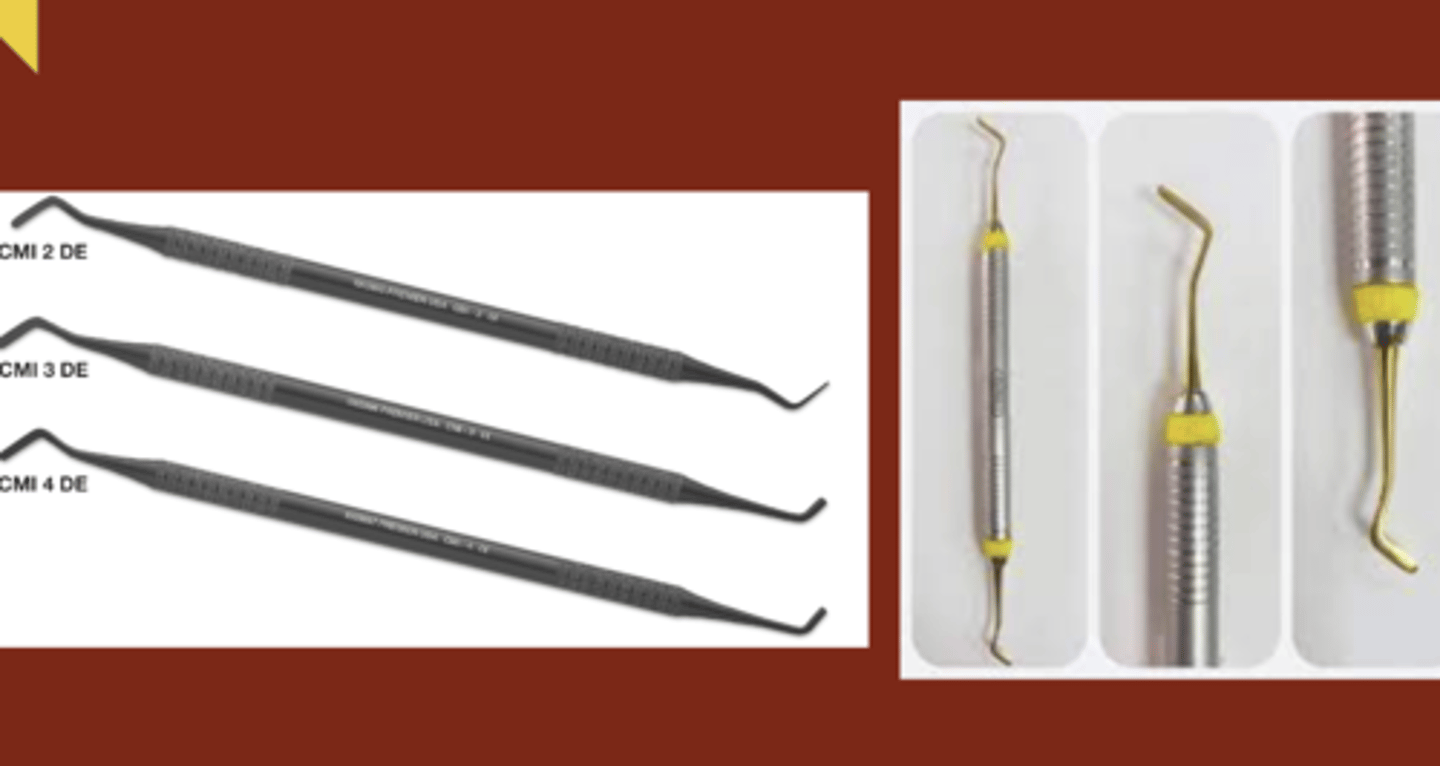
What instruments do we use for composite placement?
Anodized instruments
Teflon coated instruments
Helps increase composite surface finish and reduce damage to composite micro particles
If you are doing a composite on multiple classes, which one should you fill first?
Class II
What is axial wall condensation?
ensure composite is condensed into preparation
Why should you avoid hard pressure or folding composites?
leads to voids
How do you layer when placing composite?
2 mm layering
light cure after each layer
How do you select a shade for composite?
dentin vs enamel shade
use natural lighting to select
Does the time you light cure matter?
yes, ensure you are curing for enough time
can over-cure with no consequences
What do we use for finish and polishing for composite? What are the goals?
LUSTER
use finishing burs, polishing discs, and enhancing polishing points/cups/discs
reduce flash, smooth finish, correct occlusal contacts and anatomy
What are the common issues with composite and bonding?
It is a technique sensitive material
Shrinkage
Sensitivity
Longevity
Shade
How do we avoid shrinkage?
Incremental filling technique
Curing time
Depth of cure
How do we avoid sensitivity?
Placement of liner
Placement of desensitizing medication
How do we increase longevity?
use proper technique to increase longevity