L5 Movement and motor coordination
 Call Kai
 Learn
Learn Practice Test
 Spaced Repetition
 Match
Match Flashcards
 Knowt Play
1/57

There's no tags or description
Looks like no tags are added yet.
Name | Mastery | Learn | Test | Matching | Spaced | Call with Kai |
|---|
No analytics yet
Send a link to your students to track their progress
58 Terms
What is motor coordination
control of different muscles to achieve a movement task
How are muscle activated and what does it encompass
in a cooperative way, using multiple motor processes
What is motor control important for in life
daily living and functional tasks, and communication and social activities
Motor coordination – tell me its prevalence, when is it present in the lifespan, what the mechanisms are, which indicate its large impact on autistic people
80% prevalence (or high prevalence), present across the lifespan and mechanisms unknown
What are the 3 categories used to evaluate motor coordination
fine motor control, gross motor control and eye-hand coordination
What is the difference between fine, gross and eye-hand coordination
small vs bigger movements, eye-hand coordination requires both fine and gross motor control
Name 2 objective clinical measures used to assess motor coordination
movement assessment batteries (Movement ABC) and neurological soft signs batteries
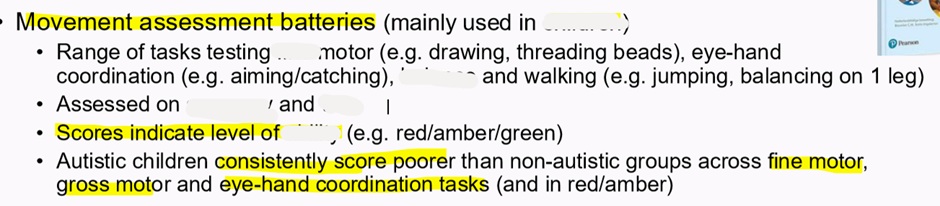
Complete info on Movement ABC
children, fine, balance, accuracy, time, ability

Complete info on neurological soft signs
overflow, dysrhythmia, persistence, muscle tone
What do objective research measures aim to assess about motor coordination, and name 4 examples of measures
the quality of movement
Name a subjective clinical vs research measure of motor coordination
quantitative questionnaires vs qualitative interviews/focus groups/questionnaires
Which objective clinical measure is best to use in adults
neurological soft signs
In pointing tasks (objective research measures), what is the nature of autistic peoples responses (time, nature, accuracy)
slower, jerkier, less accurate
In reach to grasp tasks, what is the reaction time and movement speed
longer and slower
What do objective research measures aim to determine about balance (2 things)
centre of pressure and postural sway
When measuring gait, answer whether the following are increased or reduced in autistic people – stride length, cadence (no. of steps), step width and base of support
reduce, increased, increased, wider (increased)
What is the Developmental Coordination checklist
an example of a subjective clinical measure of motor coordination
What do higher scores in the Developmental Coordination checklist indicate
likely Developmental Coordination Disorder
How do autistic groups tend to score compared to non-autistic groups on this checklist
higher
Name 3 fine motor movements autistic adults report difficultly with, according to qualitative studies
sewing, doing up buttons and tying shoelaces
Name 5 eye-hand coordination tasks autistic adults report difficultly with, according to qualitative studies
catching, throwing, pouring liquids, reaching difficult objects, dropping objects
Name 3 gross motor movements autistic adults report difficultly with, according to qualitative studies
walking, balance, bumping/knocking things
How do coordination issues shift over time
they remain throughout life, but some improvement due to strategies (not actual changes in motor coordination)
What is an emotional challenge of motor coordination difficulties
that it is noticed by others
Qualitative studies highlight what variability in motor difficulties
between and within people
Other than differences in motor strengths/weaknesses between people, what also differed between autistic people in this context
levels of awareness
Name 3 fine motor movements autistic children report difficultly with, according to qualitative studies
writing, tying shoelaces and using cutlery
Name 2 eye-hand coordination tasks autistic children report difficultly with, according to qualitative studies
throwing and catching balls
Name 3 gross motor movements autistic children report difficultly with, according to qualitative studies
unstable balance, jumping, climbing stairs
What is Developmental Coordination Disorder (DCD, also known as dyspraxia)
a condition characterised by difficulties with motor coordination
What proportion of children does it affect
Less than 10%
Assessment measures of motor coordination for DCD vs autistic motor coordination can differ – which tools tend to reveal differences between these groups
more standardised, lab-based quantitative measures
What are 3 examples of daily living tasks that autistic people will struggle with due to motor coordination difficulties
getting dressed, handwriting, sports
Trips and falls can be an impact of motor coordination difficulties, why is the particularly concerning for autistic people
they are leading cause of injury, injury-related disability, and death in older people
Why do autistic people show decreased levels of physical activity and increased risk of health conditions/obesity
because they tend to avoid challenging motor activities like physical activity
What are 2 consequences of movement requiring full concentration
active (non-optional) monitoring and extreme fatigue
What is the social impact of motor coordination difficulties
strained relationships due to negative reactions from others, and bullying and exclusion
What are 4 emotions experienced due to motor coordination difficulties
embarrassment, disappointment, frustration and fear
What are 3 impacts of this on emotional well-being
socially outcast, poor self-esteem, low confidence
Summary of impacts of motor coordination difficulties on children (4) vs parents (3)
daily activities, falls, reduced physical activity, and social and emotional well-being vs time, employment and social and emotional well-being
What are 3 time requirements from parents to support motor needs of autistic children
time to prepare, liaise with others and research support and suitable activities

Consider these findings, this points towards a relationship between motor and social difficulties – name 3 mechanisms underling the link between social and motor ability
reduced participation in play and exploration of social contexts, increased attention/effort needed to make movements and exclusion by self and others
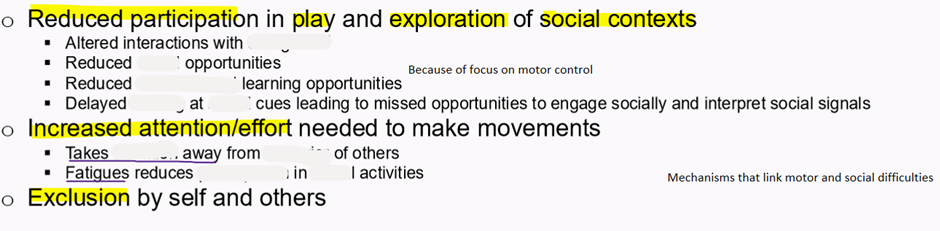
Complete the consequences of these mechanisms
caregivers, social, observational, looking, social, attention, behaviour, participation, social
Why are motor coordination difficulties often overlooked in autistic people
not routinely assessed, diagnosed or treated
Are therapies and support more available for children or adults
children
What are 5 examples of motor interventions that have been evaluated for autistic children
motor activity interventions, specific training of motor skills (e.g. balance, throwing), horse riding interventions, exergaming, school physical education programmes
What do motor activity interventions target
sports/recreational activities e.g. gymnastics, table tennis
What is the overall quality of evidence for motor interventions in autistic children
poor, even thought a variety have been assessed
Despite poor evidence, what has been generally observed as a result of these interventions
improvements in strength, motor ability and cardiovascular fitness
Name two examples of target support for children
occupational therapy (OT) and physiotherapy
What is the aim of OT
to promote participant and engagement in daily life activities, not necessarily to improve motor skills specifically
What is an example strategy targeted by OT
cognitive strategies
What is are two examples of exercises in physiotherapy
strength and balance
What are 3 problems with therapies
access, awareness and knowing what is offered
What are 3 personal strategies adopted by adults
practice and learning, practical strategies and avoidance
What is the overall outcome of practice and learning
takes a long time and does not achieve ability of peers but does lead to improvement
What are 3 examples of practical strategies
organising, reducing expectations and breaking up tasks
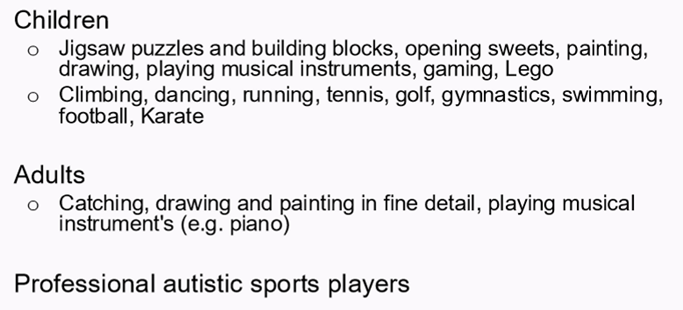
Consider these motor strength in autistic people, what does the existence of autistic professional sports players illustrate about motor coordination in autism?
It reinforces the spiky profile — motor coordination varies widely within and between autistic people, and significant motor strengths can coexist alongside specific difficulties.