5.2 Number Structure flashcards
 Call Kai
 Learn
Learn Practice Test
 Spaced Repetition
 Match
Match Flashcards
1/10

There's no tags or description
Looks like no tags are added yet.
Name | Mastery | Learn | Test | Matching | Spaced | Call with Kai |
|---|
No analytics yet
Send a link to your students to track their progress
11 Terms
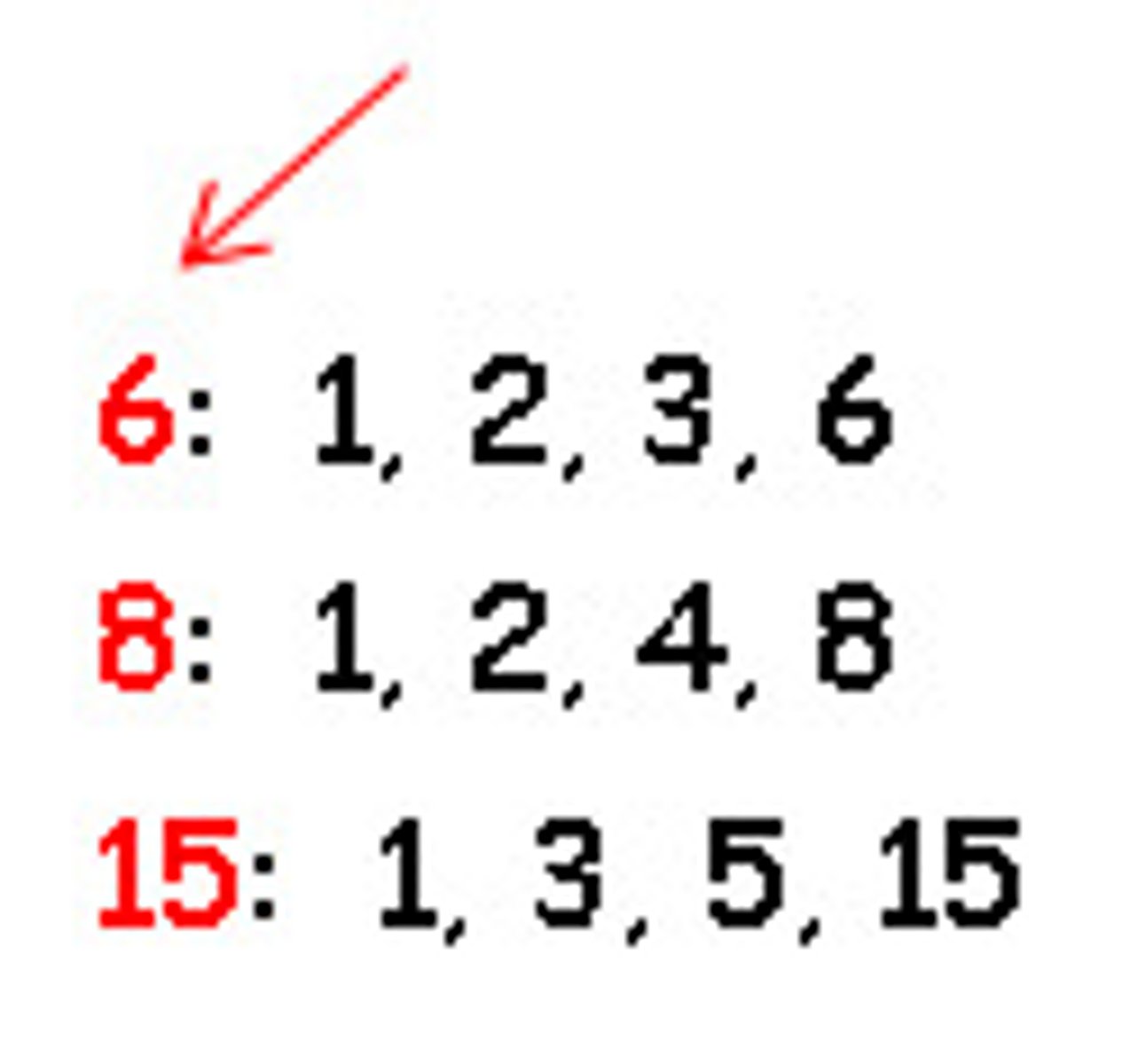
Factors
Numbers you can multiply together to get another number.
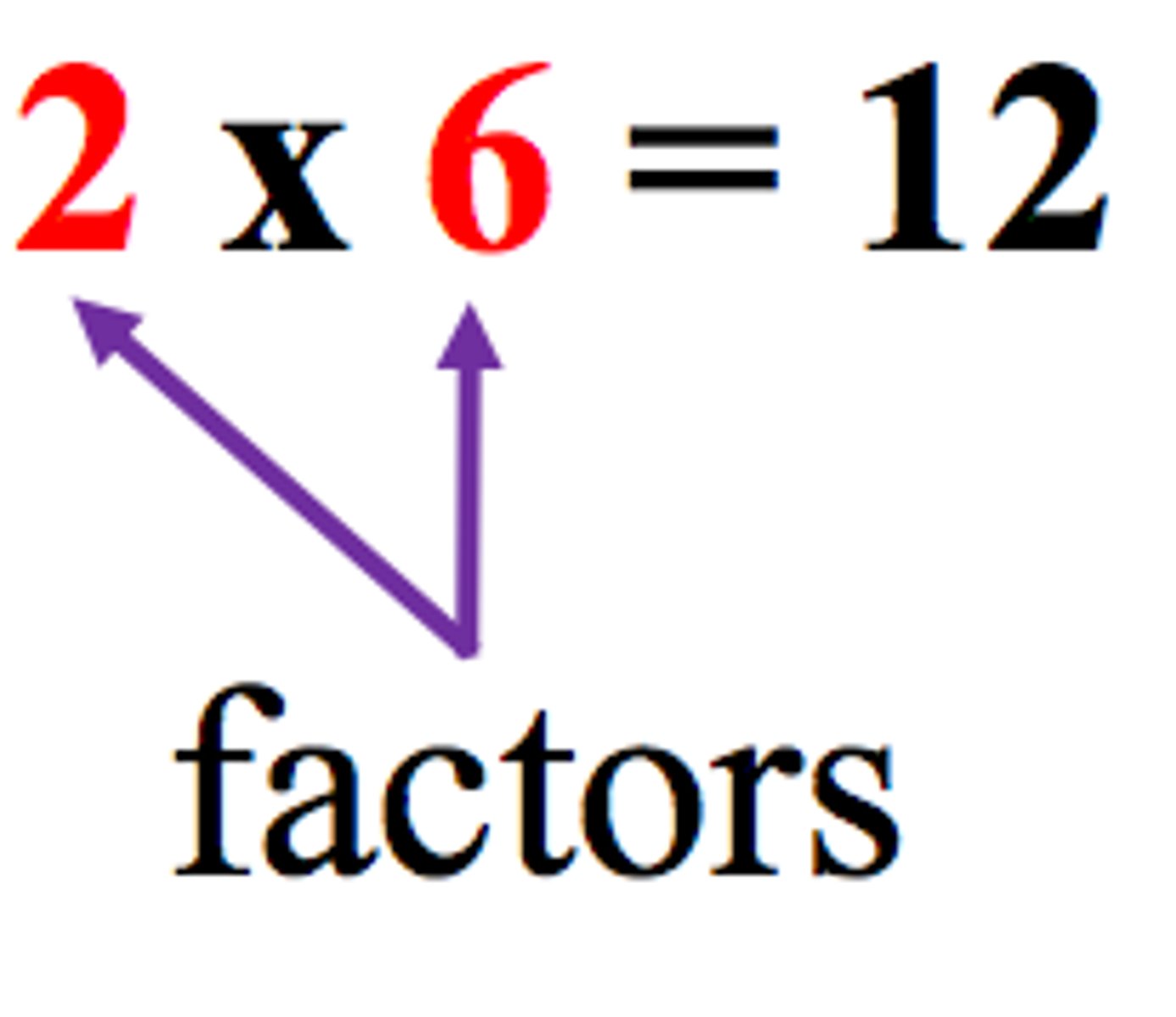
What are the factors of 12?
1, 2, 3, 4, 6, and 12 because they all multiply in pairs to make 12.
Factor tree
A diagram that helps you break down a bigger number into its smaller prime-number parts.
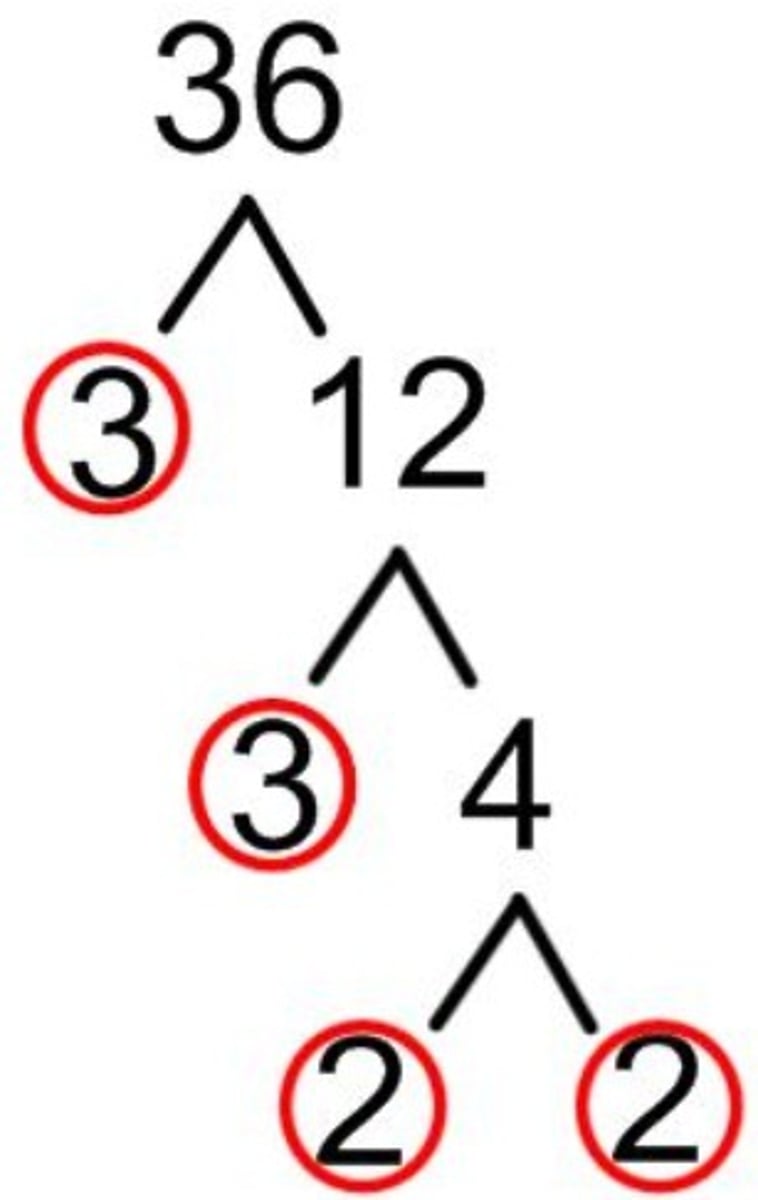
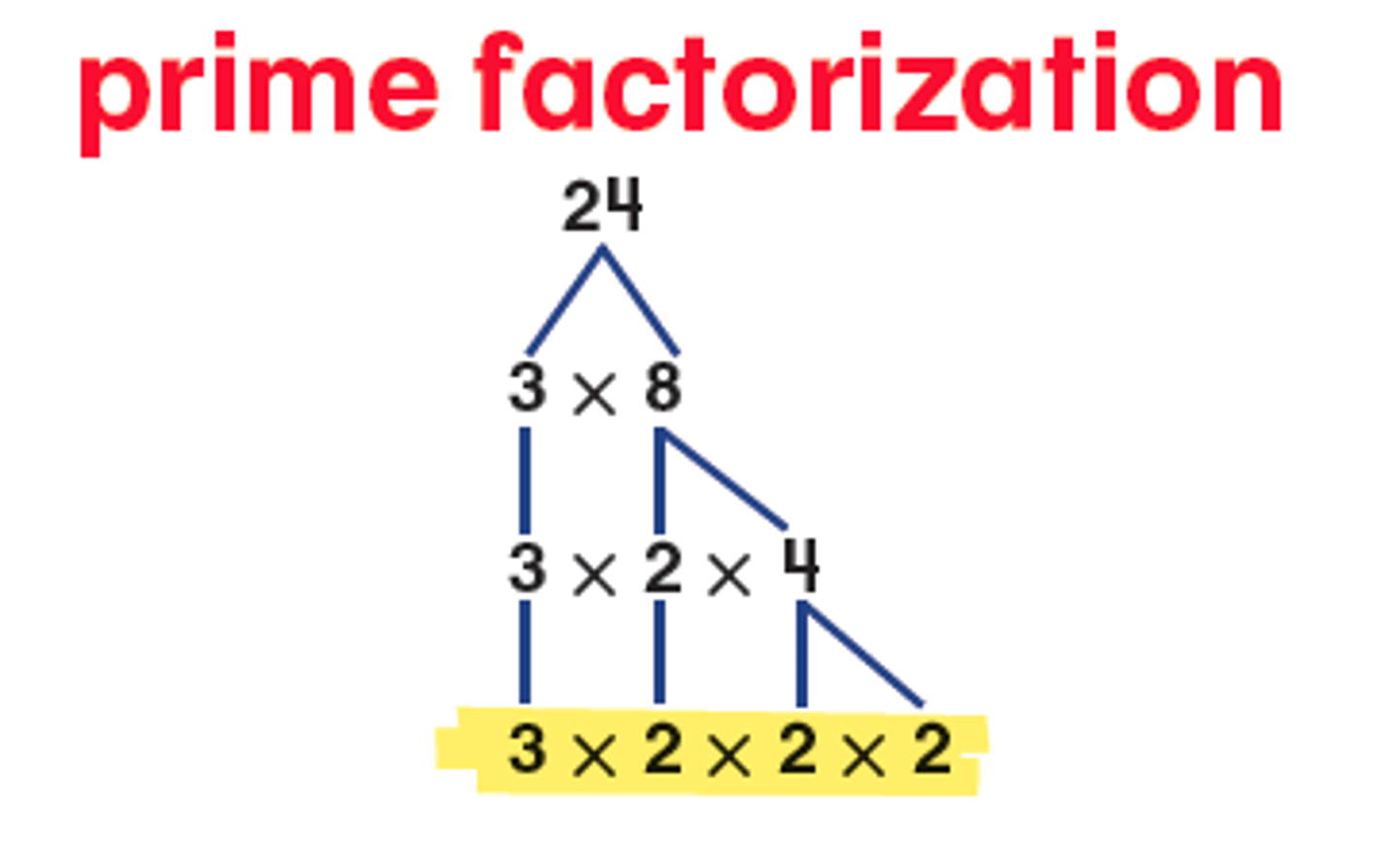
Prime factorization
The process for breaking a number down into its parts.
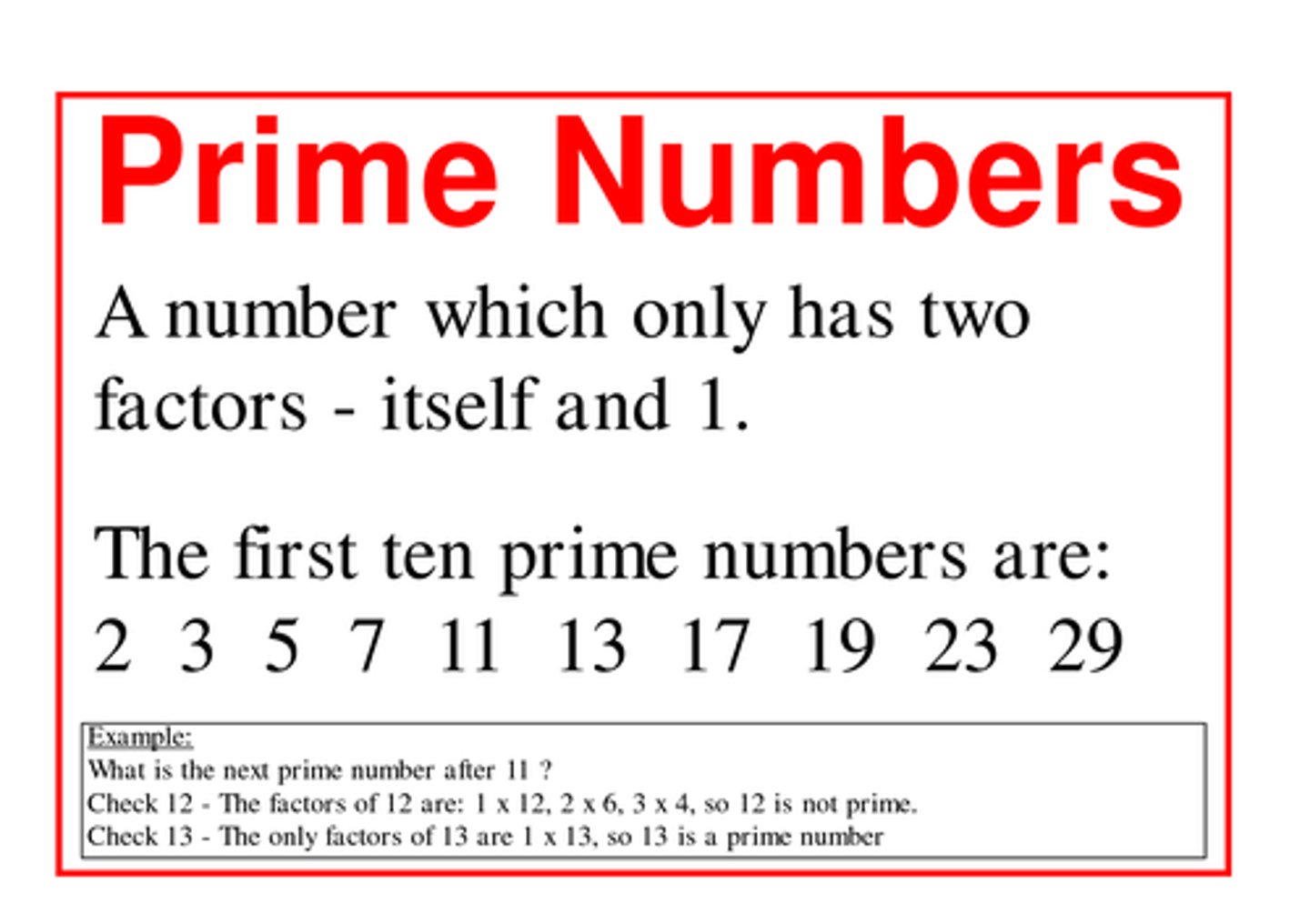
Prime
A number that can only be divided evenly by 1 and itself.
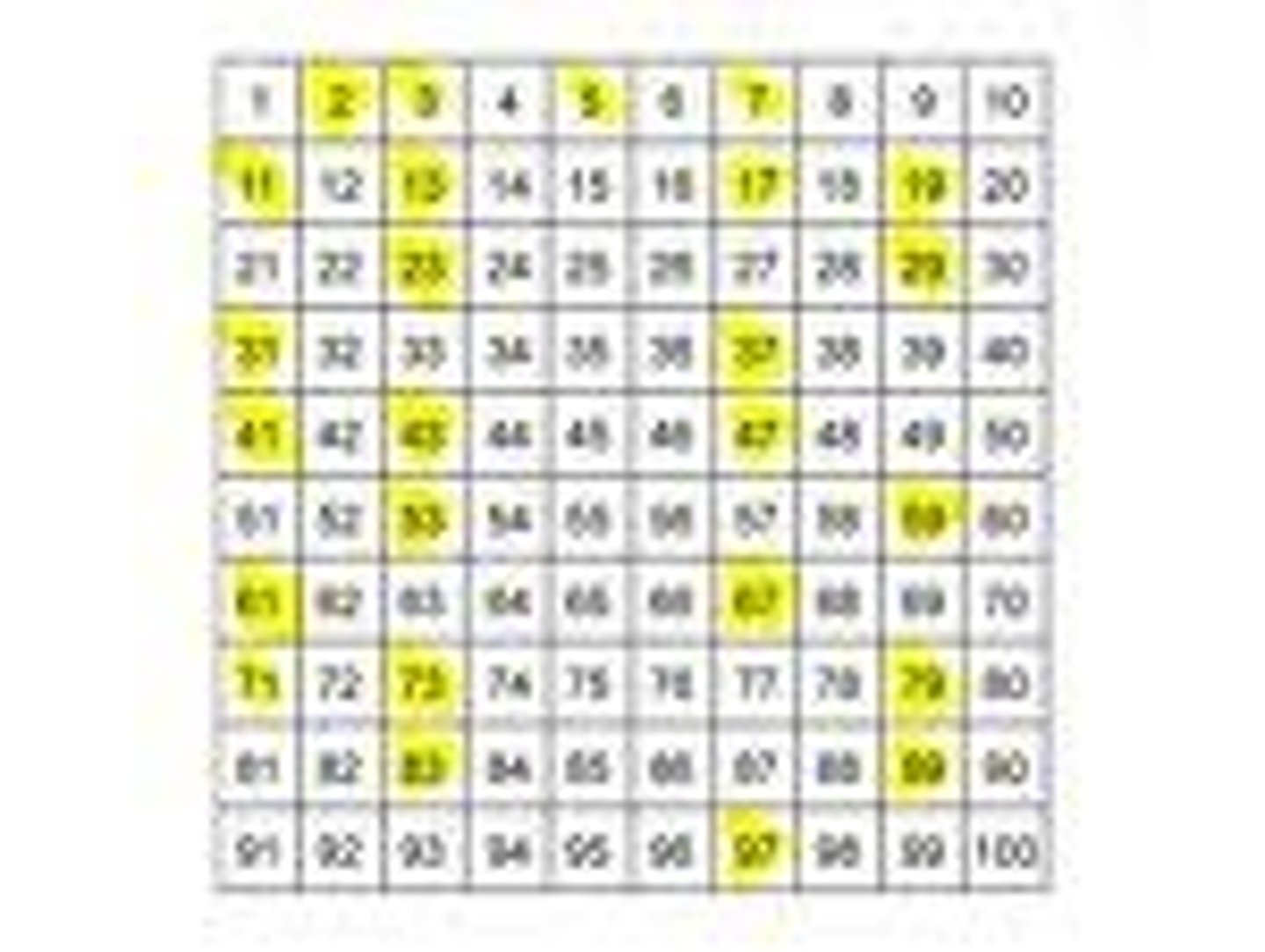
Examples of Prime Numbers
2, 3, 5, 7, 11, 13...
Composite
A number that has more than two factors—it can be made by multiplying smaller numbers.
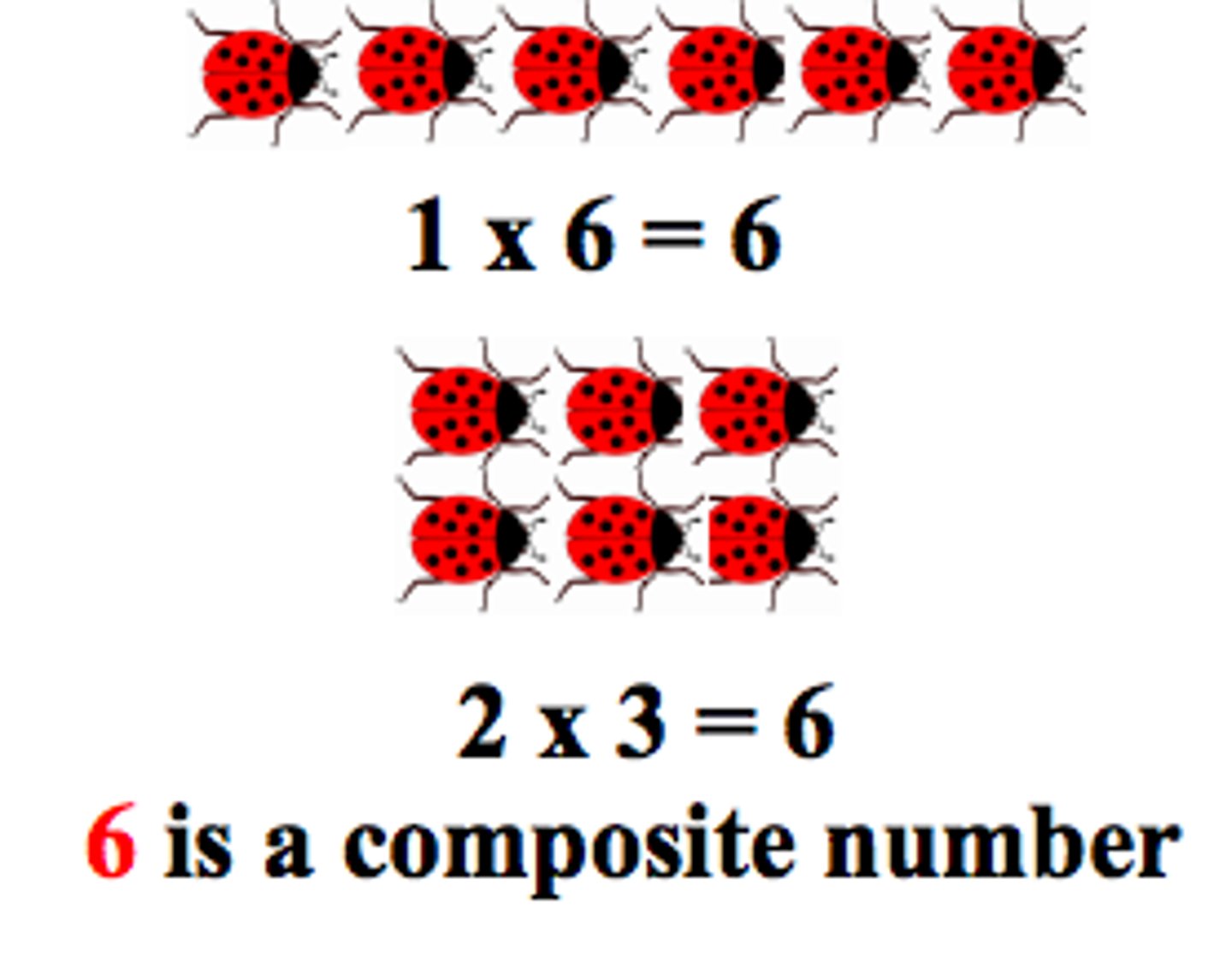
Example of Composite Number
6 is composite because 2 × 3 = 6.
How is the number '1' special?
The number 1 is not prime and not composite. It's called a 'unit.'
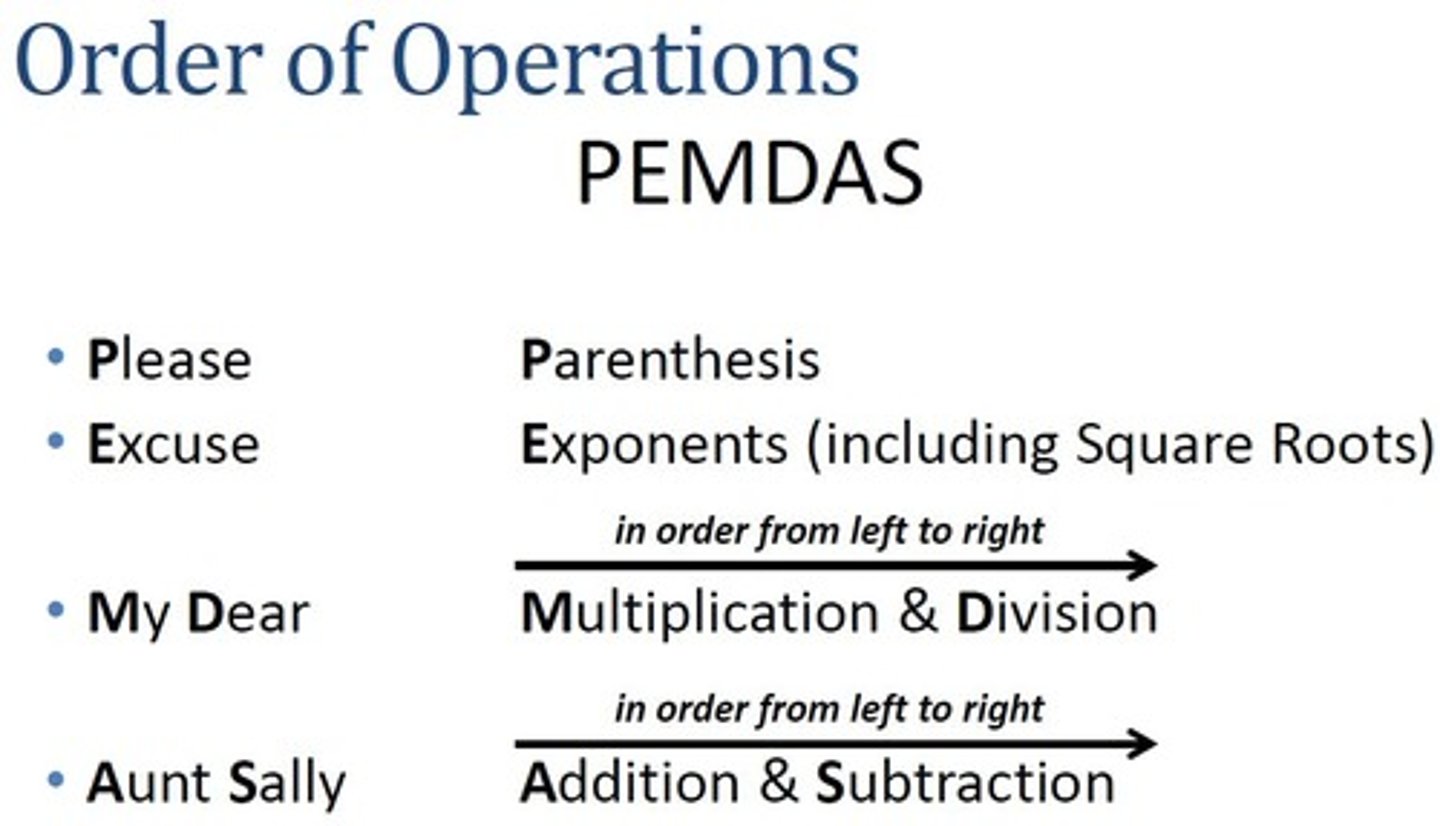
What is the Order of Operations?
PEMDAS (Parentheses Exponents Multiplication/Division Addition/Subtraction)
How do you find a Pattern rule?
1.Look at the first few numbers
2. Ask: Is the pattern going up, down
3. Try your rule on the next number