Circulation III
 Call Kai
 Learn
Learn Practice Test
 Spaced Repetition
 Match
Match Flashcards
 Knowt Play
1/39

There's no tags or description
Looks like no tags are added yet.
Name | Mastery | Learn | Test | Matching | Spaced | Call with Kai |
|---|
No analytics yet
Send a link to your students to track their progress
40 Terms
What creates a self-sustaining
pacemaker
Sinoatrial (SA) node ionic conductance
Electrical and mechanical events of the heart are
Coupled
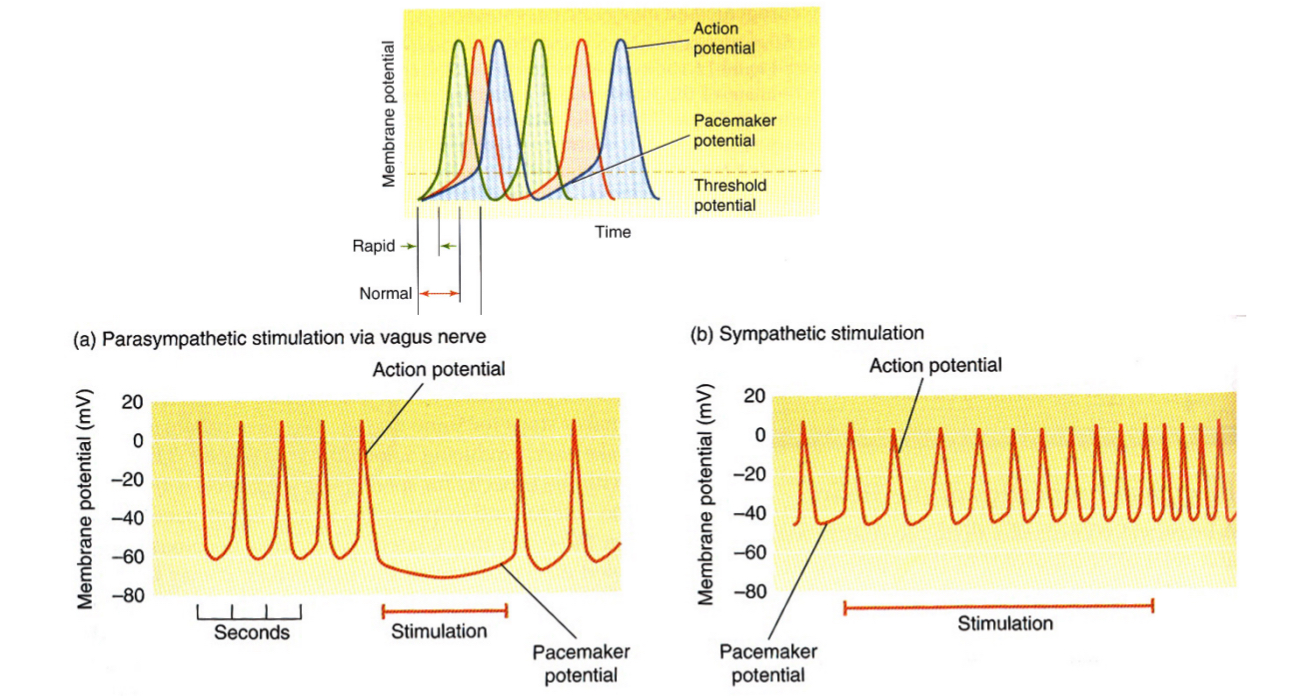
How do the parasympathetic and sympathetic branches of the autonomic nervous system reciprocally control heart rate?
by controlling the pacemaker potential in the SA node
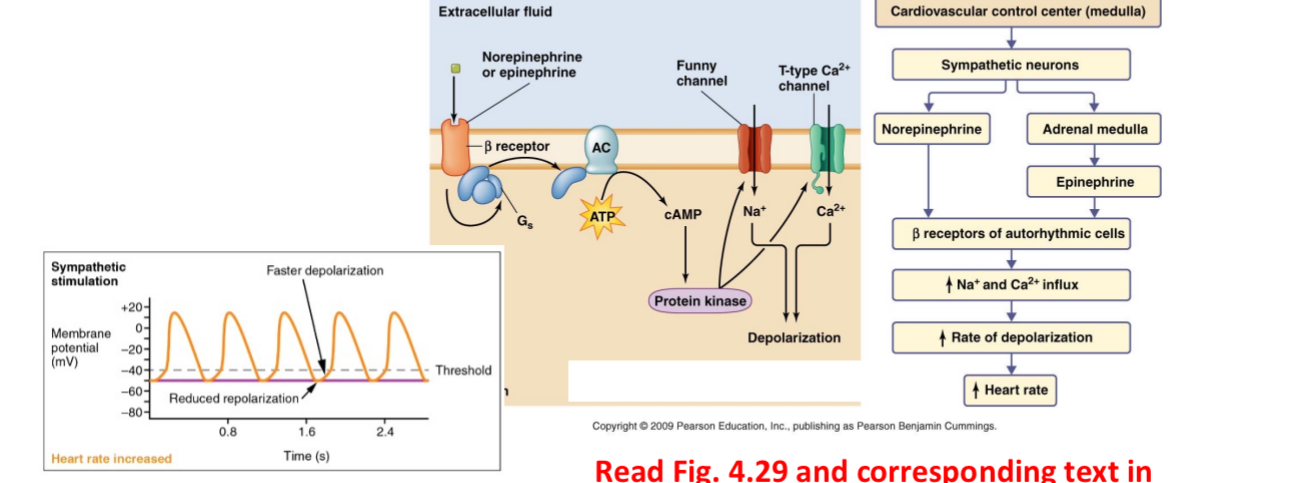
How does the sympathetic nervous system accelerate the SA node pacemaker
Via Beta Adrenergic Receptors.
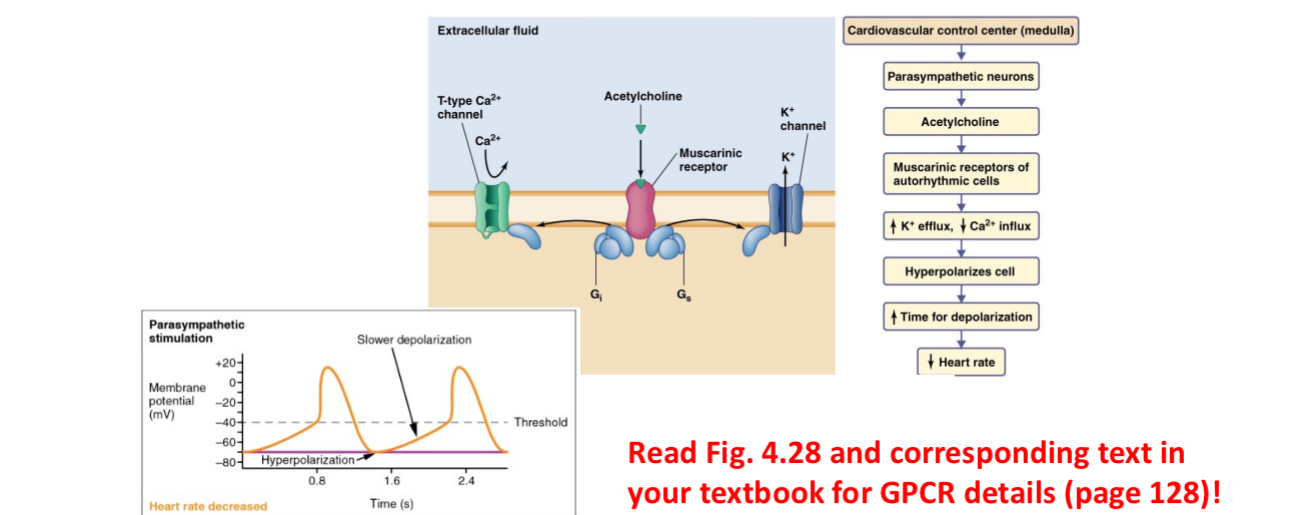
How does the parasympathetic nervous system slow the SA node pacemaker?
Via muscarinic acetylcholine receptors
Cardiac output is the product of
heart rate and stroke volume
CO = HR x SV
What modulates the force of heart contractions?
The sympathetic nervous system
What effect does increasing the force of contraction have?
It increases stroke volume, thereby increasing cardiac output.
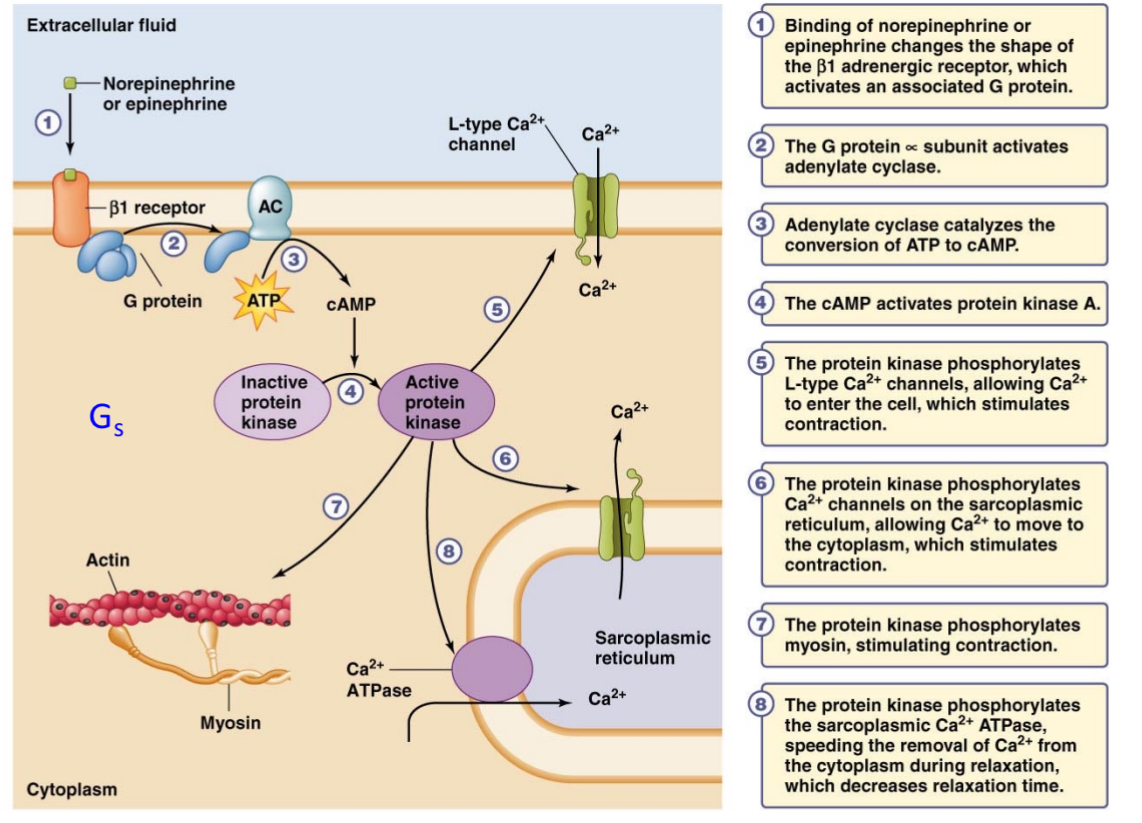
Explain the general process of sympathetic nervous system modulating the force of heart contraction
Via G coupled protein receptors so…
Does blood pressure differ or remain constant over regions of the circulatory system?
Differs
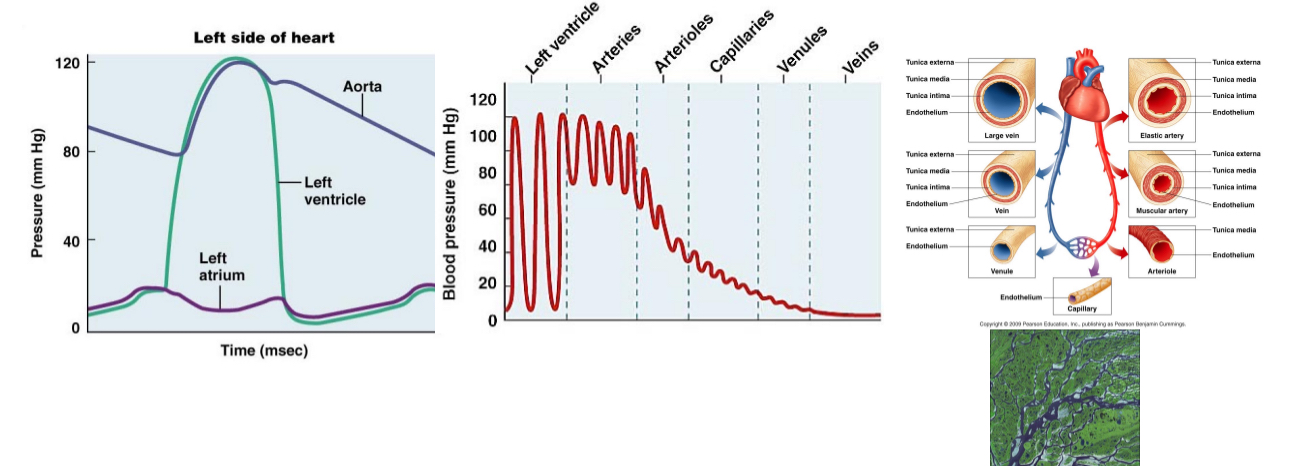
What causes the aorta to expand?
Blood flows rapidly into the aorta during the ejection phase of ventricular contraction, pushing out on the walls of the aorta
How is aortic pressure reduced as the heart relaxes?
As the heart relaxes, blood flow into the aorta ceases, but flow out into the arterioles continues, resulting in reduced aortic pressure.
What helps to push blood through the vasculature, maintaining pressure and flow?
Elastic recoil of the arterial walls
Do veins maintain high or low blood pressure?
Low blood pressure
In the skeletal muscle pump, what happens when a skeletal muscle contracts? Is blood pumped in both directions or unidirectionally?
Pressure is produced that squeezes blood toward the heart, preventing backflow.
When a skeletal muscle contracts, it puts pressure on the vein, pushing blood in both directions. The resulting pressure opens the proximal one-way valve and closes the distal one-way valve, squeezing blood toward the heart and preventing backflow.
What effect does relaxing skeletal muscle have?
The relaxation reduces pressure on the distal valve, which opens and allows blood to flow in.
When the skeletal muscle
relaxes, the one-way valves are in what kind of configuration?
Opposite configuration
Is systolic pressure associated with ventricular contraction or relaxation?
Contraction
Is diastolic pressure associated with ventricular contraction or relaxation?
Relaxation
Highest arterial blood pressure is associated with systolic or diastolic pressure?
Systolic
Lowest arterial blood pressure is associated with systolic or diastolic pressure?
Diastolic
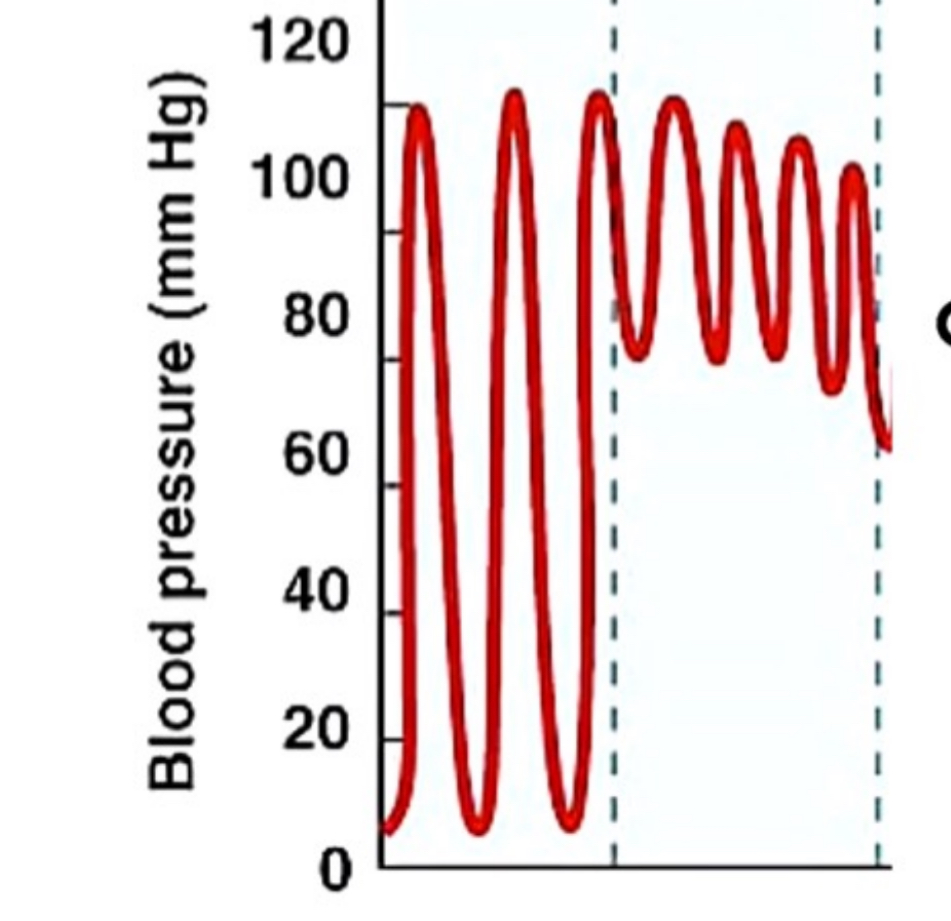
Is the left half “left ventricles” or “arteries”?
Left ventricles
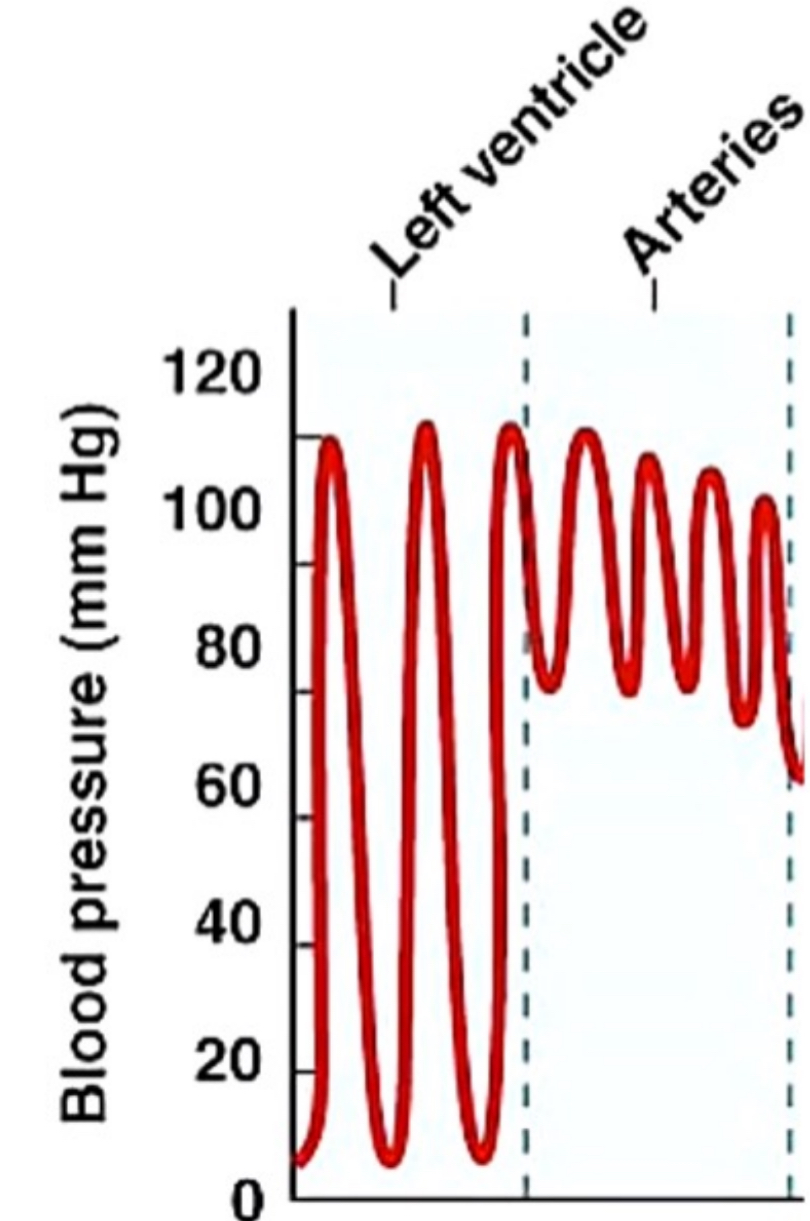
What is Mean arterial pressure (MAP)?
average blood pressure in the arteries across the cardiac cycle.
MAP = CO x TPR
CO: cardiac output
TPR: total peripheral resistance
Hint: CO = MAP/TPR
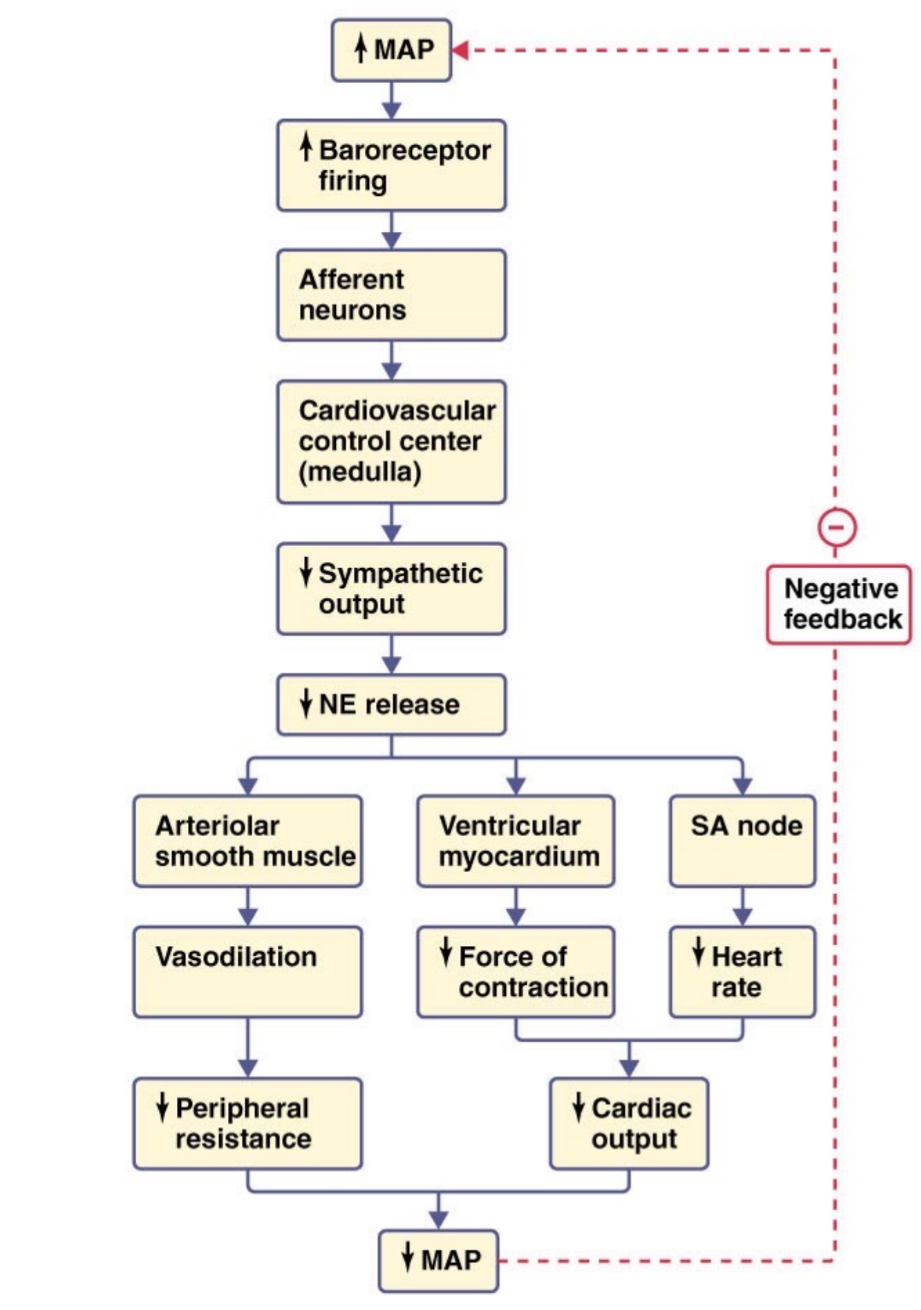
What do baroreceptors do?
monitor blood pressure and signal to the
cardiovascular control center of the medulla
How is local flow mainly controlled?
by altering the diameter of arterioles leading to the capillary beds.
What is Poiseuille’s Equation?
It is on Flow [volume per unit time]
![<p>It is on Flow [volume per unit time]</p><p></p>](https://assets.knowt.com/user-attachments/fc9e1655-95b4-4a60-b20f-4b535eaf4595.jpg)
What intrinsic mechanisms regulate vasodilators?
Metabolic:
decreased Oxygen
Increases CO2
Increased H+
Increased K+
Prostaglandins
Adenosine
Nitric Oxide
What intrinsic mechanisms regulate vasoconstrictors?
Myogenic
stretch
Metabolic
endothelins
What is the purpose for intrinsic mechanisms (autoregulation)?
Distribute blood flow to individual organs and tissues as needed.
What is the purpose for extrinsic mechanisms?
Maintain mean arterial pressure (MAP)
Redistribute blood during exercise and thermoregulation.
What extrinsic mechanisms regulate vasoconstrictors?
Neuronal
increased sympathetic tone
Hormonal
angiotensin II
Antidiuretic hormone
Epinephrine
Norepinephrine
What extrinsic mechanisms regulate vasodilators?
Neuronal
decreased sympathetic tone
Hormonal
atrial natriuretic peptide
Diffusion can be sufficient for gas exchange in what kinds of organisms?
For single cells or very small/thin organisms.
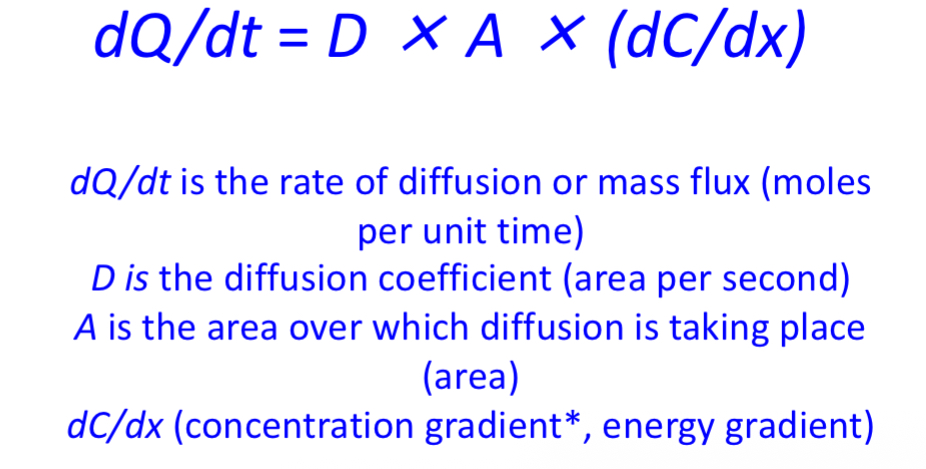
What is the Fick equation and what do it do?
The Fick equation quantifies the rate of
diffusion through a tissue sheet.
Can bulk flow of water or air deliver O2 directly to internal cells and tissues?
Yes
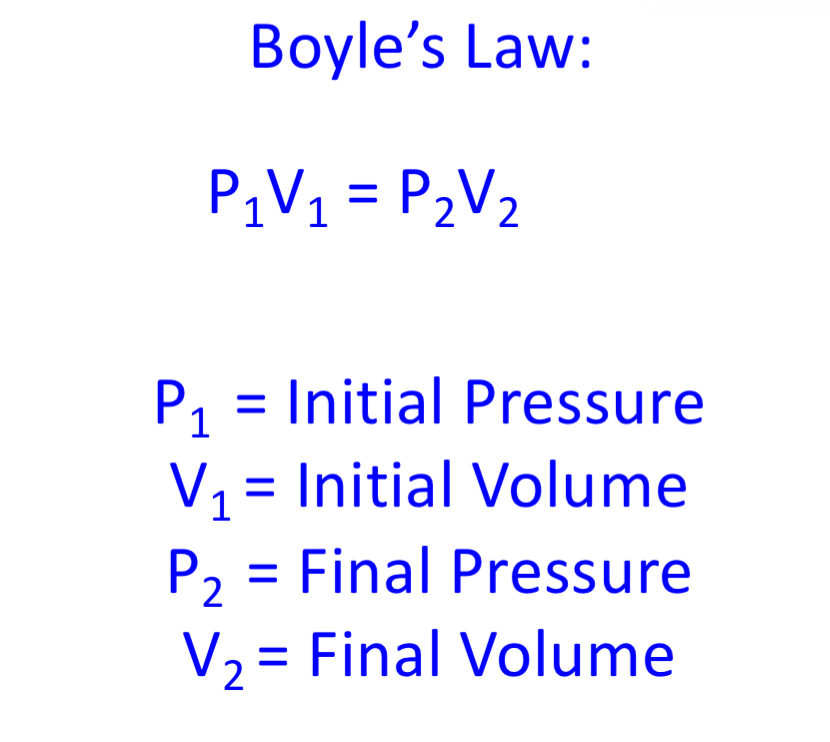
Boyle’s Law Equation
Boyle's Law in physiology states that at a constant temperature, the pressure of a gas is inversely proportional to its volume.
During inspiration, the diaphragm contracts and the chest cavity increases in volume which decreases the pressure within the alveoli below atmospheric pressure, causing air to flow in. During expiration, volume decreases, increasing pressure and pushing air out