Sexual and Gender Minorities + ...
 Call Kai
 Learn
Learn Practice Test
 Spaced Repetition
 Match
Match Flashcards
 Knowt Play
1/15

There's no tags or description
Looks like no tags are added yet.
Name | Mastery | Learn | Test | Matching | Spaced | Call with Kai |
|---|
No analytics yet
Send a link to your students to track their progress
16 Terms
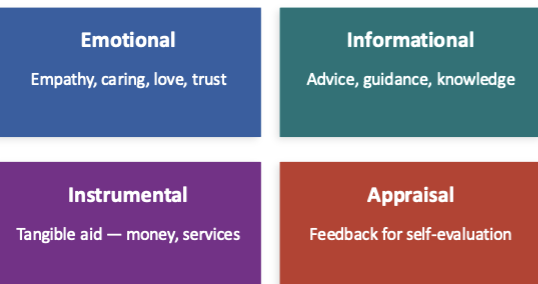
Social support:
the degree to which interpersonal relationships serve key social functions that promote well-being and buffer against stress
functional content of our relationships
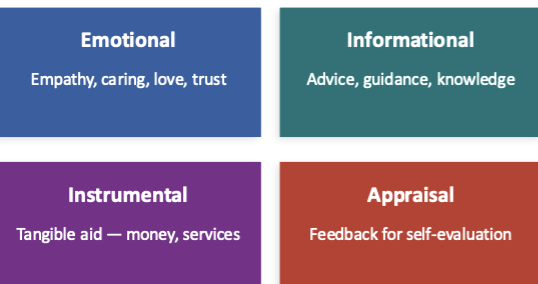
People with low social support have what?
have significantly higher mortality risk, even after controlling for unknown determinants
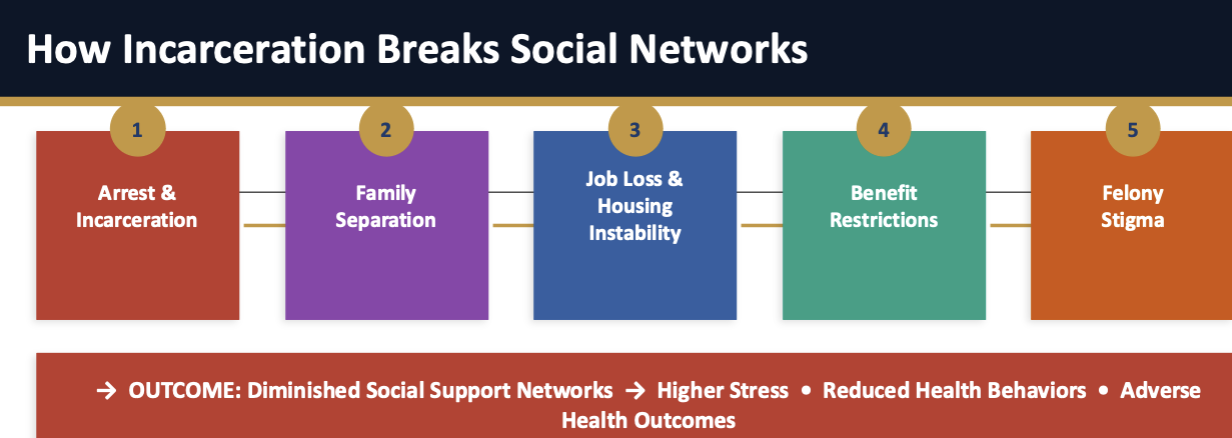
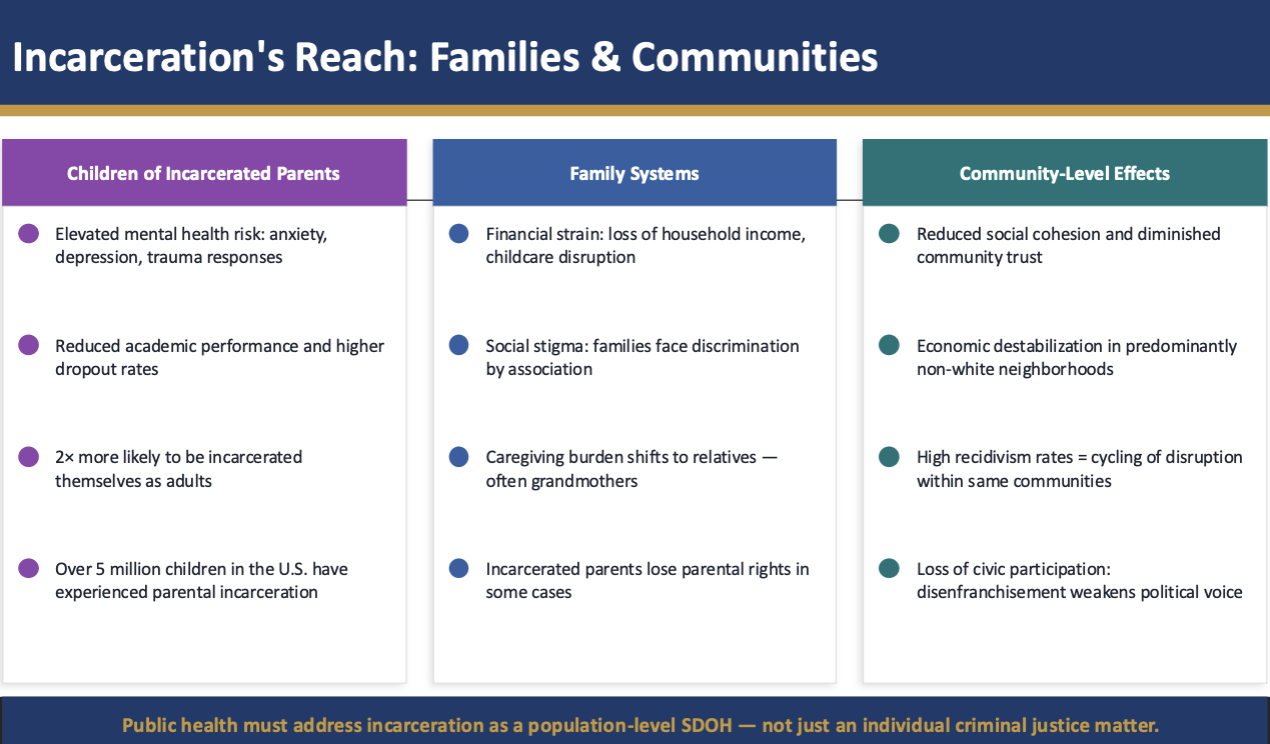
incarceration is one of the most powerful and policy-driven disruptors of social support in U.S.
Incarceration:
number of inmates under the jurisdiction of state or federal prisons or held in local jails where State and federal prisons house inmates sentenced to more than 1 year of incarceration
Local jails hold inmates sentenced to less than 1 year; people who violate parole or probation; and those awaiting trial, sentencing, or transfer to prison
each stage compounds the next and recidivism restarts the cycle
communities with high incarceration rates experience reduced social cohesion and civic participation
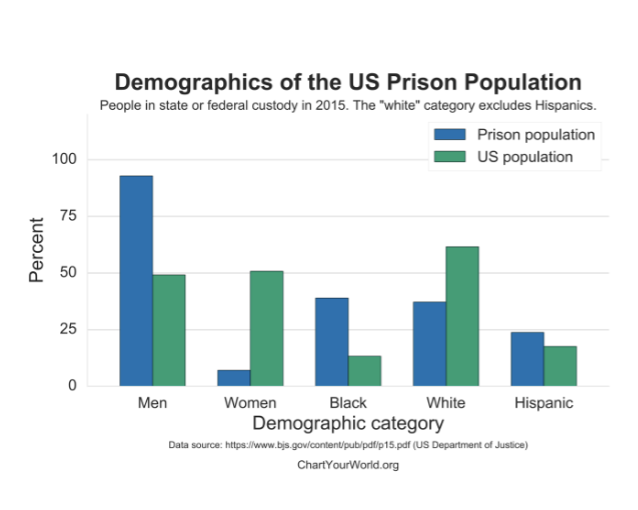
Disparities in Incarceration:
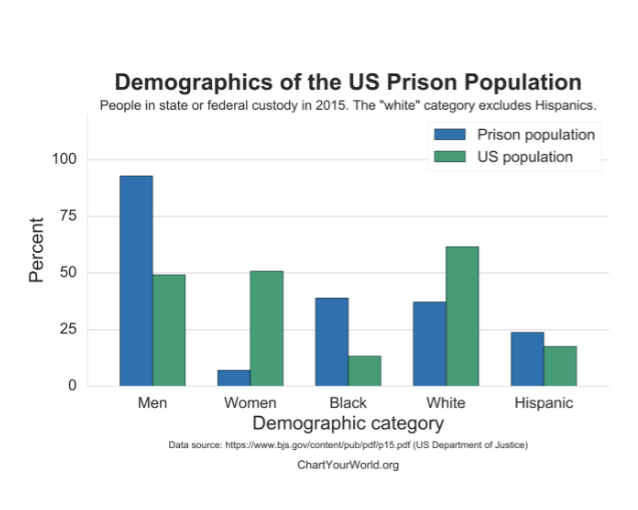
higher rates of incarceration are often seen among racial/ethnic minorities and people with lower levels of education which data for incarcerated women shows similar racial/ethnic disparities
Lifetime risk of being incarcerated is 5 per 1,000 for white women, 15 per 1,000 for Latinas, and 36 per 1,000 for black women
People without high school diplomas or GEDs have a greater likelihood of being incarcerated than their more educated peers
The incarceration rate of self-identified lesbian, gay, or bisexual persons was 1882 per 100 000
What does research show on racial disparities?
shows that some of the racial disparities in the U.S. incarceration rate may be influenced by state and federal policies such as “three strikes” and mandatory minimum sentences
We see higher rates of what among incarcerated individuals?
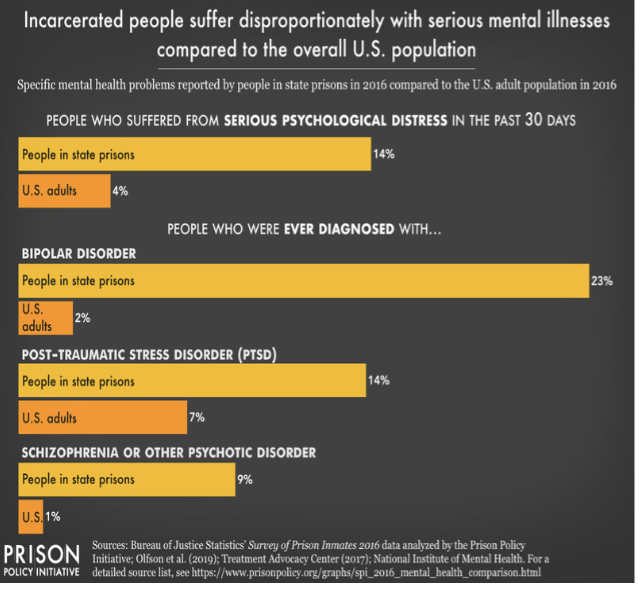
higher rates of mental health problem among incarcerated individuals where more than half of all prison and jail inmates had mental health problems and when compared to the general population, jail and prison inmates of both genders are more likely to have high blood pressure, asthma, cancer, arthritis, and infectious diseases, such as tuberculosis, hepatitis C, and HIV
downstream consequences of disrupted social support, structural discrimination, and limited civic participation
True or False: Formerly incarcerated individuals are at an increased risk for experiencing health issues.
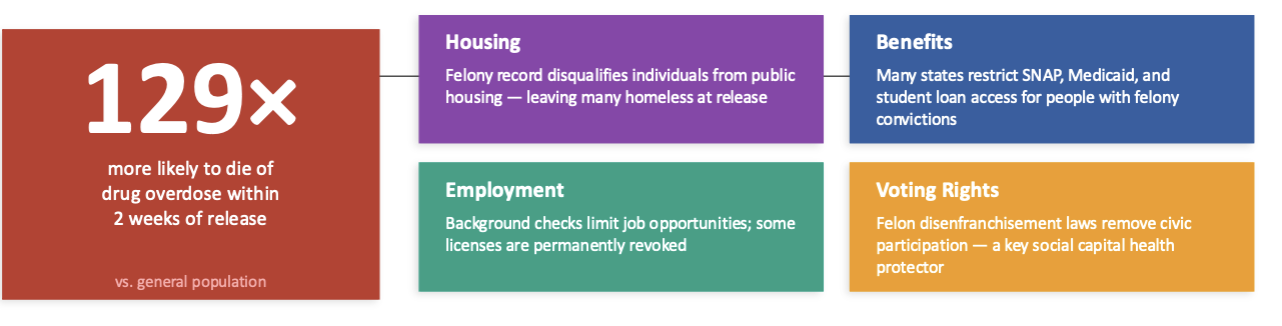
True, and 2 weeks following their release, former prisoners are 129 times more likely than the general public to die of a drug overdose
Women experiencing incarceration:
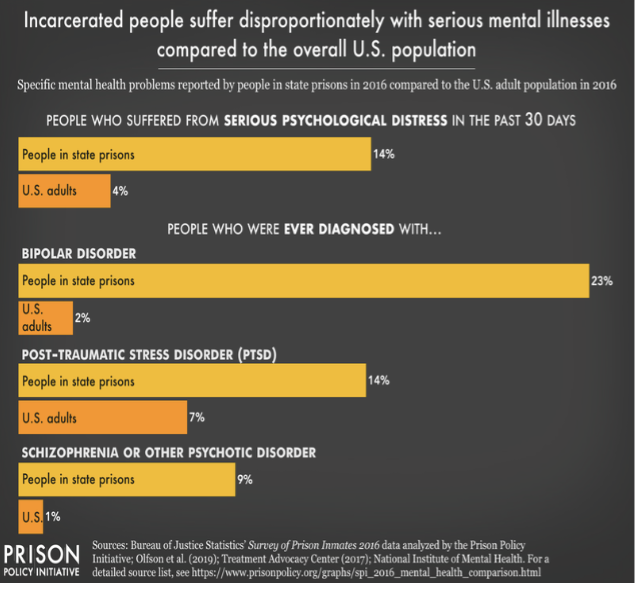
fastest growing incarcerated population in the U.S. where they are significantly more likely than incarcerated men to have a serious mental health condition, roughly 31% of women in jail vs. 14% of men
Nearly 80% of incarcerated women are mothers, and most were the primary caregiver before incarceration
58% of women in state prisons report having experienced sexual violence prior to incarceration
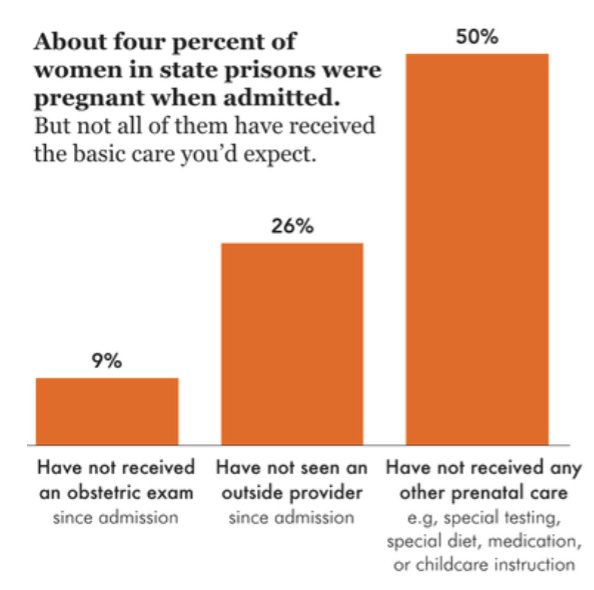
higher rates of HPV, tuberculosis, and substance use disorders than their male counterparts
How did we get to mass incarceration?
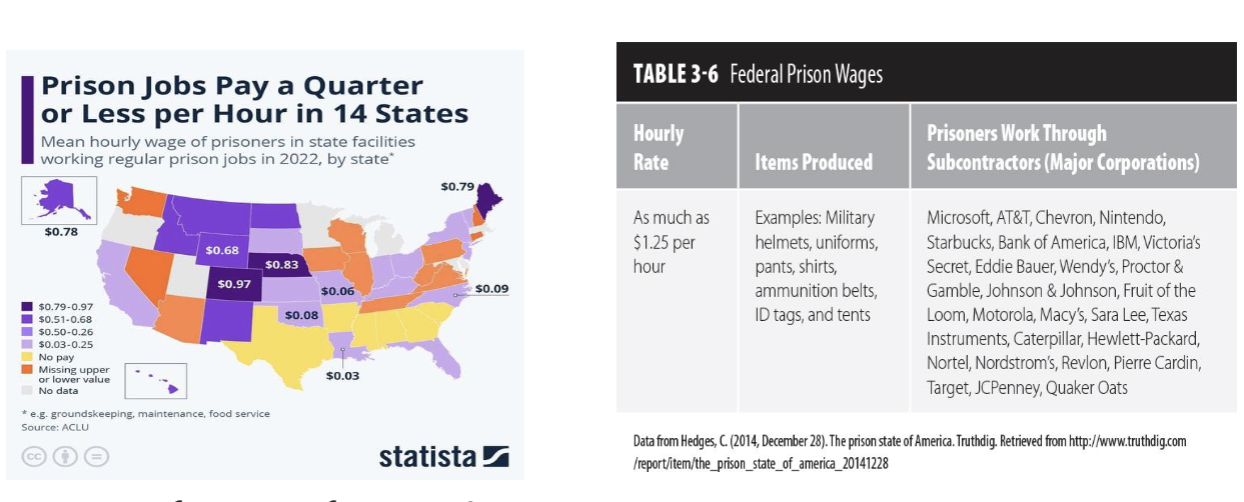
Private prisons need high incarceration rates for contracted private companies and they are businesses that are traded per the NY stock exchange
Prisoners are cheaply available labor, lending to significant profits
In order to achieve their 90–100% occupancy rates required per contracts, they rely on what?
Mandatory minimum sentences
Felony plea bargains
Three-strikes laws
Immigration detainment
Arrests of young people
School-to-Prison Pipeline:
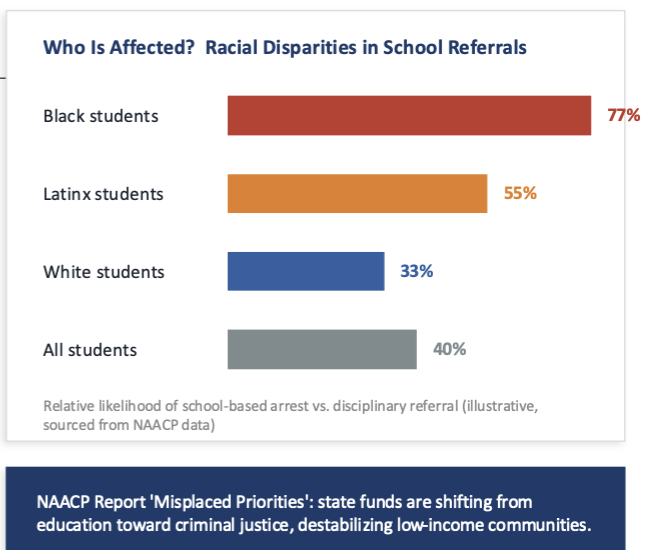
set of policies and practices that funnel students, especially those from marginalized communities, out of schools and into the criminal justice system
zero-tolerance policies
Zero-Tolerance:
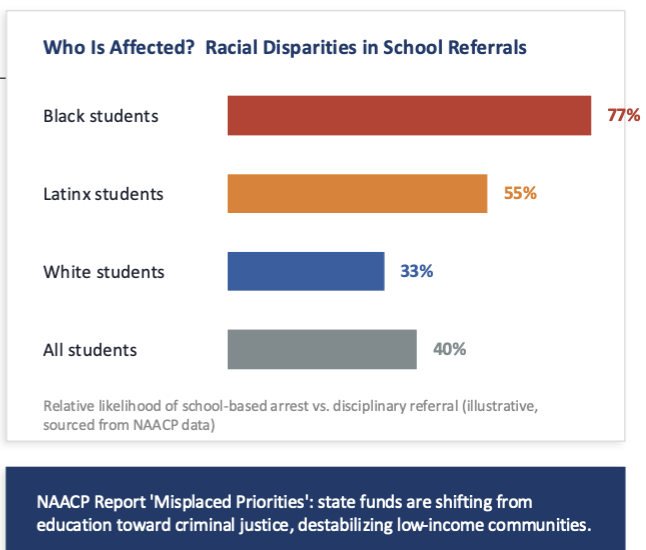
minor infractions once handled by in-school discipline are now referred to law enforcement, resulting in arrests, records, and reduced educational attainment
Online social support networks can serve which people?
people who lack face-to-face support yet many facilities restrict internet access, and formerly incarcerated individuals face significant digital access barriers post-release
this is both a research gap and a policy opportunity
How does Civic engagement improve health for those incarcerated?
improves health is by building social capital, which is defined as “features of social organization such as networks, norms, and social trust that facilitate coordination and cooperation for mutual benefit
44 countries (including the United States) found that voter participation was associated with better self-reported health, even after controlling for individual and country characteristics
Solution to Mass Incarceration:
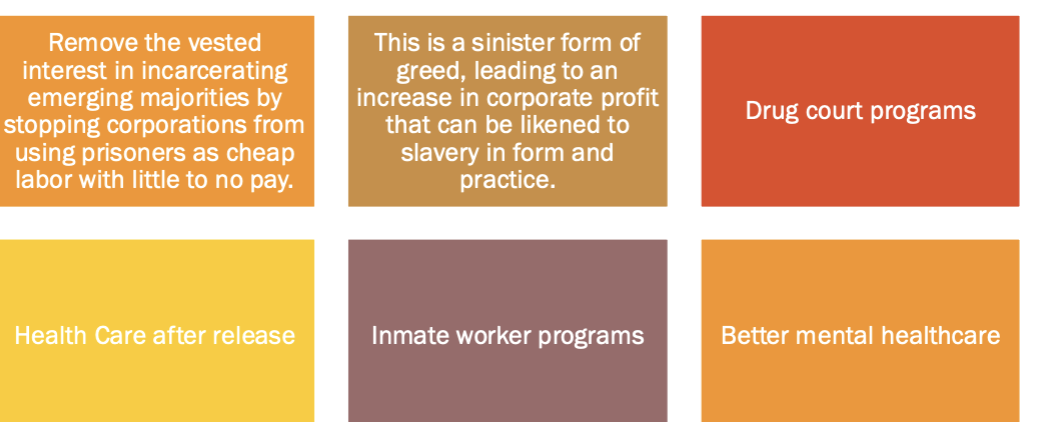
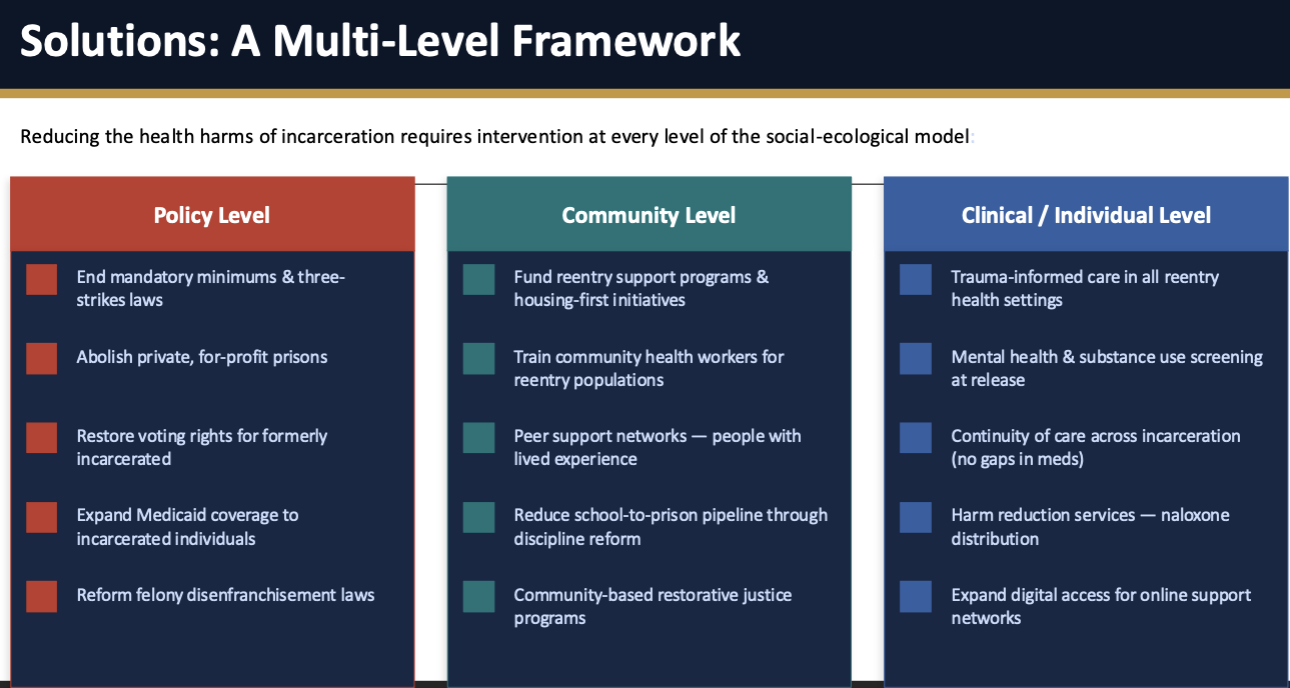
remove the vested interest in incarcerating emerging majorities by stopping corporations from using prisoners as cheap labor with little to no pay
a sinister form of greed, leading to an increase in corporate profit that can be likened to slavery in form and practice
Key findings in LGBTQ survey:
fear of stigma and deep-seated institutional distrust
widespread threats to gender-affirming care
an escalating mental health crisis
increasing emotional exhaustion among LGBTQ service providers
political environment is undermining essential LGBTQ healthcare