Physics test investigation
 Call Kai
 Learn
Learn Practice Test
 Spaced Repetition
 Match
Match Flashcards
 Knowt Play
1/40

There's no tags or description
Looks like no tags are added yet.
Name | Mastery | Learn | Test | Matching | Spaced | Call with Kai |
|---|
No analytics yet
Send a link to your students to track their progress
41 Terms
Refraction
The bending of light as it passes through different densities of mediums
Refractive index
Value measuring how much a medium slows down the light passing through it
Higher refractive index=bends more=slows down more
Refraction in different densities
When light moves into a denser medium (like from air to glass), it slows down and bends towards the normal line
When light moves into a less dense medium (like from glass to air), it speeds up and bends away from the normal line
Total Internal Reflection
When light travelling from an optically dense material to a less optically dense substance hits the boundary at a certain angle it causes the light to just graze the surface and be reflected back into the surface
Conditions for TIR to happen
Light must travel from a denser to a less dense medium
The angle of incidence must be greater than the critical angle (the angle of incidence that produces an angle of refraction of 90 degrees)
Lens
Transparent plastic or glass that has at least one curved side and refracts light
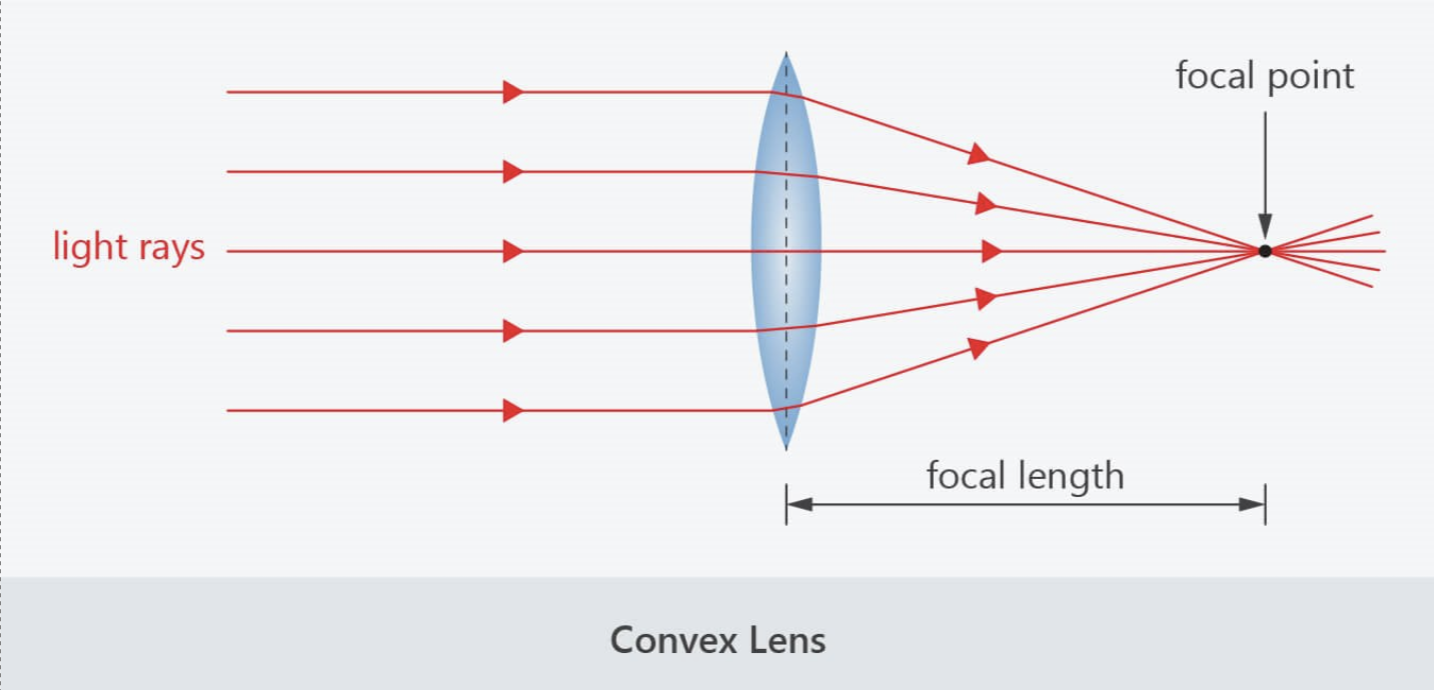
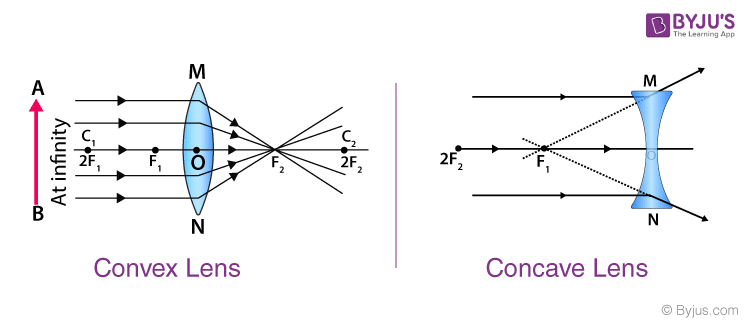
Convex Lenses
Thicker in the middle
Converges light rays
When parallel light rays travel directed at the convex lene from a perpendicular angle, they converge at a point called focal point
Both real and virtual lenses, depending on the position
Concave lenses
Thinner in the middle
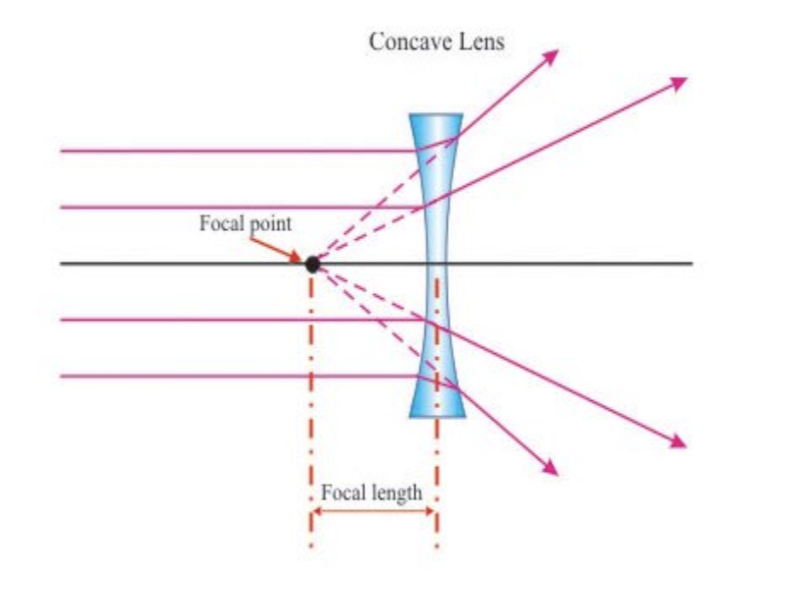
Diverge light rays
When parallel light rays travel directly at the concave lens at a perpendicular angle, they diverge, making them look like they come from a point in front of the lens.
This is a virtual focal point as light rays actually don’t pass through it
Virtual, erect and reduced
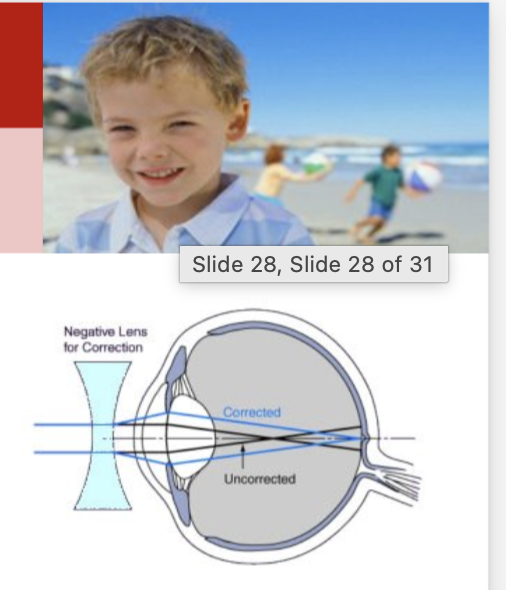
Near sighted (myopia)
Cause- The eyeball is too long or the cornea is too curved → the image focuses in front of the retina
Symptoms- faraway objects look blurry
Concave lenses or glasses expand the focal length OR laser surgery to change the shape of the cornea or lens
Far sighted (hyperopia)
Causes- The eyeball is too short or the cornea is too flat → image is focused behind the retina
Symptoms- Nearby objects look blurry
Convex lens shortens the focal length OR laser surgery to change the shape of the cornea or lens
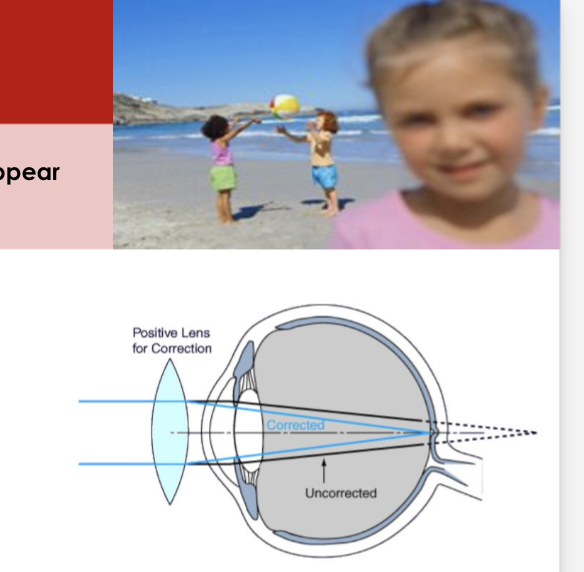
Astigmatism
causes- Cornea is not perfectly spherical, resulting in distorted images as light rays are prevented from reaching a single point or focus
symptoms- objects appear blurry at all distances
Laser surgery, special astigmatism eyeglasses or contact lenses
Colour blindness
Causes- Occurs when light sensitive cone photoreceptors in the retina fail to respond appropriately to variations of wavelengths of light that enable people to see an array of colours
Symptoms- Usually hard to distinguish between shades of red and green
No treatment
Focus
The specific point where light rays that were travelling parallel to each other meet (converge) after passing through a lens
Focal length
The distance between the center of the lense to the focus
Image formation- Convex- Virtual
Distance is less than the focal length
↳ Virtual, upright, enlarged
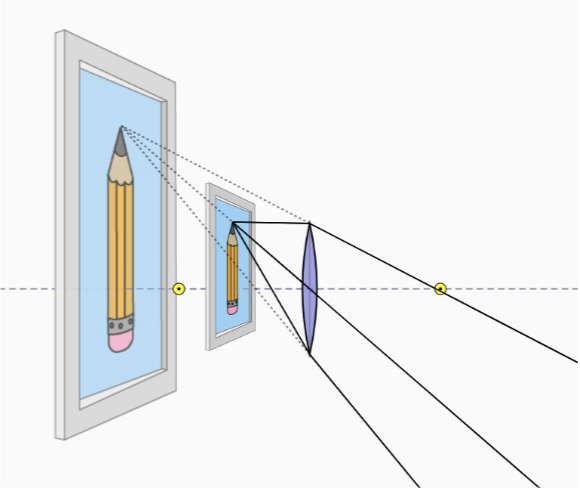
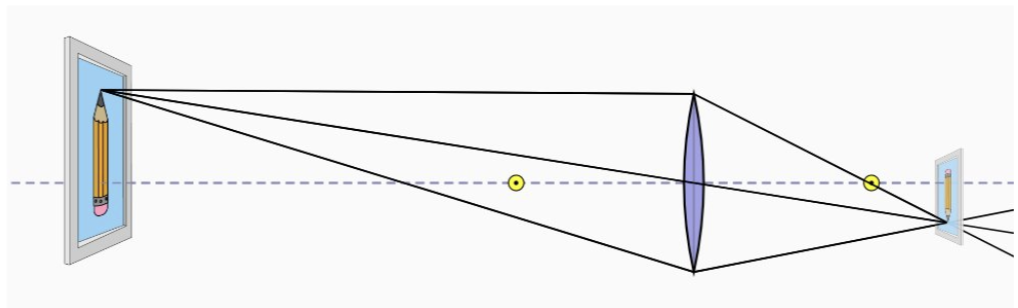
Image formation- Convex- Real
Distance is more than 2 focal length
↳ Diminished, inverted, real
Uses of convex lense
Magnifying glass, Contact lenses for long-sightedness
Image formation- Concave
Virtual
Upright
Diminished
Uses of Concave lenses
Glass for near-sightedness (short-sightedness)
Contact lense for near-sightedness (short-sightedness)
Flashlight
Draw an eye and label
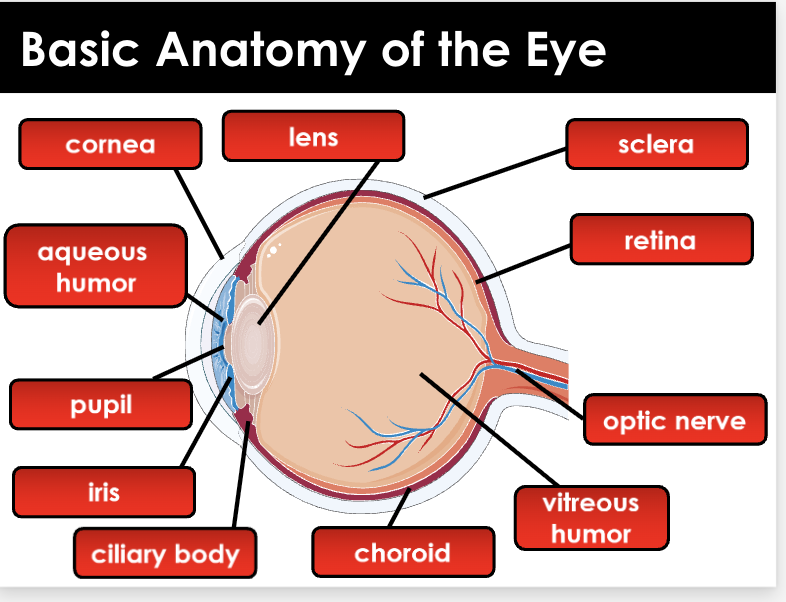
Aqueous Humour
Clear fluid that helps maintain eye shape and nourishes the cornea and lens
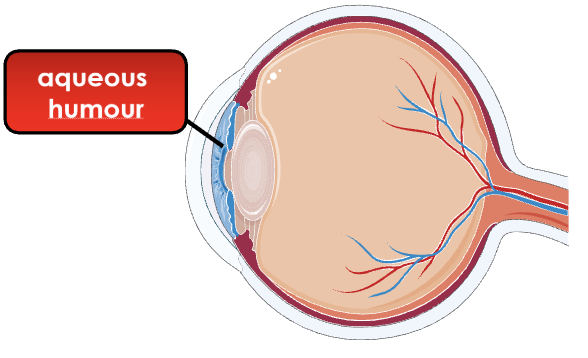
Cornea
Transparent front layer of the eye that protects the eye and bends (refracts) light as it enters.
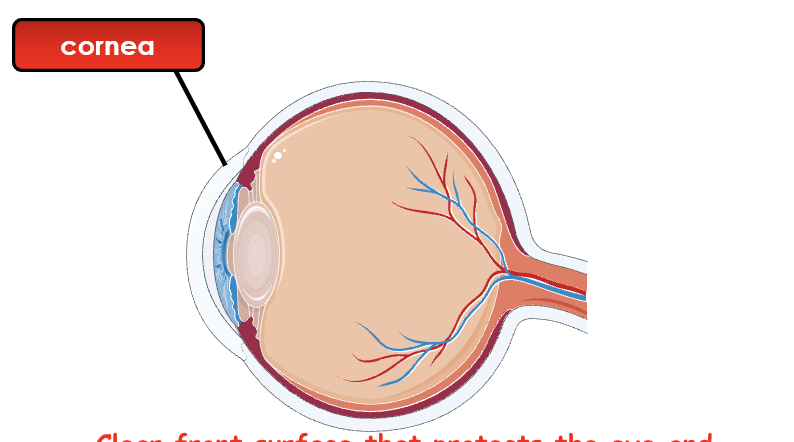
Iris
Coloured part of the eye that controls the size of pupil
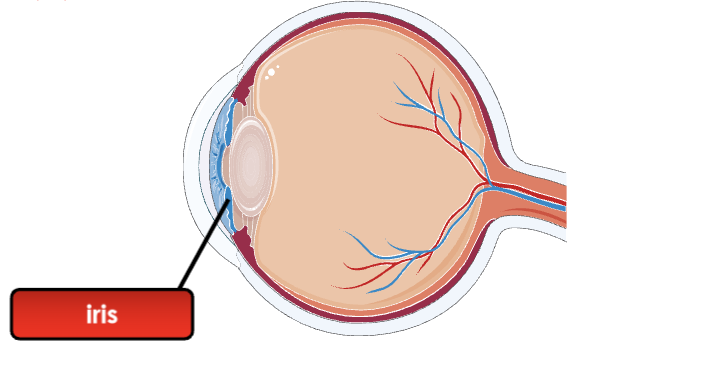
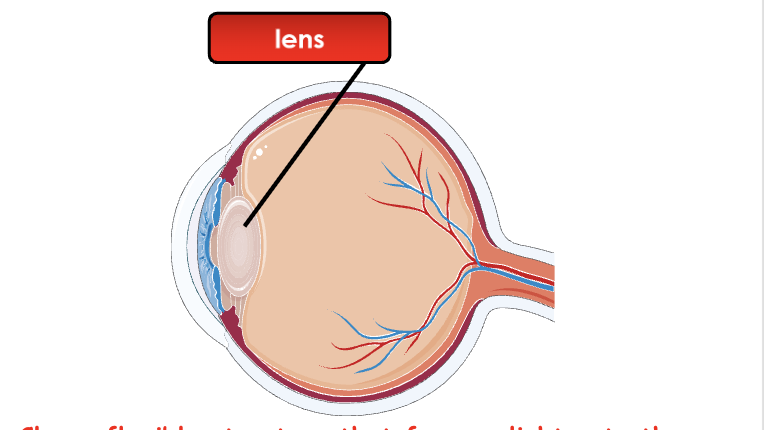
Lens (eye)
Transparent structure that changes shape to focus light onto the retina.
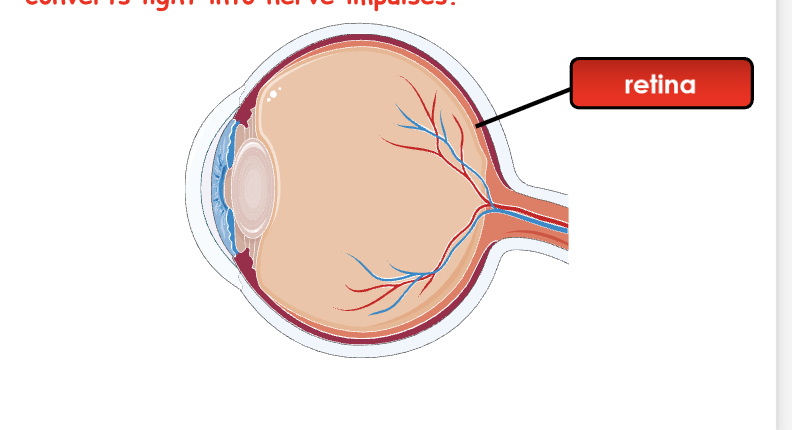
Retina
Light-sensitive layer containing photoreceptors (cones and rods) and converts light into nerve impulses
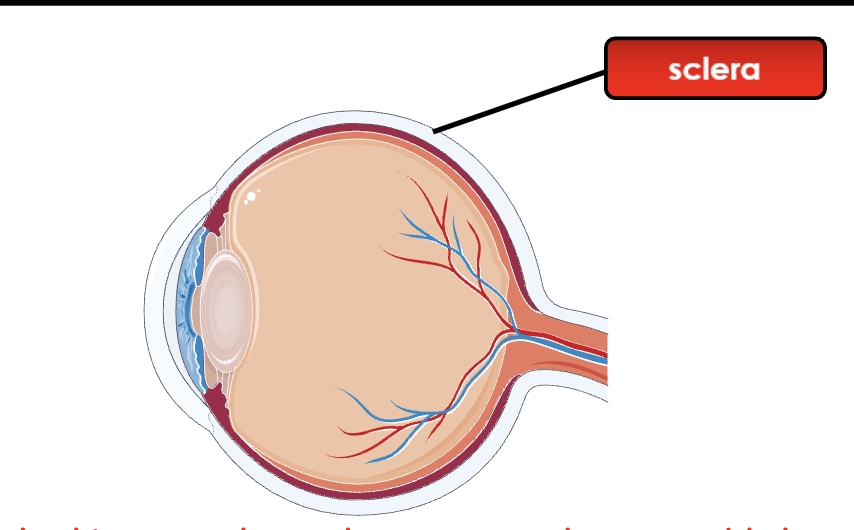
Sclera
Tough, white outer covering of the eye that protects it and helps maintain its shape.
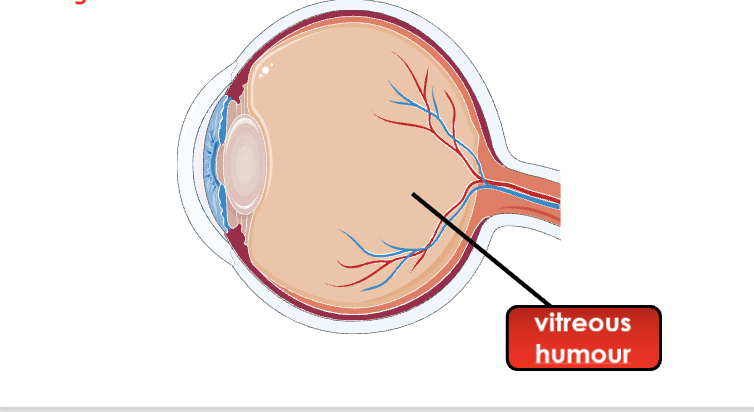
Vitreous Humour
Clear, jelly like substance that fills the eye, maintains its shape, holds the retina in place and allows light to pass through to the retina
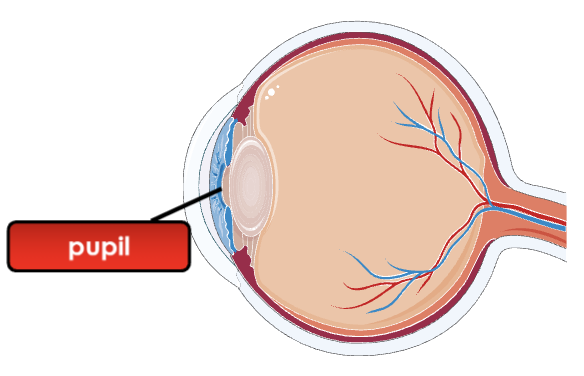
Pupil
Opening in the center of the iris through which light enters the eye.
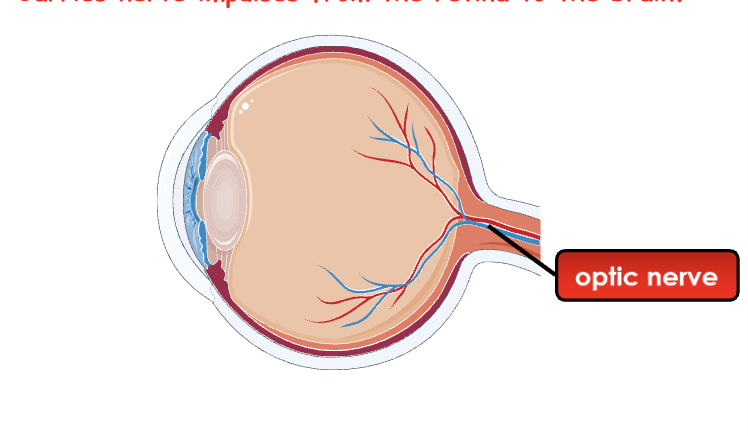
Optic nerve
Carries nerve impulses from the retina to the brain
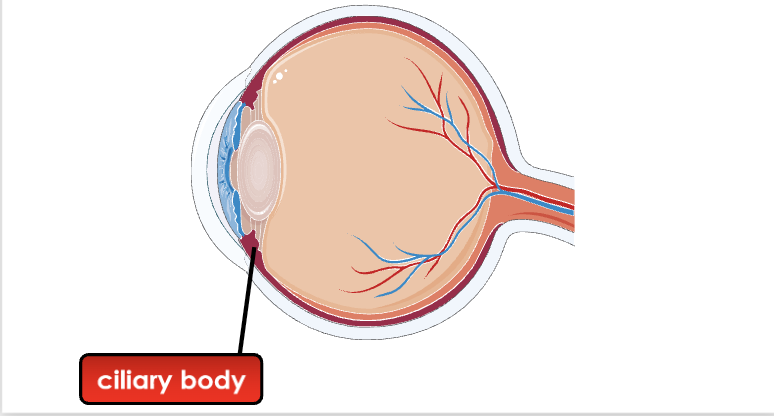
Ciliary bodies
Contain ciliary muscles that change the shape of the lens for focusing, and they produce the aqueous humour
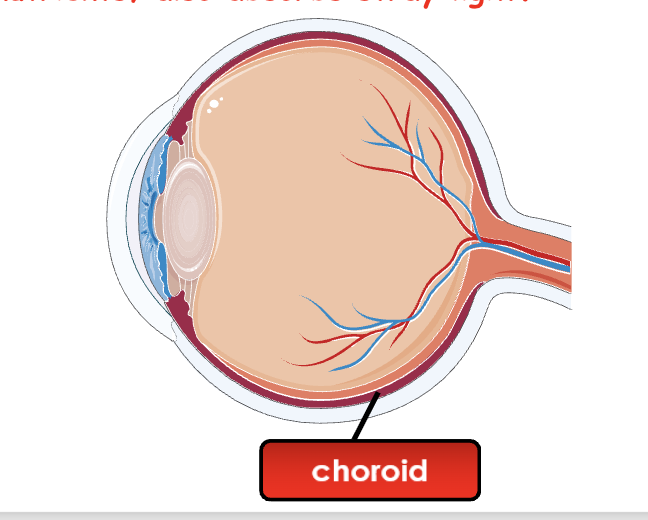
Choroid
Layer containing blood vessels that supplies oxygen and nutrients to the retina. Also absorbs light
Step 1- Light entering our eyes
Light rays enter the eye through the cornea, a convex lens that focuses the light slightly by refracting.
Step 2- Light entering our eyes
Light travels through the pupil and the iris control the ring of muslces around the pupil which adjusts how much light enters
Step 3- Light entering our eyes
The light passes through the lens, which further focuses the light rays onto the retina
Step 4- Light entering our eyes
The retina is a layer of light sensitive cells- cones for colour and rods for brigthness
The rods and cones send electrical impulses to the brain along the optic nerve
Step 5- Light entering our eyes
The brain interprets the signals as visual images
Cone cells
At the center of retina
3 types- Red, green, blue
Detect colour of light
Rod cells
At the edges of the retina
Only black and white
Detect brightness of light
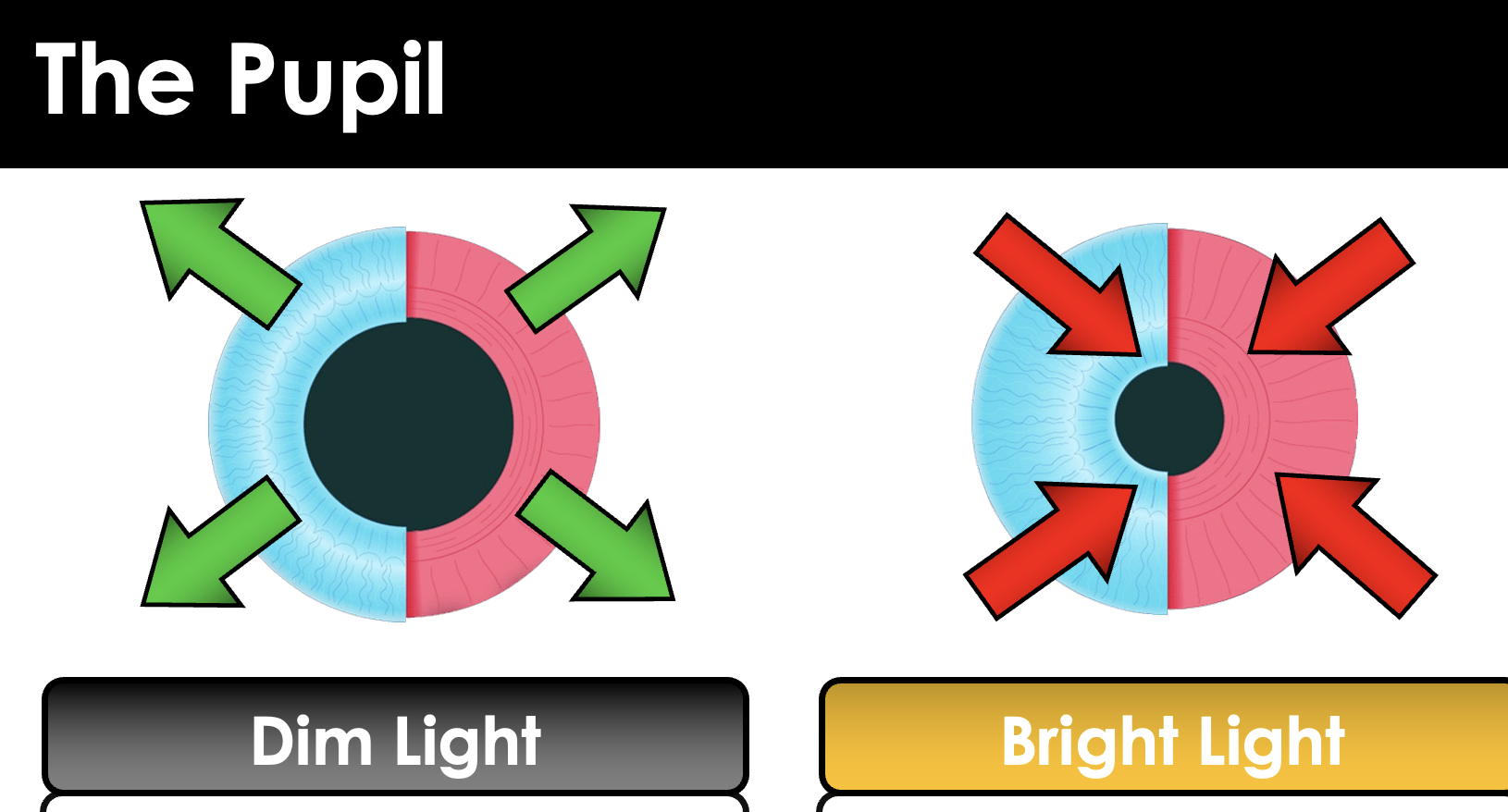
The pupil- Contracting and relaxing
Dim light
Iris muscles contract
pupil dilates (open)
Lets in more light
Bright light
iris muscles relax
Pupil constricts (close)
Lets in less light
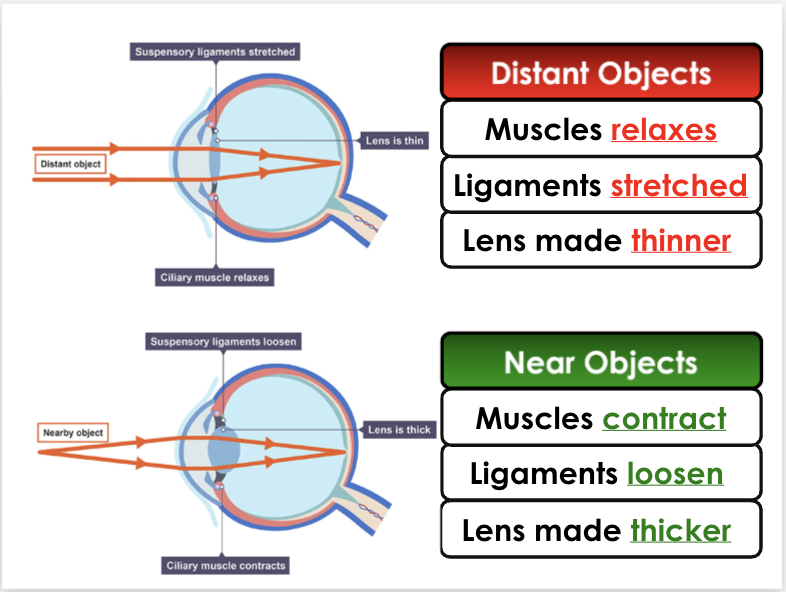
The lens- contracting and relaxing
Ciliary muscles
Distant objects
Muscles relax
Ligaments stretched
Lens made thinner
Near objects
Muscles contract
Ligaments loosen
Lens made thicker
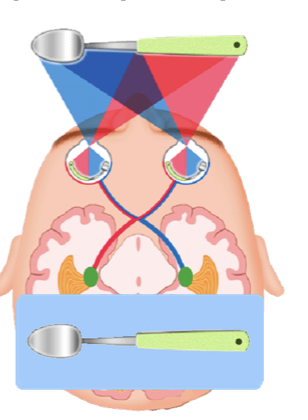
How does the brain see
The optic nerve from the left eye connects to the right side and vice versa
So your brain sees everything reversed and switches them again