L4. Physiology of Absorption in the Stomach and Intestines
 Call Kai
 Learn
Learn Practice Test
 Spaced Repetition
 Match
Match Flashcards
 Knowt Play
1/238

There's no tags or description
Looks like no tags are added yet.
Name | Mastery | Learn | Test | Matching | Spaced | Call with Kai |
|---|
No analytics yet
Send a link to your students to track their progress
239 Terms
25-30% of cardiac output
What fraction of cardiac output goes to the splanchnic circulation?
a higher cardiac output goes to the splanchnic circulation when eating a meal -> called post-prandial hyperemia
How does the fraction of cardiac output that goes to the splanchnic circulation vary based on food consumption?
-celiac artery
-superior mesenteric artery (SMA)
-inferior mesenteric artery (IMA)
What are the 3 main arteries that come off the abdominal aorta?
stomach and pancreas
What does the celiac artery supply?
pancreas, small intestine, and large intestine
What does the superior mesenteric artery (SMA)?
transverse and descending colon plus rectum
What does the inferior mesenteric artery (IMA)?
there are extensive vascular connections; arcade vessels interconnect from segment to segment along the mesenteric border
What is the vasculature like in the splanchnic circulation, and explain?
blood from the colon, small intestines, stomach, as well as the pancreas and spleen, all go to the portal vein; the liver functions to clear any toxins (ex: drugs) before going to the heart
Where does blood containing the nutrients obtained from the diet go, and explain?
splanchnic circulation:
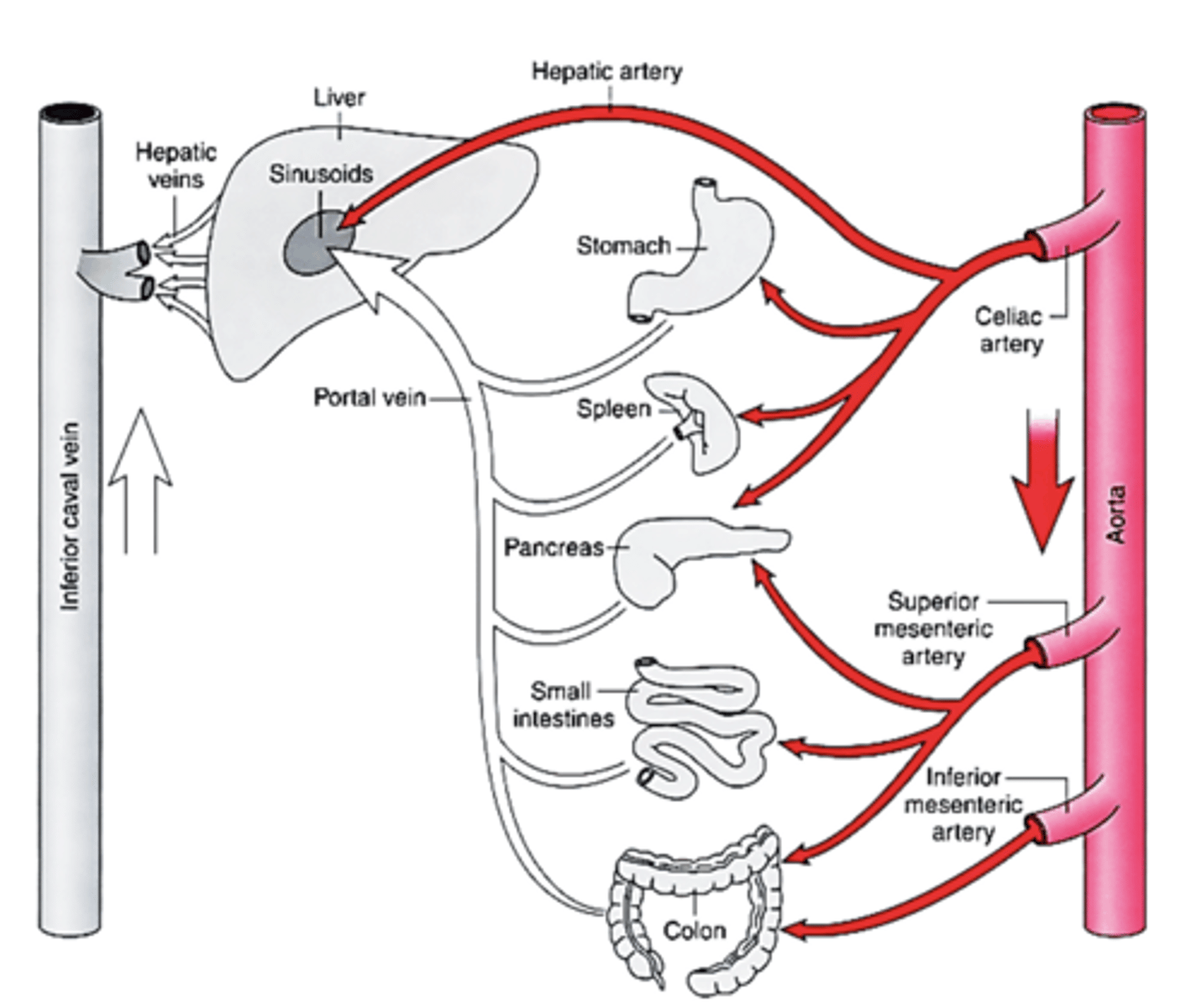
the hepatic portal veins
Where do all the splanchnic vessels drain into?
75% of blood flow to liver
What fraction of blood flow to the liver is supplied by the hepatic portal veins?
25% of blood flow to liver
What fraction of blood flow to the liver is supplied by the hepatic arteries?
establishes an oxygen gradient in the triad
What is established in the liver, due to blood flow coming from 2 different sources (hepatic portal veins/hepatic arteries)?
higher PO2 near the triad (hepatic artery) and lower PO2 near the central vein (venous)
What is the oxygen gradient established in the triad like?
the O2 gradient determines where specific enzymes will be concentrated
What is the triad's O2 gradient, where there is higher PO2 near the triad and lower PO2 near the central vein, important for?
they bypass the hepatic portal circulation
What happens to lipids contained in chylomicrons in the splanchnic circulation?
they are secreted into intestinal lymphatics -> these lymphatics drain into the general circulation at the thoracic duct
What happens to lipids contained in chylomicrons that bypass the hepatic portal circulation, and explain?
splanchnic circulation:
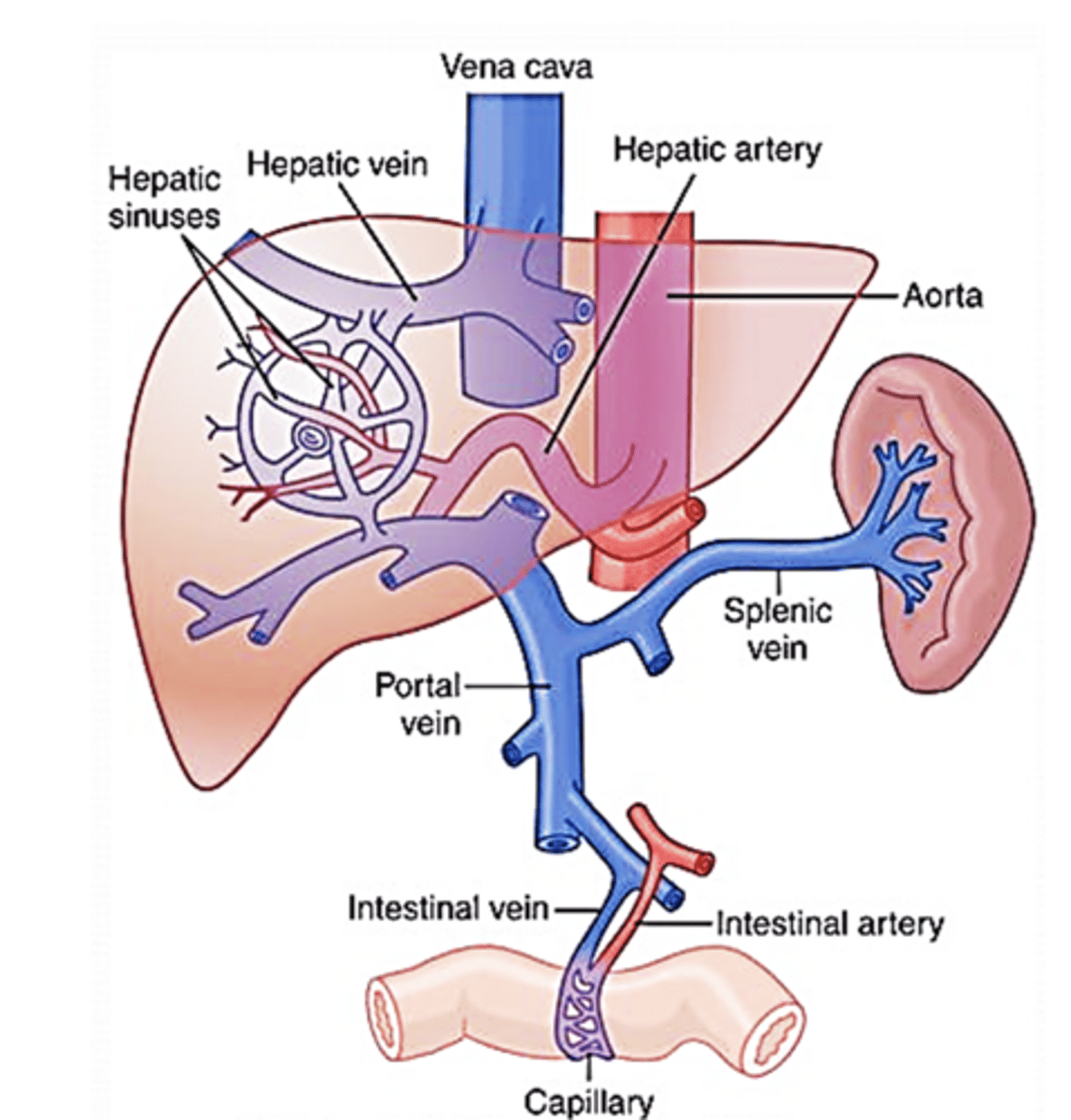
daily activities
What determines splanchnic blood flow?
-fasting
-digestion
-exercise/severe trauma
What are 3 examples of daily activities that determine splanchnic blood flow?
decreased splanchnic blood flow (blood flow sufficient to maintain the tissues) -> bc shifted to other places (ex: brain)
What happens to splanchnic blood flow between meals, and explain?
increased splanchnic blood flow -> called post-prandial hyperemia, a form of "autoregulation"
What happens to splanchnic blood flow during digestion, and explain?
will increase 8 times above baseline -> lasts about 2-4 hours
What is the increase in splanchnic blood flow during digestion like, and explain?
blood flow may fall to just 25% of baseline -> shifts blood away from GI to heart or muscles
What happens to splanchnic blood flow during mild to severe exercise or severe trauma (ex: hemorrhage), and explain?
can affect GI function if GI cells begin to die due to ischemia
What is the clinical significance of prolonged severe trauma?
-anticipatory phase (thought of having a meal)
-increased mucosal metabolic activity (increased PaCO2 and adenosine will vasodilate smooth muscle arterioles)
-hyperosmolarity created by absorbed nutrients
-presence of vasoactive hormone (ex: CCK)
What are 4 elements that contribute to post-prandial hyperemia, and explain?
Vasodilation during post-prandial hyperemia is sequential.
Vasodilation during post-prandial hyperemia is ______.
there is only a finite amount of blood, so the blood flow to various parts of the GI tract changes based on the progression of food through the organs
How is vasodilation during post-prandial hyperemia sequential?
increases in specific areas of GI tract as the food bolus makes its way down
In relation to what factor does blood flow increase in specific areas of the GI tract?
during the "alkaline tide"
When does the increased blood flow occur within the stomach?
sequential vasodilation during postprandial hyperemia:
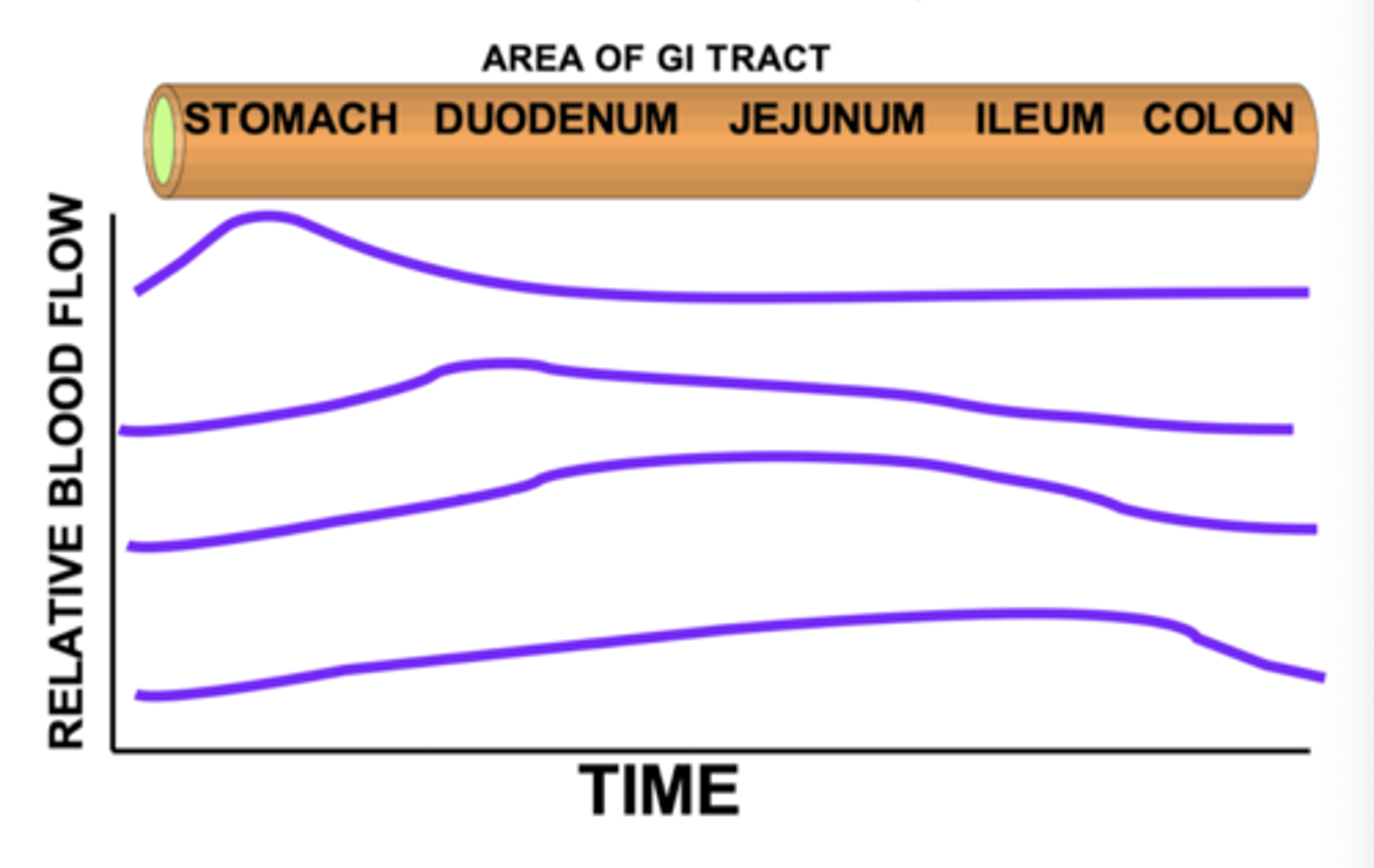
can reduce splanchnic blood flow
What can happen to splanchnic blood flow due to exercising too soon after a meal or experiencing hemorrhage?
results in underperformance of exercising skeletal muscle groups; due to the time frame for postprandial hyperemia -> blood flow is compromised as the GI tract and skeletal muscles are both competing for the blood flow
How does exercising too soon following a meal affect skeletal muscle, and explain?
the sympathetic division of the ANS
What is reduction in splanchnic blood flow mediated by?
all splanchnic blood vessels receive sympathetic postganglionic fibers
How do splanchnic blood vessels interact with the sympathetic nerve fibers?
during exercise or hemorrhage, alpha, 1-adrenergic receptor activation can reduce splanchnic blood flow to 25% of baseline values
What is the receptor activity like in the reduction of splanchnic blood flow mediated by the sympathetic division of the ANS?
causes no prolonged effects in normal individuals
What are the consequences of temporary reductions in splanchnic blood flow?
because O2 extraction at rest is only 20% and there is plenty of reserve oxygen to be tapped into -> also, the autoregulatory mechanism that exists to promote vasodilation can also "escape" if the sympathetic drive is not too severe
How do temporary reductions in splanchnic blood flow not cause prolonged effects in normal individuals?
-villus tips of endothelial cells slough off and die
-pancreatic "factors" from cellular death appear in the general circulation
What 2 pathologies can result from severe hemorrhage plus prolonged splanchnic vasoconstriction?
endotoxic shock; endotoxic shock is breaching the protective barrier between intestinal contents and the peritoneal cavity and circulation
What can result from villus tips of endothelial cells sloughing off and dying, and explain?
-multiple organ failure
-cardiovascular function eventually declines irreversibly
What 2 things occur when pancreatic "factors" from cellular death appear in the general circulation?
volume expansion soon after severe hemorrhage
What physiological compensatory mechanism does the body use in the case of severe hemorrhage?
tries to counter the series of pathological events; through Renin-Angiotensin-Aldosterone system (RAAS) -> helps to increase salt and water absorption
What is the function and process of volume expansion soon after severe hemorrhage?
summary of splanchnic circulation:
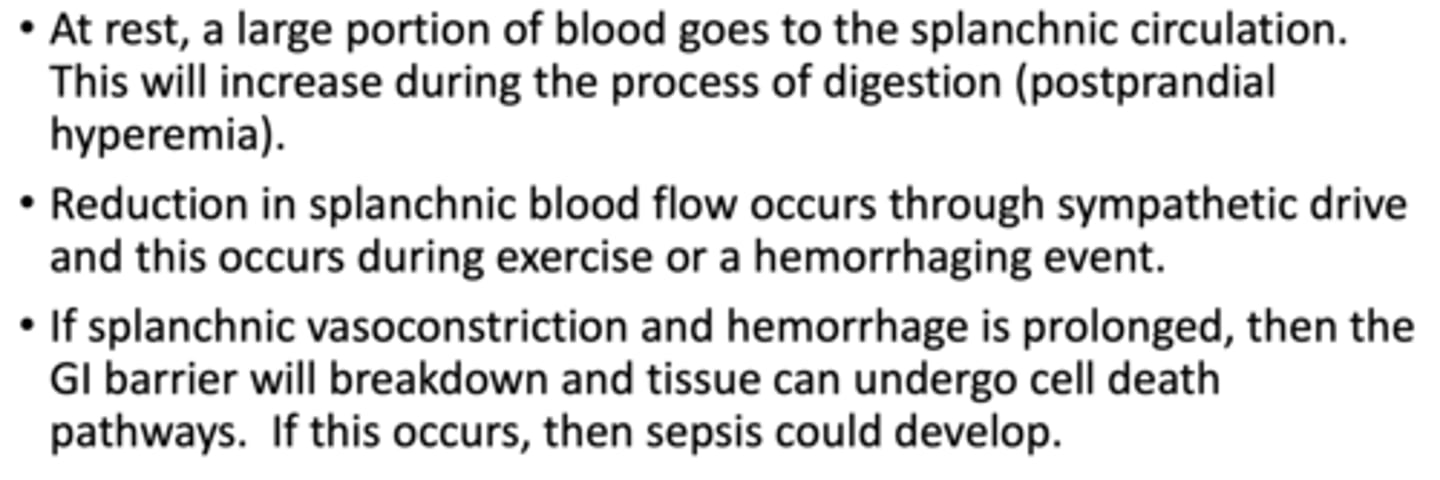
"Succus Entericus"
What are small bowel secretions collectively known as?
are all isotonic
What is the nature of all solutions secreted into the lumen of the small intestine?
-Brunner's gland
-duodenal bicarb secretion
-fluid secreted by the crypts (Crypts of Lieberkuhn)
What are the 3 sources from which small intestinal secretions are derived?
mainly alkaline (bicarb) mucus
What type of secretion do Brunner's glands mostly secrete?
accounts for 40% of total HCO3- secreted into the small and large intestines
What is duodenal bicarb secretion like?
is the primary method for neutralizing gastric acid from the stomach, protecting the duodenal mucosa, and allowing pancreatic enzymes to function at a more neutral pH
What is the major function of duodenal HCO3- secreted into the small and large intestines?
secretions are isotonic, neutral pH, and enzyme-rich
What are the 3 main characteristics of secretions from the Crypts of Lieberkuhn?
most enzymes insert into the brush border of the enterocytes (ex: enterokinase)
What happens to most of the enzymes in the secretions from the Crypts of Lieberkuhn?
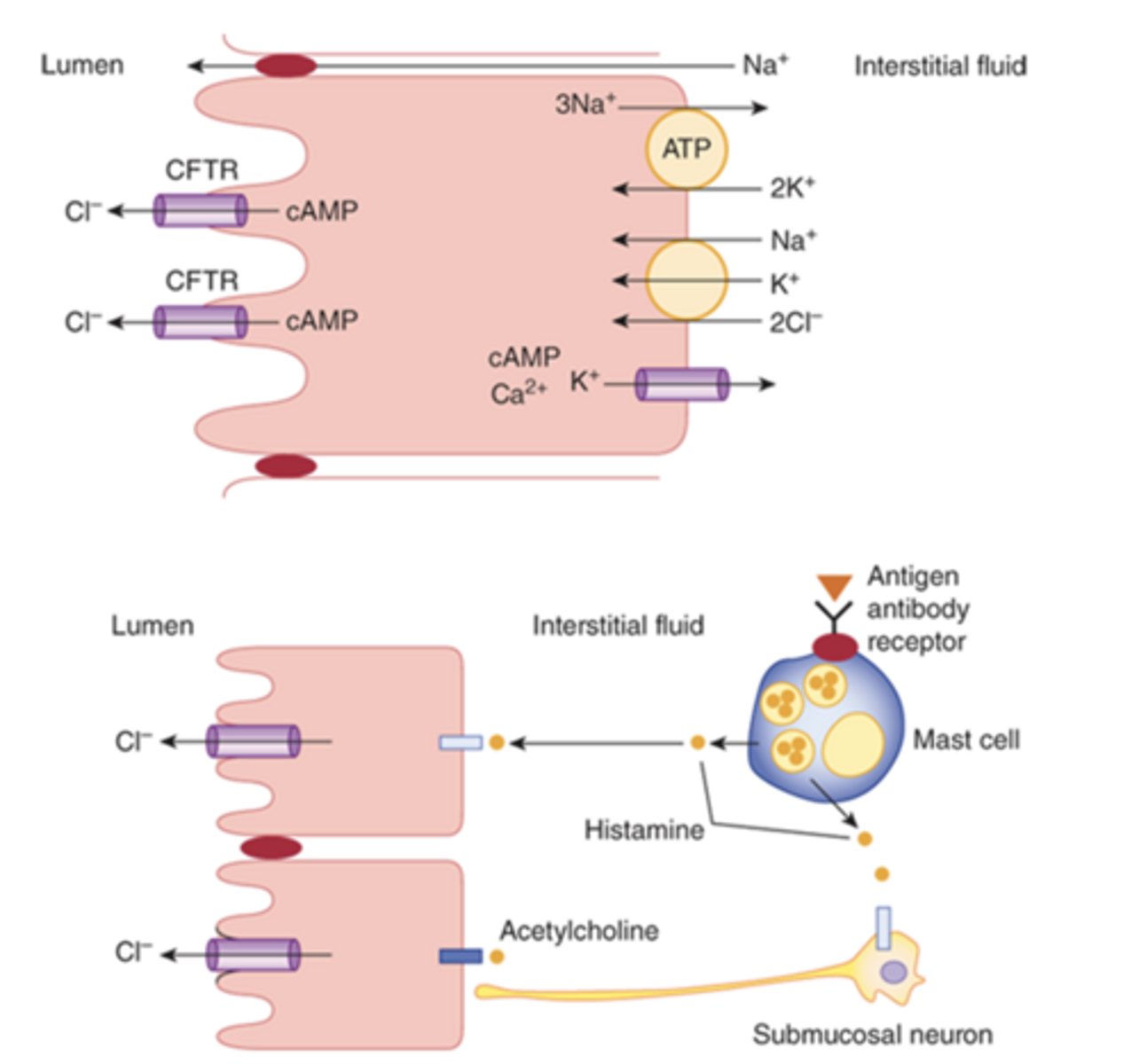
can increase cAMP and promote the secretion of Cl- ions into the intestinal lumen
What effect can cholera toxin have on the small bowel?
small bowel secretions, aka "Succus Entericus":
-enterokinase
-aminopeptidase
-dipeptidase
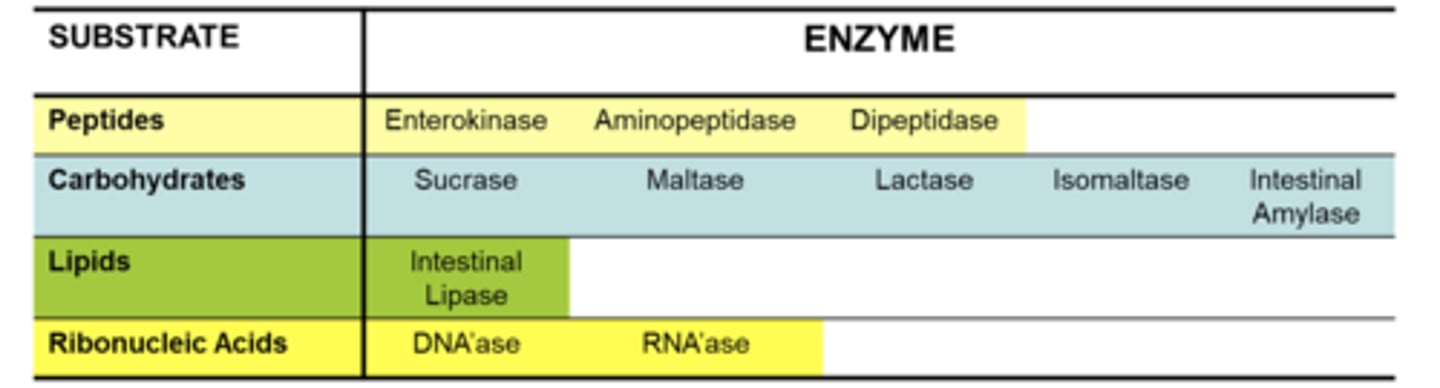
What are the 3 main crypt cell enzymes released at the brush border that target peptide substrates?
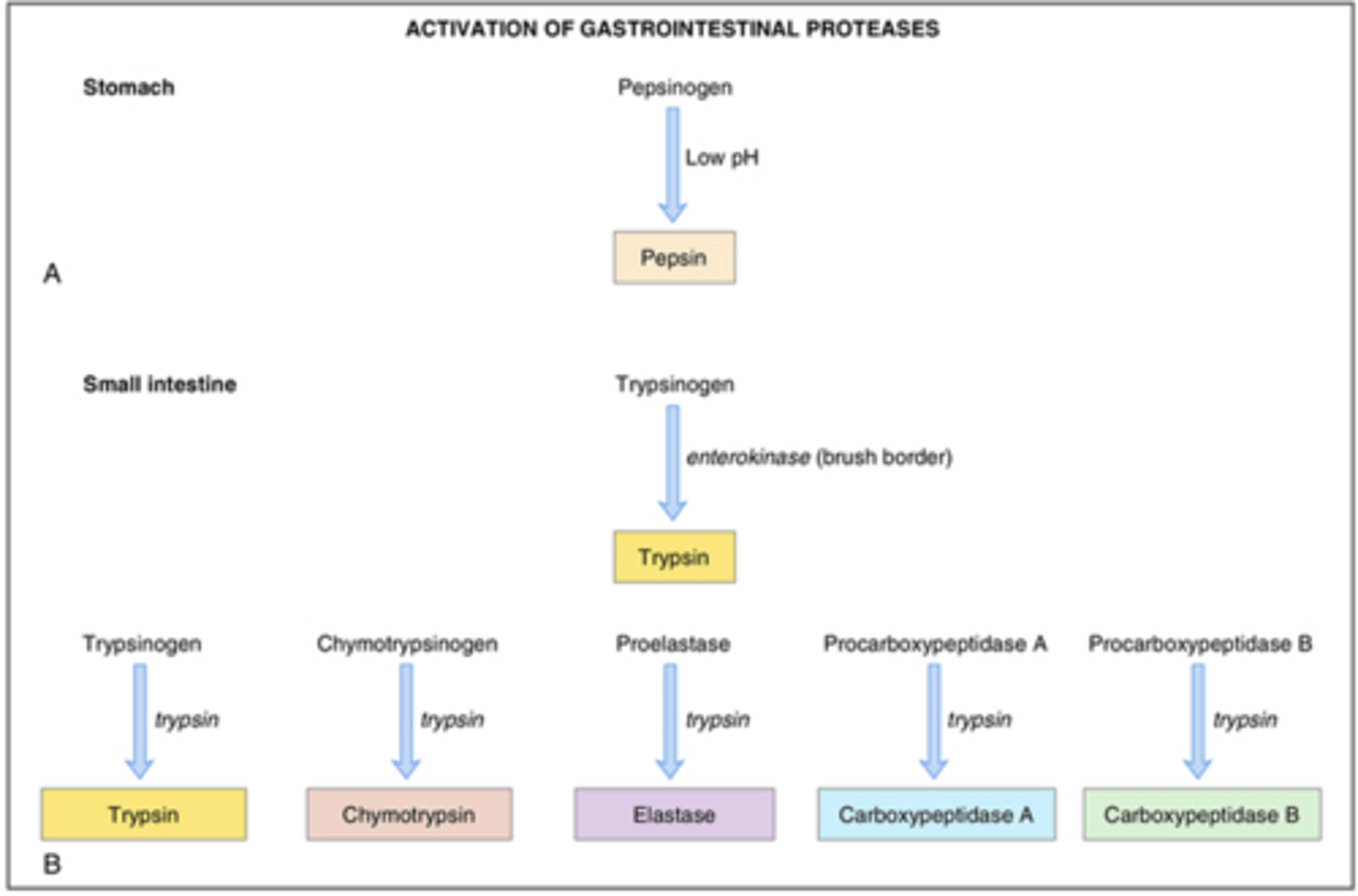
it is the important enzyme in converting pancreatic trypsinogen into trypsin
What is the significance of enterokinase?
secreted from crypts in an inactive form and is initially bound to the mucosal membrane brush border
How is enterokinase secreted?
by the presence of bile salts
How is enterokinase freed from the mucosal membrane brush border?
in the presence of its substrate, trypsinogen
How is enterokinase activated?
it catalyzes the conversion of trypsinogen to trypsin (the active enzyme)
How does activated enterokinase function?
they activate other peptide enzymes
How do enterokinase and trypsin affect other crypt cell enzymes released at the brush border?
-sucrase
-maltase
-lactase
-isomaltase
-intestinal amylase
What are the 5 main crypt cell enzymes released at the brush border that target carbohydrate substrates?
intestinal lipase
What is the main crypt cell enzyme released at the brush border that targets lipid substrates?
-DNAase
-RNAase
What are the 2 main crypt cell enzymes released at the brush border that target ribonucleic acid substrates?
crypt cell enzymes released at brush border:
in the stomach; via pepsin
Where does digestion of peptides begin, and how?
pepsin is not essential for normal protein digestion
What is important to note about the significance of pepsin in peptide digestion?
-endopeptidases (ex: trypsin, pepsin, chymotrypsin, elastase)
-exopeptidases (ex: carboxypeptidases)
What are the 2 classes of peptidases?
note how trypsin functions to activate other enzymes responsible for peptide digestion:
-amino acids
-dipeptides
-tripeptides
What are the 3 main products of protein digestion?
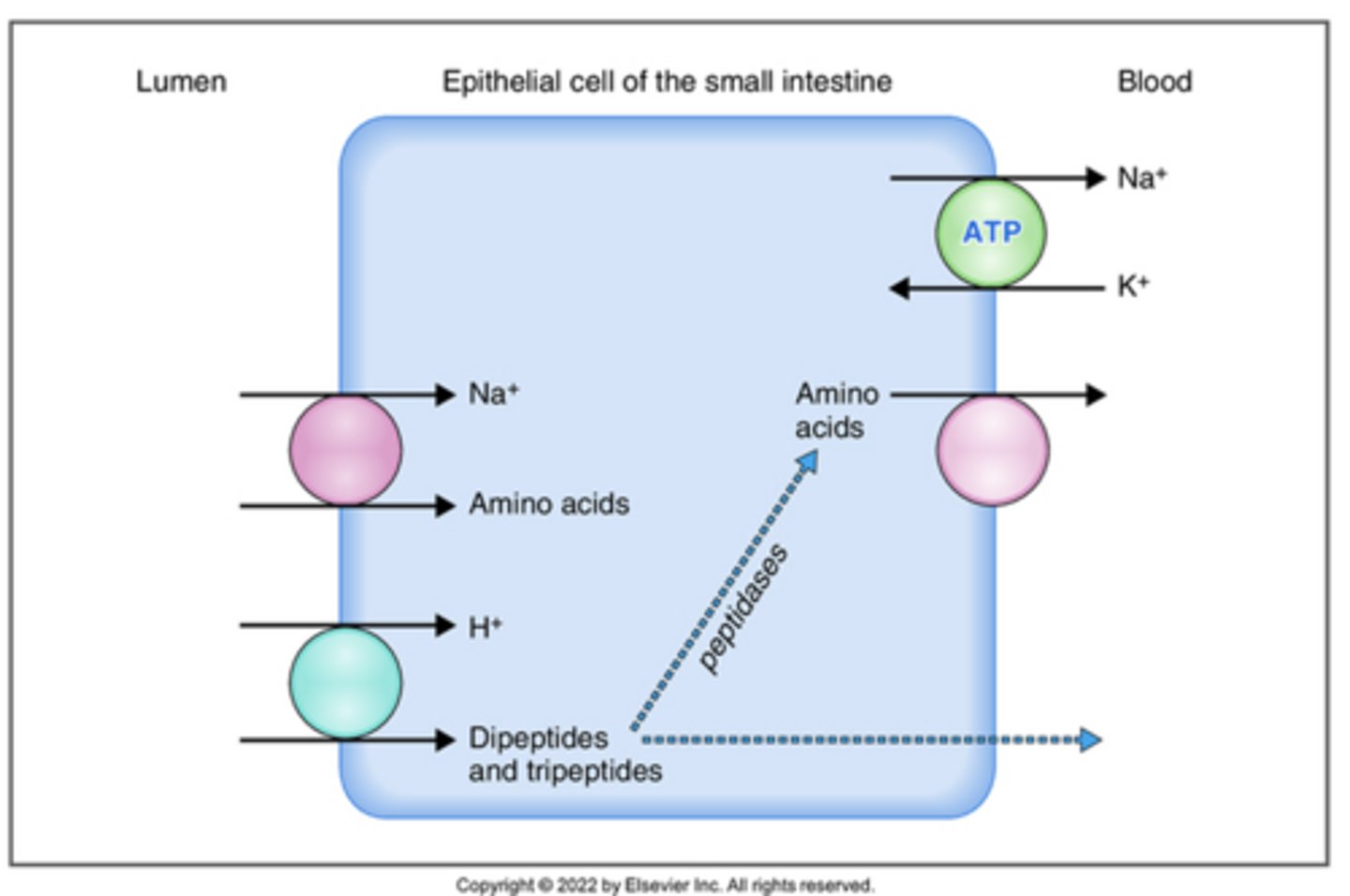
they are transported into the small intestinal cell by sodium gradient
What happens to amino acids obtained from protein digestion?
via 4 separate transporters -> neutral, basic, acidic, and imino; transported into the blood based on facilitated diffusion
How are AAs from protein digestion transported into the small intestinal cell by sodium gradient, and explain?
they are transported based on a H+-driven symporter -> gradient generated by Na+/H+ exchanger
What happens to dipeptides and tripeptides obtained from protein digestion?
can lead to a deficiency of proteases -> which can compromise protein absorption
What can result in disorders of the exocrine pancreas, chronic pancreatitis, and CF, and explain?
a rare genetic disorder where a dibasic AA transporter is nonfunctional in the GI and kidney
What is cystinuria?
the renal defect will increase excretion of cysteine in the urine and can cause formation of cystine stones
What is the result of the dibasic AA transporter being nonfunctional in the GI and kidney in cystinuria?
absorption of peptides:
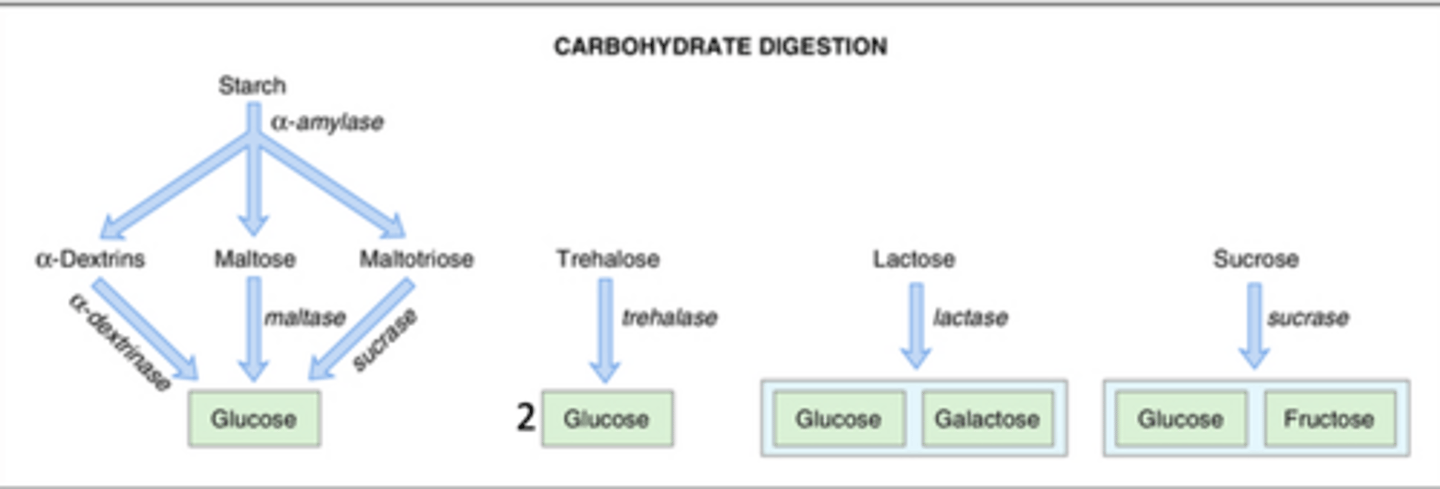
via alpha-amylase in the saliva
How does the digestion of starch start?
the pancreas; completes the process of starch digestion in the small intestine to generate alpha-dextrins, maltose, and maltotriose
Where else does alpha-amylase come from, besides the saliva, and explain?
aka isomaltase; acts as a debranching enzyme to break alpha-1,6 bonds
What is alpha-dextrinase also known as, and what is its function?
degrades maltose
What is the function of maltase?
degrades maltotriose
What is the function of sucrase?
glucose
What is the final product of the digestion of starch and disaccharides?
trehalose, lactose, and sucrose; these do not require alpha-amylase as they are already in disaccharide form
What are the 3 disaccharides found in food, and explain?
digestion of starch and disaccharides:
50%
What fraction of the typical American diet do carbohydrates compose?
-polysaccharide
-disaccharide
-monosaccharide
In what 3 forms can carbohydrates of the diet be?
glucose, galactose, or fructose
Into what form(s) must dietary carbs be digested to be absorbed by the small instestine?
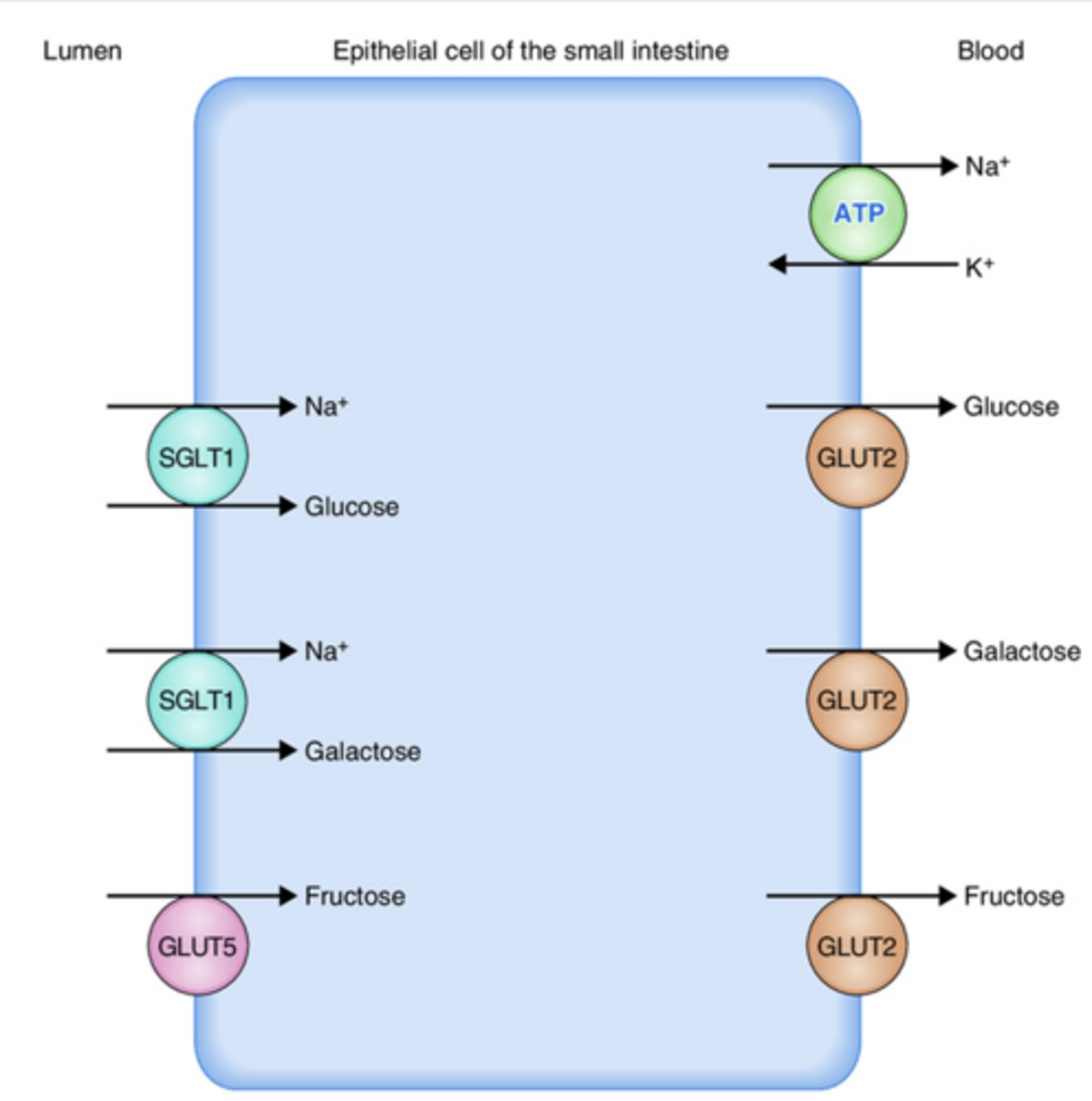
by SGLT1 transporter -> Na+-driven secondary active transport
How are glucose and galactose absorbed by the small intestine, and explain?
by GLUT5 in apical membrane -> facilitated diffusion, does not require energy
How is fructose absorbed by the small intestine, and explain?
by GLUT2 -> facilitated diffusion
How are glucose, galactose, or fructose brought into portal circulation?
absorption of carbohydrates:
-triglycerides
-cholesterol
-phospholipids
What are 3 examples of dietary lipids?
a more complicated process; because lipids are insoluble in water!
What is the complexity of lipid digestion like, and explain?
lingual and gastric lipases; the stomach has both
What are the 2 types of lipases, and where are they found?
rate of gastric emptying is slowed by CCK
What happens to gastric emptying during lipid digestion?
to prevent the small intestine from being overwhelmed with lipids and allow enough time for the release and function of bile salts and pancreatic enzymes
Why is the rate of gastric emptying slowed by CCK during lipid digestion?
emulsify the lipids
What is the function of bile salts and pancreatic enzymes?
*pancreatic lipase
*co-lipase
*cholesterol ester hydrolase
*phospholipase A2
What are the 4 main pancreatic enzymes that function in lipid digestion?
hydrolyzes TAGs
What is the function of pancreatic lipase?