Ch.5 Electrons
 Call Kai
 Learn
Learn Practice Test
 Spaced Repetition
 Match
Match Flashcards
 Knowt Play
1/9

There's no tags or description
Looks like no tags are added yet.
Name | Mastery | Learn | Test | Matching | Spaced | Call with Kai |
|---|
No analytics yet
Send a link to your students to track their progress
10 Terms
Atomic Orbitals
A region in space where there is a high probability of finding an electron
Orbitals are found in principal energy levels. Electrons are placed into different energy levels depending on the amount of energy they have.
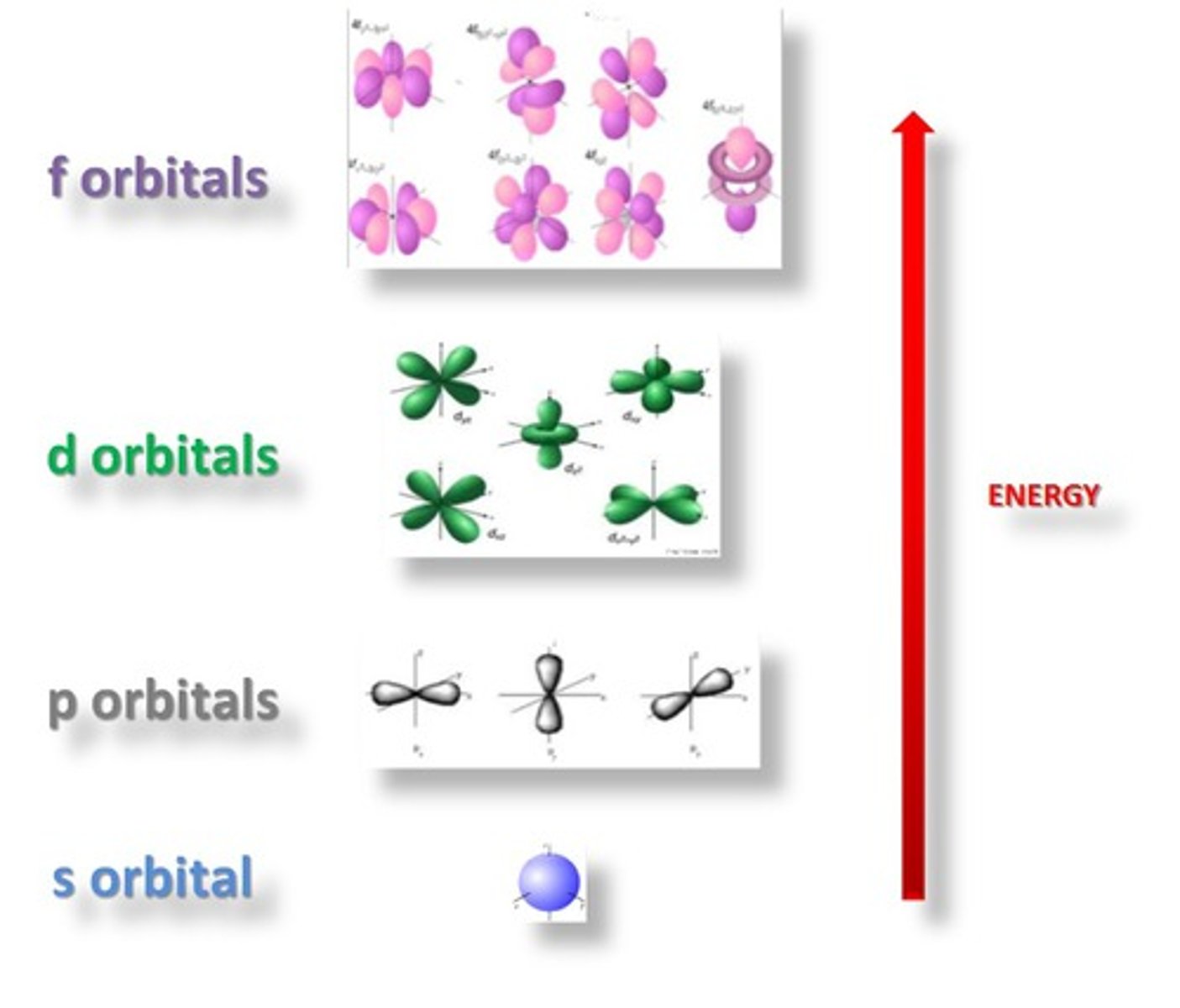
Different types of Atomic Orbitals
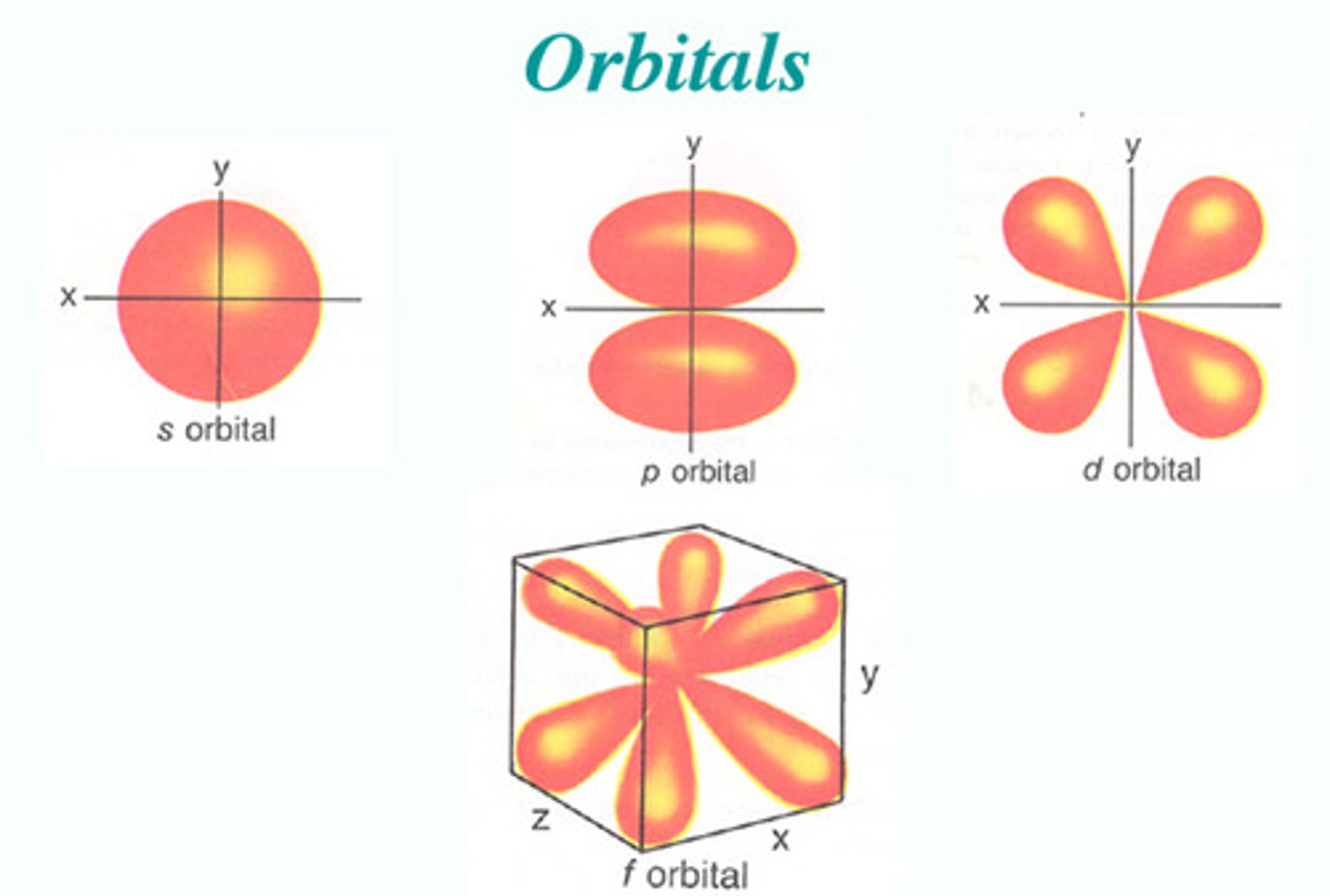
"S" Orbital - spherical shape
Electron(s) would be moving somewhere along that sphere
Only 1 "s" orbital occurs at one time
"P" Orbital - dumbbell shape
3 "p" orbitals occur together
Could have empty orbitals
"D" orbitals - more complex
5 "d" orbitals occur together
"F" orbitals - even more complex
7 "f" orbitals occur together
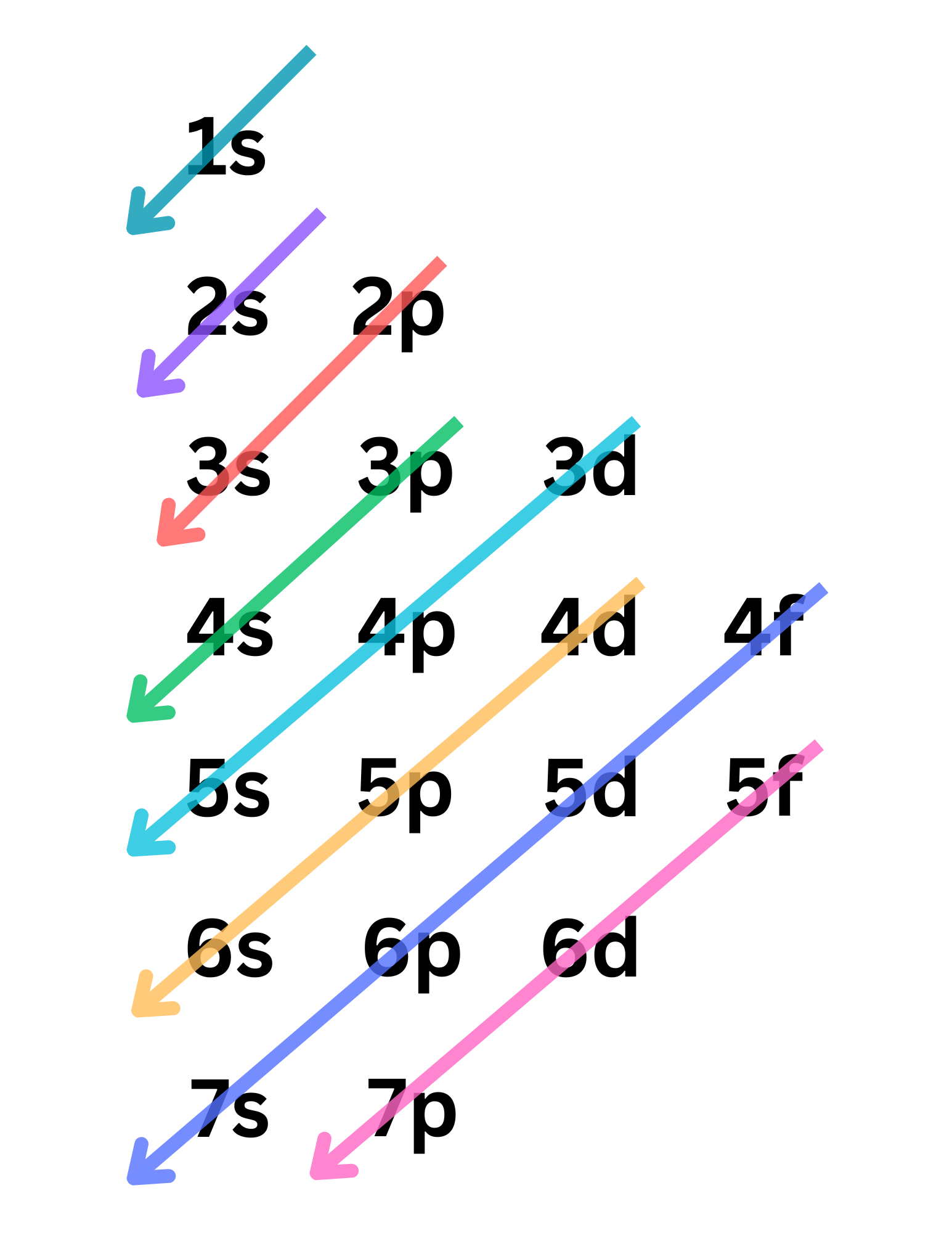
Electron configurations
Electron Configuration - how electrons are arranged around the nucleus of atoms
Aufbau principle
electrons enter orbitals of lowest energy first
Pauli Exclusion Principle
an atomic orbital may contain two electrons at the most. Paired electrons must have opposite spins.
Hund's Rule
when electrons occupy orbitals of equal energy, each electron first enters the orbitals unpaired and with the same spin
Electron Configuration ex.
Ex: write the electron configuration of phosphorus
Determine the number of electrons to be placed in the orbitals
Follow the rules to place the electron and use a diagonal diagram
P has 15 electrons, 1s and can hold 2 electrons (13 electrons left), 2s can hold 2 electrons (11 electrons left), 2p can hold 6 (3 orbitals each hold 2 electrons = 6, so 5 electrons left), 3s -2 (3 electrons left), 3p (so all 3 electrons are being used)
Electron Configuration: 1s22s22p63s23p3
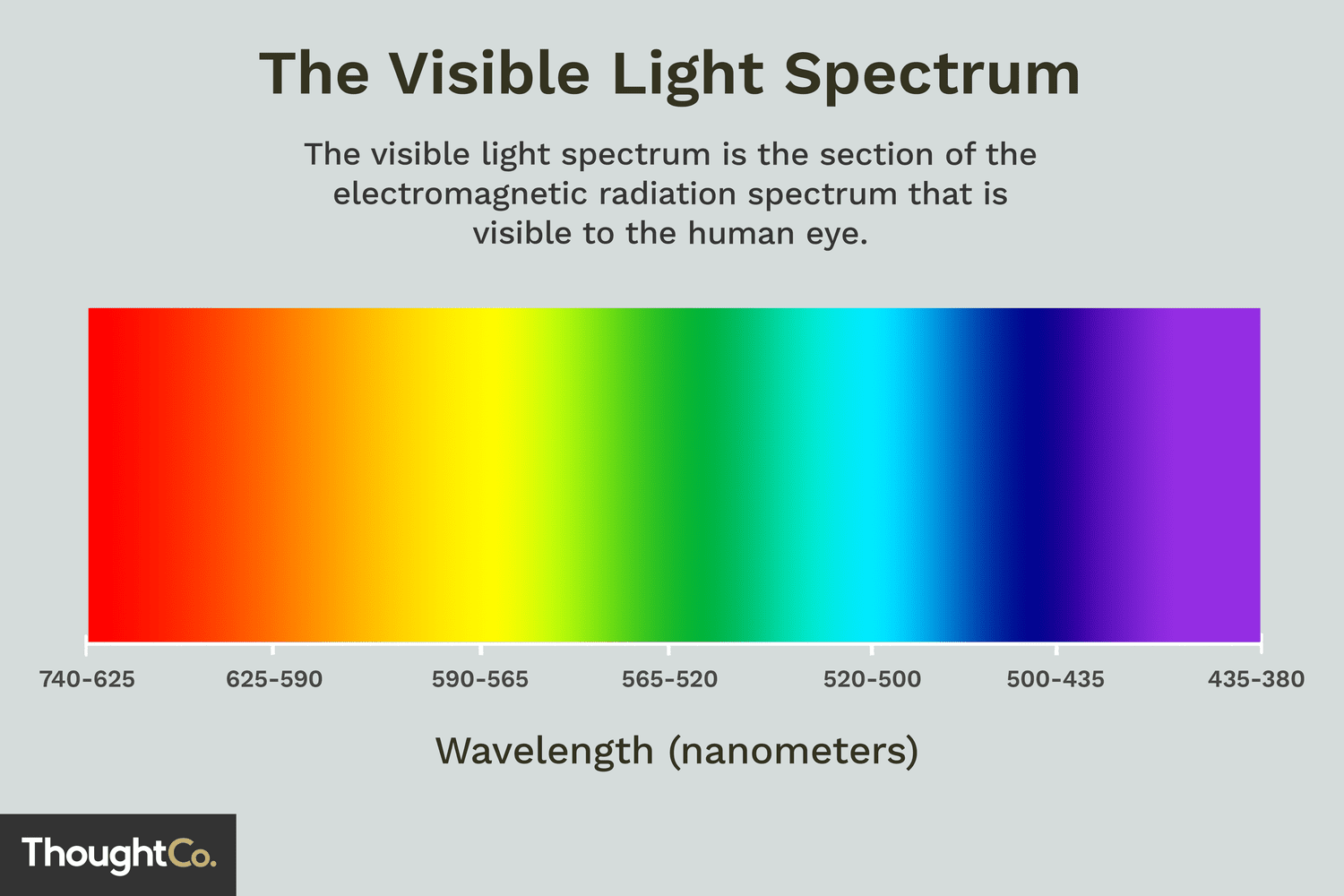
EMR/visible light spectrum Spectrum (ROYGBIV)
red=700 nanometers
green=550 meters
violet=350 meters
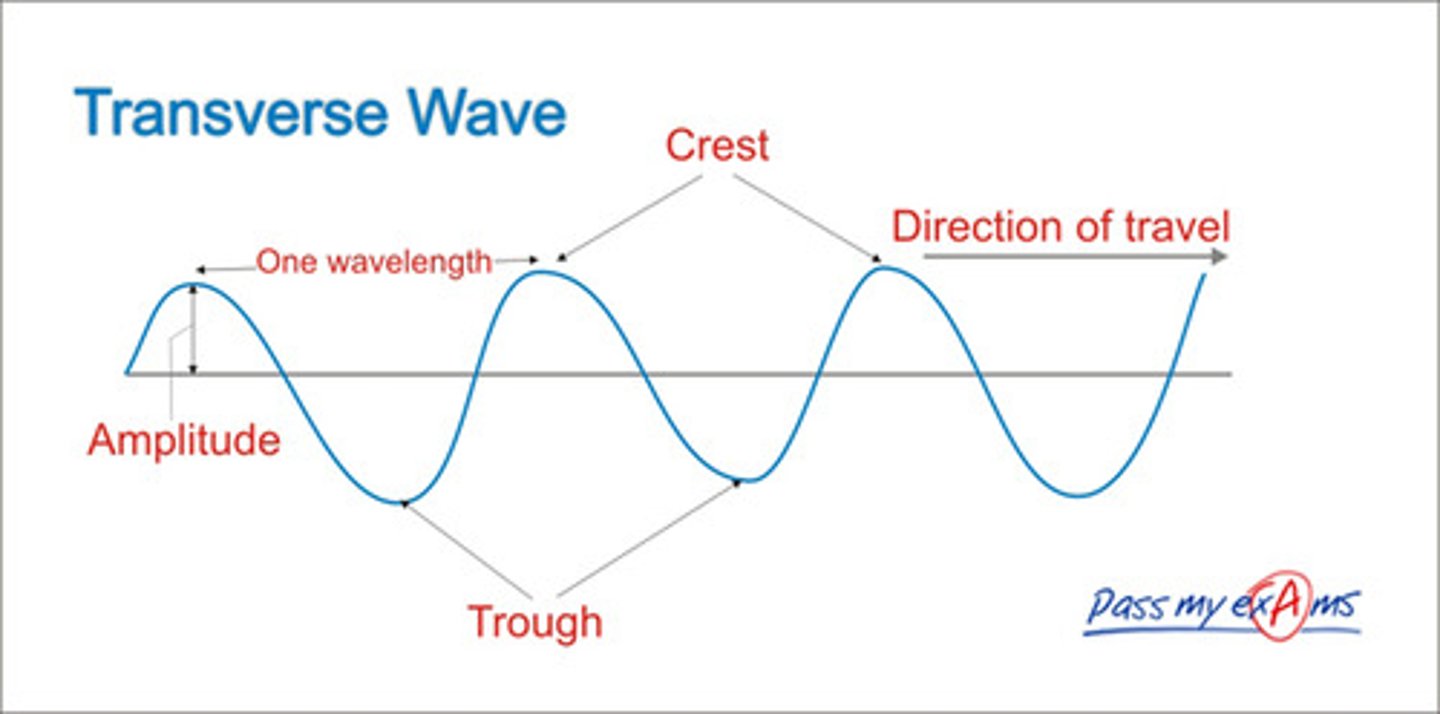
structure of a wave
(lambda) = wavelength, a= amplitude
Crest- peak on the wave
Trough - the lowest point on a wave
Amplitude - the heigh tof the wave from the origin tothd crest
Wavelength ( (lambda) - is the distance between crests
Wave cycle - when you reach the original position which you started at
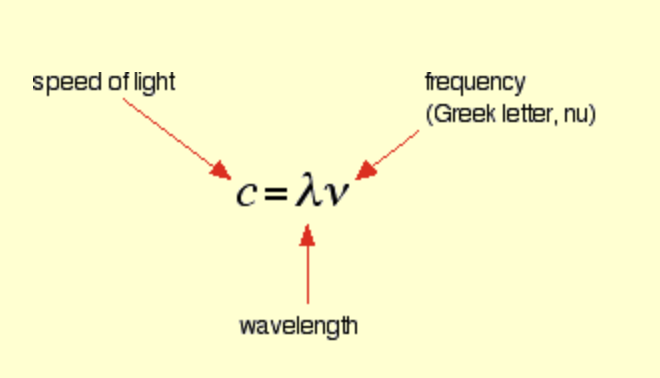
Equation for Electromagnetic Waves (EM)
Note: if the speed of light remains constant, then: if increases decreases, if decreases, increases
Note: Wavelength and frequency are inversely proportional
Ex. Find the wavelength of yellow light emitted by a sodium lamp.
C(speed of light) = 3.00 x 10^8 m/s
C = Lambda x nu