BIOL 1101: Unit 2 Vocab
 Call Kai
 Learn
Learn Practice Test
 Spaced Repetition
 Match
Match Flashcards
 Knowt Play
1/81

Earn XP
Description and Tags
Endomembrane system,
Name | Mastery | Learn | Test | Matching | Spaced | Call with Kai |
|---|
No analytics yet
Send a link to your students to track their progress
82 Terms
Endomembrane System
Collection of interconnected, membrane-bound organelles in eukaryotic cells that work together to synthesize, modify, package, and transport proteins and lipids
Topological Equivalence
The idea that the ER, golgi, lyosomes, and endosomes share the same internal environment, allowing the molecules to move between them without crossing a membrane
Nucleus
Contains nuclear envelope, nuclear pore complex, nuclear lamina
Control center of eukaryotic cell, acts as storage for cell’s genetic material, protects and manage instructions necessary for cell growth, survival, and reproduction
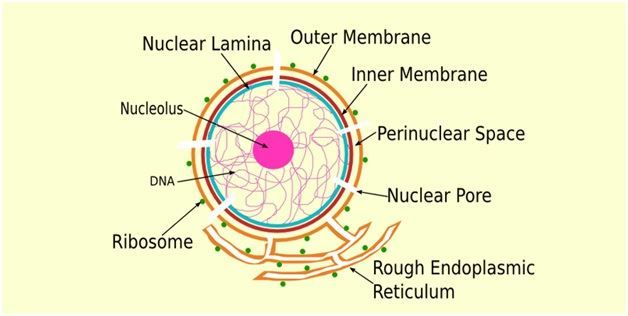
Nuclear Envelope
Highly-regulated double-membrane barrier separating the nucleus from the cytoplasm. Continuous with rough ER.
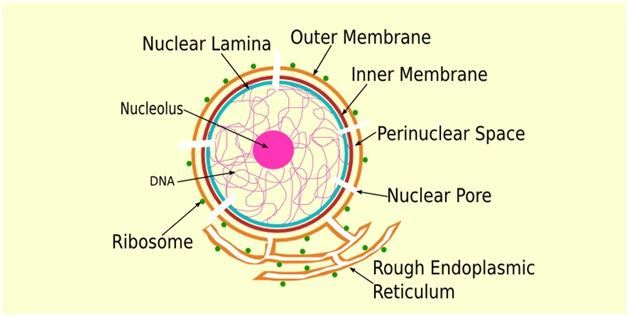
Nuclear Pore Complex
Channel of 50-100 different polypeptides allowing RNA and proteins to travel between the nucleus and cytosol
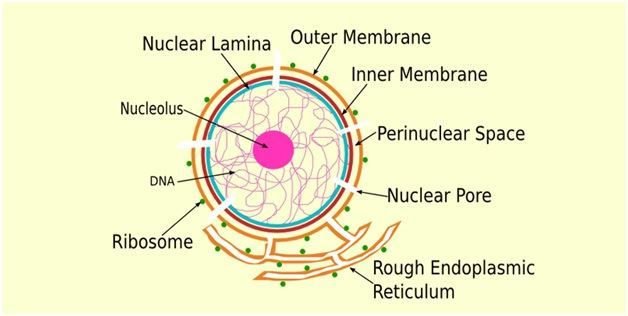
Nuclear Lamina
Provides structural support to the envelope and a point for chromatin to attach during interphase
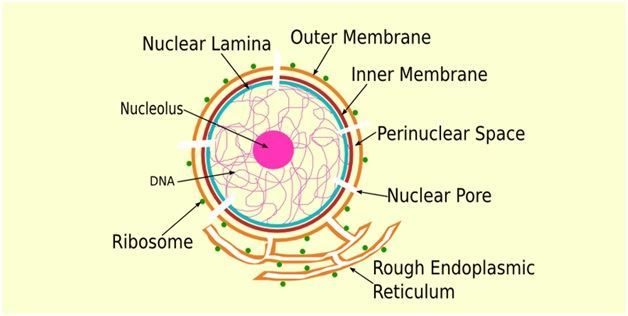
Endoplasmic Reticulum
2 distinct regions with 2 different functions: Smooth and rough
Smooth ER
No ribosomes
Synthesizes lipids (steroids), metabolizes carbs (glycogen), stores calcium ions, detoxifies poisons and drugs
Rough ER
Bound ribosomes, synthesizes proteins destined for secretion or the endomembrane system, syntehsizes integral membrane proteins, performs initial protein modifications and membrane assembly
Golgi Apparatus
Acts as the cells receiving, shipping, and modification center
Modifies proteins produced in the ER and pinches off vesicles to give rise to lysosomes and vacuoles
Vesicles
Move cargo between organelles using specific protein “coats” that designate their direction of travel
COPII-Coated Vesicles
1/3 coat proteins, goes from ER—>Golgi, pathway type: anterograde (forward)
Carry new proteins and lipids
COPI Coated Vesicles
1/3 coat proteins
Golgi—>ER
Pathway Type: Retrograde (recycling/backward)
Recycles ER resident proteins
Clathrin Coated Vesicles
1/3 coat proteins
Plasma Membrane—>Inside
Pathway Type: Endocytosis/Receptor mediated
Moves material (digestive enzymes that will break down things in the lysosomes) from the plasma membrane inward (endocytosis) or from the golgi to the lysosomes
Lysosomes
Membrane-bound sacs containing digestive enzymes acting as the cell’s destructive and break down forces and recycling center and digestive system
Main functions include: phagocytosis, autography, and waste processing
Phagocytosis
Digestion of food or foreign particles taken in from outside the cell into a large vacuole called the phagosome, which then fuses with the lysosome for digestion
Autophagy
Recycling the cell’s own damaged organelles
Endocytosis
Taking material into the cell
Includes Phagocytosis, pinocytosis, and receptor-mediated endocytosis
Phagocytosis
Cell eating, large particles are engulfed
Pinocytosis
Cell drinking, nonspecific uptake of extracellular fluid
Receptor-Mediated Endocytosis
Highly specific uptake using receptors and clathrin coated vesicles (LDL or cholesterol uptake)
Receptors on the cell surface bind to specific ligands, and once bound the clathrin proteins coat the membrane to form a vesicle and pull the material inside
Exocytosis
sending material out
Includes Constitutive secretion, regulated secretion
Constitutive Secretion
Continuous Release of materials, supplies the plasma membrane with new lipids and proteins constantly (mucus secretion in the gut)
Regulated Secretion
Materials are stored in vesicles and are released only in response to a specific signal (insulin in pancreas, or neurotransmitters from neurons)
Cytoskeleton
Network of protein fibers that give the cell its shape, hold organelles in place, and allow for movement
Consists of the microtubules, microfilaments (actin), and intermediate filaments
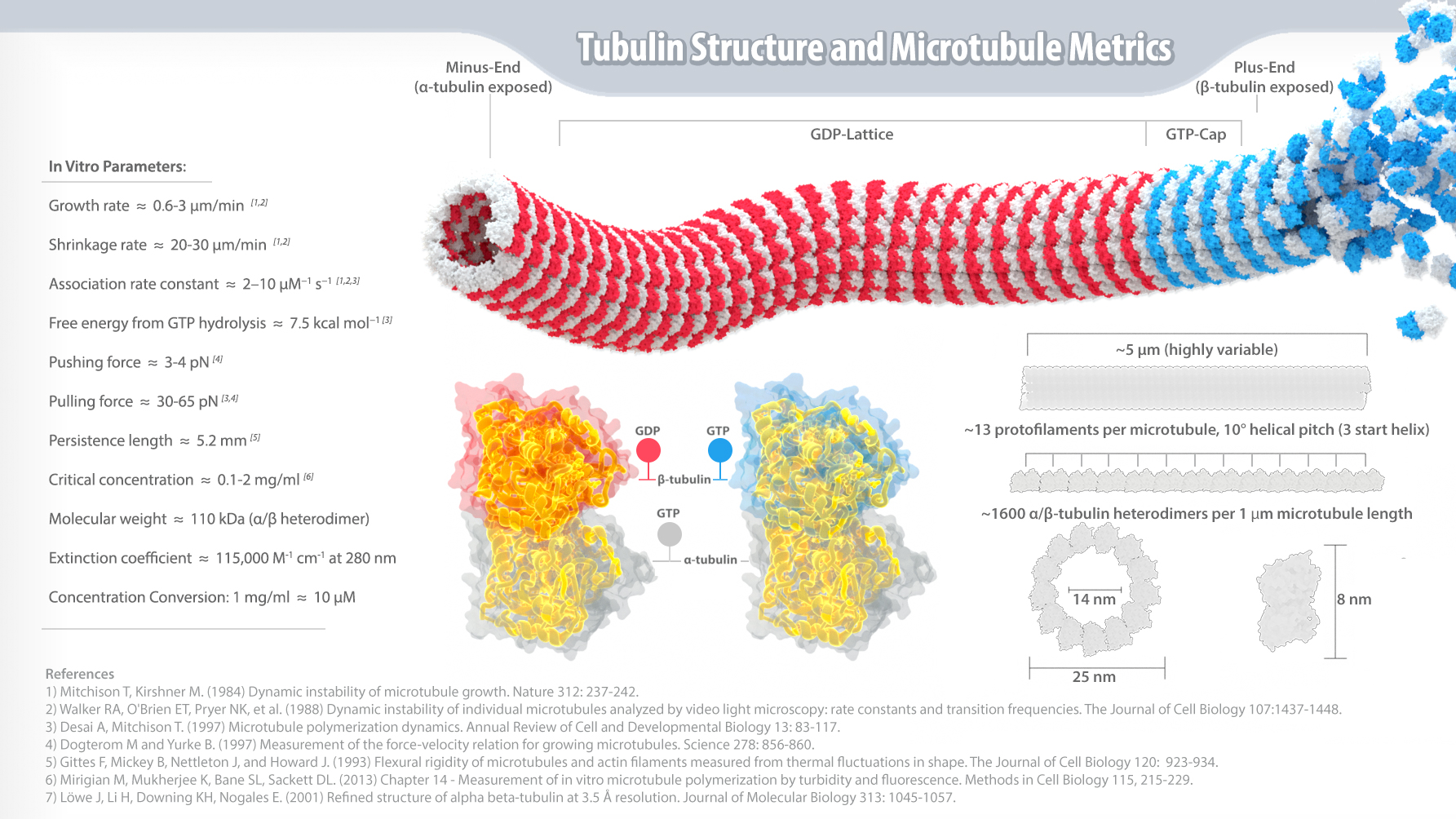
Microtubules
Structure: hollow tubes (tubulin)
Protein: tubulin
Diameter: largest
Key Functions: cell motility (cilia/flagella), chromosome movement, organelle tracks, ATP and movement, mainly involved in moving things like vesicles and DNA
Motor Proteins: kinesin and dynein
Dynamic? Yes (grows and shrinks)
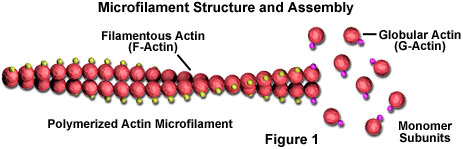
Microfilaments
Structure: 2 intertwined strands
Protein: actin
Diameter: smallest
Key Functions: muscle contractions, cell shape (cortex), cytoplasmic streaming, ATP and movement, mainly involved in cell shape and contraction
Motor Proteins: Myosin
Yes (grows and shrinks)
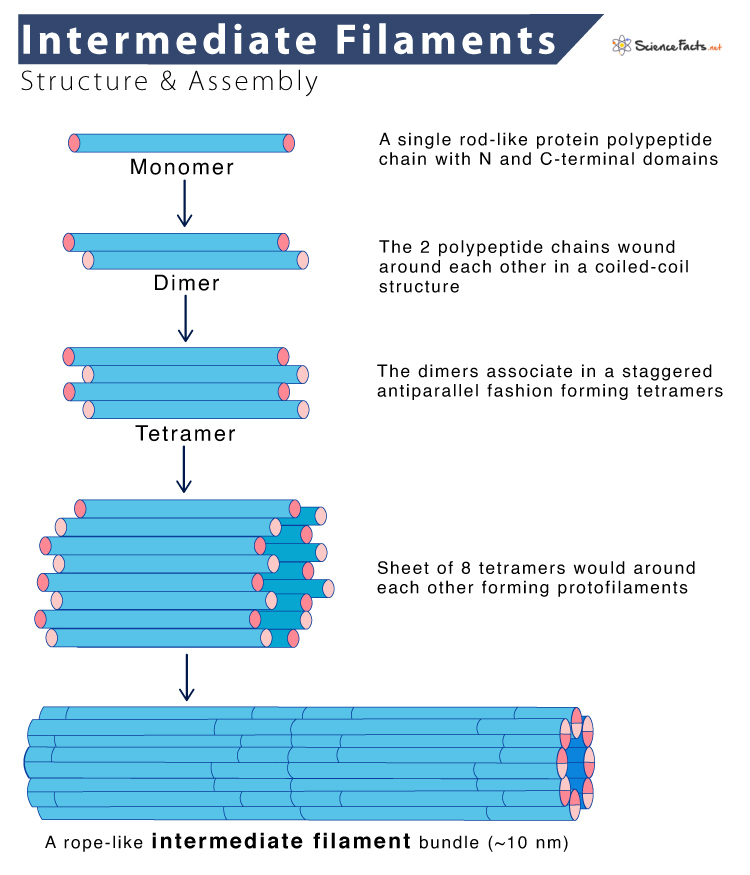
Intermediate Filaments
Structure: fibrous proteins coiled into cables,
Protein: keratin and fibrous ones
Diameter: middle
Functions: anchorage of nucleus, formation of nuclear lamina, strength, permanent structure, mainly involved in permanent support and anchoring
Motor Proteins: none
No (permanent and stable)
Motor Proteins
The guiders of the cytoskeleton to allow intentional movement of the organelles and vesicles
Microtubule Motors
Kinesin and Dynein
Kinesin
Microtubule motor
moves cargo towards the “plus” end (usually towards the cell edge)
Dynein
Microtubule motor
Moves cargo towards the “minus” end (usually towards the nucleus or centrosome)
Actin/Microfilament Motors
Myosin
Myosin
Actin/Microfilament Motors
Responsible for muscle contraction and pinching the cell during cell division (cleavage furrow)
Glycoproteins
proteins with carbs attached, carb tags that help with protein folding, stability, and cell-to-cell recognition
Glycolipids
Lipids with bound sugars, important in the membranes of nerve cells, sugars attached directly to lipid head groups, on the outlet side of the plasma membrane
Function as ID tags, receptors for cell signaling, help cells stick together to form tissues, carbs can form hydrogen bonds with the surrounding water, helping to stabilize the membrane structure
Gangliosides
Most complex type of glycolipids, found in the highest concentration in the central nervous system, help in electrical signaling between neurons and involved in cell-cell recognition with the brain
Metabolism
Sum of biochemical processes in the cell
Includes catabolic and anabolic pathways
Catabolic Pathways (energy, example)
Break down complex molecules into simpler compounds
Release Energy (exergonic)
Example: cellular respiration: breaking down glucose to CO2 and H2O
Anabolic Pathways (energy, example)
Building complex molecules from simpler ones
Consume energy (endergonic)
Example: protein synthesis (building a polypeptide from amino acids)
Kinetic Energy
energy associated with motion
Potential Energy
Energy that matter possesses because of its location or structure
Example: chemical energy
Chemical Energy (example)
Type of potential energy stored in chemical bonds that is available for release in a chemical reaction
Example: ATP has high potential energy due to the arrangement of its phosphate groups
First Law of Thermodynamics
Energy can be transferred and transformed, but it cannot be created nor destroyed
Second Law of Thermodynamics
Every energy transfer/transformation increases the entropy (disorder) o the universe
Gibbs Free Energy Equation
DeltaG=DeltaH-TdeltaS
Exergonic Reactions
Spontaneous (energetically favorable)
Energy Released
Products have less free energy than reactants
DeltaG<0
Spontaneous
Exergonic, energetically favorable
Endergonic Reaction
Nonspontaneous (energetically unfavorable)
Energy required/absorbed
Products have more free energy than reactants
DeltaG>0
Nonspontaneous
Endergonic, energetically unfavorable
Energy Coupling
Making endergonic nonspontaneous reactions possible by pairing them with exergonic ones
ATP
Adenosine Triphosphate, cell’s energy currently
ATP Hydrolysis
ATP + H2O —> ADP + P (highly exergonic)
Enzyme
Biological Catalysts (usually proteins) that speed up metabolic reactions
Increase Reaction Rates
Lower Activation Energy to provide an alternative pathway with a lower energy barrier
Transition State Stabilization: enzymes work by binding to the substrate and stabilizing the high-energy unstable transition state to make it more favorable to create relative to before
Active Site
A specific pocket or groove where the substrate binds
Induced Fit
The idea that when the substrate enters the active site, the enzyme changes its shape slightly to grip the substrate more tightly, favoring the transition state
Competitive Inhibition
Inhibitor mimics the shape of the substrate to compete for the enzyme’s active site
Blocks the substrate from entering the active site
To overcome, you can add more substrate as opposed to inhibitor
Allosteric Site
Distinct spot on an enzyme from the active site where molecules can bind to change the protein’s shape and activity
Noncompetitive Inhibition
Inhibitor binds to a different site (allosteric site) on the enzyme
Effect: binding causes the enzyme to change its shape, making the active site
Substrate Level: adding more substrate doesn’t help because the inhibitor and substrate aren’t fighting for the same spot
Stabilization Rule
Enzymes always favor and stabilize the transition state, not the substrate or product
Gene
a heritable unit of information
example: flower color
Allele
alternative versions of a gene (subject of heritable info, like color of flower) (purple vs. white)
Genotype
Genetic makeup of a gene (letters, like Pp)
Phenotype
Physical Appearance (what we see, like the color purple)
Homozygous
Having two of the same allele in one gene (PP or pp)
Heterozygous
Having two different alleles (Pp)
Mendel’s First Law
Law of Segregation
Mendel’s First Law: Law of Segregation
The two alleles for a heritable character segregate (separate) during a gamete formation and end up in different gametes during anaphase I of meiosis when homologous chromosomes separate
Result: an egg/sperm gets only one of the two alleles present in the aromatic cells
Monohybrid Cross
3:1 Ratio
Cross 2 heterozygotes (Pp x Pp)
Genotypic Ratio: 1:2:1 (1 PP, 2 Pp, 1 pp)
Phenotypic Ratio: 3:1 (3 Purple, 1 white)
Testcross
Performed using the principles of a monohybrid cross
Used to determine if a dominant looking plant is PP or Pp
Cross the dominant looking plant with a homozygous recessive (pp), and if any fo the offspring are white (recessive trait), the parent was Pp
Mendel’s Second Law
Law of Independent Assortment
Mendel’s Second Law: Law of Independent Assortment
Law: Each pair of alleles segregates independently of any other pair during gamete formation (ones splitting does not impact the others), occurring during Metaphase I of meiosis, based on how the chromosomes line up on the plate
Constraint: only applies to genes on different chromosomes or very apart on the same chromosome
Dihybrid Cross
9:3:3:1 ratio
Crossing two double heterozygotes (YyRr x YyRr)
Phenotypic Ratio: 9:3:3:1
9 of both dominant traits
3 of one dominant one recessive
3 of other one dominant and other one recessive
1 shows both recessive traits
Multiplication Rule
AND, to find the probability of two independent events happening together, multiply them by their individual probabilities from a monohybrid cross
Example: (probability of getting pp and rr from a PpRr x PpRr cross?) ¼ x ¼ = 1/16
Addition Rule
Find the probability of any one of two or more mutually exclusive events, add their individual probabilities
P Generation
True-Breeding parents (one is homozygous dominant, other is homozygous recessive)
Example: Purple x white flower
F1 GEneration
First generation of offspring from the P parents, every single offspring is a heterozygote Pp, so you see 100% of the dominant phenotype (purple, the white trait completely disappears)
F2 Generation
Second generation of the P generation. Created by crossing two of the F1 plants together Pp x Pp, or self pollinating just one of the F1 plants.
Recessive white trait reappears.
Creates 3:1 rule (monohybrid cross), where even though both parents were purple, about 75% of the offspring will be purple and 25% will be white
Independent Assortment
Genetic Linkage
When two alleles on the same chromosome do not separate during meiosis because they are on the same chromosome. (even if two different traits are on one chromosome, they cannot be separated)
Crossing Over
If two genes are on the same chromosome but are very far away from each other, crossing over can occur, where during meiosis in prophase I, homologous chromosomes (one from mom and one from dad) swap chunks of DNA. If the distance is large enough, the swap happens so frequently between the two genes that they behave as if they were on different chromosomes
Increases genetic diversity
Allows genes on the same chromosome to eventually follow the law of independent assortment if they are far enough apart
Chiasma
Where chromosomes swap DNA pieces in prophase I for crossing over