Lab 19: Anatomy of the Frog
 Call Kai
 Learn
Learn Practice Test
 Spaced Repetition
 Match
Match Flashcards
 Knowt Play
1/114

There's no tags or description
Looks like no tags are added yet.
Name | Mastery | Learn | Test | Matching | Spaced | Call with Kai |
|---|
No analytics yet
Send a link to your students to track their progress
115 Terms
frogs and toads phylum
Chordata
frogs and toads subphylum
Vertebrata
frogs and toads class
Amphibia
tadpole
aquatic larval stage of frogs
why do frogs have to live close to water?
they have an aquatic larval stage (tadpole), followed by metamorphosis into a semi-aquatic terrestrial adult; limited ability to conserve body water; often use their skin as a respiratory surface, so they must stay moist
endoskeleton
internal skeleton; allows for much larger growth, protects internal organs, serves as a support structure for muscles to attach to, has great flexibility and mobility due to the large number of separate bones
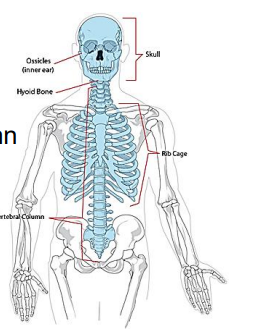
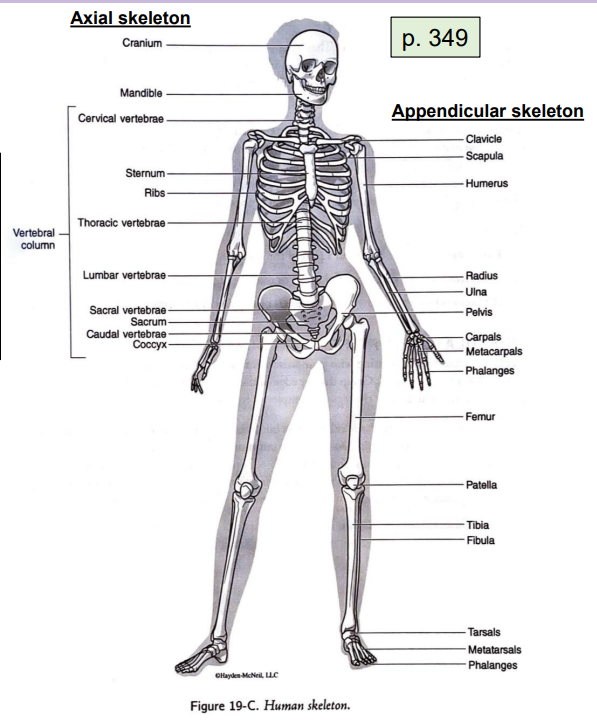
axial skeleton
skull, vertebral column, sternum/ribs
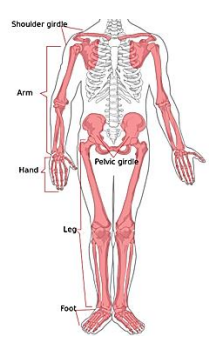
appendicular skeleton
shoulder girdle, pelvic girdle, limbs
cranium h
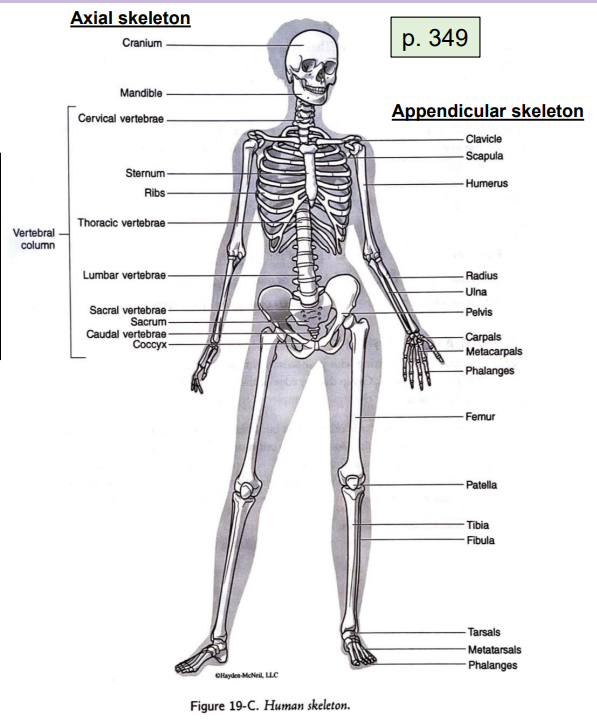
mandible h
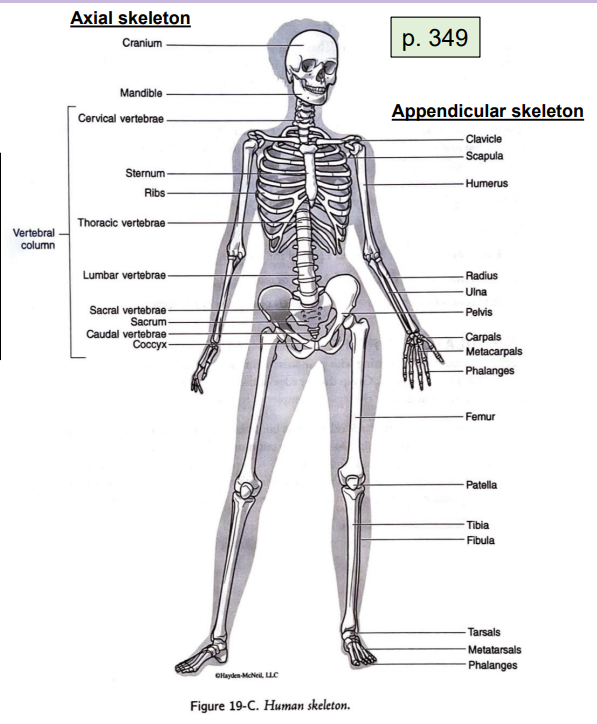
vertebral column h
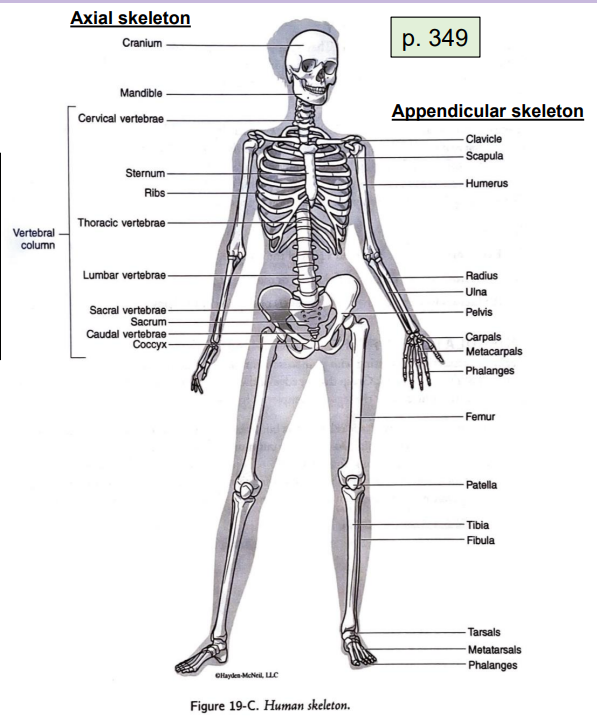
clavicle h
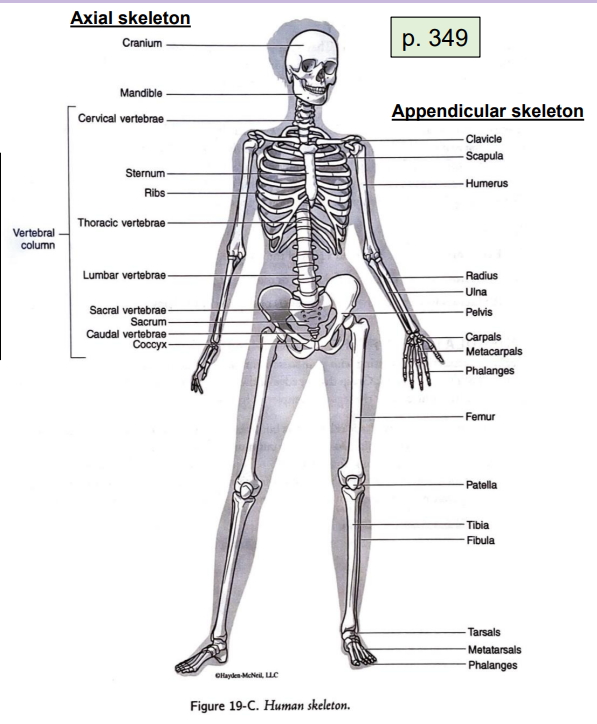
scapula h
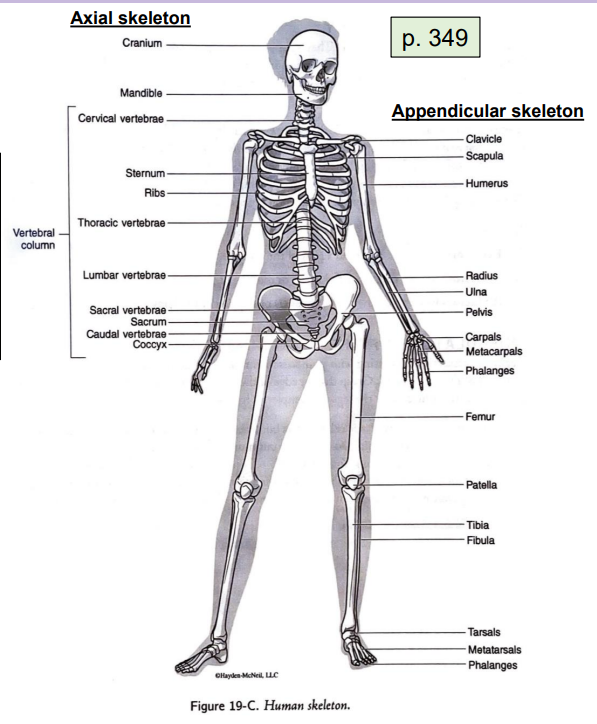
humerus h
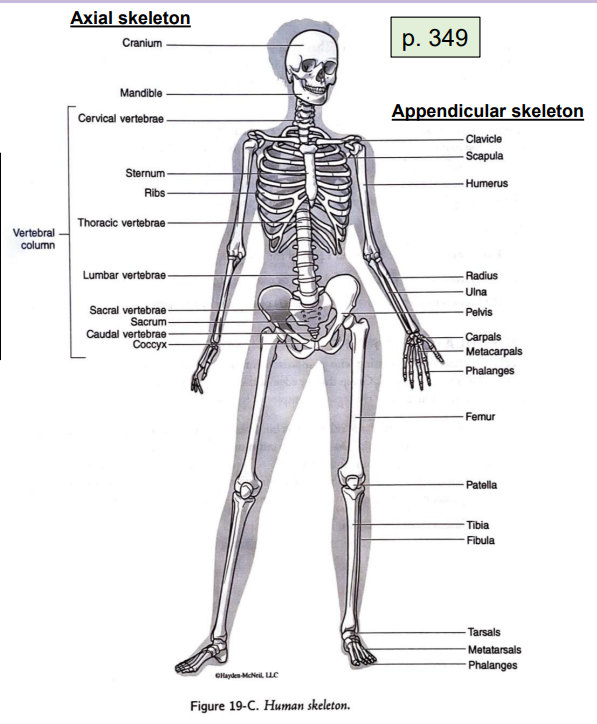
radius h
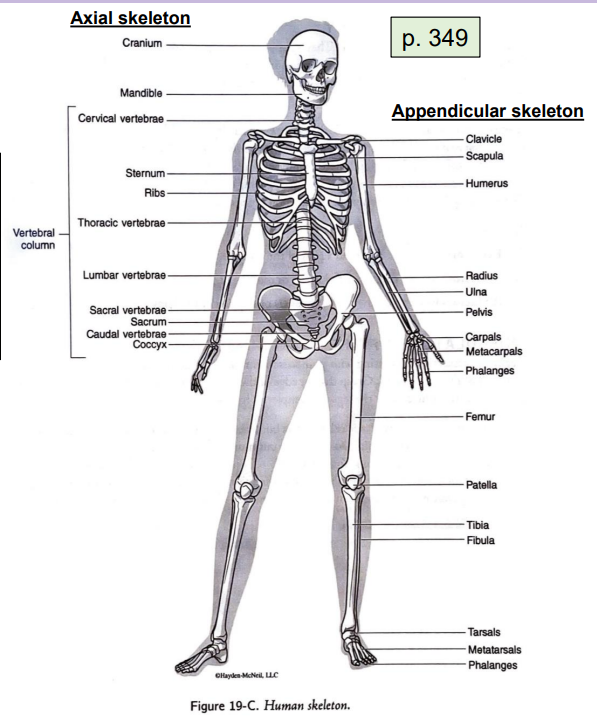
ulna h
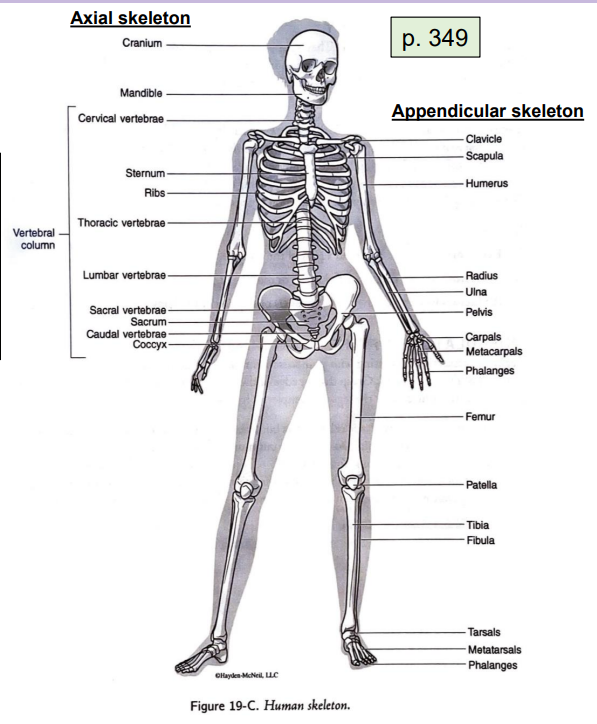
pelvis h
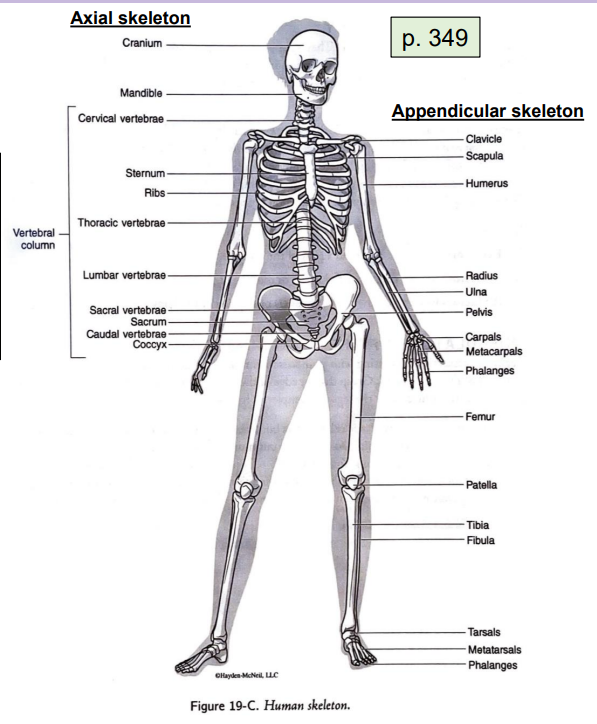
carpals h
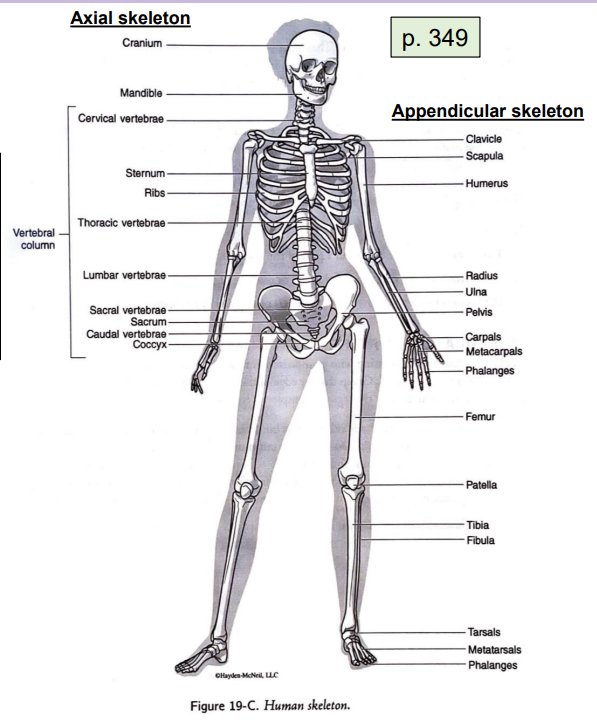
metacarpals h
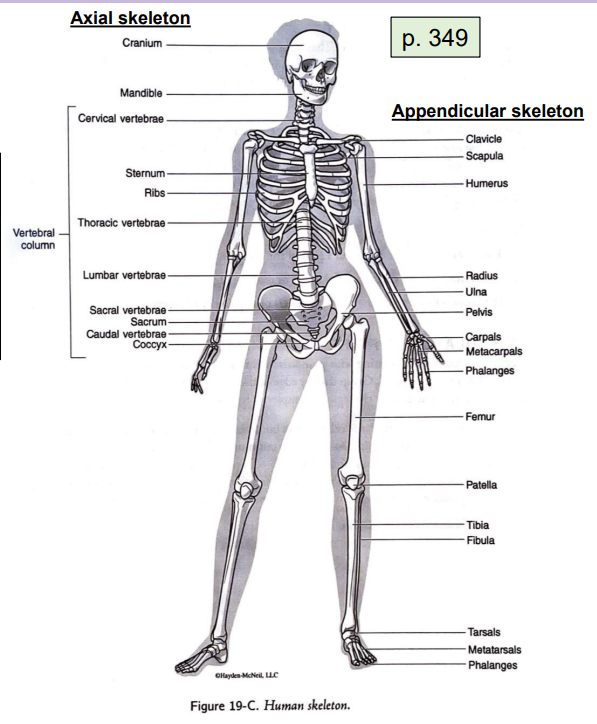
phalanges h
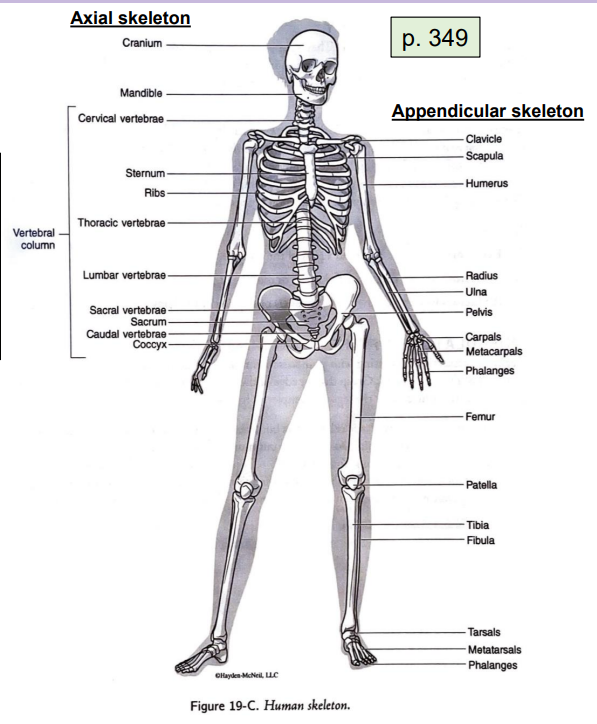
femur h
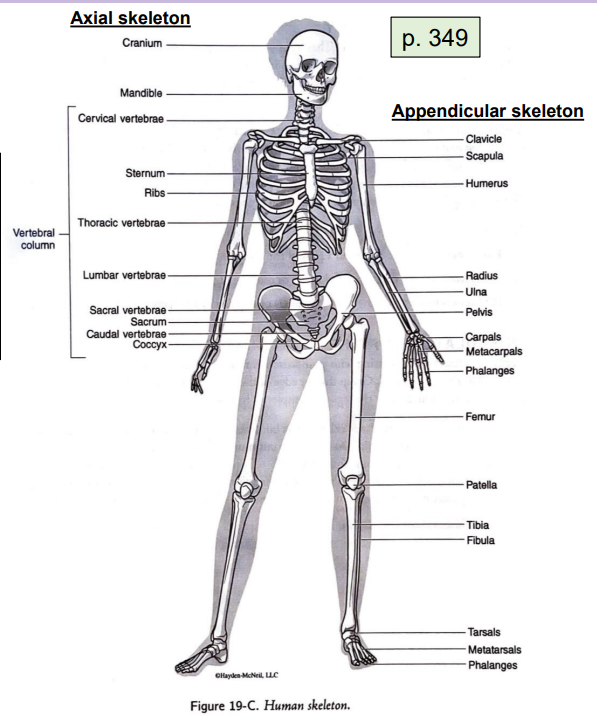
patella h
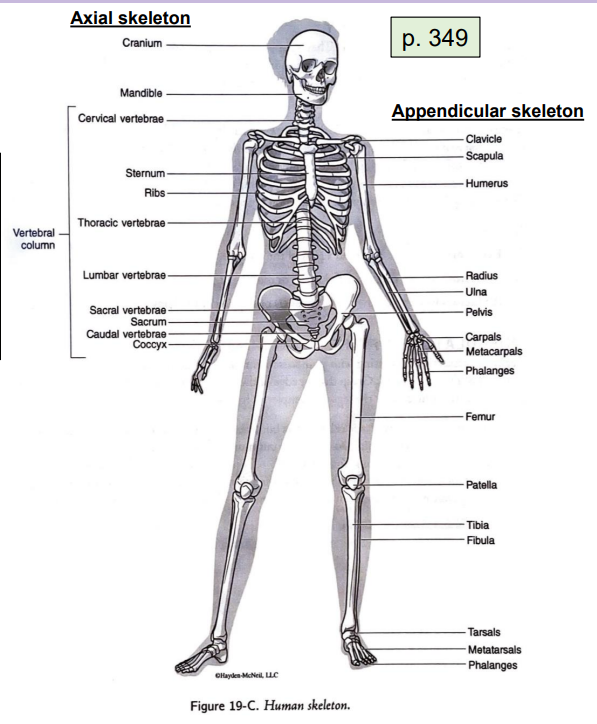
tibia h
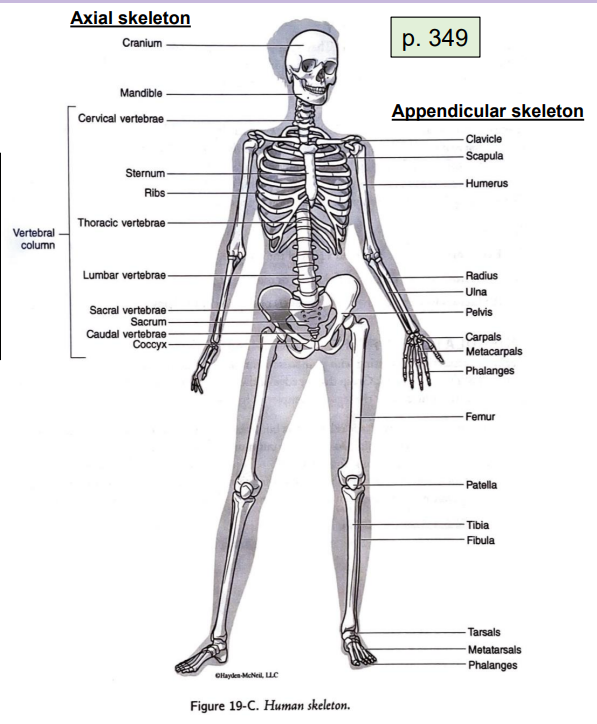
fibula h
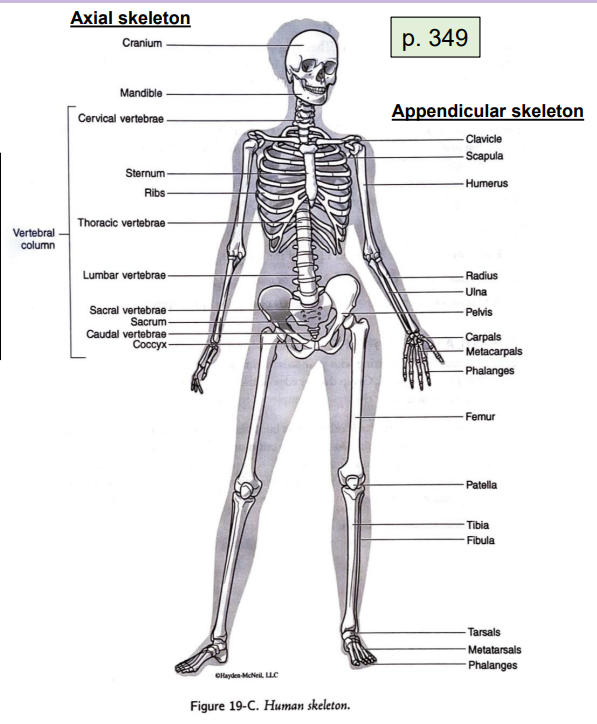
tarsals h
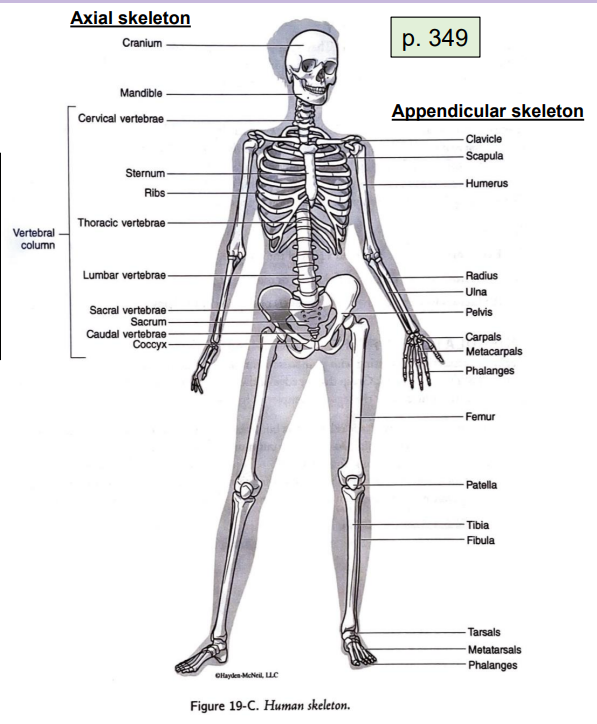
metatarsals h
cranium f
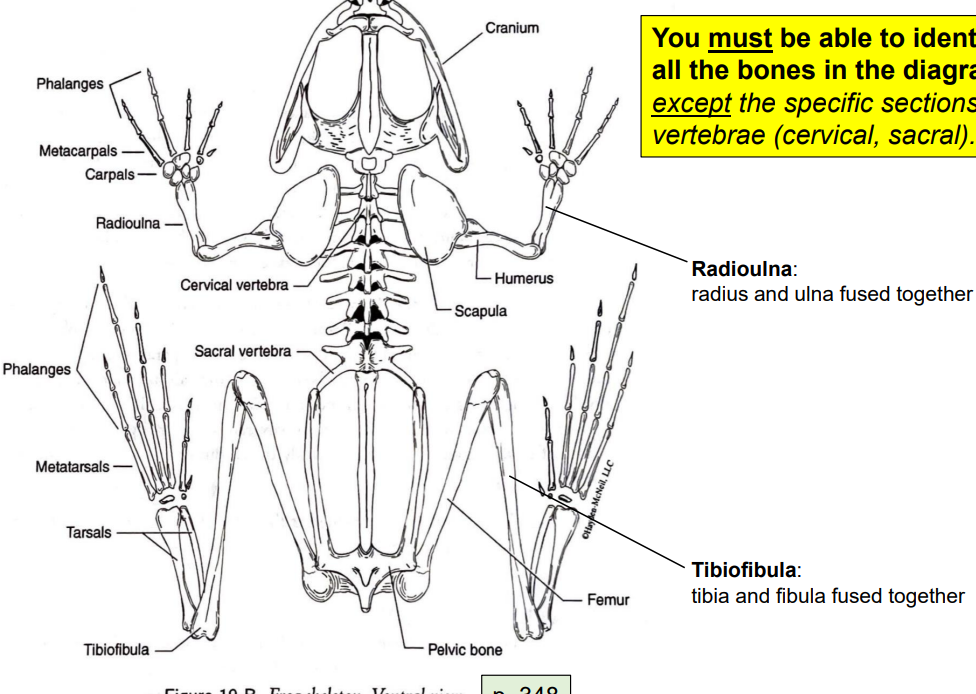
vertebral column f
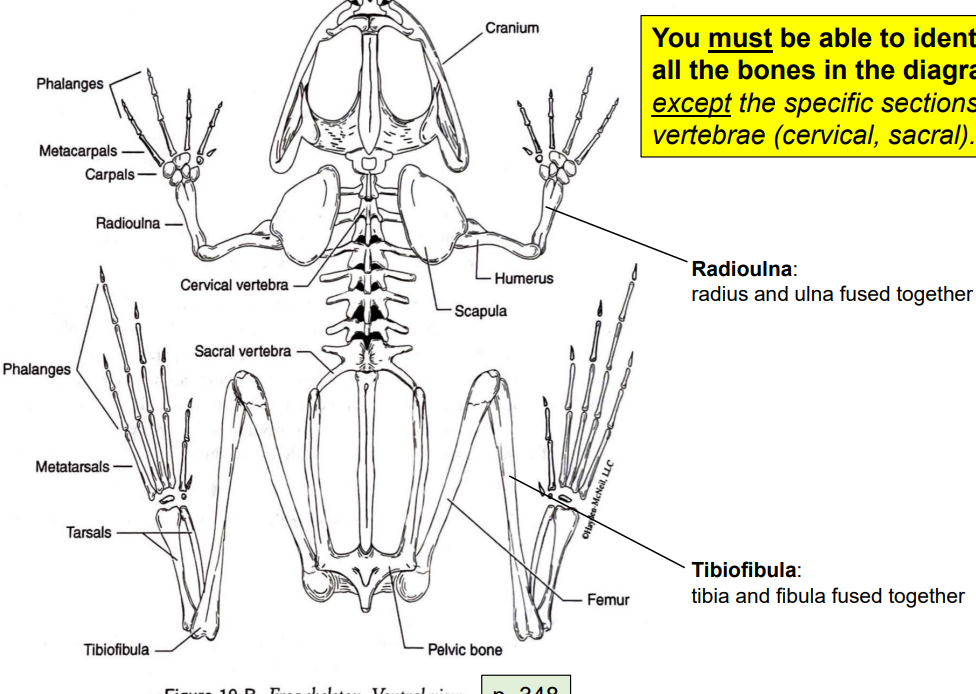
scapula f
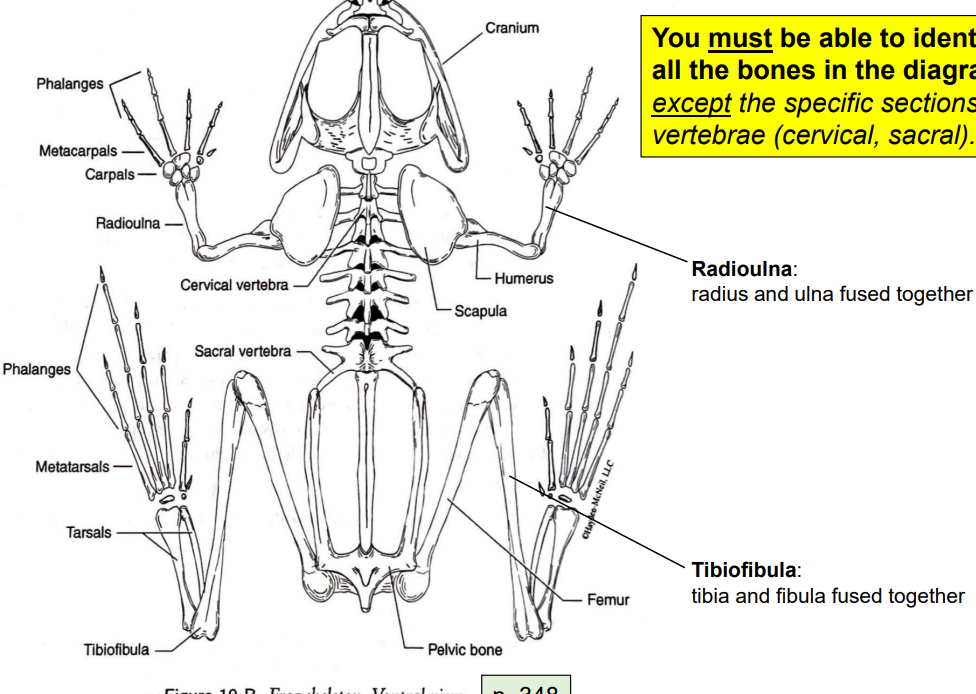
humerus f
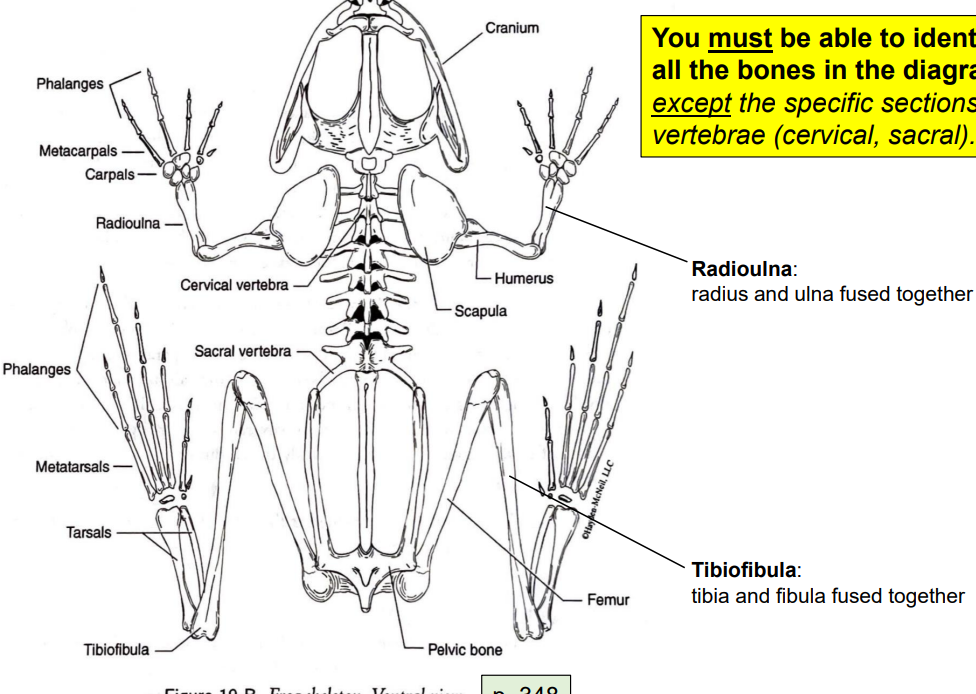
radioulna
radius and ulna fused together
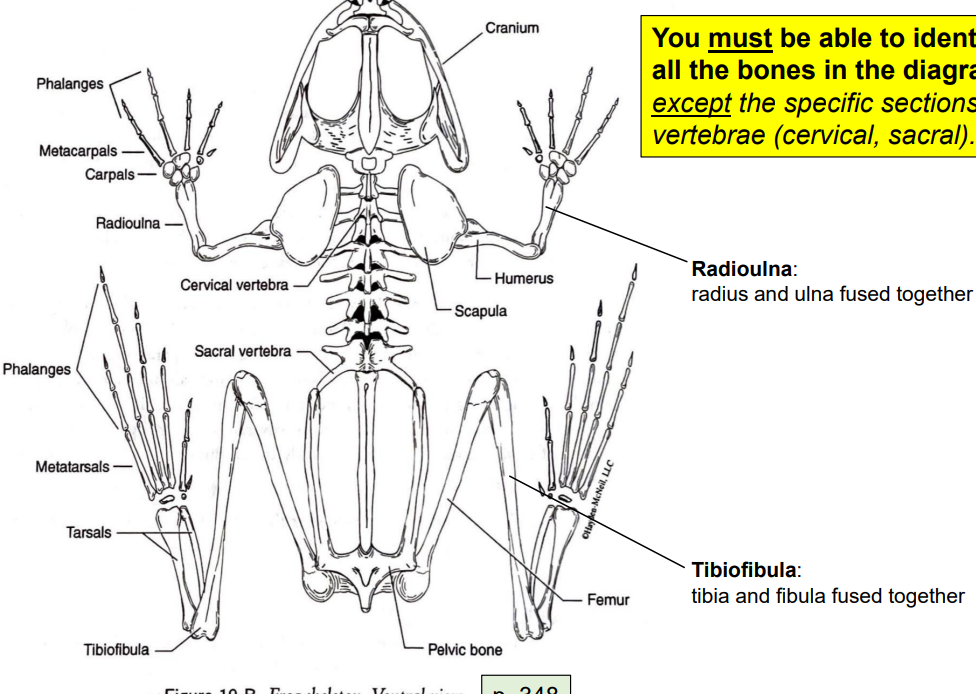
carpals f
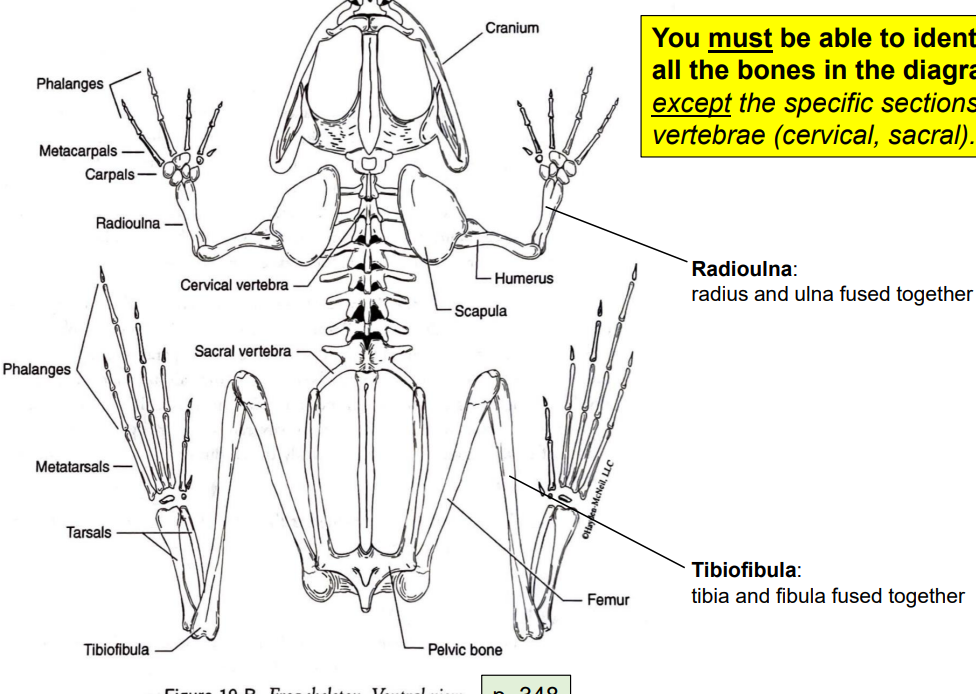
metacarpals f
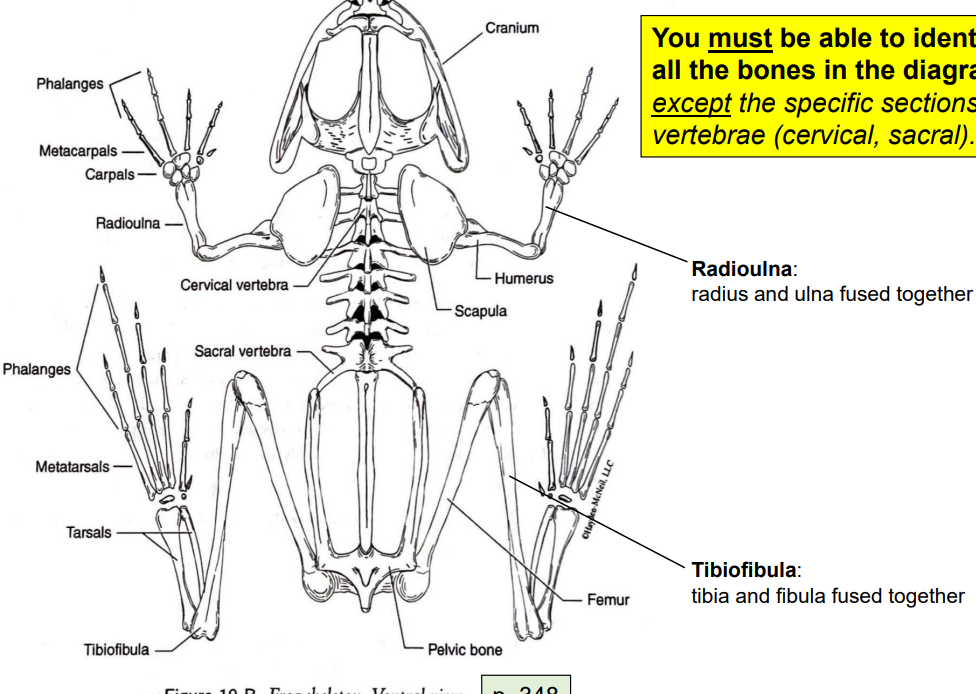
phalanges f
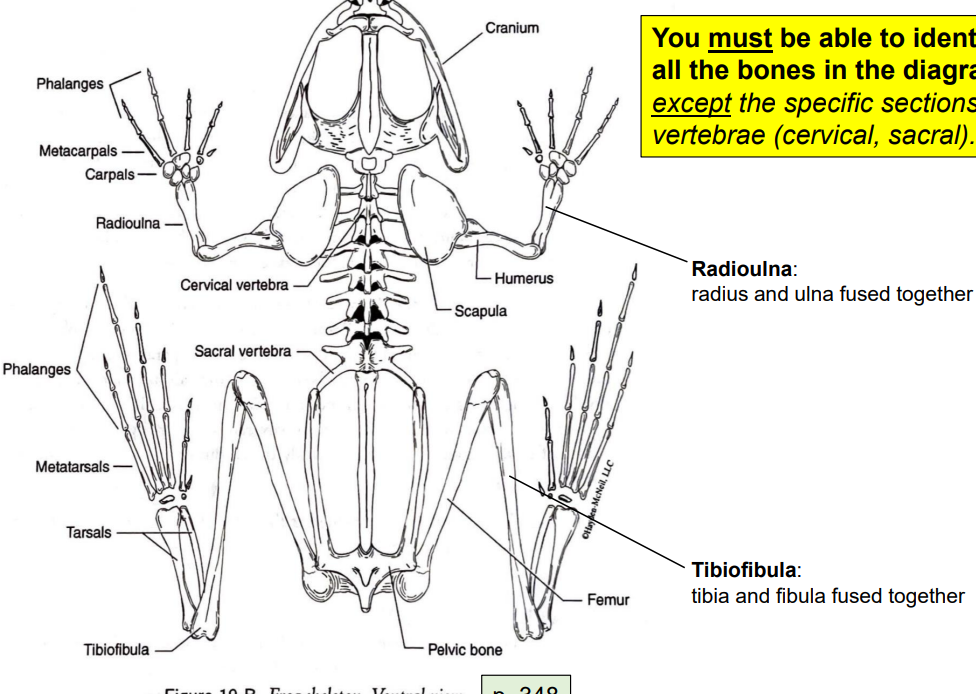
pelvic bone f
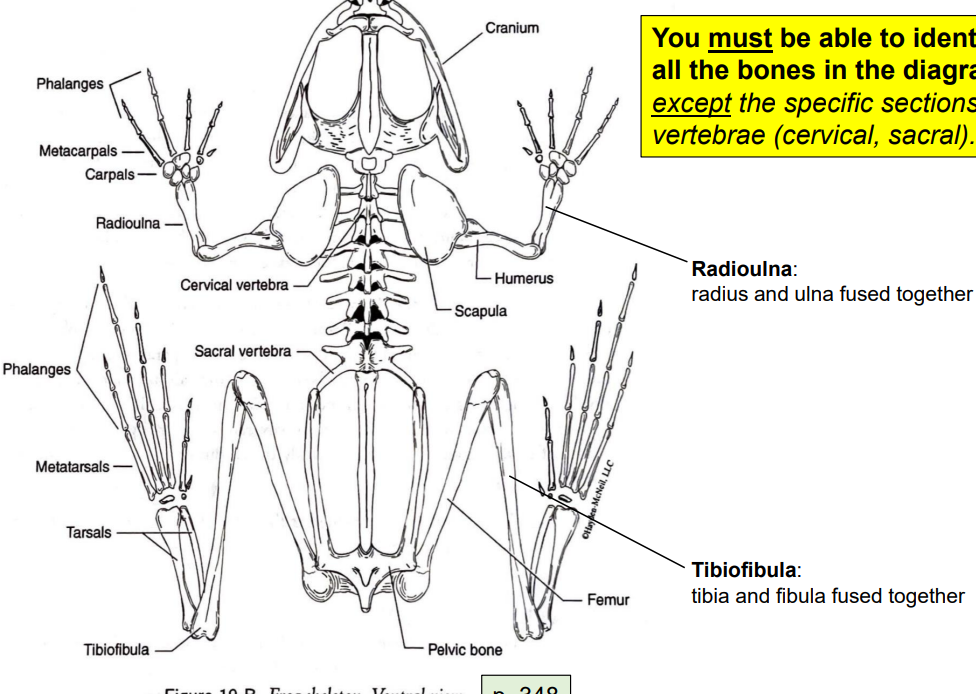
femur f
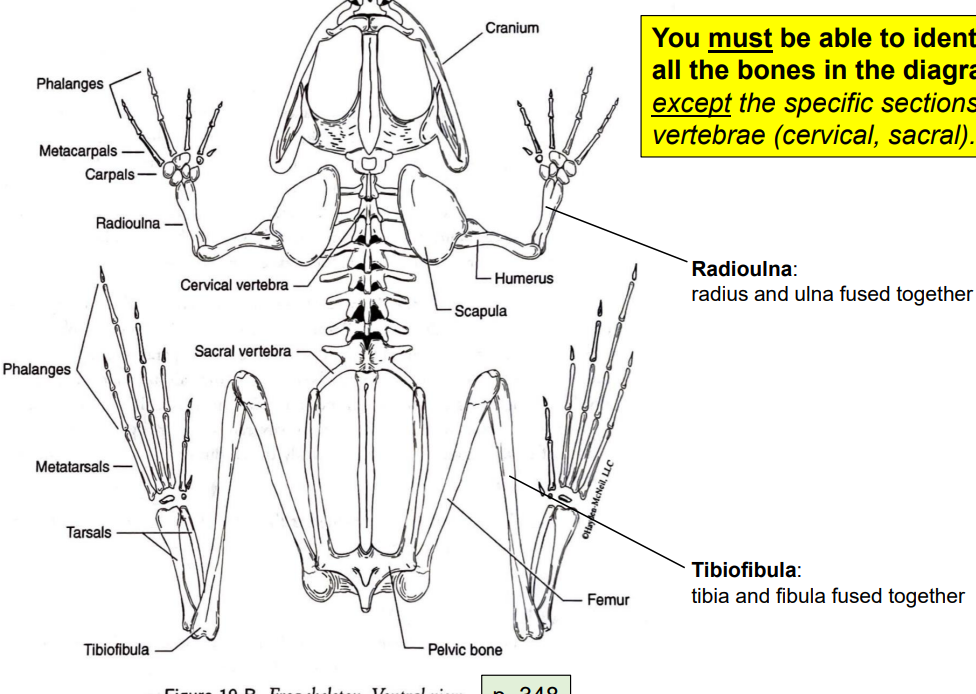
tibiofibula
tibia and fibula fused together
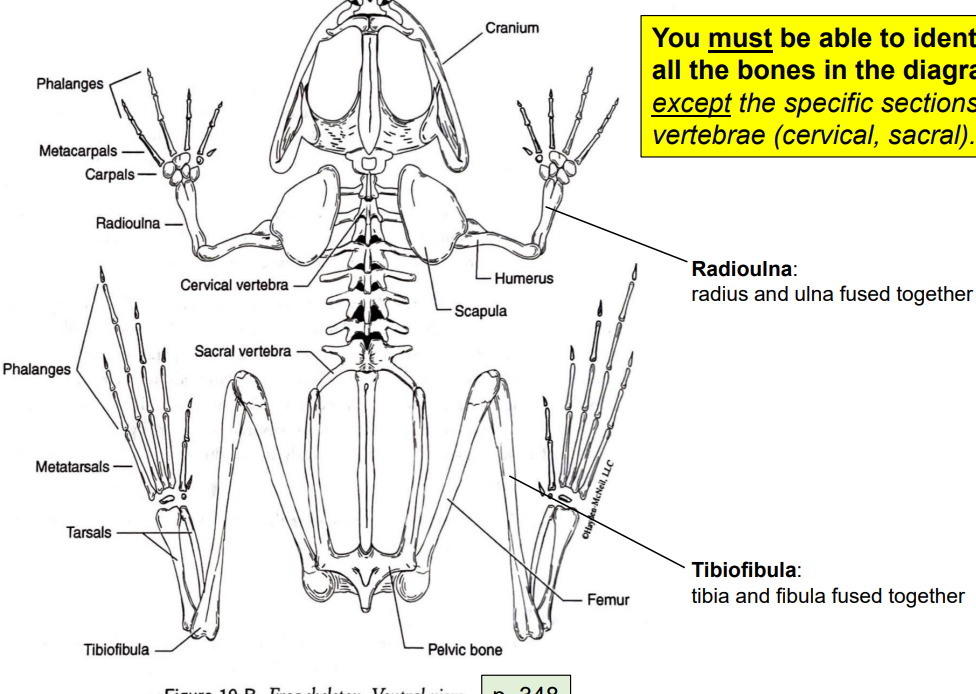
tarsals f
long and thin compared to humans
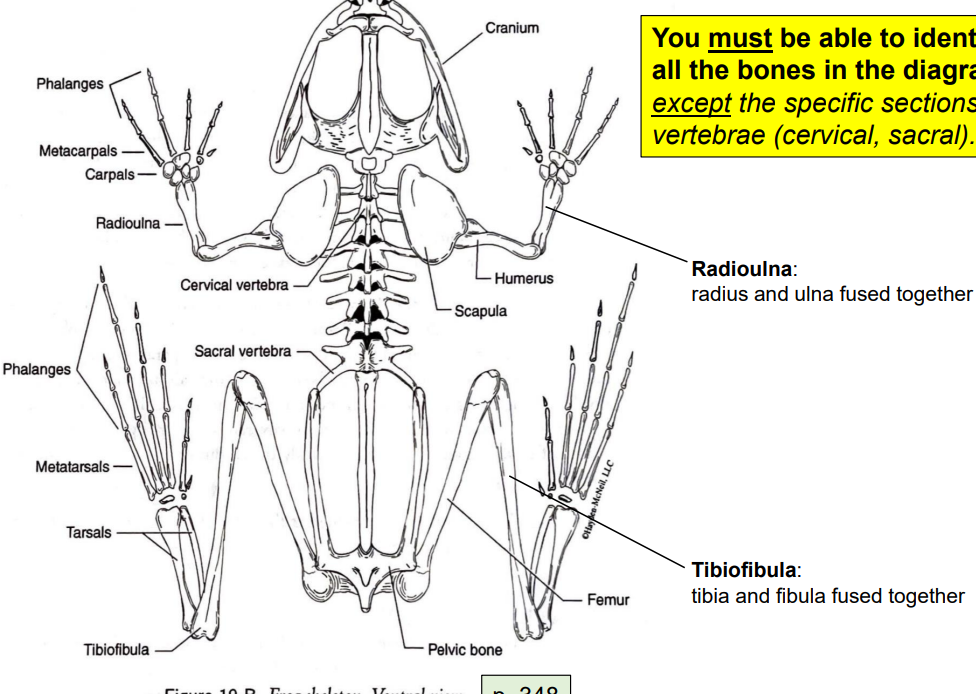
metatarsals f
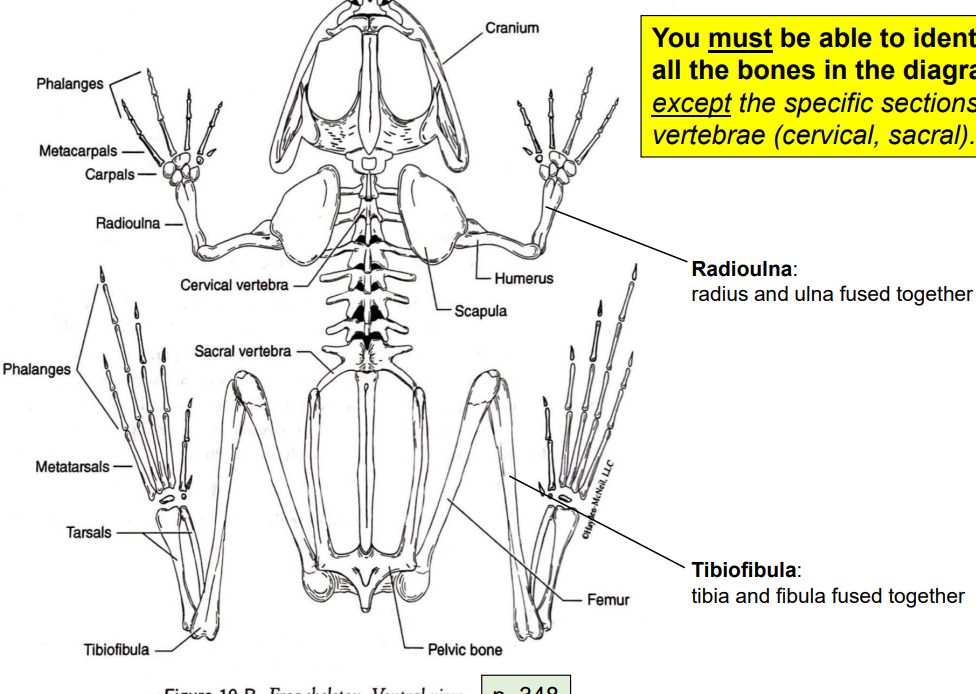
dorsal
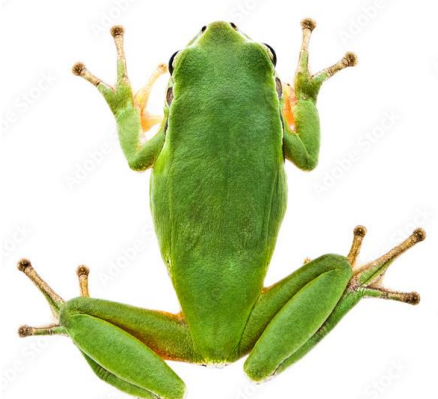
ventral
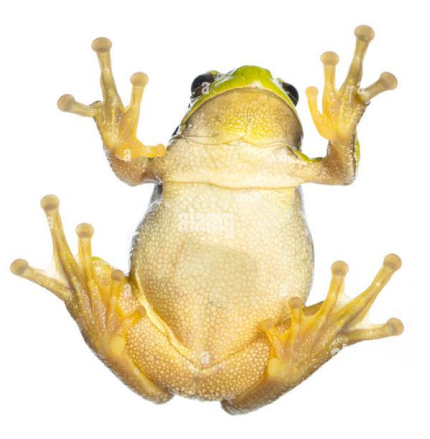
eyes
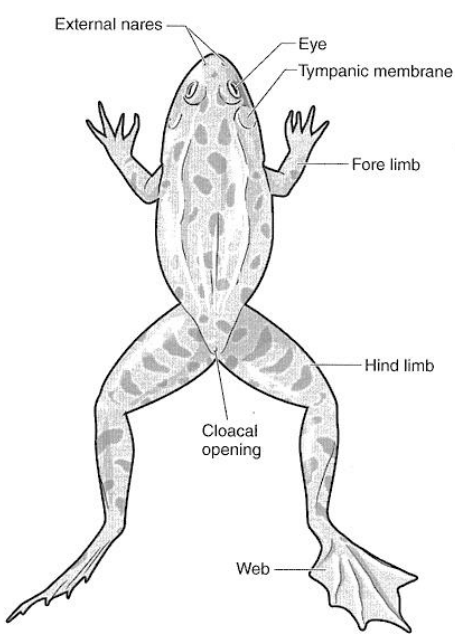
Cloacal aperture
The external opening where the digestive, urinary, and reproductive systems empty in a frog.
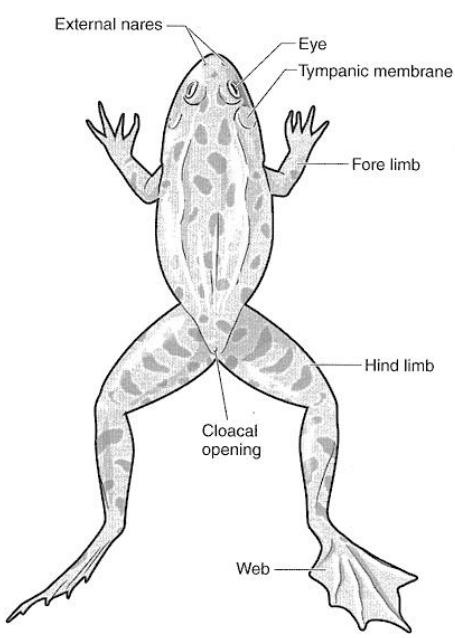
External nares
The frog’s nostrils that allow air to enter the respiratory system.
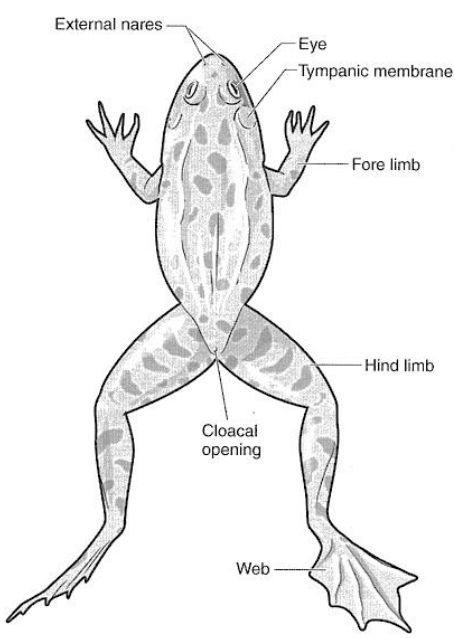
webbed feet
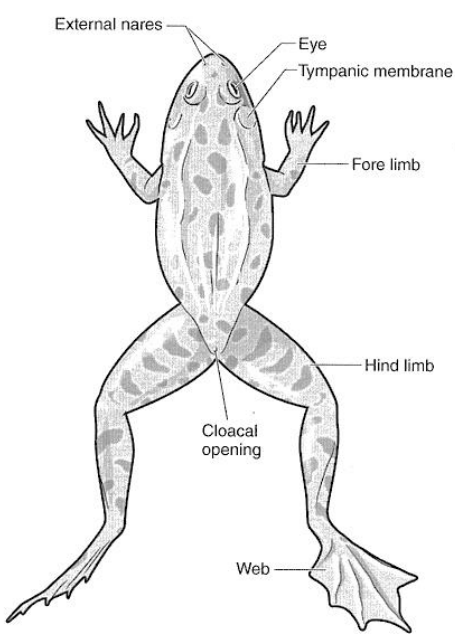
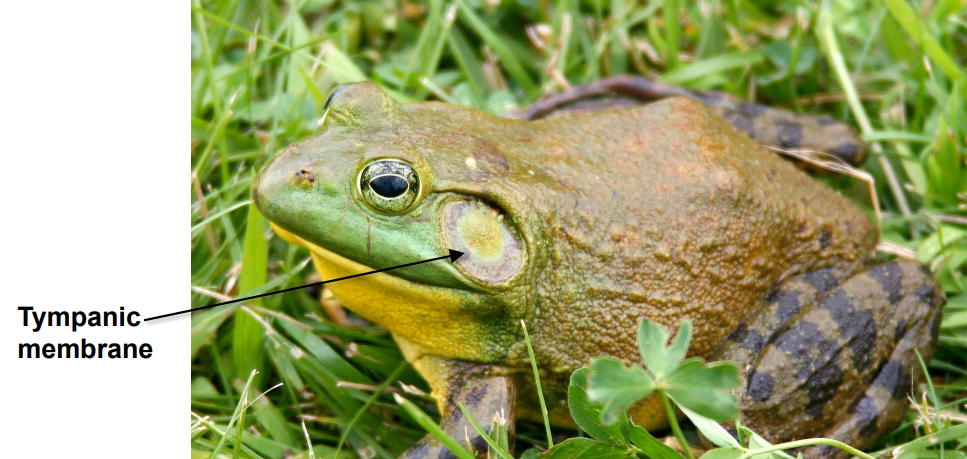
Tympanic membrane
The external eardrum that detects sound vibrations.
Flexors
Muscles that bend a joint.
Extensors
Muscles that straighten a joint.
Adductors
Muscles that move a limb toward the midline of the body.
Abductors
Muscles that move a limb away from the midline of the body.
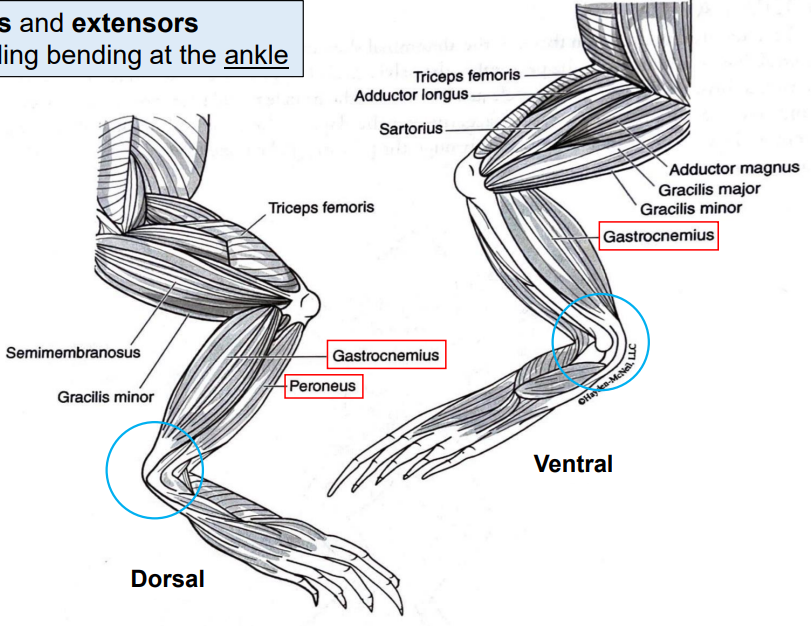
Triceps femoris
extension of leg at knee
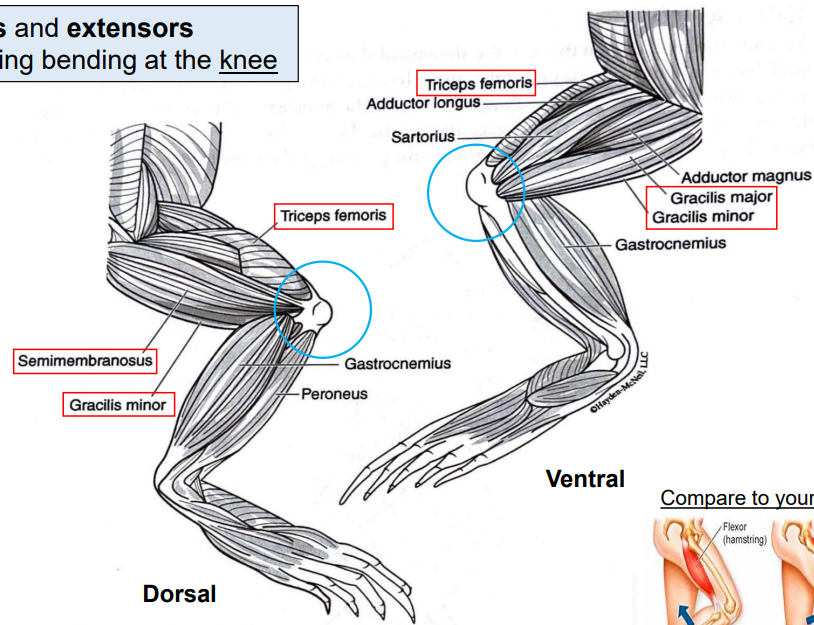
Semimembranosus
flexion of leg at knee
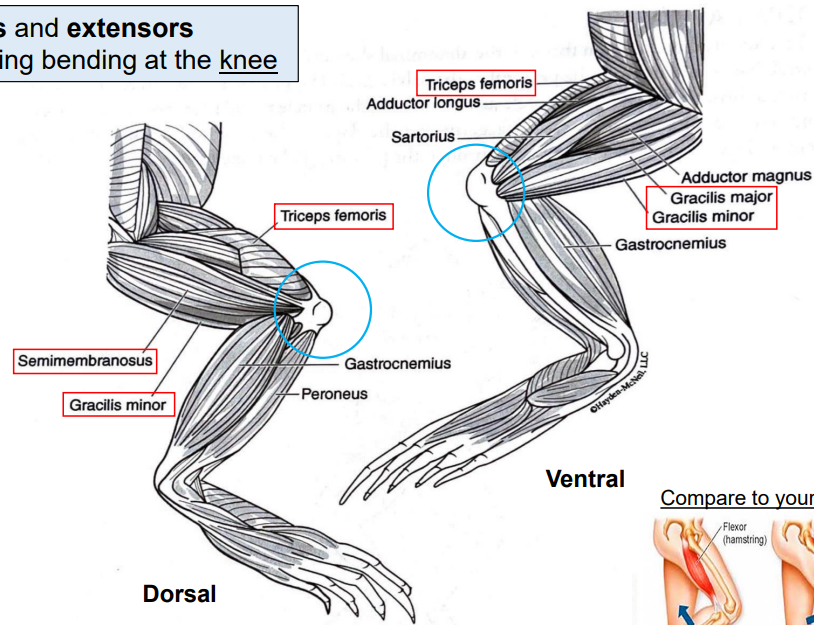
Gracilis minor
flexion of leg at knee
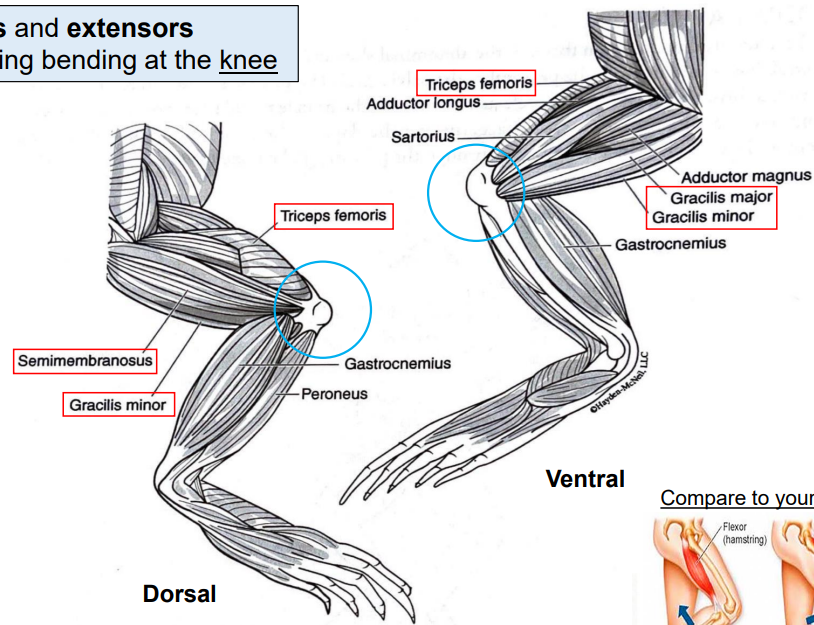
Gracilis major
flexion of leg at knee
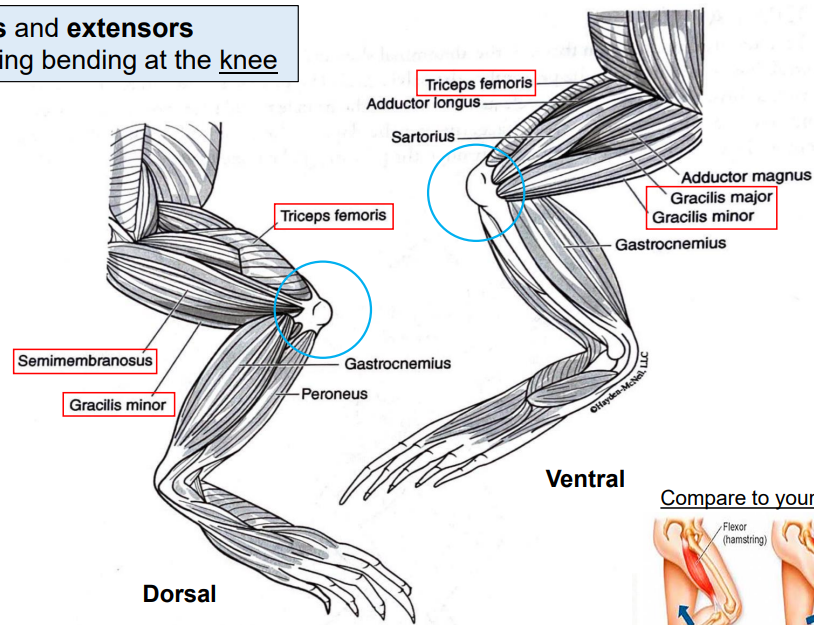
Sartorius
Legs come together at body’s midline
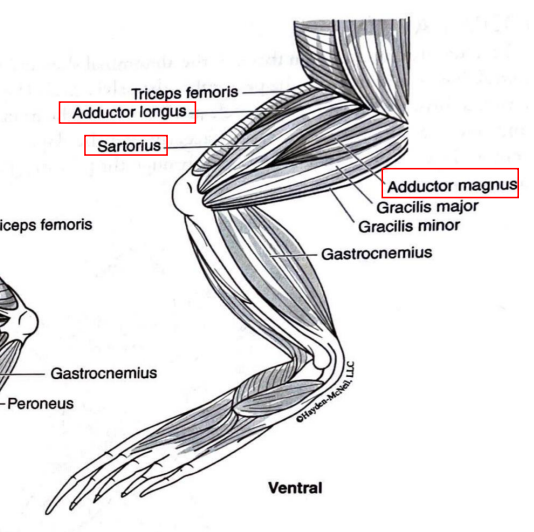
Adductor longus
Legs come together at body’s midline
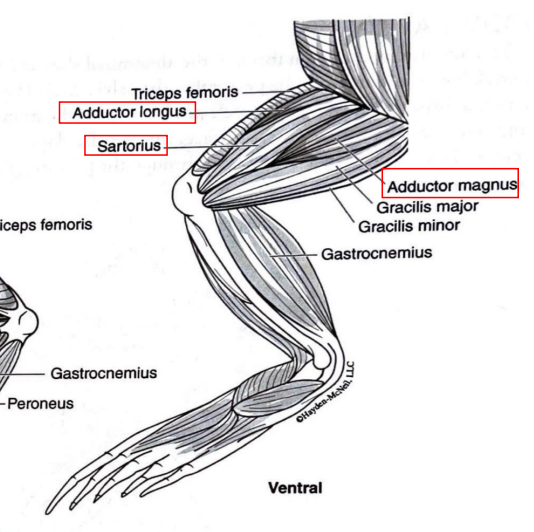
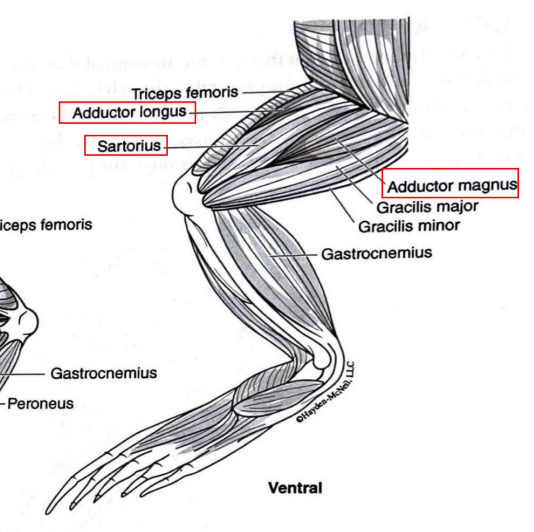
Adductor magnus
Legs come together at body’s midline
Gastrocnemius
Extension of foot at ankle (toes move away from shin)
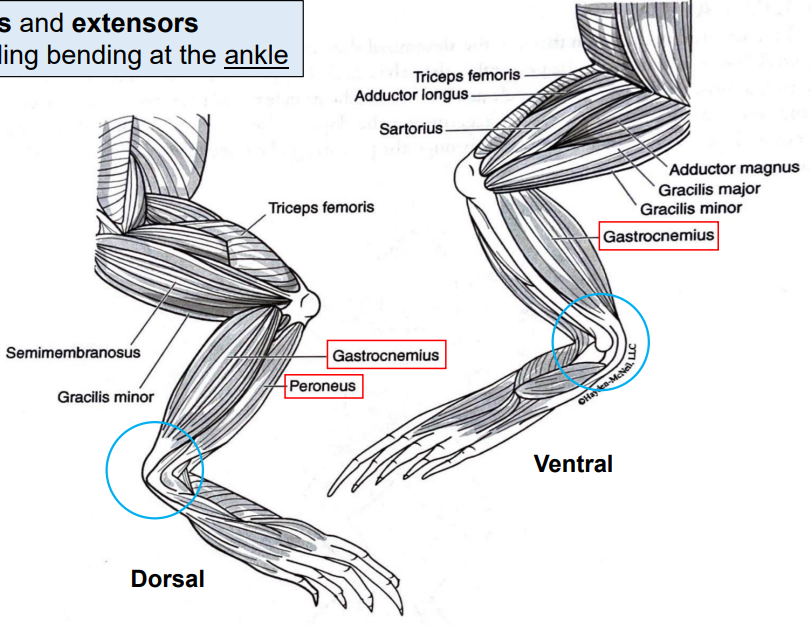
Peroneus
Flexion of foot at ankle (toes move closer to shin)
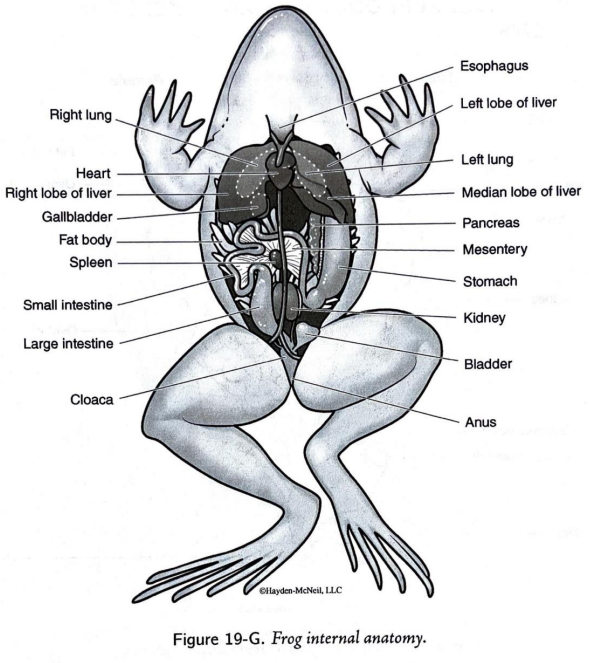
Coelom
The main internal body cavity that houses the organs.
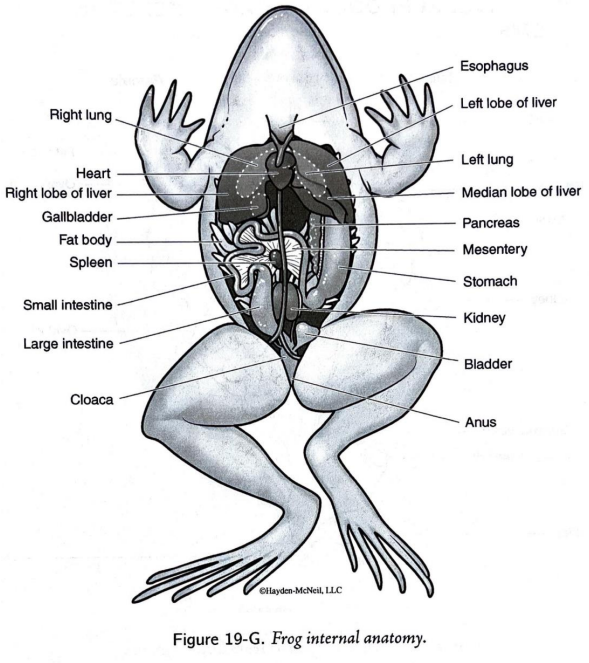
Peritoneum
layer of epithelium that lines the internal body cavity
Mesenteries
sheets of epithelium that extend from the dorsal body wall to the organs to stabilize them
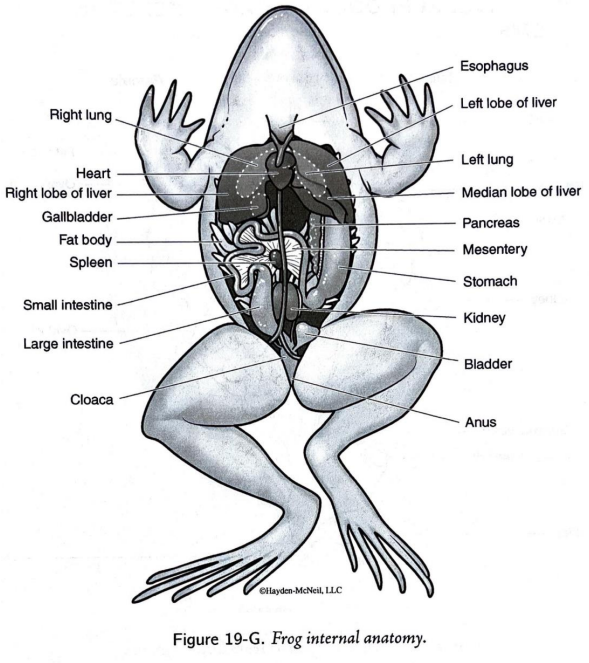
Pericardium
sac containing the heart
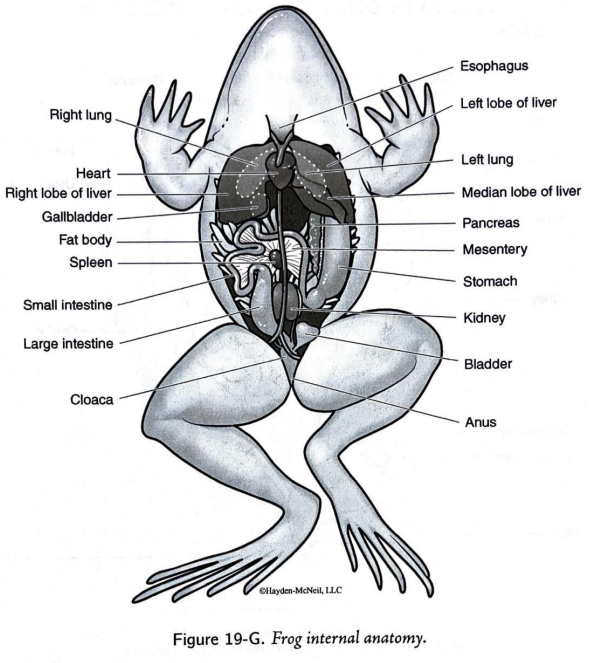
Testes
Male reproductive organs that produce sperm.
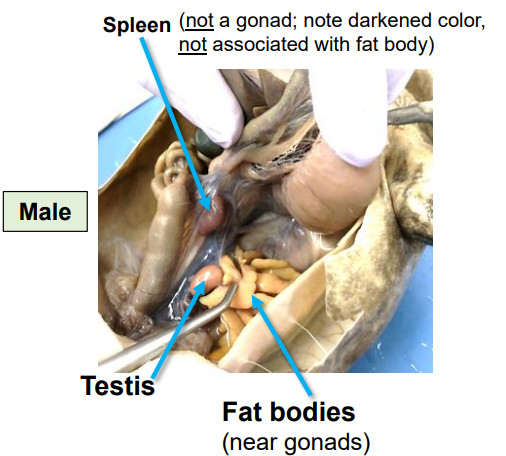
Fat bodies
Fat storage structures near the reproductive organs that provide energy for reproduction.
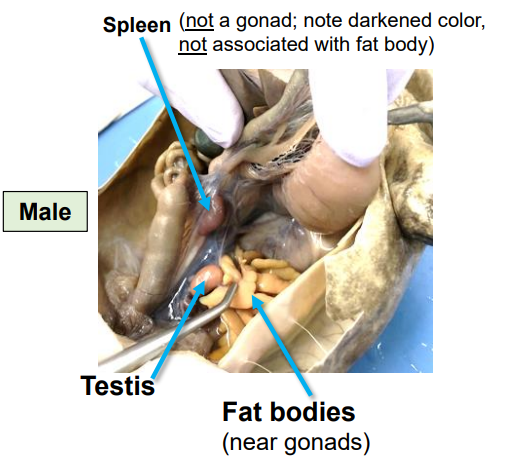
Ovaries
Female reproductive organs that produce eggs.
Oviduct
The tube that transports eggs from the ovaries to the cloaca.
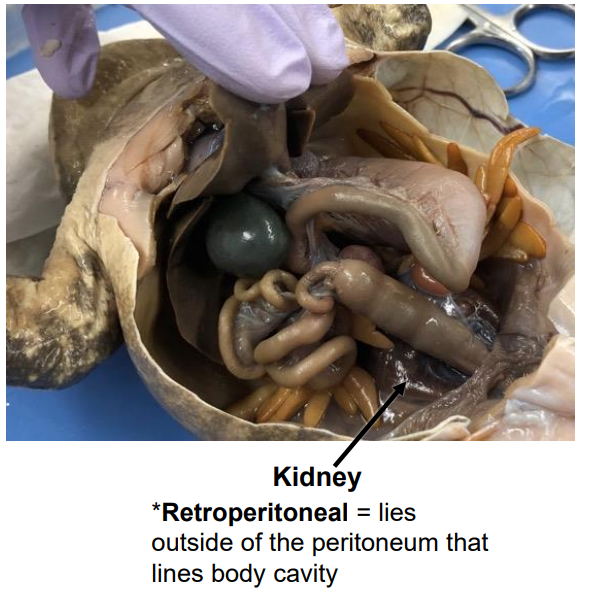
Retroperitoneal kidney
Kidneys located behind the peritoneum that filter wastes from the blood.
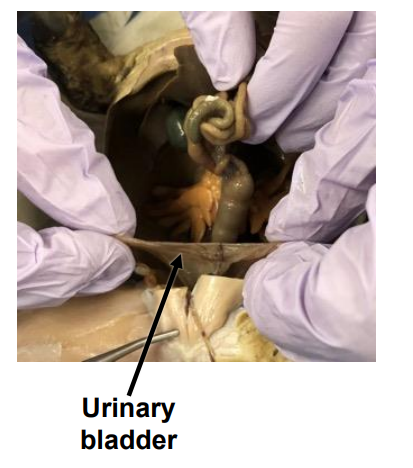
Urinary bladder
A sac that stores urine before excretion.
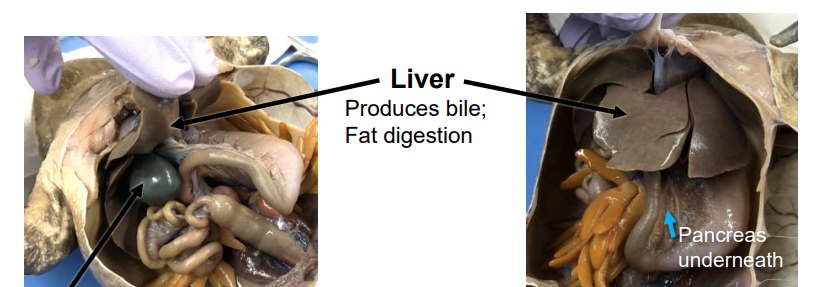
Liver
produces bile; fat digestion
frog digestive system
stomach → pyloric sphincter → small intestine → colon
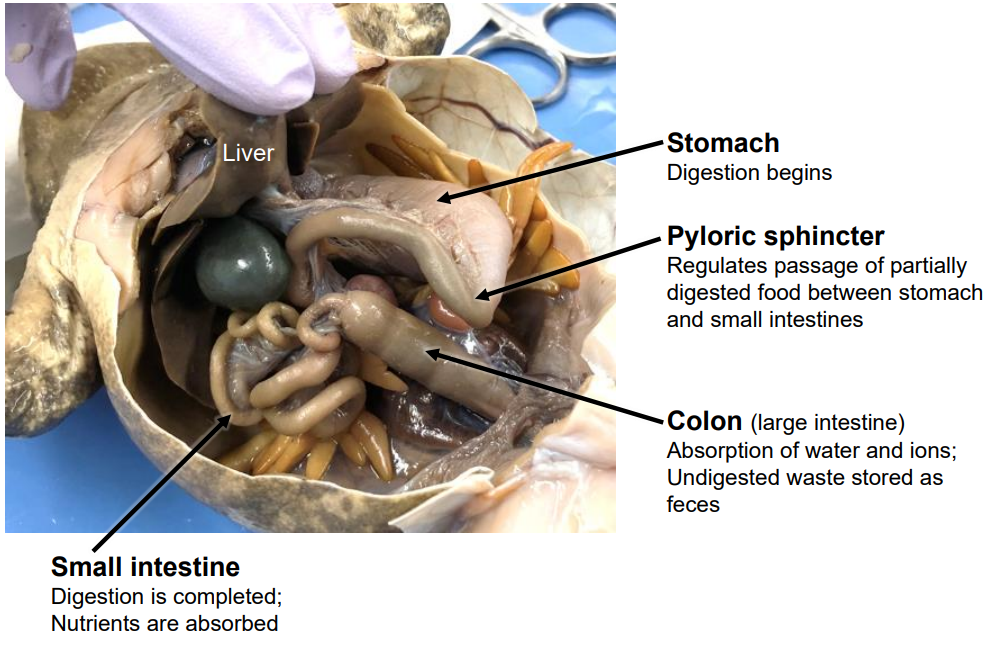
stomach
digestion begins
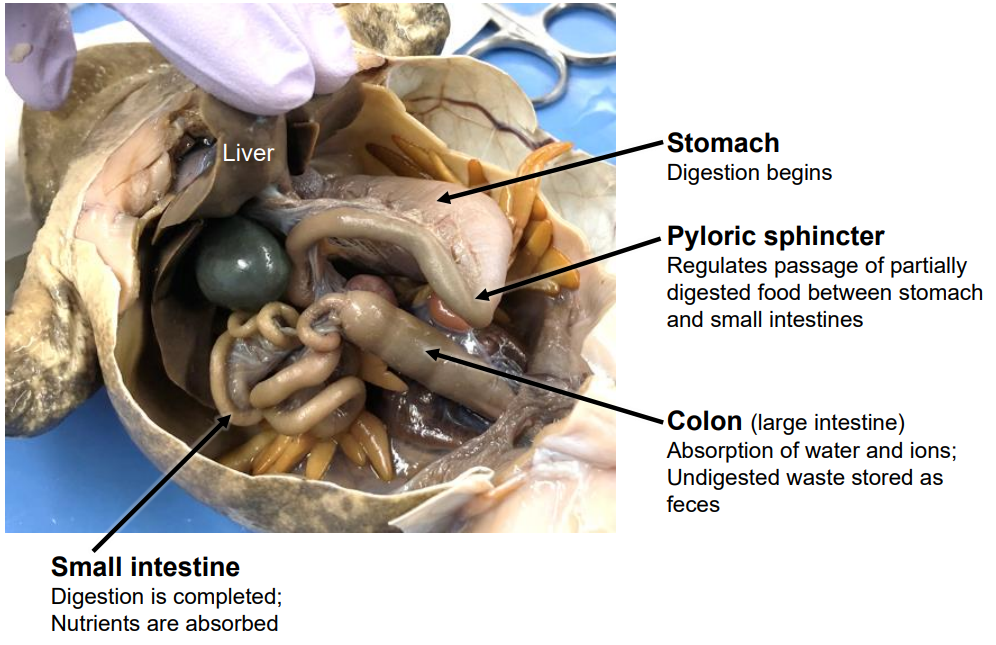
pyloric sphincter
regulates passage of partially digested food between stomach and small intestines
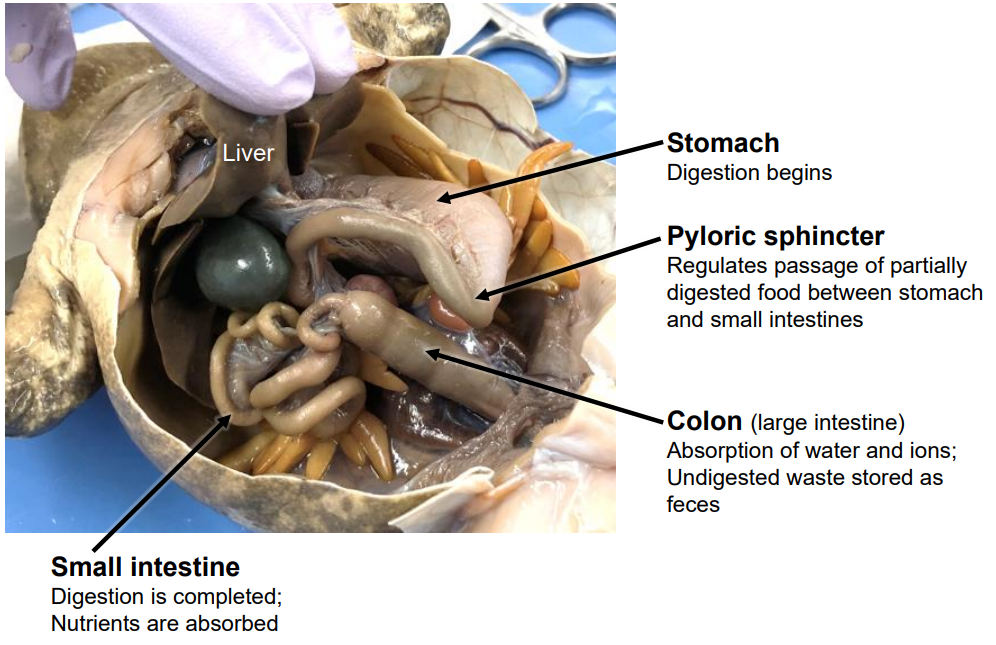
colon (large intestine)
absorption of water and ions; undigested waste stored as feces
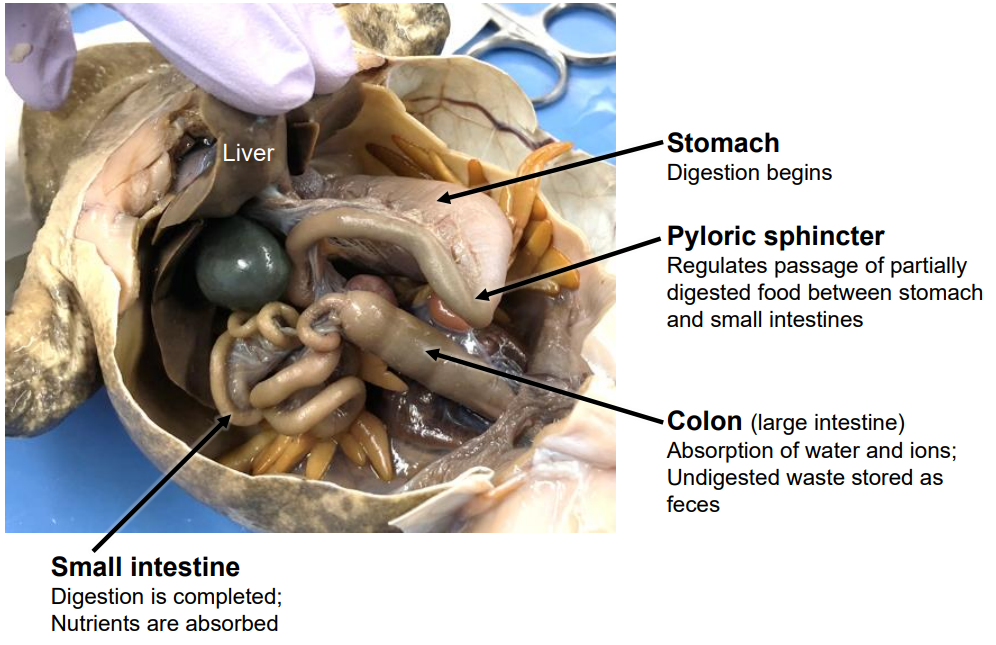
small intestine
digestion is completed; nutrients are absorbed
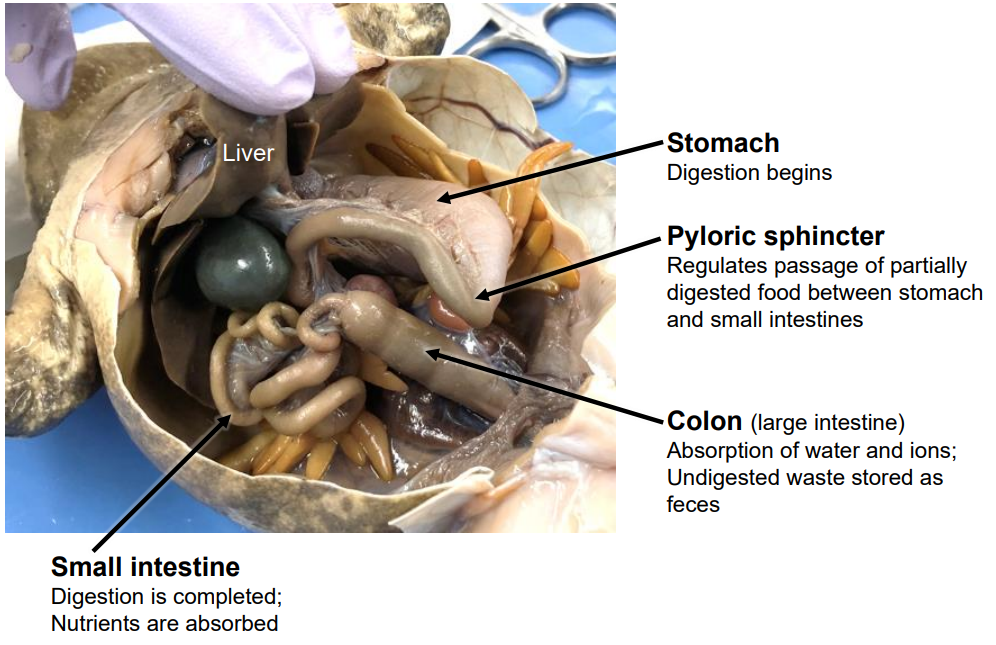
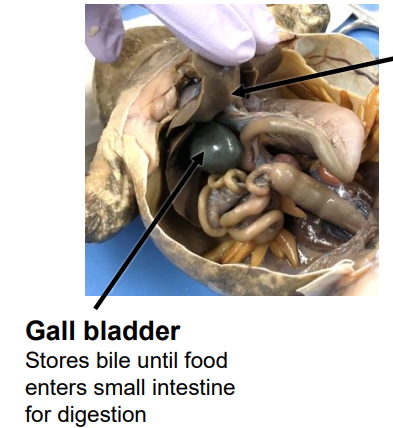
gall bladder
stores bile until food enters small intestine for digestion
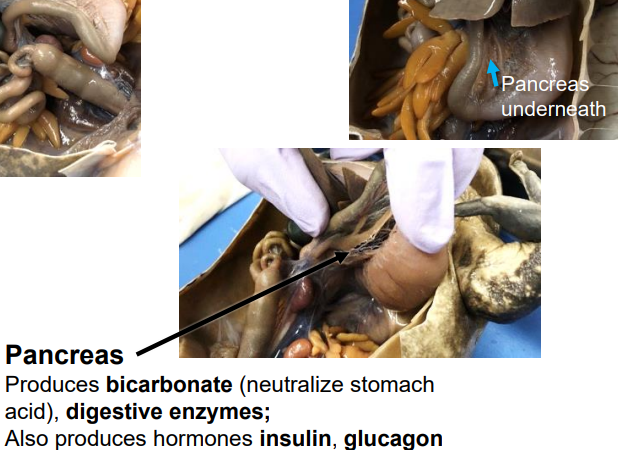
pancreas
produces bicarbonate (neutralize stomach acid), digestive enzymes; also produces hormones insulin, glucagon
Buccal cavity
The mouth cavity of the frog used in feeding and breathing.
Glottis
opening to lungs, keeps food out
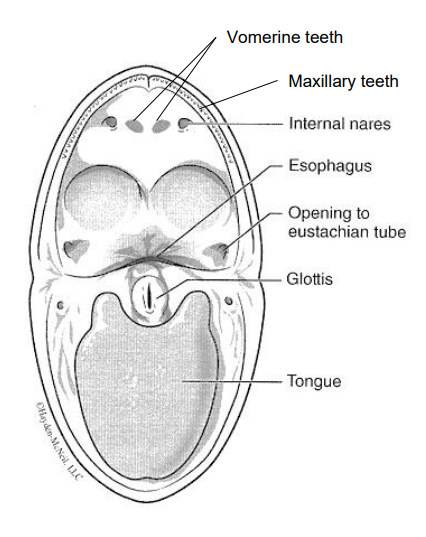
Eustachian tube opening
connects to ear under tympanic membrane
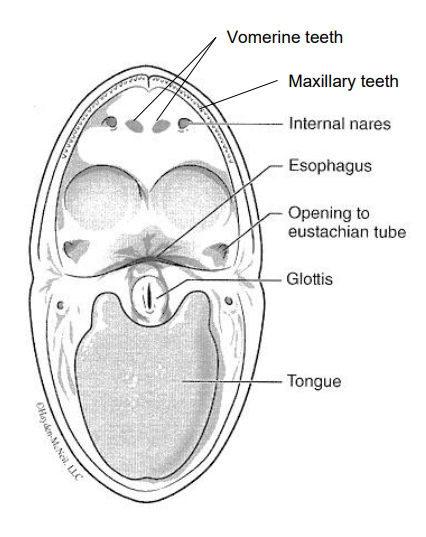
Esophagus
entrance
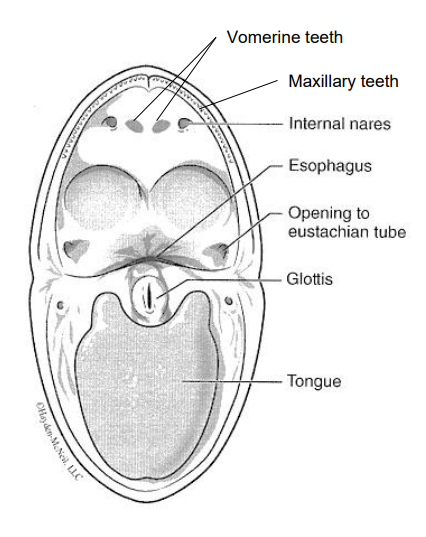
Maxillary teeth
Small teeth along the upper jaw that help hold prey.
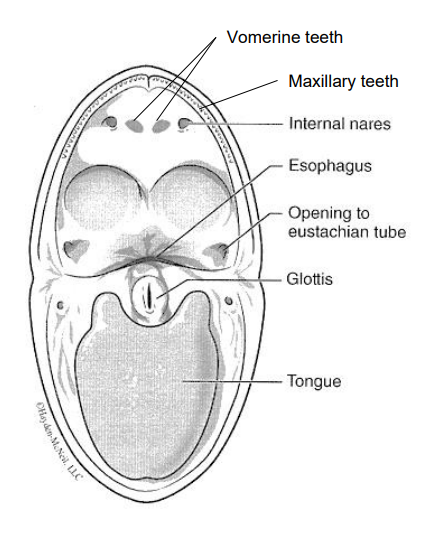
Vomerine teeth
Small teeth on the roof of the mouth that help grip prey.
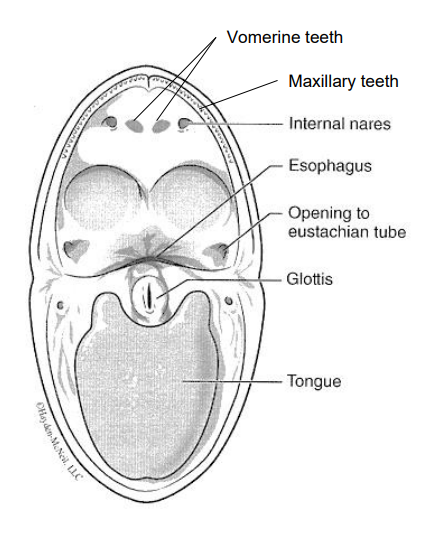
Tongue
A sticky, elastic structure used to catch prey.
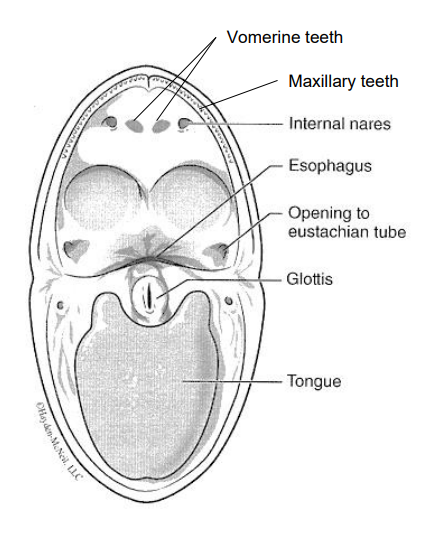
Stomach
An organ where chemical digestion of food begins.
Pyloric sphincter
A muscular valve that controls passage of food from the stomach to the small intestine.
Small intestine
The organ where digestion is completed and nutrients are absorbed.
Colon
The large intestine that absorbs water and stores waste.
Pancreas
A gland that produces digestive enzymes and hormones like insulin.
Gallbladder
A small organ that stores bile produced by the liver.
Spleen
An organ involved in immune function and blood filtration.
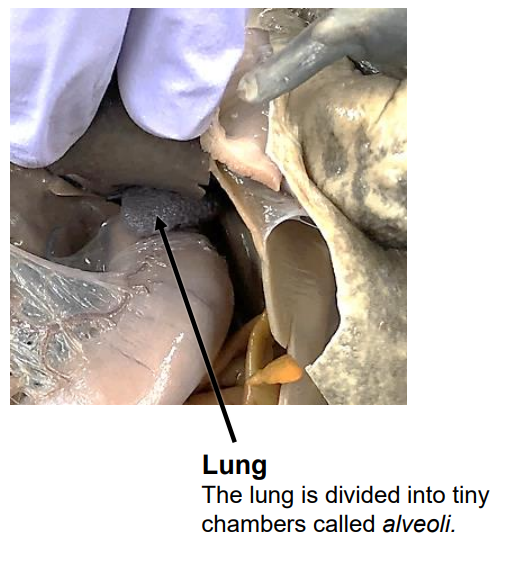
Lungs
divided into tiny chambers called alveoli
Positive pressure breathing
A breathing method where frogs push air into their lungs using mouth cavity pressure.
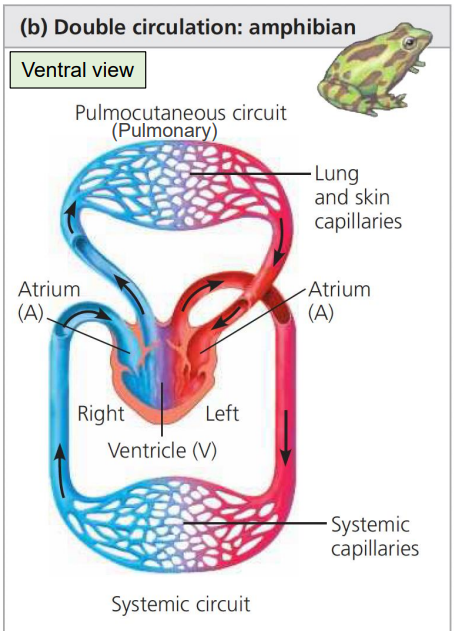
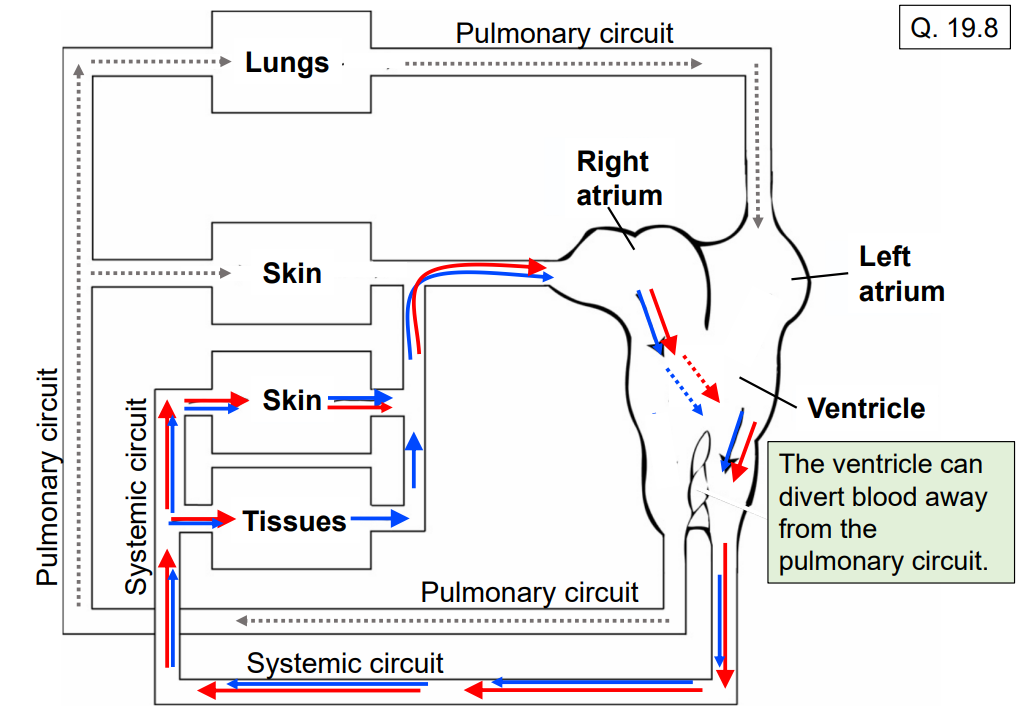
Pulmonary circuit
Right side pumps deoxygenated blood to the lung capillaries where O2 enters the blood and CO2 leaves the blood.
Systemic circuit
Left side pumps oxygen-enriched blood out to the tissues and cells of the body, where blood delivers O2 in exchange for CO2
Heart
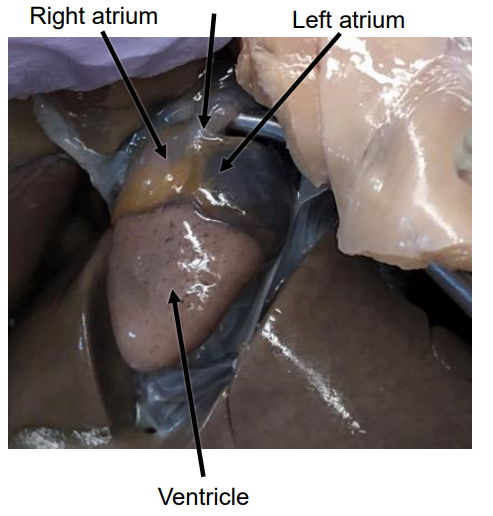
The organ that pumps blood through the circulatory system; three chambers: right atrium, left atrium, and ventricle
Left and right atria
The two upper chambers of the heart that receive blood.
Ventricle
The single lower chamber of the frog heart that pumps blood to the lungs and body; can divert blood away from the pulmonary circuit
Axial skeleton
The part of the skeleton that includes the skull, vertebral column, and sternum.
Skull – cranium and mandible
The bones of the head that protect the brain and form the jaw.