6 -- Dental Composite- Polishing: Bhattacharya
 Call Kai
 Learn
Learn Practice Test
 Spaced Repetition
 Match
Match Flashcards
 Knowt Play
1/46

There's no tags or description
Looks like no tags are added yet.
Name | Mastery | Learn | Test | Matching | Spaced | Call with Kai |
|---|
No analytics yet
Send a link to your students to track their progress
47 Terms
What is composite finishing
Finishing is the procedure of contouring and shaping a composite restoration after placement and curing to obtain the correct anatomy, margins, and occlusion, while removing excess restorative material
Purpose of composite finishing
Establish proper anatomy and evaluate restoration margins and contours to eliminate overhangs and excess coposite. Restoration has to be smooth here
What is composite Polishing
Polishing is the procedure of smoothing the finished composite surface with fine abrasives to produce a glossy, enamel-like surface
Purpose of composite polishing
Create a shiny surface to reduce plaque accumulation, improve esthetics and patient comfort
Why do we need to polish composite
1. Reduce plaque accumulation (gingivitis and periodontal disease)
2. Surface discoloration
3. Decrease risk of recurrent caries
4. Increase long term wear resistance
5. Increase esthetics
when a composite restoration is not polished, the surface remains ____ and _____. These microscopic irregularitites act as a retentive site for ____ and bacteria
rough and irregular
plaque
a smoothed, polished surface reduces ______ ____ and helps maintin _______ health
bacterial adhesion
periodontial
rough composite surfaces have microporosities that easily trap ____ from foods and bevarages
pigments
Common staining sources
Coffee
Tea
Red wine
Tobacco
Colored foods
bacteria in plaque produce ____ that demineralize tooth structure. This can lead to ____ ____ which occurs at the margins between the tooth and the restoration
acid
reccurrent caries
proper polishing reduces plaque retention anf therefore lowers the risk of ____ decay
secondary
microdefects thare are created during finishing with burs act as stress concentration points leading to _____ ____ and _____ and cause fracture or breakdown of the composite material over time
surface wear and degredation
polishing removes the superficial damaged layer and improves the ____ ____ of the restoration
mechanical durability
When to finish and polish
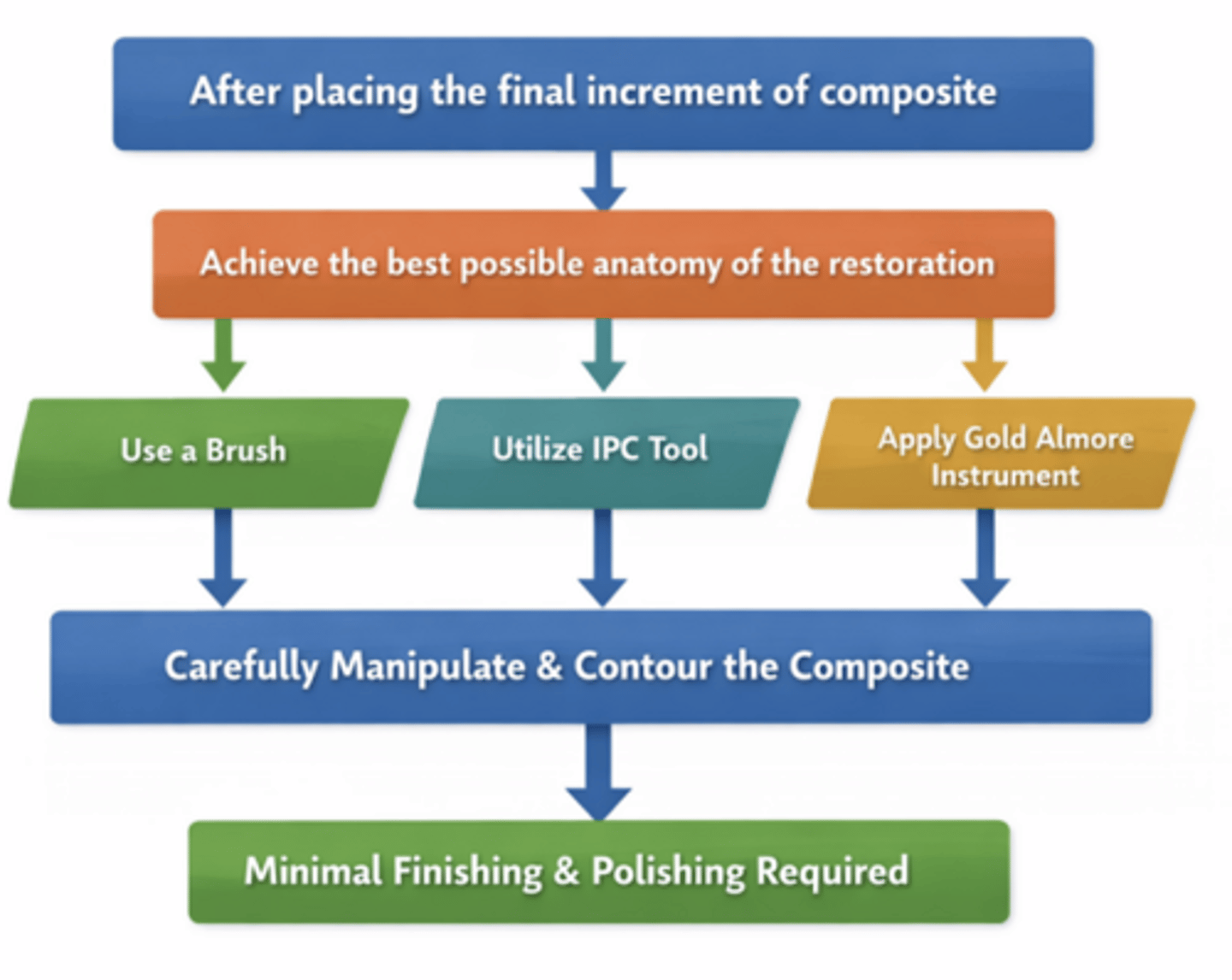
Occlusal adjustments
Remove the rubber dam
Check the bite with articulating paper
Check the bite with articulating paper more than one time
Then start finishing and polishing
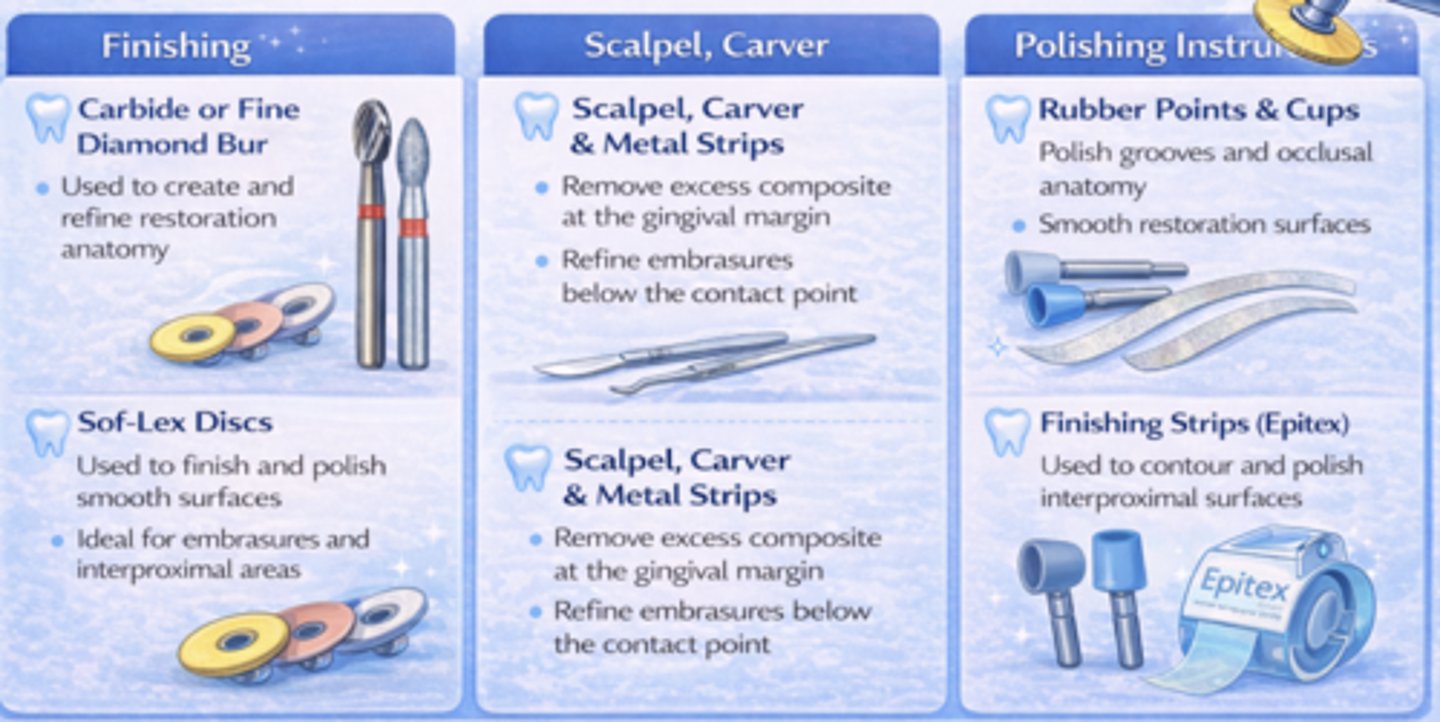
Instruments for finishing and polishing
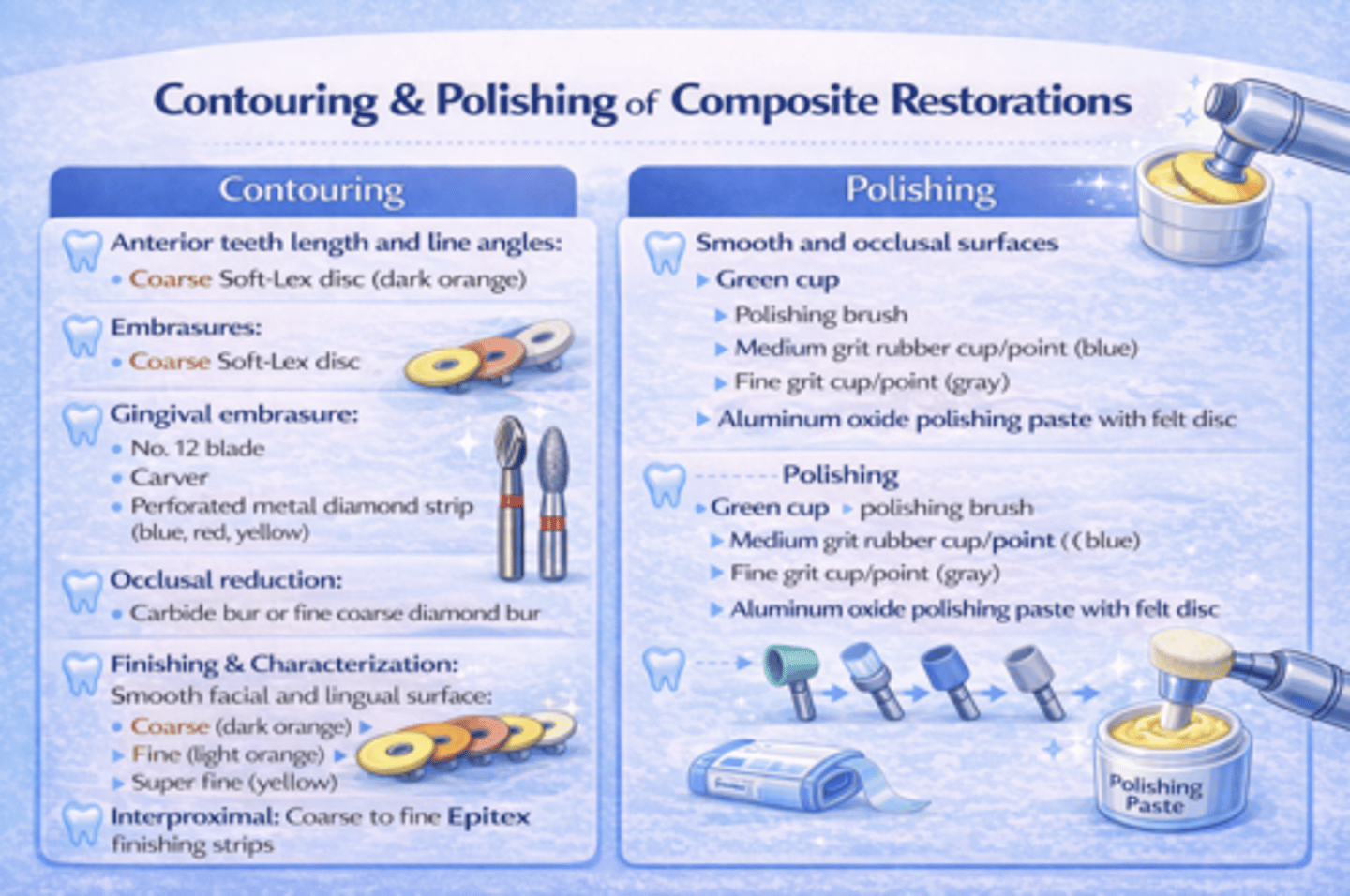
Diamond and carbide burs
No. 12 blade and carver
Metal diamond strips
sof-lex disks
Green rubber cup
Rubber cups and points
Finishing strips (epitex)
Finishing instruments
No. 12 blade
Metal diamond strips
FG restoration polish 4500 rpm with water
Interproximal carber
Mandrel FG restoration polish 4500 rpm no water
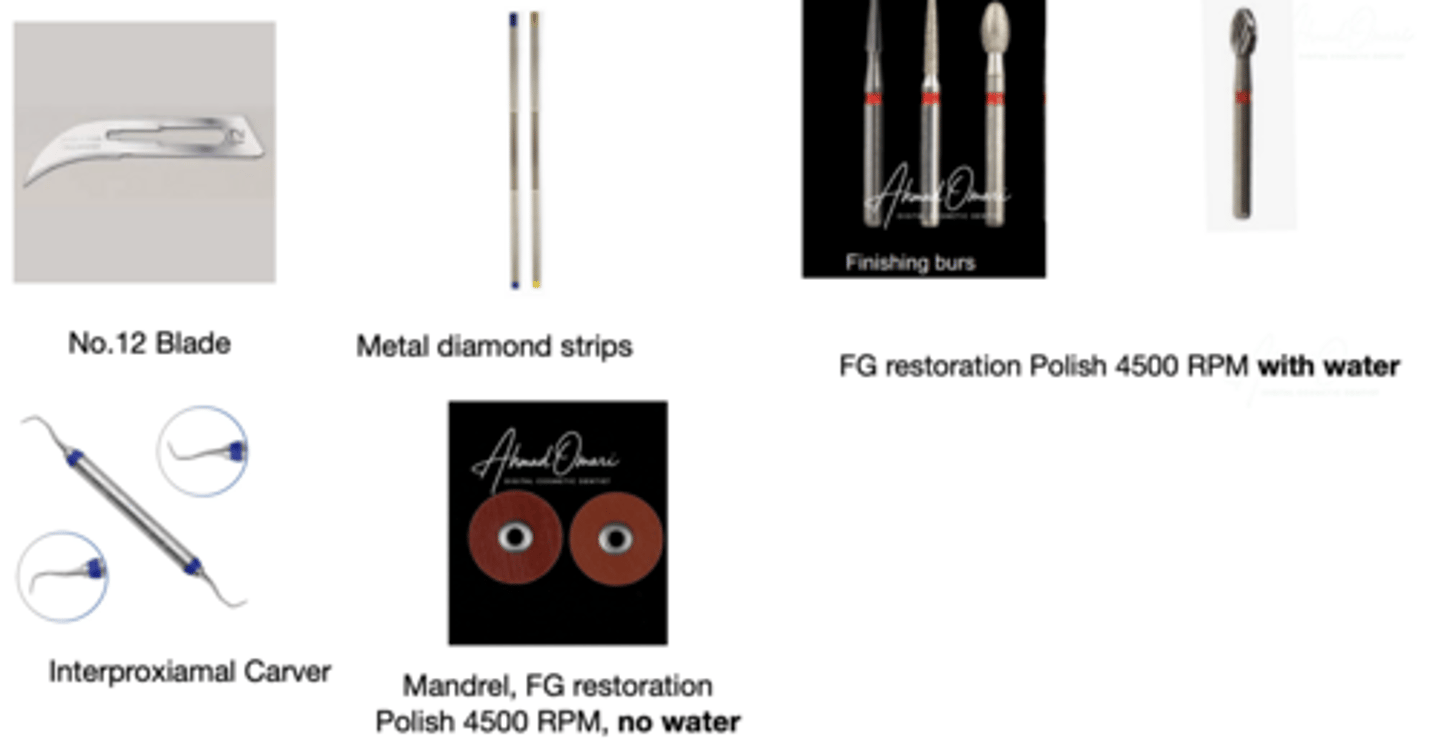
Instruments for polishing
Mandrel FG restoration polish 4500 no water
Latch restoration polish 6000 rpm with water

Finishing Diamond bur: Material
Diamond particles bonded to metal
Finishing Diamond bur: Cutting mechanism
Abrasion (grinding action)
Finishing Diamond bur: Surface finish
Produce slightly rougher surface
Finishing Diamond bur: Main purpose
initial finishing and contouring
Finishing Diamond bur: Material removal
faster removal of material
Finishing Diamond bur: Heat generation
more friction --> may generate more heat
Finishing Carbide bur: Material
Tungsten carbide with multiple blades
Finishing Carbide bur: Cutting mechanism
Shearing/cutting with blades
Finishing Carbide bur: Surface finish
Produced a smoother surface finish
Finishing Carbide bur: Main purpose
Final finishing and refining anatomy
Finishing Carbide bur: Material removal
More controlled and precise cutting
Finishing Carbide bur: Heat generation
Less friction --> smoother cutting
Composite polishing for posterior teeth
Finishing carbide and diamond burs on the occlusal surface
Sof-lex disk for smooth surfaces
Final polishing by green cups followed by brush then blue and grey rubber tips
Polishing paste
Enamelize is final polishing step
NO water
Use it with high speed handpiece in FG restoration polish at 4500 rpm
IT IS NOT MANDATORY FOR OCCLUSAL SURFACE
Work flow for composite finishing and polishing
1. Length of restoration
2. Incisal-facial line angle
3. Facial profile/crest of contour
4. Line angles
5. Embrasures
6. Point angles
7. Axial inclination
8. Depressions and elevations
9. Surface texture
10. gloss
1. Length of restoration
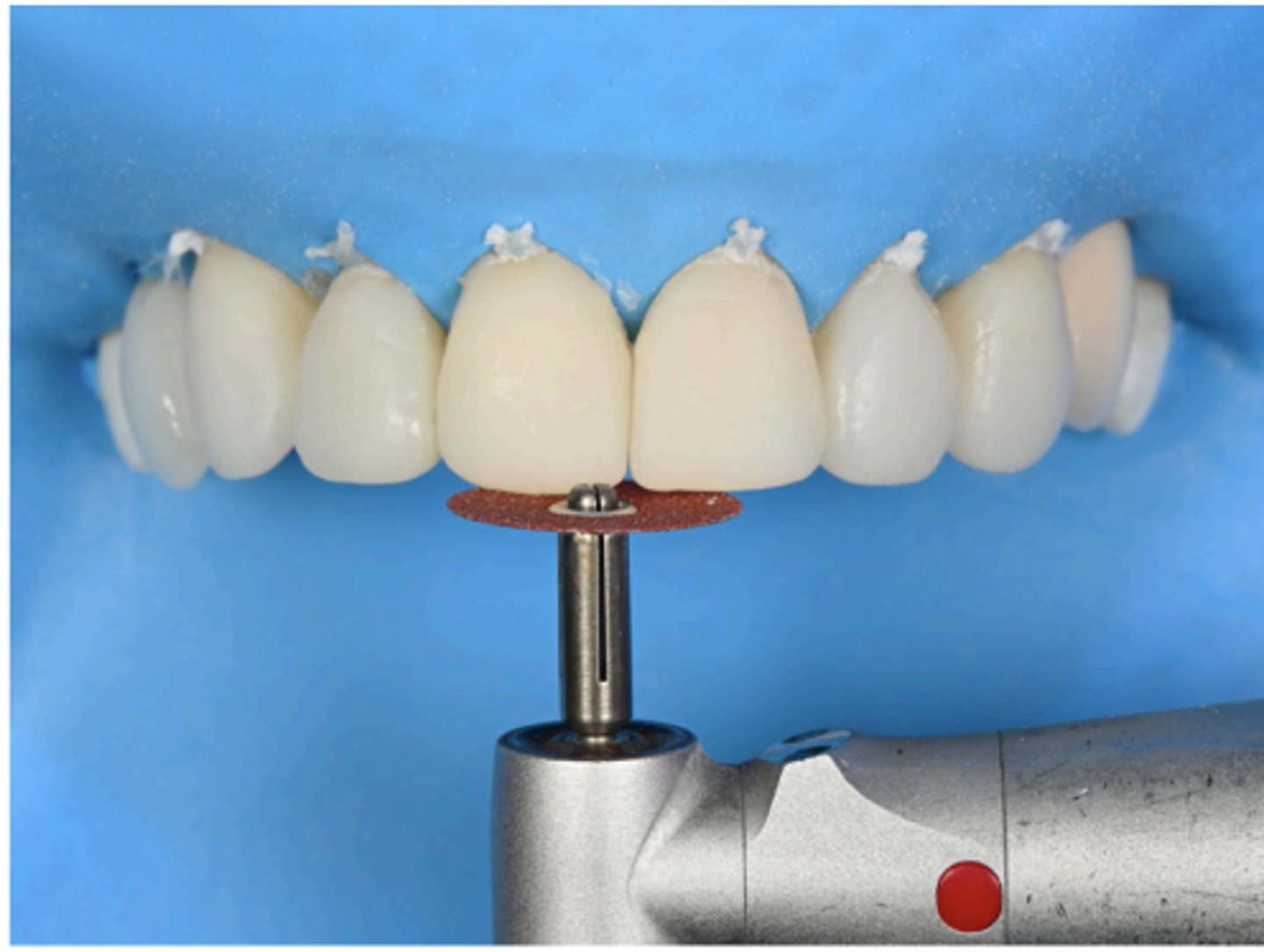
2. Incisal-facial line angle
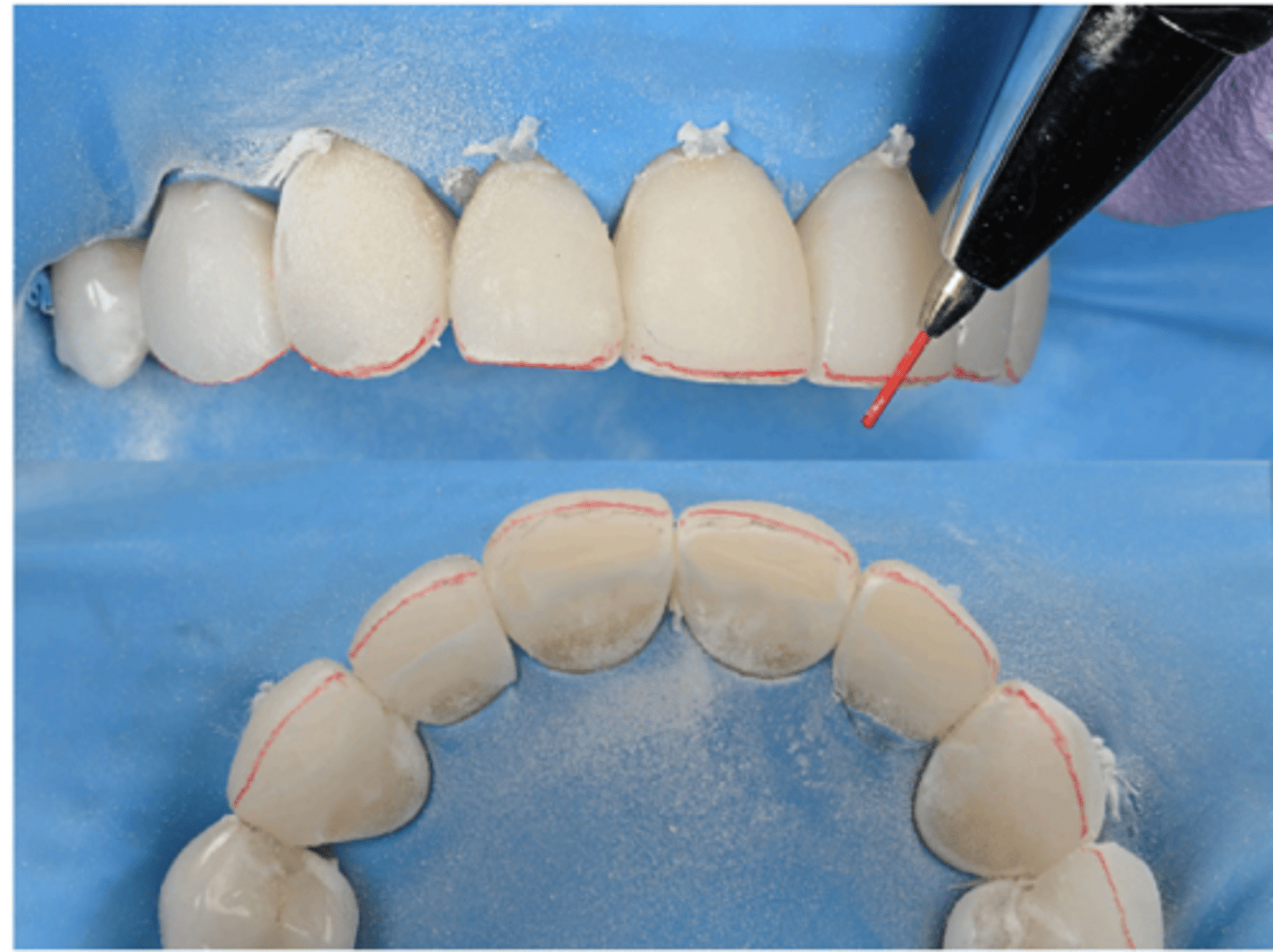
3. Facial profile/crest of contour
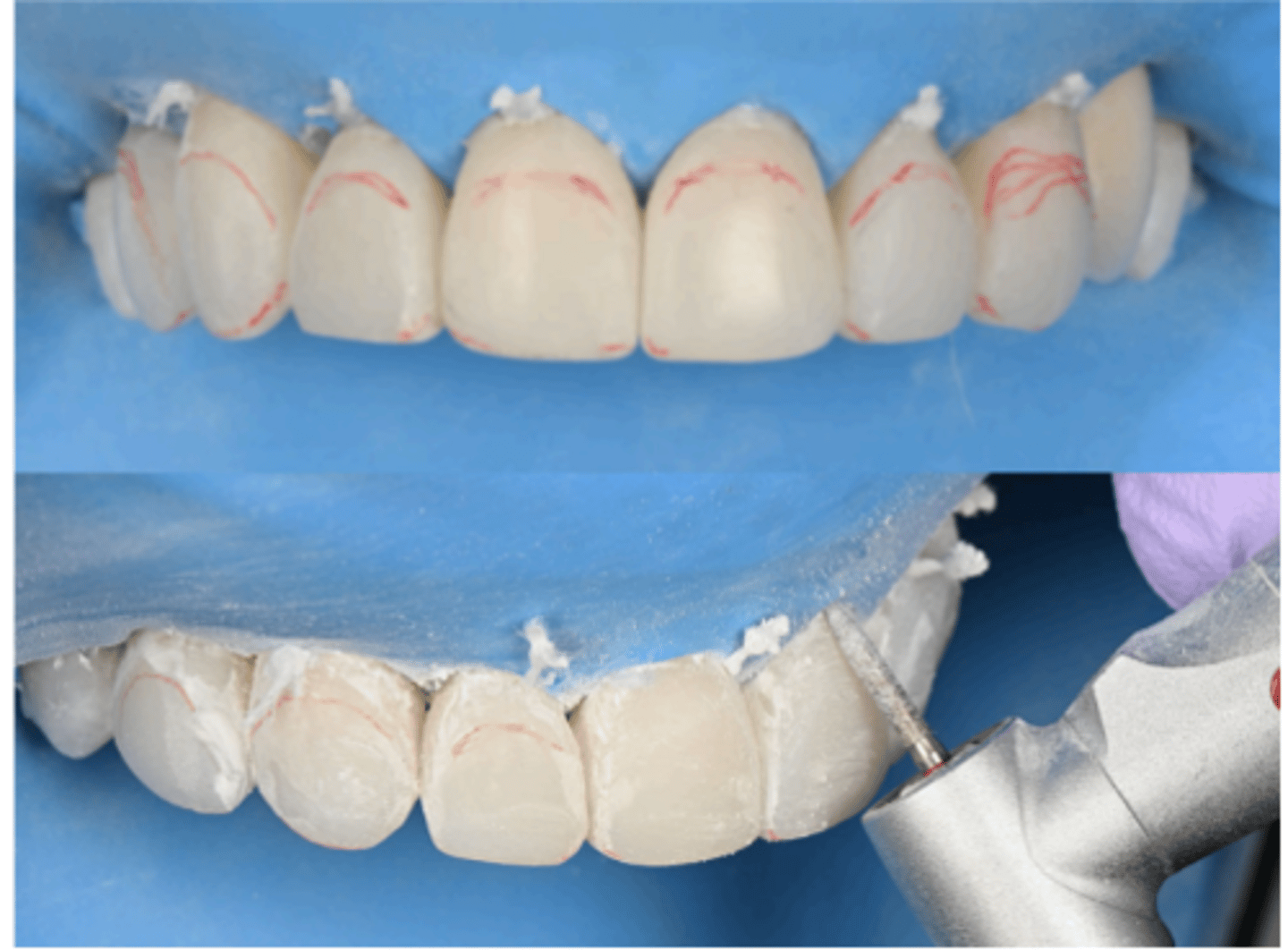
4. Line angles
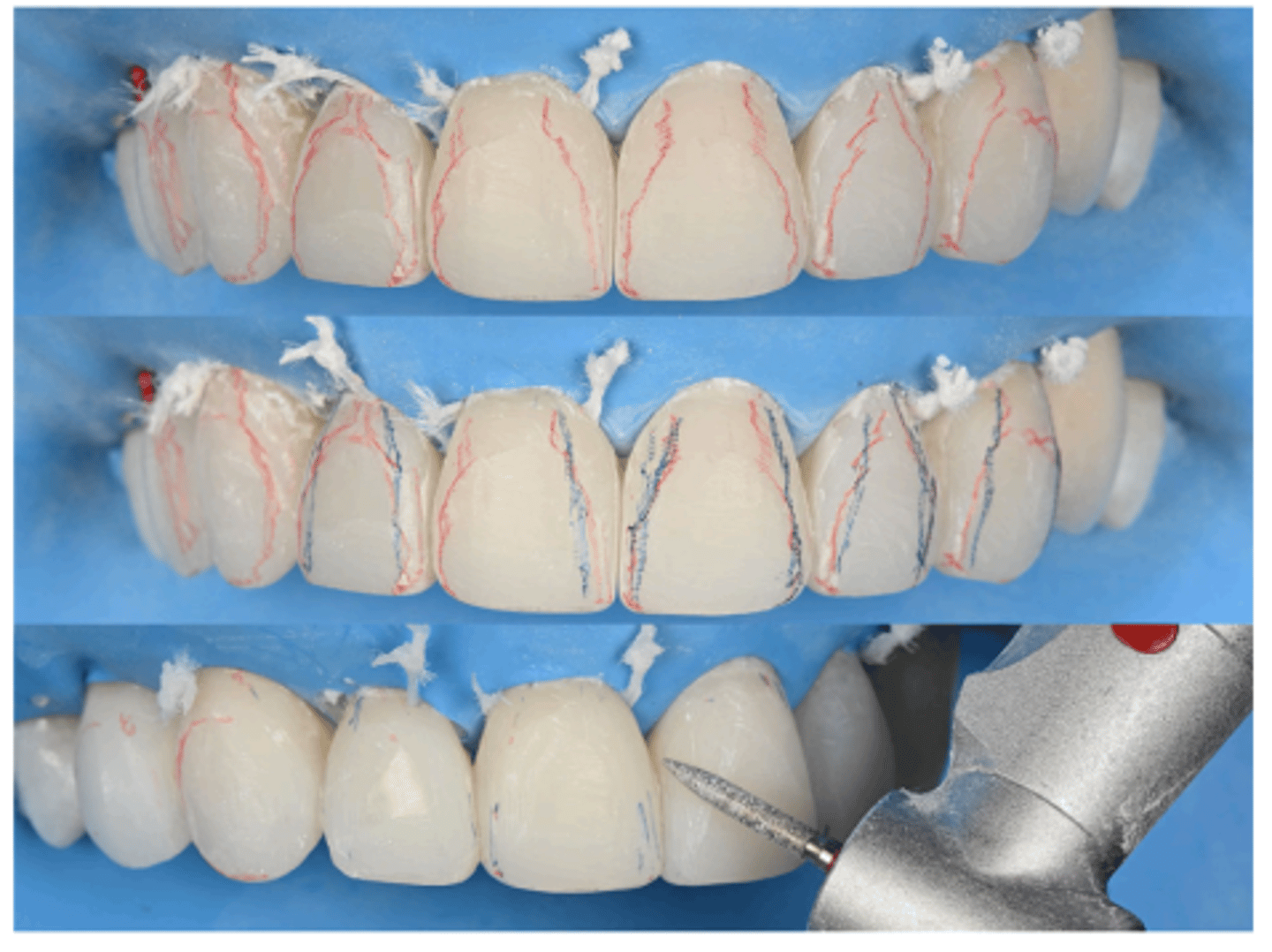
5. Embrasures
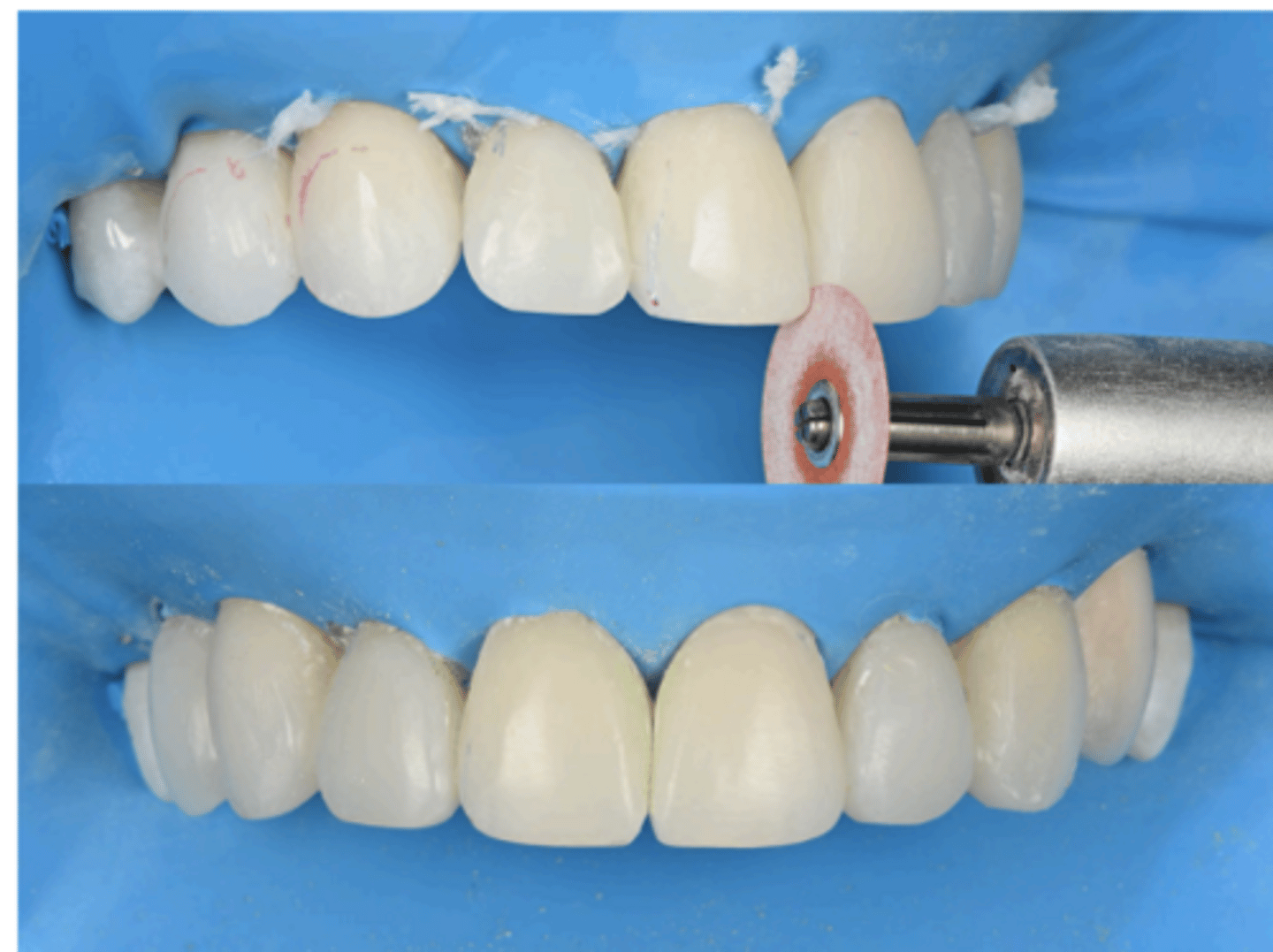
6. Point angles
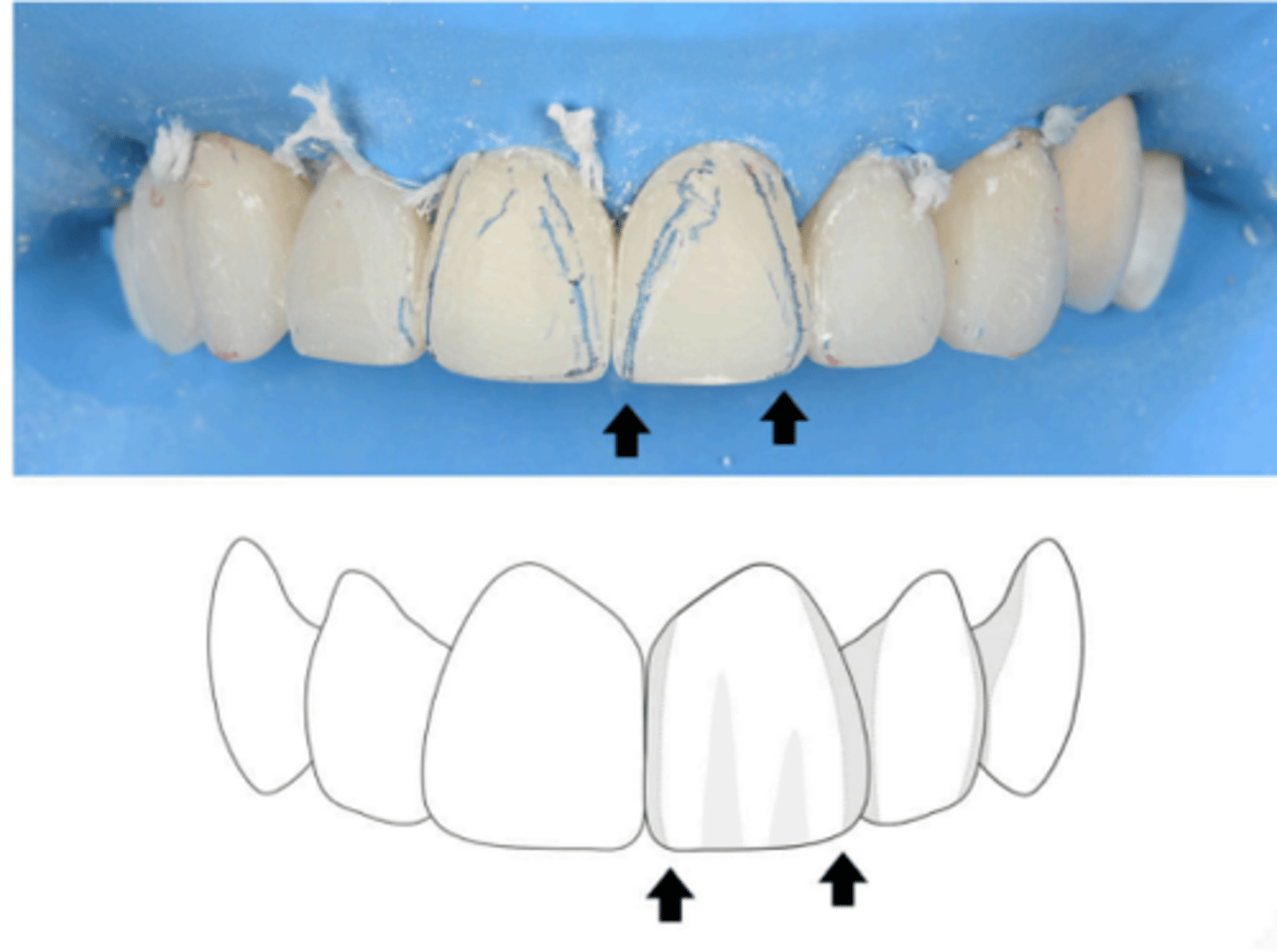
7. Axial inclination
To advanced for us rn
8. Depressions and elevations
To advanced for us rn
9. Surface texture
To advanced for us rn
10. gloss
needs to be glossy
Depending on the class of cavity
Depends on if you need to do every step of the workflow
Example:
Don't need to worry about length of restoration on a class 5 bro
SUMMARY: Benefits of proper finishing and polishing
1. reduce plaque accumulation
2. maintain marginal integrity
3. reduced gingival irritation
4. increased restoration longevity
5. enhances esthetics
SUMMARY: Finishing and polishing instruments
SUMMARY: Contouring and polishing of composite restorations