Week 2- Culture
 Call Kai
 Learn
Learn Practice Test
 Spaced Repetition
 Match
Match Flashcards
 Knowt Play
1/51

There's no tags or description
Looks like no tags are added yet.
Name | Mastery | Learn | Test | Matching | Spaced | Call with Kai |
|---|
No analytics yet
Send a link to your students to track their progress
52 Terms
What is Culture
Culture consists of the language,beliefs,values, behaviours,material objects and symbols that define a people's way of life, passed on from one generation to the next
Humans turn to their culture for solutions. Only humans depend on culture rather than instincts to ensure their survival
Culture gives us the ability to actively shape the natural environment for ourselves
At the root of culture is that it makes our sensory experiences meaningful. Once your cultural experience conditions you to interpret concrete experiences a certain way, this becomes your reality
Many modern societies are multicultural
Culture consists of the…
language,beliefs,values, behaviours,material objects and symbols that define a people's way of life, passed on from one generation to the next
Humans turn to their culture for…
solutions. Only humans depend on culture rather than instincts to ensure their survival
Abstraction:
The ability to create general concepts that meaningfully organize concrete, sensory experience.
Cooperation:
The capacity to create a complex social life by establishing norms and values.
Cultural concepts provide the foundation for Beliefs:
Statements about what members of a community define as real
Production:
The human capacity to make and use tools, and thereby improve our ability to take what we want from nature
Social Organization:
the orderly arrangement of social interaction.
What distinguishes high culture from popular culture?
High culture refers to cultural patterns of a society's elite, while popular culture designates widespread cultural patterns among the population.
What is material culture?
Material culture consists of tools, technology, and techniques that enable people to achieve everyday goals.
Subcultures are…
cultural patterns within a population whose values, norms, folkways or mores set them apart from the mainstream culture
What is non-material culture?
Non-material culture is composed of symbols, norms, values, and other intangible elements.
How does Clifford Geertz define culture?
As a system of inherited conceptions expressed in symbolic forms through which people communicate and develop their knowledge.
What is the significance of symbols in culture?
Symbols carry particular meanings recognized by people who share a culture and can vary in meaning across different societies.
What is language in the context of culture?
A system of symbols strung together to communicate thought.
What is a subculture?
Cultural patterns within a population whose values, norms, folkways, or mores set them apart from the mainstream culture.
What is the impact of multicultural societies?
They encompass diverse cultural backgrounds and perspectives, enriching the overall cultural landscape.
What role does language play in culture?
Language is a cultural invention that distinguishes humans from other animals and is key to cultural transmission.
What is cultural transmission?
The process by which one generation passes culture to the next, historically accomplished through oral tradition.
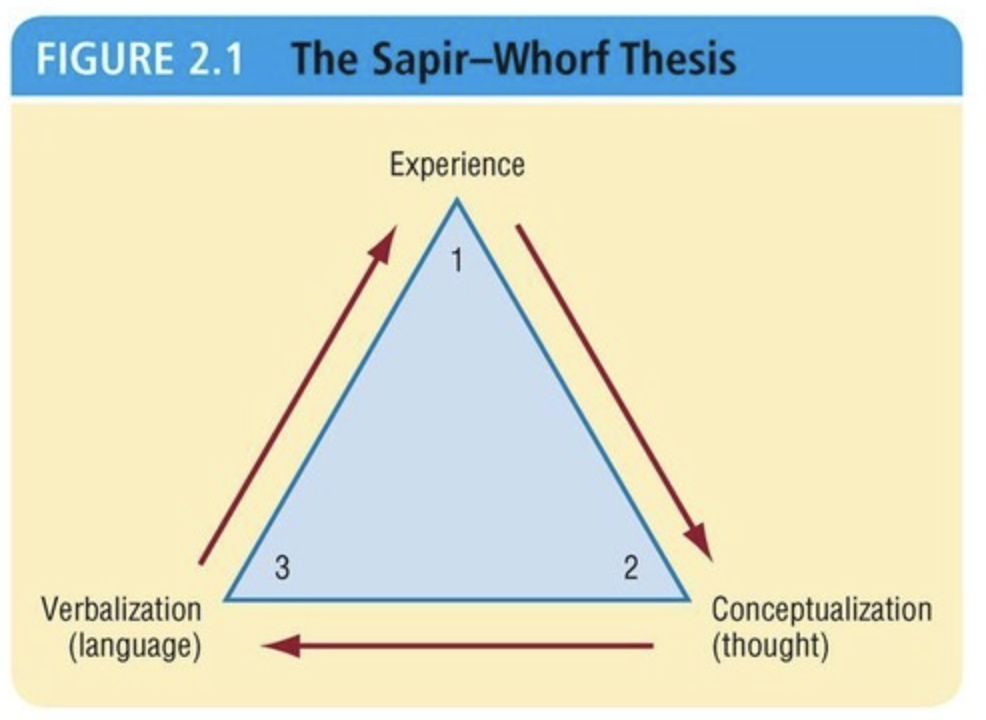
What does the Sapir-Whorf hypothesis propose?
It holds that people perceive the world through the cultural lens of language.
What are countercultures?
Cultural patterns that strongly oppose accepted culture within a society.
What is cultural integration?
The close relationship among various elements of a cultural system as cultures change.
What is multiculturalism?
The demographic reality of a multicultural society made up of ethnoculturally and racially diverse groups, and an ideology that values diversity and equity.
What are some core Canadian values?
Peace, politeness, respect for the law, and diversity.
What is the significance of the term 'eurocentrism'?
It refers to the dominance of European cultural patterns, which multiculturalism opposes.
What is the rights revolution?
The process by which socially excluded groups have struggled to win equal rights under the law and in practice.
What does Max Weber's concept of rationalization refer to?
The most efficient means to achieve given goals, often leading to negative consequences like loss of individuality and autonomy.
What is consumerism?
The tendency to define ourselves in terms of the goods we purchase, influenced by advertising and a 'shop-till-you-drop' lifestyle.
Who coined the term 'conspicuous consumption'?
Thorstein Veblen in his book 'The Theory of the Leisure Class' (1899).
What is cultural capital?
The beliefs, tastes, norms, and values that people draw upon in everyday life, which are connected to social classes.
What is globalization?
The process by which formerly separate economies, states, and cultures are connected, leading to increased awareness of interdependence.
What is the impact of immigration on Canadian culture?
Canada is undergoing rapid cultural diversification due to a rising number of immigrants and changes in their countries of origin.
What are some characteristics of Canadian culture?
Beliefs in fairness, consultation, accommodation, tolerance, inclusion, and support for diversity.
What does the term 'symbolic interactionism' imply about culture?
People do not accept culture passively; they have the liberty to choose how culture influences them.
How does the rights revolution affect Canadian culture?
It fragments Canadian culture by legitimizing grievances of excluded groups and renewing pride in their identity.
What are the unintended consequences of rationalization according to Weber?
Loss of individuality, autonomy, and a sense of community due to the efficiency-driven nature of bureaucracies.
What is the relationship between cultural capital and social class?
Differences in cultural capital are connected to social classes, influencing one's social position and fate.
What does 'cultural diversity' refer to?
The variety of cultural or ethnic groups within a society.
What is the significance of emojis in cultural communication?
Emojis have evolved in meaning over time, reflecting changes in cultural context.
What is the importance of values in culture?
Values are culturally defined standards that guide social living and reflect what is considered desirable.
What is the role of sororities and fraternities in culture?
They embody different meanings, values, and traditions within their respective cultural contexts.
Material Culture
Comprised of tools, technology and techniques that enable people to achieve everyday goals and improve our lives. We call such tools and techniques material culture because they are tangible
Non-material culture
Composed of symbols, norms, values and other intangible elements
Culture
the shared symbols and their definitions that people create to solve real-life problems.
Symbols
concrete objects or abstract terms that represent something else
Sapir-Whorf thesis
theory that we experience certain things in our environment, form concepts about those things, develop language to express our concepts, and that language itself influences how we see the world.
Ethnocentrism
the tendency for people to judge other cultures exclusively by the standards of their own culture.
Multiculturalism
a federal government policy that promotes and funds the maintenance of culturally diverse communities, thus strengthening the trend toward cultural diversification.
Globalization
the process by which formerly separate economies, states, and cultures are tied together and people become aware of their growing interdependence.
Rationalization
the application of the most efficient means to achieve given goals and the unintended, negative consequences of doing so.
Consumerism
the tendency to define ourselves in terms of the goods we purchase.