NR 293 Pharmacology Weeks 3 and 4 Questions and answers + rationales
 Call Kai
 Learn
Learn Practice Test
 Spaced Repetition
 Match
Match Flashcards
1/100

There's no tags or description
Looks like no tags are added yet.
Name | Mastery | Learn | Test | Matching | Spaced | Call with Kai |
|---|
No analytics yet
Send a link to your students to track their progress
101 Terms
Which conditions are respiratory medications used to treat?
allergies and hay fever
asthma
chronic obstructive pulmonary disease (COPD)
emphysema and chronic bronchitis
3 multiple choice options
Respiratory drug classifications include the following:
antihistamines
decongestants
antitussives
expectorants
bronchodilators
2 multiple choice options
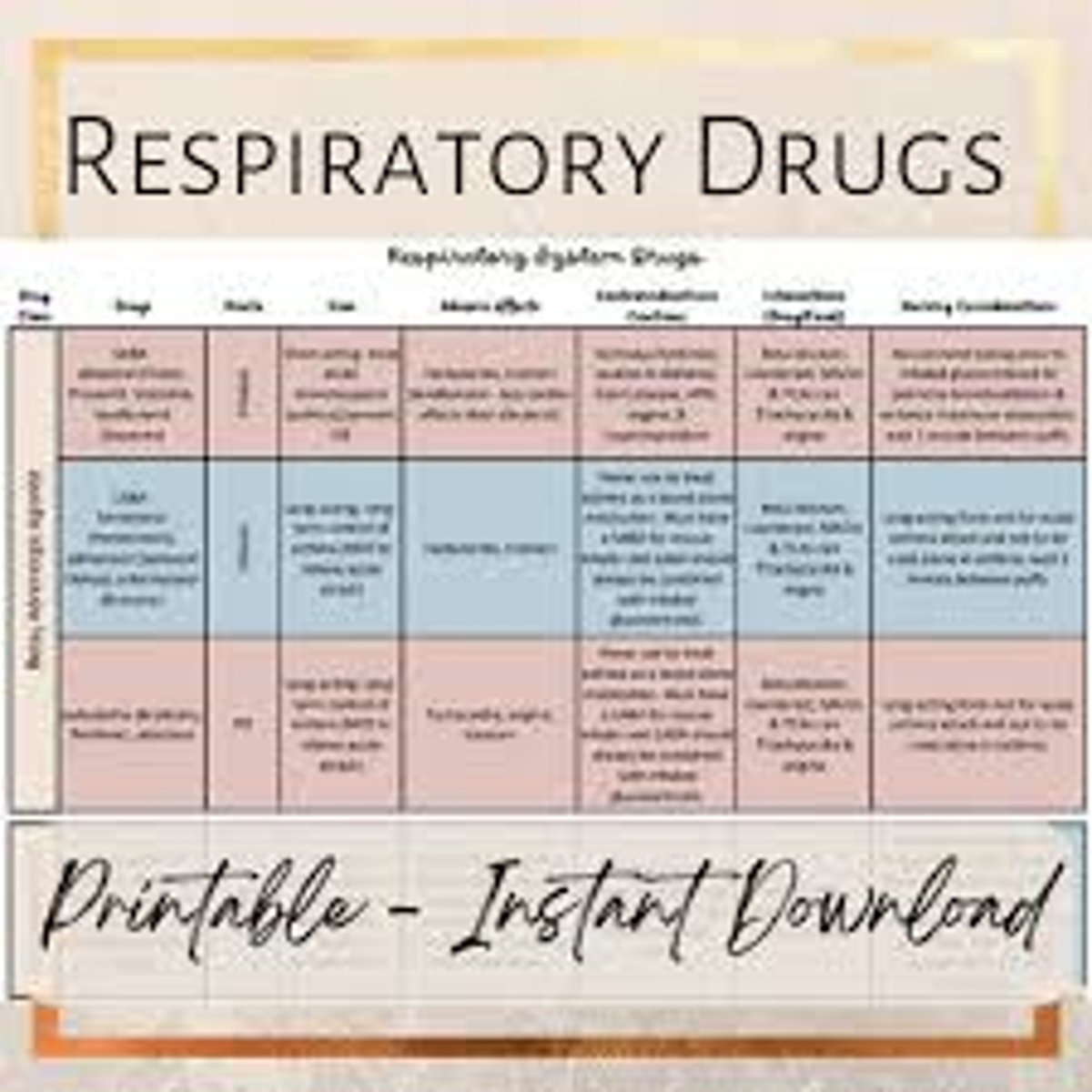
Which drug class should be used as a rescue inhaler for an acute asthma attack?
Short-acting inhaled beta 2-agonists
3 multiple choice options
Long-acting inhaled beta-2 agonists, inhaled corticosteroids, and mast cell stabilizers ___________used as rescue inhalers.
are not
1 multiple choice option
What is the primary action of antihistamines?
Dry up secretions
3 multiple choice options
Which medication class is used to decrease the amount of respiratory secretions?
Decongestants
3 multiple choice options
Which drug class is primarily used to suppress cough?
Antitussives
3 multiple choice options
Leukotrienes cause
inflammation, bronchoconstriction, and mucus production.
3 multiple choice options
What action do expectorants have on respiratory secretions?
Move them out of the body
3 multiple choice options
Which class of drugs is specifically used to open the airway through dilation?
Bronchodilators
What is the main function of non-bronchodilators in respiratory treatment?
Suppress the underlying cause of illness
which short acting drug do patients with asthma usually use
albuterol
2 multiple choice options
which long acting drug to patients with asthma usually use
All clients with asthma should have a short-acting beta-2 agonist (generally albuterol) available for
acute attacks
2 multiple choice options
Antitussives work directly on the medulla to suppress the cough reflex.
true
1 multiple choice option
An example of an expectorant is
guaifenesin
3 multiple choice options
Which of the following drugs is classified as an antihistamine?
Loratadine
Name 2 antihistamines
fexofenadine
loratadine
Name 2 decongestants
fluticasone
triamcinolone
name 2 antitussives
codeine
dextromethorphan
what is a common expectorant
Guaifenesin (Mucinex)
3 multiple choice options
Short-acting beta-2-adrenergic agonists (SABAs) are indicated for airflow obstructions, such as in the case of an
an asthma attack
3 multiple choice options
The most commonly used short-acting beta-2 agonist is
albuterol
3 multiple choice options
Long-acting beta agonists (LABAs) are not used for acute treatment of bronchoconstriction.
true
1 multiple choice option
Which of the following medications is a Long-Acting Beta Agonist (LABA)?
Salmeterol
3 multiple choice options
What is the primary therapeutic use of Long-Acting Beta Agonists (LABAs)?
To provide long-term control of asthma and COPD symptoms
3 multiple choice options
How often are Long-Acting Beta Agonists (LABAs) typically administered?
Twice daily
3 multiple choice options
Which of the following is a key safety consideration when prescribing Long-Acting Beta Agonists (LABAs) for asthma?
They should be used in combination with inhaled corticosteroids.
3 multiple choice options
What is a common side effect of Long-Acting Beta Agonists (LABAs)?
Muscle tremors
3 multiple choice options
Which of the following is an example of a combination inhaler that contains a Long-Acting Beta Agonist (LABA) and an inhaled corticosteroid?
Advair (Fluticasone/Salmeterol)
3 multiple choice options
What is the mechanism of action of Long-Acting Beta Agonists (LABAs)?
They stimulate beta-2 adrenergic receptors to relax bronchial smooth muscle.
3 multiple choice options
Anticholinergic drugs, such as ipratropium and tiotropium, work by
blocking the parasympathetic neurotransmitter acetylcholine.
Because the action of anticholingeric drugs is slower and prolonged, they are predominately used for the prevention of bronchospasms associated with
COPD
Anticholinergics
They are used for acute symptom management.
False
1 multiple choice option
Xanthine derivatives cause bronchodilation of the airways
true
1 multiple choice option
What is the primary mechanism by which xanthine derivatives cause bronchodilation?
By increasing levels of cAMP
3 multiple choice options
What is the function of cAMP in the respiratory system?
Relaxes bronchial smooth muscle and inhibits chemical mediators
3 multiple choice options
Which medication is considered a xanthine derivative?
Theophylline
3 multiple choice options
For which conditions are xanthine derivatives typically prescribed?
Mild to moderate asthma, COPD, and chronic bronchitis
3 multiple choice options
Why are xanthine derivatives used to prevent reactive airway symptoms rather than treat them?
They have a slow onset of action
3 multiple choice options
The nurse is caring for a client newly diagnosed with asthma. Which drug should the nurse educate the client to use as a rescue inhaler?
Albuterol
3 multiple choice options
The medication actions and side effects of beta-adrenergic agonists will mimic the ______________ nervous system.
Sympathetic
1 multiple choice option
Anticholinergics affect the __________ nervous system.
Parasympathetic
1 multiple choice option
When administering a corticosteroid and beta-2 agonist drug such as albuterol, the beta-2 agonist is given first to open the airway. Then the corticosteroid is given so it can penetrate the lung tissue better.
True
1 multiple choice option
Mast cell stabilizers (such as cromolyn and nedocromil) are a classification of drugs listed as an alternative therapy and are mostly prescribed for
exercise-induced asthma
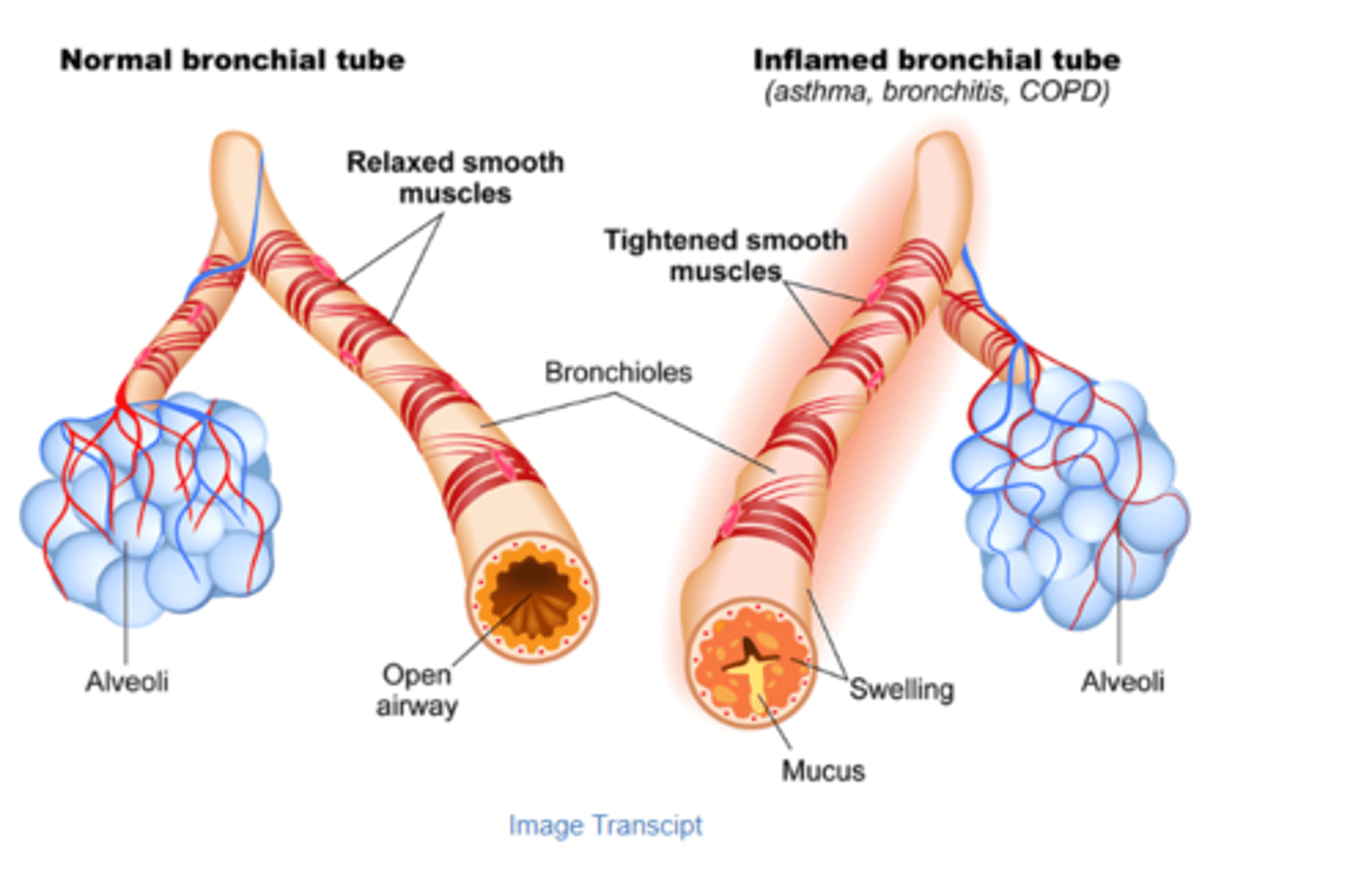
In people with asthma, ____________ cause inflammation, bronchoconstriction, and mucus production.
leukotrienes
3 multiple choice options
What is one of the most common side effects that occurs with diphenhydramine?
Drowsiness
3 multiple choice options
If the client is scheduled for an allergy test, remind them to stop taking this medication four days prior to the exam.
Antihistamines
3 multiple choice options
Monitor blood pressure closely; many drugs in this group can raise blood pressure.
Decongestants
3 multiple choice options
Assess for other medications that may interact with opioid-based antitussives.
Antitussives
3 multiple choice options
Assess for thick secretions within the airway.
Expectorants
3 multiple choice options
These drugs relax smooth muscles and decrease itching and bodily secretions.
Antihistamines
3 multiple choice options
These drugs function by preventing inflammatory chemicals from attaching to receptors on circulating immune cells throughout the respiratory system, which results in a reduction in inflammation and relief of asthma symptoms.
Leukotriene receptor antagonists
3 multiple choice options
These drugs act by soothing the cell membranes of specific types of cells to prevent the release of histamine, an inflammatory mediator.
Mast cell stabilizers
3 multiple choice options
These drugs work by blocking acetylcholine, a neurotransmitter, to prevent bronchial constriction and narrowing of the airways, which indirectly facilitates bronchodilation.
Anticholinergics
3 multiple choice options
Work best when administered prior to the anticipated exposure of an allergen.
Antihistamines
3 multiple choice options
Contraindicated in narrow-angle glaucoma, uncontrolled cardiovascular disease, hypertension, diabetes, and prostatitis.
Decongestants
3 multiple choice options
May enhance the effects of other opioids, general anesthetics, tranquilizers, sedatives and hypnotics, tricyclic antidepressants, alcohol, and other central nervous system (CNS) depressants.
Antitussives
3 multiple choice options
Current studies are inconclusive on whether the primary drug in this group has a greater therapeutic effect than water.
Expectorants
3 multiple choice options
Which drug class should all clients with asthma have available?
Short-acting beta-2 agonist
3 multiple choice options
Theophylline
Drug class
Xanthine derivative
3 multiple choice options
Cromolyn
drug class
Mast cell stabilizer
Montelukast
drug class
Leukotriene receptor antagonist
Ipratropium
Anticholinergic
Guaifenesin
Expectorant
Dextromethorphan suppresses the cough reflex by which mechanism of action?
Depressing the cough center of the brain
3 multiple choice options
Ipratropium is used to treat which condition?
chronic obstructive pulmonary disease.
3 multiple choice options
Ipratropium should be used cautiously in clients who have which conditions?
Select all that apply.
an enlarged prostate (prostatic hypertrophy)
urinary retention issues
glaucoma
Anticholinergic drugs, such as ipratropium and tiotropium, work by blocking
acetylcholine
3 multiple choice options
Anticholinergics should not be used to manage acute bronchospasm or acute asthma attacks.
true
1 multiple choice option
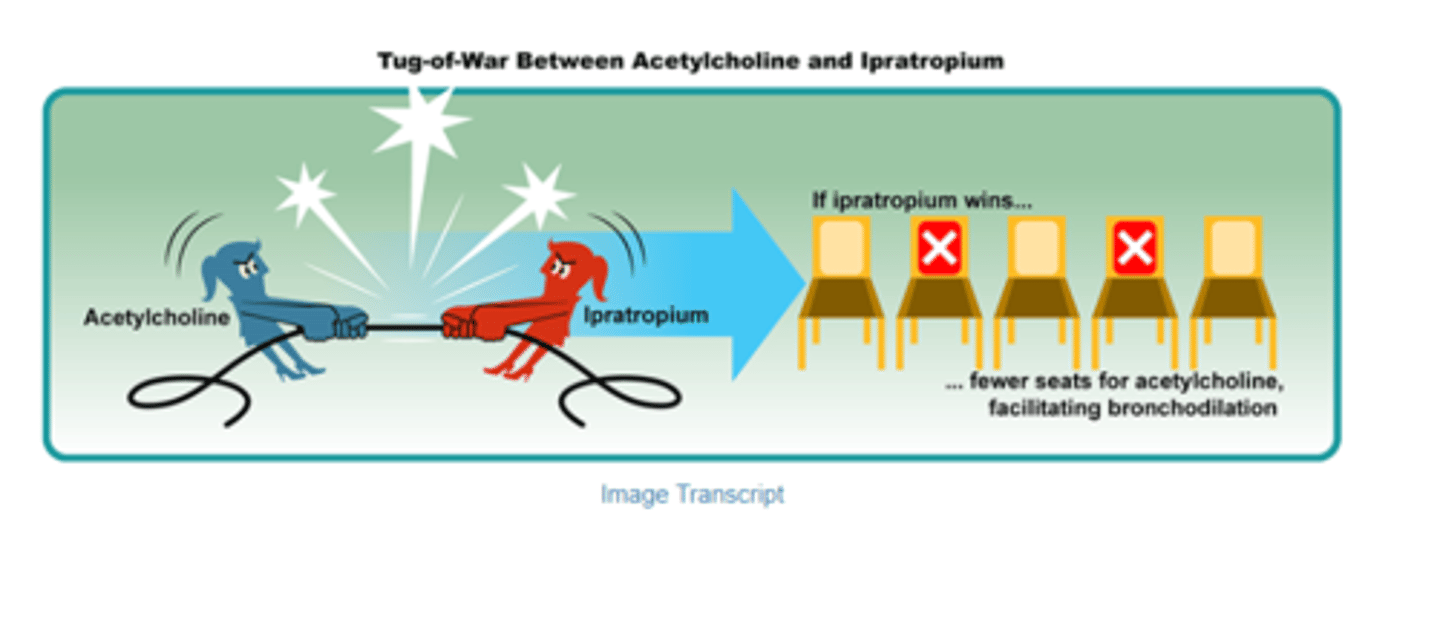
What is the primary action of acetylcholine in the bronchial tree?
Bronchial constriction and narrowing of the airways
How do anticholinergics like ipratropium work in the lungs?
They block acetylcholine receptors, causing airway relaxation and dilation.
Which of the following is a true statement about ipratropium?
It blocks acetylcholine receptors, resulting in less airway constriction.
Why should anticholinergics like ipratropium not be used to manage acute bronchospasm or acute asthma attacks?
They have a slow onset of action and are not effective for immediate relief.
What is the effect of blocking acetylcholine receptors in the lungs with anticholinergics?
Airway relaxation and dilation
Ipratropium should be used with caution or avoided in clients with which of the following conditions?
Prostatic hyperplasia
3 multiple choice options
Which neurotransmitter is affected by ipratropium?
Acetylcholine
3 multiple choice options
When ipratropium is administered concurrently with other inhalation medications, administer adrenergic bronchodilators first, followed by ipratropium, then corticosteroids. Wait 5 minutes between medications.
true
1 multiple choice option
Drugs used to treat the following conditions commonly interact with ipratropium:
Motion sickness
Irritable bowel syndrome
Overactive bladder
Which should the nurse include when educating a client about ipratropium?
Do not use for acute bronchospasm.
3 multiple choice options
Ipratropium should be used as a rescue inhaler.
false
1 multiple choice option
When administering multiple inhalers, they should be given in the following order:
Beta adrenergic
Anticholinergic
Inhaled corticosteroid
The nurse is educating the client about using multiple inhalers. Which statement made by the client indicates they understand the teaching?
"I will wait 5 minutes between each medication."
3 multiple choice options
Which items are mechanisms of action of ipratropium?
Select all that apply.
Airway relaxation
Prevention of bronchoconstriction
3 multiple choice options
Ipratropium is available in liquid aerosol for inhalation and as a multidose inhaler.
true
1 multiple choice option
What is the therapeutic effect expected with ipratropium?
Improved breathing through bronchodilation
3 multiple choice options
____________acts by targeting specific beta-2 adrenergic receptors in the lungs to relax smooth muscles of the airways.
Albuterol
3 multiple choice options
Albuterol is a bronchodilator taken to treat
bronchospasm
3 multiple choice options
Albuterol is a _____________ beta agonist, which is an important characteristic that helps determine when and how it is used.
short acting
1 multiple choice option
Short-acting beta agonists cause ________ in the respiratory system and _____________ in the cardiovascular system.
Dilation
Constriction
What is the primary body system that is targeted by selective beta agonist drugs?
Respiratory
3 multiple choice options
Contraindications for beta agonists are
an allergy to the drug
should be used cautiously in people with uncontrolled hypertension or dysrhythmias, or for those who have a high risk of a stroke.
For adults, the maximum dosage of albuterol is ___ mg per day
32
3 multiple choice options
For pediatrics an albuterol dose, this is _____ mg per day.
12
3 multiple choice options
In the event of an asthma attack, use albuterol first before using other inhalation medications and allow 5 minutes to elapse before administering other inhalant medications
true
1 multiple choice option
"I should use the albuterol 30 minutes before I exercise."
Understands Education
1 multiple choice option
"If I have an asthma attack, I should use my other inhalers before using my albuterol inhaler."
Needs Additional Education
1 multiple choice option
"I should rinse my mouth out after use."
Understands Education
1 multiple choice option
"I will notify my healthcare provider if I experience an increase in heart rate after use."
Needs Additional Education
1 multiple choice option
Which adverse effect of albuterol should be reported to the healthcare provider?
Increased wheezing
3 multiple choice options