18.2 Linking glycolysis and the Krebs cycle
 Call Kai
 Learn
Learn Practice Test
 Spaced Repetition
 Match
Match Flashcards
 Knowt Play
1/30

There's no tags or description
Looks like no tags are added yet.
Name | Mastery | Learn | Test | Matching | Spaced | Call with Kai |
|---|
No analytics yet
Send a link to your students to track their progress
31 Terms
In eukaryotic cells, where do the remaining aerobic (oxygen-requiring) reactions of cellular respiration take place?
inside the mitochondria
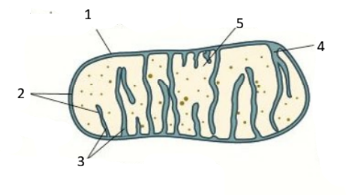
Mitochondria: 1?
outer mitochondrial membrane
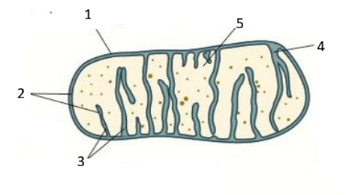
Mitochondria: 2?
inner mitochondrial membrane
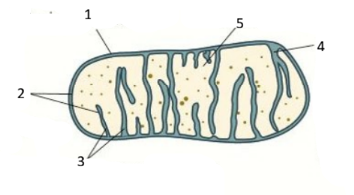
Mitochondria: 3?
cristae
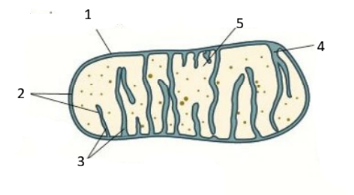
Mitochondria: 4?
intermembrane space
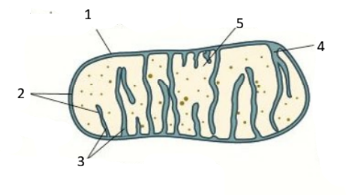
Mitochondria: 5?
matrix
Mitochondria: function of the outer mitochondrial membrane?
separates the contents of the mitochondrion from the rest of the cell, creating a cellular compartment with ideal conditions for aerobic respiration
Mitochondria: function of inner mitochondrial membrane?
contains electron transport chains and ATP synthase
Mitochondria: what are cristae?
projections of the inner membrane
Mitochondria: function of the cristae?
increase the surface area available for oxidative phosphorylation
Mitochondria: function of intermembrane space?
proteins pumped into this space by the electron transport chain - the space is small so the concentration builds up quickly
Mitochondria: function of the matrix?
contains enzymes for the Krebs cycle and the link reaction also contain mitochondrial DNA
The first step in aerobic respiration?
oxidative decarboxylation (the link reaction)
Why is oxidative decarboxylation referred to as the link reaction?
it’s the step that links anaerobic glycolysis, occurring in the cytoplasm, to the aerobic steps of respiration, occurring in the mitochondria
Oxidative decarboxylation: in eukaryotic cells, what does pyruvate enter?
the mitochondrial matrix
Oxidative decarboxylation: how does pyruvate enter the mitochondrial matrix?
by active transport via specific carrier proteins
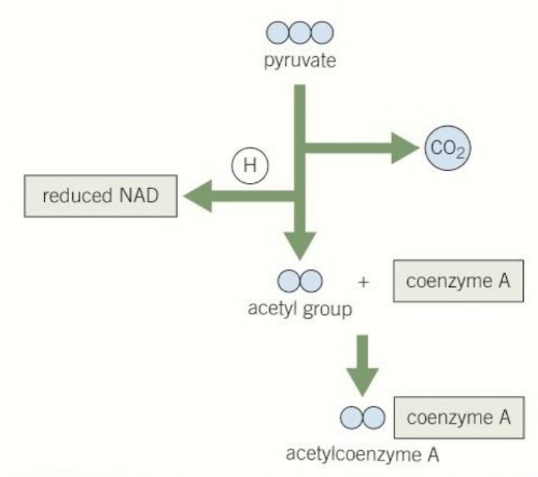
Oxidative decarboxylation: what does pyruvate then undergo?
oxidative decarboxylation
Oxidative decarboxylation: what is removed from the pyruvate when it undergoes oxidative decarboxylation (2)?
carbon dioxide is removed (decarboxylation) along with hydrogen (oxidation)
Oxidative decarboxylation: what is pyruvate converted to through Oxidative decarboxylation?
(two-carbon) acetyl group
Oxidative decarboxylation: what are the hydrogen atoms removed accepted by?
NAD
Oxidative decarboxylation: what is NAD reduced (bonding with removed hydrogen ions) to form?
NADH (also known as reduced NAD)
Oxidative decarboxylation: what is the acetyl group bound by?
coenzyme A
Oxidative decarboxylation: what does the acetyl group form when bound by coenzyme A?
acetylcoenzyme A (acetyl CoA)
IUPAC name for the acetyl group?
the ethanoyl group
Oxidative decarboxylation diagram?
…
Where does Acetyl CoA deliver the acetyl group to?
the next stage of aerobic respiration - known as the Krebs cycle
Where is the NADH used?
in oxidative phosphorylation to synthesise ATP
Oxidative decarboxylation: what is all that’s left of the original glucose molecules?
acetyl groups
Where does the produced CO2 go (2)?
will either diffuse away and be removed from the organism as metabolic waste or, in autotrophic organisms, it may be used as raw material in photosynthesis
During the link reaction what does each pyruvate form (3)?
1 molecule of acetyl coenzyme A, one molecule of carbon dioxide and one molecule of NADH
How many times does the link reaction occur per molecule of glucose entering respiration?
twice