Parasitology Lab Exam 2

0.0(0)
Studied by 0 people
call kaiCall Kai
learnLearn
examPractice Test
spaced repetitionSpaced Repetition
heart puzzleMatch
flashcardsFlashcards
GameKnowt Play
Card Sorting

1/35

encourage image

There's no tags or description

Looks like no tags are added yet.

Last updated 4:20 PM on 4/29/26
Name
Mastery
Learn
Test
Matching
Spaced
Call with Kai

No analytics yet

Send a link to your students to track their progress

36 Terms
1
New cards
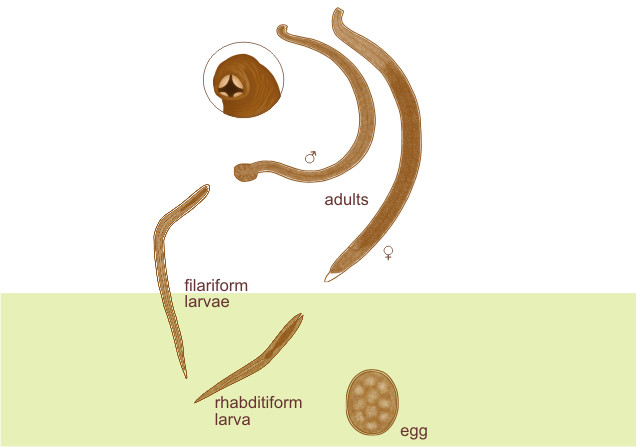
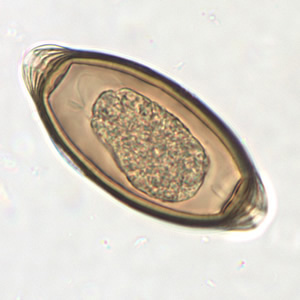
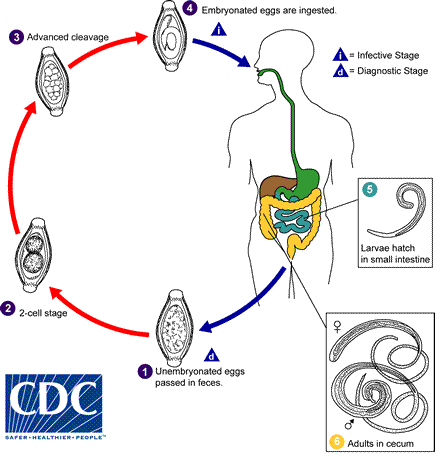
<p>Trichuris trichiura Life Cycle </p>

Trichuris trichiura Life Cycle

  • Whipworm

  • Phylum - Nematoda

  • Eggs are barrel-shaped and have polar “plugs” at each end

  1. Unembryonated eggs are passed in the stool

  2. In the soil, eggs develop into a two-cell stage

  3. An advanced cleavage stage takes place

  4. Embryonated eggs are ingested (contaminated soil or food)

  5. The eggs hatch in the small intestine and release larvae

  6. The larvae mature and establish as adults in the colon
<ul><li><p>Whipworm</p></li><li><p>Phylum - Nematoda</p></li><li><p>Eggs are barrel-shaped and have polar “plugs” at each end</p></li></ul><ol><li><p>Unembryonated eggs are passed in the stool</p></li><li><p>In the soil, eggs develop into a two-cell stage</p></li><li><p>An advanced cleavage stage takes place</p></li><li><p>Embryonated eggs are ingested (contaminated soil or food)</p></li><li><p>The eggs hatch in the small intestine and release larvae</p></li><li><p>The larvae mature and establish as adults in the colon</p></li></ol><p></p>
2
New cards
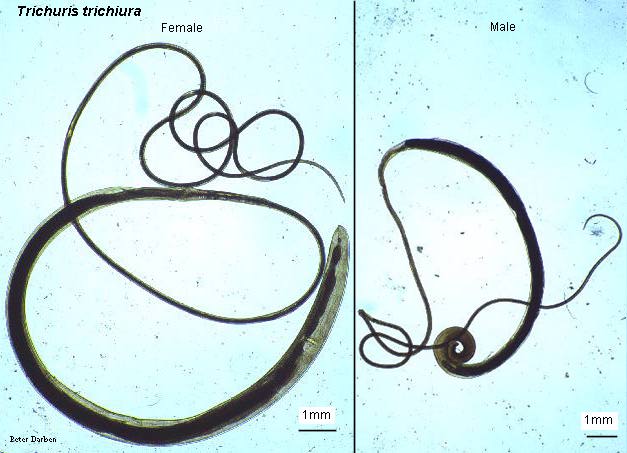
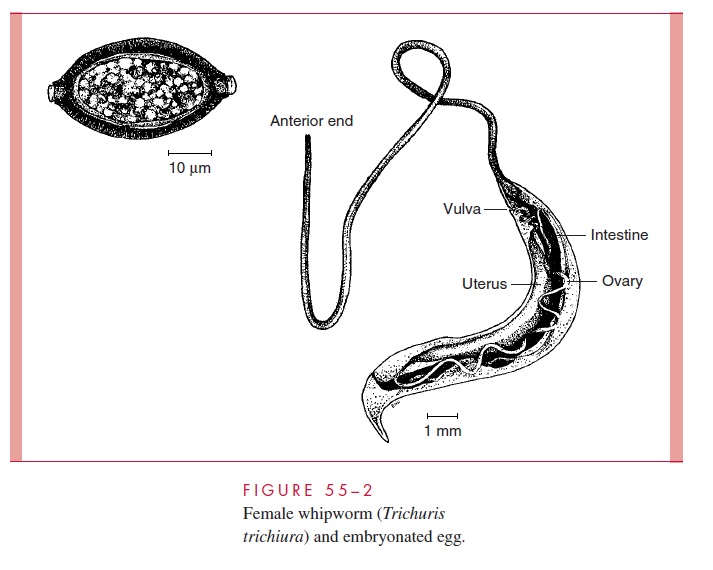
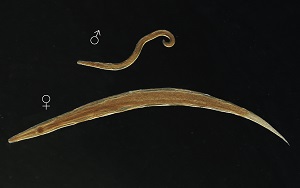
<p>Trichuris trichiura Female Anatomy</p>

Trichuris trichiura Female Anatomy

  • Sexual dimorphism, females are larger
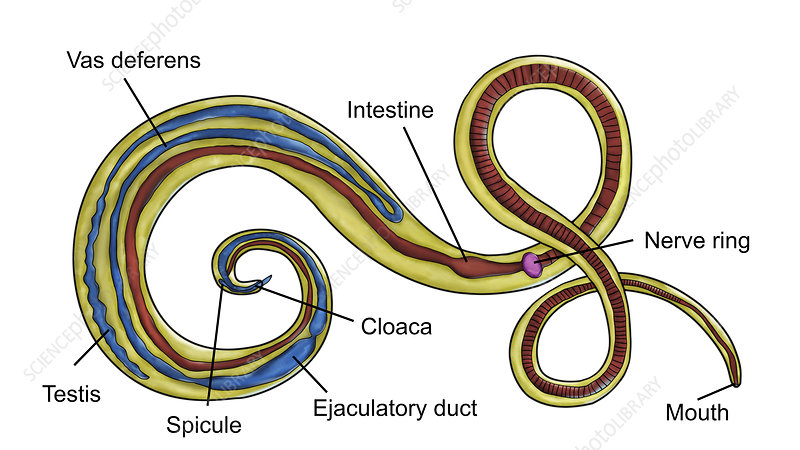
<ul><li><p>Sexual dimorphism, females are larger</p></li></ul><p></p>
3
New cards
<p>Trichuris trichiura Male Anatomy </p>

Trichuris trichiura Male Anatomy

  • Males are smaller than females

  • Have a curved tail

  • The curved tail has a copulatory spicule with a retractable sheath
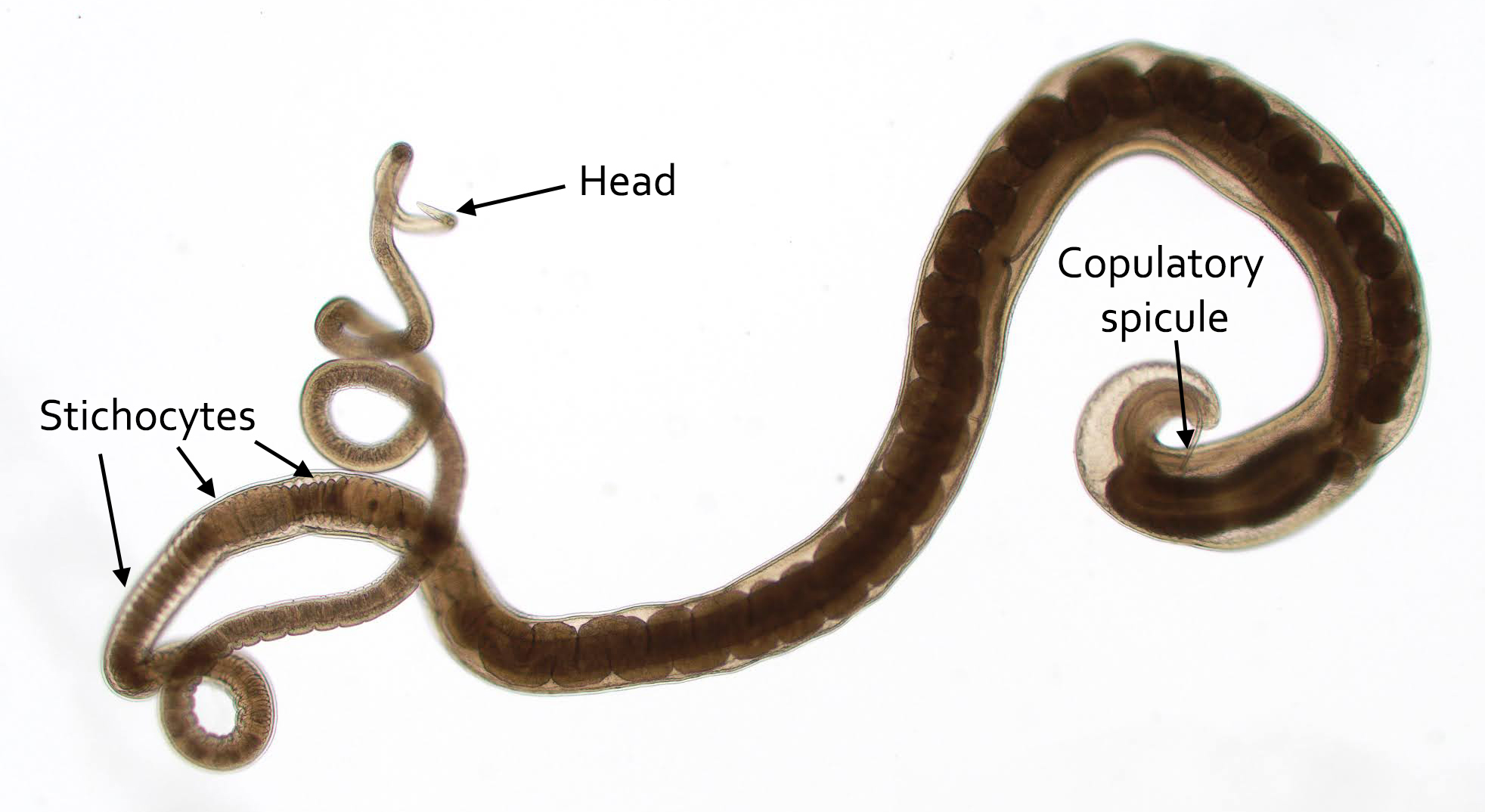
<ul><li><p>Males are smaller than females</p></li><li><p>Have a curved tail </p></li><li><p>The curved tail has a copulatory spicule with a retractable sheath </p></li></ul><p></p>
4
New cards
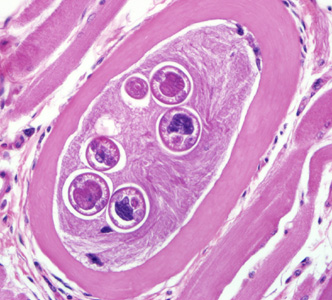
<p>Trichinella spiralis Life Cycle </p>

Trichinella spiralis Life Cycle

  • Contracted via undercooked pork containing encysted larvae

  • Two host life cycle

  1. Larvae are released from cysts after exposure to gastric acids

  2. Larvae invade the small bowel mucosa and develop into adult worms

  3. Females release larvae that migrate to striated muscles where they encyst
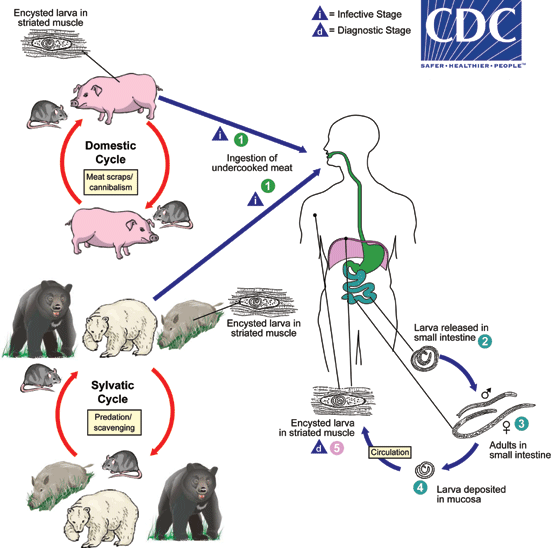
<ul><li><p>Contracted via undercooked pork containing encysted larvae </p></li><li><p>Two host life cycle </p></li></ul><ol><li><p>Larvae are released from cysts after exposure to gastric acids</p></li><li><p>Larvae invade the small bowel mucosa and develop into adult worms </p></li><li><p>Females release larvae that migrate to striated muscles where they encyst </p></li></ol><p></p>
5
New cards
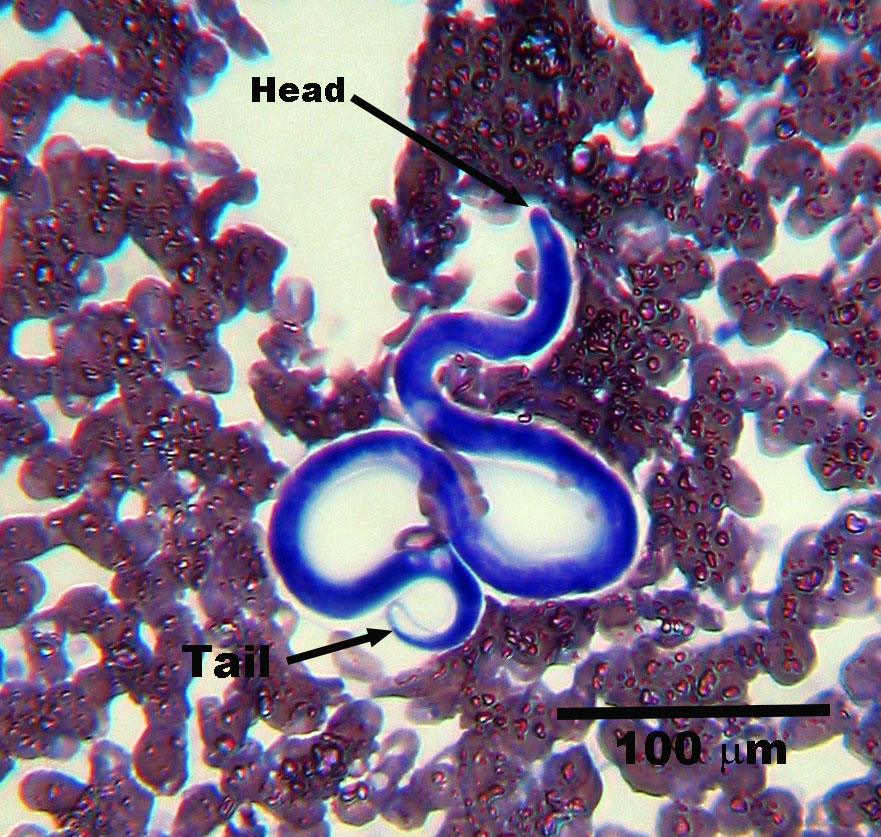
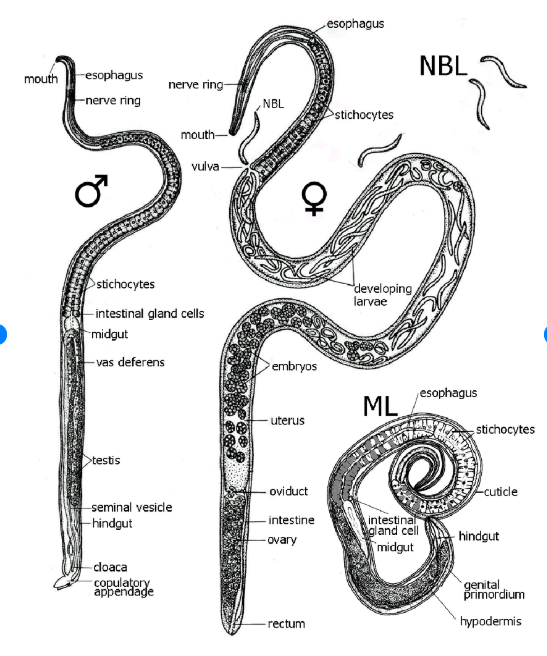
<p>Trichinella spiralis Female Anatomy </p>

Trichinella spiralis Female Anatomy

  • Sexual dimorphism, females are larger
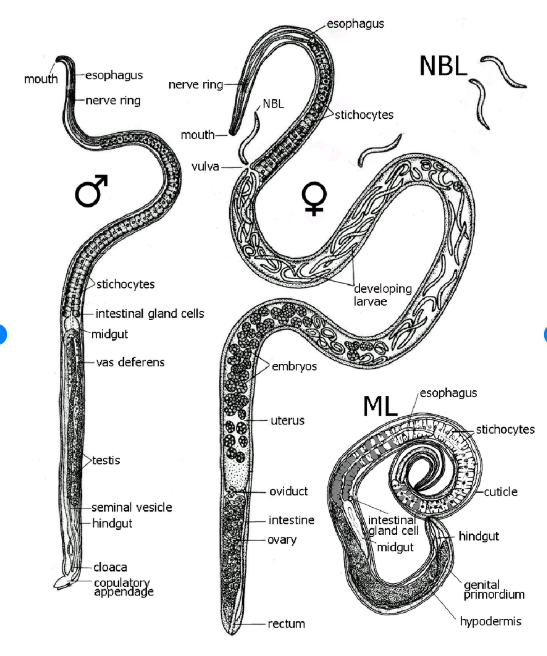
<ul><li><p>Sexual dimorphism, females are larger </p></li></ul><p></p>
6
New cards
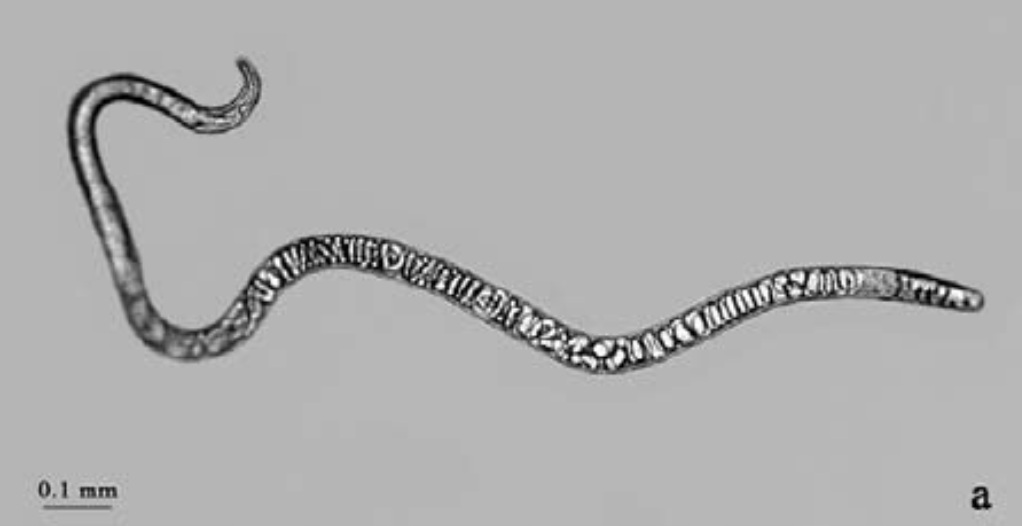
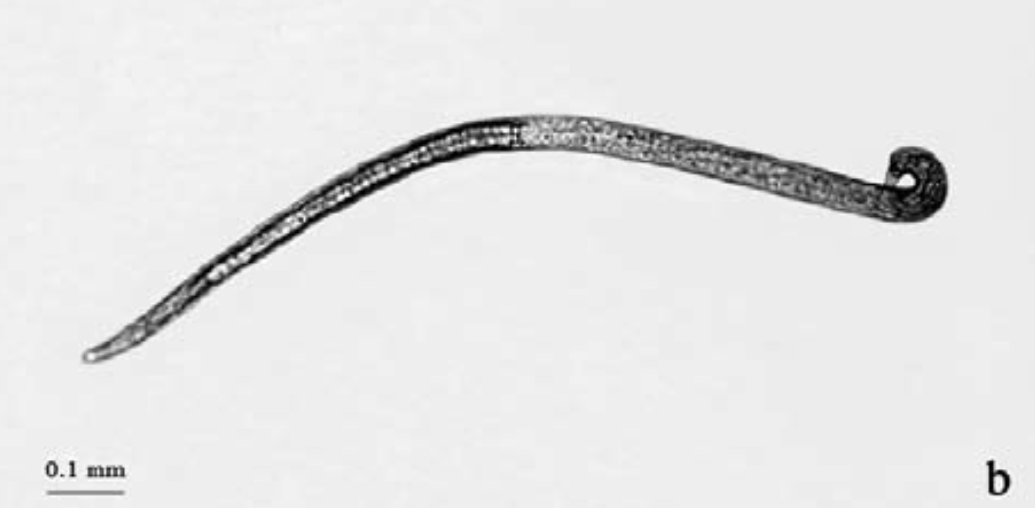
<p>Trichinella spiralis Male Anatomy </p>

Trichinella spiralis Male Anatomy

knowt flashcard image
7
New cards
<p>Trichinella spiralis Juvenile in Muscle</p>

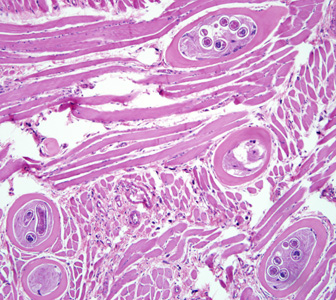
Trichinella spiralis Juvenile in Muscle
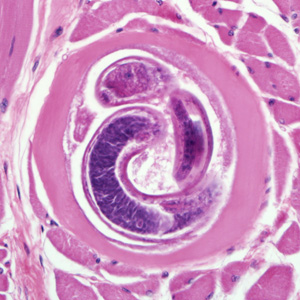
knowt flashcard image
8
New cards
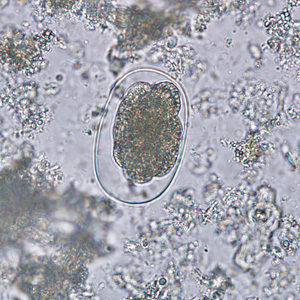
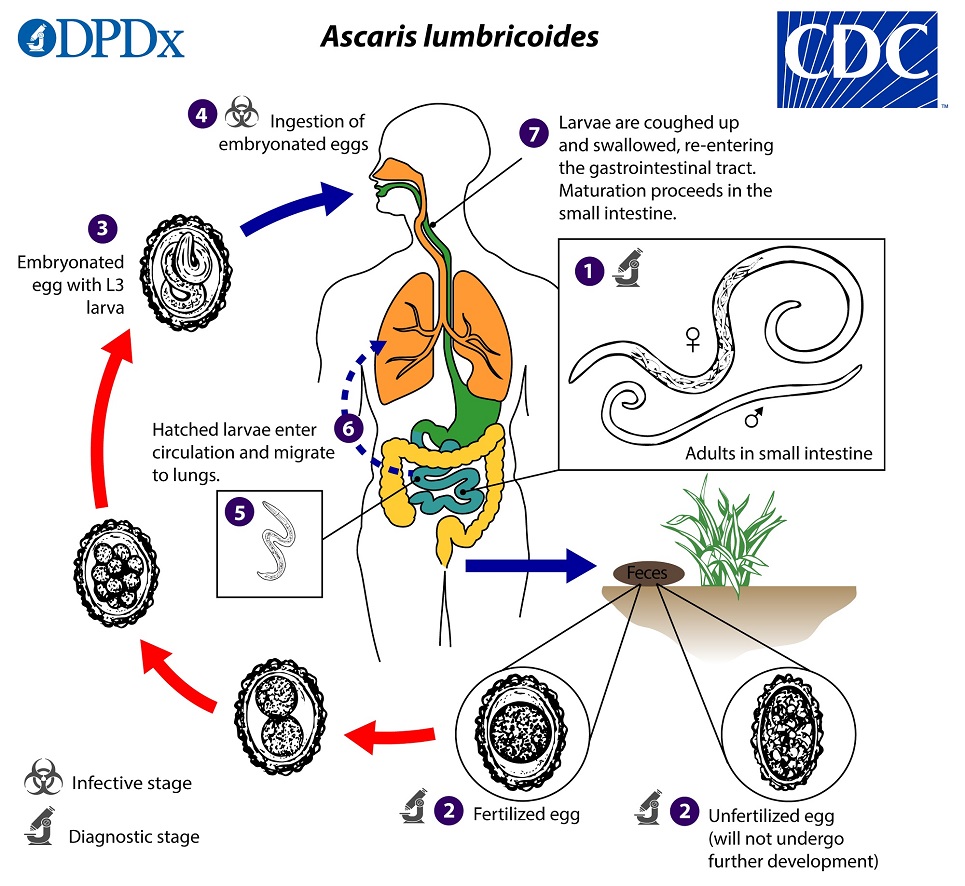
<p>Ascaris lumbricoides Life Cycle </p>

Ascaris lumbricoides Life Cycle

  1. Unfertilized eggs are passed in stool

  2. Eggs become fertilized in the environment (ideal conditions: moist, warm, shaded soil)

  3. Infective eggs are swallowed

  4. The larvae hatch and infect intestinal mucosa

  5. Larvae are carried to the lungs (10 to 14 days)

  6. Crawl up the throat and are swallowed

  7. Reach the small intestine and mature into adults

  • Eggs have a lipid coating and can persist in the environment

  • Humans and swine are the major hosts, dogs may also be infected
<ol><li><p>Unfertilized eggs are passed in stool </p></li><li><p>Eggs become fertilized in the environment (ideal conditions: moist, warm, shaded soil) </p></li><li><p>Infective eggs are swallowed </p></li><li><p>The larvae hatch and infect intestinal mucosa </p></li><li><p>Larvae are carried to the lungs (10 to 14 days) </p></li><li><p>Crawl up the throat and are swallowed </p></li><li><p>Reach the small intestine and mature into adults </p></li></ol><ul><li><p>Eggs have a lipid coating and can persist in the environment </p></li><li><p>Humans and swine are the major hosts, dogs may also be infected </p></li></ul><p></p>
9
New cards
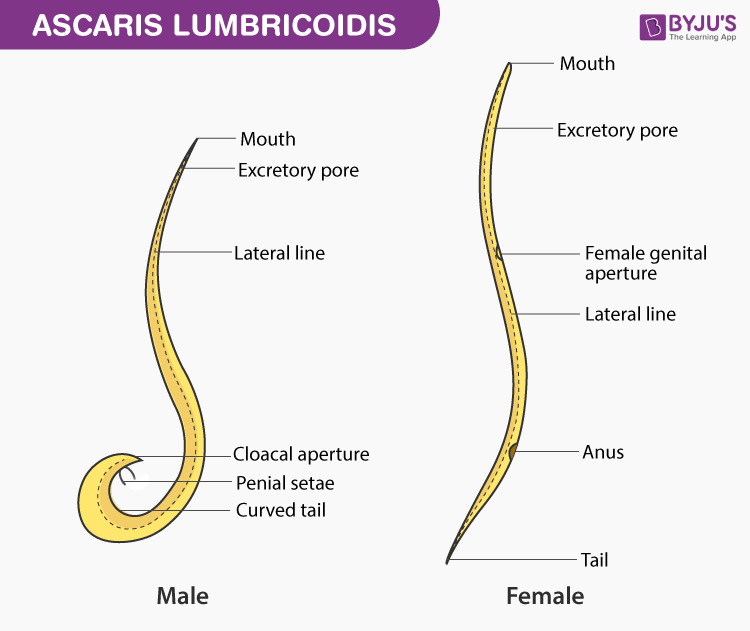
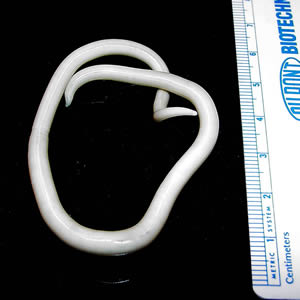
<p>Ascaris lumbricoides Female Anatomy </p>

Ascaris lumbricoides Female Anatomy

  • Sexual dimorphism, females are larger
<ul><li><p>Sexual dimorphism, females are larger </p></li></ul><p></p>
10
New cards
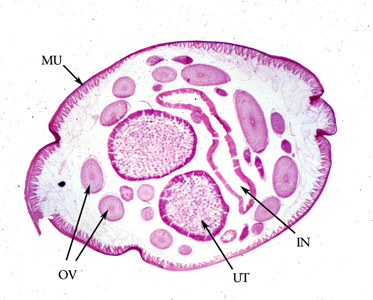
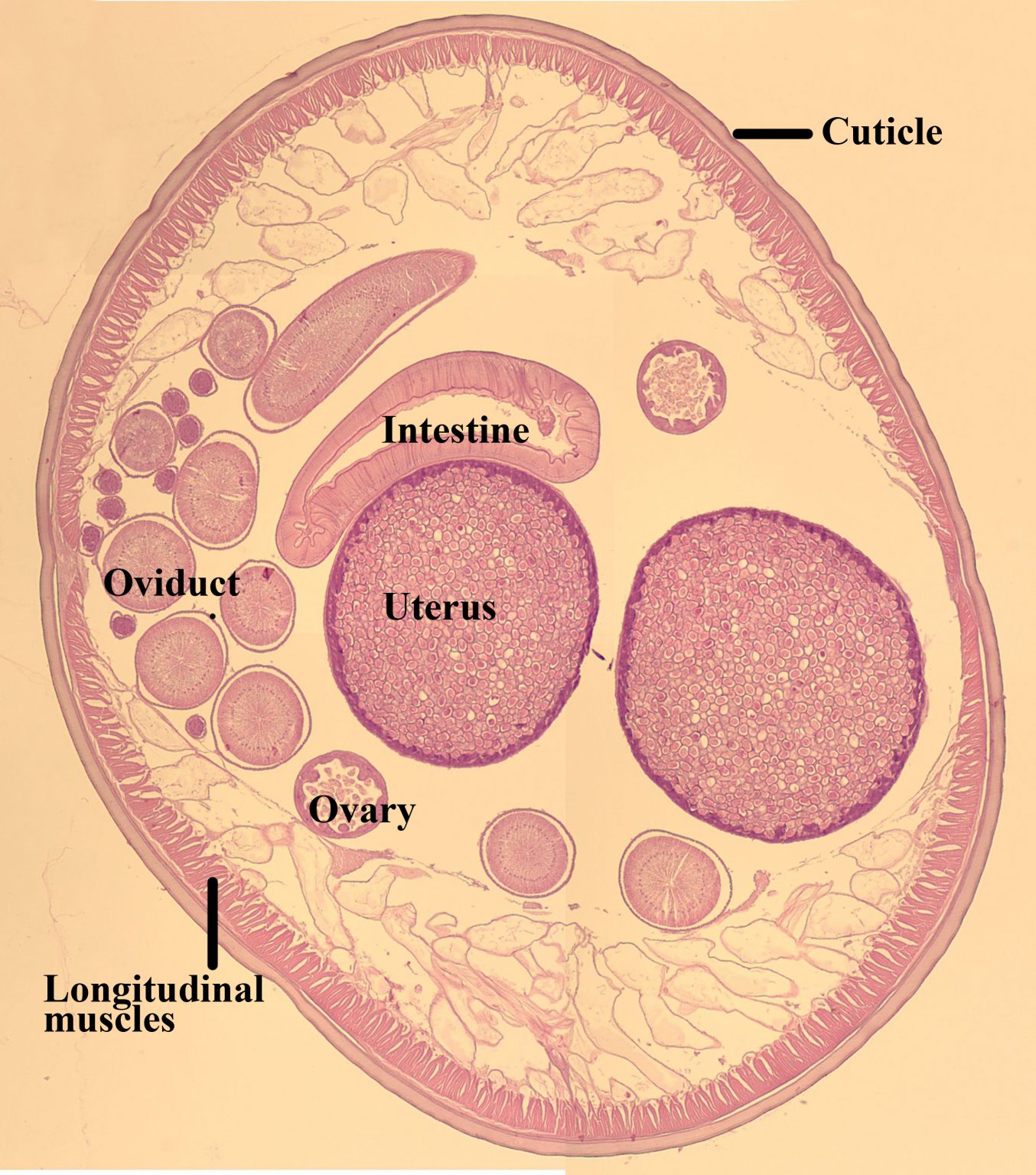
<p>Ascaris lumbricoides Female Cross-section</p>

Ascaris lumbricoides Female Cross-section

  • Gravid uterus (UT)

  • Intestine (IN)

  • Coiled ovary (OV)

<ul><li><p>Gravid uterus (UT) </p></li><li><p>Intestine (IN) </p></li><li><p>Coiled ovary (OV)</p></li></ul><p></p>
11
New cards
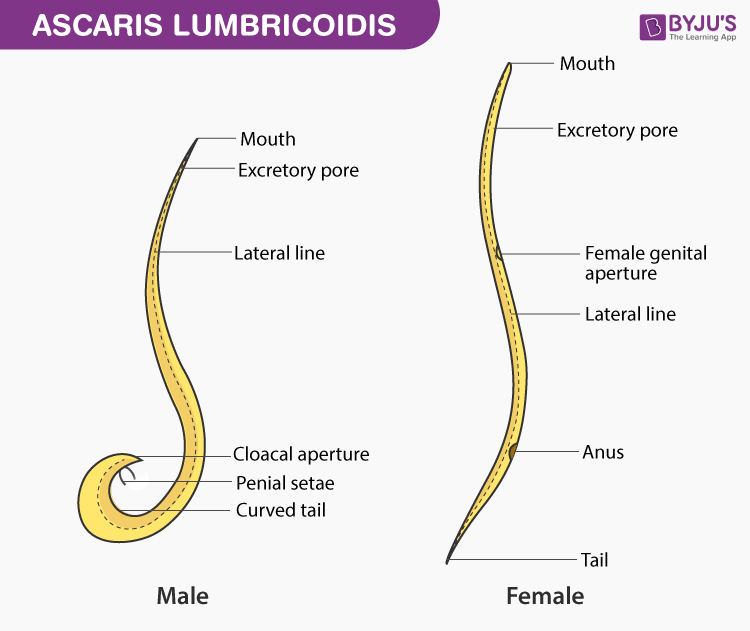
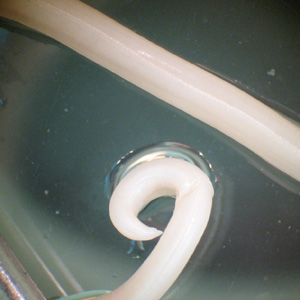
<p>Ascaris lumbricoides Male Anatomy </p>

Ascaris lumbricoides Male Anatomy

knowt flashcard image
12
New cards
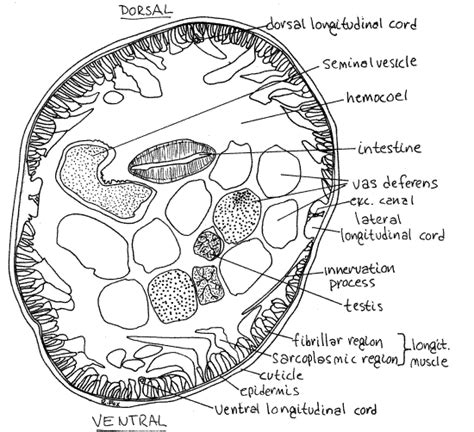
<p>Ascaris lumbricoides Male Cross-section</p>

Ascaris lumbricoides Male Cross-section
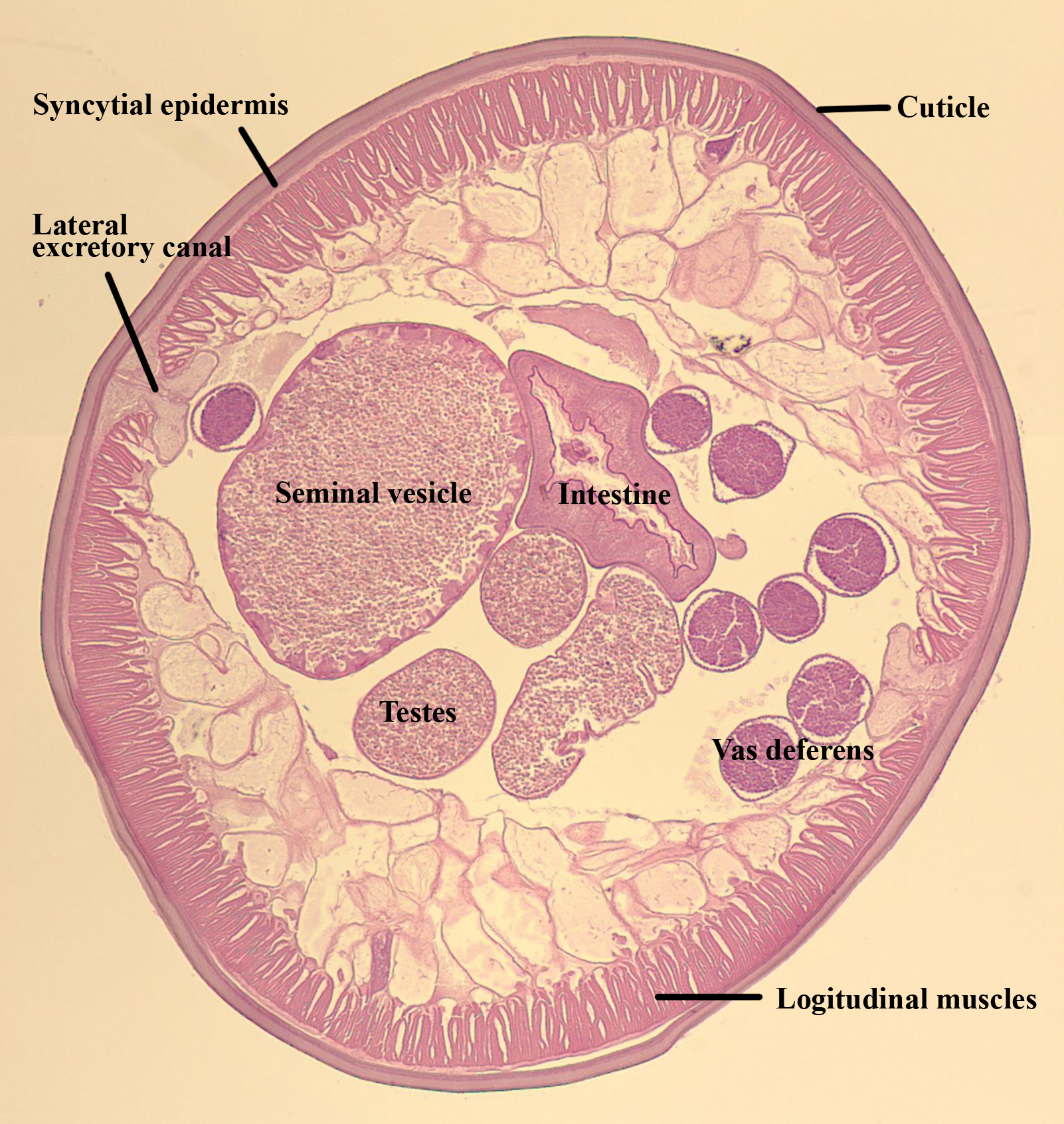
knowt flashcard image
13
New cards
<p>Hookworm Life Cycle </p>

Hookworm Life Cycle

  1. Eggs are passed in stool

  2. Larvae grow in feces and/or soil

  3. Become a filariform larvae after two molts

  4. Larvae penetrate the skin and are carried through the blood to the heart and the lungs

  5. Crawl to the throat, are swallowed, and reach the small intestine and mature into adults
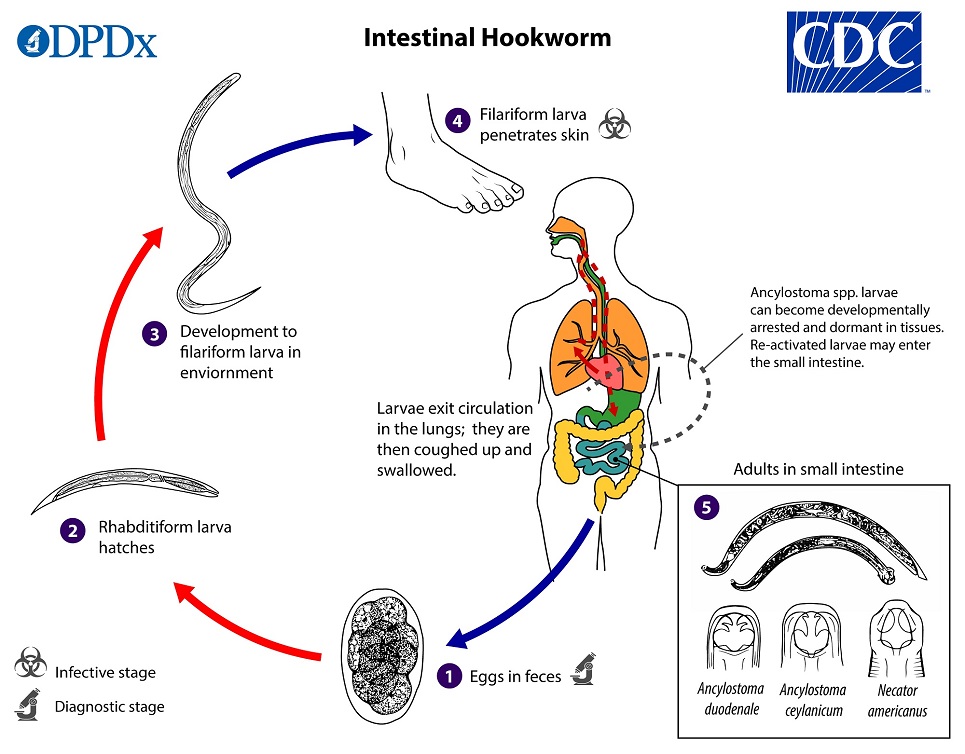
<ol><li><p>Eggs are passed in stool </p></li><li><p>Larvae grow in feces and/or soil </p></li><li><p>Become a filariform larvae after two molts </p></li><li><p>Larvae penetrate the skin and are carried through the blood to the heart and the lungs </p></li><li><p>Crawl to the throat, are swallowed, and reach the small intestine and mature into adults </p></li></ol><p></p>
14
New cards
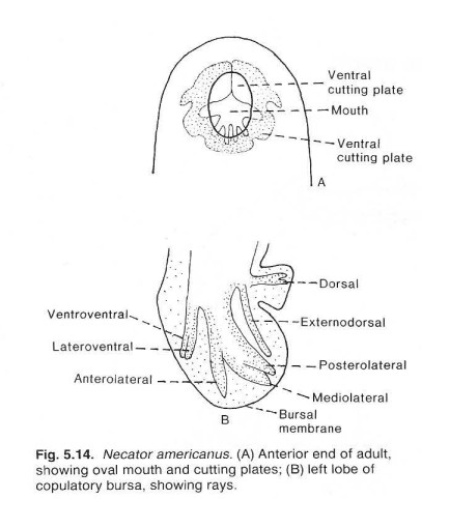
<p>Necator americanus Adult Anatomy</p>

Necator americanus Adult Anatomy

  • Copulatory bursa at posterior of male

  • Two spicules

  • Fleshy rays support lateral and dorsal lobes
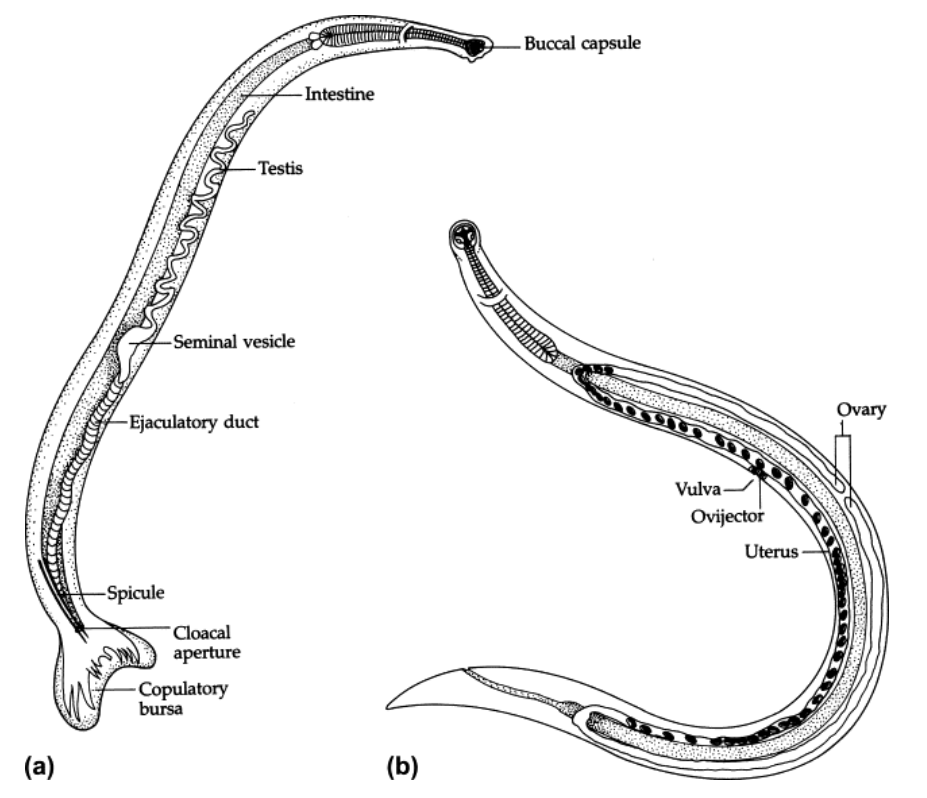
<ul><li><p>Copulatory bursa at posterior of male </p></li><li><p>Two spicules </p></li><li><p>Fleshy rays support lateral and dorsal lobes </p></li></ul><p></p>
15
New cards
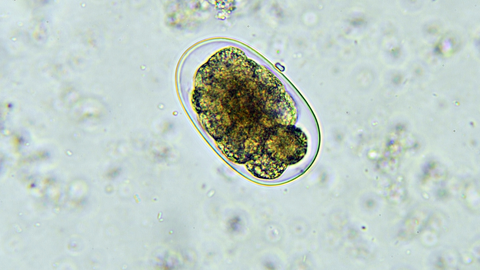
<p>Necator americanus Eggs</p>

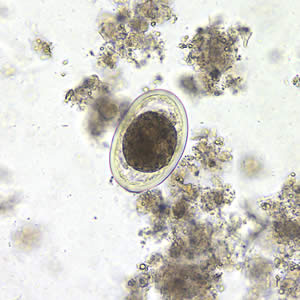
Necator americanus Eggs

knowt flashcard image
16
New cards
<p>Dirofilaria immitis Life Cycle </p>

Dirofilaria immitis Life Cycle

  1. A mosquito takes a blood meal and L3 larva enter the bite wound

  2. In the definitive host L3 larvae undergo two more molts into L4 and adults

  3. Adults reside in the pulmonary arteries

  4. Female worms produce microfilariae which circulate in peripheral blood

  5. A mosquito ingests the microfilariae, which migrate to the Malpighian tubes in the abdomen
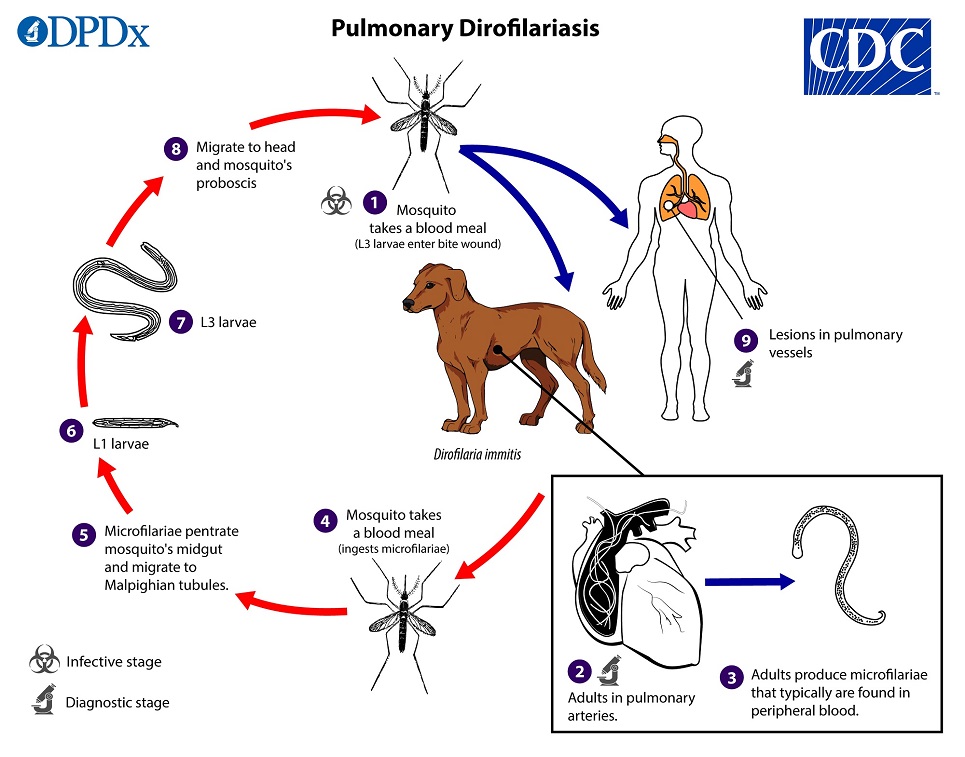
<ol><li><p>A mosquito takes a blood meal and L3 larva enter the bite wound</p></li><li><p>In the definitive host L3 larvae undergo two more molts into L4 and adults</p></li><li><p>Adults reside in the pulmonary arteries </p></li><li><p>Female worms produce microfilariae which circulate in peripheral blood</p></li><li><p>A mosquito ingests the microfilariae, which migrate to the Malpighian tubes in the abdomen</p></li></ol><p></p>
17
New cards
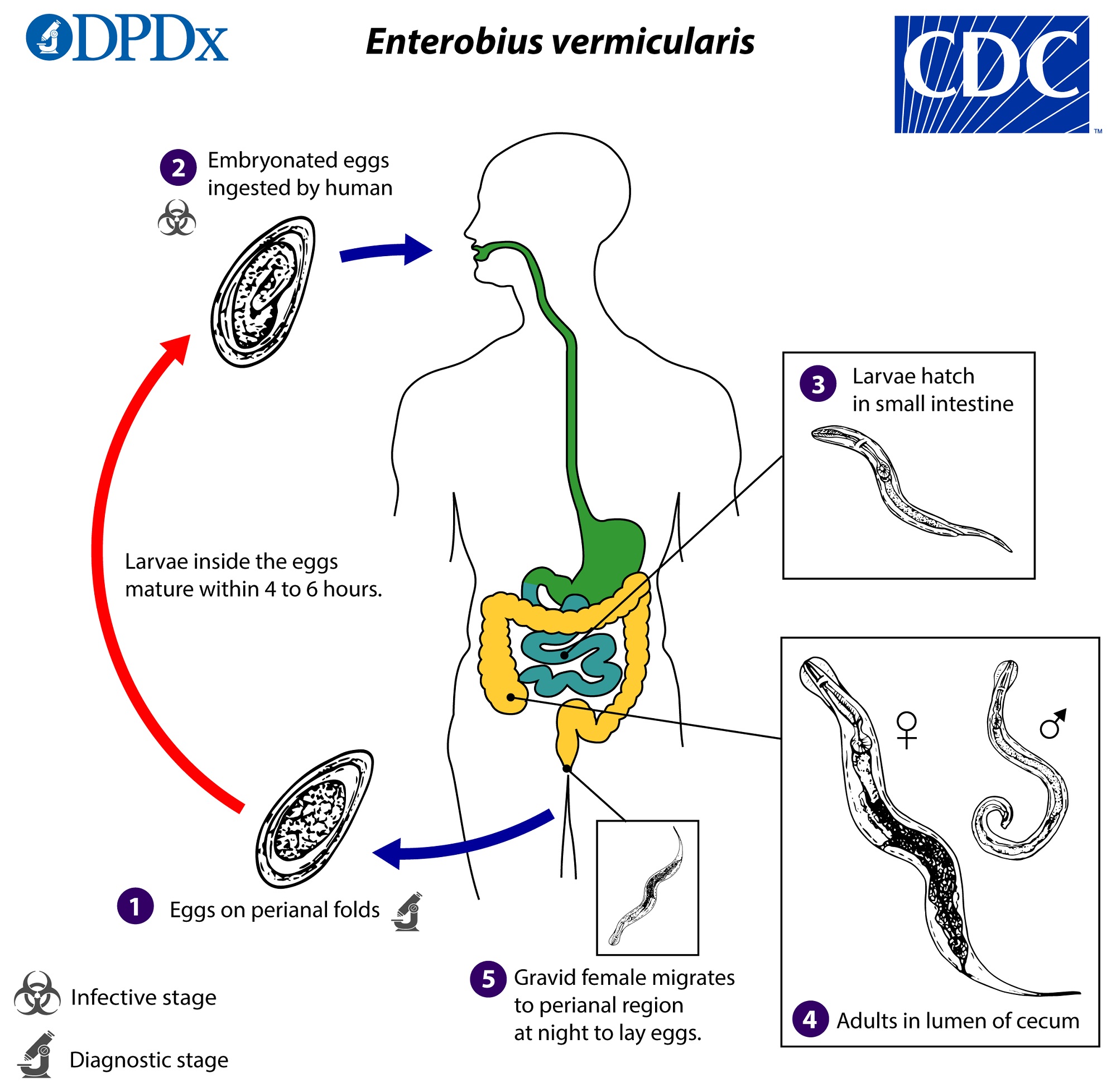
<p>Enterobius vermicularis Life Cycle</p>

Enterobius vermicularis Life Cycle

  1. Gravid females deposit eggs on perianal folds

  2. Self infection occurs from the transfer of eggs from the perianal region to the mouth

  3. Larvae hatch in the small intestine

  4. Adults establish themself in the colon

  5. Gravid females migrate nocturnally outside the anus and deposit eggs
<ol><li><p>Gravid females deposit eggs on perianal folds </p></li><li><p>Self infection occurs from the transfer of eggs from the perianal region to the mouth</p></li><li><p>Larvae hatch in the small intestine </p></li><li><p>Adults establish themself in the colon</p></li><li><p>Gravid females migrate nocturnally outside the anus and deposit eggs</p></li></ol><p></p>
18
New cards
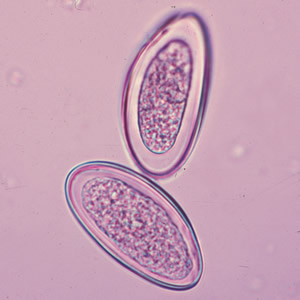
<p>Enterobius vermicularis Egg</p>

Enterobius vermicularis Egg

knowt flashcard image
19
New cards

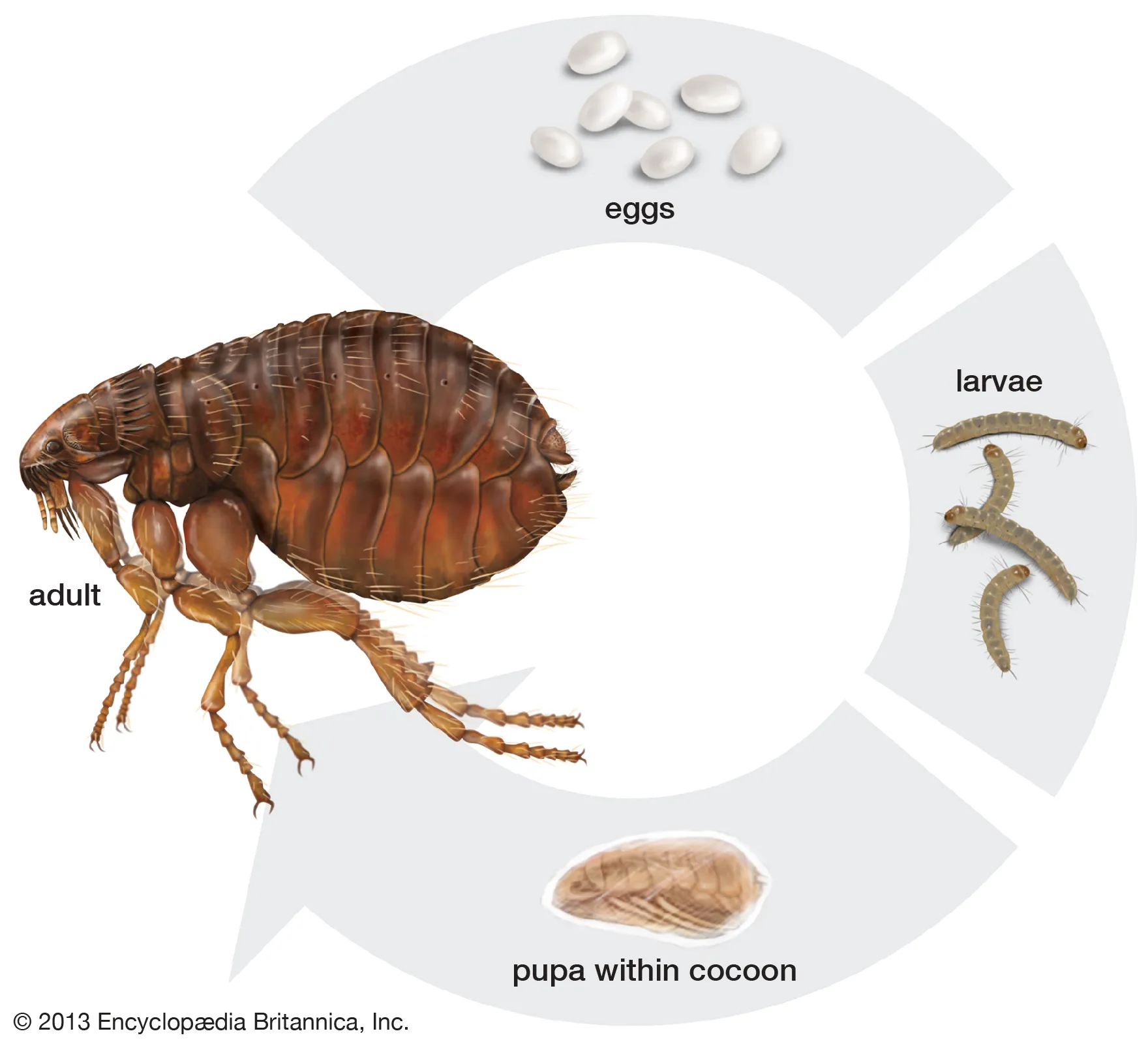
Class Insecta Characteristics

  • Body segmentation (head, thorax, and abdomen)

  • Parasitic adaptations include attachment organs, flattened bodies, and loss of wings
20
New cards
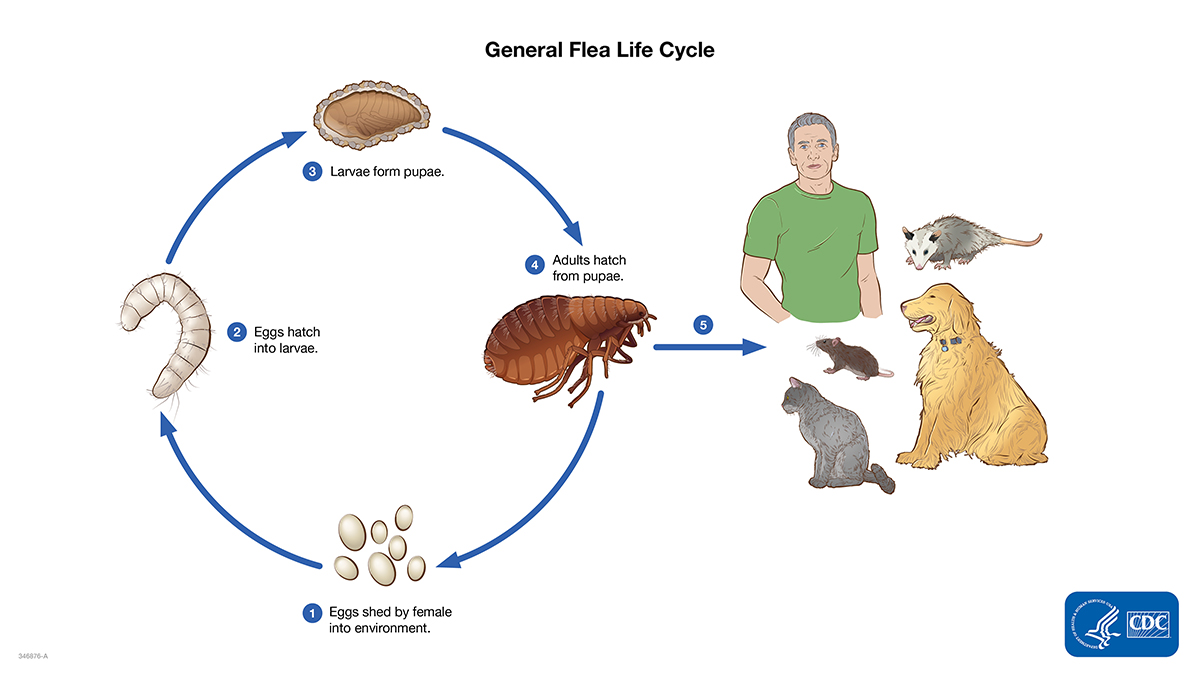
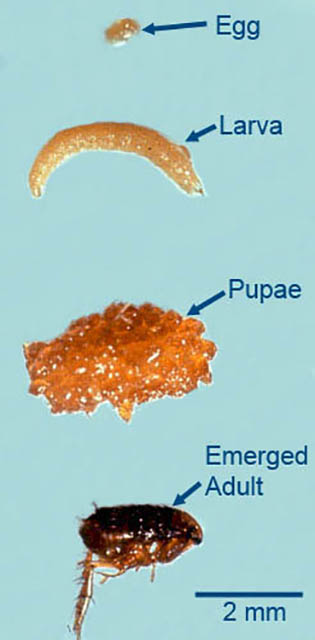
<p>Flea (Siphonaptera) Life Cycle</p>

Flea (Siphonaptera) Life Cycle

  1. After taking a blood meal, fleas mate and begin laying eggs

  2. After hatching, fleas enter the larval stage

  3. Larvae spin a cocoon and enter the pupa stage

  4. Adult fleas emerge from the cocoon when there is the presence of a host

Phylum - Arthropoda

Class - Insecta

Order - Siphonaptera
<ol><li><p>After taking a blood meal, fleas mate and begin laying eggs</p></li><li><p>After hatching, fleas enter the larval stage</p></li><li><p>Larvae spin a cocoon and enter the pupa stage</p></li><li><p>Adult fleas emerge from the cocoon when there is the presence of a host</p></li></ol><p>Phylum - Arthropoda </p><p>Class - Insecta </p><p>Order - Siphonaptera</p><p></p>
21
New cards
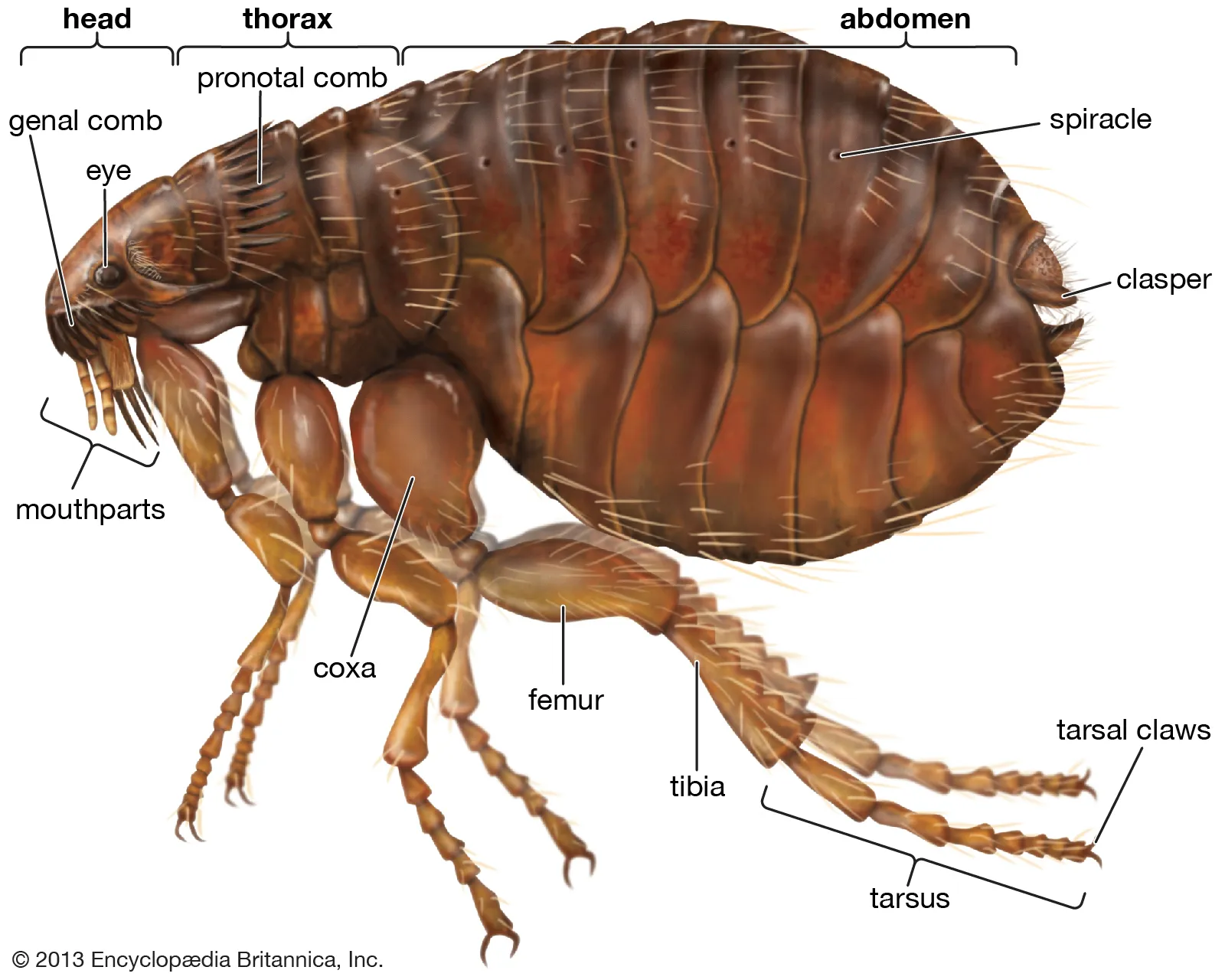
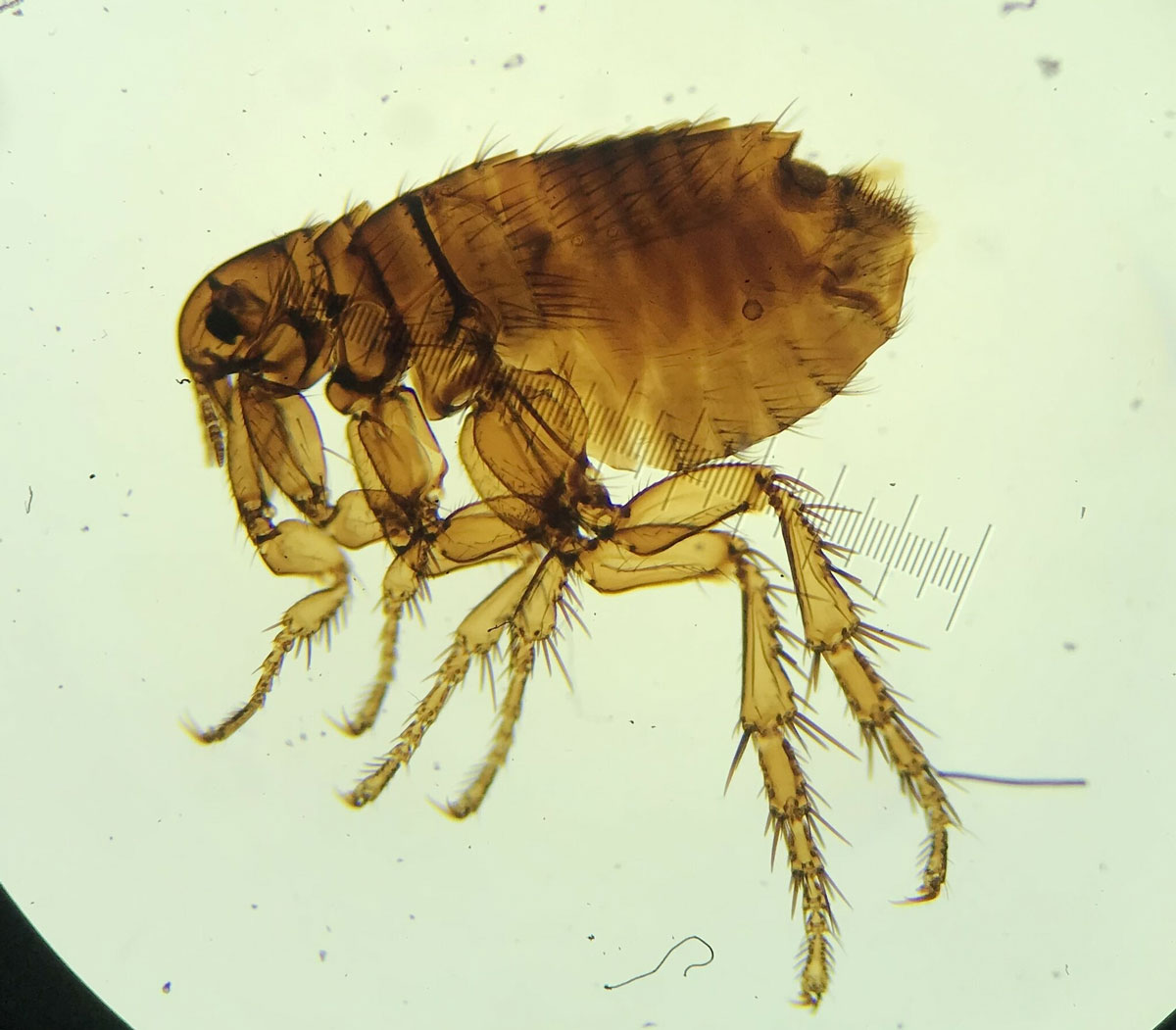
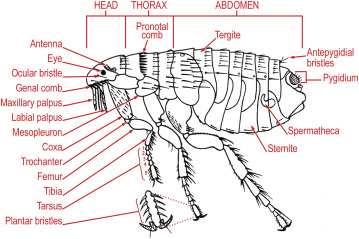
<p>Flea Morphology</p>

Flea Morphology

Identify:

  • Antenna

  • Compound eyes - reduced eye structure due to parasitic lifestyle

  • Genal ctenidia - anchoring mechanism, backward-facing spines lock onto fur, makes it difficult for hosts to remove the flea

  • Pronotal ctenidia - anchor the flea in place, assist in locomotion through the host’s hair

  • Pygidium - detect air movements and vibrations, allow the flea to sense potential hosts and threats

  • Spiracle - regulate respiration, minimize water loss, allow for air exchange

  • Spermatheca (females) - stores, nourishes, and protects sperm for an extended period of time

  • Copulatory apparatus (males) - locks securely onto the female and ensures sperm transfer
<p>Identify: </p><ul><li><p>Antenna</p></li><li><p>Compound eyes - reduced eye structure due to parasitic lifestyle</p></li><li><p>Genal ctenidia - anchoring mechanism, backward-facing spines lock onto fur, makes it difficult for hosts to remove the flea </p></li><li><p>Pronotal ctenidia - anchor the flea in place, assist in locomotion through the host’s hair</p></li><li><p>Pygidium - detect air movements and vibrations, allow the flea to sense potential hosts and threats </p></li><li><p>Spiracle - regulate respiration, minimize water loss, allow for air exchange </p></li><li><p>Spermatheca (females) - stores, nourishes, and protects sperm for an extended period of time </p></li><li><p>Copulatory apparatus (males) - locks securely onto the female and ensures sperm transfer</p></li></ul><p></p>
22
New cards
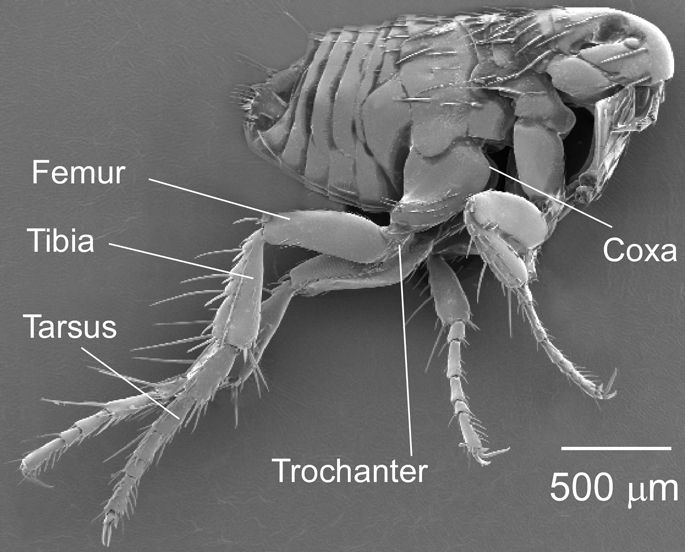
<p>Flea Leg Morphology</p>

Flea Leg Morphology

  • Coxa - the base of the jumping mechanism, enables movement through the host’s hair

  • Trochanter - acts as a lever to release jumping power, transfers stored energy from the resilin protein

  • Femur - activates the internal spring system (resilin), compress the elastic protein before releasing it

  • Tibia - allows for long distance leaps, is pressed against the the ground with the trochanter to build energy, backward facing spines help to grip the substrate

  • Tarsus - anchor point for jumping, equipped with claws that grip the host’s hair and allow the friction to push off the ground
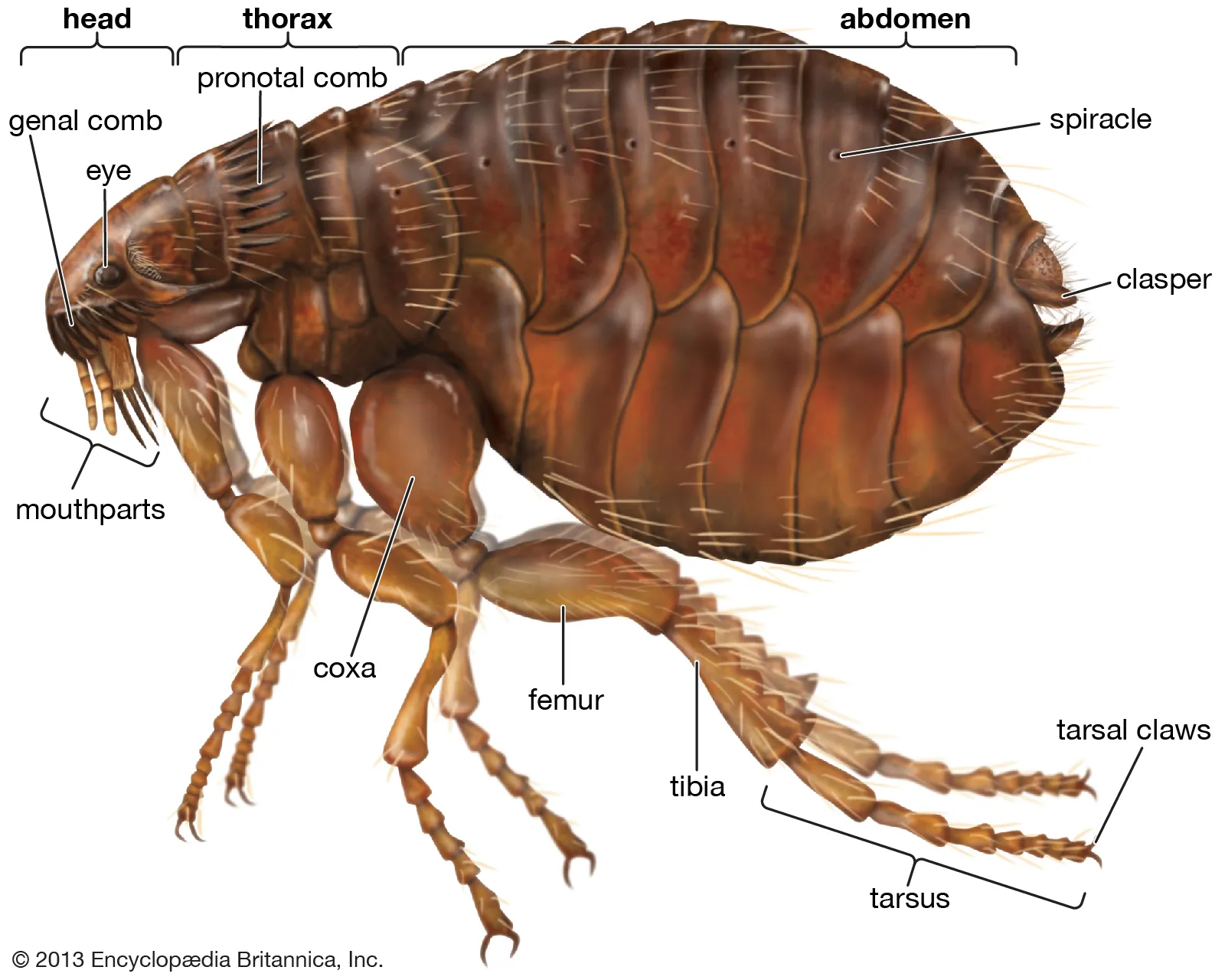
<ul><li><p>Coxa - the base of the jumping mechanism, enables movement through the host’s hair </p></li><li><p>Trochanter - acts as a lever to release jumping power, transfers stored energy from the resilin protein</p></li><li><p>Femur - activates the internal spring system (resilin), compress the elastic protein before releasing it </p></li><li><p>Tibia - allows for long distance leaps, is pressed against the the ground with the trochanter to build energy, backward facing spines help to grip the substrate</p></li><li><p>Tarsus - anchor point for jumping, equipped with claws that grip the host’s hair and allow the friction to push off the ground </p></li></ul><p></p>
23
New cards
<p>Ctenocephalides Larvae/Adult</p>

Ctenocephalides Larvae/Adult

  • The cat flea, primarily impacts mammal animal hosts

  • Four-stage, 30-75 day life-cycle (egg, larvae, pupa, adult)
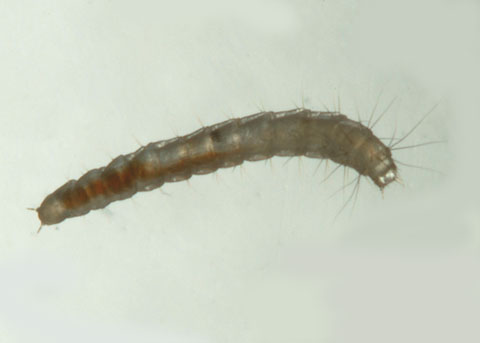
<ul><li><p>The cat flea, primarily impacts mammal animal hosts</p></li><li><p>Four-stage, 30-75 day life-cycle (egg, larvae, pupa, adult)</p></li></ul><p></p>
24
New cards
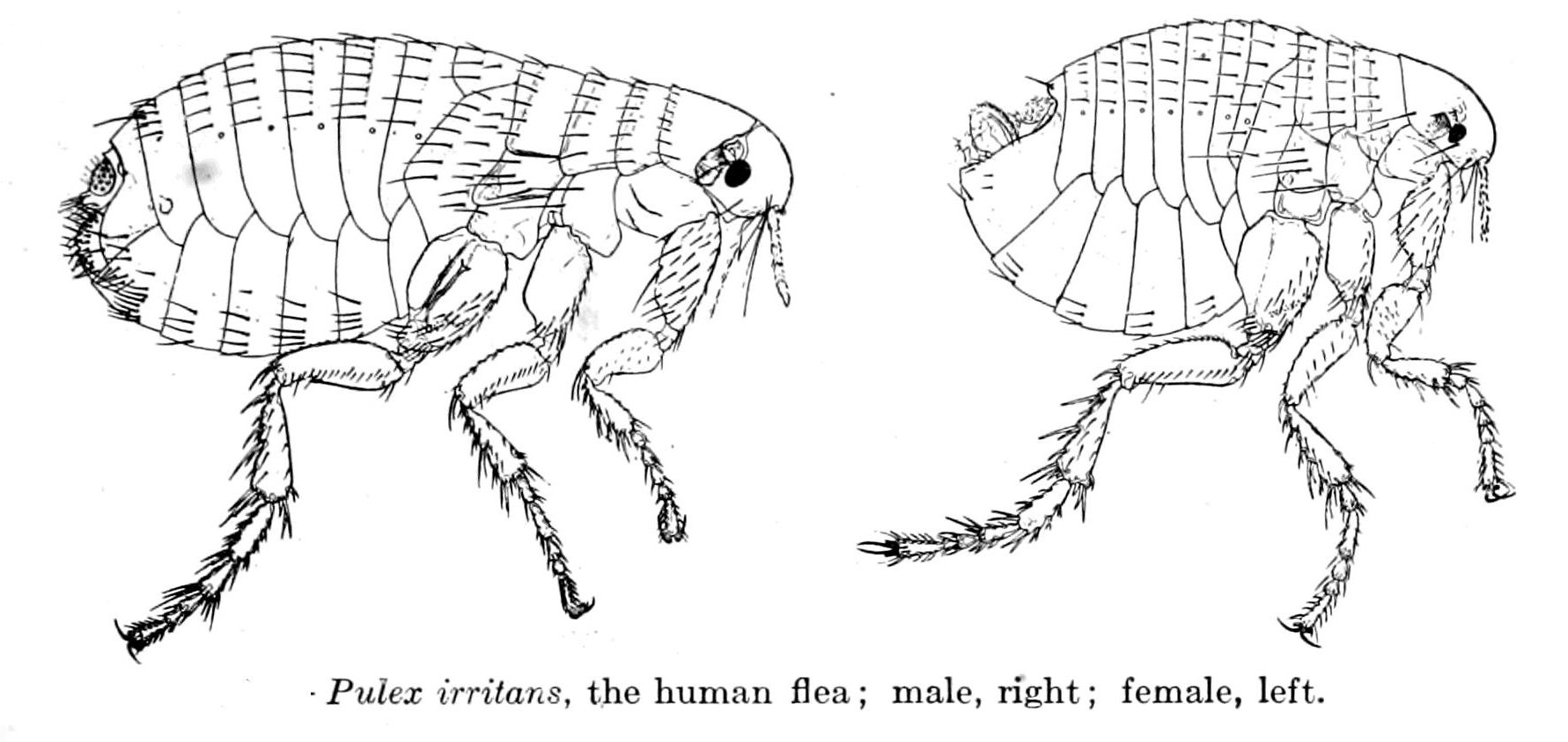
<p>Pulex irritans Larvae/Adult</p>

Pulex irritans Larvae/Adult

  • Human flea or house flea

  • Wide host spectrum

<ul><li><p>Human flea or house flea </p></li><li><p>Wide host spectrum</p></li></ul><p></p>
25
New cards
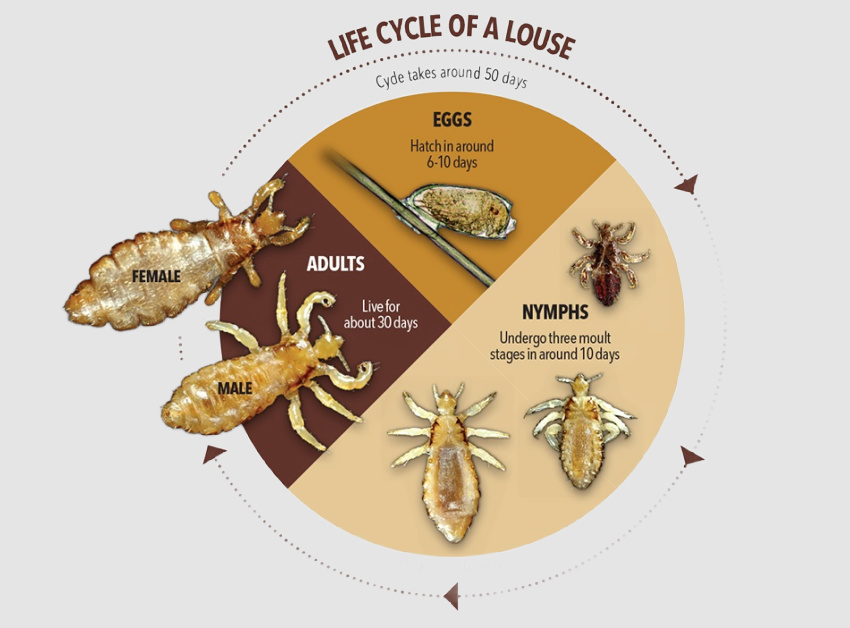
<p>Lice (Phthiraptera) Life Cycle</p>

Lice (Phthiraptera) Life Cycle

  1. Nits, or eggs, are laid by the adult female and are cemented at the base of the hair shaft near the scalp

  2. The egg hatches and releases a nymph, nymphs mature after 3 molts

  3. Nymphs become adults after 7 days after hatching

  4. Adult lice are the size of a sesame seed and have six legs

Body lice - body lice reside and lay their eggs on clothing and migrate to the human body to feed

Phylum - Arthropoda

Class - Insecta

Order - Phthiraptera
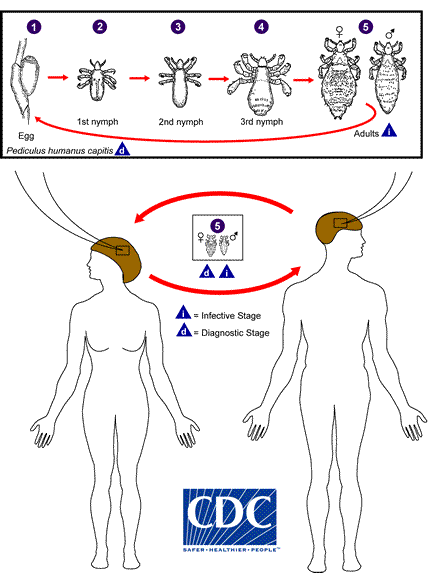
<ol><li><p>Nits, or eggs, are laid by the adult female and are cemented at the base of the hair shaft near the scalp</p></li><li><p>The egg hatches and releases a nymph, nymphs mature after 3 molts</p></li><li><p>Nymphs become adults after 7 days after hatching</p></li><li><p>Adult lice are the size of a sesame seed and have six legs</p></li></ol><p>Body lice - body lice reside and lay their eggs on clothing and migrate to the human body to feed</p><p>Phylum - Arthropoda </p><p>Class - Insecta </p><p>Order - Phthiraptera</p>
26
New cards
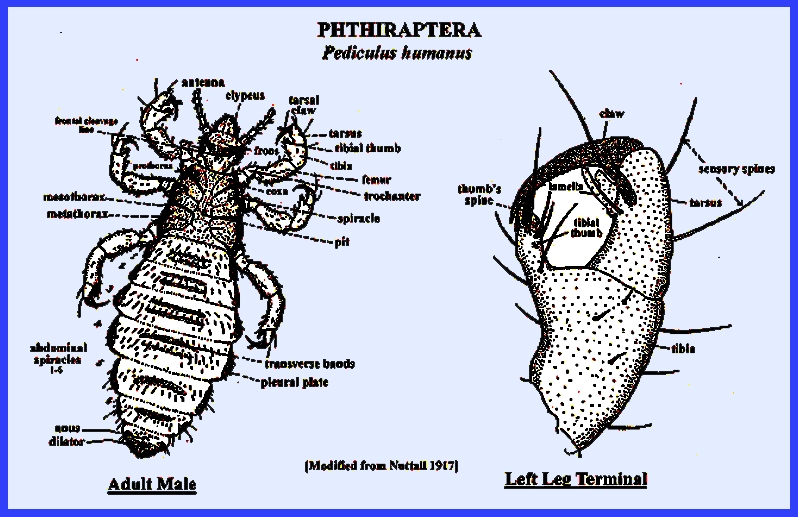
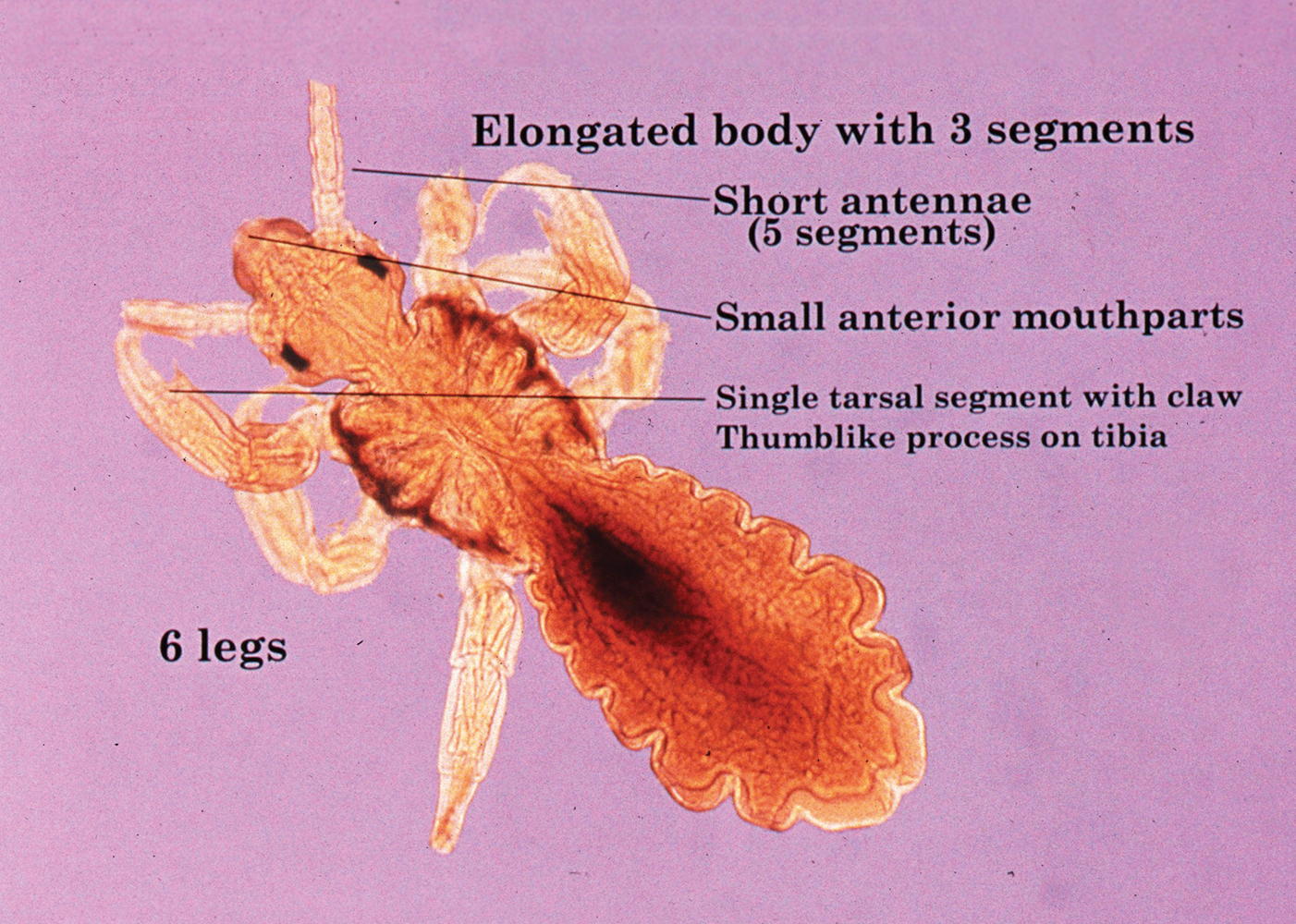
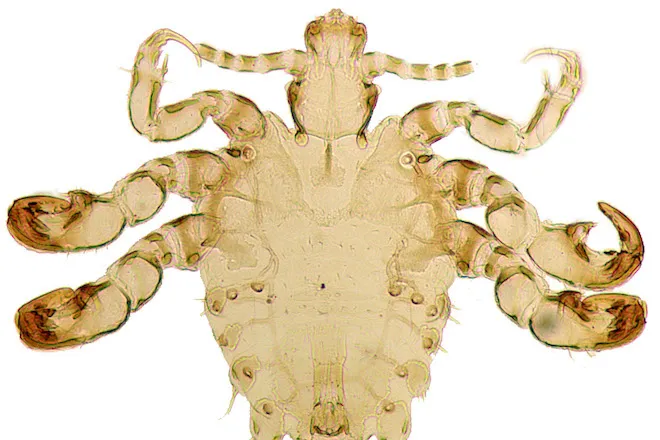
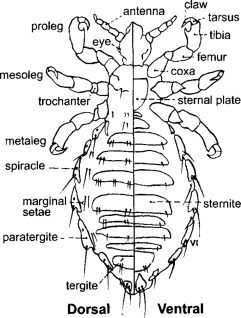
<p>Lice Anatomy</p>

Lice Anatomy

  • Antennae

  • Compound eye

  • Coxa - helps to anchor the large muscles

  • Trochanter - provides flexibility and allows the rotational movement of the leg

  • Femur

  • Tibia - used to anchor the louse, a tibial thumb works in opposition to the tarsal claw

  • Tarsus - grasps human hair and clothing fibers, allows a secure hold on the hair during movement
<ul><li><p>Antennae </p></li><li><p>Compound eye </p></li><li><p>Coxa - helps to anchor the large muscles </p></li><li><p>Trochanter - provides flexibility and allows the rotational movement of the leg </p></li><li><p>Femur </p></li><li><p>Tibia - used to anchor the louse, a tibial thumb works in opposition to the tarsal claw </p></li><li><p>Tarsus - grasps human hair and clothing fibers, allows a secure hold on the hair during movement</p></li></ul><p></p>
27
New cards
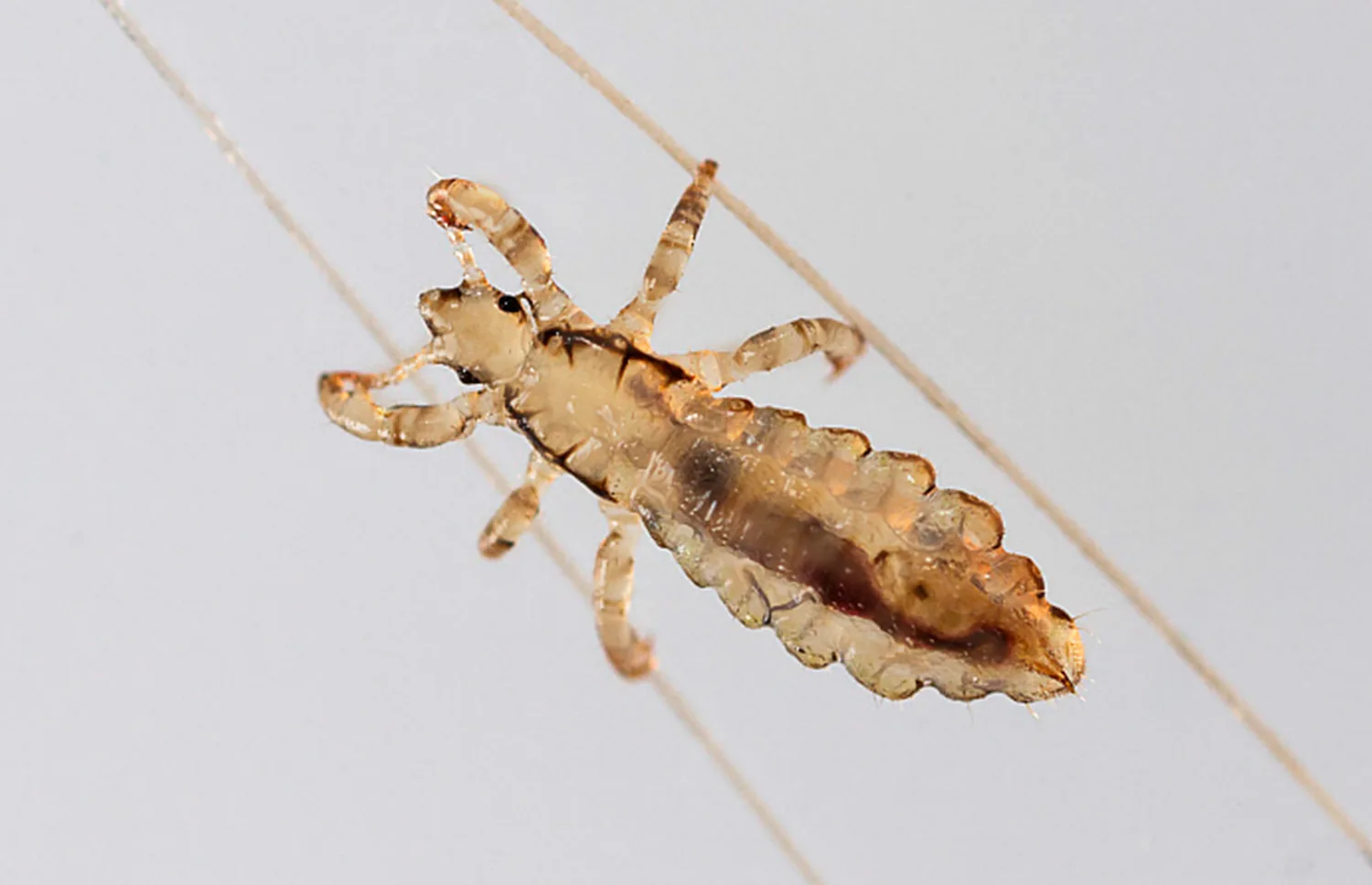
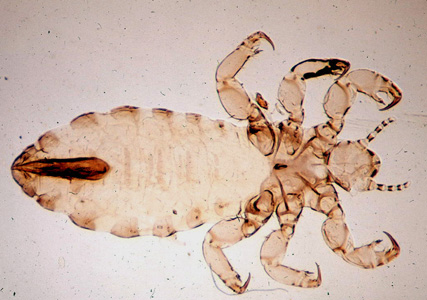
<p>Pediculus humanus humanus (body louse)</p>

Pediculus humanus humanus (body louse)
knowt flashcard image
28
New cards
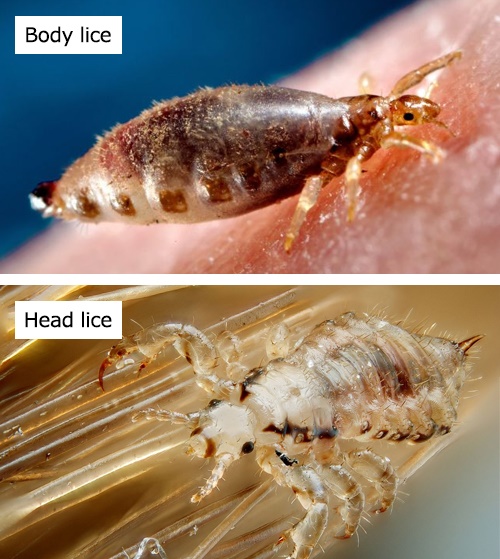
<p>Pediculus humanus capitalis (head louse)</p>

Pediculus humanus capitalis (head louse)
knowt flashcard image
29
New cards
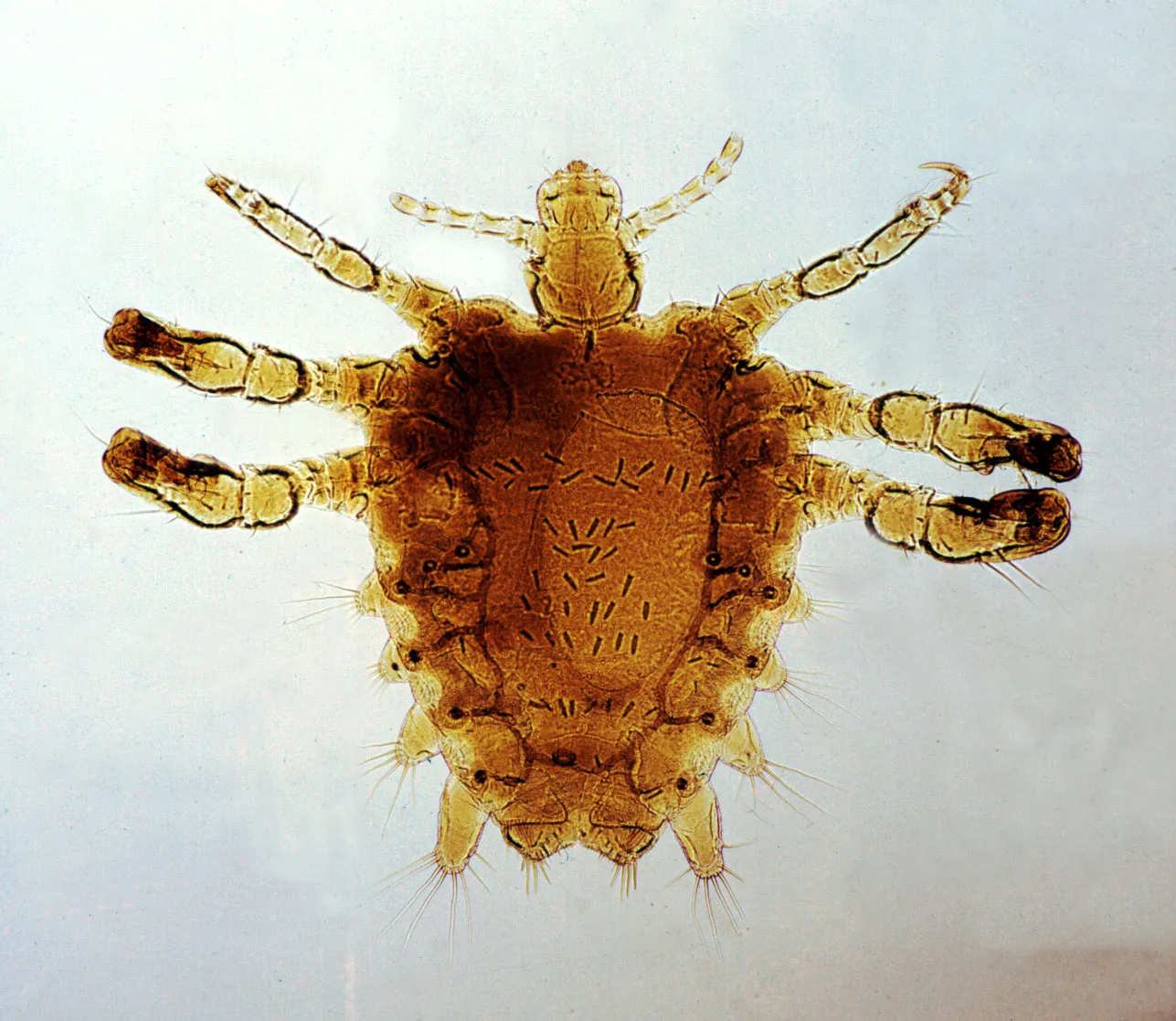
<p>Phthirus pubis </p>

Phthirus pubis

knowt flashcard image
30
New cards
<p>Tick Life Cycle</p>

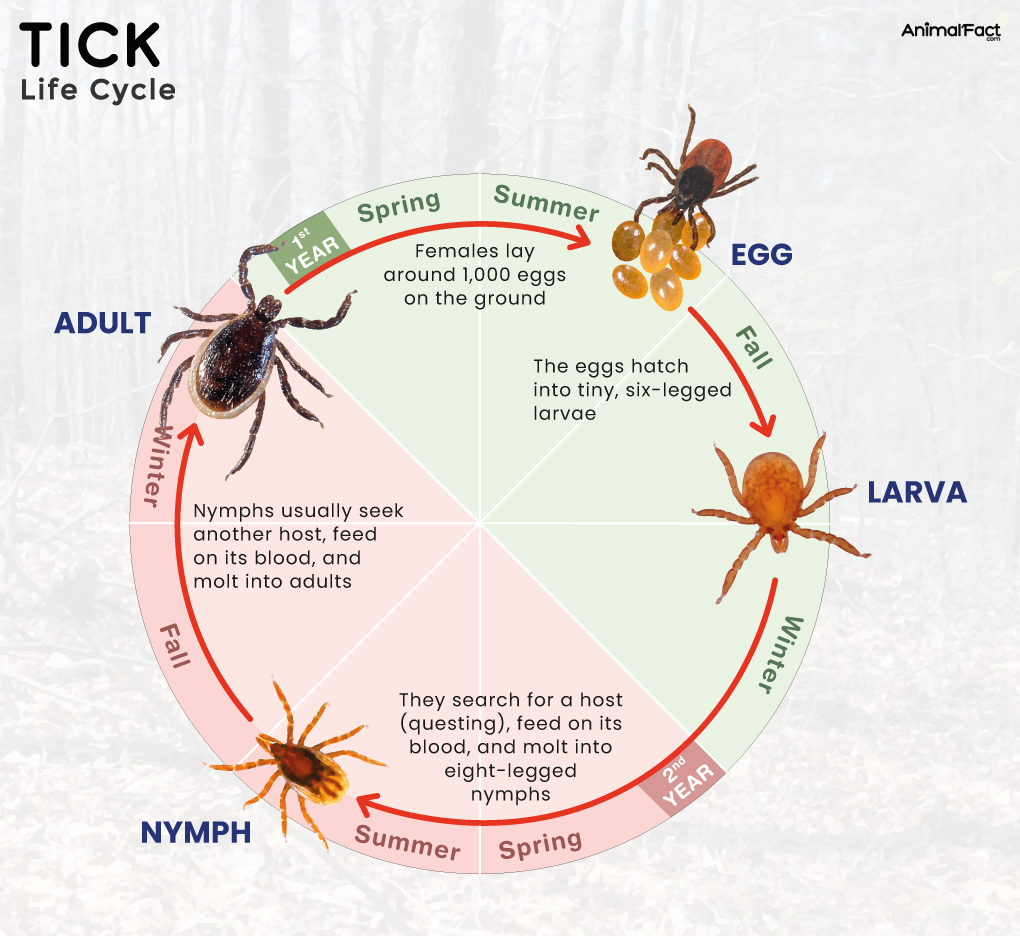
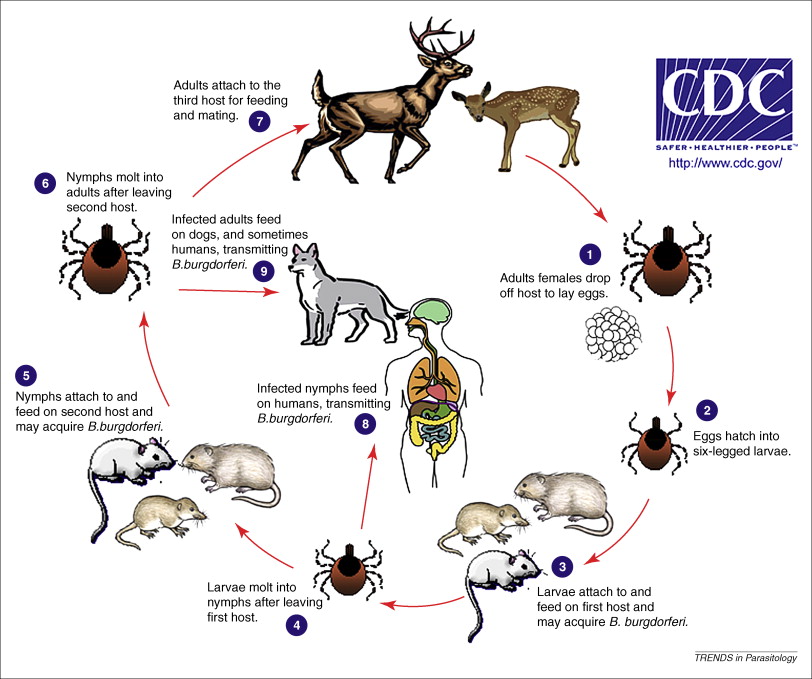
Tick Life Cycle

Four life stages: egg, larva, nymph, adult

  • A tick needs a blood meal at each stage to survive

  • Spring - eggs are laid

  • Summer - hungry 6-legged larva hatch

  • Next spring - 8-legged nymphs look for their next blood meal, can now transmit pathogens

  • Fall or winter - nymphs transition into adults, females seek out another blood meal to reproduce

Phylum - Arthropoda

Class - Arachnida

Subclass - Acari
<p>Four life stages: egg, larva, nymph, adult</p><ul><li><p>A tick needs a blood meal at each stage to survive</p></li><li><p>Spring - eggs are laid</p></li><li><p>Summer - hungry 6-legged larva hatch</p></li><li><p>Next spring - 8-legged nymphs look for their next blood meal, can now transmit pathogens</p></li><li><p>Fall or winter - nymphs transition into adults, females seek out another blood meal to reproduce</p></li></ul><p>Phylum - Arthropoda</p><p>Class - Arachnida </p><p>Subclass - Acari</p>
31
New cards
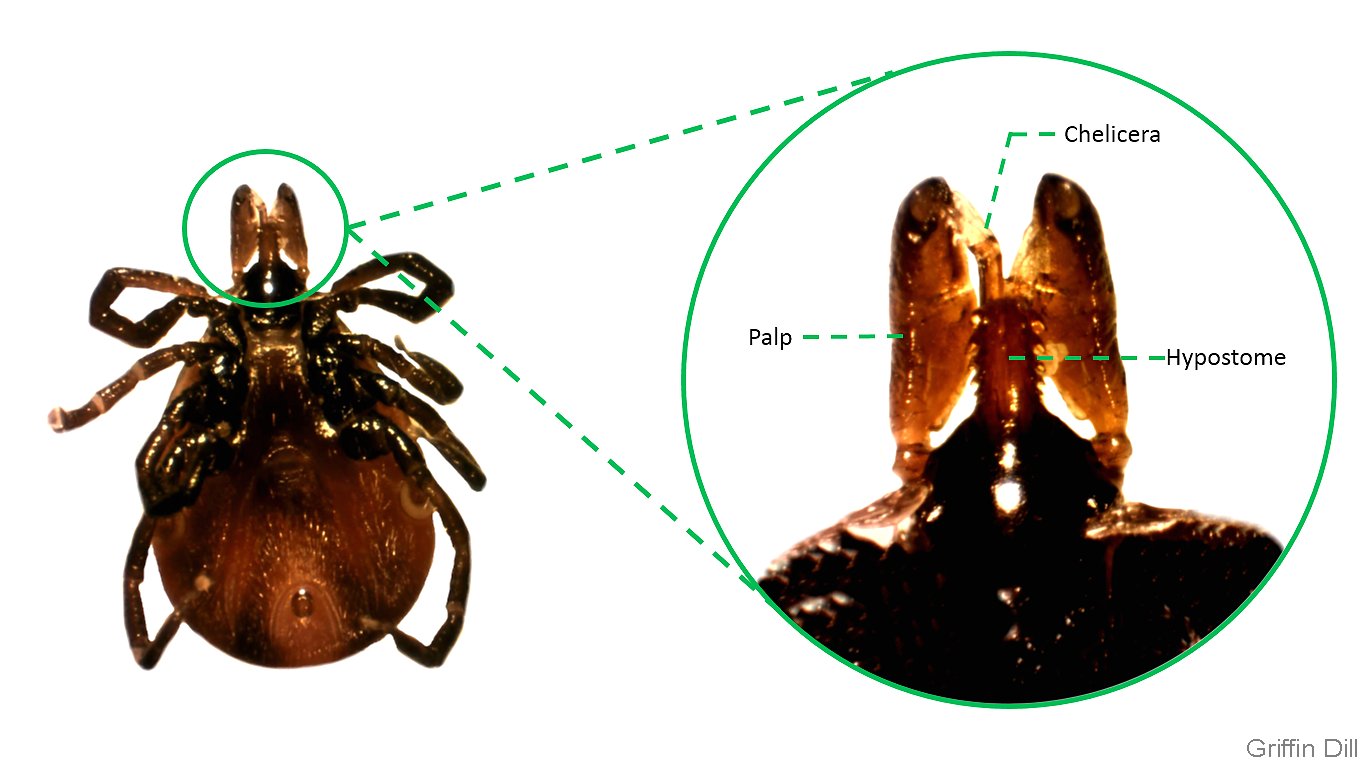
<p>Tick Anatomy</p>

Tick Anatomy

Anterior - gnathosoma

Posterior - idiosoma

Hypostome - embeds in skin

Scutum - provides structural support and protection

Spiracular plate - allow oxygen to enter and carbon dioxide to exit, manages water loss

Festoon - allow for expansion of the body with blood
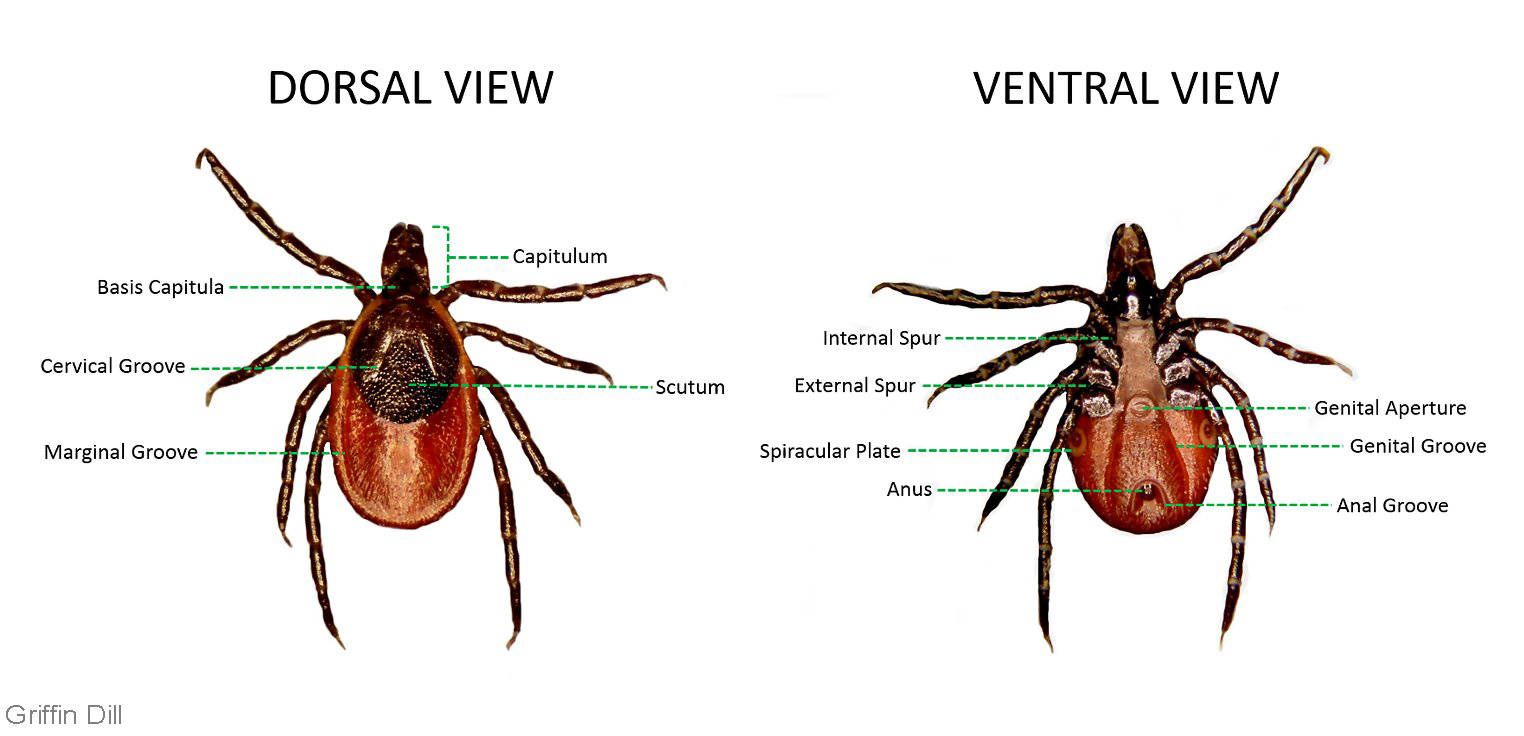
<p>Anterior - gnathosoma</p><p>Posterior - idiosoma </p><p>Hypostome - embeds in skin </p><p>Scutum - provides structural support and protection </p><p>Spiracular plate - allow oxygen to enter and carbon dioxide to exit, manages water loss </p><p>Festoon - allow for expansion of the body with blood </p>
32
New cards
<p>Entamoeba histolytica Life Cycle </p>

Entamoeba histolytica Life Cycle

  1. Cysts and trophozoites are passed in feces

  2. Mature cysts are ingested

  3. Excystation occurs in the small intestine

  4. Trophozoites can invade the intestinal mucosa and other sites like the blood, liver, and brain

Phylum - Amoebozoa

Class - Lobosea

Order - Amoebida
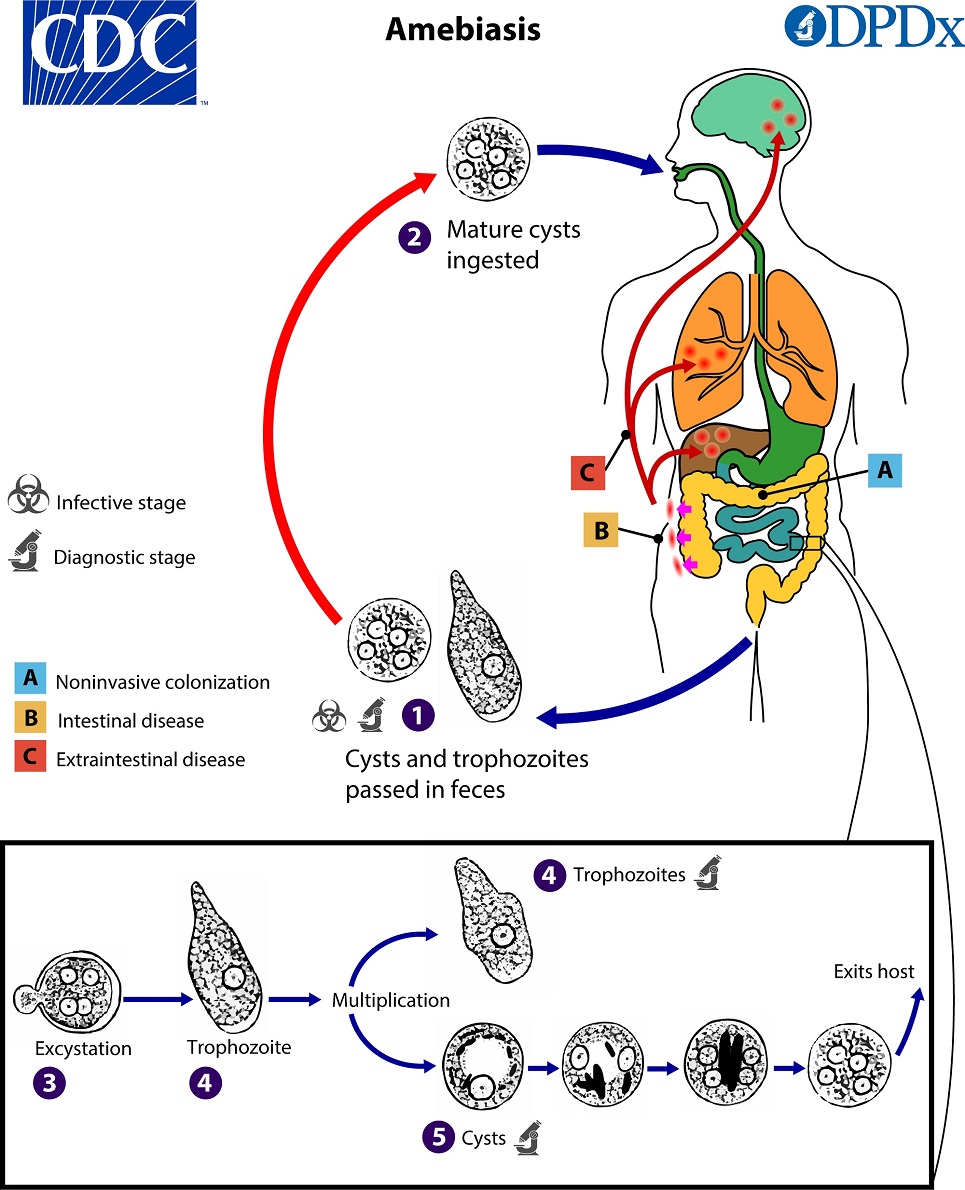
<ol><li><p>Cysts and trophozoites are passed in feces </p></li><li><p>Mature cysts are ingested </p></li><li><p>Excystation occurs in the small intestine </p></li><li><p>Trophozoites can invade the intestinal mucosa and other sites like the blood, liver, and brain</p></li></ol><p>Phylum - Amoebozoa </p><p>Class - Lobosea </p><p>Order - Amoebida </p>
33
New cards
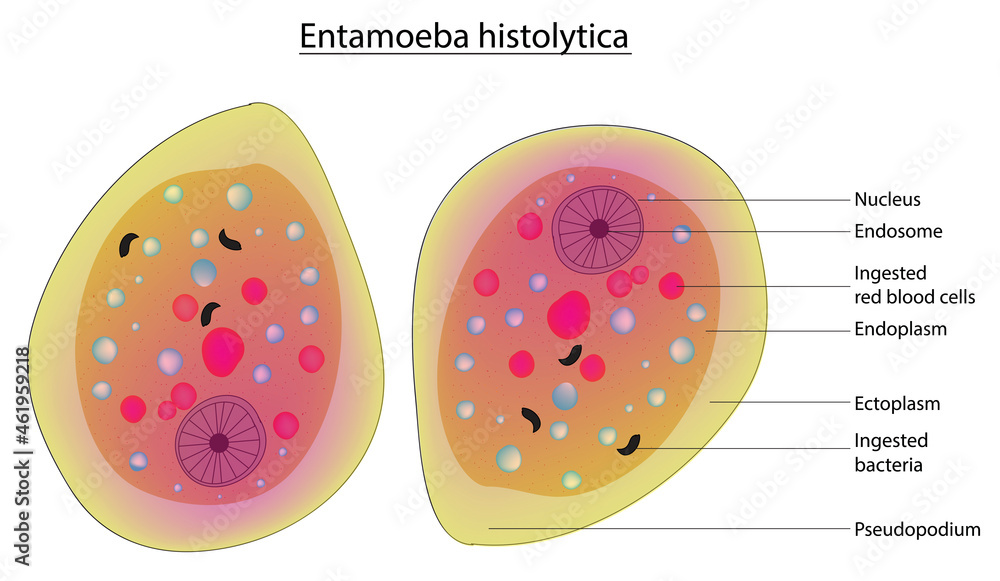
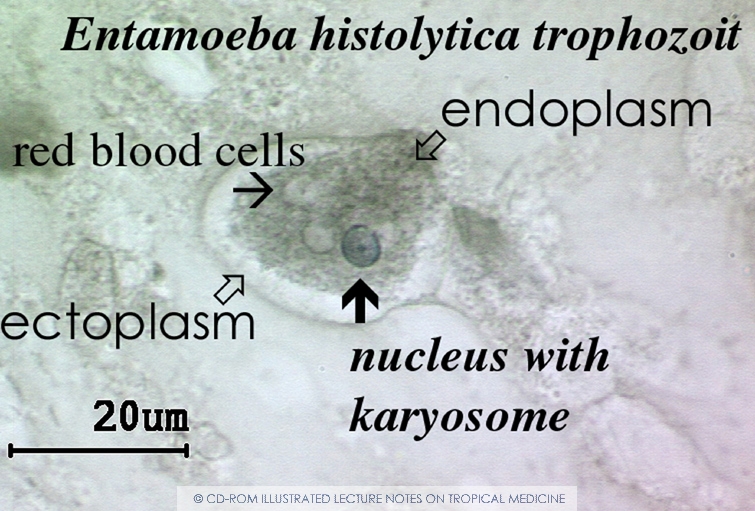
<p>Entamoeba histolytica Anatomy </p>

Entamoeba histolytica Anatomy

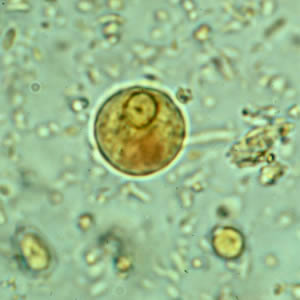
knowt flashcard image
34
New cards
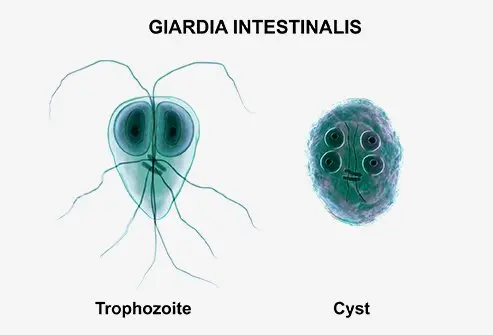
<p>Giardia lamblia Life Cycle</p>

Giardia lamblia Life Cycle

  • Phylum: Metamonada

  • Class: Trepomonadea

  • Order: Distomatida

  • Genus: Giardia

  1. Cysts or trophozoites are found in feces

  2. Ingestion of cysts

  3. Trophozoites multiply in the small bowel

  4. Encystation occurs and the parasites travel towards the colon
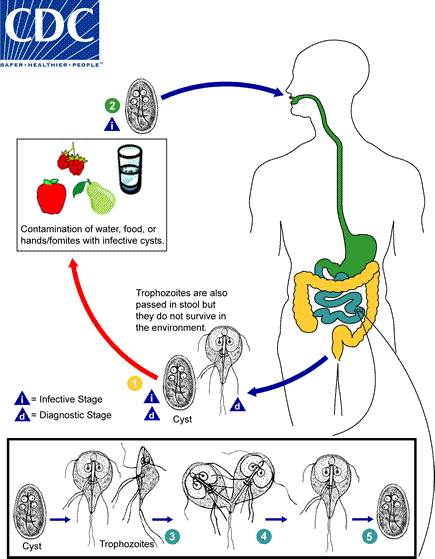
<ul><li><p><span><strong>Phylum:</strong> Metamonada</span></p></li><li><p><span><strong>Class:</strong> Trepomonadea</span></p></li><li><p><span><strong>Order:</strong> Distomatida </span></p></li><li><p><em>Genus: Giardia </em></p></li></ul><ol><li><p>Cysts or trophozoites are found in feces</p></li><li><p>Ingestion of cysts </p></li><li><p>Trophozoites multiply in the small bowel </p></li><li><p>Encystation occurs and the parasites travel towards the colon</p></li></ol><p></p>
35
New cards
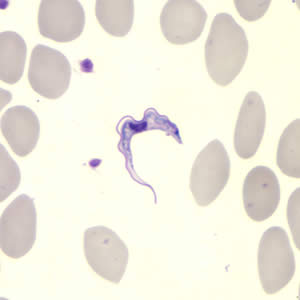
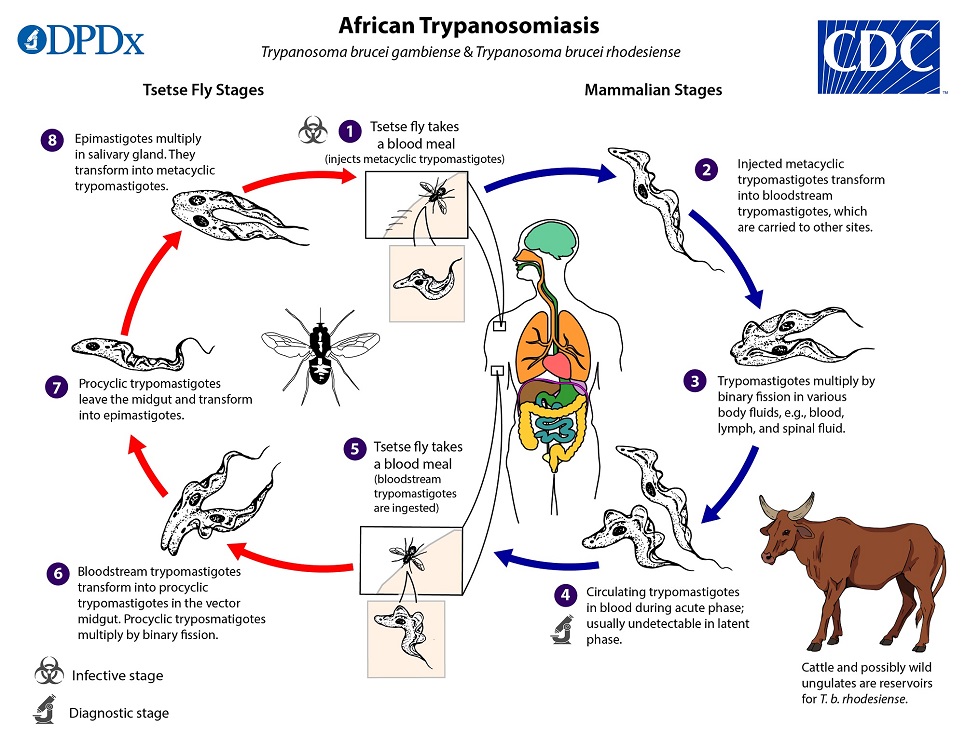
<p>Trypanosome brucei</p>

Trypanosome brucei

  • Phylum: Euglenozoa

  • Class: Kinetoplastea

  • Order: Trypanosomatida

  • Genus: Trypanosoma

  1. A tsetse fly takes a blood meal

  2. Parasites enter the blood stream

  3. Transform into trypomastigotes, are carried to other sites in the body

  4. A fly takes a blood meal and becomes infected
<ul><li><p><span><strong>Phylum:</strong> Euglenozoa</span></p></li><li><p><span><strong>Class:</strong> Kinetoplastea</span></p></li><li><p><span><strong>Order:</strong> Trypanosomatida</span></p></li><li><p><span><strong>Genus: </strong>Trypanosoma </span></p></li></ul><ol><li><p>A tsetse fly takes a blood meal </p></li><li><p>Parasites enter the blood stream </p></li><li><p>Transform into trypomastigotes, are carried to other sites in the body </p></li><li><p>A fly takes a blood meal and becomes infected </p></li></ol><p></p>
36
New cards
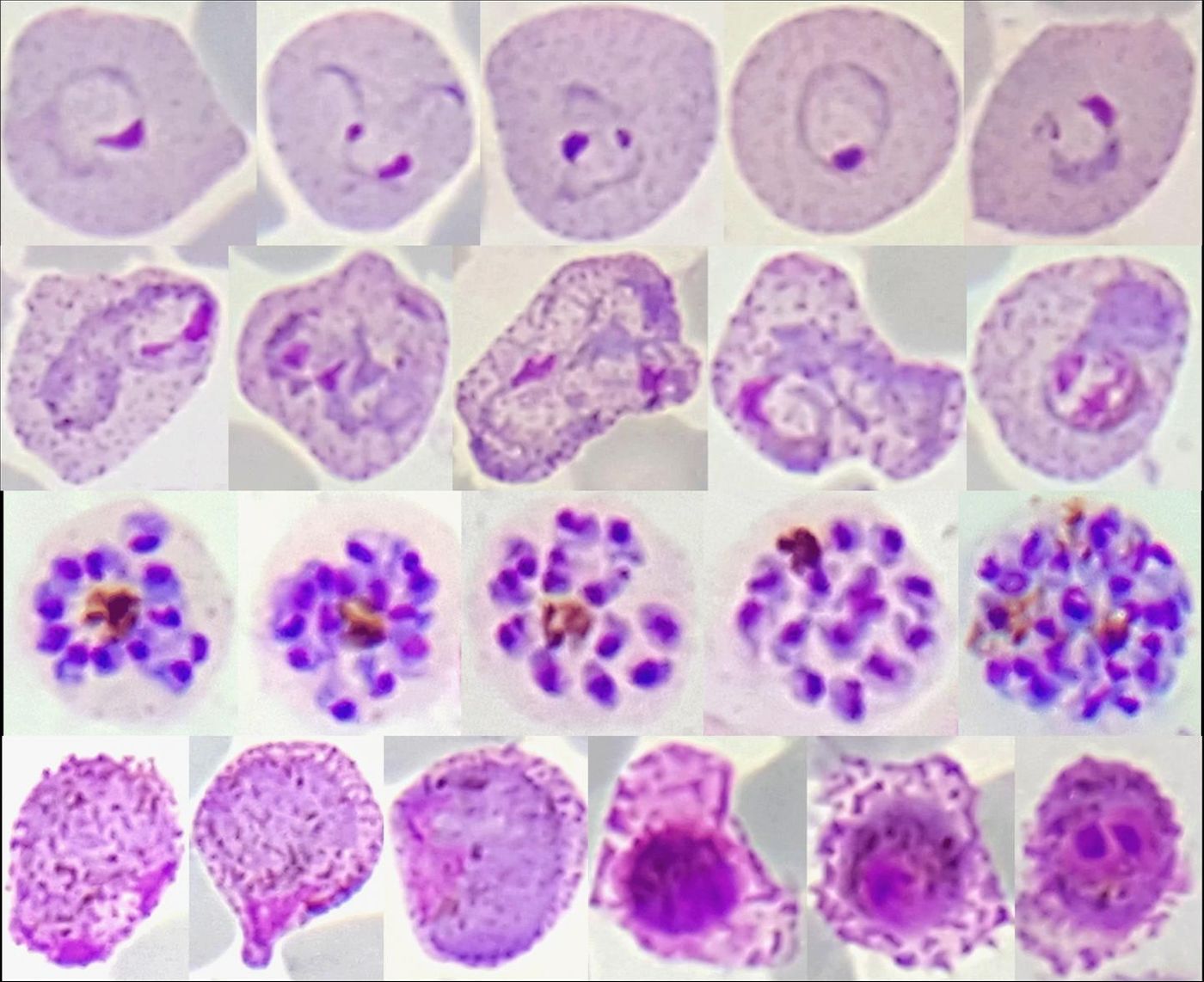
<p>Plasmodium spp. </p>

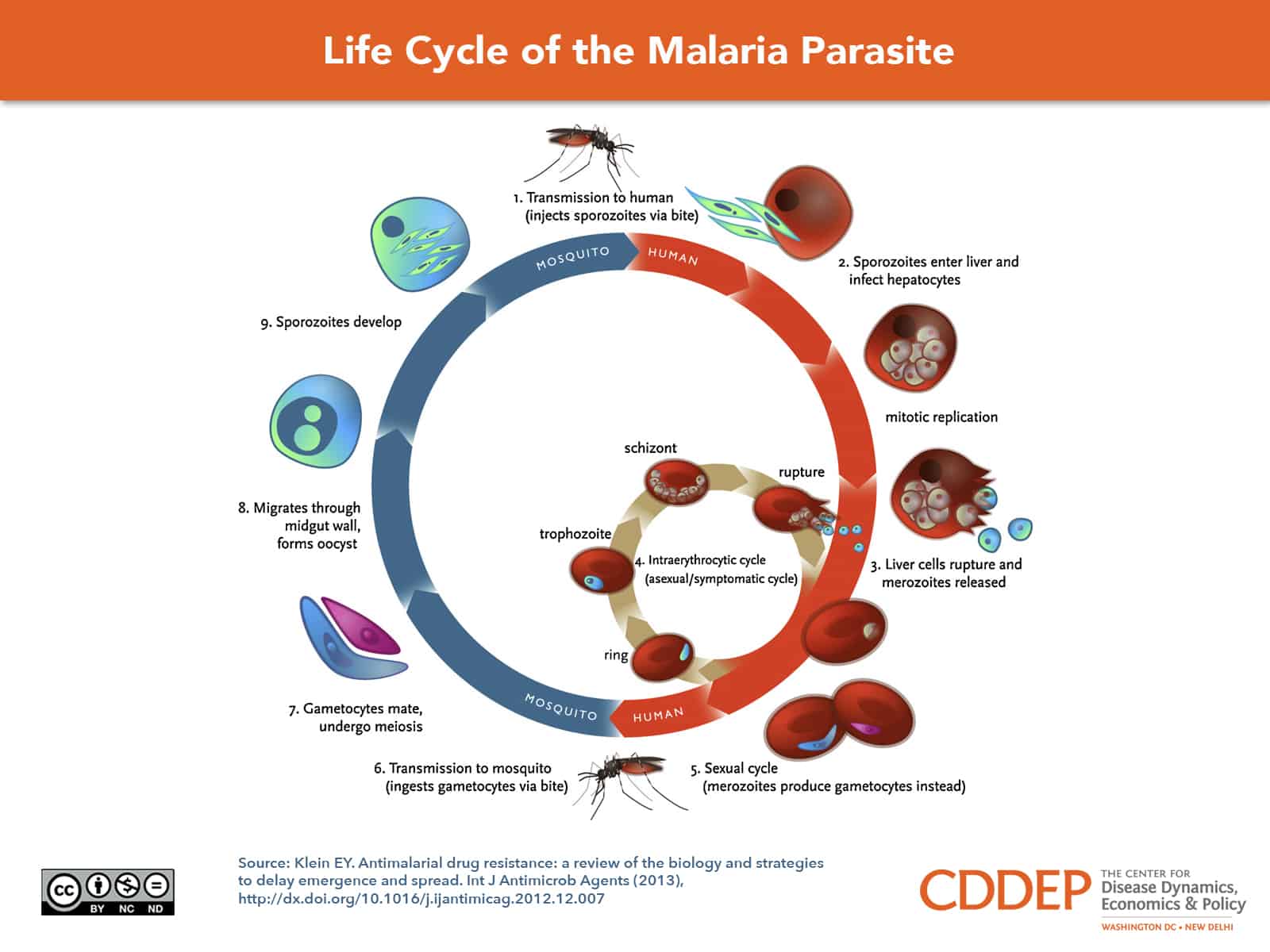
Plasmodium spp.

  1. A mosquito ingests gametocytes that mate within the gut of the mosquito

  2. Sporozoites are injected into a human during the next blood meal

  3. Sporozoites travel to the liver, infect hepatocytes, and begin asexually replicating

  4. Merozoites infect the red blood cells, the cell then ruptures

  5. The cycle repeats

<ol><li><p>A mosquito ingests gametocytes that mate within the gut of the mosquito </p></li><li><p>Sporozoites are injected into a human during the next blood meal </p></li><li><p>Sporozoites travel to the liver, infect hepatocytes, and begin asexually replicating </p></li><li><p>Merozoites infect the red blood cells, the cell then ruptures </p></li><li><p>The cycle repeats </p></li></ol><p></p>