dmv permit test
 Call Kai
 Learn
Learn Practice Test
 Spaced Repetition
 Match
Match Flashcards
 Knowt Play
1/150

There's no tags or description
Looks like no tags are added yet.
Name | Mastery | Learn | Test | Matching | Spaced | Call with Kai |
|---|
No analytics yet
Send a link to your students to track their progress
151 Terms
You do not have to come to a complete stop before turning right on a red light. (T/F)
False
A left turn at a red traffic signal is allowed when:
You are on a one-way street and turning left onto another one-way street.
It is legal to avoid traffic controls by cutting through a parking lot or field. (T/F)
False
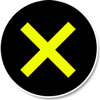
Yellow X or Yellow Diagonal Downward Arrow: These signals mean that you should move out of the lane as soon as safely possible. (T/F)
True
You may turn left at a red light if you are on a one-way street and turning left onto another one-way street. (T/F)
True
Before turning right on red:
Come to a complete stop, look both ways, and yield the right-of-way to pedestrians and other traffic.
Obey all signs and signals unless directed by a police officer. (T/F)
True
At a red light, come to a complete stop:
Before you reach the intersection, stop line, or crosswalk.
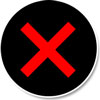
Lane use signals are often used to:
Indicate where you can and cannot drive during different hours of the day.
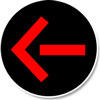
A red arrow indicates that you may turn after you come to a complete stop and look both ways for traffic and pedestrians. (T/F)
False

A flashing red light means:
Stop, yield to oncoming traffic and pedestrians, and proceed when the way is clear.
Lane signals indicate where you can and cannot drive during different hours of the day. (T/F)
True
If a police officer directs you to go through an intersection with a red light, you should:
Follow the officer’s direction.

You see a flashing yellow traffic signal at the next intersection. You should:
Slow down and proceed with caution.
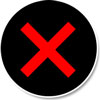
Never drive in a lane marked with a red X signal. (T/F)
True
If the traffic light is green and a police officer motions you to stop, you should:
Follow the officer’s direction.
Traffic signals apply to pedestrians. (T/F)
True
Traffic signals do not apply to bicyclists. (T/F)
False
Traffic signals apply to:
All of the above.
A right turn on a red traffic signal is permitted:
After stopping, if no sign prohibits right turn on red.
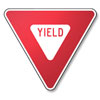
This road sign means:
Slow down and yield the right-of-way. Stop if necessary.
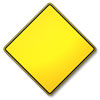
This road sign means:
Warning of special conditions or hazards ahead.
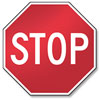
This road sign means:
Come to a complete stop.
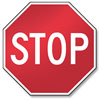
When approaching a stop sign and the car in front of you proceeds, you should:
Stop at the sign and proceed when the way is clear.
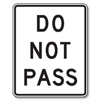
This road sign means:
Entering a no passing zone.
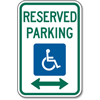
This road sign means:
Parking space reserved for people with disabled parking permits.
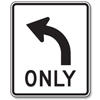
This road sign means:
Traffic in the lane must turn in the direction of the arrow.
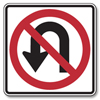
This road sign means:
No U-turn.
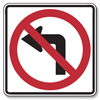
This road sign means:
No left turns or U-turns.
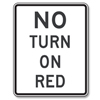
This road sign means:
Do not turn during the red light.
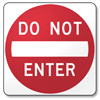
This road sign means:
You cannot drive in that direction.
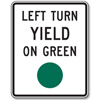
This road sign means:
Traffic turning left on green must yield the right-of-way to traffic coming from the other direction.
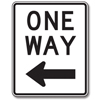
This road sign means:
Traffic flows only in the direction of the arrow.
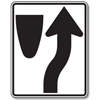
This road sign means:
Keep to the side indicated by the arrow.
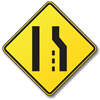
This road sign means:
Right lane ends soon, merge left.
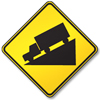
This road sign means:
Steep grade ahead.
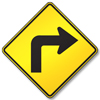
This road sign means:
Sharp right turn in the road ahead.
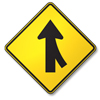
This road sign means:
Merge.
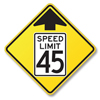
This road sign means:
Maximum legal speed in 45 mph.
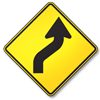
This road sign means:
The road ahead curves right, then left.
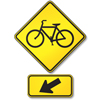
This road sign means:
Bicycles crossing or riding beside traffic.
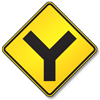
This road sign means:
You must bear either right or left ahead.
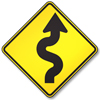
This road sign means:
Winding road.
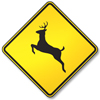
This road sign means:
Deer crossing. Slow down and be ready to stop.
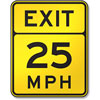
This road sign means:
The maximum safe speed for the exit is 25 mph.
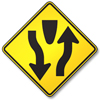
This road sign means:
Divided highway begins.
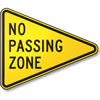
This road sign means:
Do not pass cars ahead of you in your lane.
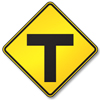
This road sign means:
The roadway you are travelling on ends ahead at a stop sign.
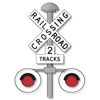
You must always stop your vehicle at railroad crossings with flashing signals. (T/F)
True
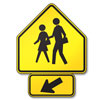
This road sign means:
School crossing.
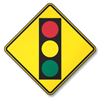
This road sign means:
A traffic signal is ahead.
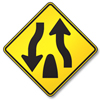
This road sign means:
A divided highway ends.
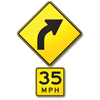
This road sign means:
The road curves to the right ahead. A safe speed to travel is 35 mph.
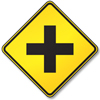
This road sign means:
An intersection ahead.
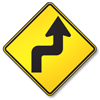
This road sign means:
Sharp right and left turns ahead.
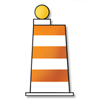
This traffic device means:
Work zone. Keep vehicle in middle of lane and obey posted speed limit.
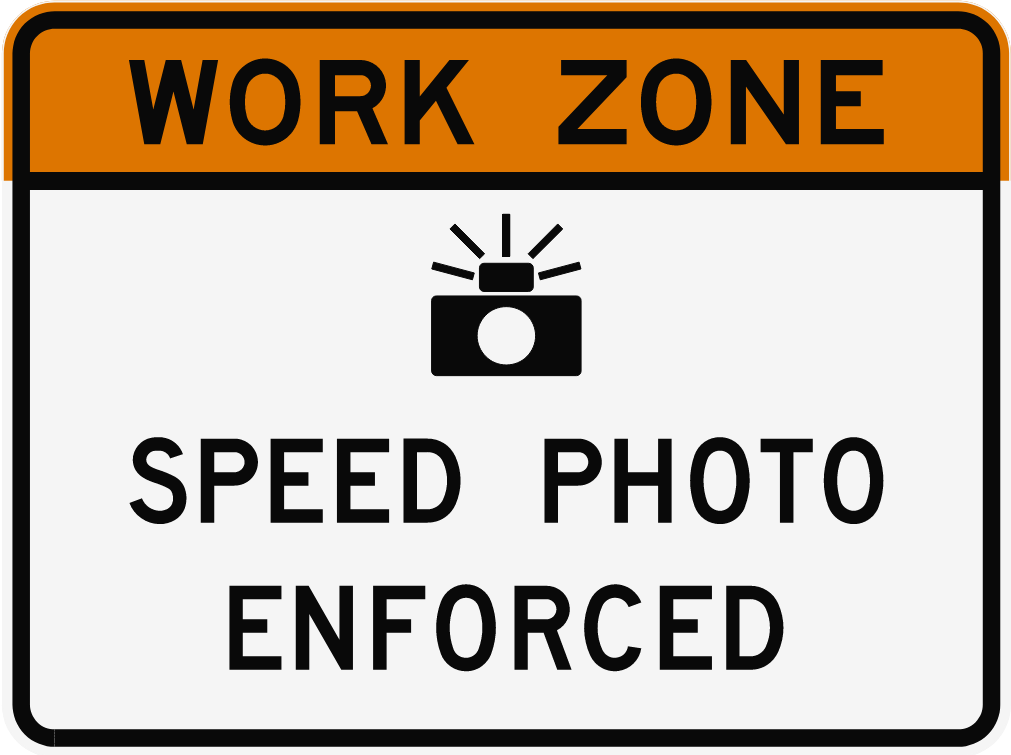
This road sign means:
Automated photo enforcement is in place for the speed limit in this work zone. Always obey the posted speed limit.
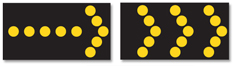
This road sign means:
Proceed into different traffic lanes. Part of the road ahead is closed.
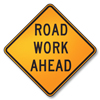
This road sign means:
A change in the traffic pattern or route is ahead in a work zone.
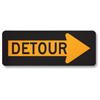
This road sign means:
Slow down. Change in traffic route ahead.
If you are convicted of exceeding the speed limit in a highway work zone, you may be fined. (T/F)
True
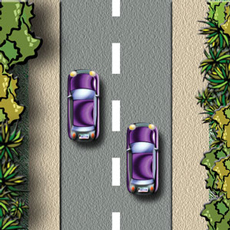
Broken white lines in the center of the highway mean:
Lanes of traffic are going in the same direction.
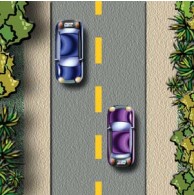
Broken yellow center lines mean that passing on the left is allowed in either direction when the way ahead is clear. (T/F)
True
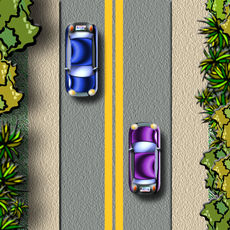
Double solid yellow lines mean that passing is not allowed in either direction. (T/F)
True
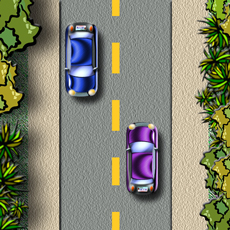
Broken yellow center lines mean no passing is allowed. (T/F)
False
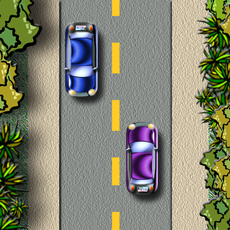
A broken yellow line in the center of the highway means:
Passing on the left is permitted when the way ahead is clear.
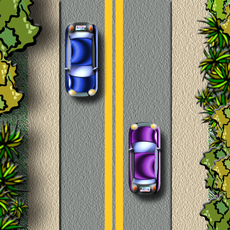
Double solid yellow lines in the center of the highway mean:
No passing in either direction.
If you are driving on a two lane Virginia road with no lane markings, you may pass a slow-moving vehicle:
On the left side if there are no signs prohibiting passing and the way is clear.
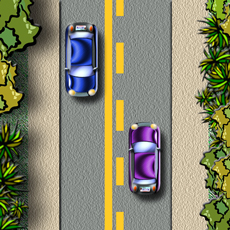
A broken yellow line alongside a solid yellow line in the center of the highway means:
Passing is permitted only from the side of the broken line.
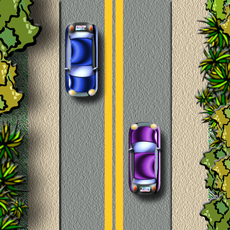
You may cross double solid yellow lines to make a left turn. (T/F)
True.
Unless posted otherwise, the speed limit in a business area is:
25 mph.
Unless otherwise posted, the maximum speed limit for passenger vehicles and motorcycles is 25 MPH for school, business and residential areas; 35 MPH for unpaved roads and 55 MPH for all other roads. (T/F)
True
You must drive slower if conditions such as road construction or bad weather make the posted speed unsafe. (T/F)
True
Unless otherwise posted, the speed limit in school, business and residential areas is:
25 mph.
A speed limit is the maximum legal speed you can travel on the road in wet conditions.
False
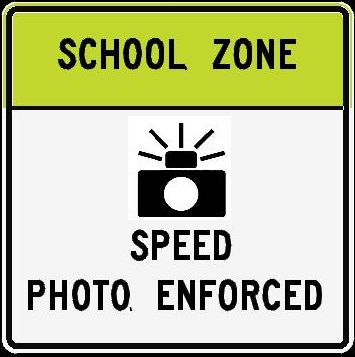
This road sign means:
Automated photo enforcement is in place for the speed limit in this school zone. Always obey the posted speed limit.
You may drive slower than the posted speed limit under ideal conditions, as long as you don’t impede the normal movement of traffic, but it is illegal to drive any faster. (T/F)
True
Unless otherwise posted, the maximum speed limit on public highways not part of the interstate system is 60 MPH. (T/F)
False
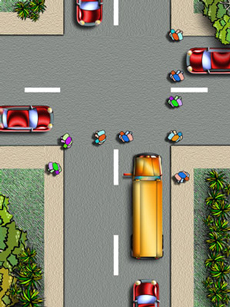
When a school bus stops to load or unload children, vehicles traveling in the same direction as the bus must:
Stop until all children are clear and the bus moves again.
If a school bus stops to load or unload children on a divided highway separated by a median or barrier, vehicles traveling in the opposite direction:
Are not required to stop.
Unless otherwise posted, the maximum speed limit in residential areas is 25 MPH. (T/F)
True
You do not have to stop if a school bus is loading or unloading passengers and the signals are not on. (T/F)
False
It is illegal to use a radar detector in Virginia. (T/F)
True
It is illegal to drive slower than the posted speed limit. (T/F)
False
You may drive slower than the posted speed. (T/F)
True
Unless otherwise posted, the maximum speed limit on interstate highways is 75 MPH. (T/F)
False
What is a factor that determines the distance that it takes to stop your vehicle?
All of the above.
You must stop for stopped school buses with flashing red lights and an extended stop sign when you approach from any direction on a highway. (T/F)
True
Unless otherwise posted, the speed limit in a residential area is:
25 mph.
On average, it takes a vehicle moving 65 miles per hour over 500 feet to stop on dry, level pavement. (T/F)
False
You must always stop your vehicle at flashing red signals. (T/F)
True
Perception time, reaction distance and braking distance are affected by:
All of the above.
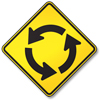
When inside a roundabout you must:
Stay in your lane until you are ready to exit.
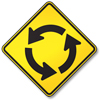
When approaching a roundabout:
Slow down.
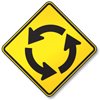
When you arrive at a roundabout, you must yield the right-of-way to traffic already in the circle. (T/F)
True
You do not need to stop your vehicle for pedestrians attempting to cross a street. (T/F)
False
When entering a roadway from a private road or driveway you must:
Stop and yield to all traffic and pedestrians.
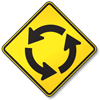
While inside the roundabout, stay in your lane until you are ready to exit. (T/F)
True
You may not park within how many feet of where fire trucks or equipment are stopped answering an alarm?
500 feet.
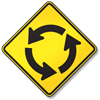
When you arrive at a roundabout you must:
Yield the right of way to pedestrians and bicyclists.