3 - power, center + edge thickness, edge lift
 Call Kai
 Learn
Learn Practice Test
 Spaced Repetition
 Match
Match Flashcards
 Knowt Play
1/35

There's no tags or description
Looks like no tags are added yet.
Name | Mastery | Learn | Test | Matching | Spaced | Call with Kai |
|---|
No analytics yet
Send a link to your students to track their progress
36 Terms
What are the two types of edge left?
1. axial edge lift
2. relative edge lift
not evaluated clinically
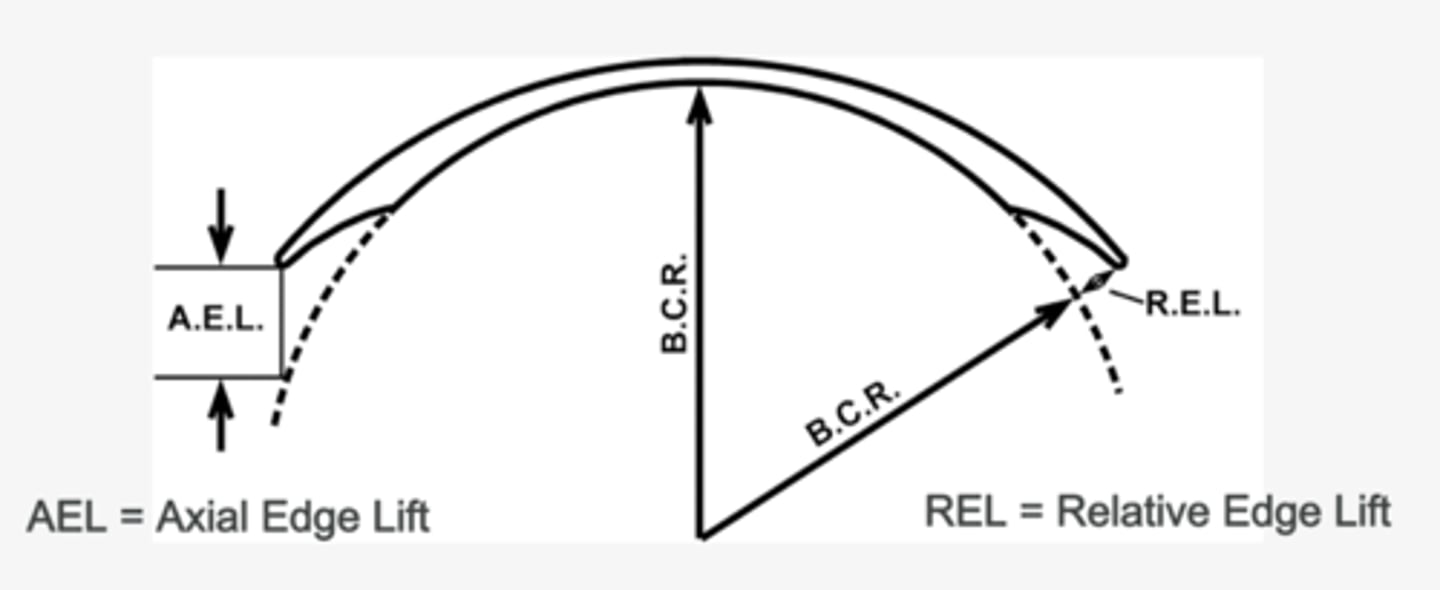
What is edge lift/edge clearance?
distance between peripheral curve and peripheral cornea
What is the purpose of edge lift?
1. encourage tear exchange behind lens
2. assist in centration
3. aids in CL removal
4. prevents indentation of peripheral cornea
What are some clinical ways to describe edge lift?
1. adequate
2. excessive
3. minimal
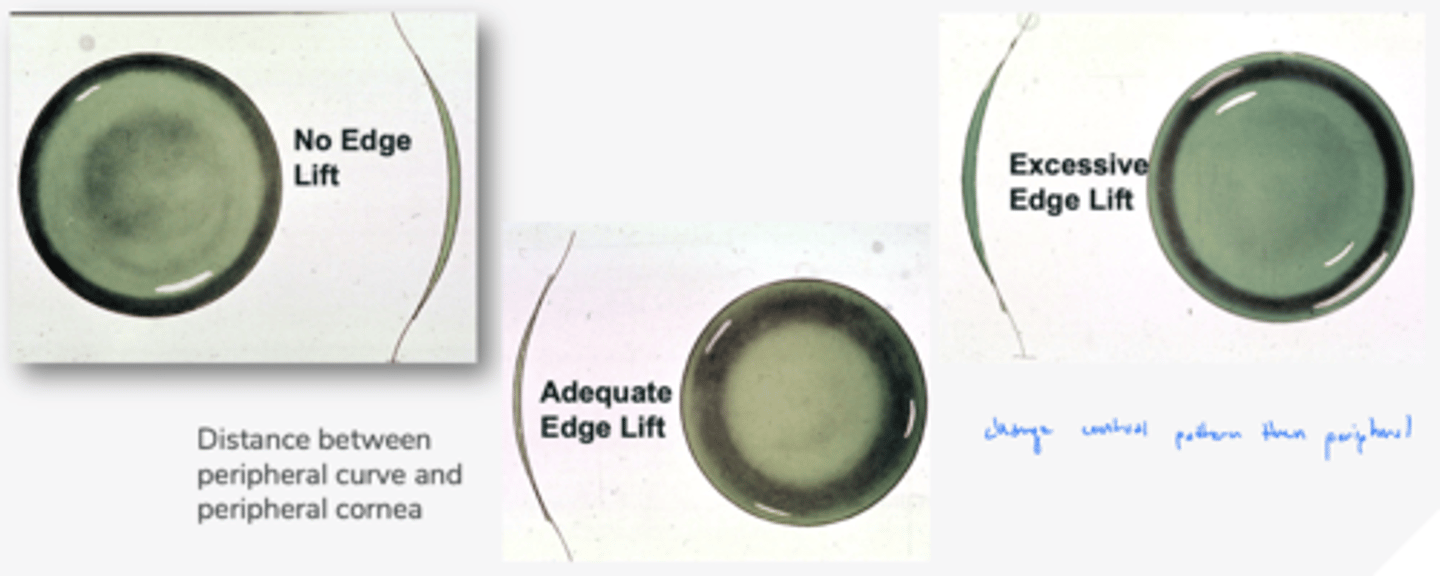
What is the ideal peripheral fluorescein width/edge lift?
0.5-1.0mm width
What edge lift widths are unacceptable?
too small - <0.3mm
too large - >1.0mm
What are two ways to increase edge lift? And by how much?
1. flatten (increase) SCR/PCR by at least 1.0mm
2. increase SCW/PCW by at least 0.2mm
Why do we try to avoid adjusting the SCW/PCW to change edge lift?
because changing the SCW or PCW will alter the size of lens
What are two ways to decrease edge lift? And by how much?
1. steepen (decrease) SCR/PCR by at least 1.0mm
2. decrease SCW/PCW by at least 0.2mm
what is the purpose of the front curve?
provide the appropriate power
Why is the thickness of the lens important?
1. influences Dk/t
2. influences flexibility
3. affects lens mass
How does OAD (overall diameter) affect the thickness of the lens?
increased OAD → increased lens thickness
How does power affect the thickness of the lens?
increase power → increased lens thickness
what power GP lens is the thinnest?
~-2.00D
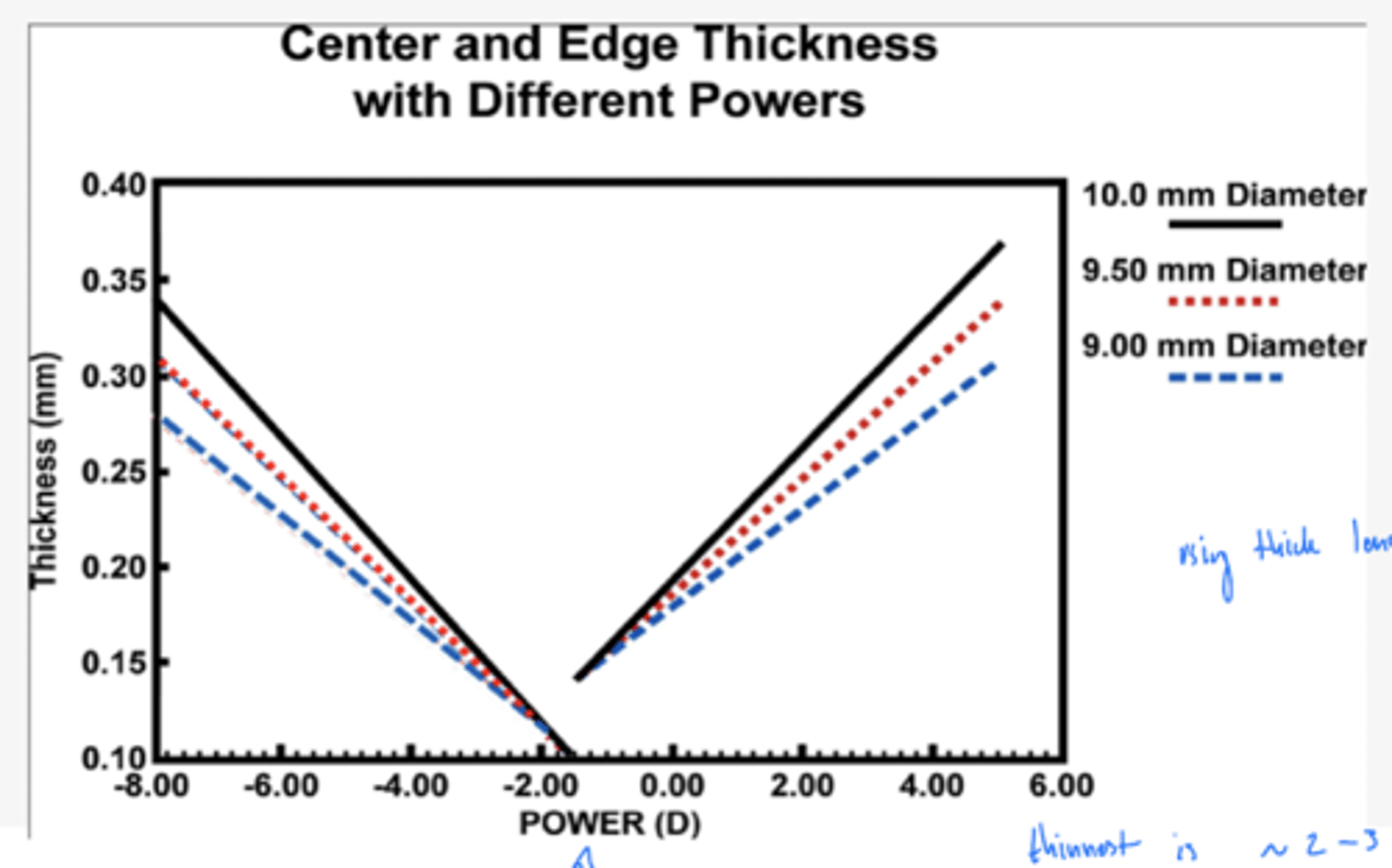
Where is the lens the thickest for a myopic shape?
edges
Where is the lens the thickest for a plus shape?
center
At what lens powers does the lens take on a minus shape?
≥-4.00D
At what lens powers does the lens take on a plano shape?
-2.00 to -3.00D
At what lens power does the lens take on a plus shape?
anything equal to or more positive than -1.00D
What is the typical center thickness for a ≥-3.00D lens (minus lens)?
0.13-0.18mm
What is the typical center thickness for a Plano shaped lens?
0.20-0.21mm
What is the typical center thickness for a ≥+3.00D lens?
0.30-0.60mm
What is the typical edge thickness for an unpolished lens?
0.10-0.12mm
What is the typical edge thickness for a polished lens?
~0.08mm
What is a lenticular curve?
peripheral curve on the front of the lens
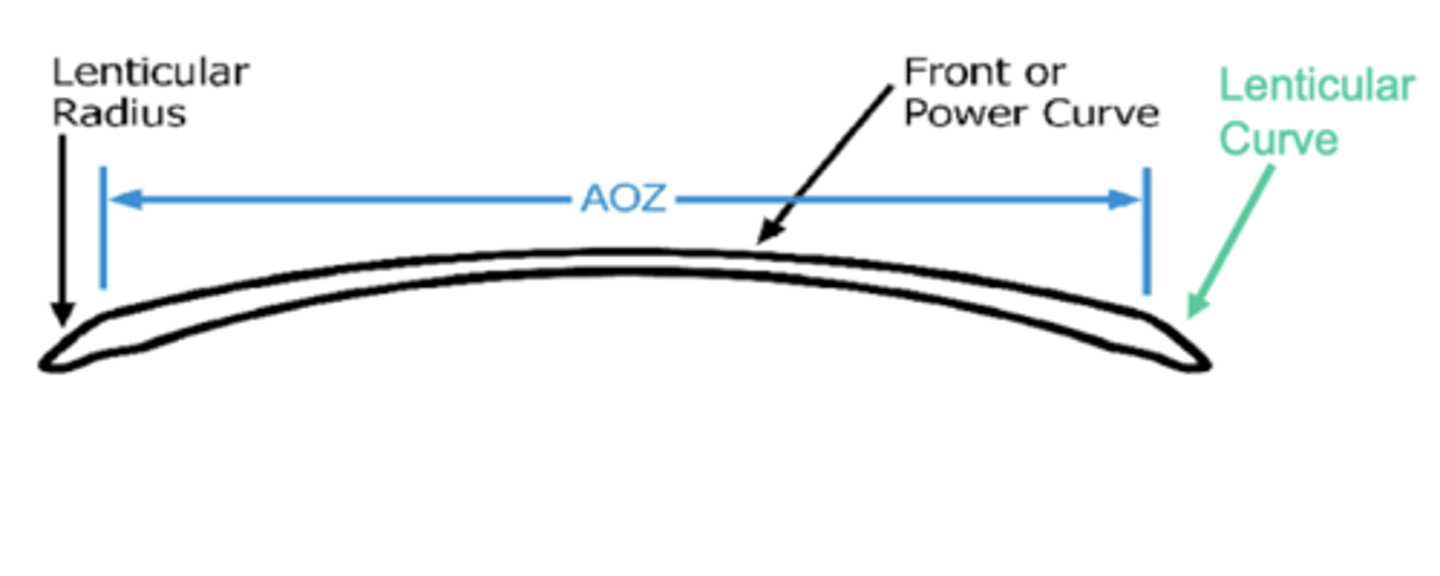
what happens to the power curve after you add a lenticular?
power curve is no longer across the whole front surface
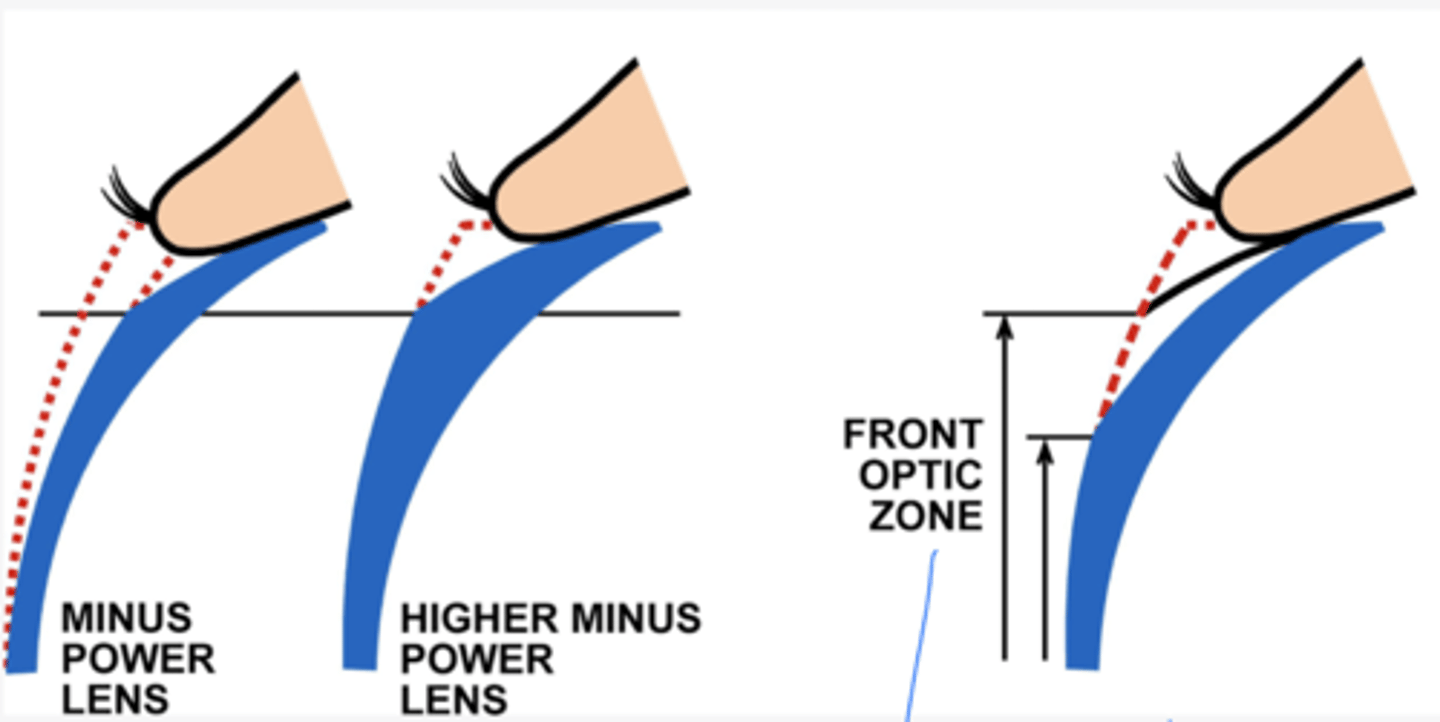
what is the anterior optic zone?
diameter of the power curve that is inside of the lenticular curve
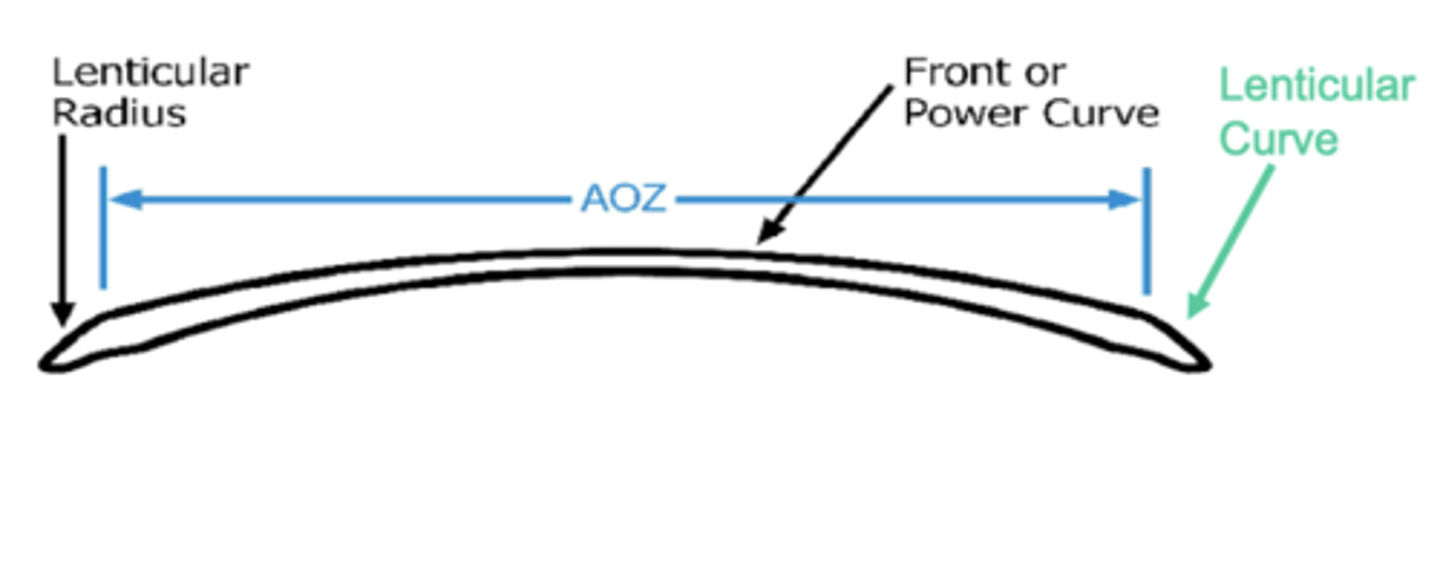
For plus-shaped lenses, the lenticular is _________ than the power curve?
flatter
What is the purpose of lenticular on plus shaped lenses?
1. thinner lenses → decreases lens mass and improves Dk/t
2. better fit → interacts better with lid, moves center of gravity back
What are the two types of plus-shaped lenticulars?
1. regular carrier
2. minus carrier
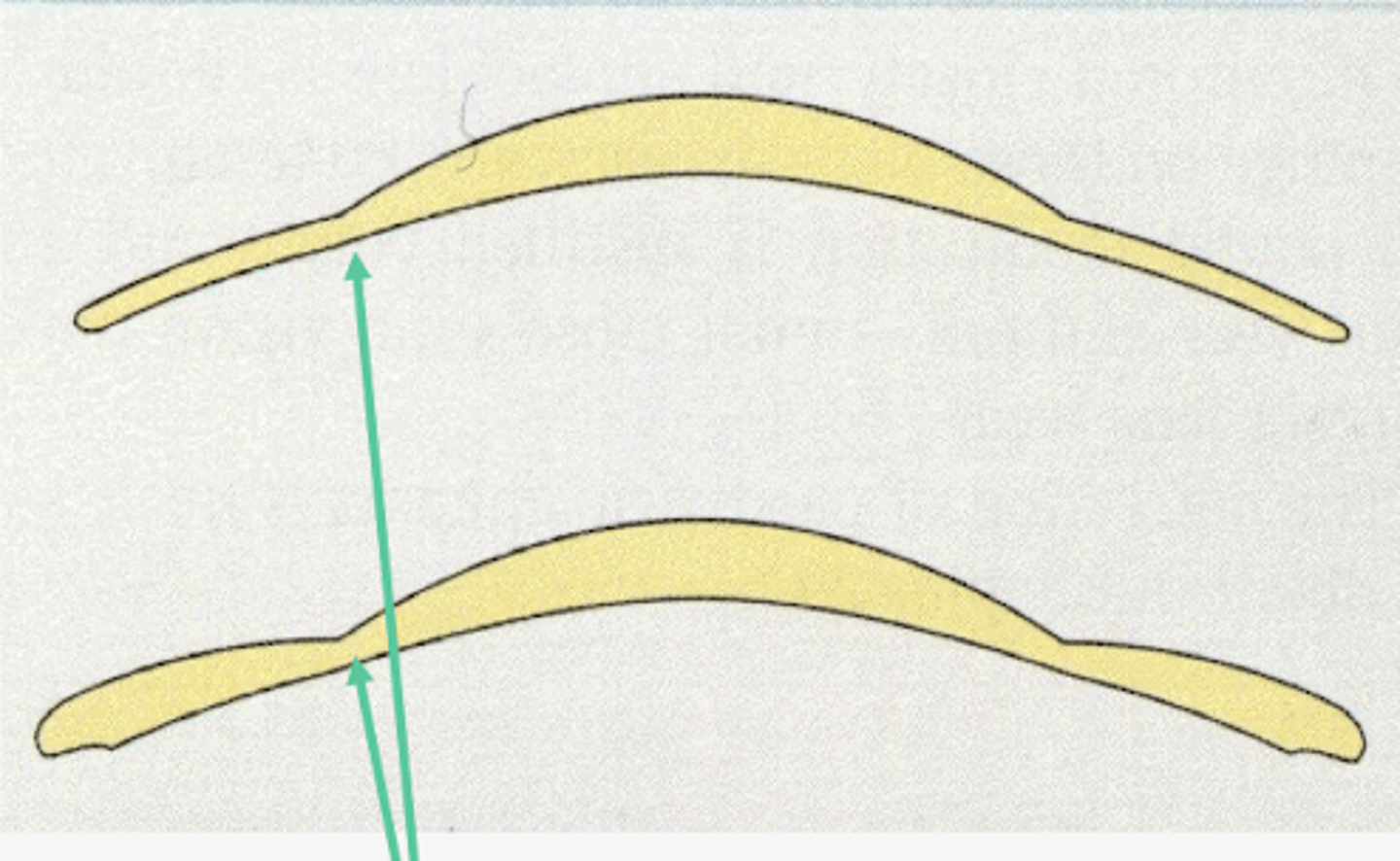
What is a regular carrier lenticular?
edge thickness = juctional thickness
image - top lens
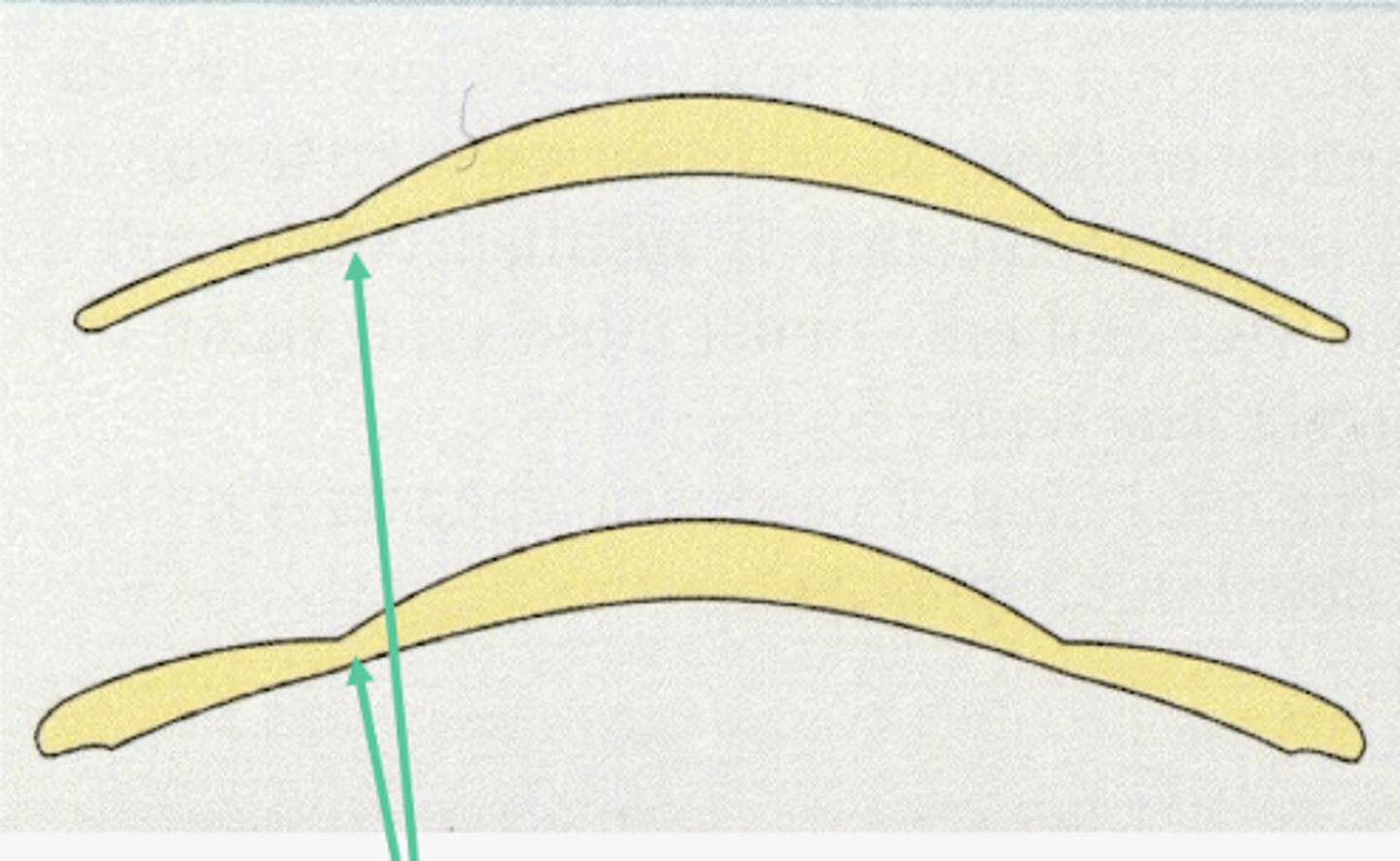
What is a minus carrier lenticular?
edge thickness > junctional thickness
image - bottom lens
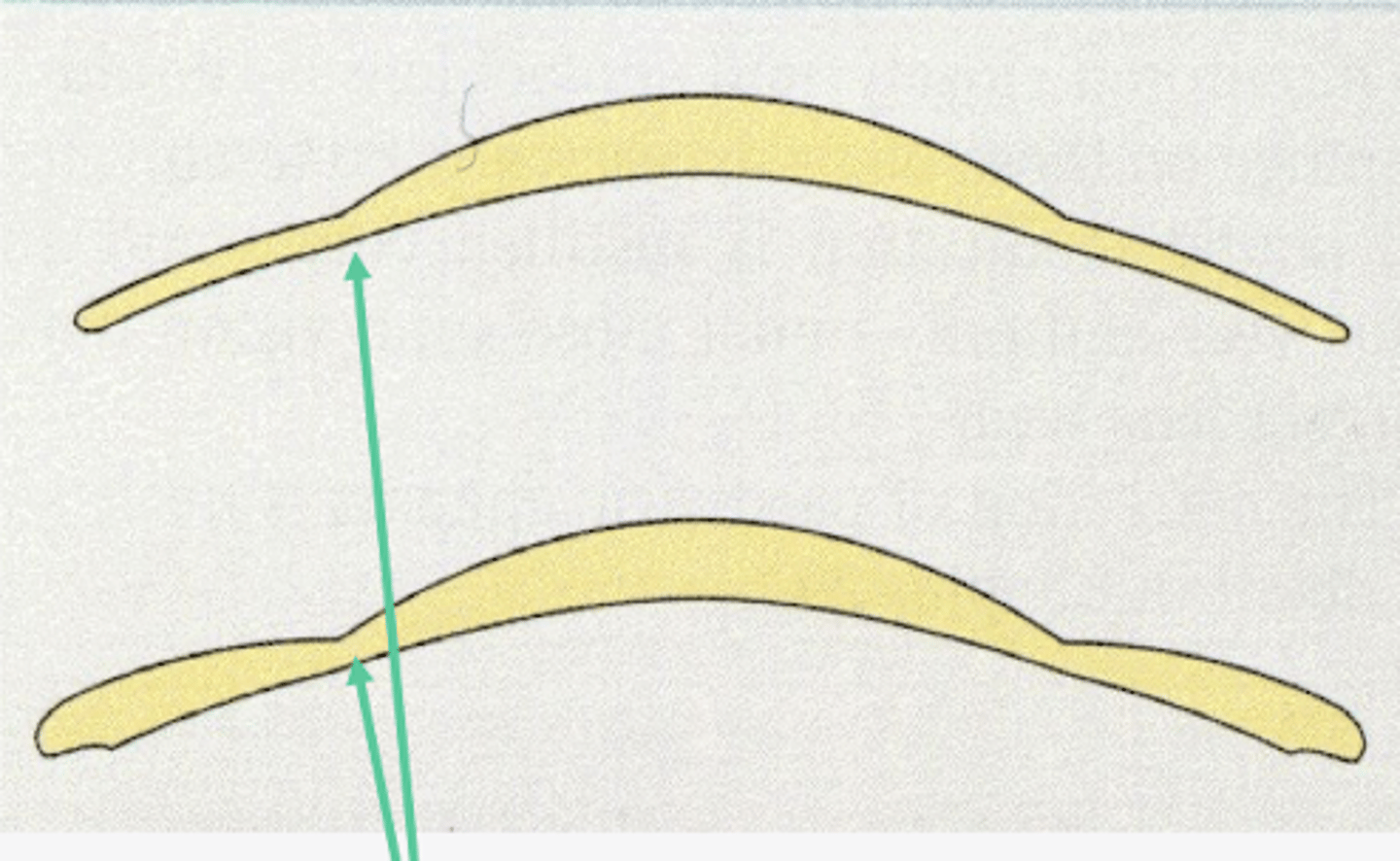
How does the relationship between edge thickness and junctional thickness affect the lens?
the greater the edge thickness is compared to the junctional thickness → the more the lens will interact with the lid
For minus lenses, the lenticular is _____________ than the power curve?
steeper
What is the purpose of a minus-shaped lenticular (lenticular on a minus lens)?
1. thinner lenses → decreases lens mass, improves Dk/t
2. better fit → decreases lid awareness, improves comfort
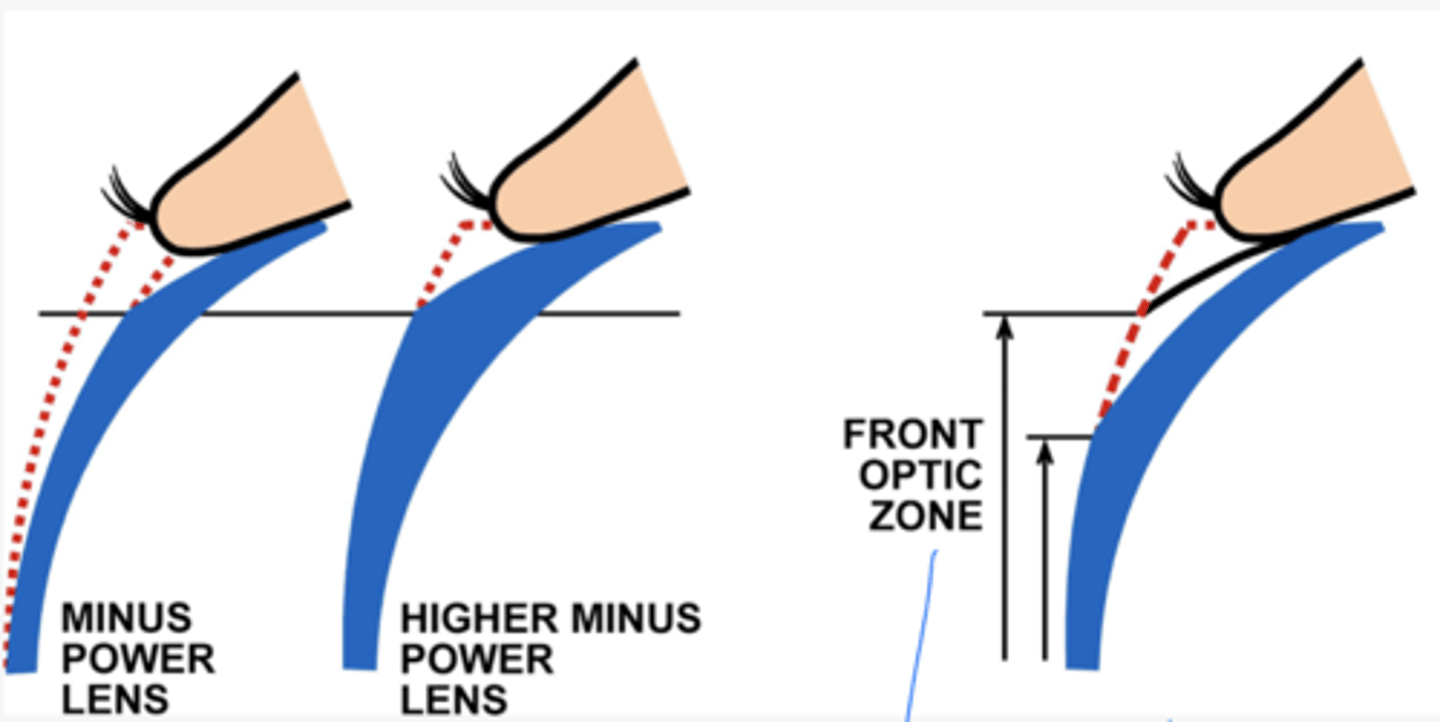
How does the optic zone change the wider the lenticular curves get?
the size of the optic zone decreases