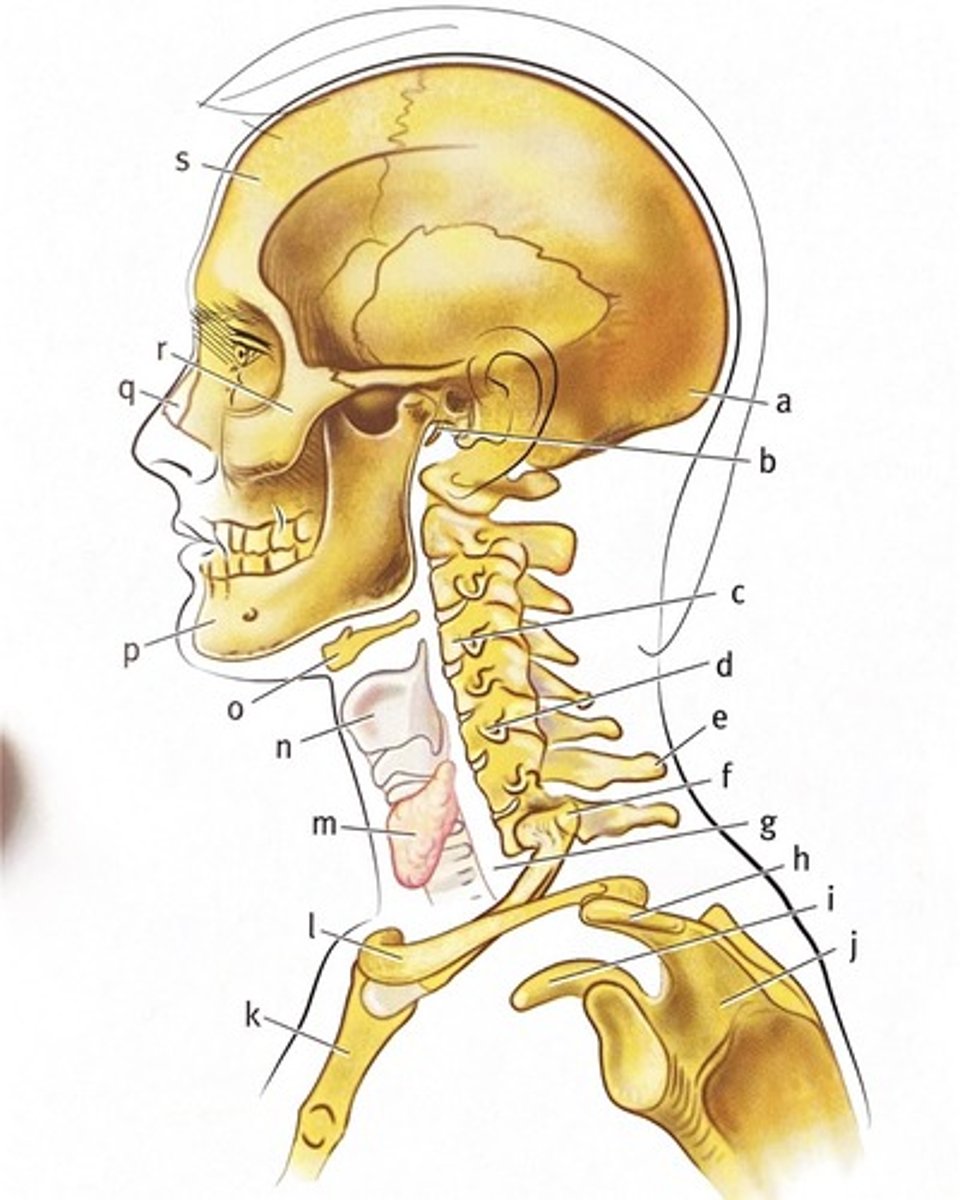
Skeletal and visceral structures of the head and neck
 Call Kai
 Learn
Learn Practice Test
 Spaced Repetition
 Match
Match Flashcards
 Knowt Play
1/18

There's no tags or description
Looks like no tags are added yet.
Name | Mastery | Learn | Test | Matching | Spaced | Call with Kai |
|---|
No analytics yet
Send a link to your students to track their progress
19 Terms
external occipital protuberance
What is A - also serves as a crucial anchor for the neck, and back muscles
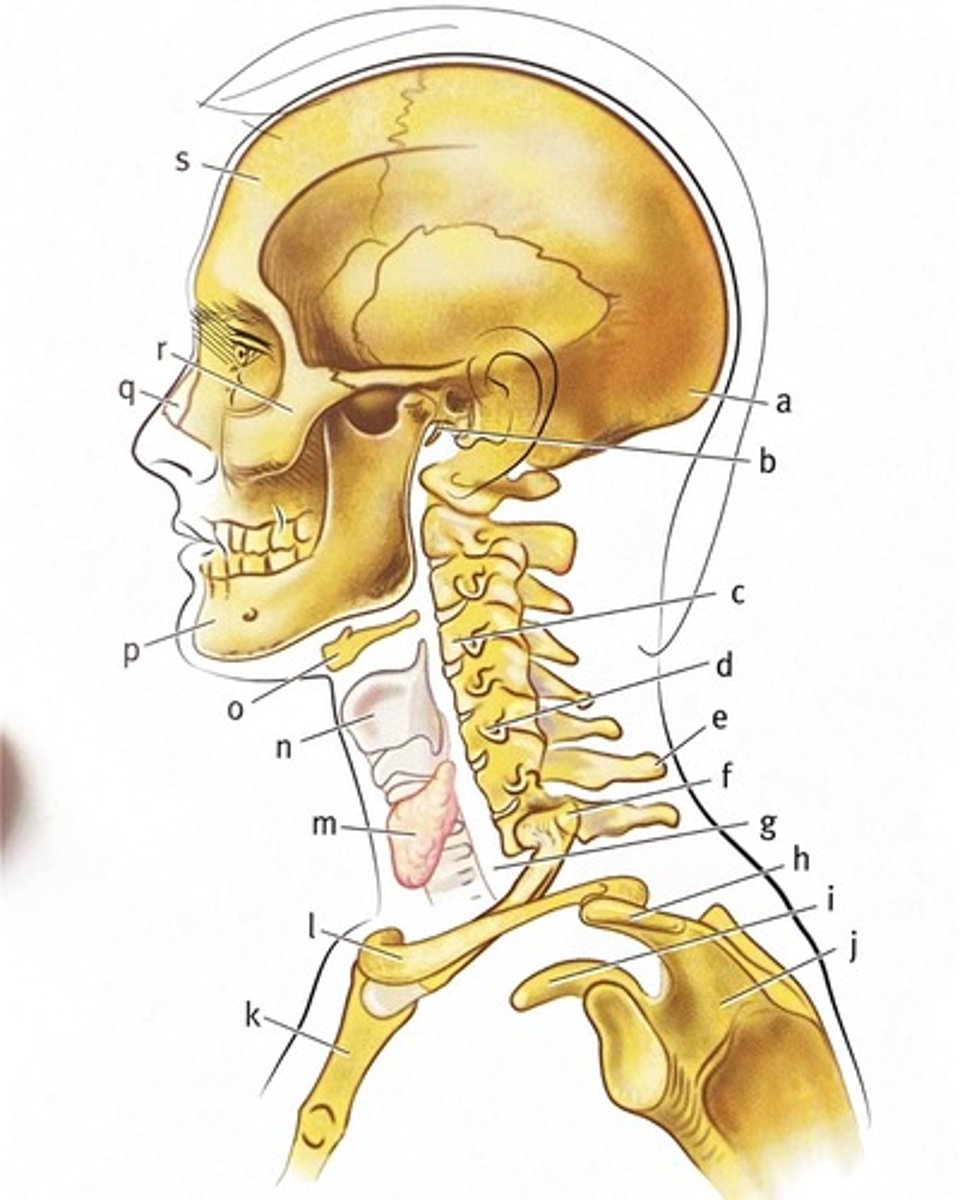
styloid process
What is B - also serves as an anchor for muscles and ligaments involved in speech and swallowing
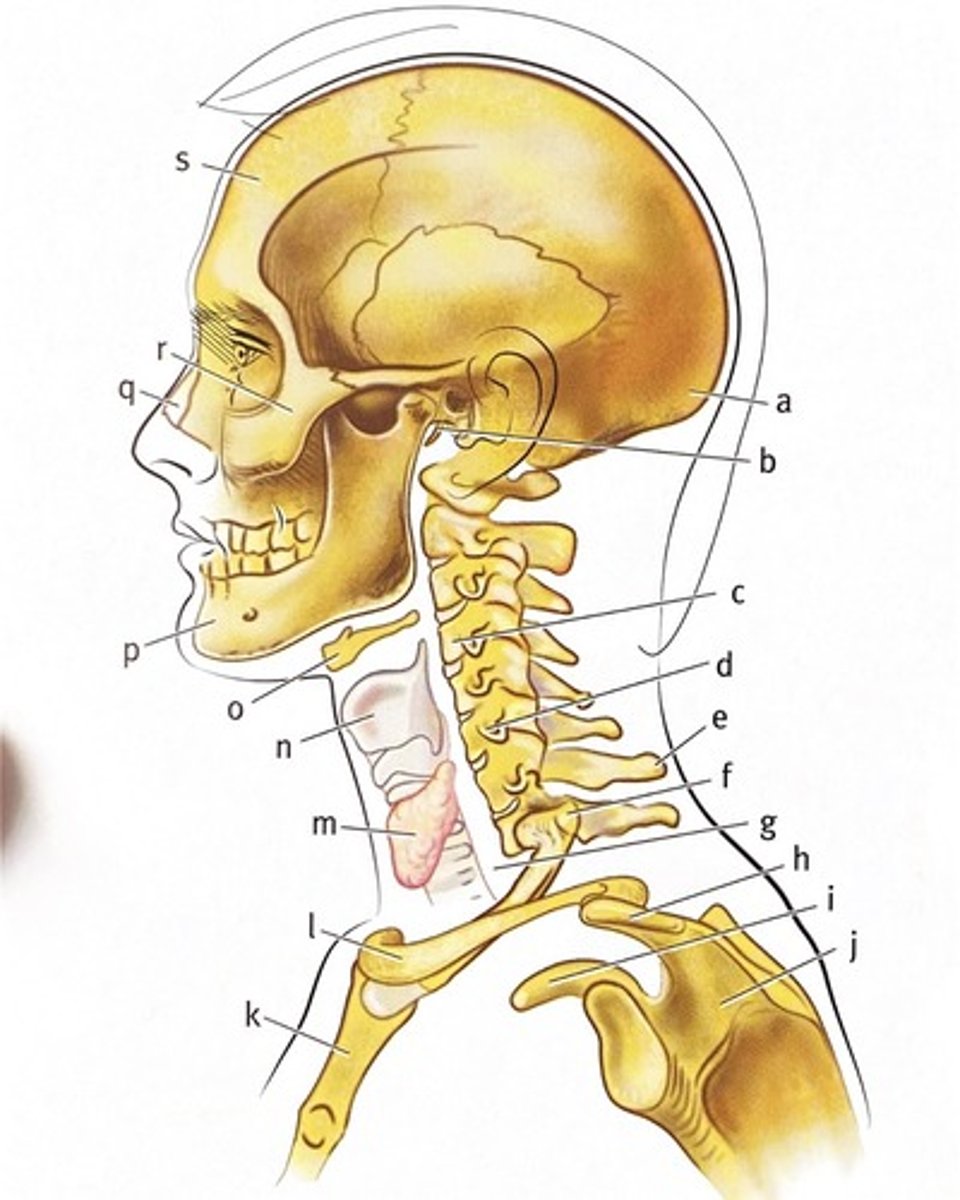
C4 (fourth cervical vertebra)
What is C - support weight of head, protect spinal cord, facilitate neck movement
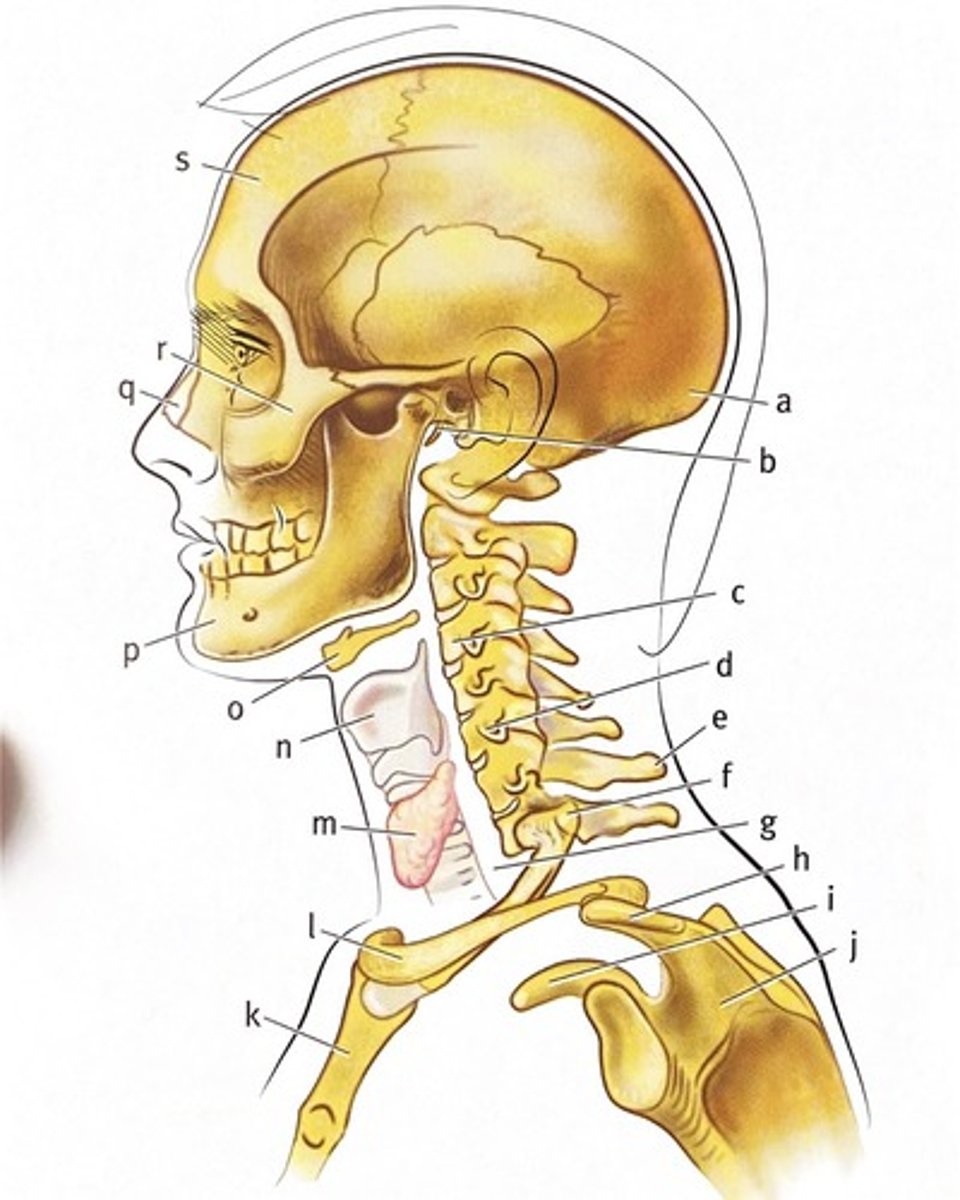
carotid tubercle of C6
What is D
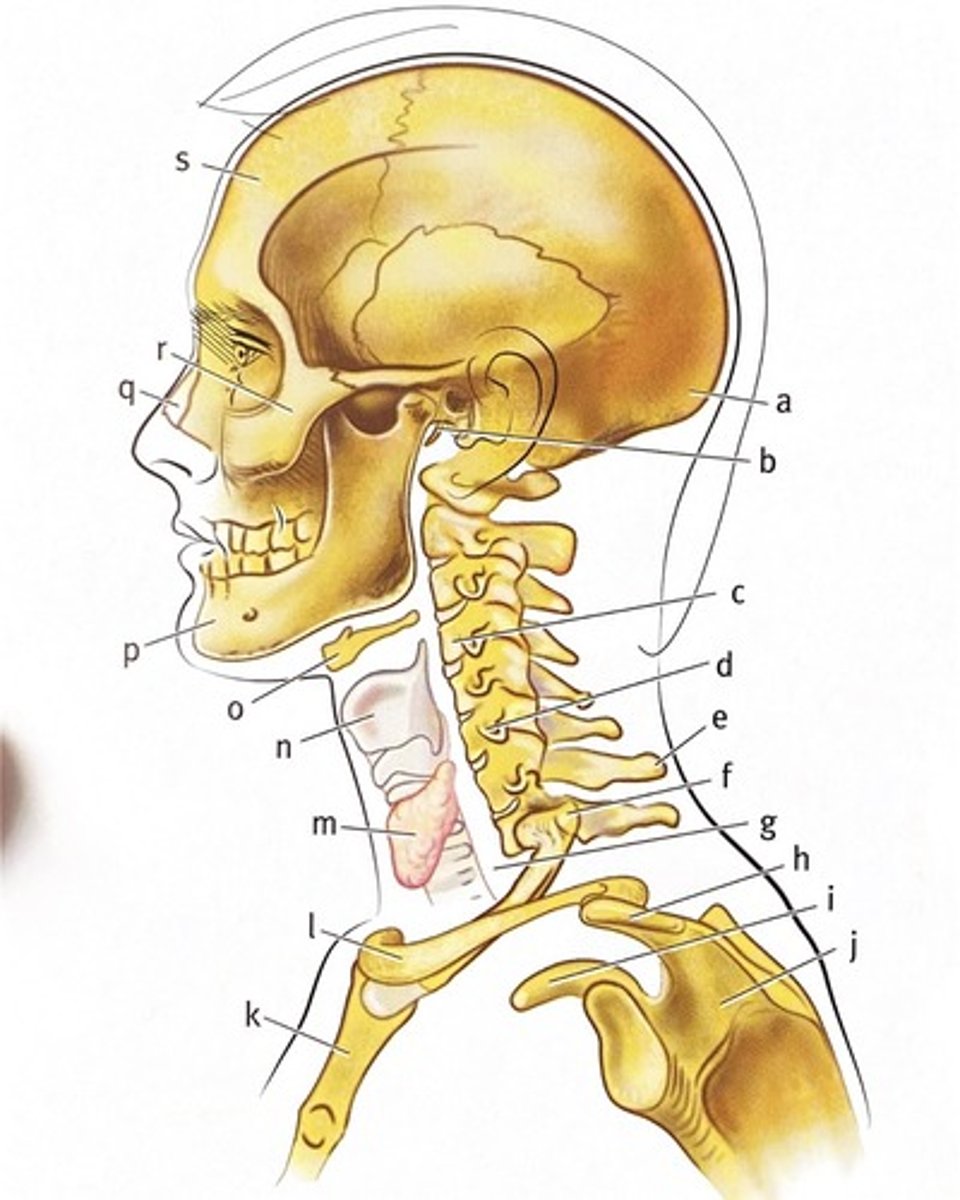
vertebra prominens
What is E - also known as c7, vital attachment point for several muscles, including the trapezius and ligamentum nuchae
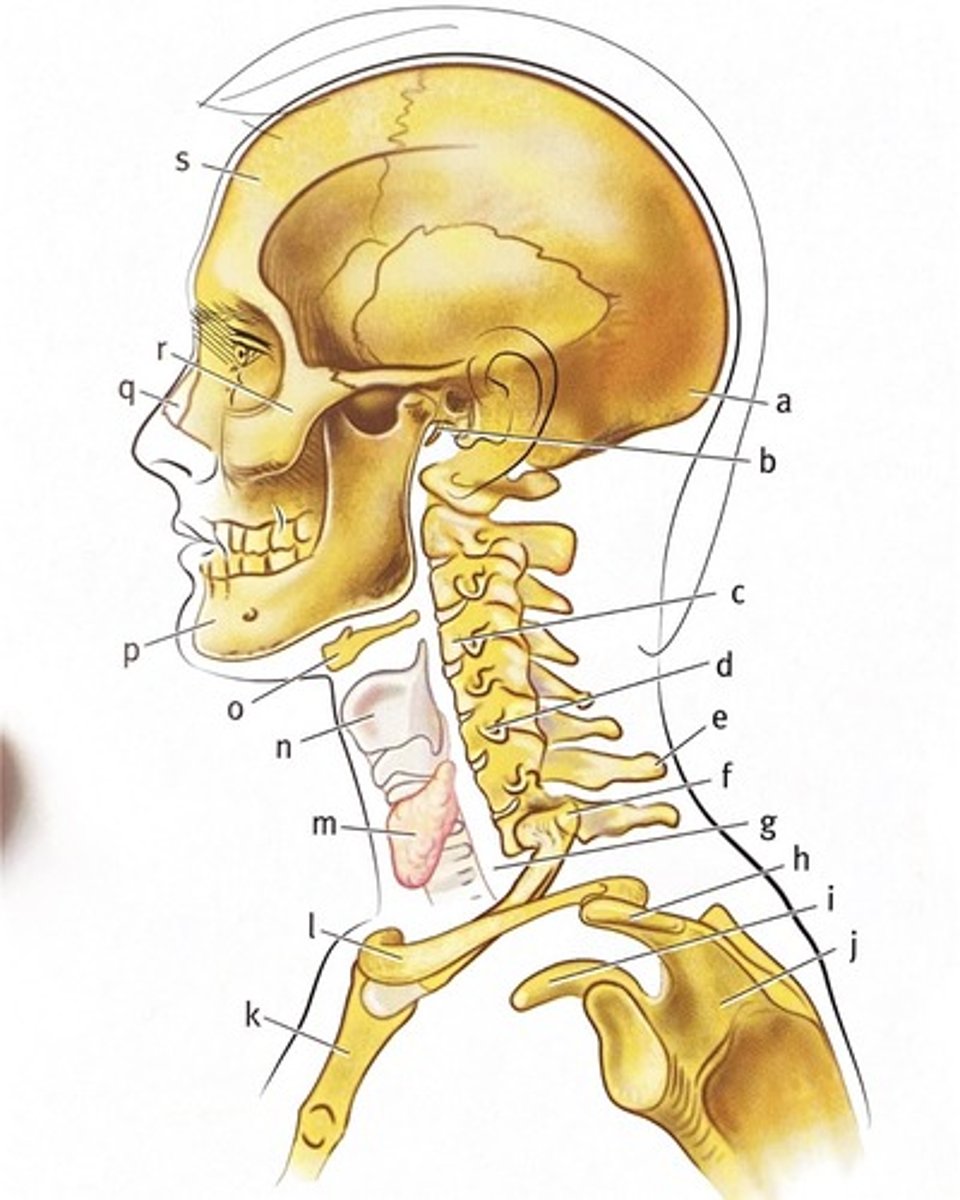
first rib
What is F - to protect the thoracic cavity, act as an attachment point for crucial neck muscles (like the scalenes), and provide a bony tunnel for the major nerves and blood vessels traveling to your arms
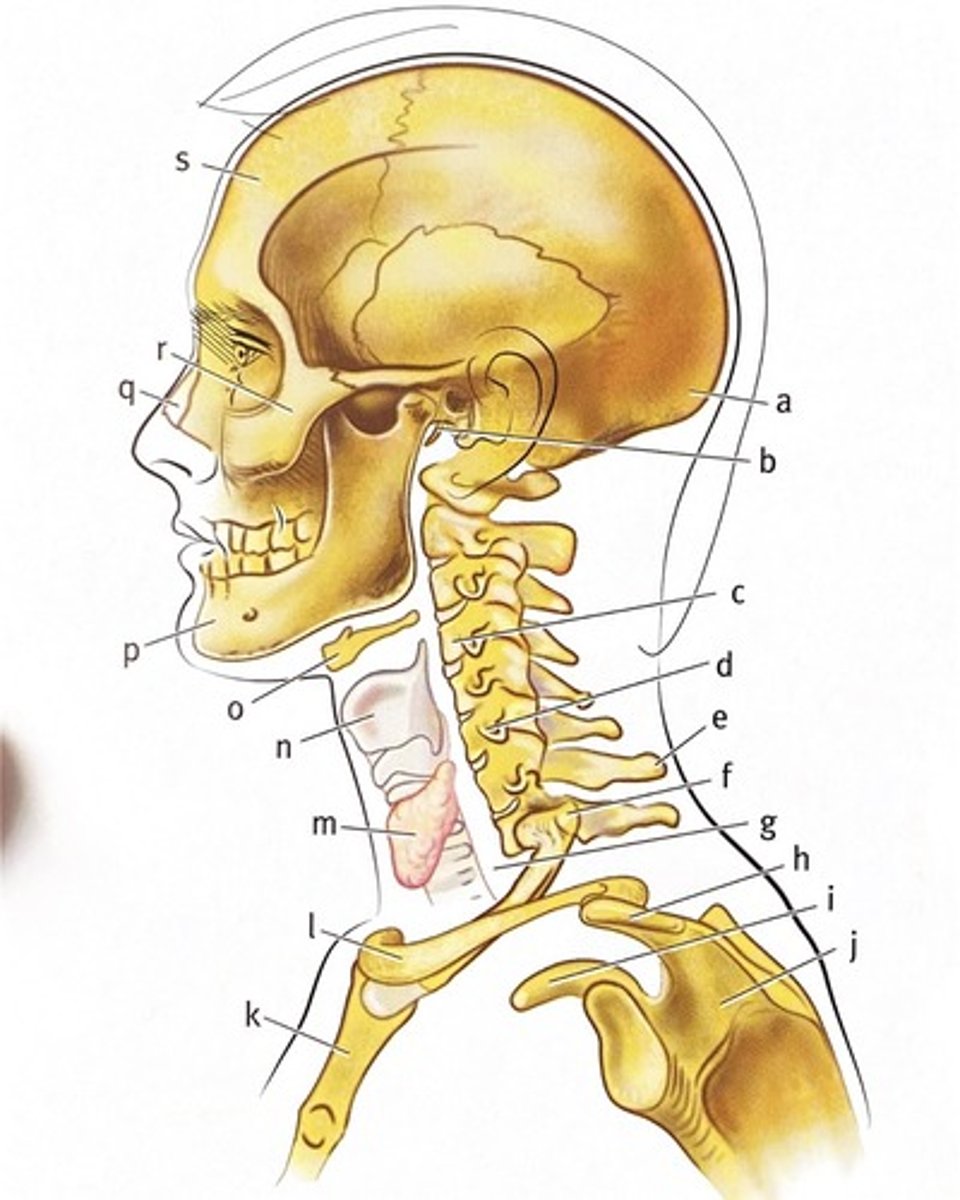
esophagus
What is G - to transport food, liquids, and saliva via rhythmic muscle contractions (peristalsis), while using muscular valves to block stomach acid from traveling backward
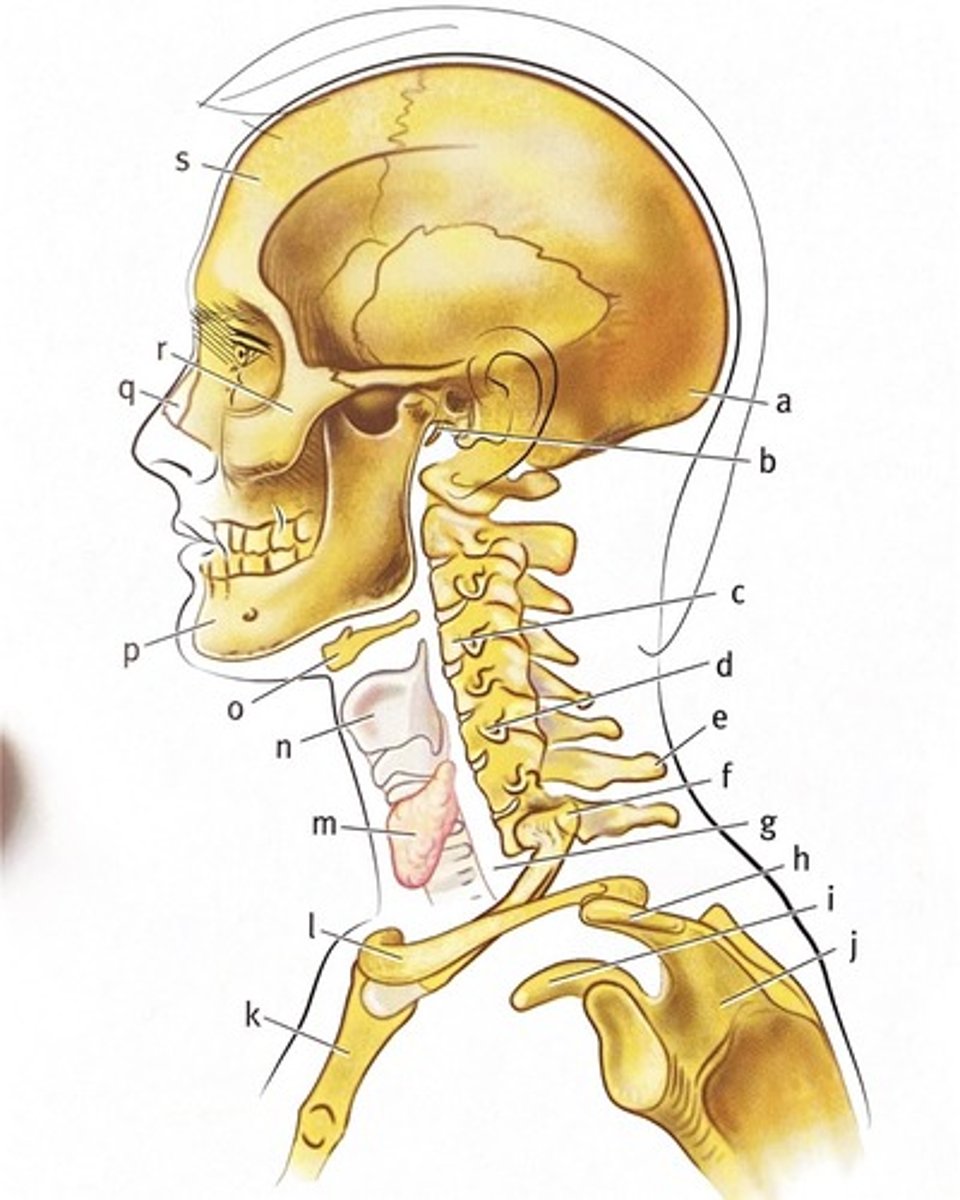
acromion process
What is H - acts as a protective roof over the rotator cuff, provides an anchor point for major shoulder muscles, and connects with your collarbone
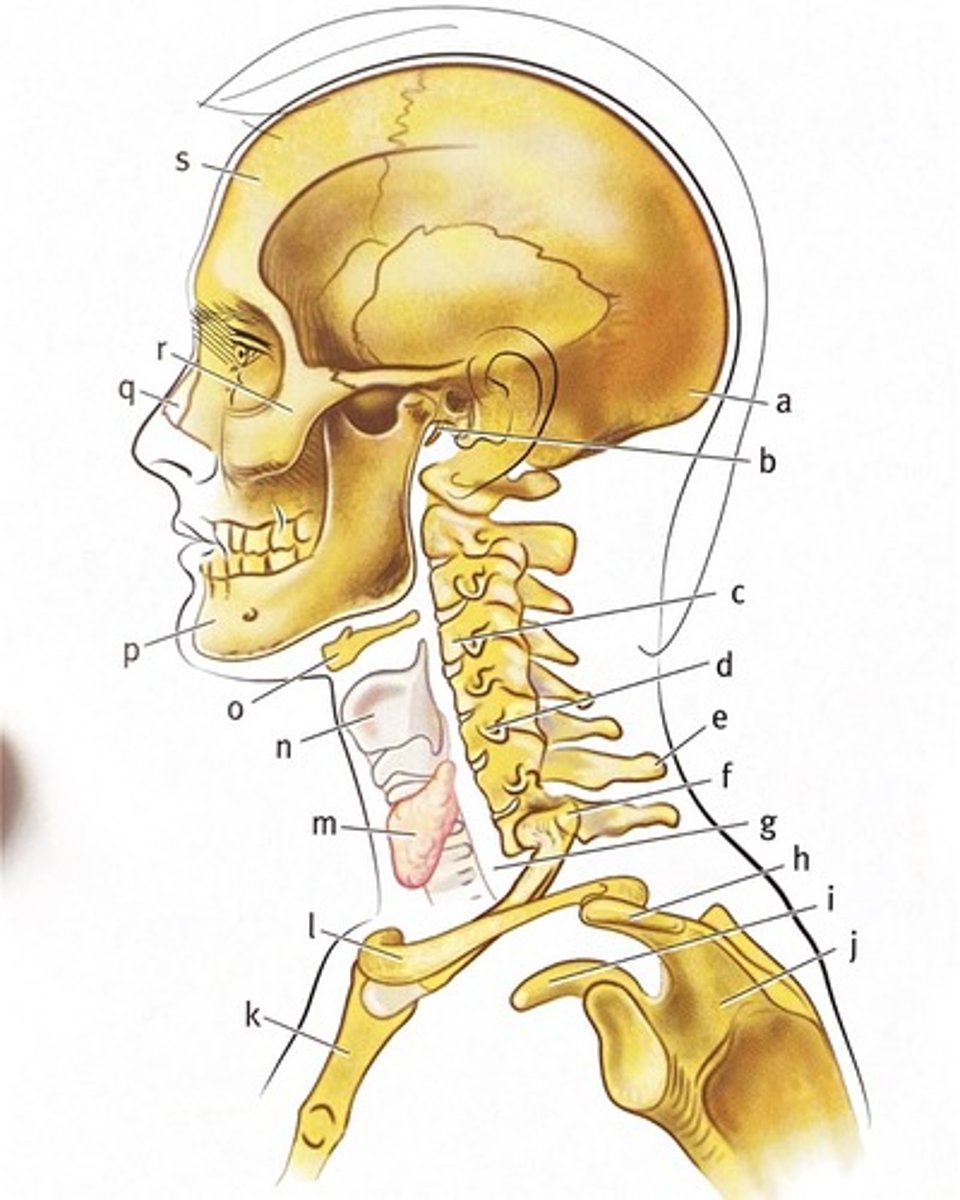
coracoid process
What is I - to act as a crucial anchor for major muscles and ligaments that stabilize and control the movement of your arm and shoulder
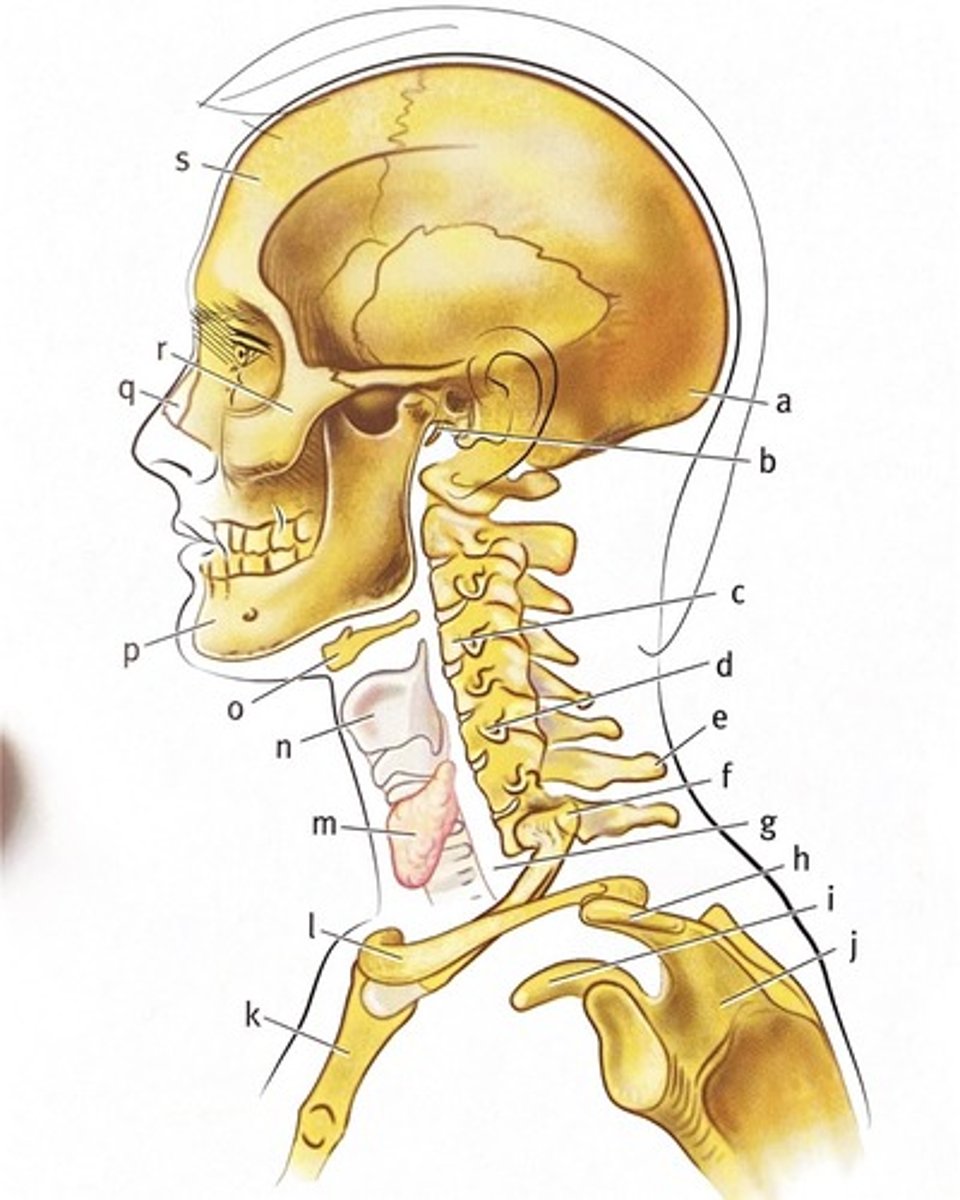
scapula
What is J - connects your upper arm bone (humerus) to your collarbone
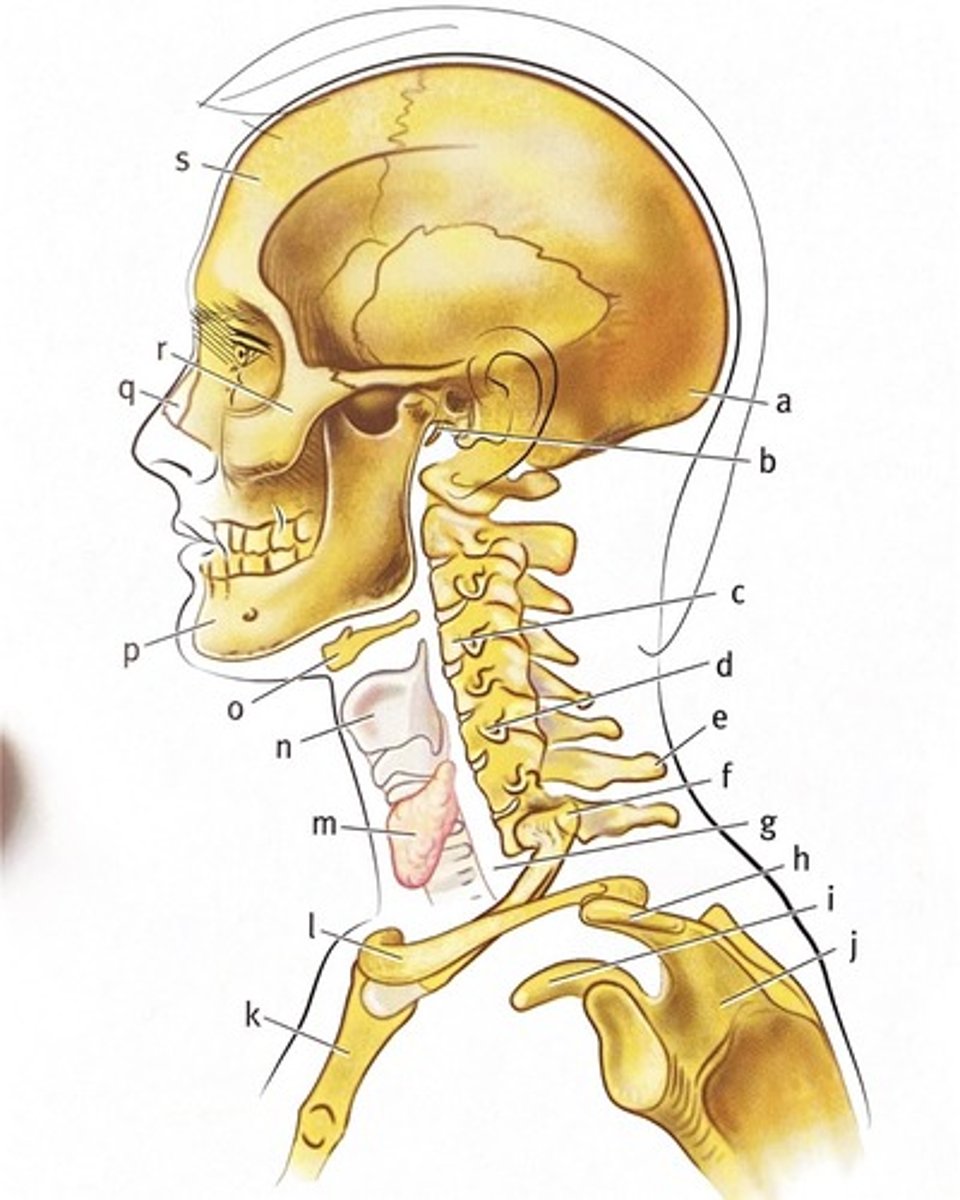
sternum
What is K - to protect vital organs like the heart and lungs, anchor the rib cage together, and serve as an attachment point for muscles in your chest, neck, and abdomen
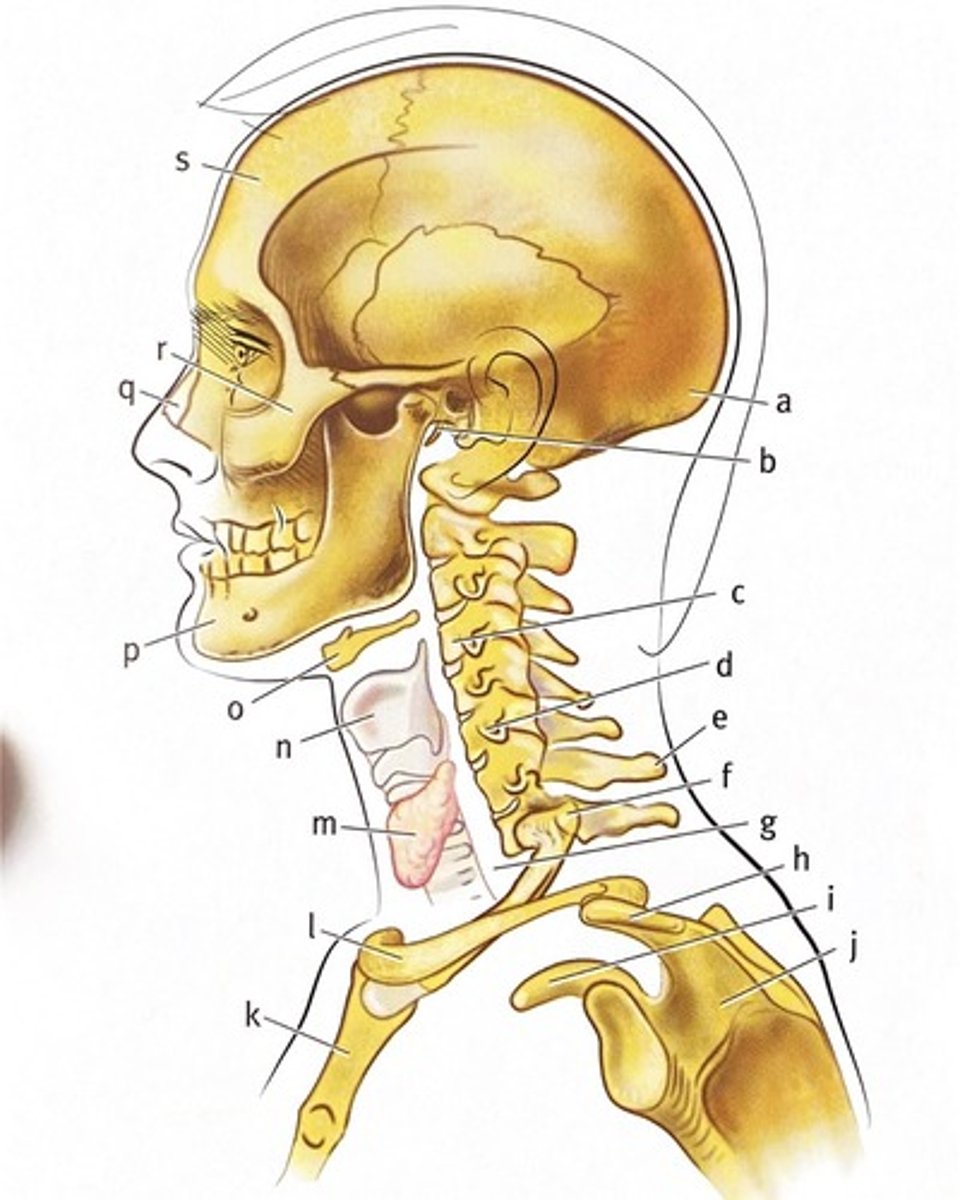
clavicle
What is L - acts as a mechanical strut that holds your shoulder joint in place
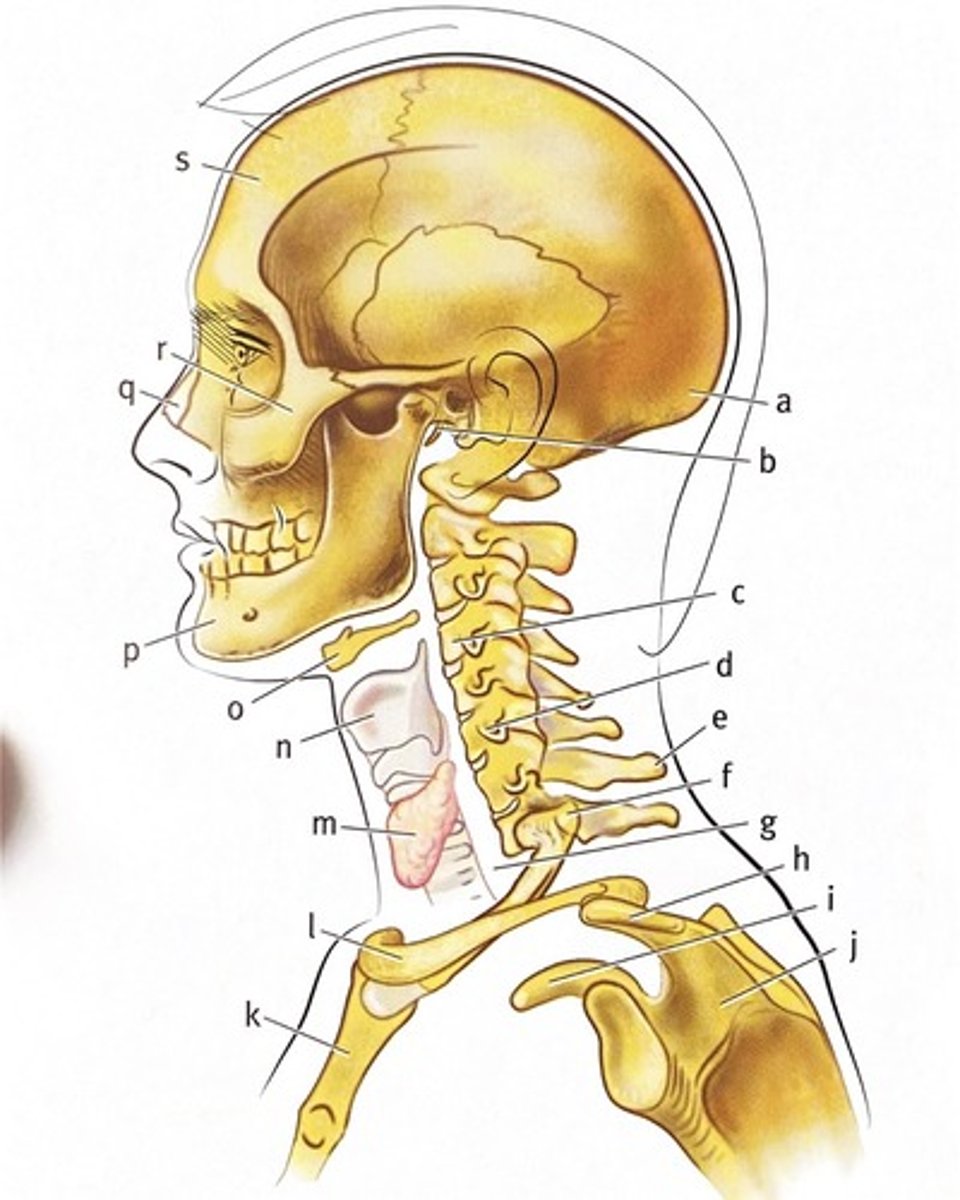
thyroid gland
What is M - acts as the body's master energy regulator. It produces hormones that control metabolism (how your body turns food into energy), heart rate, body temperature, and digestion
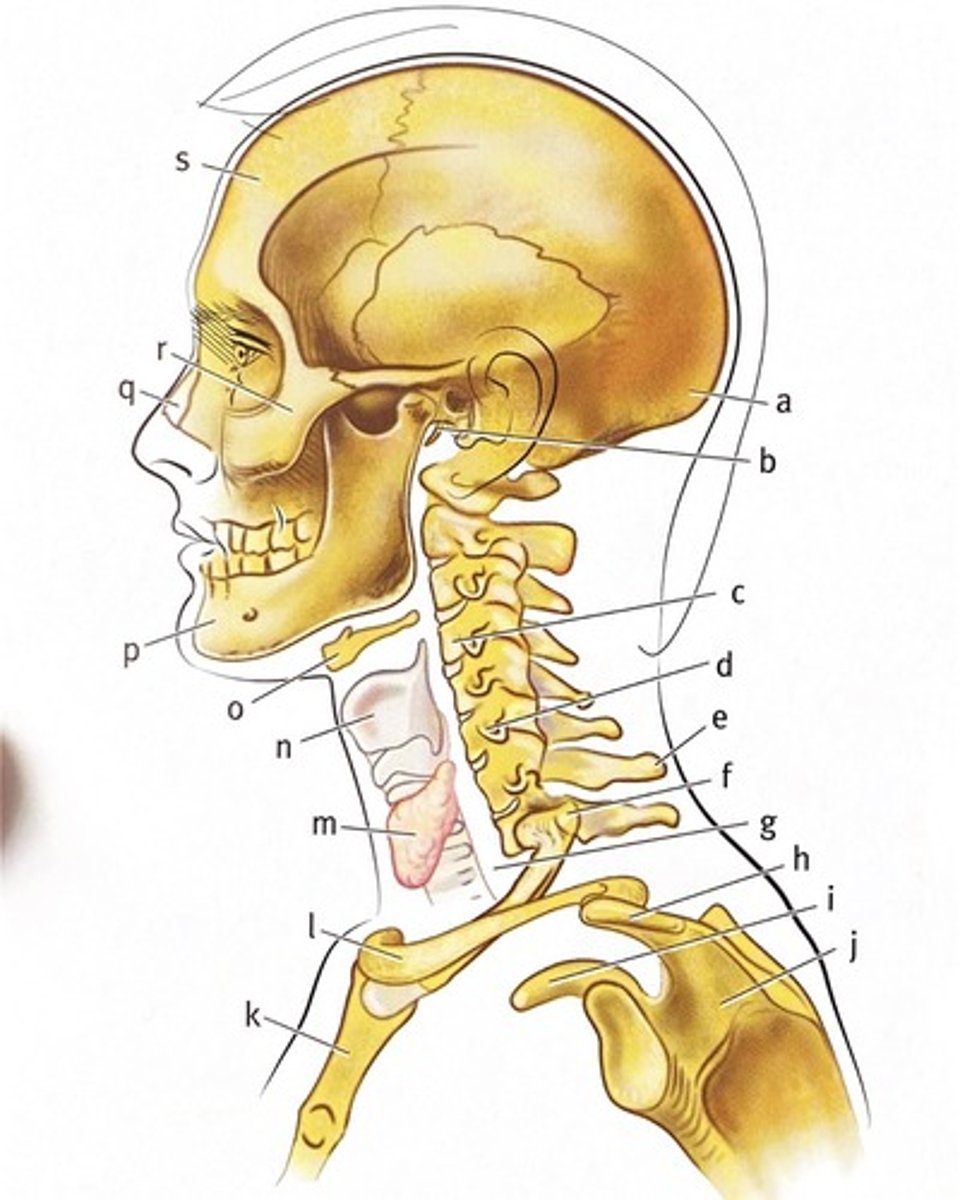
thyroid cartilage
What is N - protect the vocal cords, provide structural support for the throat, and act as a control mechanism for changing the pitch of your voice
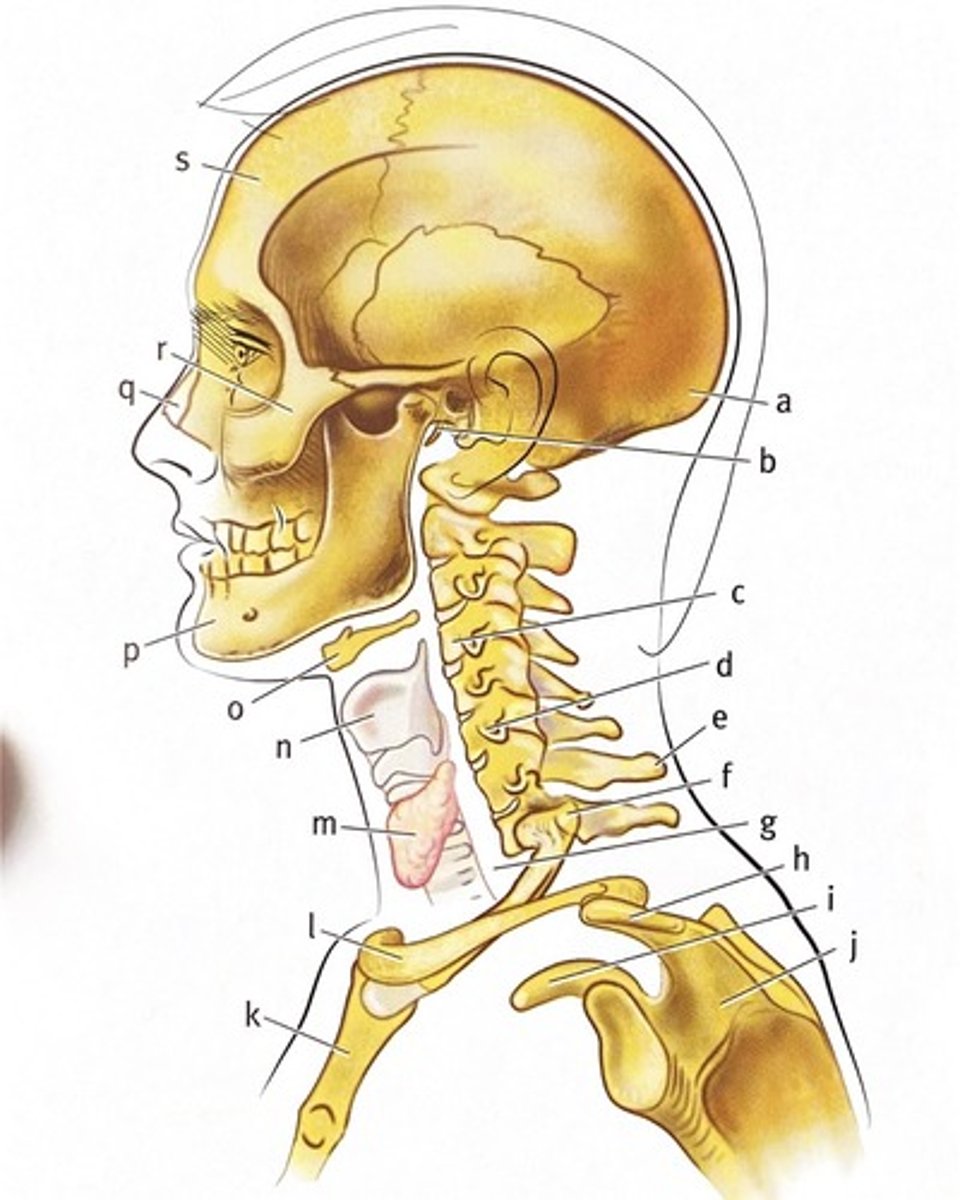
hyoid bone
What is O - floating bone, helps with speech and swallowing
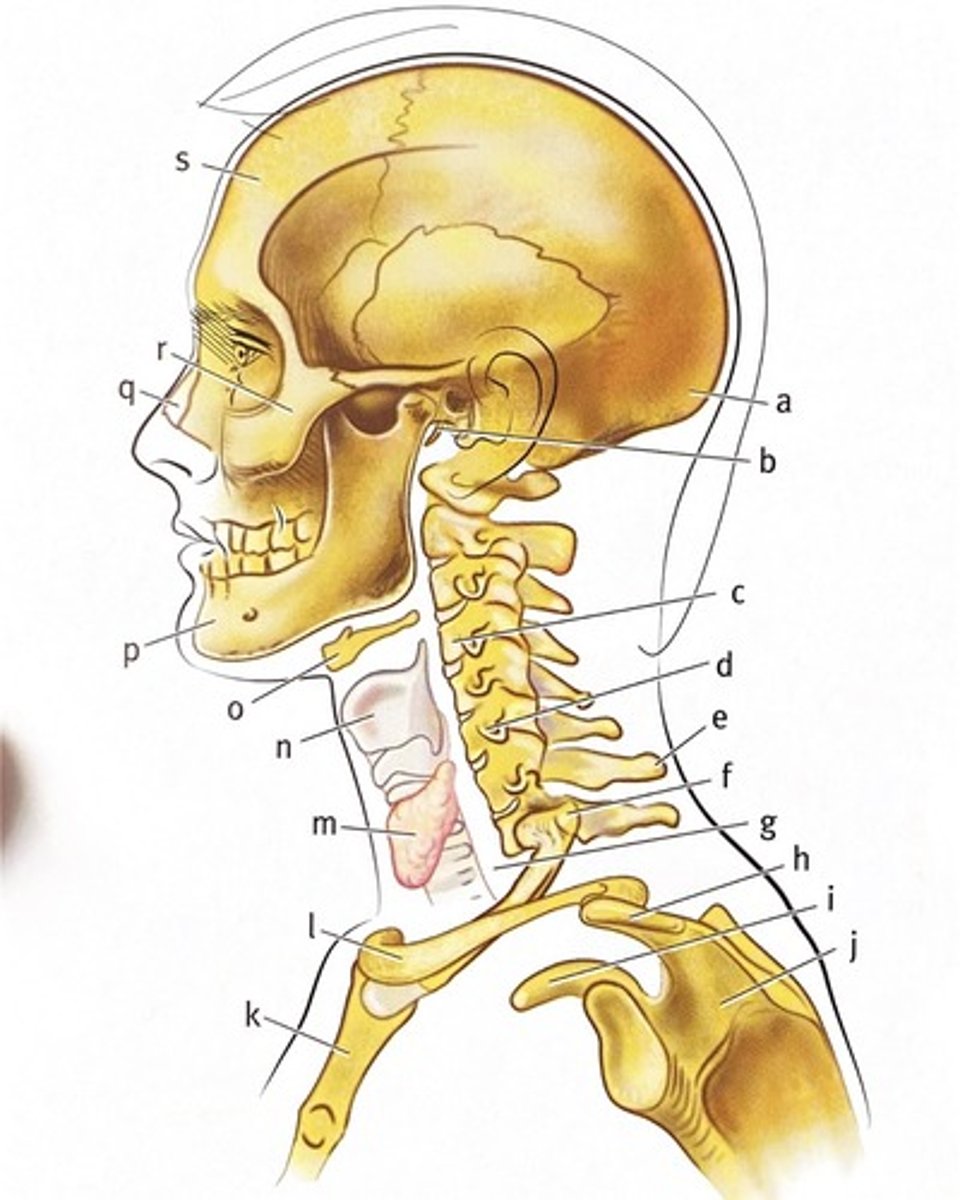
mandible
What is P - facilitate biting and chewing (mastication), enable speech production, support the lower teeth, and define the shape of the lower face and chin
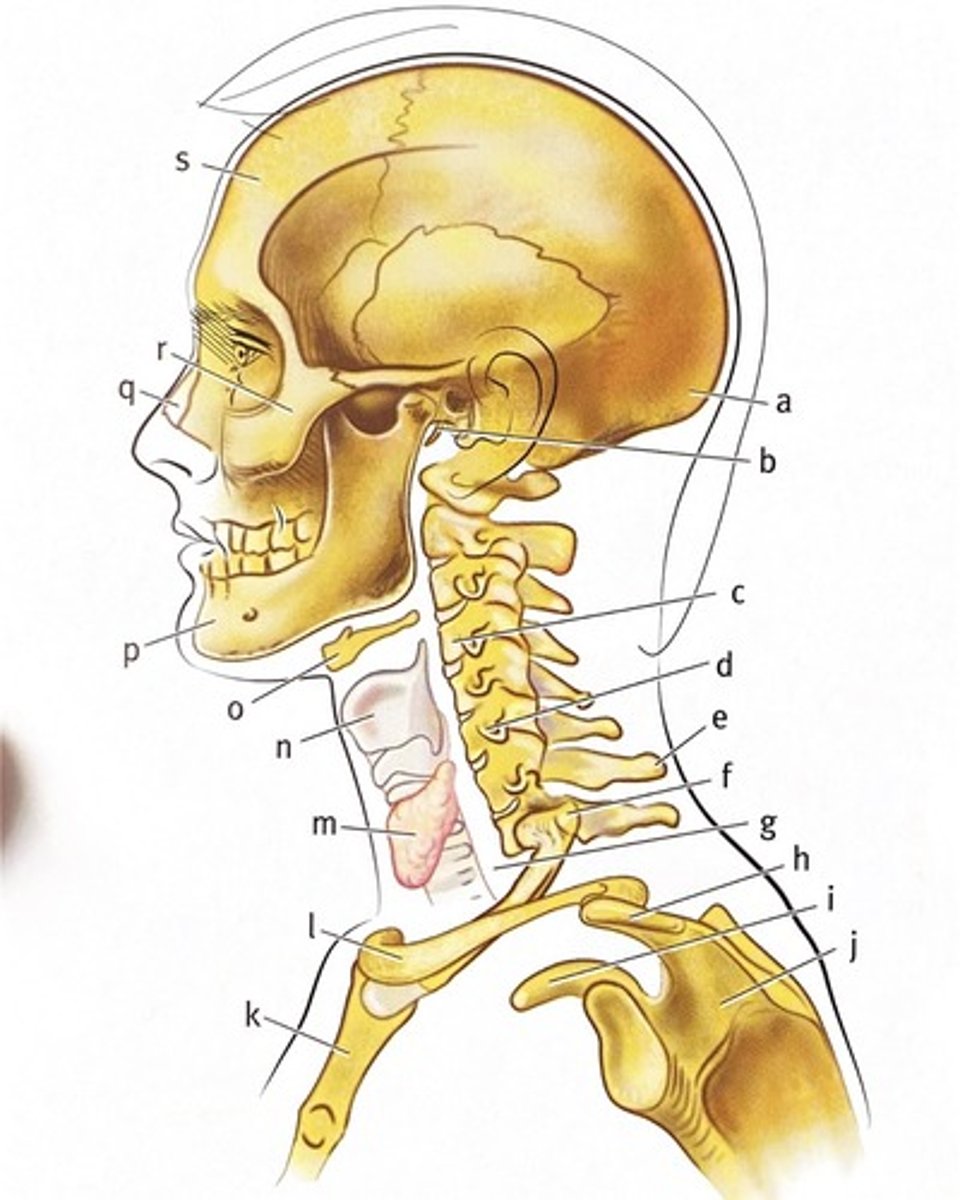
nasal bone
What is Q - provide a strong, protective anchoring point that gives the nose its structural strength
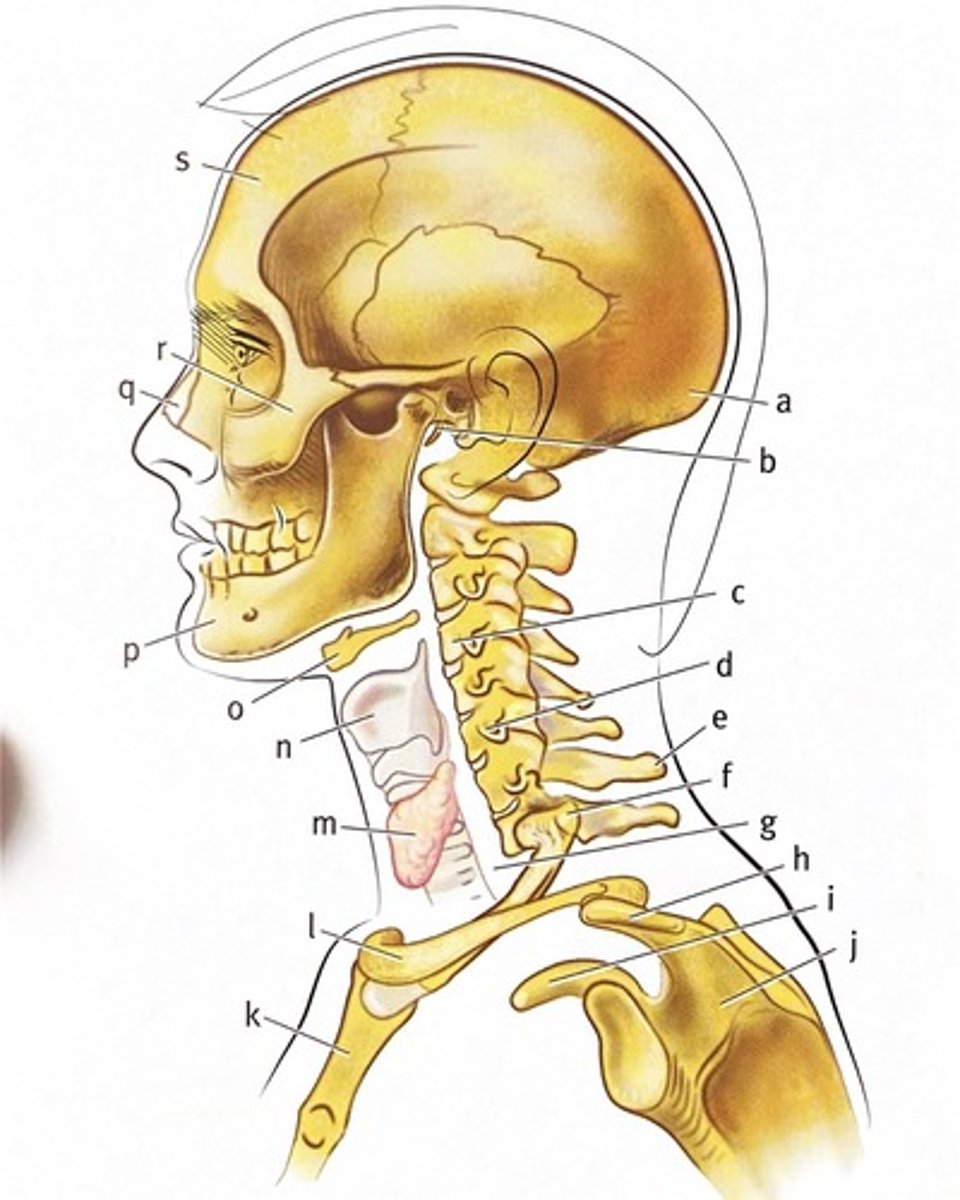
zygomatic bone
What is R - provides structural framework to the mid-face, protects the eyes and facial nerves, and serves as a vital anchor for muscles involved in chewing and facial expression
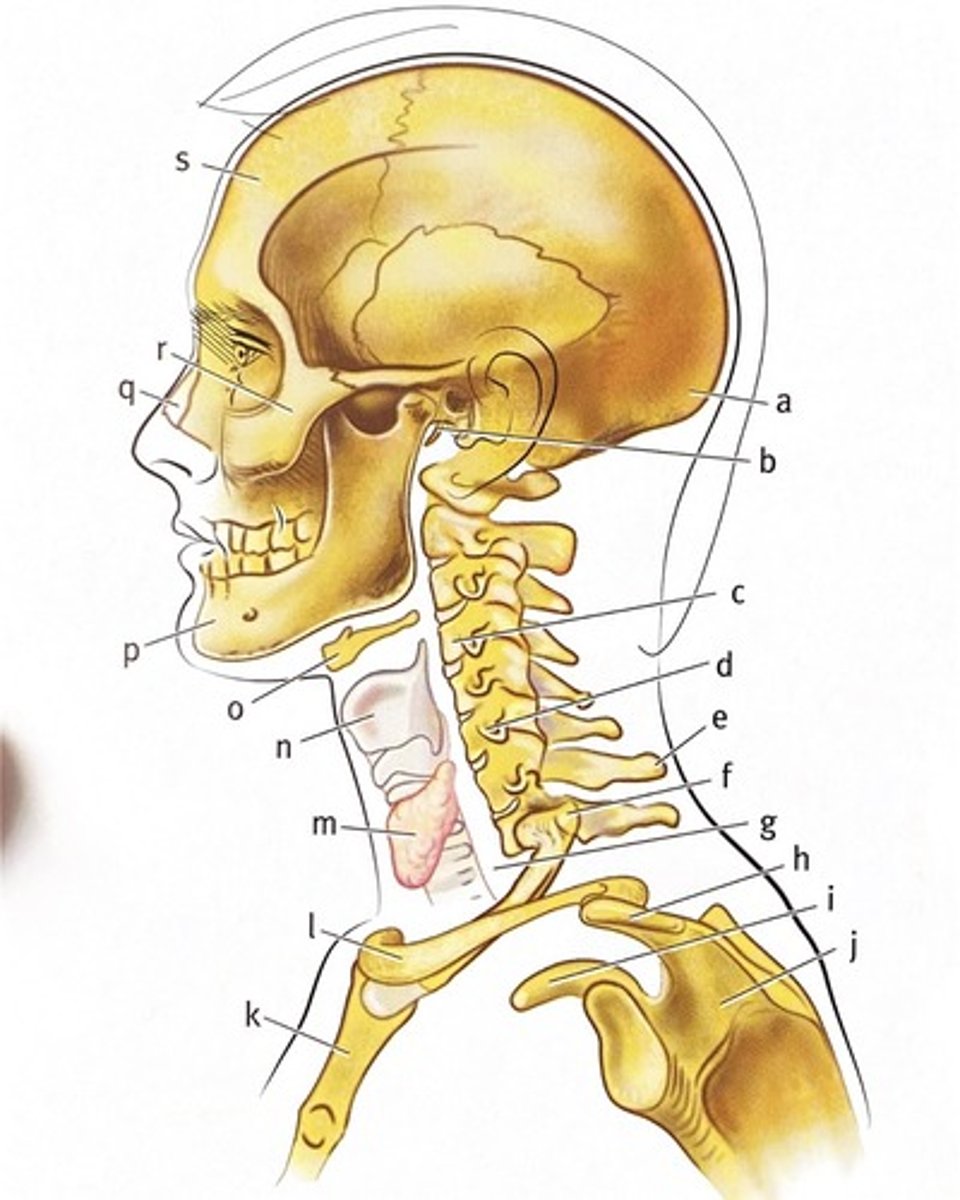
frontal bone
What is S - It protects the frontal lobes of your brain and provides structural support for your face