Ch.27 PHY
 Call Kai
 Learn
Learn Practice Test
 Spaced Repetition
 Match
Match Flashcards
 Knowt Play
1/29

There's no tags or description
Looks like no tags are added yet.
Name | Mastery | Learn | Test | Matching | Spaced | Call with Kai |
|---|
No analytics yet
Send a link to your students to track their progress
30 Terms
What is a light with a single wavelength called?
Monochoromatic
What is the principle of Linear Superposition?
The resultant disturbance at any point is the sum of the disturbance from individual waves.
What was Young’s Double Slit experiment?
If a light behaves as a wave, it will produce interference effects
What is an interferometer? (michelson interferometer)
A device used to measure the wavelength of light by analyzing the interference between two light waves.
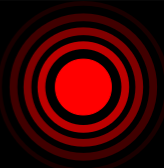
What kind of interference is this?
Constructive
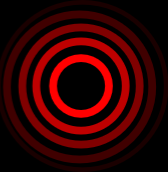
What kind of intereference is this?
Destructive
Whats Huygen’s Principle?
Every point on a wavefront acts as a pointsource.
What is the formula for Young’s Double Slit (constructive)?
𝑑𝑠𝑖𝑛 𝜃 = 𝑚λ (𝑐𝑜𝑛𝑠𝑡𝑟𝑢𝑐𝑡𝑖𝑣𝑒)
What is the formula for Young’s Double Slit soap on glass (destructive)?
𝑑𝑠𝑖𝑛 𝜃 = (𝑚 + 1/2)λ (𝑑𝑒𝑠𝑡𝑟𝑢𝑐𝑡𝑖𝑣𝑒)
What is diffraction grating?
Large number of equally spaced narrow slits
What is thin film interference?
Thickness of a few wavelengths, light will reflect both the top and bottom surfaces of layer causing interference (soap bubbles and oil slicks)
What is the thin-film case 1 formula soap on glass (constructive)?
𝑑 = 𝑚λ / 𝑛𝑓𝑖𝑙𝑚 (𝑐𝑜𝑛𝑠𝑡𝑟𝑢𝑐𝑡𝑖𝑣𝑒 𝑖𝑛𝑡𝑒𝑟𝑓𝑒𝑟𝑒𝑛𝑐𝑒)
What is the thin-film case 1 formula soap bubble (destructive)?
2𝑑 = (𝑚 + 1/2)λ / 𝑛𝑓𝑖𝑙𝑚 (𝑑𝑒𝑠𝑡𝑟𝑢𝑐𝑡𝑖𝑣𝑒 𝑖𝑛𝑡𝑒𝑟𝑓𝑒𝑟𝑒𝑛𝑐𝑒)
What is the thin-film case 2 formula soap bubble (constructive)?
2𝑑 = (𝑚 + 1/2)λ / 𝑛𝑓𝑖𝑙𝑚 (𝑐𝑜𝑛𝑠𝑡𝑟𝑢𝑐𝑡𝑖𝑣𝑒 𝑖𝑛𝑡𝑒𝑟𝑓𝑒𝑟𝑒𝑛𝑐𝑒)
What is case 1 in the thin film theory?
When both reflected rays undergo a phase change (180) and cancel out.
What happens to ray one in case 1?
It reflects off of the soap boundary. Air→ film causing a 180 phase change
What happens to ray two in case 1?
It enters the film and reflects on the bottom (film→glass). 180 phase change.
What happens to ray three in case 1?
It transmitted through the glass
What is the net reflection of case 1?
0-cancel out
What is the brightness of case 1?
2d
What happens to ray one in case 2?
It reflects off the soap boundary (air→film). 180 phase change.
What happens to ray two in case 2?
It enters the film and reflects off the bottom (film→air). No flip since n1>n2
What happens to ray three in case 2?
It’s transmitted to through the bottom.
What is the net reflection of case 2?
½ a wave shift
What is the brightness of case 2?
½ wavelenght shift.
Is light produced if constructive interference is reached? If so, what kind?
Yes, bright fringes produced
Is light produced if destructive interference is reached? If so, what kind?
No
What is the single slit formula?
𝐷𝑠𝑖𝑛 𝜃 = 𝑚λ 𝑚 = ±1, ±2, ±3, …
What are the diffraction grating formulas?
d = 1/N
sin (𝜃𝑚) = 𝑚λ / 𝑑 𝑚 = 0,1,2,…
tan (𝜃𝑚) = 𝑥𝑚/𝐿
What is the formula for Rayleighs criterion?
𝜃𝑚𝑖𝑛 = 1.22𝜆/ 𝐷