Unit 5 - Muscles of Abdomen & Pelvis

0.0(0)
Studied by 0 people
call kaiCall Kai
learnLearn
examPractice Test
spaced repetitionSpaced Repetition
heart puzzleMatch
flashcardsFlashcards
GameKnowt Play
Card Sorting

1/7

encourage image

There's no tags or description

Looks like no tags are added yet.

Last updated 9:41 PM on 4/11/26
Name
Mastery
Learn
Test
Matching
Spaced
Call with Kai

No analytics yet

Send a link to your students to track their progress

8 Terms

1
New cards

Muscles of abdominal wall

Deep → superficial

  1. Transverse Abdominus m.

  2. Internal Oblique m.

  3. Rectus Abdominus m.

  4. External Oblique m.

(All innervated by ventral rami of T7-L2)
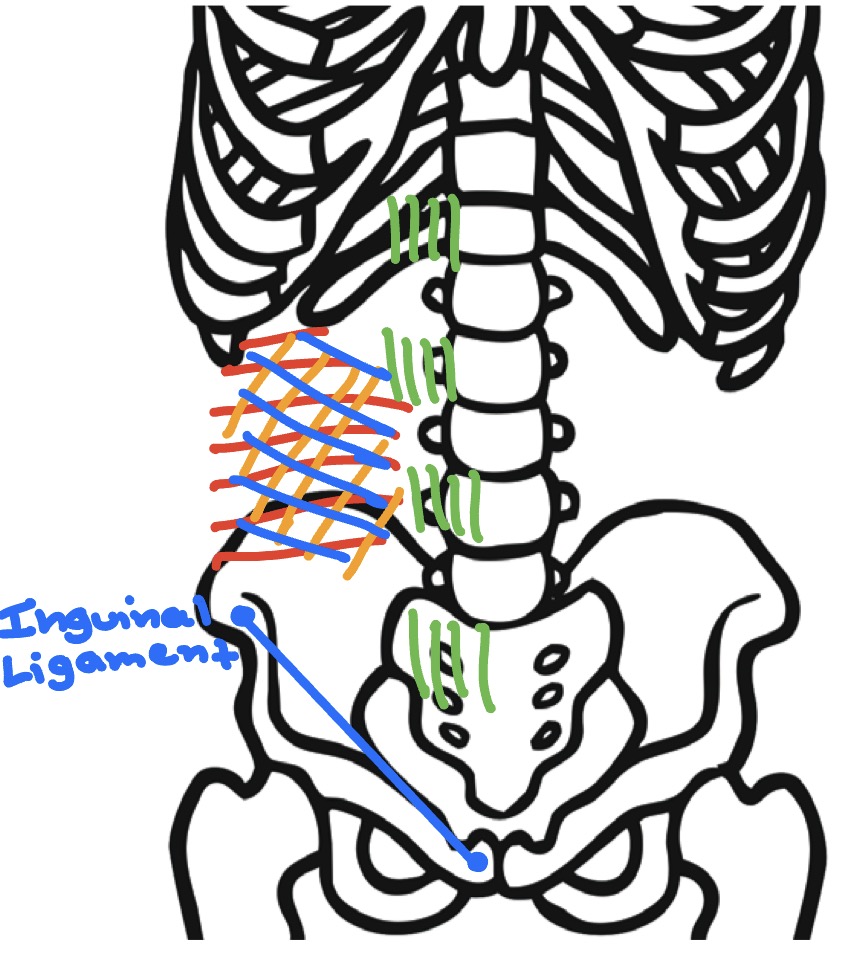
<p>Deep → superficial </p><ol><li><p><span style="color: rgb(254, 24, 24);">Transverse Abdominus m. </span></p></li><li><p><span style="color: rgb(208, 157, 7);">Internal Oblique m.</span></p></li><li><p><span style="color: rgb(4, 148, 13);">Rectus Abdominus m.</span></p></li><li><p><span style="color: rgb(27, 34, 243);">External Oblique m.</span></p></li></ol><p>(All innervated by ventral rami of T7-L2)</p><p></p>
2
New cards

Rectus sheath

  • Aponeuroses of the 3 anterolateral abdominal wall muscles, forms the anterior & posterior rectus sheet (encloses rectus abdominis muscle)
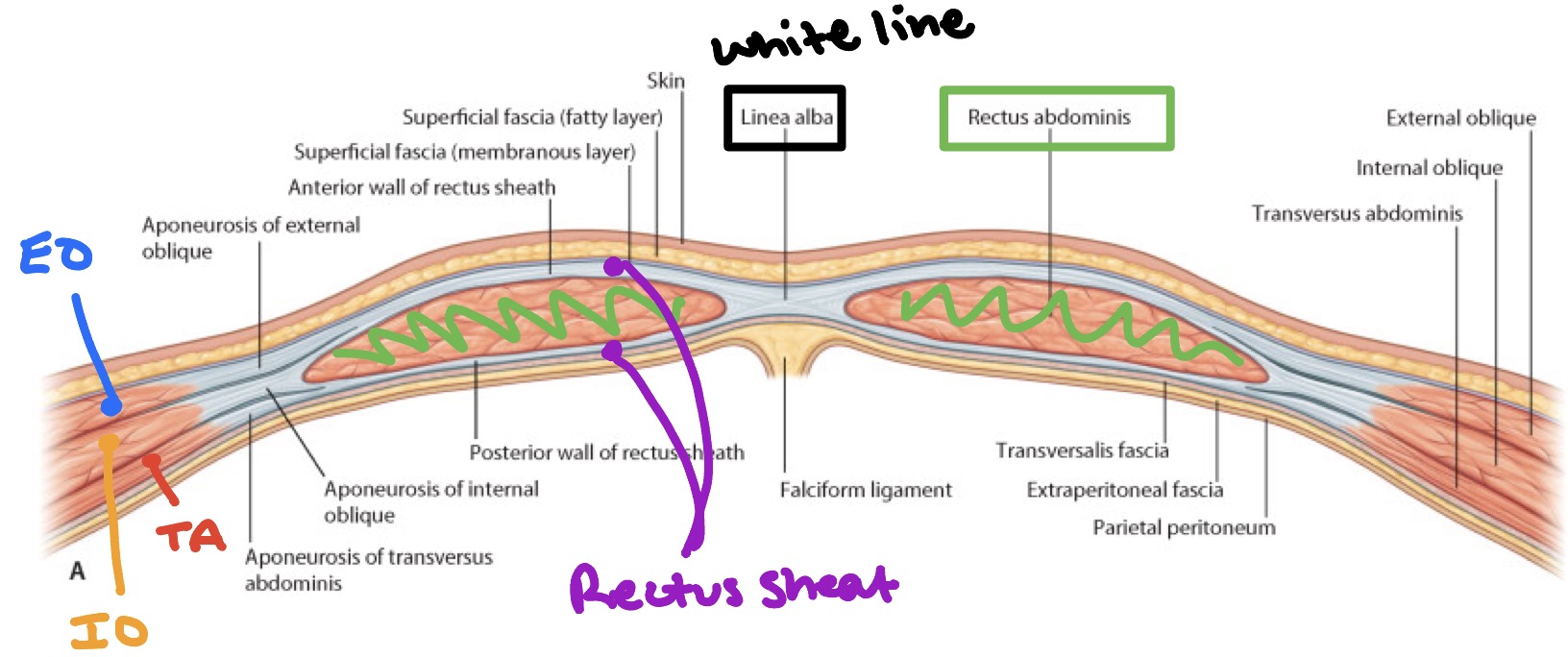
<ul><li><p>Aponeuroses of the 3 anterolateral abdominal wall muscles, forms the <span style="color: rgb(126, 45, 245);"><strong>anterior &amp; posterior rectus shee</strong></span>t (encloses rectus abdominis muscle)</p></li></ul><p></p>
3
New cards

Rectus abdominis muscle

  • Paired muscle, separated at midline by linea alba

  • Along its course, it is intersected by 3 or 4 tendinous intersections
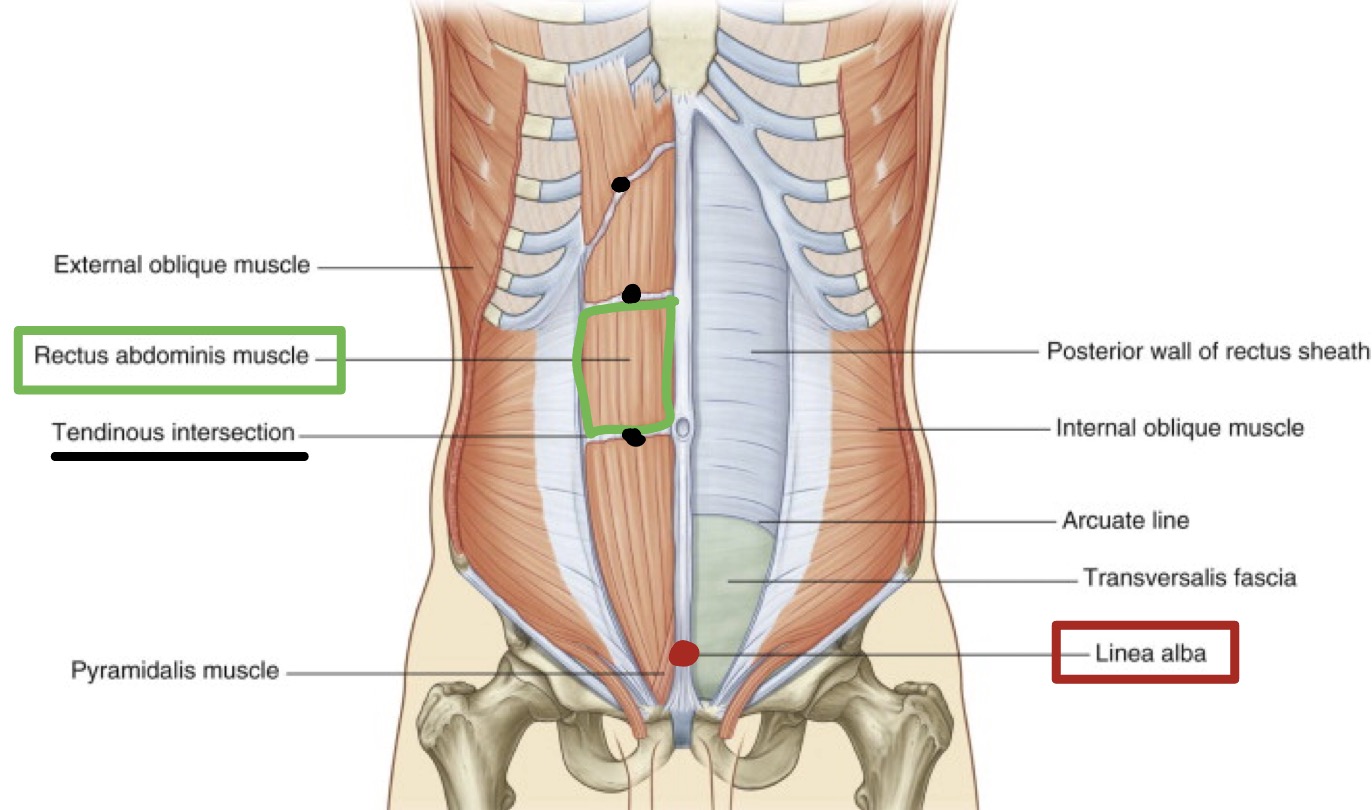
<ul><li><p>Paired muscle, separated at midline by<span style="color: rgb(252, 22, 22);"><strong> linea alba</strong></span></p></li><li><p><span style="color: rgb(8, 7, 7);">Along its course, it is intersected by 3 or 4 <strong>tendinous intersections</strong></span></p></li></ul><p></p>
4
New cards

Inguinal region

  • Area of junction b/w anterior & abdominal wall & thigh

  • Inferior free border of external oblique aponeurosis folds back on itself to form the inguinal ligament, which runs from anterior superior iliac spine to public tubercle
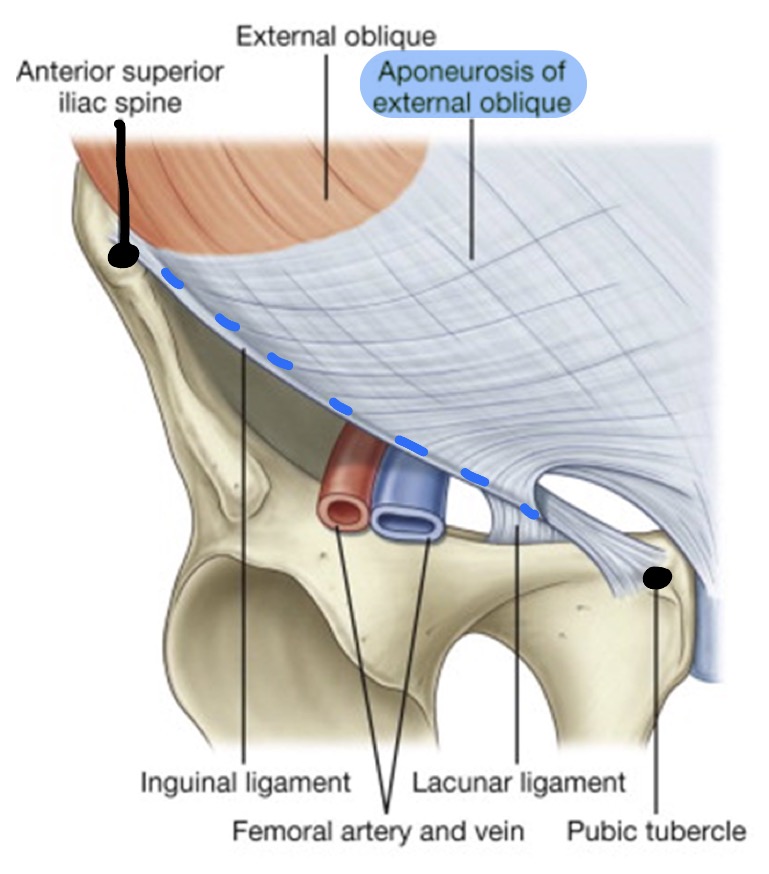
<ul><li><p>Area of junction b/w anterior &amp; abdominal wall &amp; thigh</p></li><li><p>Inferior free border of <span style="color: rgb(18, 38, 237);"><strong>external oblique aponeurosis</strong></span> folds back on itself to form the <strong>inguinal ligament</strong>, which runs from anterior superior iliac spine to public tubercle</p></li></ul><p></p>
5
New cards

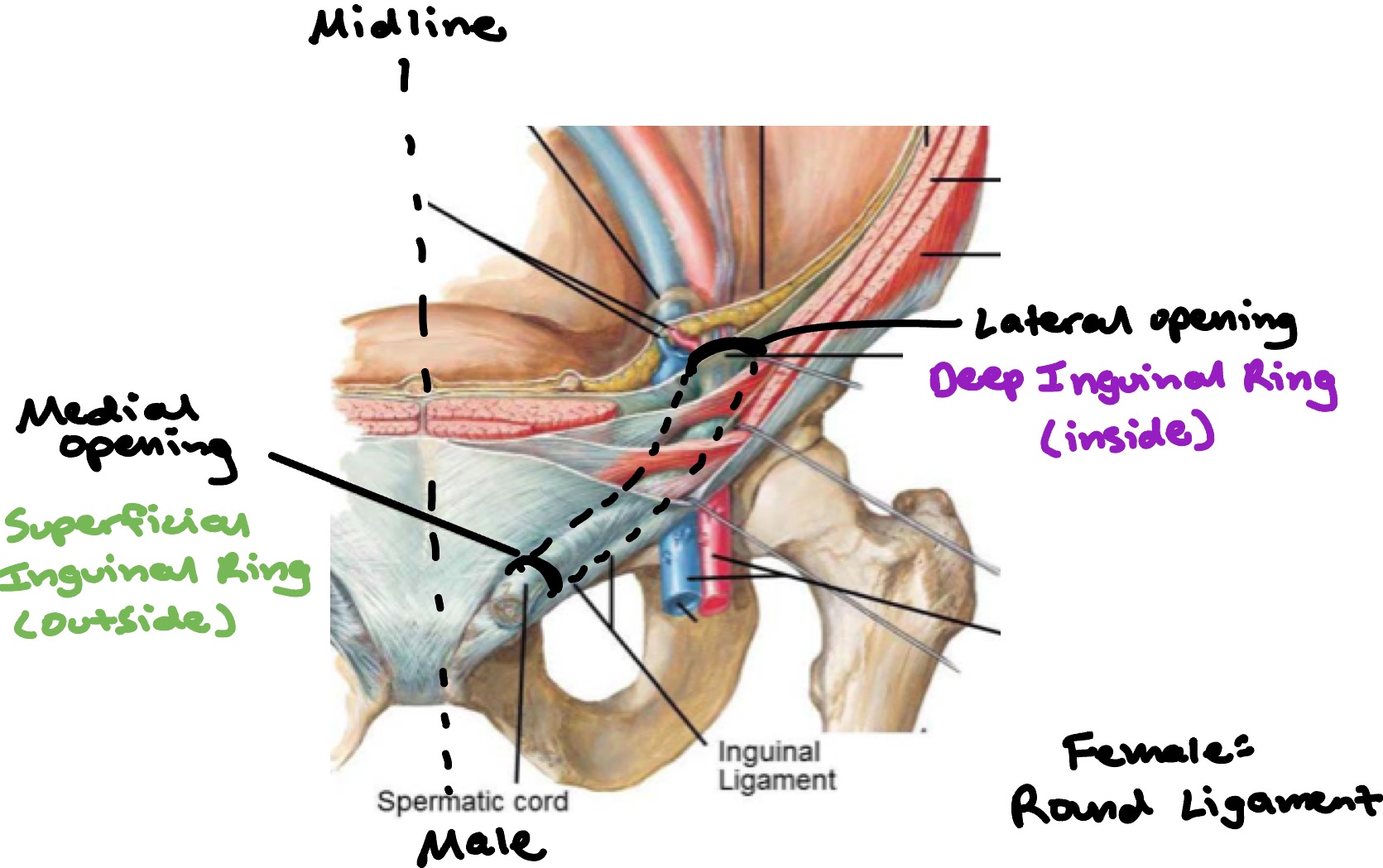
Inguinal region - parts

  • Inguinal canal is slit-like passage that extends in a downward & medial direction

  • Begins at deep inguinal ring & continues for 4 cm, ending at superficial inguinal ring

  • Contains spermatic cord (testes) & round ligament (uterus)

6
New cards

Inguinal region - visual

knowt flashcard image
7
New cards

Inguinal Hernias

  • Indirect = in canal → 2/3 of cases

  • Direct = directly through abdominal wall → 1/3 of cases
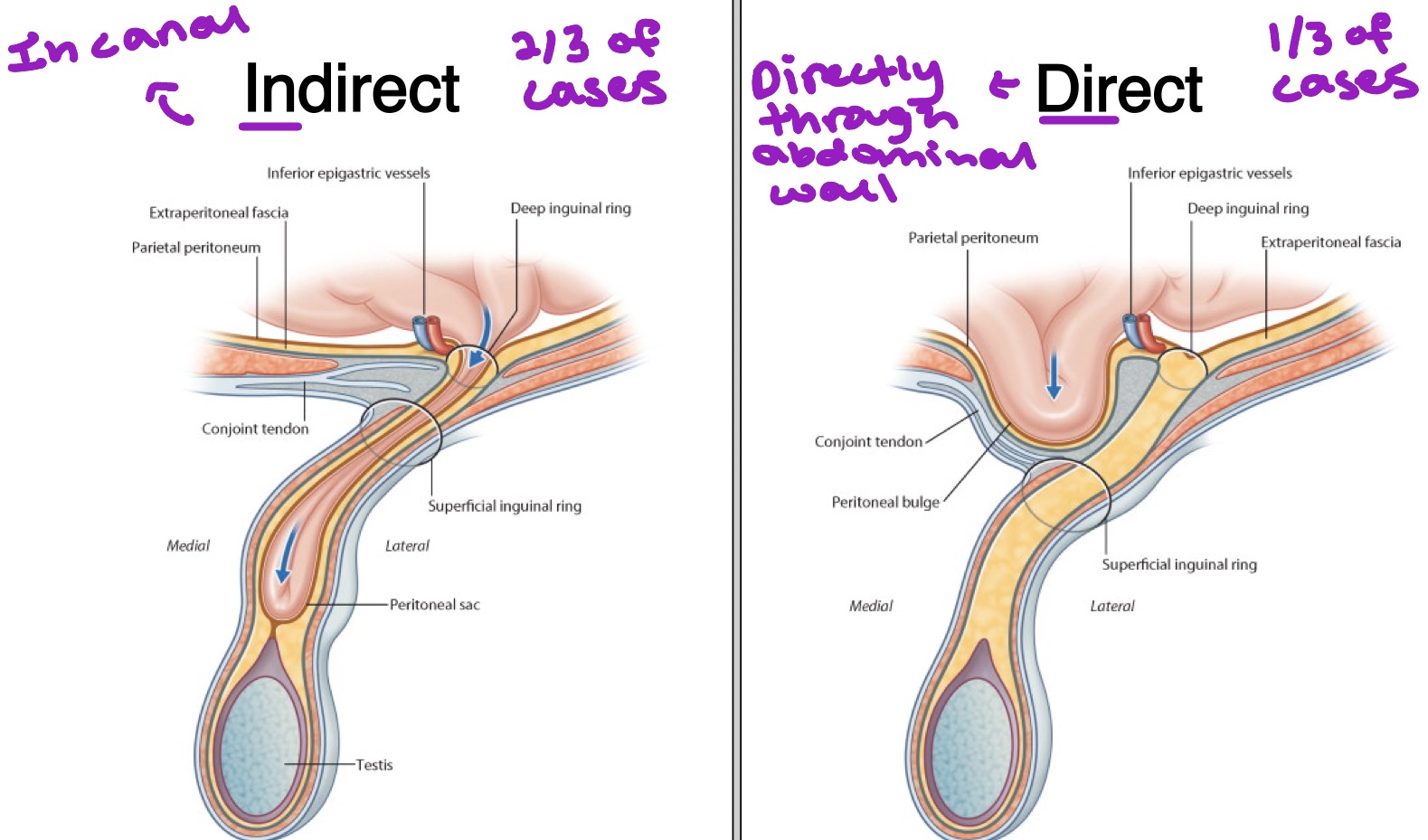
<ul><li><p>Indirect = in canal → 2/3 of cases</p></li><li><p>Direct = directly through abdominal wall → 1/3 of cases</p></li></ul><p></p>
8
New cards

Muscles of Pelvis

  • Funnel shaped pelvis floor or pelvis diaphragm is composed of 2 paired muscles

    • Levator ani muscles & coccygeus muscles

  • Pelvis diaphragm closes the majority of the inferior pelvis aperture

    • Pierced by rectum & urethra

    • This diaphragm supports & raises the pelvis floor & assists in the support of the abdominopelvic viscera
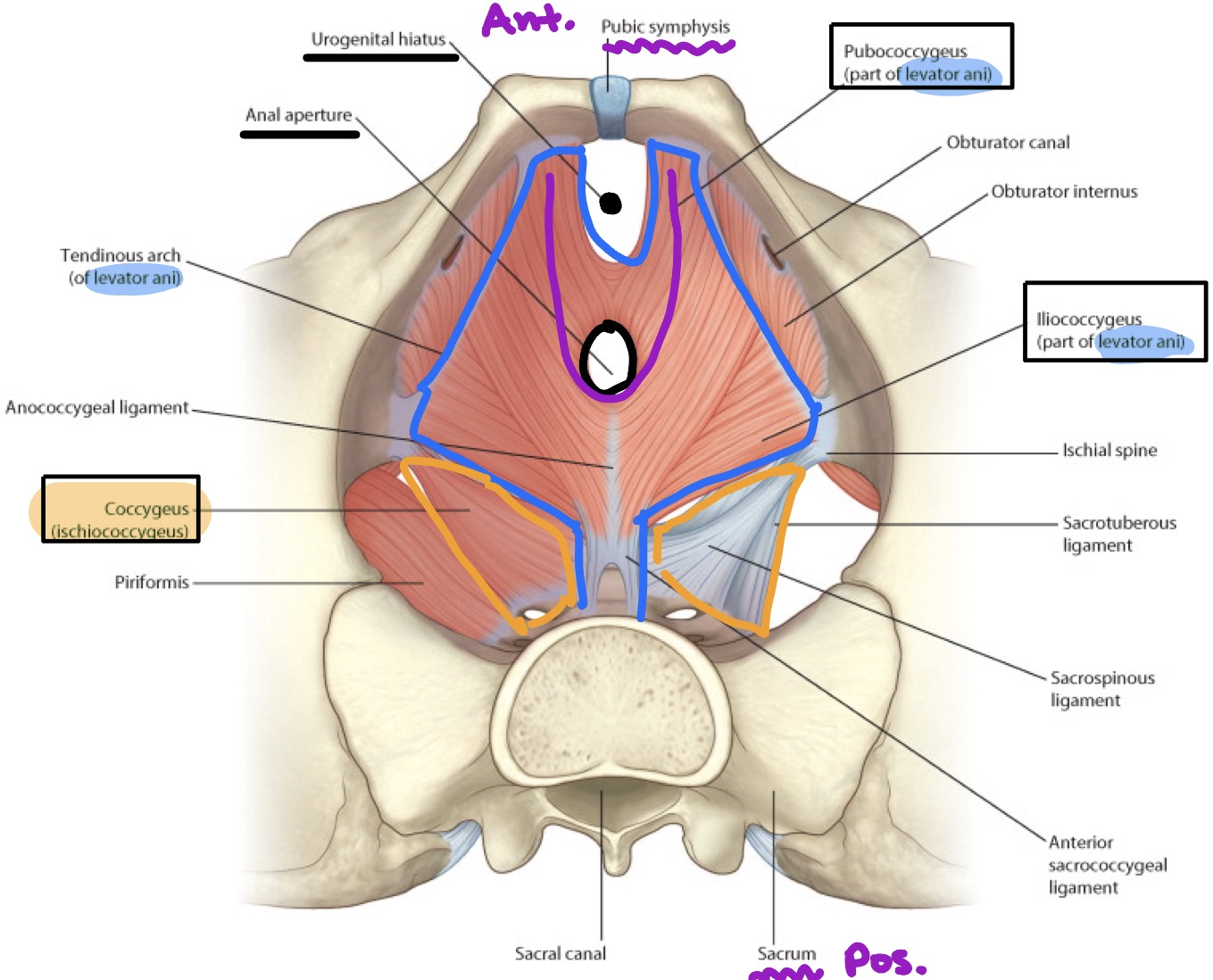
<ul><li><p>Funnel shaped pelvis floor or <strong>pelvis diaphragm</strong> is composed of 2 paired muscles</p><ul><li><p><strong>Levator ani muscles</strong> &amp; <strong>coccygeus muscles</strong></p></li></ul></li><li><p>Pelvis diaphragm closes the majority of the inferior pelvis aperture </p><ul><li><p>Pierced by <strong>rectum</strong> &amp; <strong>urethra</strong></p></li><li><p>This diaphragm supports &amp; raises the pelvis floor &amp; assists in the support of the abdominopelvic viscera</p></li></ul></li></ul><p></p>