Lecture 13 - Clinical Psychology
 Call Kai
 Learn
Learn Practice Test
 Spaced Repetition
 Match
Match Flashcards
 Knowt Play
1/46

There's no tags or description
Looks like no tags are added yet.
Name | Mastery | Learn | Test | Matching | Spaced | Call with Kai |
|---|
No analytics yet
Send a link to your students to track their progress
47 Terms
Why does psychological assessment exist? (2)
• because intuition is powerful, but often wrong
• psychodiagnostics is attempt to replace guesswork with systematic, reliable and evidence-based methods
Diagnostic cycle
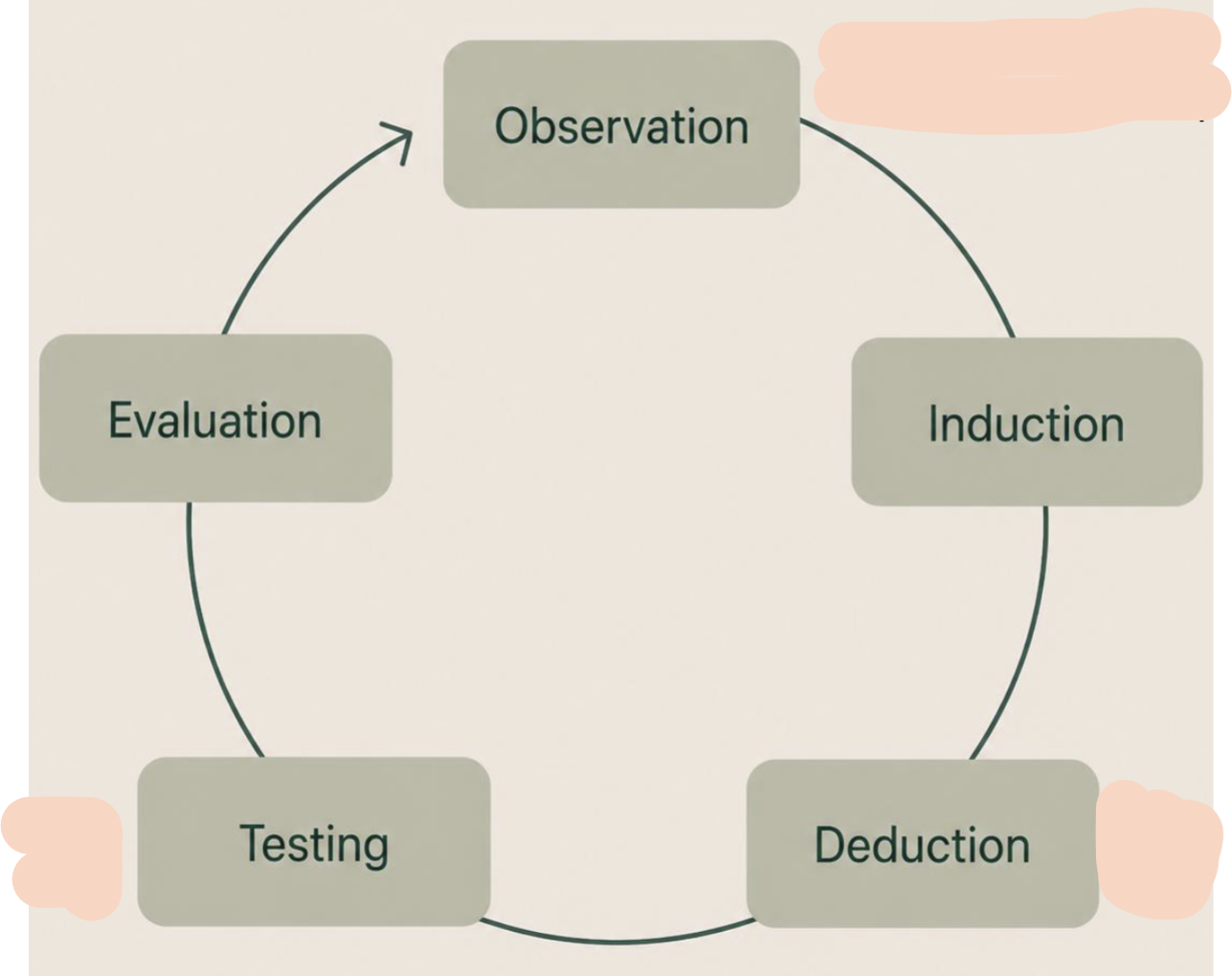
observation
• exploration and first thoughts about creation and persistence of problem behavior
induction
• formulation of theory and hypotheses
deduction
• derivation of testable predictions from hypotheses
testing
• application of relevant diagnostic measurements
evaluation
• determination whether predictions are met
clinical interview
• A procedure in which questions are adjusted in accord with the answers the interviewee provides; used to collect detailed information about a person’s history, current symptoms, and functioning.
Process of diagnostics applied to clinical psychology
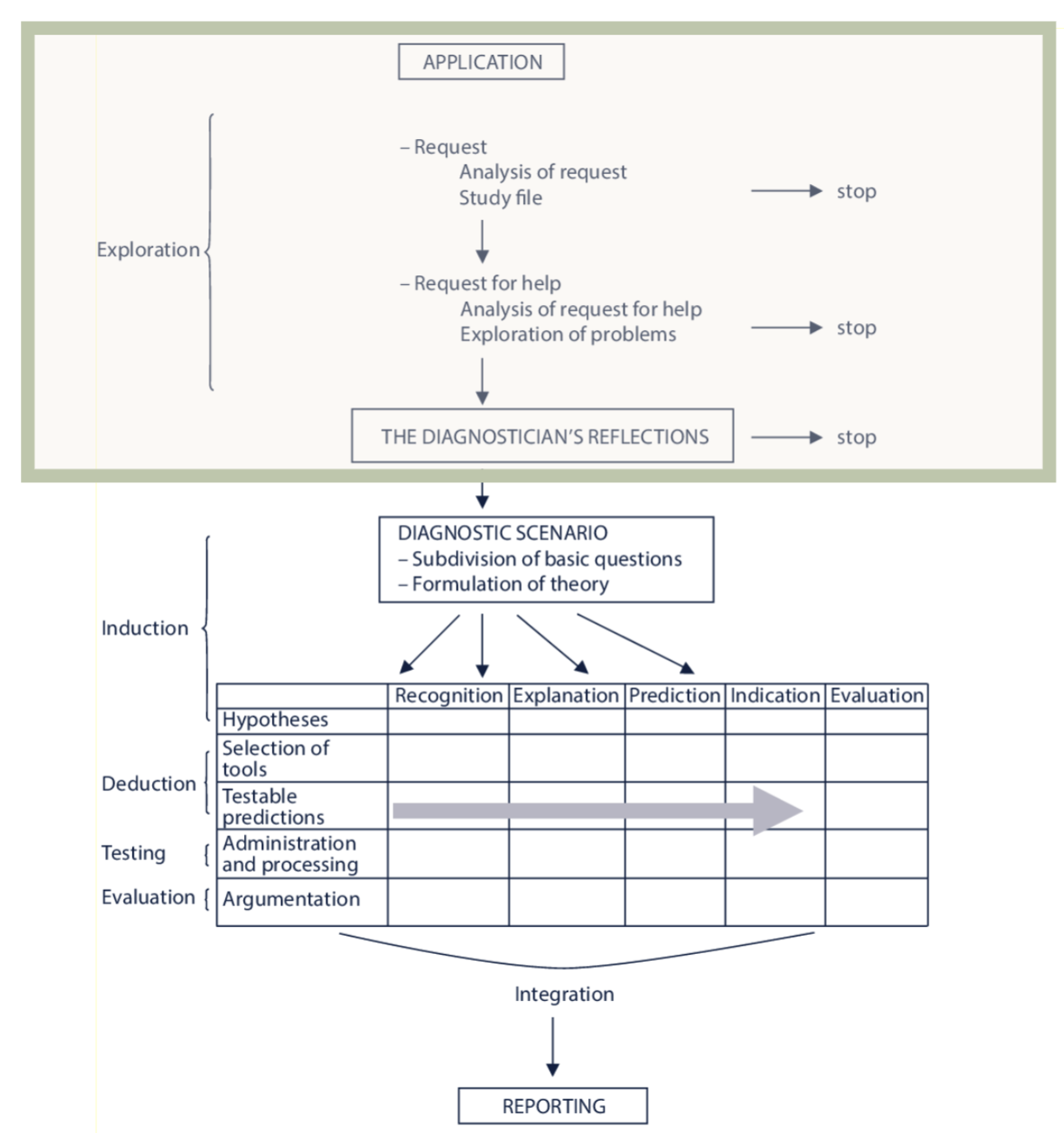
exploration phase
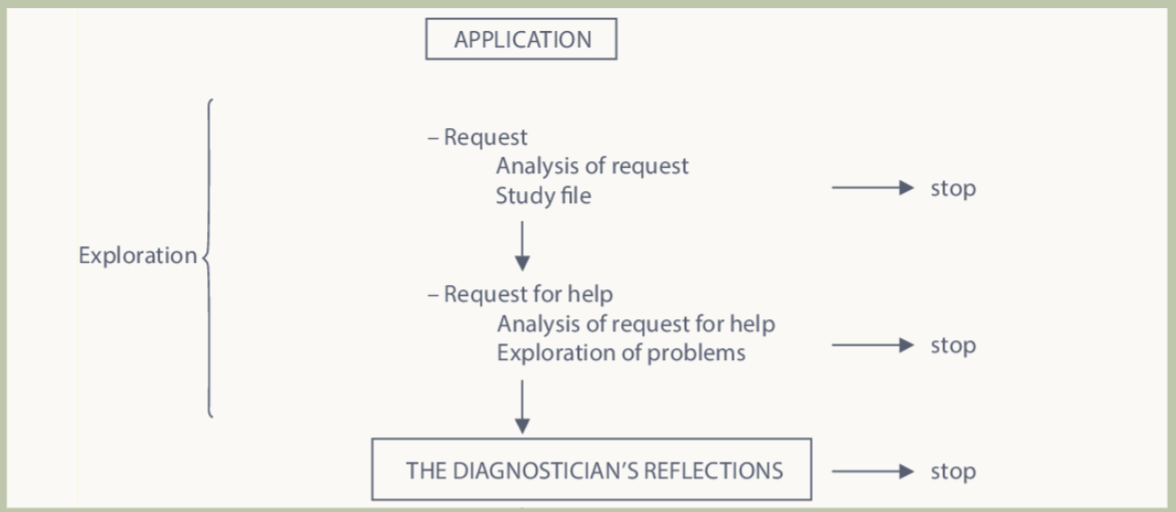
What should be done during the exploration phase in addition?(6)
take debiasing pause:
• availability heuristics may occur → recency bias, vividness bias, anchoring
• cannot be eliminated, but
→ slow down decision-making
→ differential, structured diagnostics
→ knowledge and intervision
vividness bias
• our minds overweight most striking, emotional, or prestigious information, causing us to neglect subtle yet equally important details
anchoring
• tendency to rely too heavily on the first piece of information encountered when making decisions → e.g. sticking to first hypothesis even though new information/evidence pointing in other direction occurs
induction phase
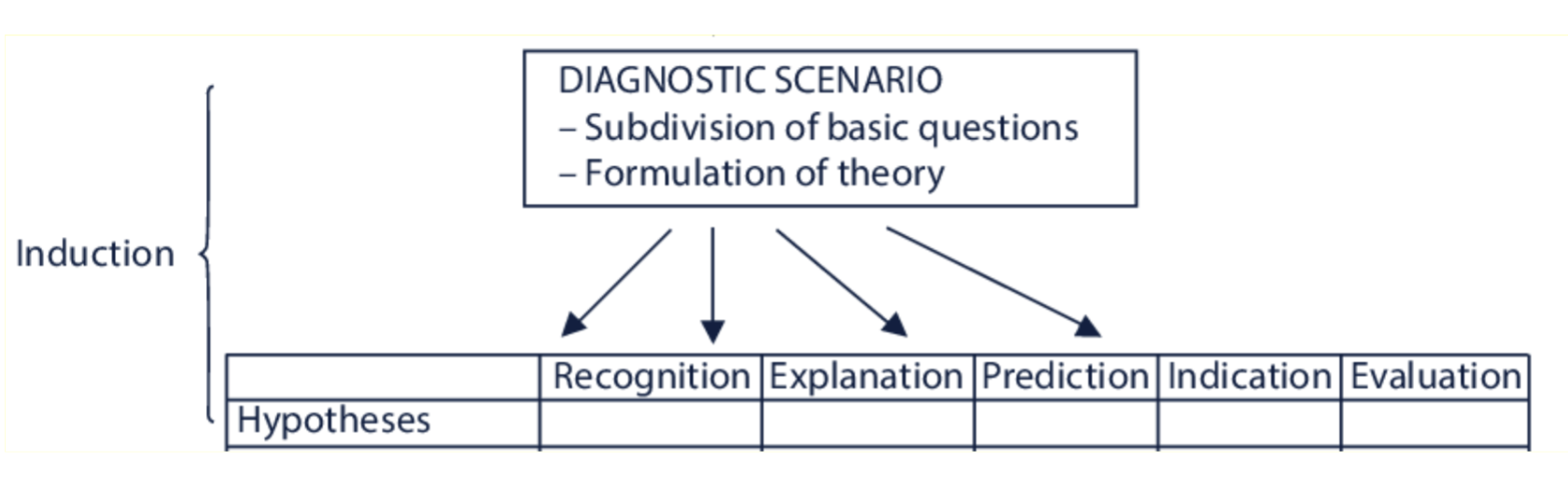
Types of questions in induction (5)
• recognition
• explanation
• prediction
• indication
• evaluation
recognition questions (Which question? Which principles?) (3)
• What are the (level of the) problems?
• all-or-nothing principle: clients is or isn’t assigned to diagnostic category → e.g. using SCID interview
• more-or-less principle: client is given profile of scores for number of dimensions → e.g. using MMPI
explanation questions (Which question? Which main elements?) (2)
• Why do the problems exist or perpetuate?
• 3 main elements of explanation questions: main problem, explanatory condition, connection between main problem and explanatory condition (usually causal)
prediction questions (Which question? What to pay attention to here? How do you then make predictions?) (3)
• How will problems develop in the future?
• large error margins!
• what can help: assessment (e.g. ipsative)
indication questions
• How can the problems be resolved?
evaluation questions
• Have the problems been adequately resolved by the intervention?
deduction phase
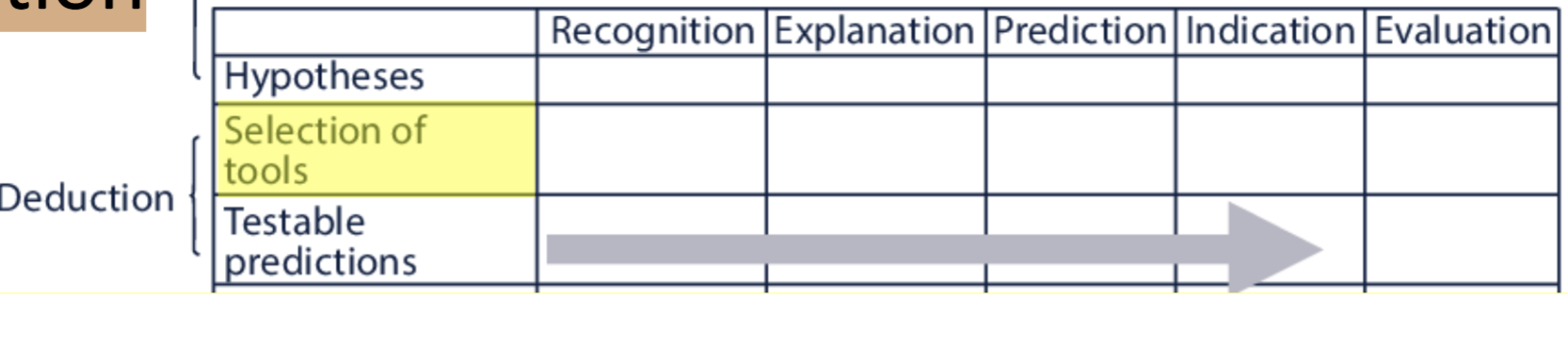
PA instruments for deduction phase (5)
• structured and semi-structured interviews
• Self- and informant-report questionnaires
• IQ tests and neuropsychological tests
• Observational rating scales
• (Projective tests)
Measurement strategies for testable predictions (3)
• representative group (normative)
• predefined standard (criterion)
• individual themselves (ipsative)
testing phase

What is the outcome of the testing phase? (2)
• interpreted results → might give rise to new hypotheses
• observational data → how does client perform task? has an appropriate working relationship been established?
evaluation phase
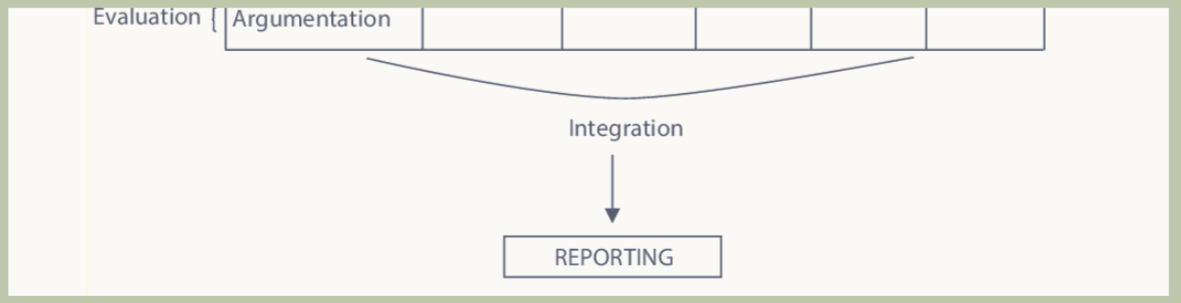
What are the products of the evaluation phase? (2)
• report for referrer that contains results of diagnostic examination
• verbal report to clients
What should you pay attention to in the report for the referrer? (3)
• substantiate claims
• distinction between facts/interpretation of facts/conclusions
• quality of sources is weighted
What should you pay attention to in the verbal report to clients? (2)
• acquaint client with diagnostician’s framework
• when done well, can be motivating for client
Under which circumstances does the PA (psychological assessment)/cycle work well? (2)
• most recognition questions, based on criteria or norms
• evaluation using norms, reduction scores, …
Under which circumstances does the PA/Cycle not work well/is it problematic? (2)
• explanation, prediction, indication without (sufficient) models or data
• most explanation questions rely on clinical judgement
Client standard rights within PA (NIP ethics code) (6)
→ client has to be informed on that
• information on working relationship
• access to and copy of report
• correction, addition, deletion report
• block sending out report
• right to delete PA report/file
structured interview
• A clinical interview in which the questions and the order of presentation are set, with standardized wording and scoring, to increase reliability of diagnosis.
Minnesota Multiphasic Personality Inventory-3 (MMPI-3)
• A widely used self-report personality inventory with validity and clinical scales designed to assess a broad range of emotional and behavioral problems.
standardization
• The process of establishing norms and uniform procedures for administering and scoring a psychological test, allowing comparison of an individual’s score with a reference group.
Big Five Inventory-2 (BFI-2)
• A self-report questionnaire that measures the five major dimensions of personality (the Big Five): neuroticism, extraversion, openness to experience, agreeableness, and conscientiousness.
NEO Personality Inventory (NEO-PI)
• A personality inventory designed to assess the Big Five personality traits and their facets.
intelligence test
• A standardized test designed to measure intellectual abilities such as reasoning, problem solving, and knowledge; often yields an intelligence quotient (IQ).
neuropsychological tests
• Tests used to measure cognitive functions (e.g., memory, attention, language, motor skills) that rely on specific brain systems, to help infer possible brain dysfunction.
ecological momentary assessment (EMA)
• A method of repeatedly sampling people’s behaviors and experiences in real time and in their natural environments, typically using electronic devices.
magnetic resonance imaging (MRI)
• A technique for measuring brain structure by using magnetic fields and radio waves to produce high-resolution images of the brain.
functional magnetic resonance imaging (fMRI)
• A technique for measuring brain activity by detecting changes in blood flow and oxygenation while a person performs tasks or is at rest.
BOLD
• Acronym for blood oxygen level–dependent signal; the fMRI signal that reflects changes in blood oxygenation associated with neural activity.
PET scan
• Positron emission tomography; a brain-imaging technique that measures metabolic activity (often glucose metabolism or receptor binding) by tracking radioactive tracers.
SPECT
• Single photon emission computed tomography; a brain-imaging technique similar to PET that uses radioactive tracers to measure blood flow and activity, typically with lower resolution than PET.
transcranial magnetic stimulation (TMS)
• A noninvasive technique that uses magnetic fields applied to the scalp to induce electrical currents in the cortex, temporarily modulating neural activity in targeted brain regions.
transcranial direct current stimulation (tDCS)
• A noninvasive brain stimulation technique in which a weak direct electrical current is applied via electrodes on the scalp to alter cortical excitability in targeted regions.