Chapter 9: Skeletal System and Appendicular Skeleton in Vertebrates
 Call Kai
 Learn
Learn Practice Test
 Spaced Repetition
 Match
Match Flashcards
 Knowt Play
1/44

There's no tags or description
Looks like no tags are added yet.
Name | Mastery | Learn | Test | Matching | Spaced | Call with Kai |
|---|
No analytics yet
Send a link to your students to track their progress
45 Terms
What does the appendicular skeleton include?
Paired fins or limbs and the girdles that support them.
What forms the pectoral girdle?
It is formed from endochondral and dermal elements.
What are ceratotrichia?
Keratinized rods found in Chondrichthyes.
What are lepidotrichia?
Ossified rays found in bony fishes.
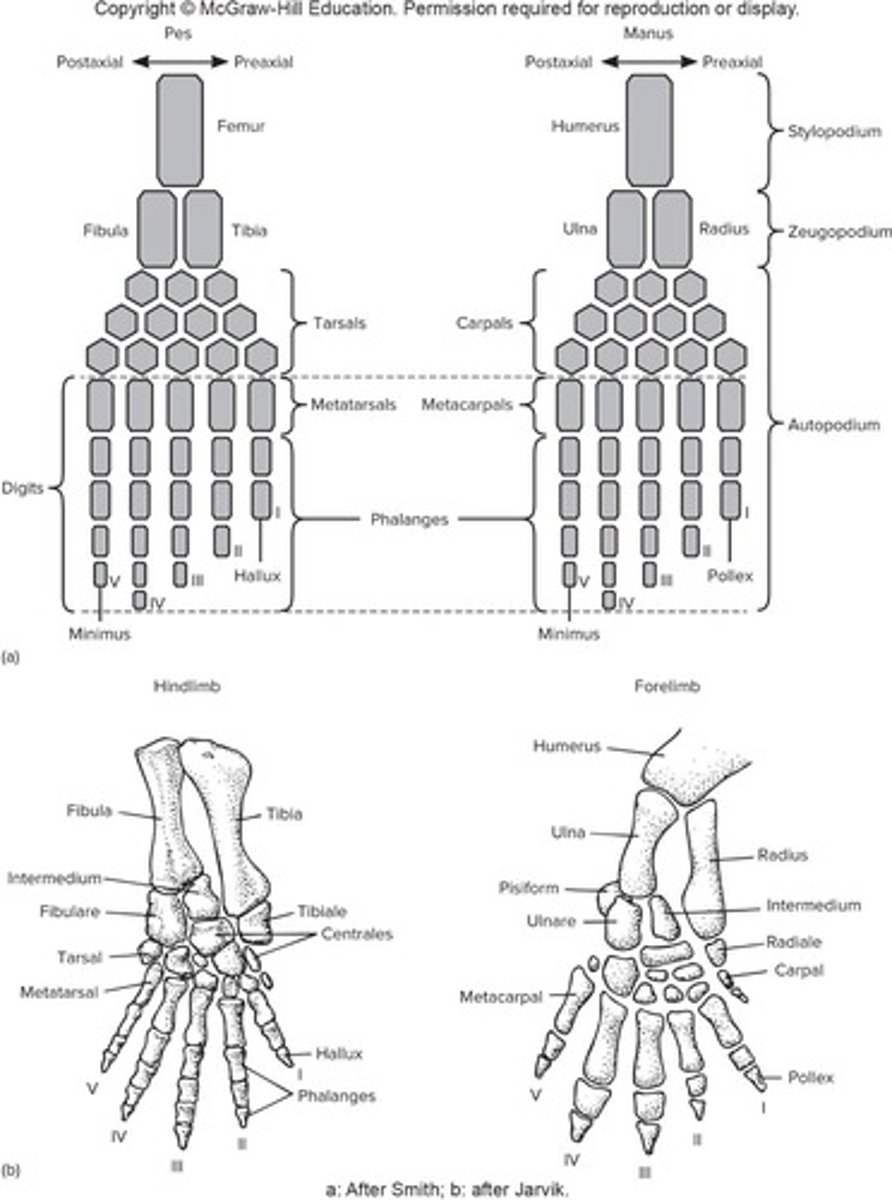
What is the stylopodium?
The part of the limb that includes the humerus or femur.
What is the zeugopodium?
The intermediate section of the limb, including the radius and ulna or tibia and fibula.
What is the fin-fold theory?
The hypothesis that paired fins arose from paired continuous sets of ventrolateral folds in the body.
What is the significance of Tiktaalik in limb evolution?
It shows the loss of the pectoral girdle attachment to the skull, marking a transition to tetrapods.
What are the three bones that make up the pelvic girdle in tetrapods?
Ilium, pubis, and ischium.
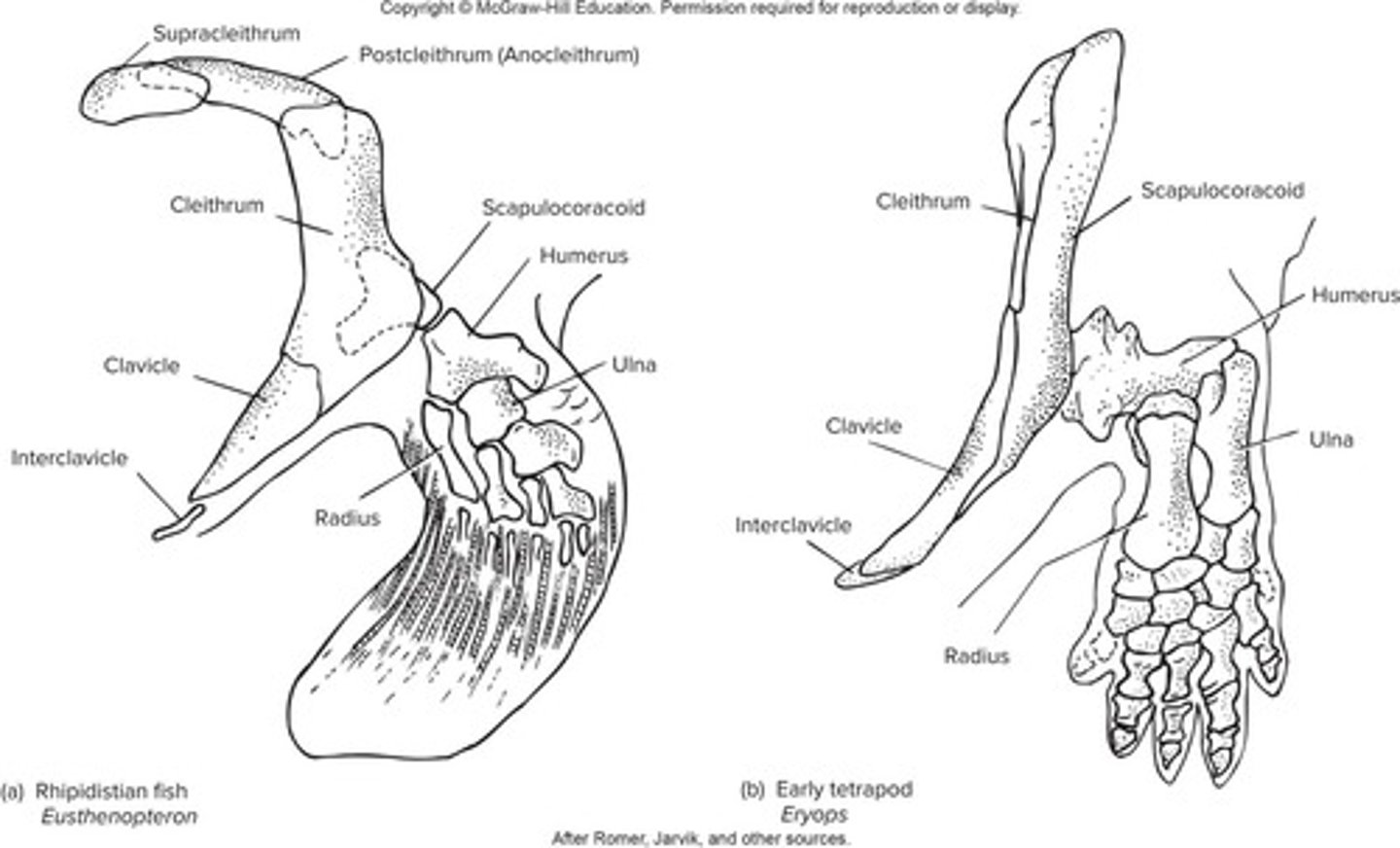
What is the function of the cleithrum?
It is the largest element of the dermal shoulder girdle that supports the scapulocoracoid.
What adaptations do fossorial animals have for digging?
Stout limb bones with large muscles, short forearms, and broad hands with heavy claws.
What is the difference between plantigrade, digitigrade, and unguligrade locomotion?
Plantigrade: entire sole touches ground; Digitigrade: only digits bear weight; Unguligrade: walks on tips of toes.
What is the primary function of fins in Actinopterygii?
Fins function mainly as small oars for close maneuvering or slight adjustments in body position.
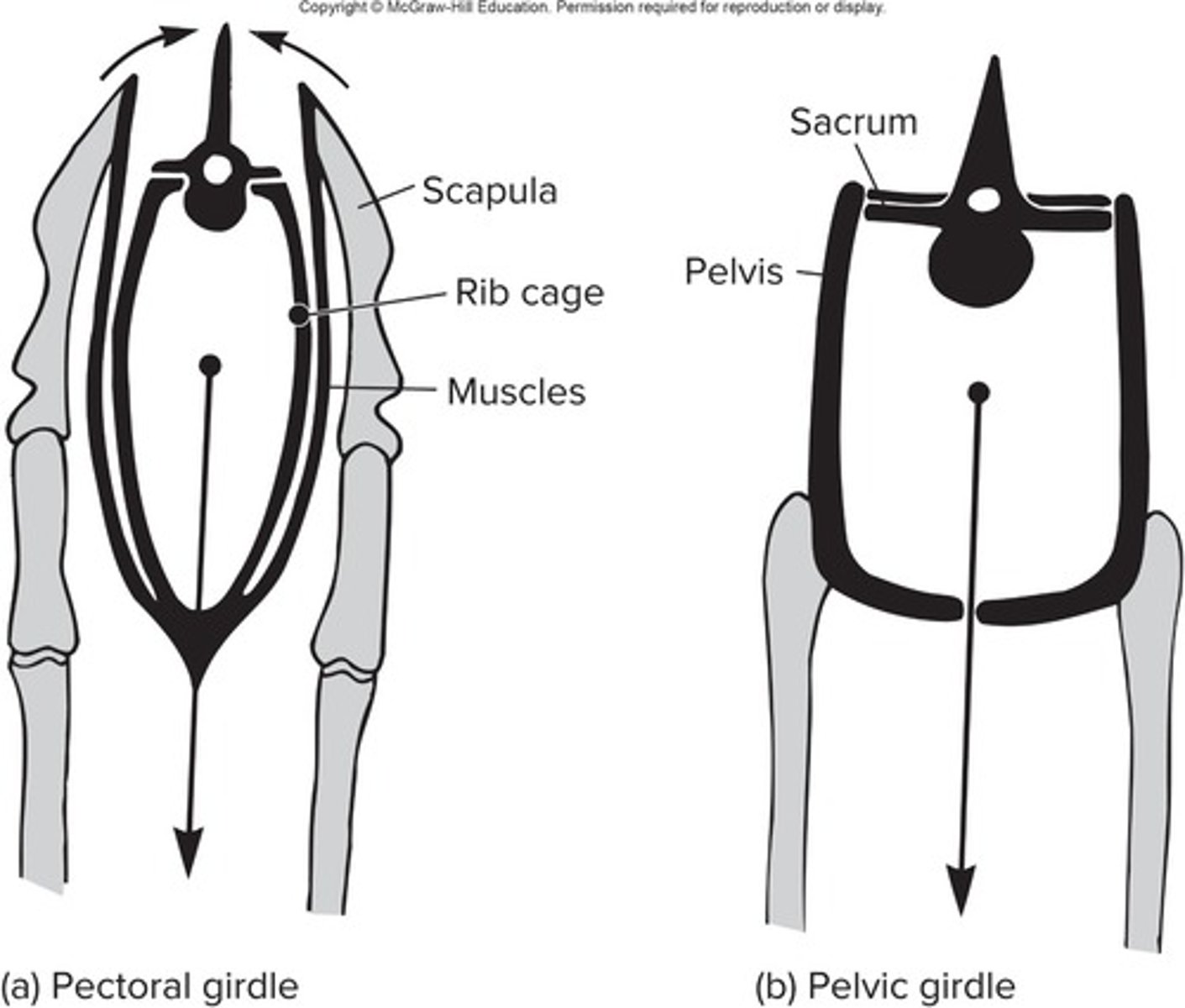
What is the role of the pelvic girdle in tetrapods?
It attaches directly to the vertebral column and supports locomotion.
What are the two types of locomotion in tetrapods?
Cursorial (running) and fossorial (digging).
What is the autopodium?
The wrist and hand (manus) or ankle and foot (pes) of the limb.
What is the evolutionary significance of lobe-finned fish?
They have appendages that support dermal fins and are homologous with early tetrapod limbs.
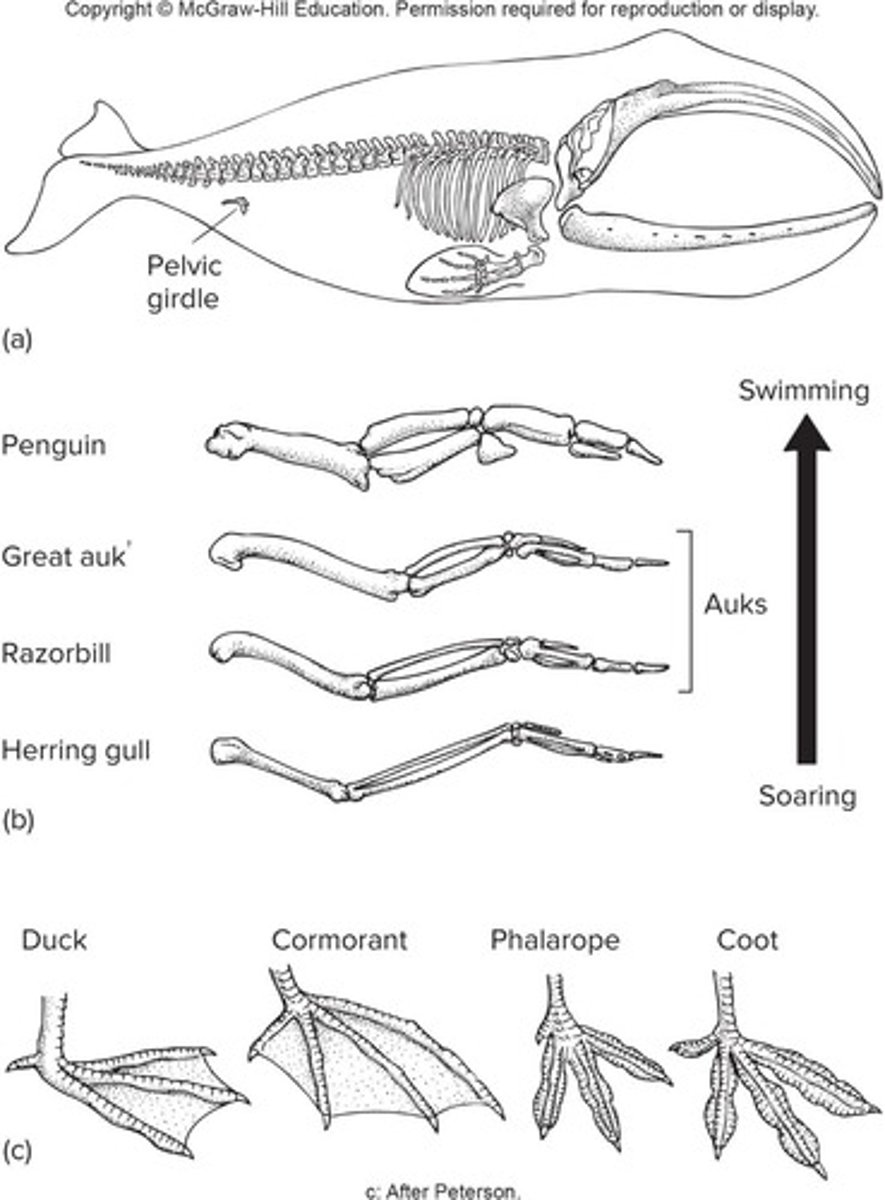
What is the primary locomotion mode of secondary aquatic tetrapods?
Limbs become flipper-like for swimming.
What is the significance of the scapulocoracoid in tetrapods?
It supports the pectoral girdle and articulates with the fins.
What adaptations do animals have for aerial locomotion?
Expanded body parts that allow gliding or flying.
What is the main function of the pectoral girdle in tetrapods?
It is supported by a muscular sling from the vertebral column.
What is the evolutionary advantage of moving from water to land?
Avoiding predation, finding more food, and exploring new habitats.
What are the primary components of the appendicular skeleton? 1
Fins or limbs and the girdles that support them.
What is the role of the interclavicle in tetrapods?
It is a bone found in some later tetrapods, contributing to the structure of the girdle.
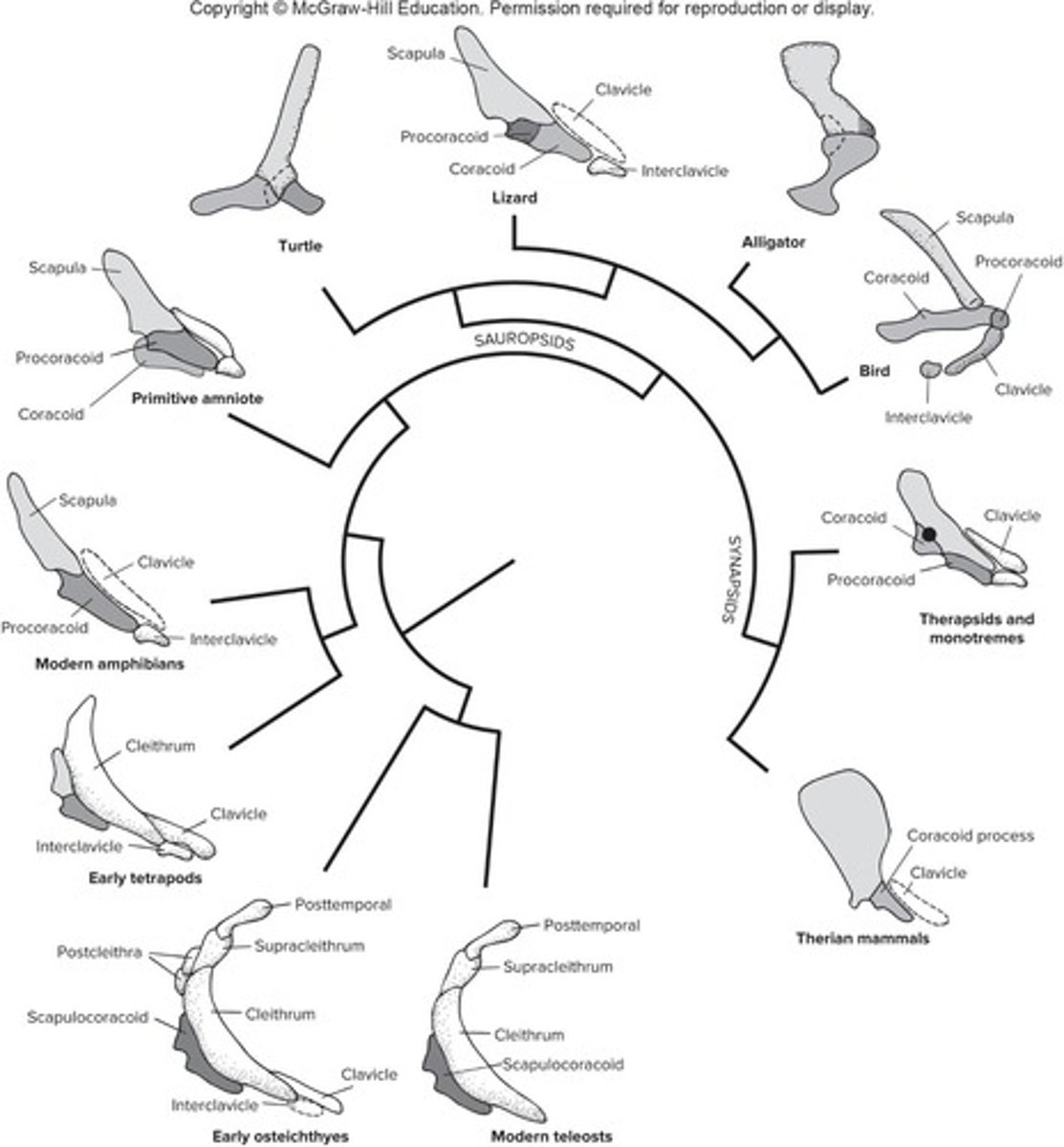
What is the significance of the scapula in tetrapods?
It becomes predominant in the endoskeletal structure of the pectoral girdle.
What is the primary difference in limb development between tetrapods and fish?
Tetrapods develop limbs with digits, while fish have fins.
What is the evolutionary trend observed in the pelvic girdle of tetrapods?
It evolved from a single element in late fishes to three distinct bones in tetrapods.
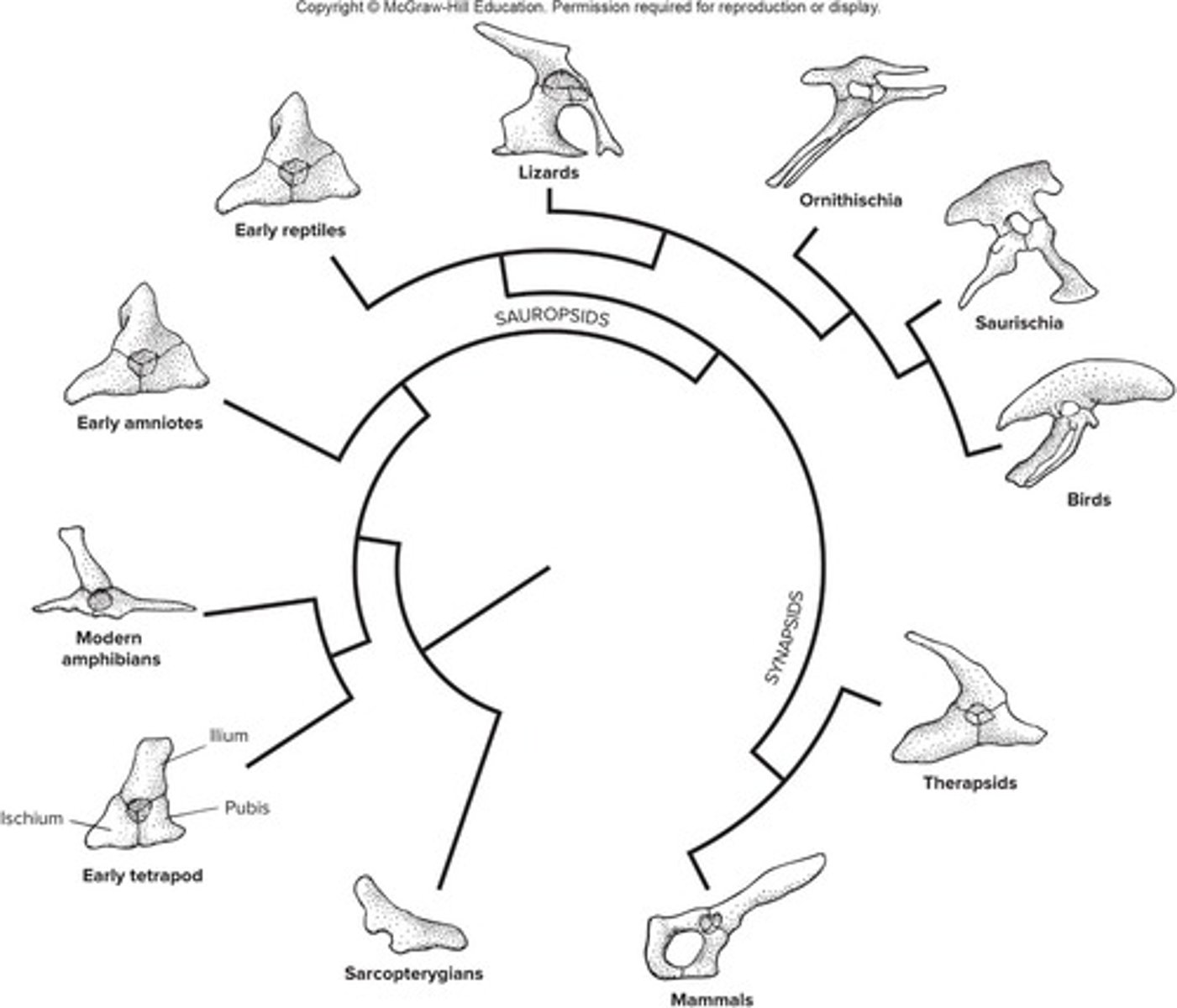
What is the pelvic girdle formed from?
It is formed from endochondral elements.
What does the zeugopodium consist of?
The radius and ulna in the forelimb; tibia and fibula in the hindlimb.
What bones are included in the stylopodium?
The humerus in the forelimb and the femur in the hindlimb.
What is the metapterygial stem?
A chain of basals from which two different types of fins developed in gnathostomes.
What is the archipterygial fin?
A fin where the stem of basals runs down the middle and radials project outward.
What is the metapterygial fin?
A fin where the stem of basals is located posteriorly and radials project anteriorly.
What is the common pattern of embryonic development in tetrapod limbs?
Stylopodium develops first, then branches into pre-axial and post-axial elements, followed by the autopodium.
What are the three types of animals that can fly?
Bats, birds, and extinct pterosaurs.
What is the function of fins in Actinopterygii?
Fins function mainly as small oars for close maneuvering or slight adjustments of body position.
What is the cleithrum?
The largest element of the dermal shoulder girdle, supporting the scapulocoracoid.
How do sarcopterygii fins differ from those of other fish?
They have muscle and internal supportive elements forming a fleshy base of the dermal fin.
What is the evolutionary significance of the lobe fins?
They allowed early fish to 'walk' along the bottom of ponds and adapt to shallow water environments.
What happens to dermal bones in amphibians?
Most dermal bones are lost, but clavicle and interclavicle persist.
What is the role of the clavicle in birds?
It forms the furcula (wishbone) and articulates with the scapula and coracoid.
What are the primary functions of the pectoral and pelvic girdles?
The pectoral girdle supports the forelimbs, while the pelvic girdle supports the hindlimbs.
What is the significance of the interclavicle in tetrapods?
It is a bone found in some later tetrapods, contributing to the structure of the girdles. 1
How do locomotion modes differ among tetrapods?
Modes include cursorial (running), fossorial (digging), saltatorial (hopping), aerial (flying), and more.
What is the primary adaptation for cursorial locomotion?
Increasing limb length and changing foot posture to enhance stride length.