Bio 201 - Chapter 7 - Bone Tissue
 Call Kai
 Learn
Learn Practice Test
 Spaced Repetition
 Match
Match Flashcards
 Knowt Play
1/31

There's no tags or description
Looks like no tags are added yet.
Name | Mastery | Learn | Test | Matching | Spaced | Call with Kai |
|---|
No analytics yet
Send a link to your students to track their progress
32 Terms
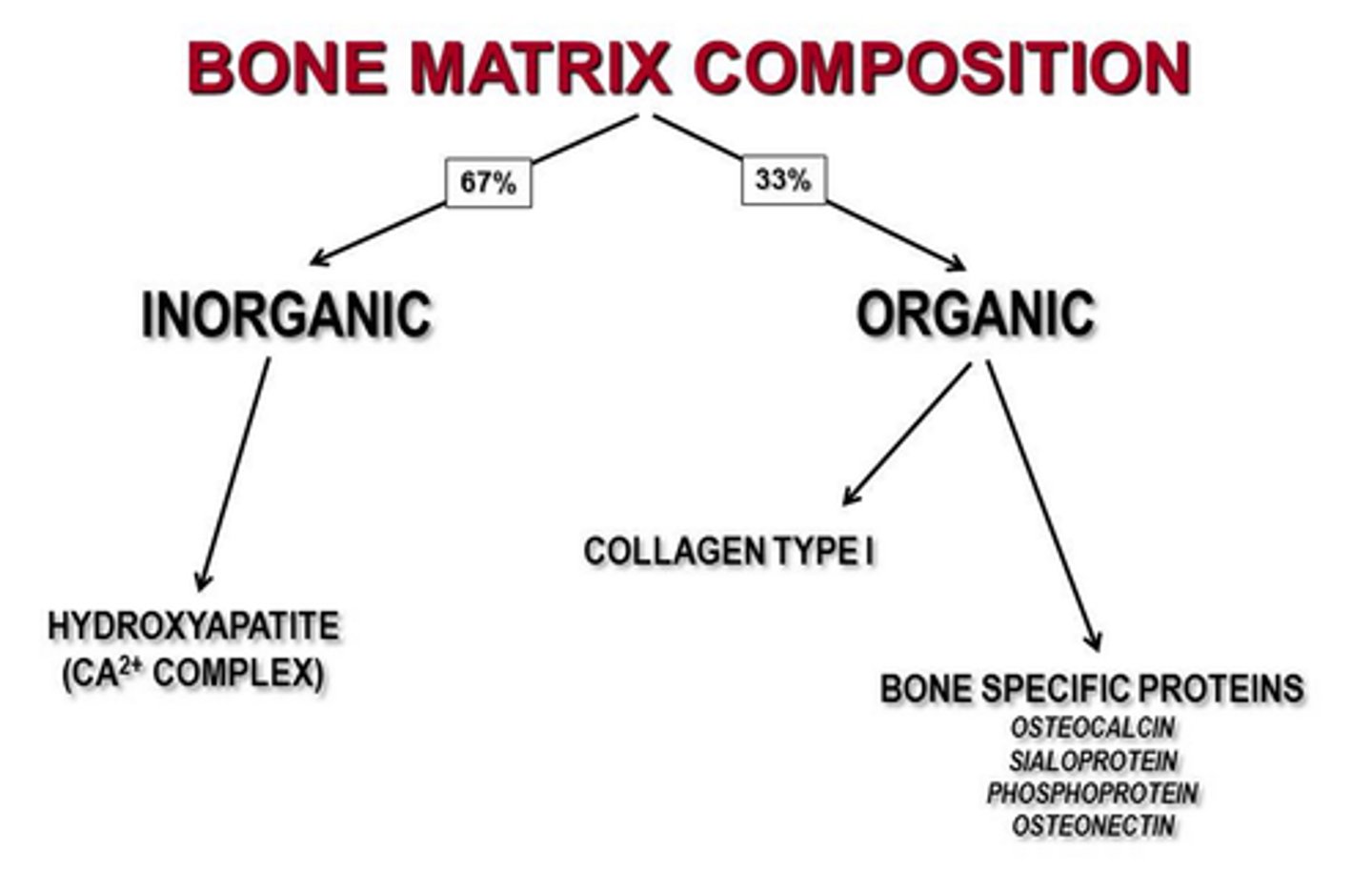
Describe the organic and inorganic components of bone
1/3 organic- collagen and the glycos
2/3 inorganic- 85% hydroxyapatite 10% calcium
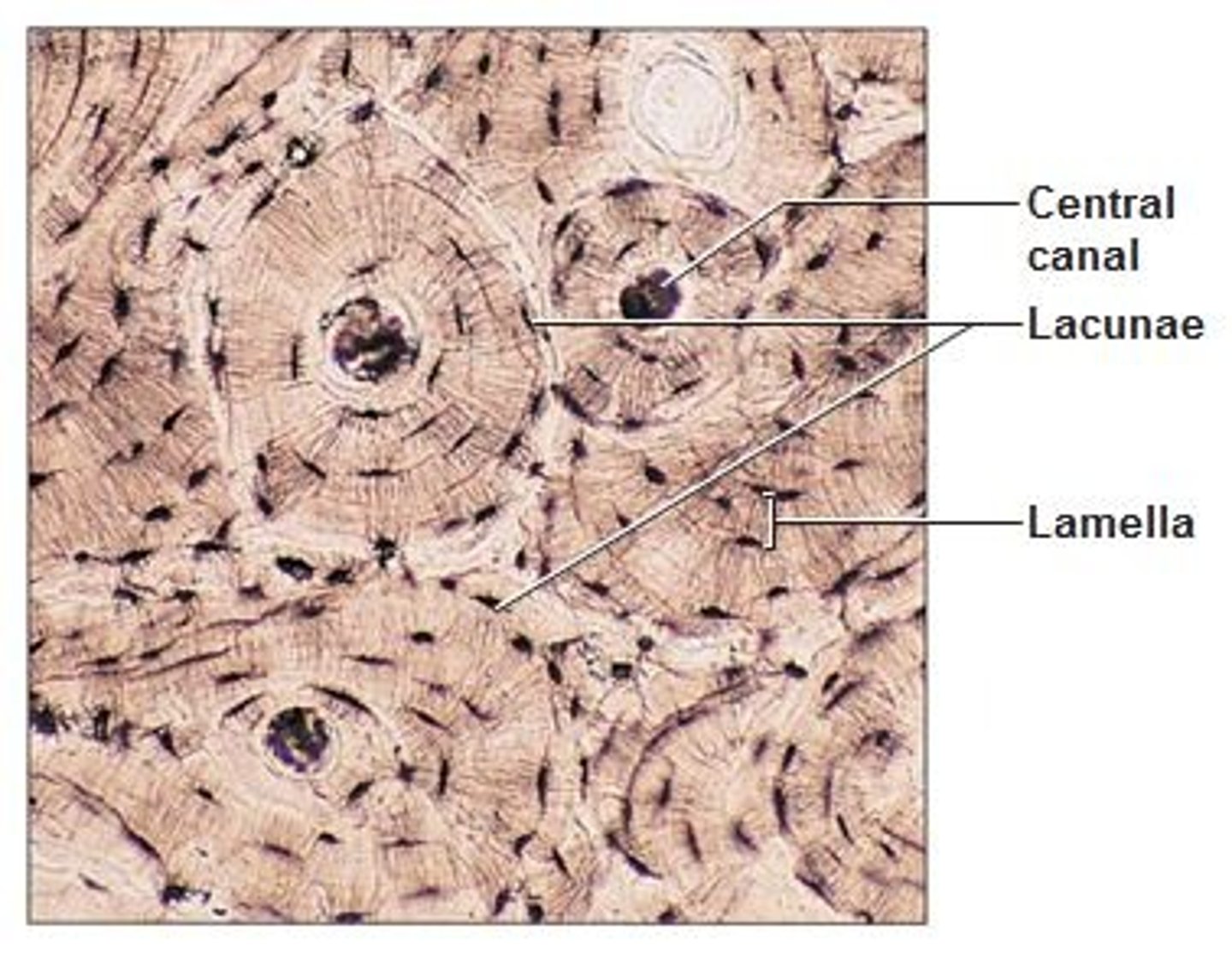
Recall that bone tissue is connective tissue
osseous tissue with a matrix hardened by calcium phosphate.
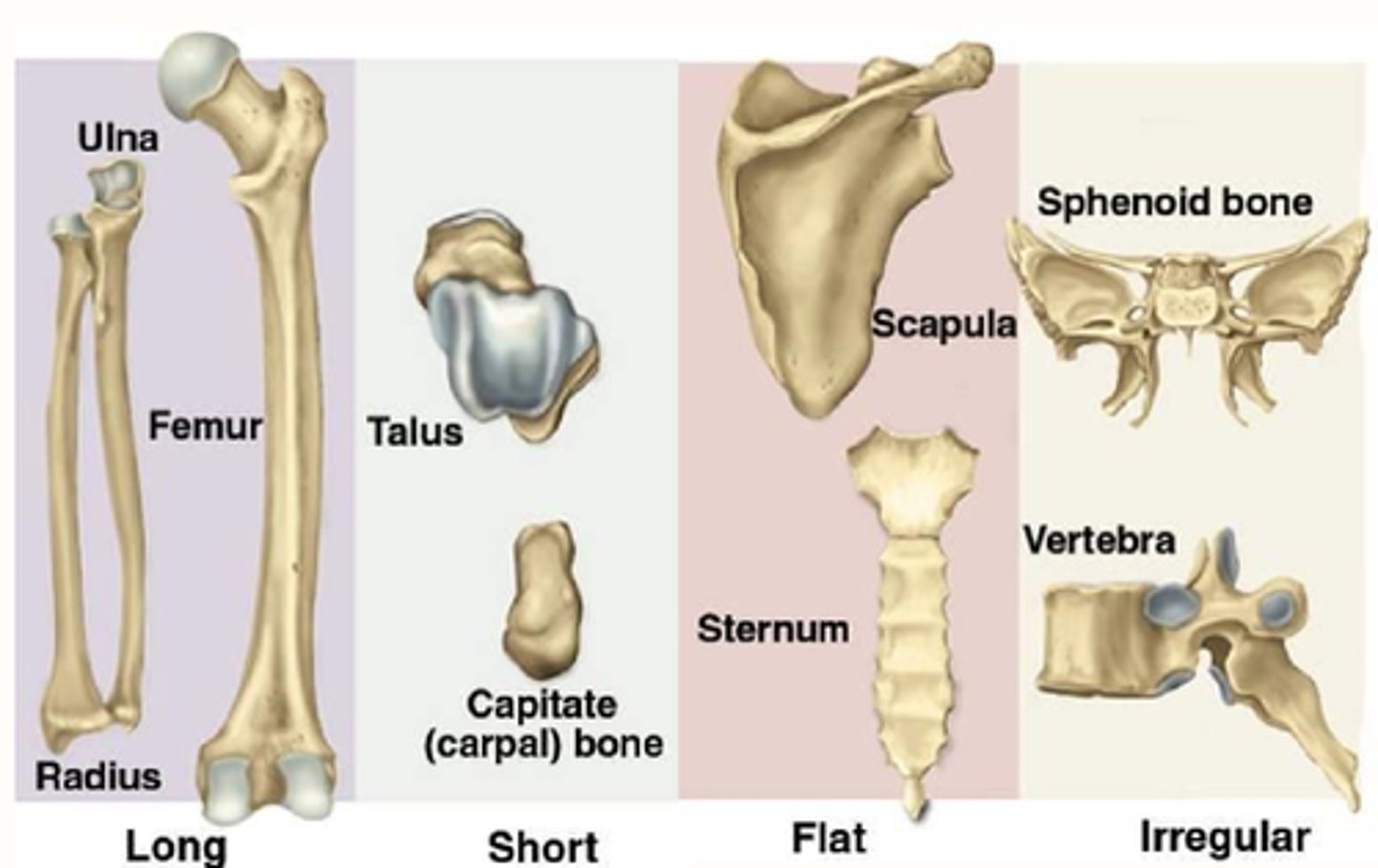
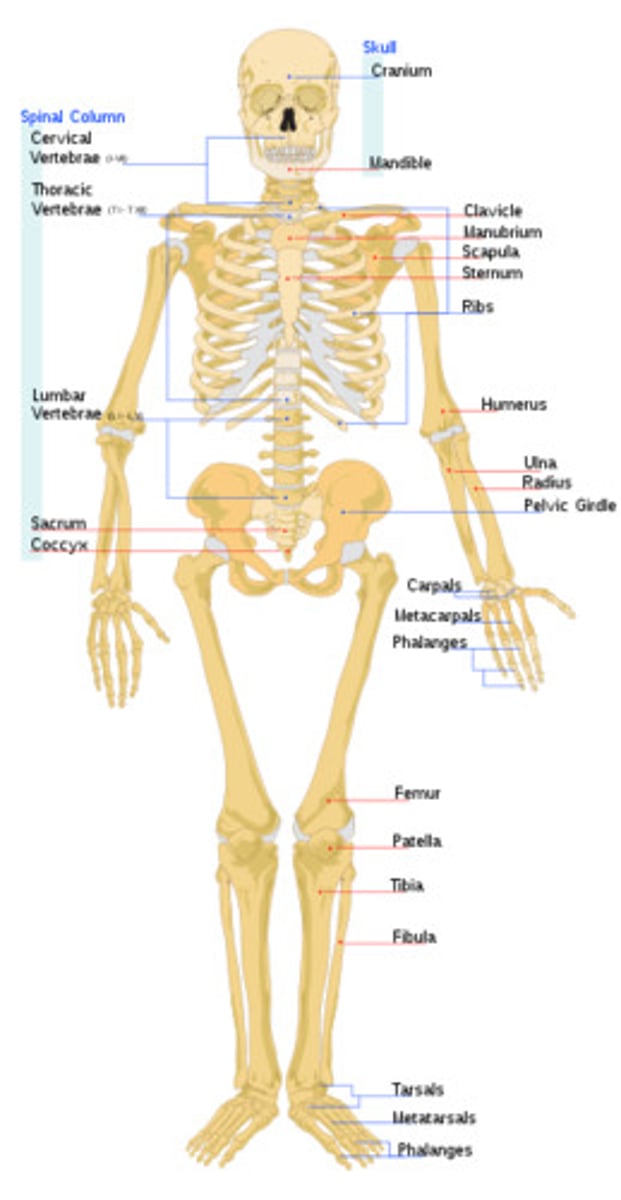
List examples of long, short, flat and irregular bones
Long bones: ulna, femur
Short: talus, capitate
Flat: ribs, sternum, scapula
Irregular: vertebrae, spheoid
Explain how the structure of a flat bone is conducive to protection
The flat bone has an inner and outer layer of compact bone that sandwiches "dipole" which is spongy bone that absorbs shock
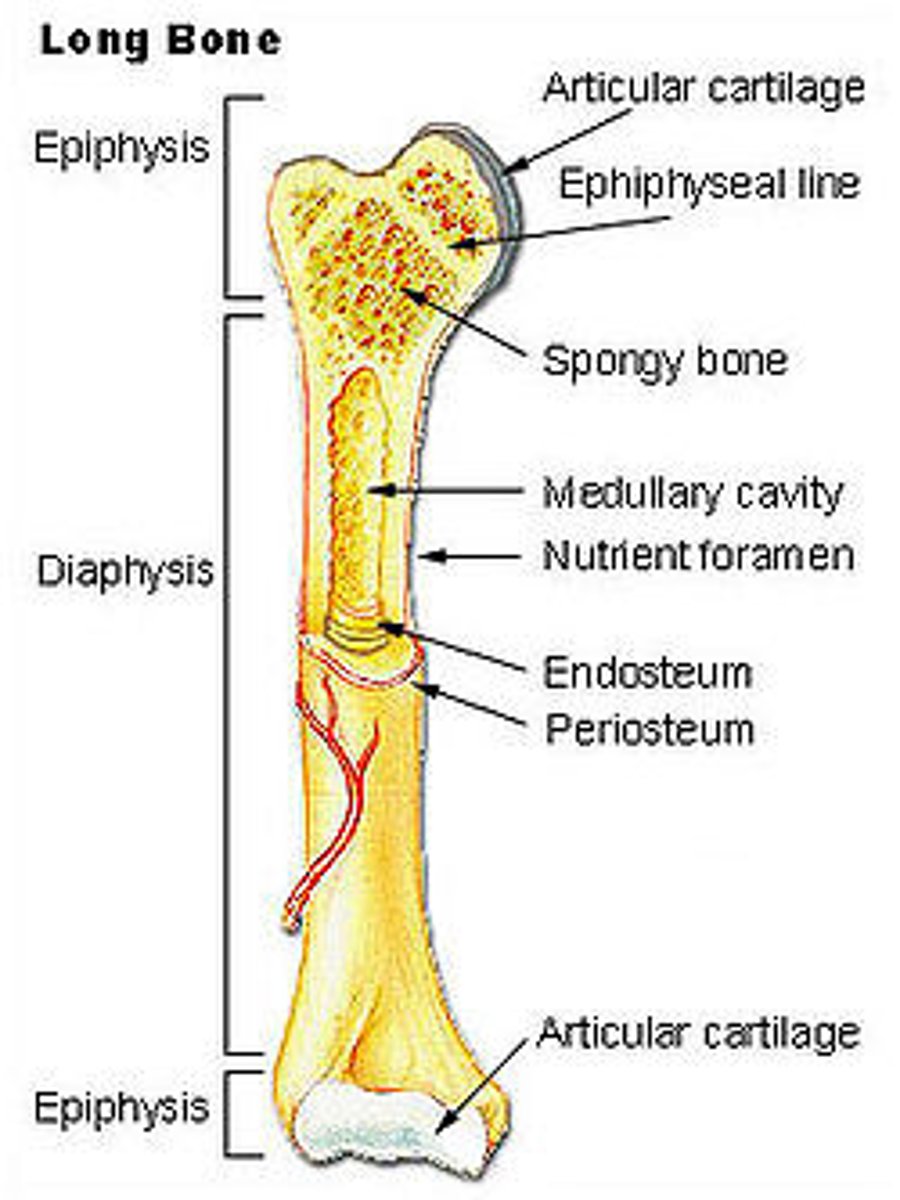
what are the characterize the components of a long bone
Diaphysis- the shaft (covered by the periosteum)
Epiphysis- the head (outer is compact bone inside is spongy, also covered with articular cartilage)
Endosteum- inner liner, outlines the marrow
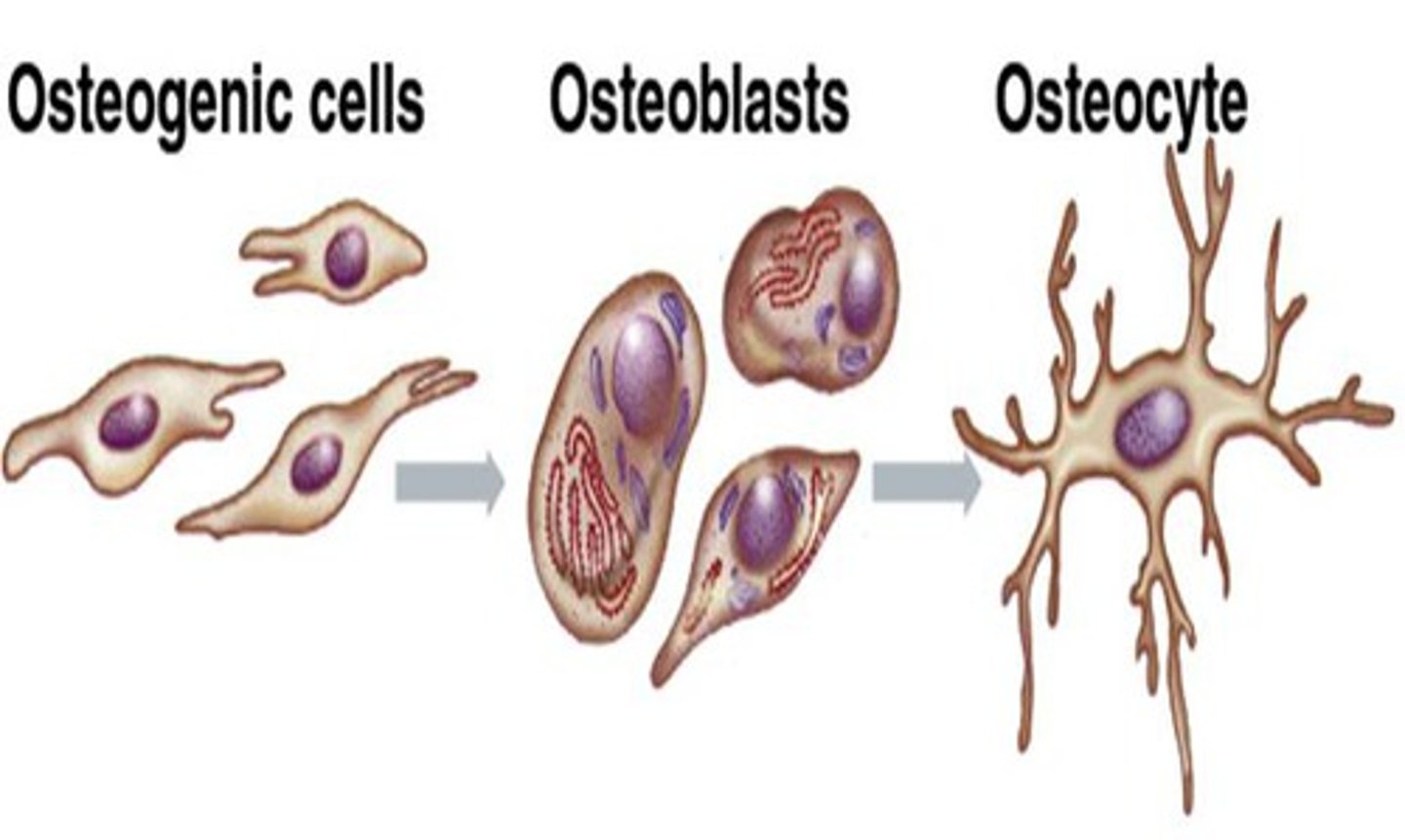
Describe the cells of osseous tissue
Osteogenic- (multiply and becomes osteoblasts)
Osteoblasts- (create bone tissue, mineralizes in response to stress)
Osteocytes- (osteoblasts that lay down a matrix and become trapped in lacunae and connect via canaliculi)
Explain the importance of a combination of organic and inorganic matter in bones
Organic( minerals) resists flexibility of bones
Inorganic- would shatter.
They balance each other with the stresses that bones go under.
Describe rickets and osteomalacia
Rickets- in children, soft bone, insufficient vitamin D, so not enough calcium or phosphate.
Osteomalacia- rickets but in adult
Recall the components of bones
bone tissue, marrow, cartilage, periosteum
List the functions of the skeletal system
support, protection, movement, storage, blood cell formation
Explain the advantages to having both compact and spongy bone
If our whole body had compact our bones would be extremely heavy and cause our muscles to be bigger, would not take impact as well
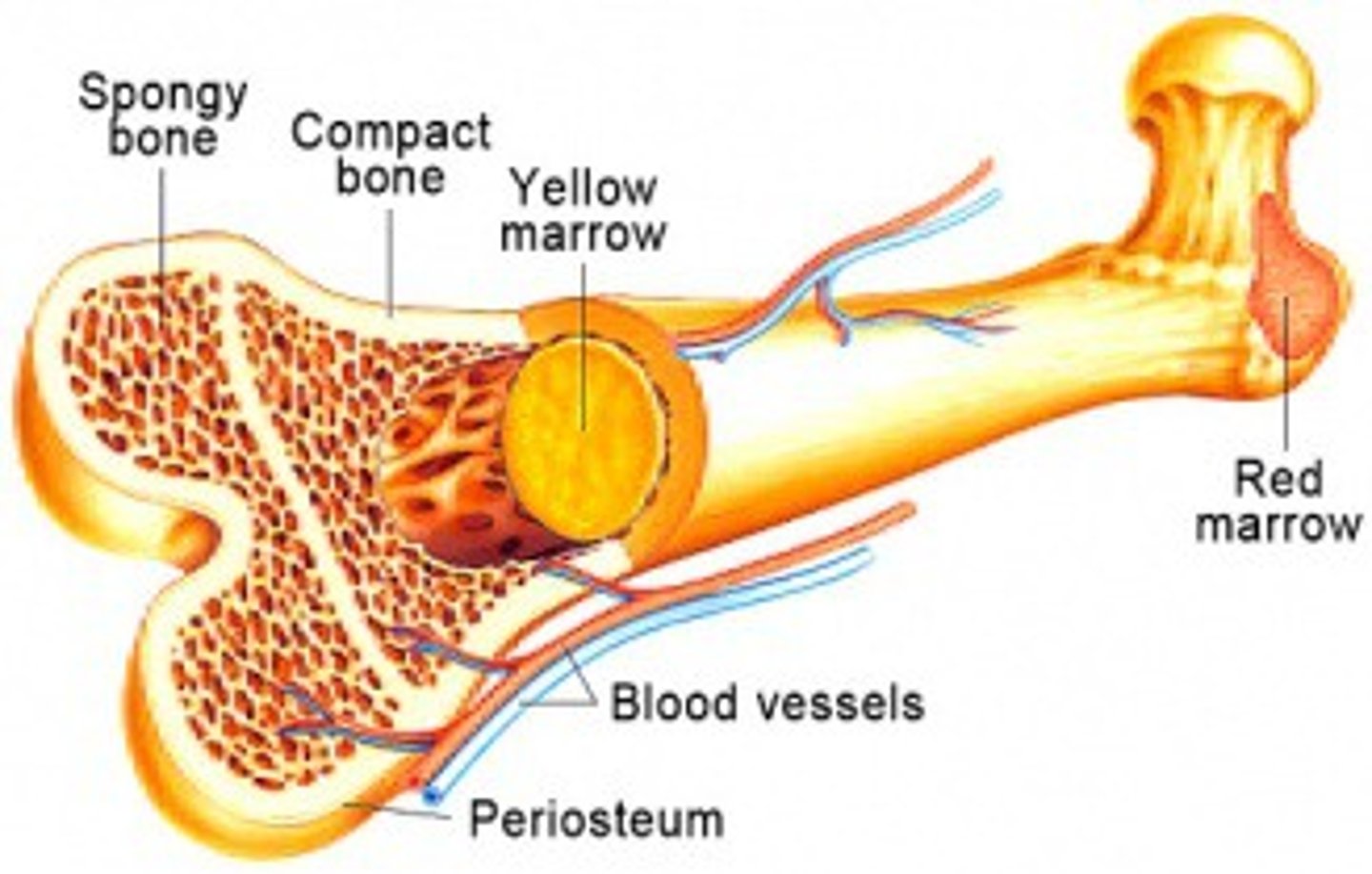
Characterize the appearance and function of three types of bone marrow
Red bone marrow- looks like thick red blood, makes blood
Yellow bone marrow- fatty marrow made of adipocytes
Gelatinous marrow-yellow marrow replaces with gelatin pink marrow
Explain intramembranous ossification
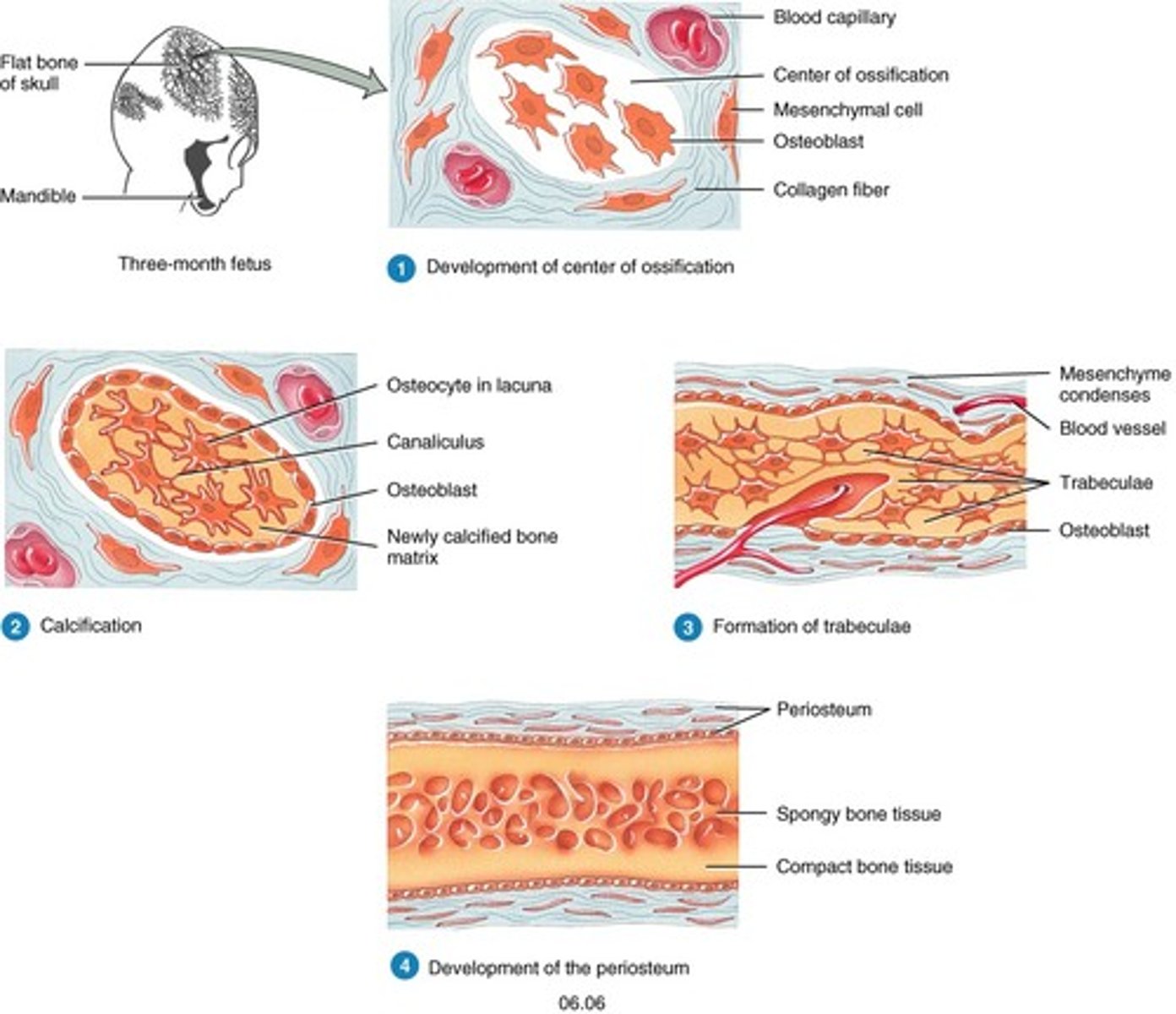
During intramembranous ossification, compact and spongy bone develops directly from sheets of mesenchymal (undifferentiated) connective tissue. The flat bones of the face, most of the cranial bones, and the clavicles (collarbones) are formed via intramembranous ossification.
The process begins when mesenchymal cells in the embryonic skeleton gather together and begin to differentiate into specialized cells. Some of these cells will differentiate into capillaries, while others will become osteogenic cells and then osteoblasts. Although they will ultimately be spread out by the formation of bone tissue, early osteoblasts appear in a cluster called an ossification center.
The osteoblasts secrete osteoid, uncalcified matrix, which calcifies (hardens) within a few days as mineral salts are deposited on it, thereby entrapping the osteoblasts within. Once entrapped, the osteoblasts become osteocytes. As osteoblasts transform into osteocytes, osteogenic cells in the surrounding connective tissue differentiate into new osteoblasts.
Osteoid (unmineralized bone matrix) secreted around the capillaries results in a trabecular matrix, while osteoblasts on the surface of the spongy bone become the periosteum. The periosteum then creates a protective layer of compact bone superficial to the trabecular bone. The trabecular bone crowds nearby blood vessels, which eventually condense into red marrow.
Explain the significance of articular cartilage and the epiphyseal plate
Articular cartilage forms the epiphyseal plate, also is the way that bones grow, chondrocytes multiply and become osteoblasts and create bone.
List factors that affect bone growth
Hormones, physical stress, age, dietary calcium, sex hormones, thyroid hormones.
•Compare interstitial and appositional bone growth
Interstitial; growth from within with the multiplication of chondrocytes and deposition of new matrix.
Appositional: growth on the surface of the bone, osteoblast deposited on the inner surface of the periosteum.
• Contrast achondroplasia and pituitary dwarfism
achondroplasia: the cartilage fails to grow in zone 1 and 2
Pituitary: the growth hormone is not produce so the bones do not grow at all
• Explain the process of bone deposition
Bone deposition: a crystallization process in which calcium, phosphate, and other ions are taken from the blood plasma and deposited in bone tissue by osteoclasts mainly as needlelike crystals of hydroxyapatite. Hydrochloric acid is secreted on the bone too.
• Explain ectopic ossification and give examples
Abnormal ossification in areas such as the lungs, brains, eyes, muscles, tendons and arteries.
List the enzymes/chemicals involved bone resorption and describe their functions
hydrogen pumps in the cell membrane secrete hydrogen ions into the space between osteoclast & bone
chloride ions follow by electrical attraction
hydrochloric acid (HCl) w/ pH 4 dissolve bone minerals
secrete an enzyme (acid phosphate) that digests the collagen
• List the functions of calcium and phosphate in the body
The body needs calcium to maintain strong bones and to carry out many important functions. Almost all calcium is stored in bones and teeth, where it supports their structure and hardness. It also needs calcium for muscles to move and for nerves to carry messages between the brain and every body part.
• Describe hypercalcemia and hypocalcemia
Hypocalcemia denotes a lower than average amount of calcium, while hypercalcemia is an overabundance of calcium.
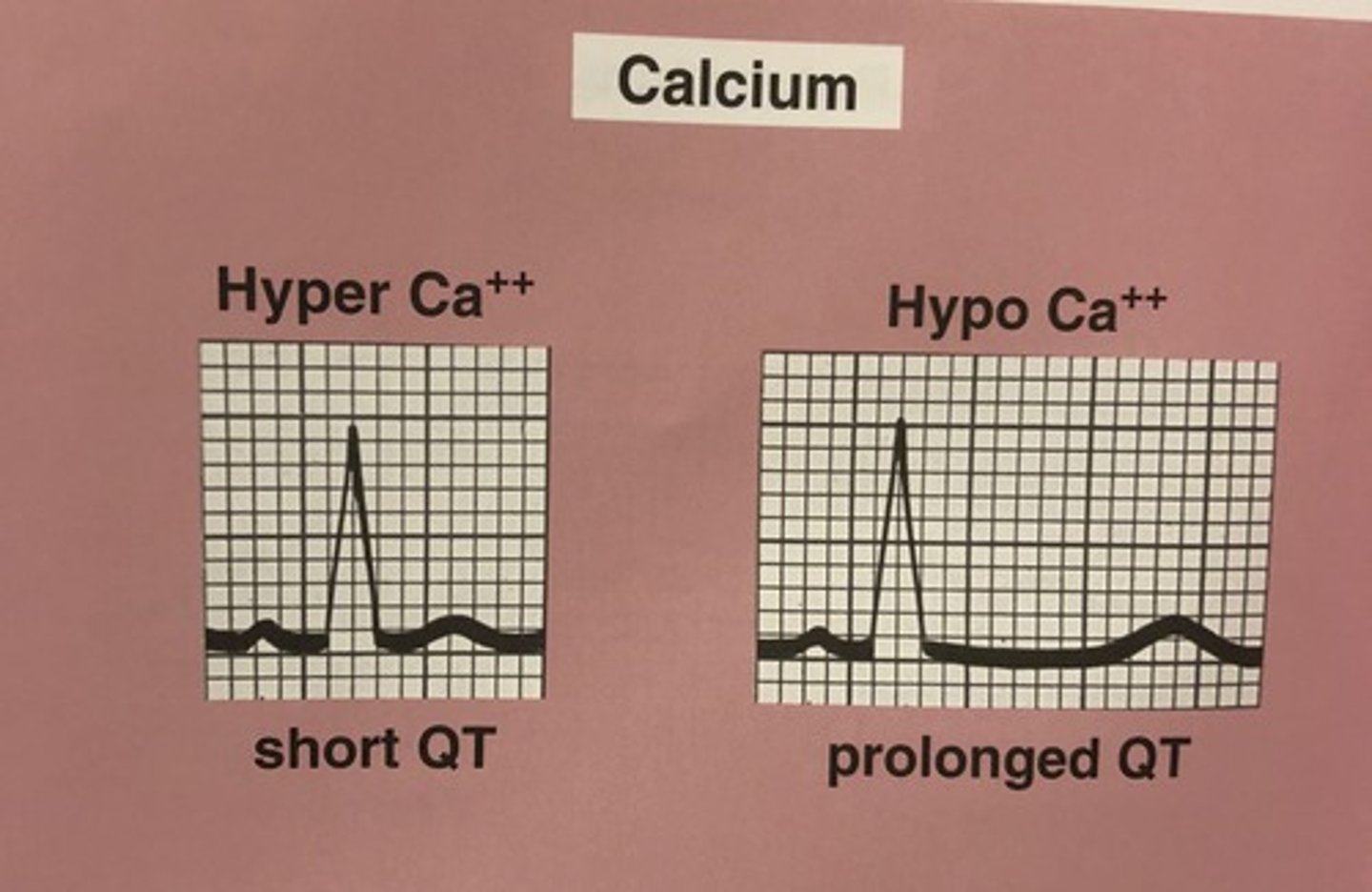
• List the three main hormones involved in calcium homeostasis and explain the effects of each in detail
Three major hormones (PTH, vitamin D, and calcitonin) interact to maintain a constant concentration of calcium, despite variations in intake and excretion. Other hormones, such as adrenal corticosteroids, estrogens, thyroxine, somatotropin, and glucagon, may also contribute to the maintenance.
Compare stress fractures and pathological fractures•
Stress: A tiny crack in a bone caused by repetitive stress or force, often from overuse.
Pathologic fracture is a break in a bone that is caused by an underlying disease.
The effects of estrogen and anabolic steroids on bone growth
Premature stopping of bone development and linear growth (height).
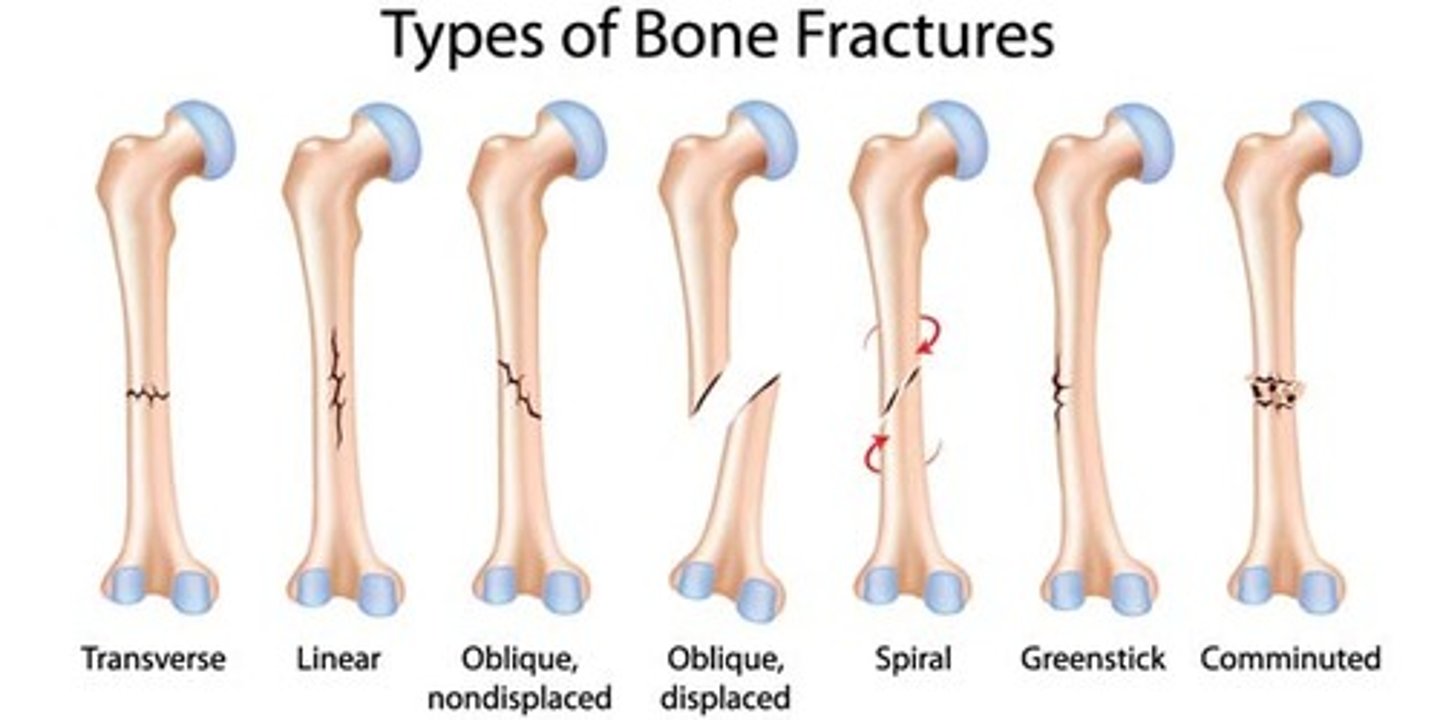
List and characterize the different types of bone fractures
Stress fracture: a break caused by abnormal trauma to a bone.
Pathological fracture: a break in a bone weakened by some other disease.
Nondisplaced fracture: the bone pieces remain in proper anatomical alignment.
Displaced: at least one piece has shifted out of alignment.
Comminuted: bone is broken into three or more pieces.
Greenstick: bone is incompletely broken on one side, just bent, the way a green twig breaks only partially.
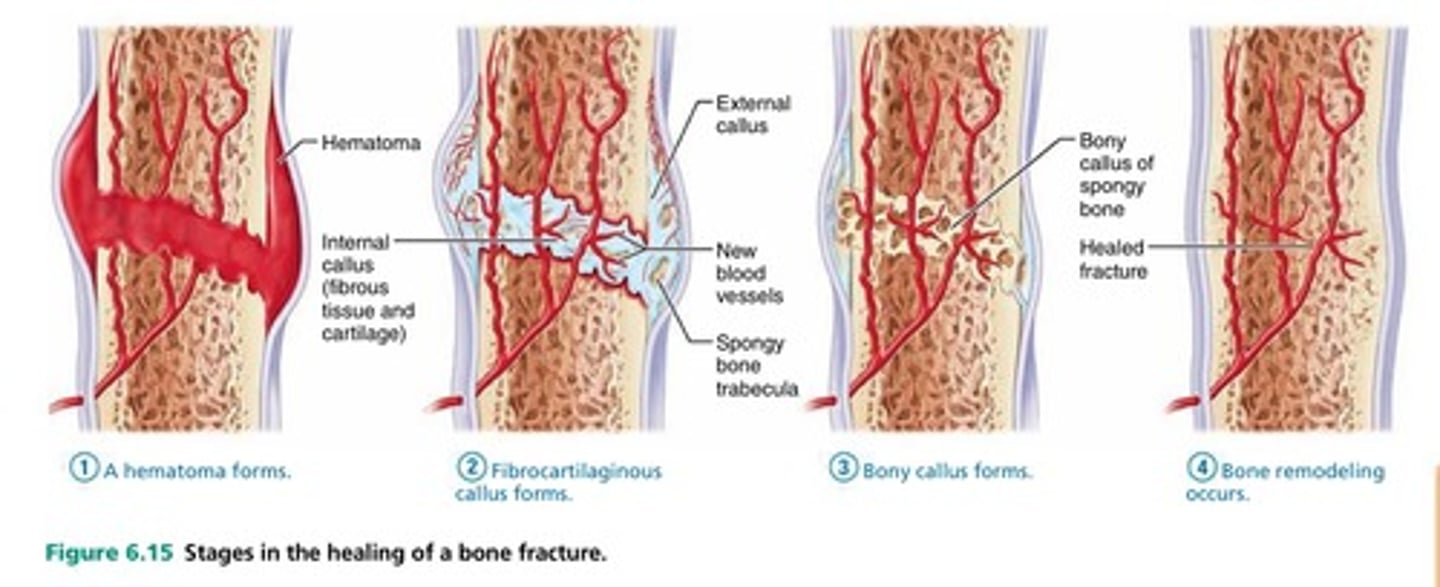
Explain the healing process of fractures
Formation of hematoma.
Callus formation.
Conversion to hard callus.
Remodeling.
• Describe the treatments for fractures
Closed reduction: a procedure in which the bone fragments are manipulated into their normal position without surgery.
Open reduction: the surgical exposure of the bone and the use of plates, screws, or pins to realign the fragments.
Characterize osteoporosis and describe the causes and treatments
A condition in which bones become weak and brittle. The body constantly absorbs and replaces bone tissue. With osteoporosis, new bone creation doesn't keep up with old bone removal. Caused by the effects of aging. Treatment includes medications, healthy diet, and weight-bearing exercise.
Describe specific bone diseases - osteomyelitis, osteoma, osteochondroma, osteosarcoma and chondrosarcoma
Osteomyelitis: Inflammation of the osseous tissue and bone marrow as a result of bacterial infection.
Osteoma: most common tumor involving the paranasal sinuses. Benign, slow growing bony tumors involving the base of the skull and paranasal sinuses.
Osteochondroma: the most common noncancerous bone growth. an overgrowth of cartilage and bone that happens at the end of the bone near the growth plate. it affects the long bones in the leg, the pelvis, or the shoulder blade.
Osteosarcoma: The most common and deadly form of bone cancer. It occurs most often in the tibia, femur, and humorous of males between age 10 and 25. In 10% of cases, it metastasizes to the lungs or other organs. If untreated, death within a year.
Chondrosarcoma: a type of bone cancer that develops in cartilage cells..
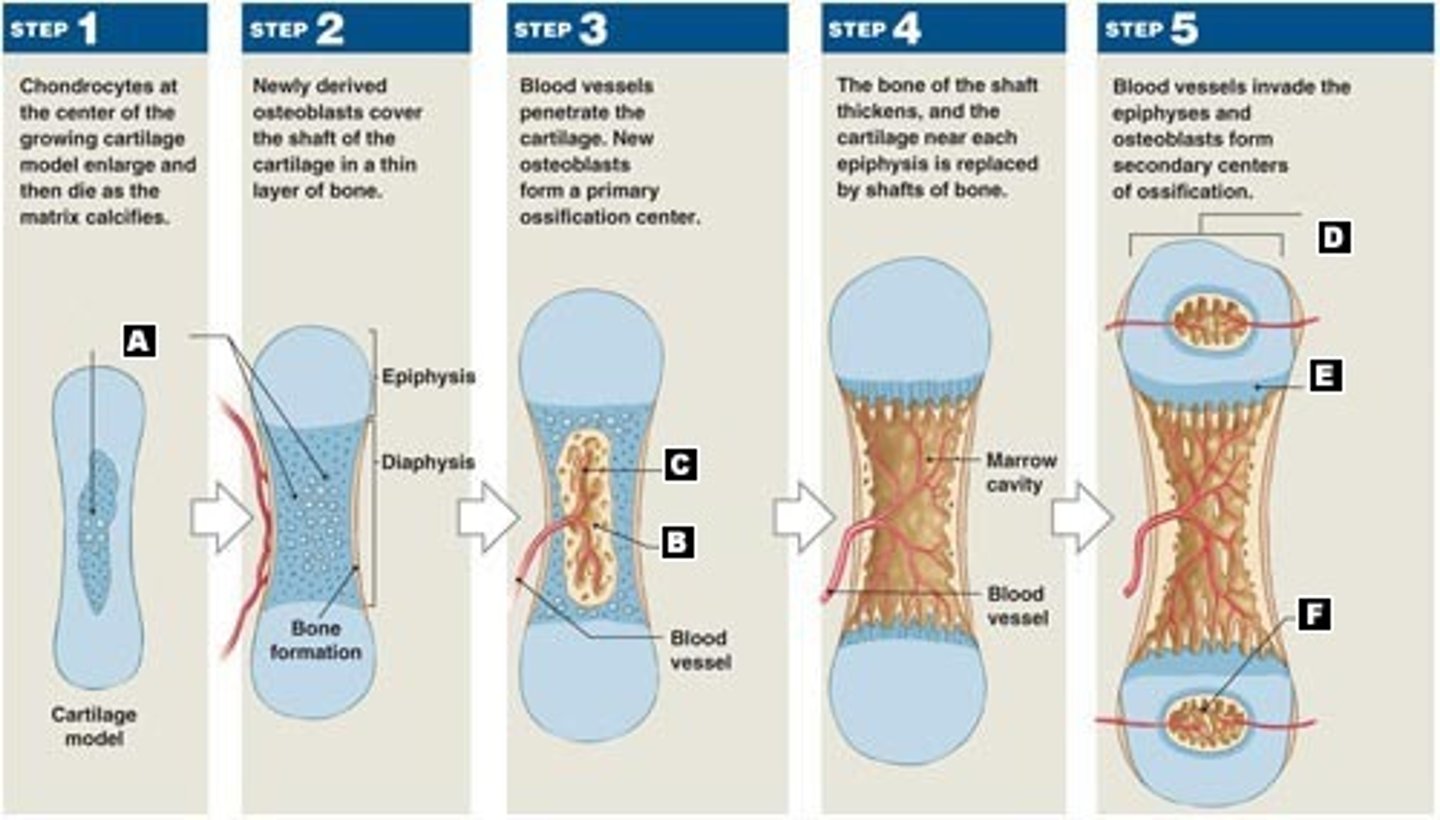
Explain endochondral ossification
one of the two essential processes during fetal development of the skeletal system by which bone tissue is created.
Still learning (8)
You've started learning these terms. Keep it up!