4b. facial recognition
 Call Kai
 Learn
Learn Practice Test
 Spaced Repetition
 Match
Match Flashcards
 Knowt Play
1/15

There's no tags or description
Looks like no tags are added yet.
Name | Mastery | Learn | Test | Matching | Spaced | Call with Kai |
|---|
No analytics yet
Send a link to your students to track their progress
16 Terms
what did tanaka and farah show with their larry study
faces are processes holistically because we learn them holistically
people who learned larry as a scrambled face were more likely to recognise his nose alone
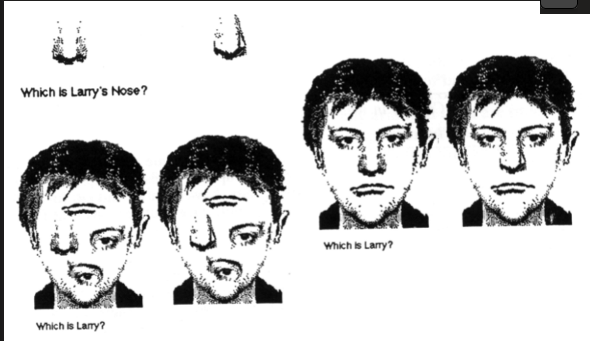
what does it mean for faces to be represented configurally
the spaces between features are just as important as the features themselves
explain the thatcher illusion
p’s asked to rate two pictures of thatcher based on how gross they were
second was rated as way more gross
because the second image has her features are turned upside down
shows how we process upside down faces as individual features and upright faces considering configuration
explain the 2 potential effects of negation
negation = reverse colouring
disrupts:
pigmentation
patterns of shading - helps specify 3d structure of faces
what do bruce and hana suggest about line drawings
having shading and lines give best recognition results for famous faces
then shading
then lines
shows how line drawings are hard to recognise without shading or pigmentation
what did valentine and bruce find about facial distinctiveness
distinctive faces are recognised better than average ones
what are bruce and young’s 4 stages of recognising faces
structural encoding - form a structural description of face seen
face recognition units - match to stored representations of known faces
person identity nodes - access semantic info about them
name generation - remember name
give evidence for bruce and young’s model
tip of the tongue state:
evidence for the different levels because we have accessed the face info but still can’t get to the name
being given their initials is the most helpful info to reach their name
explain the second part to bruce and young’s model - independent processing
processing of expression and facial speech are processed at the same time as structural encoding etc, but separately
this is because we can recognise these things regardless of identity
name two problems with bruce and young’s model
independence
covert recognition
explain covert recognition as an issue for bruce and young’s model
some patients with prosopagnosia show no overt recognition of famous faces, but do show covert recognition
suggests the element of conscious and unconscious facial recognition routes
explain burton bruce and johnston’s IAC model
can account for covert recognition
we have facial recognition units (FRUs) that hold representations of familiar faces become active when we see a face
name recognition units (NRUs)
person identity nodes (PINs)
all these units work together to identify poeple
which brain areas are most responsive to faces
medial fusiform gyrus
occipital face area
superior temporal sulcus
define prosopagnosia
face blindness
define acquired and developmental prosopagnosia
acquired = people who acquire the disorder after neurological damage
developmental = lifelong recognition impairment - no neurological damage
how does prosopagnosia relate to the bruce and young model
facial recognition processes could break down at any stage - i.e. FRU or PIN
the result would be any form of prosopagnosia