4.1 Fluid Mosaic Membranes
 Call Kai
 Learn
Learn Practice Test
 Spaced Repetition
 Match
Match Flashcards
 Knowt Play
1/17

There's no tags or description
Looks like no tags are added yet.
Name | Mastery | Learn | Test | Matching | Spaced | Call with Kai |
|---|
No analytics yet
Send a link to your students to track their progress
18 Terms
Cell membrane structure
> all membranes are made of a p__ b__
> aligned like ts bc h__ heads are a__ to H2O (so faces o__)
>> h__ t__ repel H2O (so faces i__)
>>> if more u__ (=), less l__, incr. t__ = incr f__
phospholipid bilayer, hydrophilic, attr, out, hydrophobic tails, inward, unsaturated, length, temp, fluidity
Cell membrane structure
> has c__ & p__
>> some lipids/proteins have short c__ chains attached = g__smth
>> proteins have h__/hydrophilic regions
cholesterol, protein, carb, glyco, hydrophobic
Phospholipid roles
> forms b__
> prevents h__ subst. from p__ in/out membrane (tails are h__)
> tails affect f__ of membrane (= bond makes fatty acid b__)
bilayer, hydrophilic, passing, hydrophobic, fluidity, bend
Cholesterol roles
> rel. s__; s__ membranes by maintaining f__
>> h__ regions prevent polar mols from passing
>> prevents p__ tails from packing too c__ in low t__ = survive in cold
> less in p__, none in p__
small, strengthens, fluidity, hydrophobic, phospholipid, close, temps, plants, prokaryotes
Glycoprotein/glycolipid roles
> cell s__: c__ chain binds w/ s__ subst. at cell surface
> cell r__: acts as a__ (c__ chain binds to c__ sites on other cells)
signalling, carb, specific, recognition, antigen, carb, complementary
Protein roles
> t__ proteins: h__ channels for p__ mols to pass thru m__
> e__
> maintain cell s__: some proteins attached to c__
transport, hydrophilic, polar, membrane, enzymes, shape, cytoskeleton
Why “fluid mosaic model”?
> fluid: p__/proteins move via d__ (move s__)
> mosaic: scattered p__ bc proteins within b__ look like a mosaic if viewed from a__
phospholipids, diffusion, sideways, pattern, bilayer, above
Cell signalling
> process where m__ are s__ to c__
> important for c__ & response to environments
messages, sent, cells, coordination
Cell signalling: stages of cell signalling pathways
1. s__ causes cells to secrete l__ (mols that b__ specifically to r__ on another mol)
2. ligands t__ to target cells (rel. s__ = ez transport)
3. ligands b__ to cell surface r__
> receptor has s__; changes receptor s__ so it interacts w/ next component, so message is t__ (transduction)
> _ protein activates e__ to make many s__ m__ = a__ of og signal
> these s.m. make more enzymes = incr a__
> changes in cell m__ occur
stimulus, ligands, bind, receptors, transported, small, bind, receptors, specificity, shape, transmitted, G, enzyme, second messengers, amplification, amplification, metabolism
Receptors can also alter cell activity via:
> opening i__ c__
> acting directly as membrane-bound e__
> acting as intracellular r__
ion channels, enzymes, receptors
H__ signalling mols (e.g. steroid h__) can d__ directly across the c__ m__ & bind to r__ in cytoplasm/nucleus
hydrophobic, hormones, diffuse, cell membrane, receptors
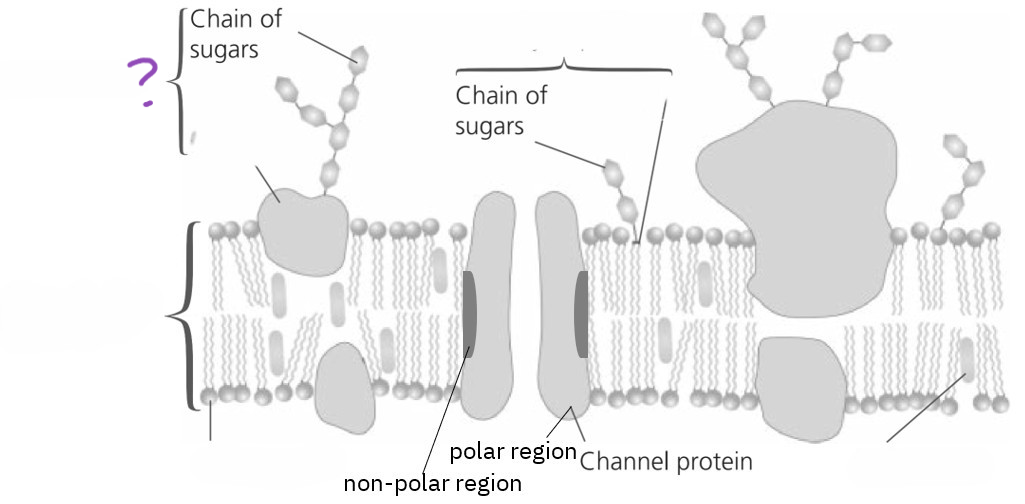
glycoprotein
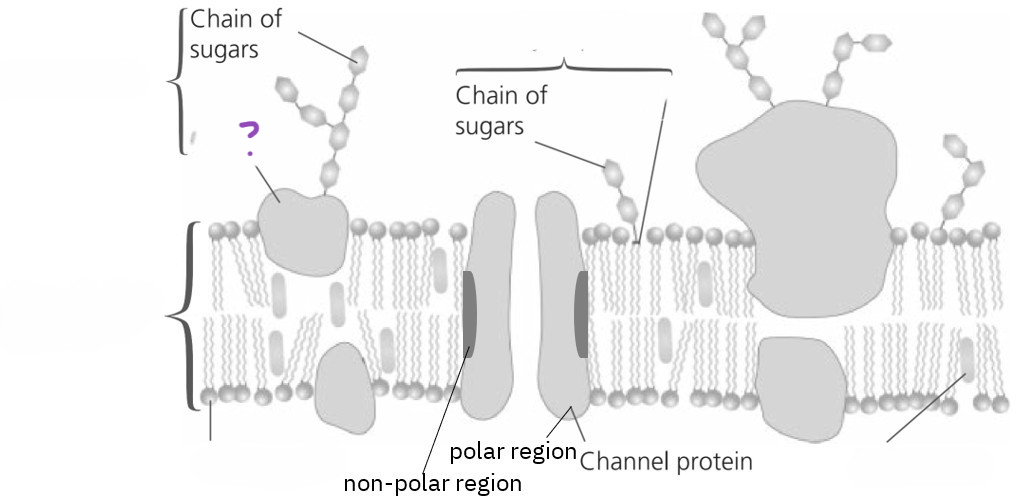
protein
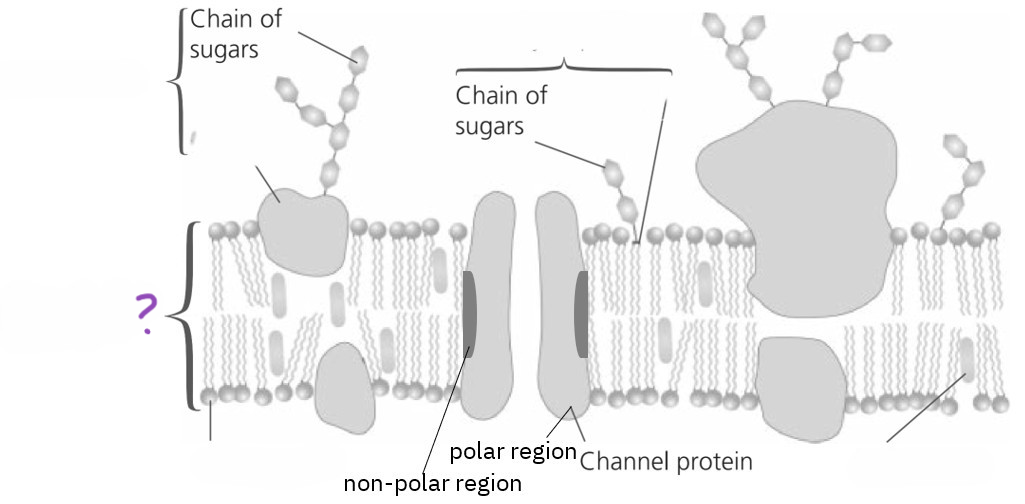
phospholipid bilayer
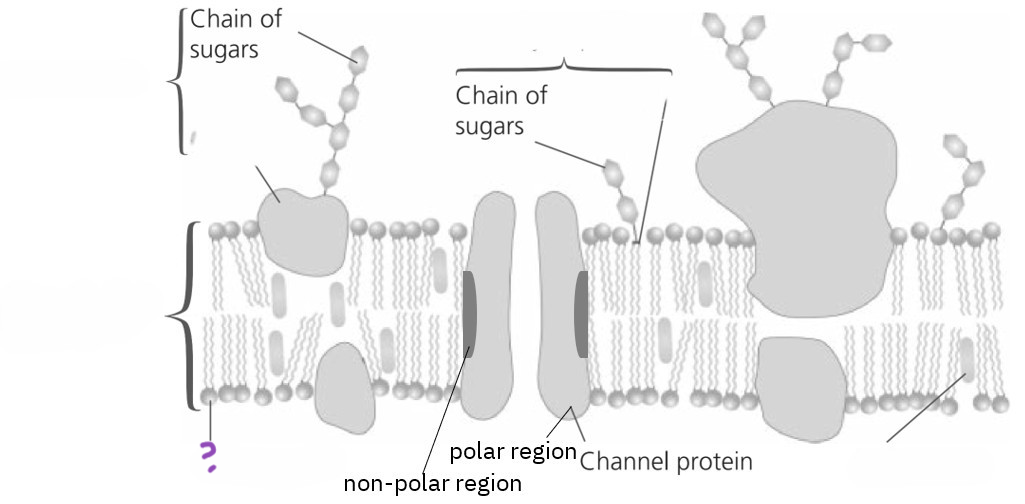
phospholipid
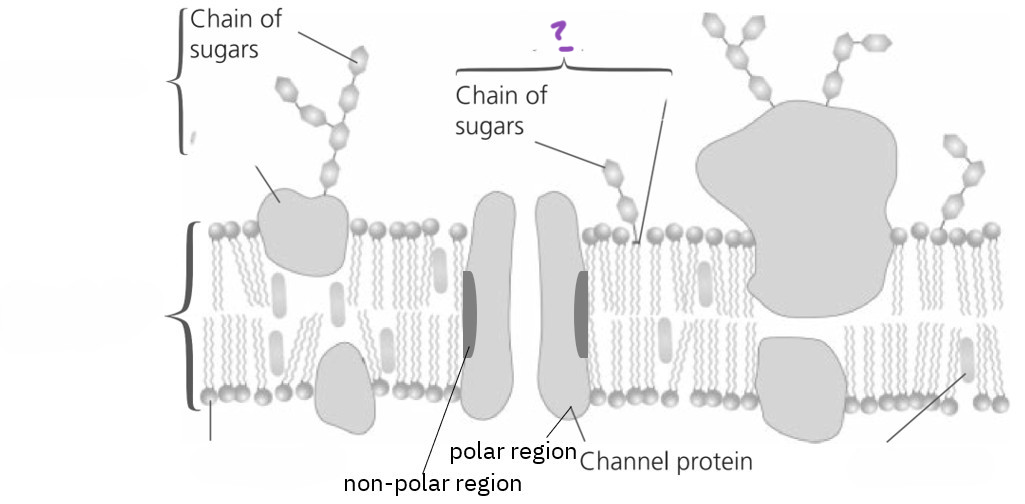
glycolipid
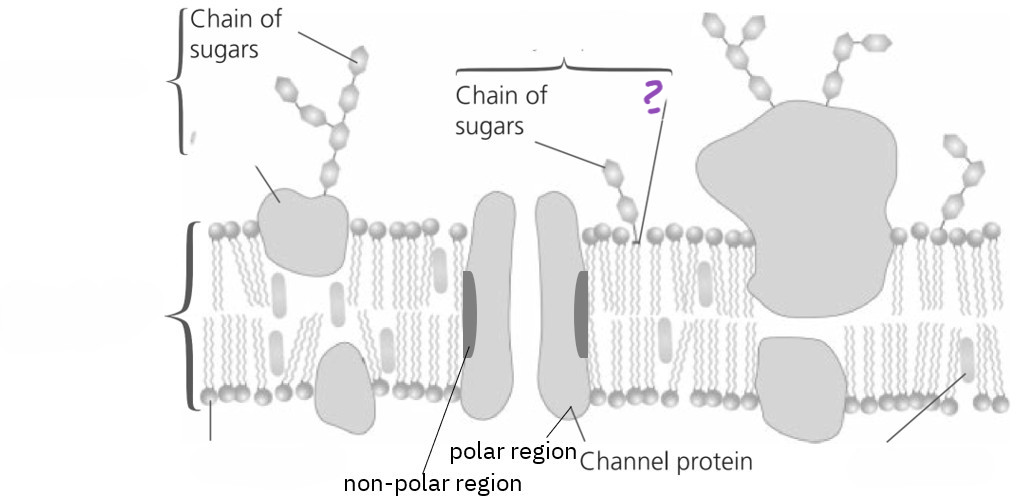
lipid
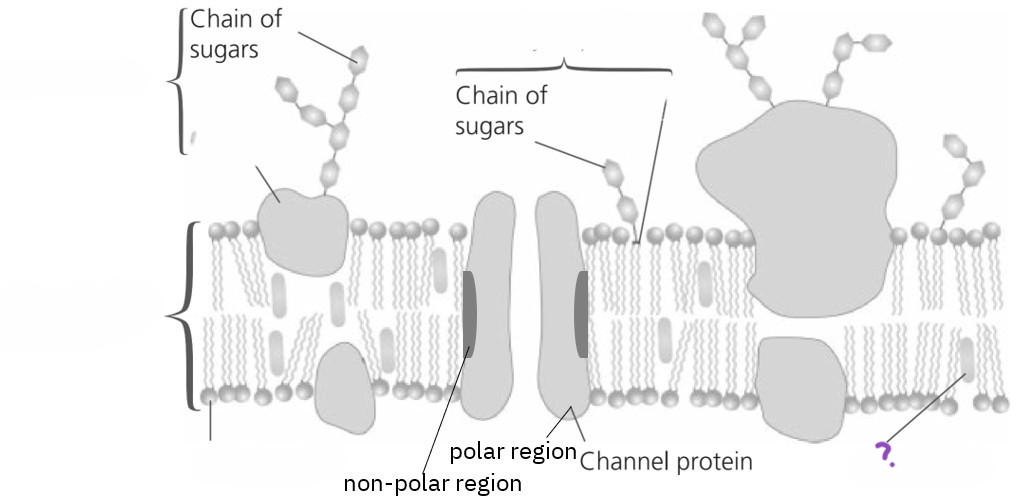
cholesterol