HMI202 - Week 7 GIT
 Call Kai
 Learn
Learn Practice Test
 Spaced Repetition
 Match
Match Flashcards
 Knowt Play
1/66

There's no tags or description
Looks like no tags are added yet.
Name | Mastery | Learn | Test | Matching | Spaced | Call with Kai |
|---|
No analytics yet
Send a link to your students to track their progress
67 Terms
What are the types of teeth and their main function?
Incisor: slicing through things
Canine: puncture through things
Premolars: basic crushing as well as some cutting
Molars: mainly crushing and grinding
How many of each teeth type does a typical adult have?
8 incisors, 4 canines, 8 premolars and 12 molars
What does non-keratinized mean?
There is no extra layer of keratin
this usually means that mouth will stay dry unless properly lubricated
What are the two enzymes in the mouth and what do they break down?
Lipase: lipids
Amylase: carbohydrates
What’s the difference between the oral cavity and the buccal cavity?
Buccal cavity is between the cheeks and teeth, whereas the oral cavity is between teeth, tongue on floor, palate on roof
There are three salivary glands on each side of the head. What are the three different salivary glands called and where are they located?
Parotid - below and front of each ear
Sublingual - floor of oral cavity under the tongue
Submandibular - below of mandible
The pharynx has 3 parts. What is the starting and finishing point of each part
Nasopharynx: posterior nares of nasal cavity to posterior of soft palate
Oropharynx: soft palate to epiglottis
Laryngopharynx: epiglottis to oesophagus
What epithelium is found covering the oral, buccal cavities, as well as lining of the lumen of the pharynx and oesophagus?
Stratified squamous epithelium
what is the function of Stratified squamous epithelium?
Function is to protection against microorganisms from invading, physical abrasions and chemical damage
What is the epithelium type of the oesophagus?
Stratified squamous
What is the epithelium type of the stomach?
Simple columnar
What is the epithelium type of the duodenum?
simple columnar
What is the epithelium type of the jejunum?
Simple columnar
What is the epithelium type of the ileum?
Simple columnar
What is the epithelium type of the large intestine/ colon?
Simple columnar
What is the epithelium type of the rectum?
Simple columnar
What is the epithelium type of the anus?
Simple columnar → stratified squamous
Function of brunner’s glands?
Secrete alkaline mucosa to protect the intestinal wall of gastric acid, as well as lubricates the intestine
Function of rugae
Increased surface area of flexibility
Function of g-cells/ enteroendocrine cells
Regulat digestion, metabolism
G cells: secrete gastrin
Function of haustra?
Helps to move food to the next haustra, along with mixing chyme to help water absorption
What are the two main flexures in the large intestine?
Right/ hepatic flexure
Left/ splenic flexure
Function of epiploic/ omental/ fatty appendages?
Fat reservoir
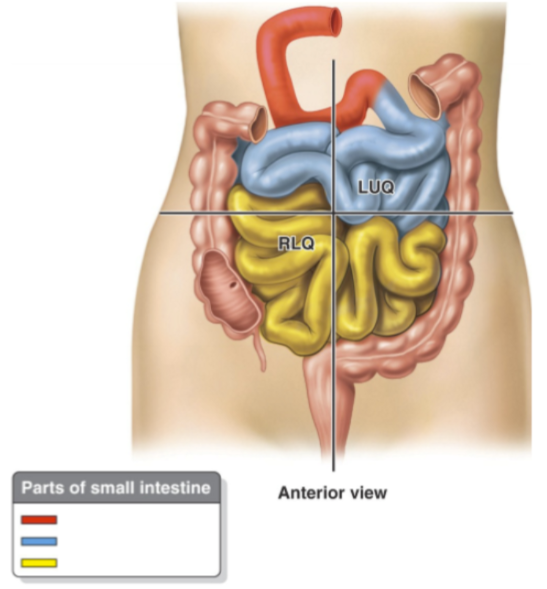
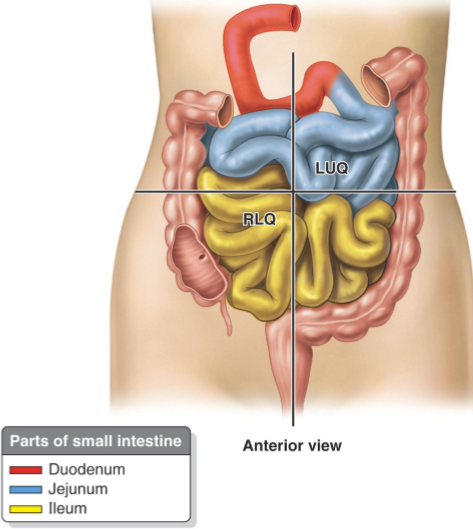
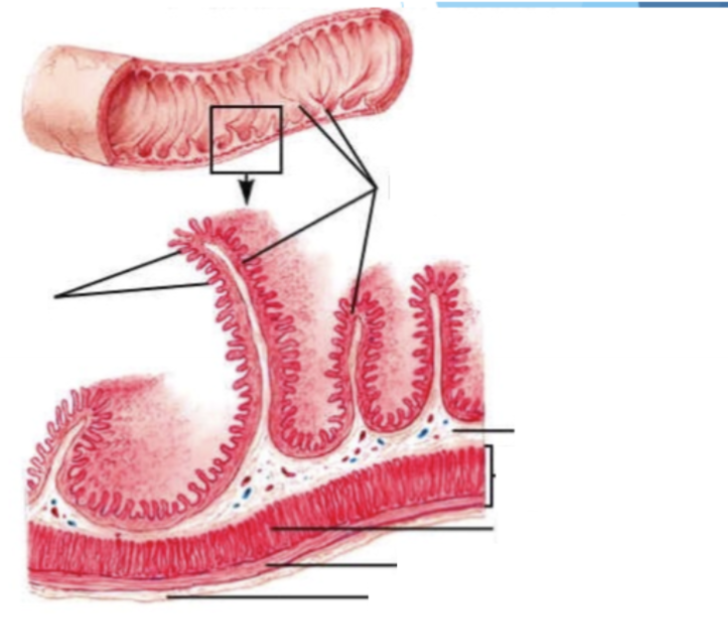
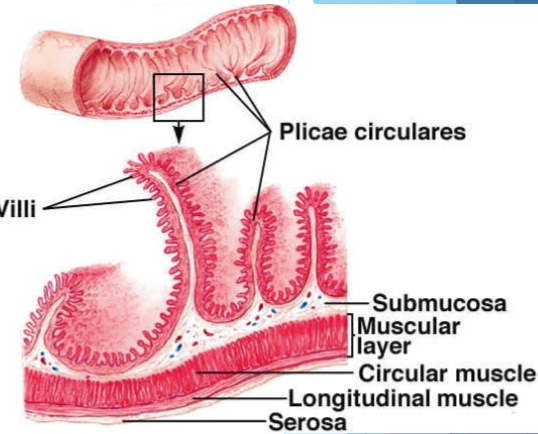
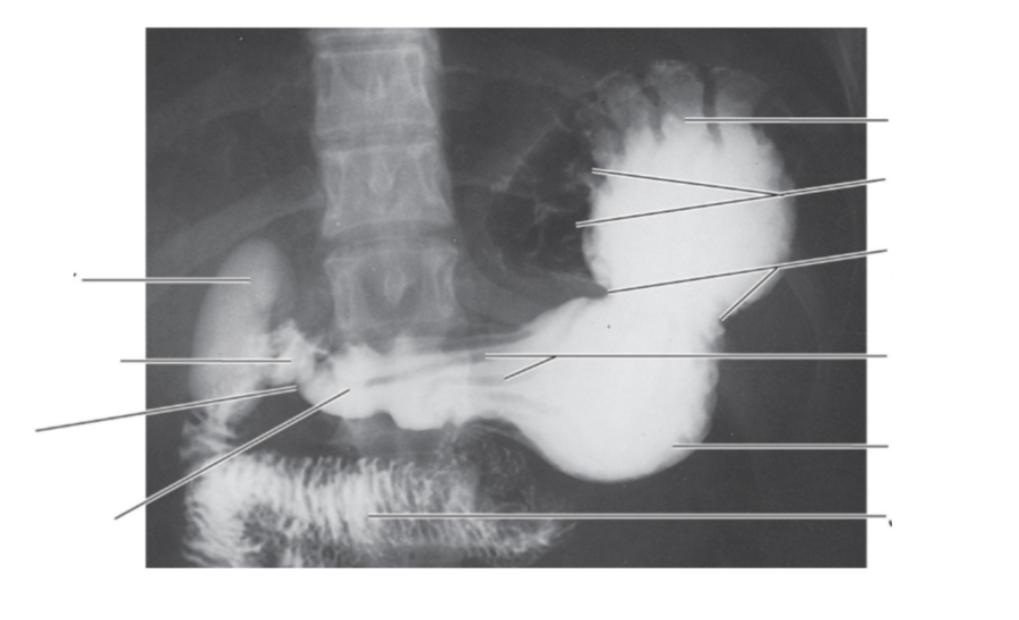
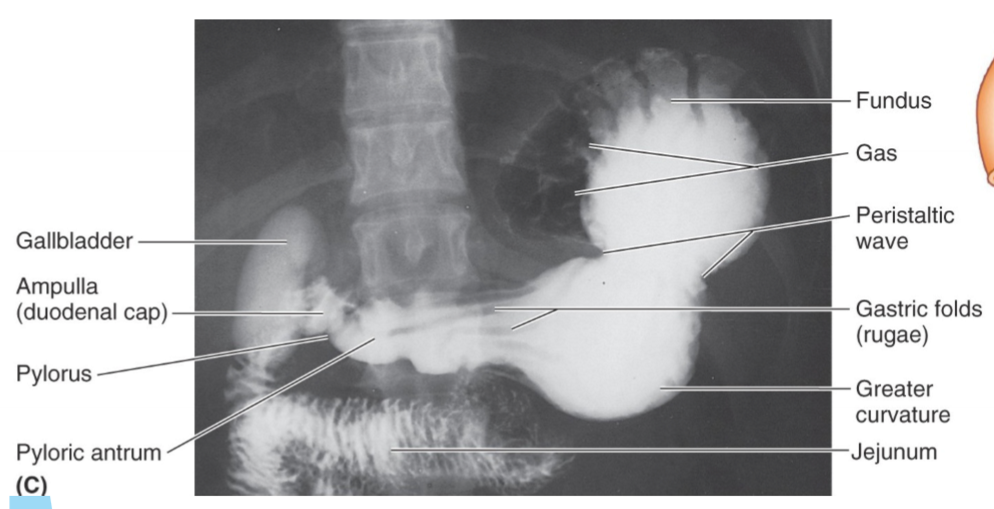
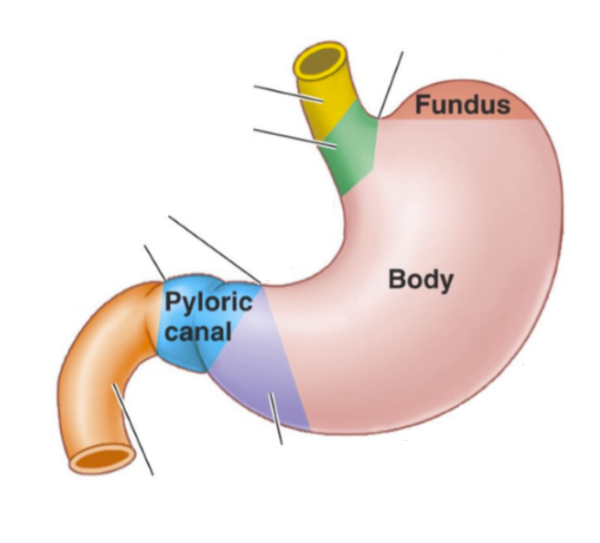
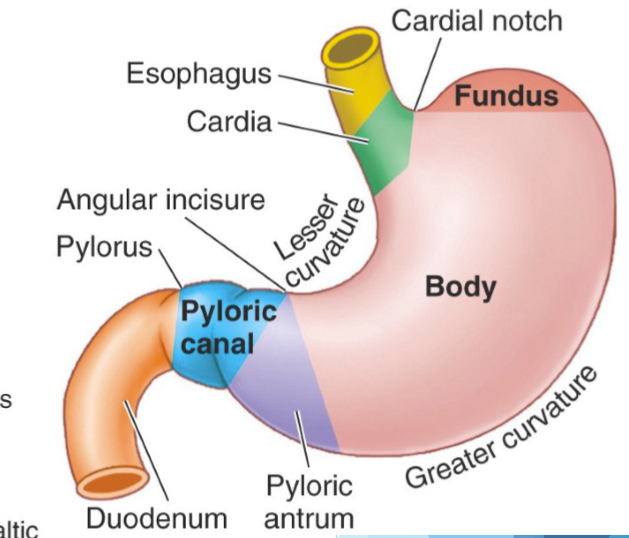
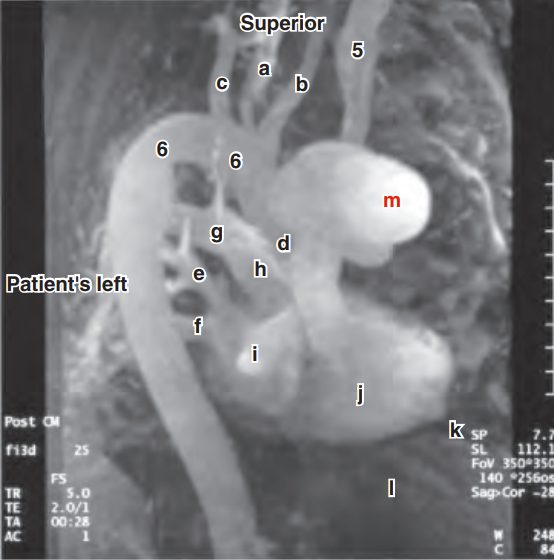
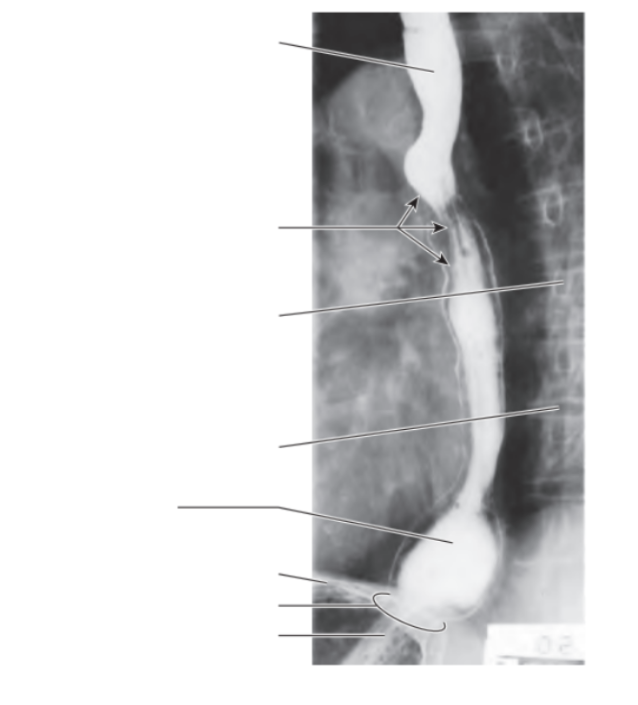
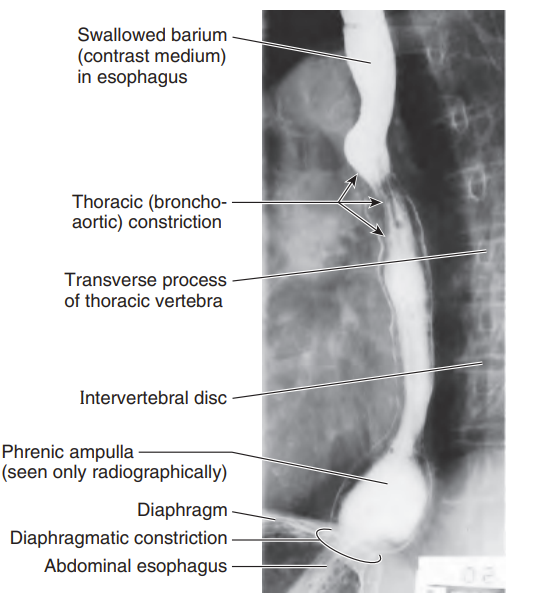
Please label
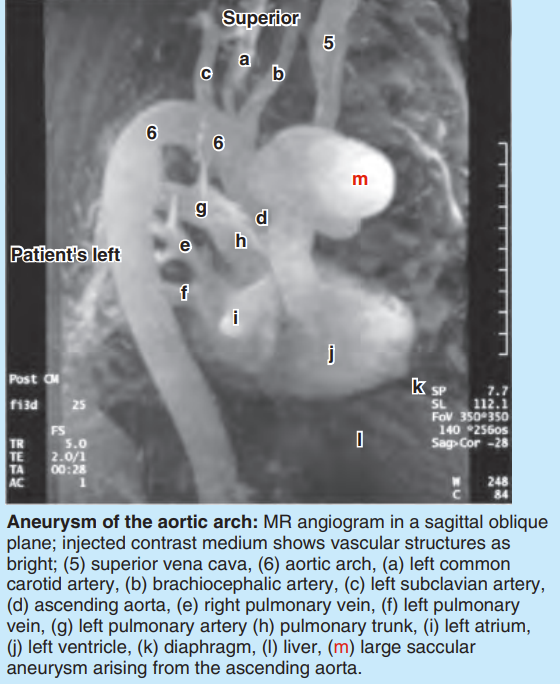
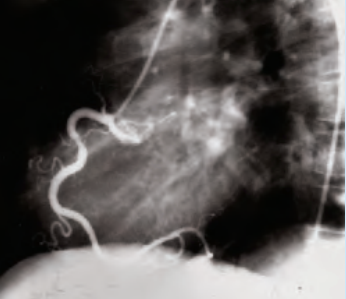
Label the coronary angiogram
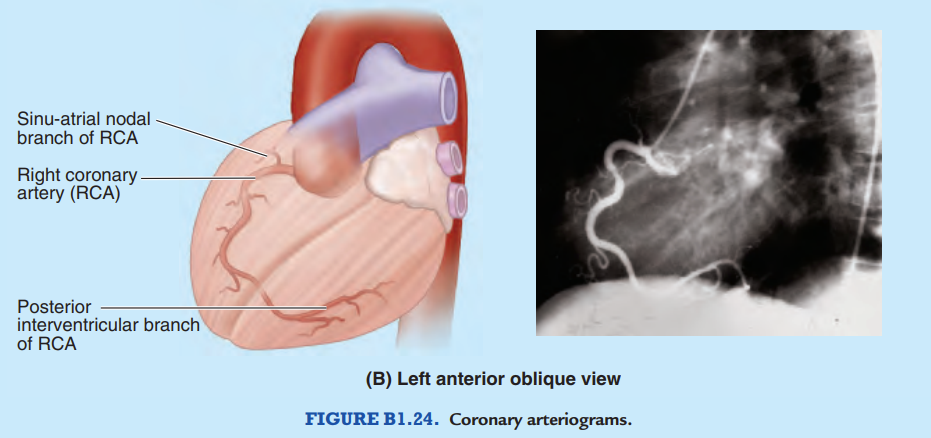
Which part of the small intestine has the most plicae circularis and why?
Jejunum, because it does the most absorption
Which part of the small intestine has peyer’s patches?
ileum
What happens to the plicae circulares when it goes closer towards the caecum?
It flattens off, meaning it becomes more of a smoother tube
Where does the ileum finish at?
ileocecal valve
What is the peritoneal relationship of the cecum + appendix, and the 5 parts of the large intestine?
cecum + appendix - intraperitoneal
Ascending - retroperitoneal
Descending - intraperitoneal
Sigmoid - retroperitoneal
What are the two flexures in the large intestine?
right - hepatic flexure
Left - splenic flexure
How long is the large intestine?
1.5m
What are we absorbing in the large intestine?
Water out of the fecal matter, and water soluble vitamins
What is the omentum structures in the stomach made up of?
Peritoneal membranes, blood vessels, adipose tissue
When you have a gastric ulcer, what happens to the rugae?
Instead of travelling longitudinally, it goes towards the direction of the ulcer
What number of the L spine is the duodenum in?
L1 to L3
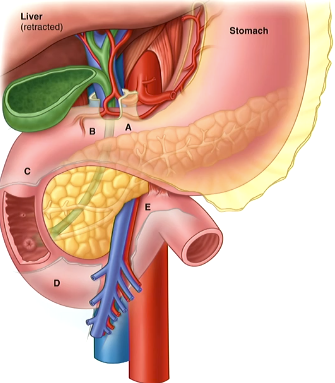
Label the parts of the duodenum
A & B - superior
C - descending
D - horizontal
E - ascending
What are the two flexures of the duodenum?
Superior and inferior duodenum
What is the peritoneal relationship of the duodenum?
Retroperitoneal (except first 1 - 2cm)
What is the peritoneal relationship of the ileum?
intraperitoneal
What is the peritoneal relationship of the jejunum?
intraperitoneal
What is the function of plicae circularis
Increase surface area for nutrient absorption
How to differentiate the small intestine from the large intestine
Small intestine has plicae circularis, large intestine doesn’t
Large intestine has a higher density of goblet cells
Small intestine has lots of villi, large intestine lacks it
In the duodenum, why do we lose the oblique layer from the stomach and only have longitudinal and circular layers (muscular externa)?
To enable peristaltic movement to help move chyme in the small intestine
Functions of duodenum?
neutralize acid
mixing
bile/ pancreatic secretions
begins absorption
What happens to the laryngeal cartilage when you are swallowing?
It moves up
What is lamina propria?
Connective tissue that is holding onto the epithelium and connecting it to a muscular layer
What is the name of the thin layer of muscle which changes the shape of the epithelium?
Muscularis mucosa
Name for connective tissue covering the muscle
Adventitia layer
What is the type of muscle in the oesophagus?
upper 1/3: skeletal muscle (voluntary control)
lower 2/3: smooth muscle (no voluntary control)
Where does the oesophagus begin?
C5/C6 - upper oesphageal sphincter
Where does the oesophagus end?
at the lower oesophageal sphincter (physiological sphincter) at t10 to t11
What an additional thing in the stomach?
Oblique muscular layer
Function of goblet cells
Creating mucus which creates a coating substance to create a bit of a barrier
What does the bottom of the gastric pit contain?
Chief cells
What is the function of chief cells?
Creates an enzyme called pepsin, which becomes activated when in contact with the acid
What is the function of G cells?
To produce gastrin
Gastrin helps promote the production of hydrochloric acid by parietal cells, promotes the production of pepsin by chief cells, and also promotes movement in the stomach
Gastrin also helps to promote activity of the pancreas and the activity of the bile
Where are chief and parietal cells mostly found in?
Body and fundus of stomach
Function of rugae?
Allows stomach to expand
What is an ulcer?
Destruction of epithelium or even layers of it
Why do we need an oblique layer?
Because circular and longitudinal muscular layer only allows for peristaltic movement
By adding an oblique layer, it adds the extra movement to help with the breakdown
What do we surround the whole stomach with?
Serosa - thin layer of connective tissue