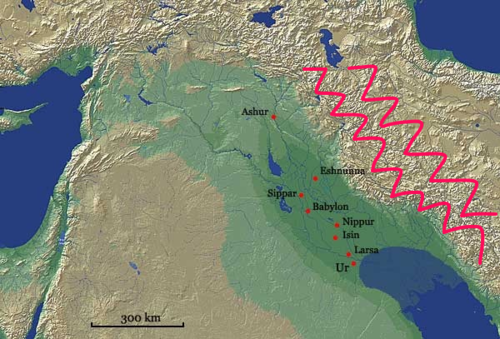
Global - unit 1: Ancient civilizations
0.0(0)
Studied by 1 person Call Kai
 Learn
Learn Practice Test
 Spaced Repetition
 Match
Match Flashcards
 Knowt Play
Card Sorting
1/78

Earn XP
Description and Tags
Last updated 12:43 PM on 10/20/22
Name | Mastery | Learn | Test | Matching | Spaced | Call with Kai |
|---|
No analytics yet
Send a link to your students to track their progress
79 Terms
1
New cards
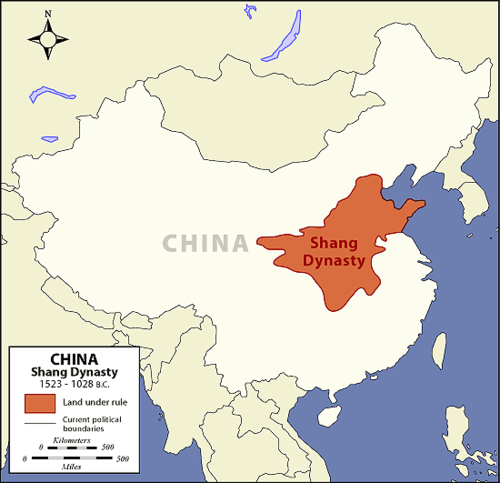
* Shang Dynasty
one of the first Chinese dynasties, ruled from 1600 to 1122 B.C.E.
2
New cards
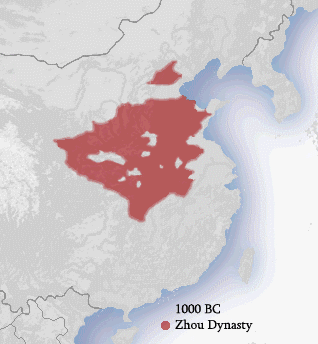
* Zhou Dynasty
the longest lasting Chinese dynasty, during which the use of iron was introduced. 1027-256BCE
3
New cards
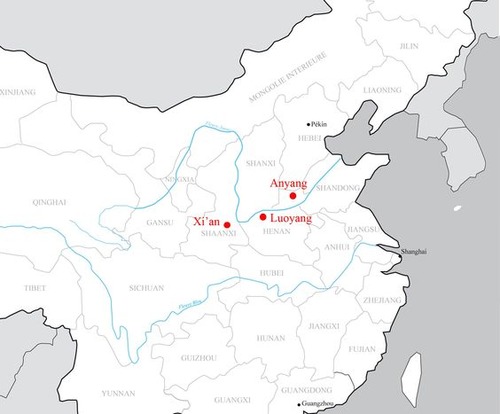
* Anyang
The ancient Chinese capital of the Shang dynasty.
4
New cards
* Zhongguo
What the Chinese called their land (means the Middle Kingdom)
5
New cards
* Huang He (Yellow River)
Begins in Tibet and flows east to the Yellow Sea. Named for yellow silt and nicknamed "China's Sorrow" because of flooding.
6
New cards
* Feudalism
A political system in which nobles are granted the use of lands that legally belong to their king, in exchange for their loyalty, military service, and protection of the people who live on the land. This system of government was used by the Zhou Dynasty.
7
New cards
* Crops farmed during the Shang Dynasty
Wheat, rice, and soybeans
8
New cards
* Shang Kings
Led other noble warriors into battle. The top of the social hierarchy, and rich.
9
New cards
* social class system (Both Shang + Zhou Dynasties)
Kings and nobles on top, warriors, artisans and merchants, peasants and farmers on the bottom
10
New cards
* Public works in ancient China
Irrigation systems for farming, Dikes to control flooding, Burial tombs for nobles
11
New cards
* Ancient Chinese writing system
Pictographs and ideographs
12
New cards
* Ancient Chinese religion
Polytheistic -- worshipped the ancestors and many nature spirits and gods
13
New cards
* Shang Di
The chief god of the Shang dynasty
14
New cards
* Ancient Chinese beliefs
the Chinese believed that their ancestors could influence the gods, and that China was the center of the Earth. They also believed that their king was a link between the people and Shang Di (chief god).
15
New cards
* Art
During the Shang Dynasty, people carved sculptures out of bronze
16
New cards
* Calligraphy
Became an elegant art form
17
New cards
* Zhou Dynasty new jobs
ironworkers, astronomers
18
New cards
* Mandate of Heaven
a political theory of ancient China in which those in power were given the right to rule from a divine source
19
New cards
* Creation of Silk
China became the largest exporter of silk. Silk was very expensive -- only royalty and nobility could afford it.
20
New cards
* Silk route
An overland trade route connecting Asia and the Middle East. Many luxury items such as silk came from China to Middle East along with spices from India. Controlling it was Important to empires because they could control the flow of trade and enforce taxes. A source of tax for empires that controlled portions of it.
21
New cards
* First books
Zhou Dynasty, bound thin strips of wood or bamboo together and characters on flat surface w/ brush and ink
22
New cards
* First Money
Zhou Dynasty, coins had holes in the middle and could be hung on cords or strings.
23
New cards
* Women
Noble women had status, however peasant women did the laborious work of tending the silkworms and making silk
24
New cards
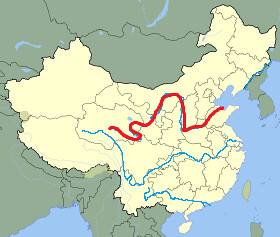
* What river is this?
Huang He River
25
New cards
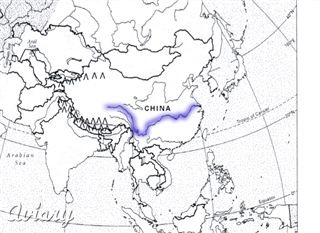
* What river is this?
Yangtze River
26
New cards
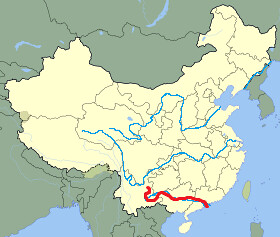
* What river is this?
Xi River
27
New cards
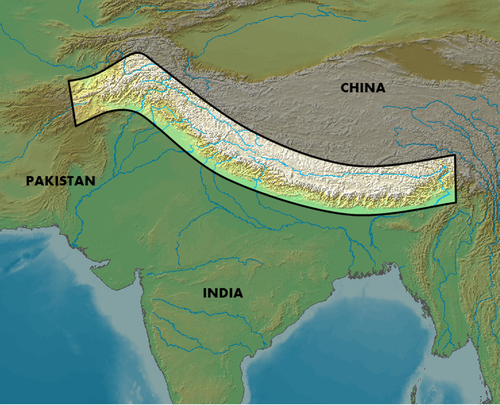
* What mountain range is this?
Himalayas
28
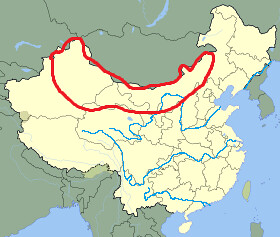
New cards
* What desert is this?
Gobi desert
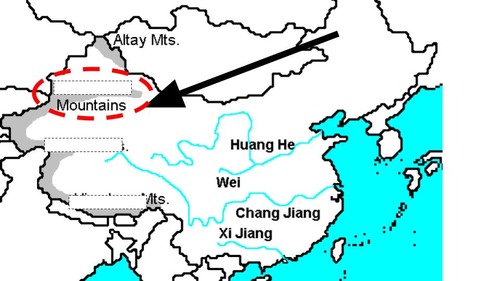
29
New cards
* Which mountain range is this?
Tien Shan mountains
30
New cards
# Mohenjo-Daro
Largest city of the Indus Valley civilization. It was centrally located in the extensive floodplain of the Indus River. Little is known about the political institutions of Indus Valley communities, but the large-scale implies central planning. Flourished around 2000 BCE.
31
New cards
# Harappa
a large ancient city of the Indus civilization, created in present-day Pakistan
32
New cards
# Mohenjo-Daro and Harappa
the two main cities of india, know as twin capitals and both 3 miles in circumference. Major cities of the Indus Valley civilization; both of which flourished around 2000 B.C.E.
33
New cards
# public works of Mohenjo-Daro and Harappa
Indus Valley city laid out in a grid pattern. Had a complex irrigation and sewer system.
34
New cards
# Rajah
in ancient India, the elected warrior chief of an Aryan tribe
35
New cards
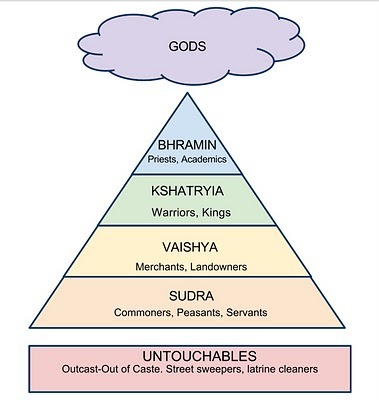
# Caste System
a set of rigid social categories that determined not only a person's occupation and economic potential, but also his or her position in society. The caste that you were born in is the caste that you stay in.
36
New cards
# Sanskrit
(Hinduism) an ancient language of India (the language of the Vedas and of Hinduism). Still mostly undeciphered.
37
New cards
# Zebu Motif
Symbol used to represent sacred animals, family names. Signified the leader of the herd.
38
New cards
# Polytheistic
belief in more than one god
39
New cards
# Chief god
Mother goddess. The Ancient Indians believed that the first world came from a golden egg laid by the gods.
40
New cards
# bull
Sacred animal
41
New cards
# Art
created small statues and ornamental brickwork.
42
New cards
# Advanced culture
Merchants used a uniform system of weight and measurement. Farmers produced enough surplus food to support tens of thousands of people. Everything was well planned out and organized.
43
New cards
# Mound of the Dead
Mohenjo-Daro
44
New cards
# grid pattern
Each city was laid out in a grid pattern with rectangular blocks larger than modern-day city blocks.
45
New cards
# Government (Aryans)
Rajah ruled with the advice of a council of elders mde of heads of families.
46
New cards
# Social divisions -- Divided by occupation
On top were the Brahmins (priests), then the Kshatriyas (warriors), Vaisyas (herders, farmers, artisans, merchants), lastly the Sudras (servants)
47
New cards
# Mystics
people who devote their lives to seeking spiritual truth
48
New cards
# Vedas
Ancient Sanskrit writings that are the earliest sacred texts of Hinduism. Collections of hymns, songs, prayers, and rituals honoring the barious gods of the Aryans.
49
New cards
# Indra
Chief deity of the Aryans; god of war
50
New cards
# Architecture (Aryans)
Walled villages
51
New cards
# what river is this? (Dark blue)
Indus river
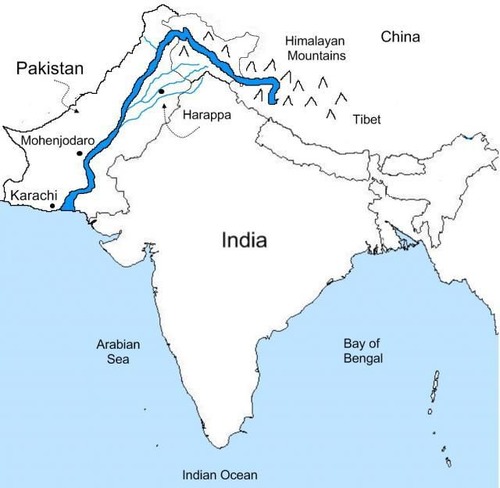
52
New cards
# Indus river civilization
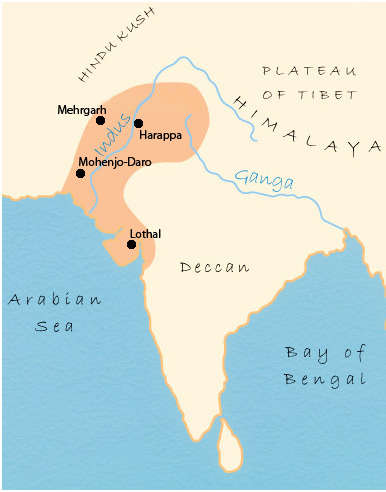
53
New cards
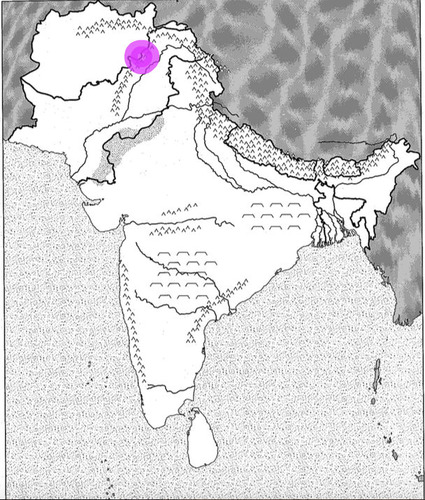
# What pass is this? (Pink)
Khyber Pass
54
New cards
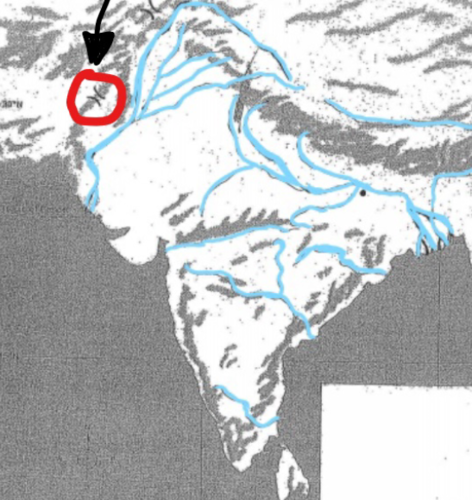
# What pass is this? (circled)
Bolan pass
55
New cards
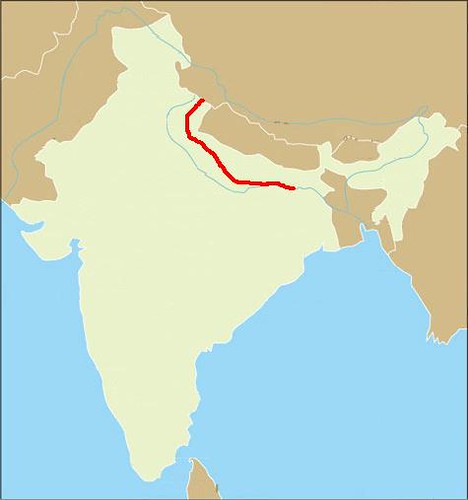
# What river is this? (red)
Ganges River
56
New cards
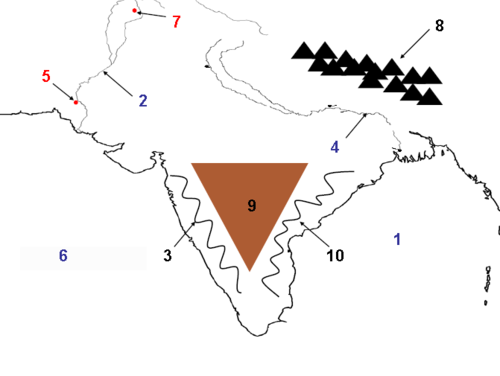
# What does number 9 on the map show? (brown)
Deccan plateau
57
New cards
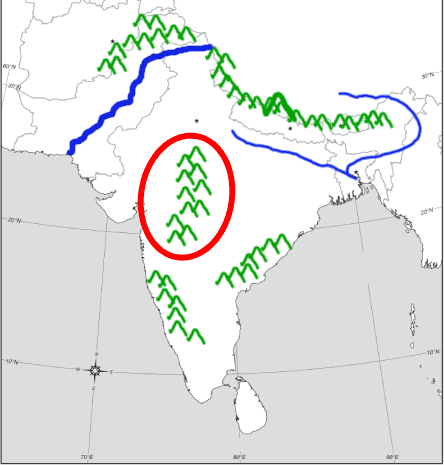
# Which mountain range is circled on the map?
Vindhya Mountains
58
New cards
$ Sumer
The world's first civilization, founded in Mesopotamia, which existed for over 3,000 years.
59
New cards
$ Assyria
a southwest Asian kingdom that controlled a large empire from about 850 to 612 B.C. This country used highly advanced military organization to acquire a large empire around 850 BC
60
New cards
$ Babylon
The largest and most important city in Mesopotamia. It achieved particular eminence as the capital of the king Hammurabi in the eighteenth century B.C.E. and the Neo-Babylonian king Nebuchadnezzar in the sixth century B.C.E. (p. 29)
61
New cards
$ Ziggurats
temples built by Sumerians to honor the gods and goddesses they worshipped
62
New cards
$ City-States of Sumer
Ur, Uruk, Shurrupak
63
New cards
$ Job Specialization (Sumer)
Artisans who practiced the same trade, such as weavers or carpenters lived/worked on the same street.
64
New cards
$ social hierarchy (sumer)
Each city-state had a social hierarchy. The highest class was a ruling family, leading officials, and high priests. Middle class was artisans, scribes, merchants, and lesser priests.
65
New cards
$ public works - sumer
Dikes to hold back flood waters and irrigation system
66
New cards
$ Cuneiform
First written language- made of shapes and wedges. People recorded myths, prayers, laws, treaties, and business agreements
67
New cards
$ Religion (Sumer)
polytheistic. Gods were thought to control every aspect of life, especially nature. Sumerians believed in the afterlife
68
New cards
$ Hammurabi
Amorite ruler of Babylon (r. 1792-1750 B.C.E.). He conquered many city-states in southern and northern Mesopotamia and is best known for a code of laws, inscribed on a black stone pillar, illustrating the principles to be used in legal cases.
69
New cards
$ Women (Assyria)
women had to be confined and wear veils when in public
70
New cards
$ Assyrians created the first library
71
New cards
$ Assyrian religion
Pleased gods by waging war
72
New cards
$ Hanging Gardens of Babylon
An artificial mountain covered with trees and plants, built by Nebuchadnezzar ll for his wife. The gardens are one of the Seven Wonders of the world.
73
New cards
$ Marduk
A Mesopotamian deity, chief god of the city of Babylon
74
New cards
$ Hammurabi's Code
First written code/set of laws that all were expected to obey. 282 laws that governed life in the Babylonian empire;
75
New cards
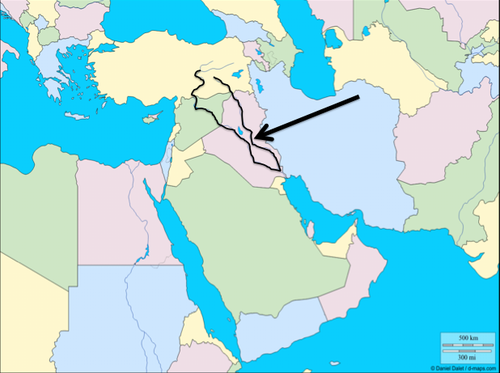
$ Which river is this pointing to?
Tigris River
76
New cards
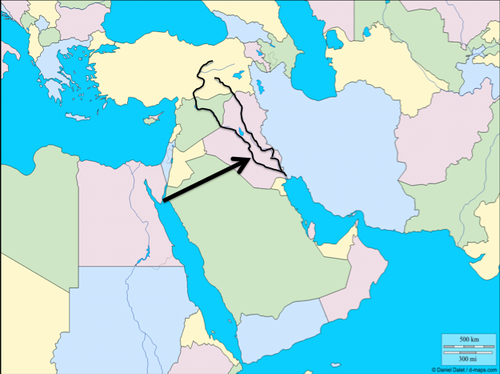
$ Which river is this pointing to?
Euphrates river
77
New cards
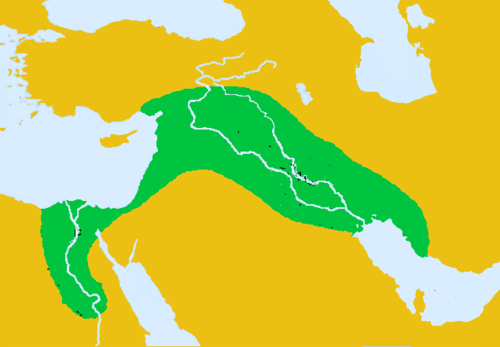
$ What is this? (Green)
Fertile crescent/Ancient Mesopotamia
78
New cards
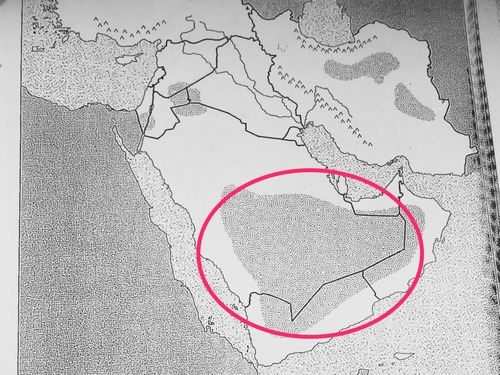
$ What desert it circled here?
Arabian desert
79
New cards
$ What mountain range is this?
Zagros mountains