ECG Interpretation
 Call Kai
 Learn
Learn Practice Test
 Spaced Repetition
 Match
Match Flashcards
 Knowt Play
1/29

Earn XP
Description and Tags
Lecture 31
Name | Mastery | Learn | Test | Matching | Spaced | Call with Kai |
|---|
No analytics yet
Send a link to your students to track their progress
30 Terms
How does an electrocardiogram work?
ion movement in cell creates electric currents and movement of these current through cardiac tissue stimulates muscle contraction —> ECG is graphical representation of this electrical activity
What ion is extracellular?
Na+
What ion is intracellular?
K+
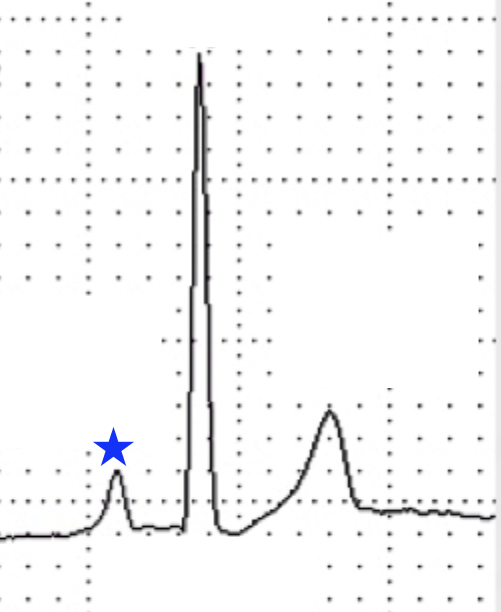
What wave is indicated by the blue star?
P
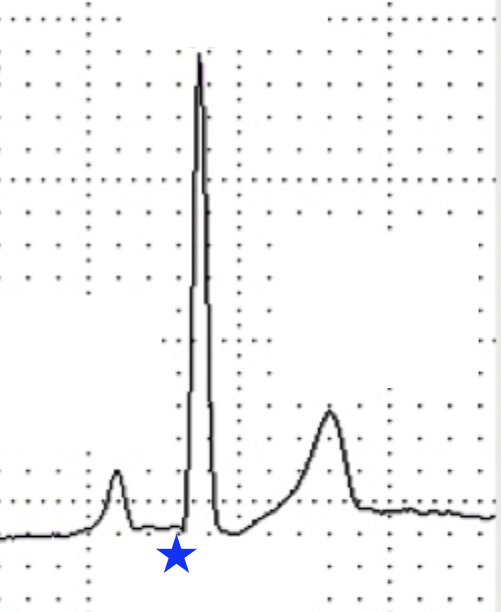
What wave is indicated by the blue star?
Q
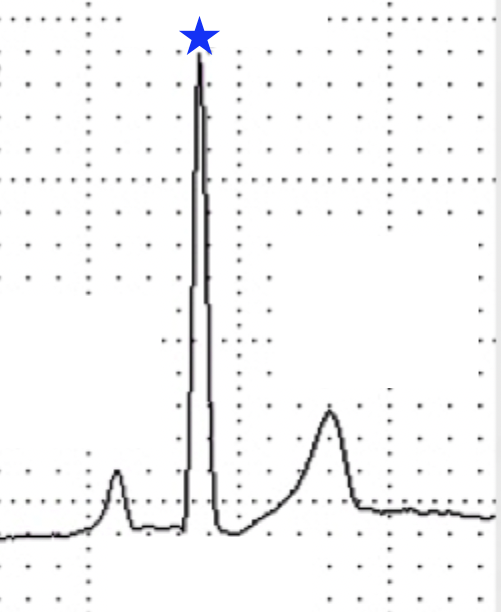
What wave is indicated by the blue star?
R
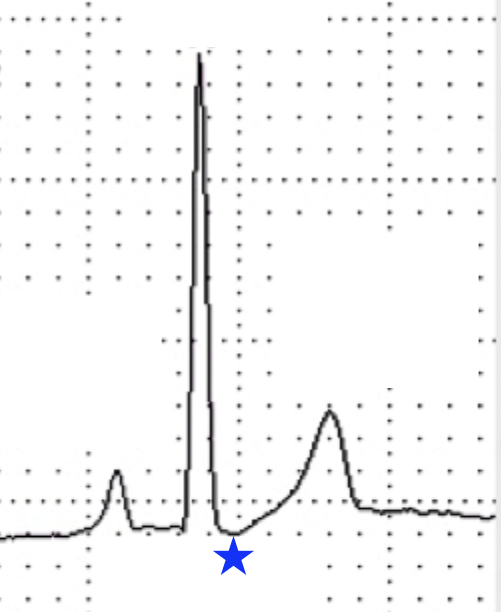
What wave is indicated by the blue star?
S
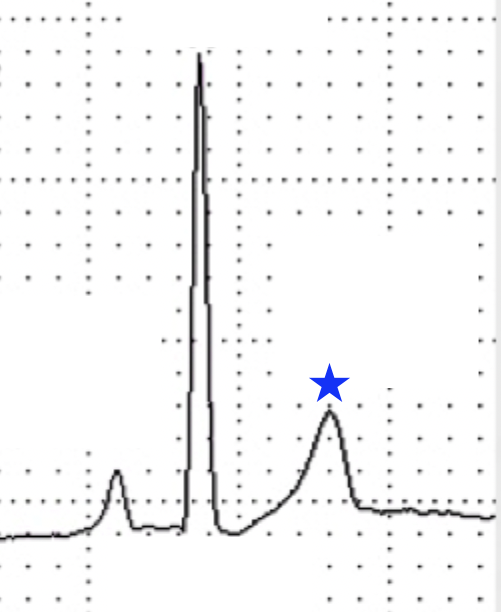
What wave is indicated by the blue star?
T
What does the P wave stand for?
atrial contraction
What does the QRS complex stand for?
ventricular contraction
What does the T wave stand for?
repolarization
How do you place ECG leads on a patient?
White —> right forelimb
Black —> left forelimb
Red —> left hindlimb
Green —> right hindlimb
“White is right, smoke over fire”
What questions should you ask when reading an ECG?
Does this rhythm has a pulse associated with it?
Is it fast or slow (rate)?
Is it regular or irregular?
Are teh QRS compelxes wide or narrow/normal?
Is there a P wave for every QRS wave?
Is there a QRS wave for every P wave?
ASK IN THE SAME ORDER, EVERY TIME
What does “regularly irregular” mean?
it’s not right, but it is a predictable pattern
Example: sinus arrythmia
What does “irregularly irregular” mean?
random pattern, not right, not predictable
Examples: atrial fibrillation, VPCs, AV blocks
Normal QRS complexes are most likely of what origin?
supraventricular
Wide and bizarre QRS complexes are most likely of what origin?
ventricular
If you can consistently identify a P wave, the rhythm starts with what?
sinus
If there is not a QRS complex for every P wave, what rhythms can it be?
2nd degree AV block
3rd degree AV block
atrial flutter
If there is a QRS complex for every P wave and it is consistently and reasonably related, waht rhythms can it be?
sinus rhythm
sinus arrhythmia
sinus bradycardia
supraventricular tachycardia
APCs
If there is a QRS complex for every P wave and it is not consistently and reasonably related, waht rhythms can it be?
3rd degree AV block
ventricular tachycardia
If there is not a P wave for every QRS complex, what rhythms can it be?
atrial fibrillation
atrial standstill
ventricular tachycardia
VPCs
supraventricular tachycardia
APCs
escape complexes
What lead is the best one to pick up electrical activity in the heart?
lead II
What rhythms are associated with bradycardia?
sinus bradycardia
escape rhythms
AV block
SA block/arrest
atrial standstill
What rhythms are associated with a normal heart rate?
normal sinus
sinus arrythmia
atrial fibrillation
AV block
ventricular premature complexes (VPCs)
atrial premature complexes (APCs)
What rhythms are associated with tachycardia?
sinus tachycardia
atrial fibrillation/flutter
atrial tachycardia
ventricular tachycardia
ventricular premature complexes (VPCs)
atrial premature complexes (APCs)
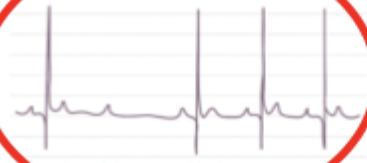
What rhythm is shown?
2nd degree AV block
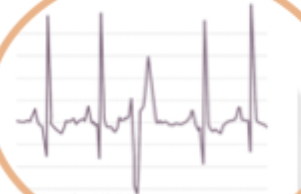
What rhythm is shown?
VPC
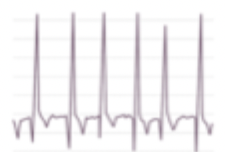
What rhythm is shown?
atrial fibrillation
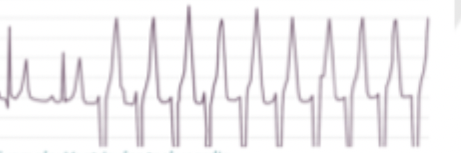
What rhythm is shown?
ventricular tachycardia