Lec 6 - Cell Division - Mitosis
 Call Kai
 Learn
Learn Practice Test
 Spaced Repetition
 Match
Match Flashcards
 Knowt Play
1/16

There's no tags or description
Looks like no tags are added yet.
Name | Mastery | Learn | Test | Matching | Spaced | Call with Kai |
|---|
No analytics yet
Send a link to your students to track their progress
17 Terms
What are the three reasons why cell division is important?
1) Growth
2) Reproduction
3) Regeneration
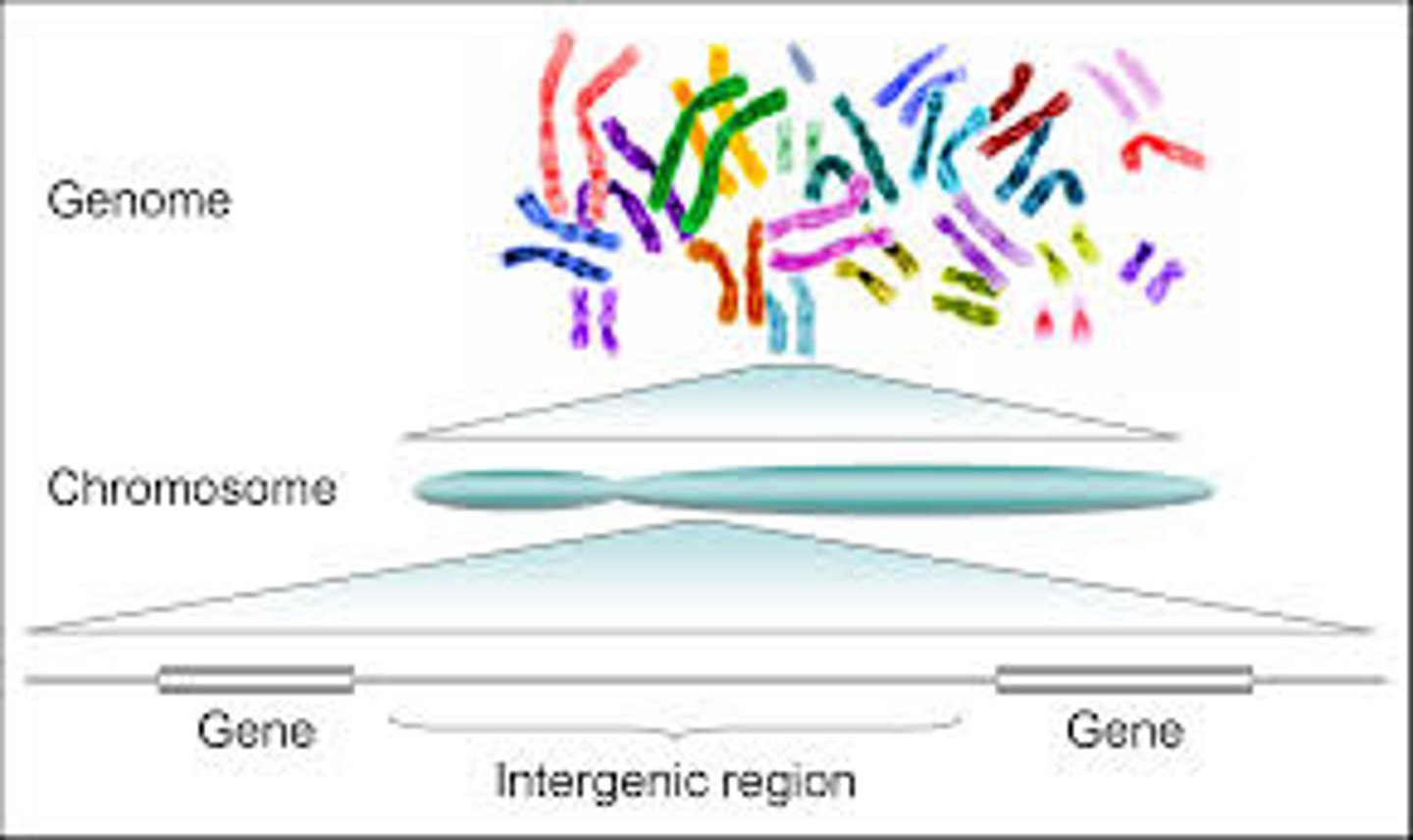
What is a genome?
A complete set of genes in an organism.
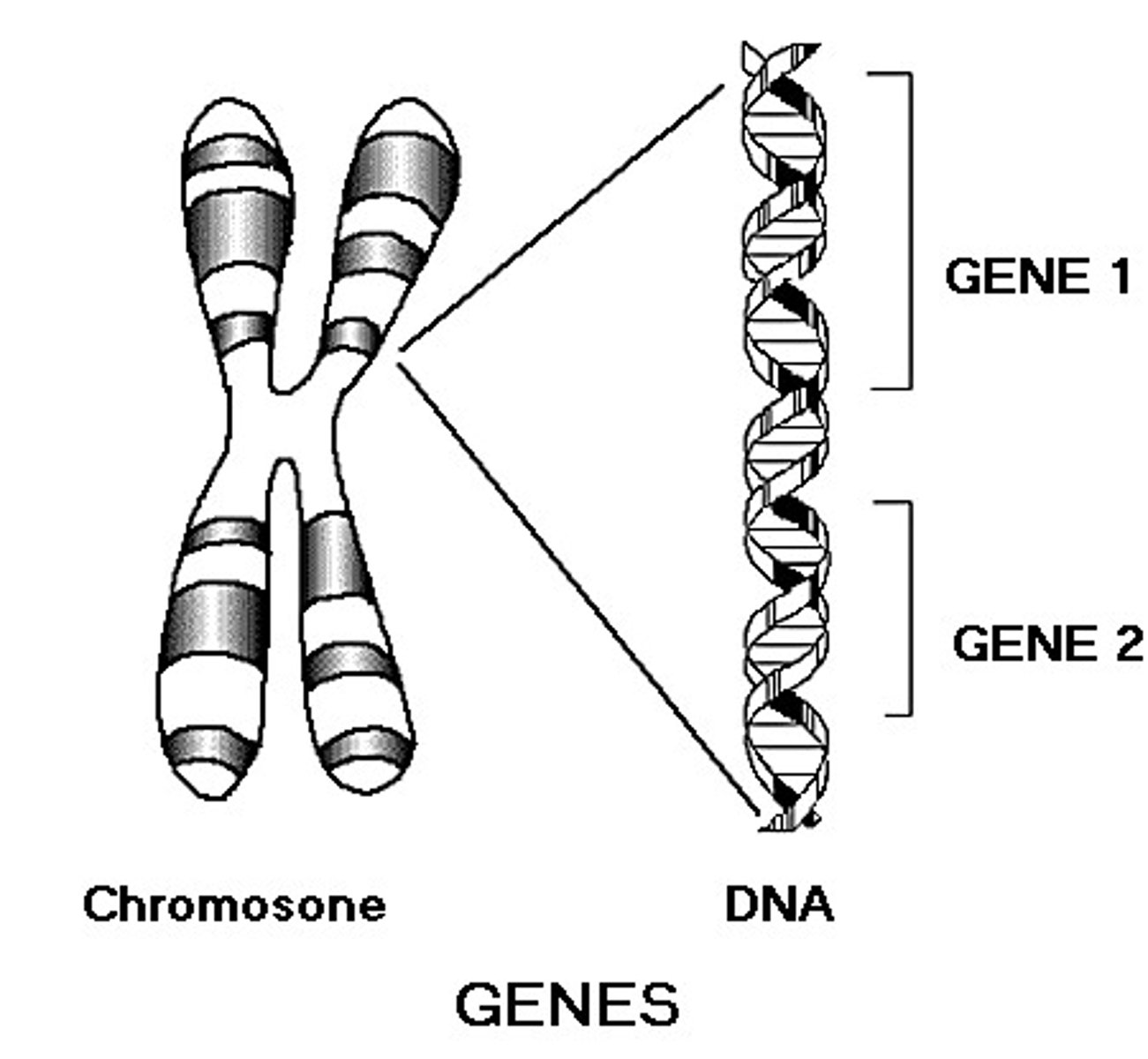
What is a gene?
Sequences of DNA that are transcribed into RNA
What is a somatic cell?
Any cell that is not specialized for reproduction.
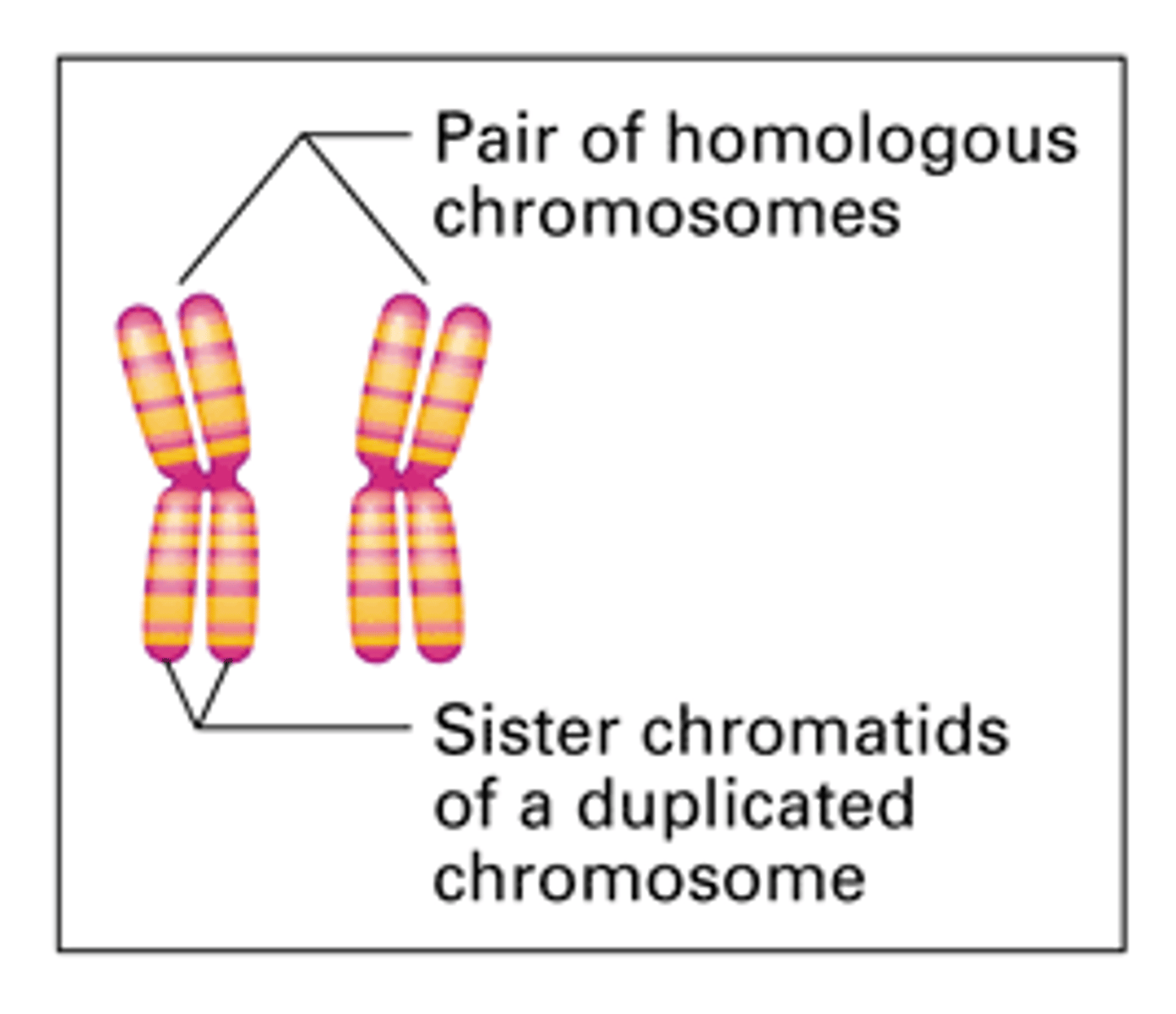
What are homologous chromosomes?
Two genetically similar chromosomes, one from each parent.
What is the cell cycle, and what are the stages?
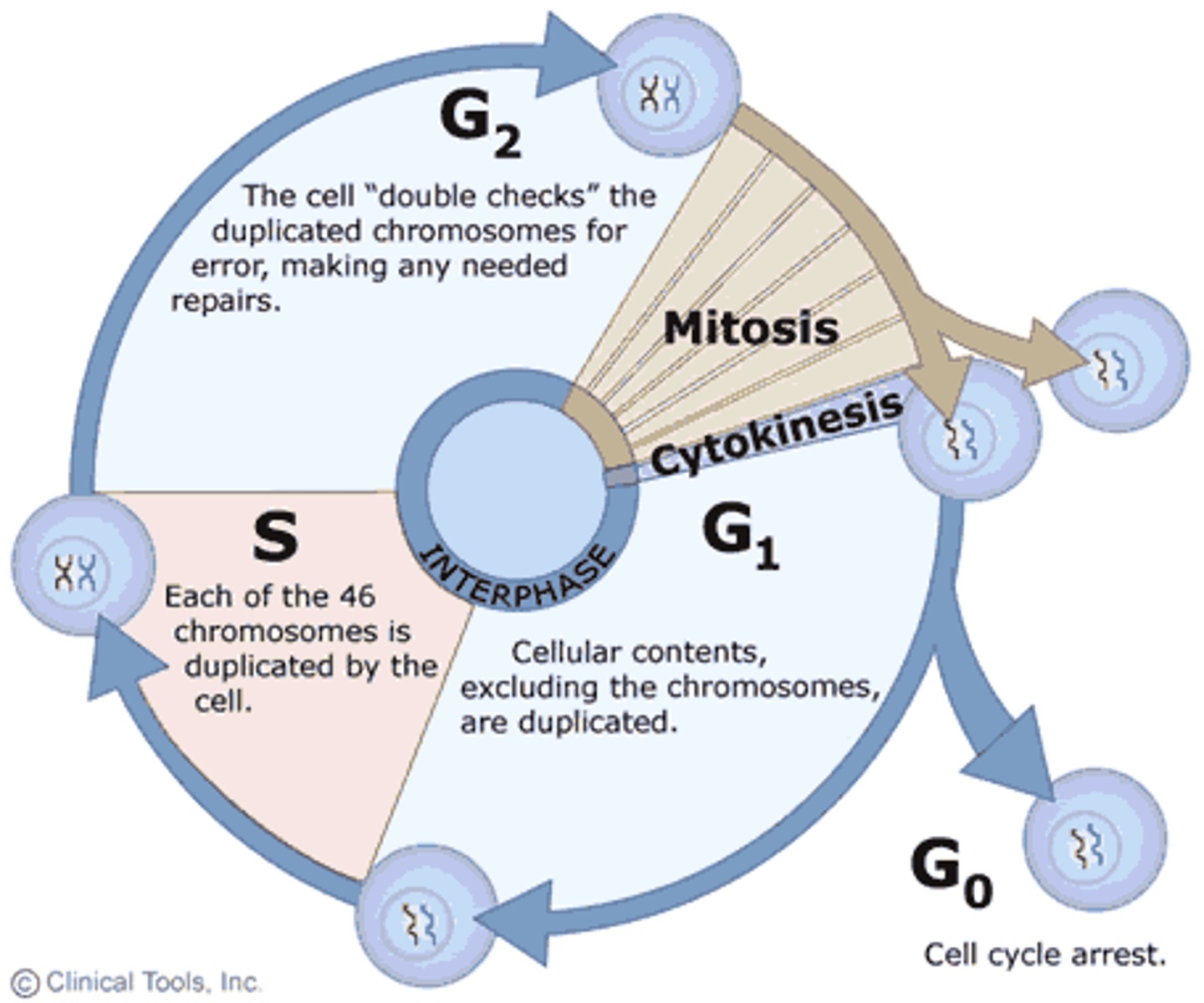
The cell cycle is the process eukaryotic cells go through to produce daughter cells.
Interphase (G1, S, G2): the nucleus is visible, and cell functions occur
--> G1: chromosomes are unreplicated
--> S: DNA replicates
--> G2: Cell prepares for mitosis
Mitosis: separates the two newly replicated chromosomes into two new nuclei, one copy for each daughter cell.
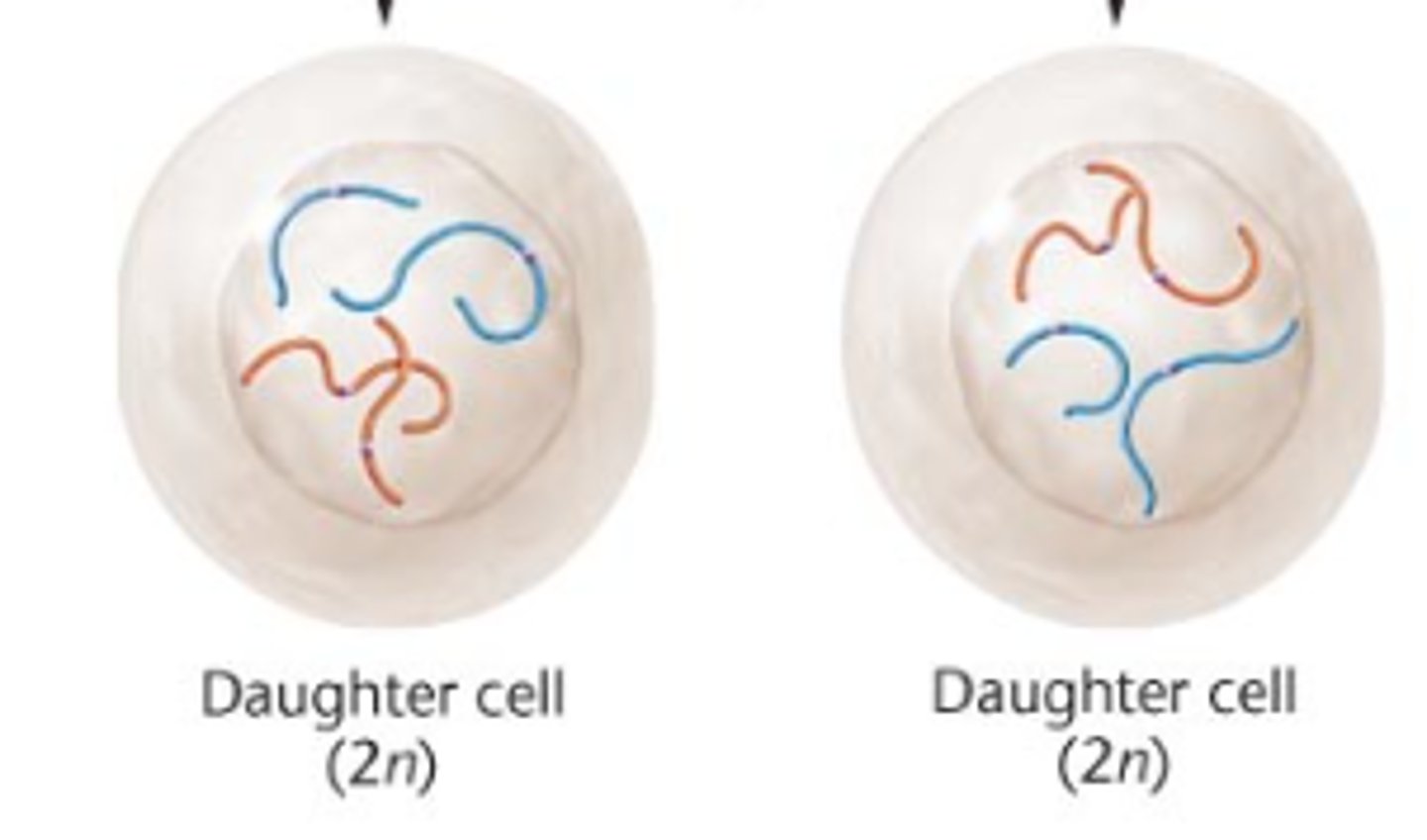
What is the product of mitosis?
Two genetically identical daughter cells.
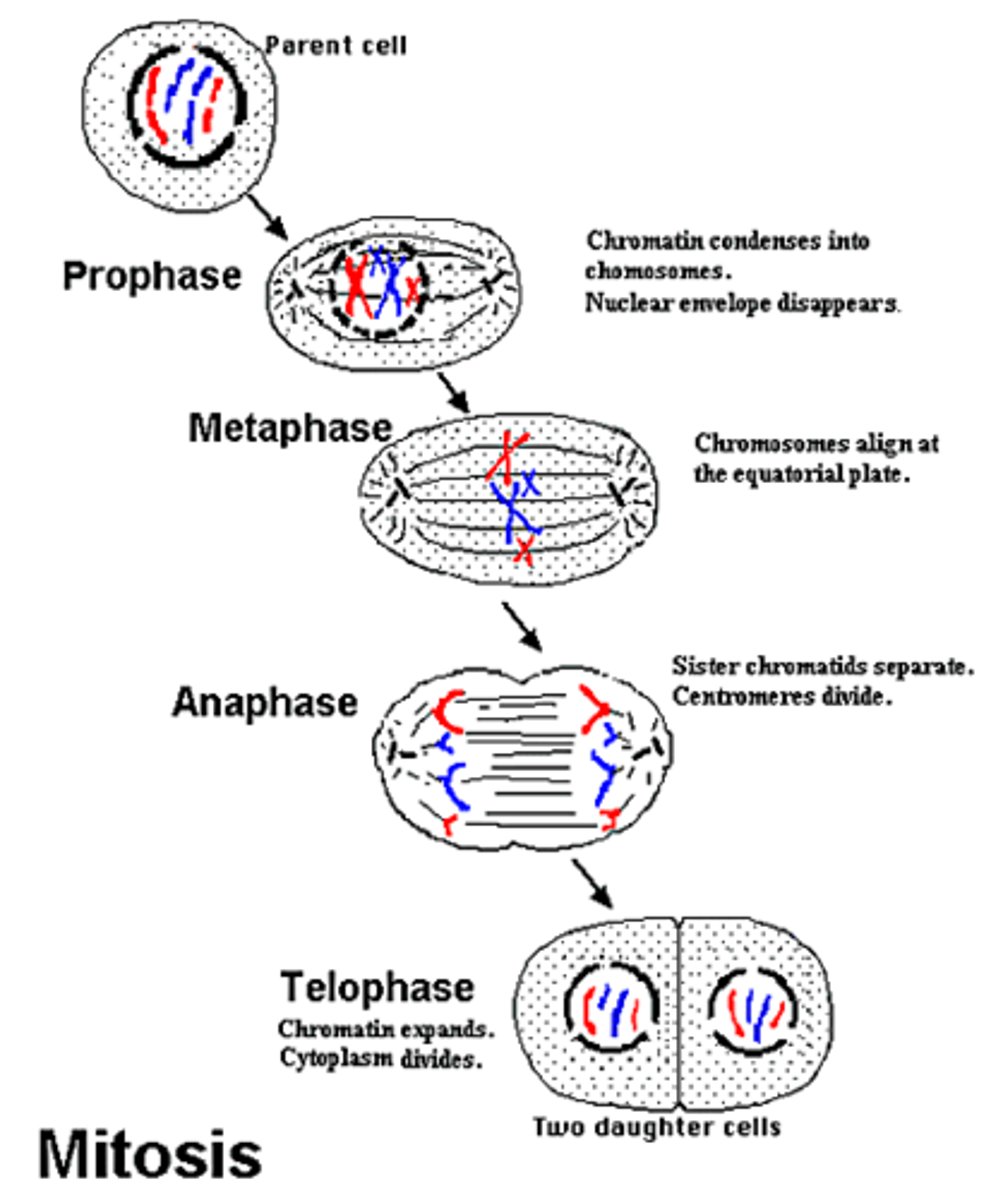
What are the steps of mitosis?
Prophase: chromatin condenses into chromosomes
Metaphase: the two connected sister chromatids line up along the center of the cell, helped by the spindle apparatus.
Anaphase: the spindle fibers pull the chromatids apart to opposite poles, now called chromosomes.
Telophase: chromosomes organize into their respective new nuclei
Cytokinesis: division of the cytoplasm
How does cytokinesis appear in plant cells?
Forms a cell plate to divide two new cells.
What is Apoptosis and its purpose?
1) It is a programmed cell death.
2) The cell is no longer needed or is defective.
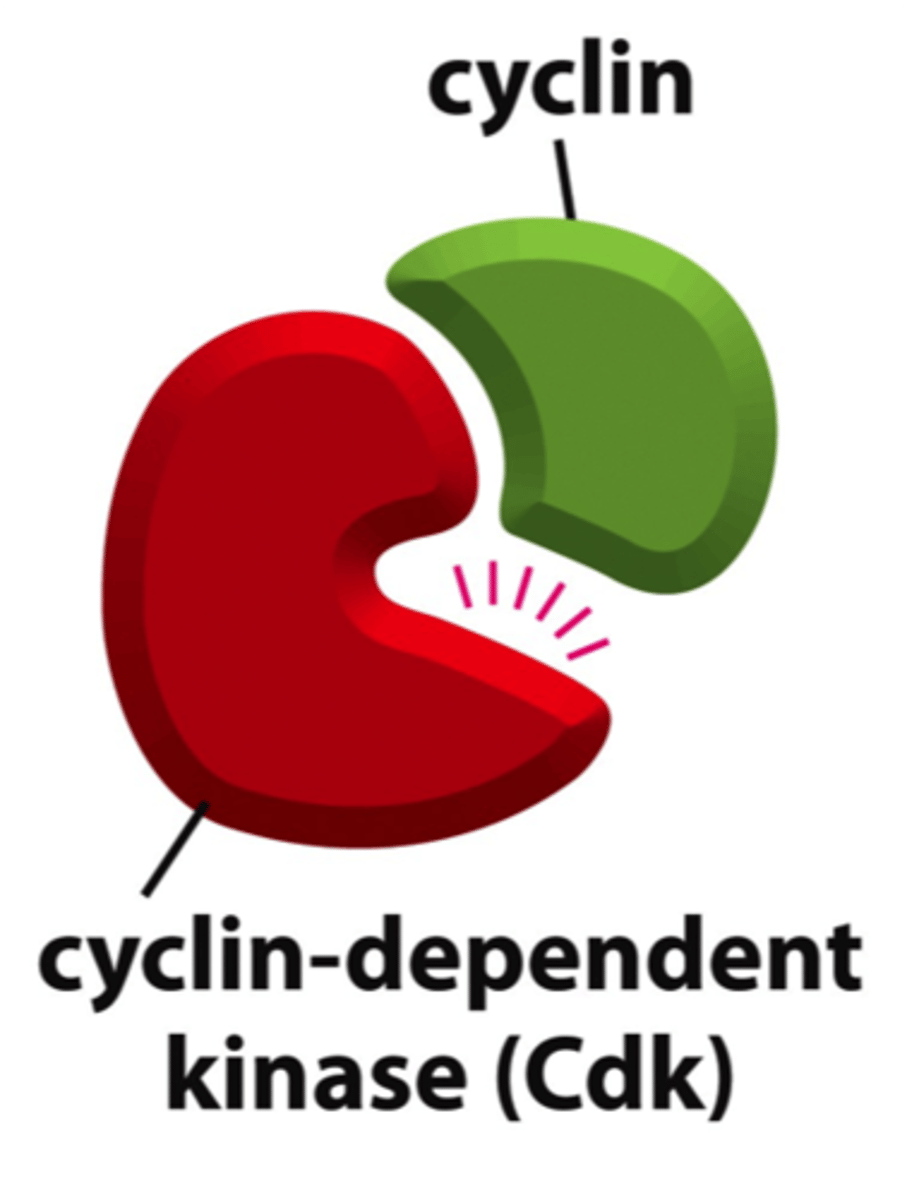
What is the purpose of CDKs? What are they activated by? What is this activation protein for?
1) Cyclin-dependent kinases are proteins that control the cell cycle.
2) CDKs are activated by cyclin.
3) Cyclin acts as a cell cycle checkpoint to regulate progress.
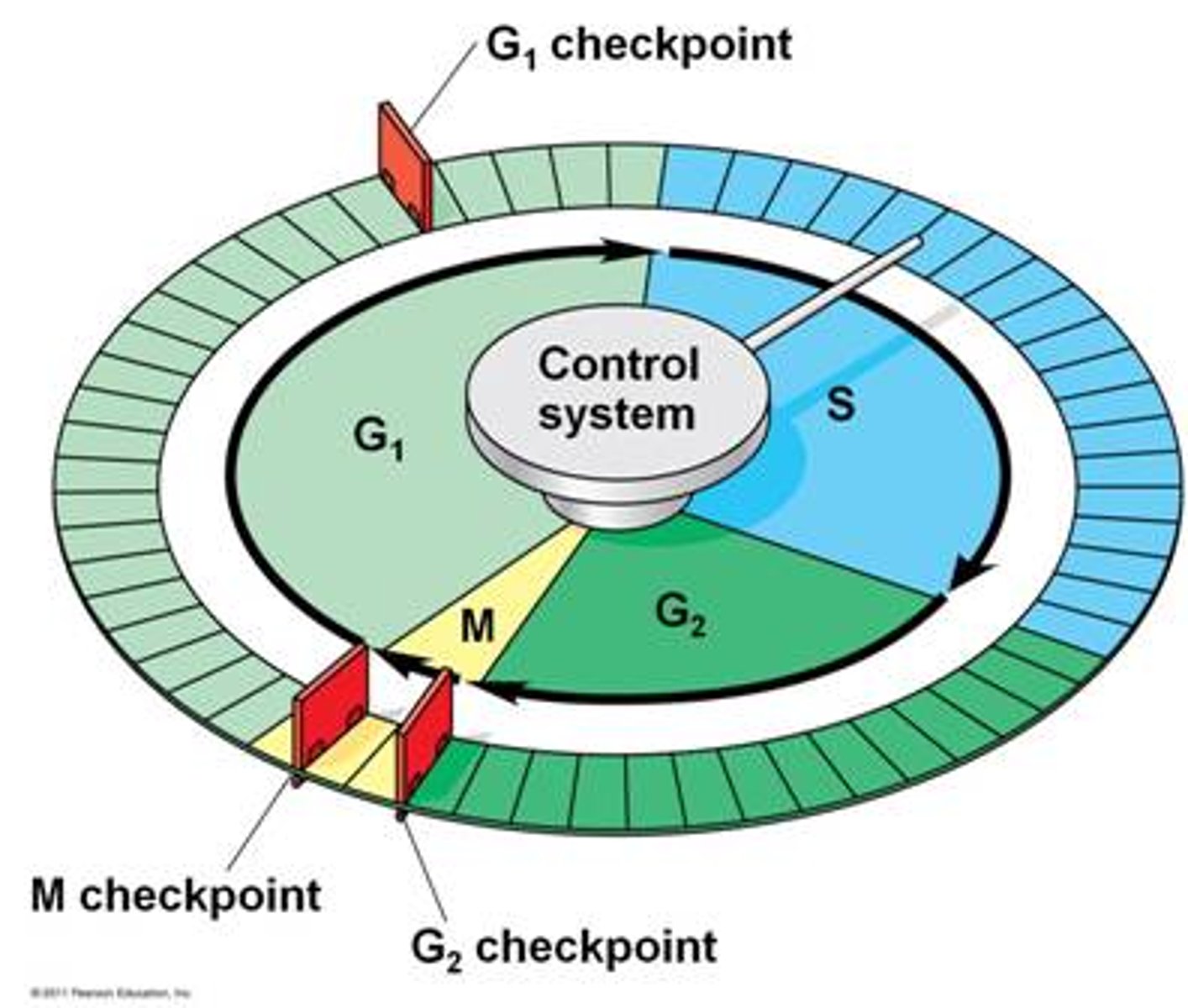
What are the three checkpoints for the CDK? What are the main concerns for each section?
1) G1 Checkpoint: Are the conditions favorable for division? Is the cell the correct size? Is there DNA damage?
2) G2 Checkpoint: Is the cell ready to enter mitosis? Have all chromosomes been replicated? Is there DNA damage?
3) M Checkpoint: Are all sister chromatids correctly attached to the spindle microtubules?
What is cancer? What are the three different types?
1) Cancer is uncontrolled cell division. It is called a tumor if it migrates to other parts of the body.
2) Benign: Grow slowly, resemble the tissue from which they grow, and are not dangerous.
Malignant: do not resemble the tissue they come from, and have irregular structures.
Metastasis: cancer cells invade surrounding tissue and travel through the bloodstream or lymph system, dangerous.
What are the two regulators for regular cells and their functions? What are their cancer-causing mutations?
Positive regulators: stimulate cell division.
--- Oncogene protiens: mutated positive regulator that causes it to be overactive.
Negative regulators: inhibit the cell cycle.
--- Tumor suppressor: negative regulator that are inactive, not stopping cancer cells.
What is P53 and its significance to the cell cycle?
It is a transcription factor that activates other genes that are important for stopping the cell cycle, so damaged DNA can be repaired. Damaged P53 allows cells to continue division and production with mutations, and can't perform apoptosis.
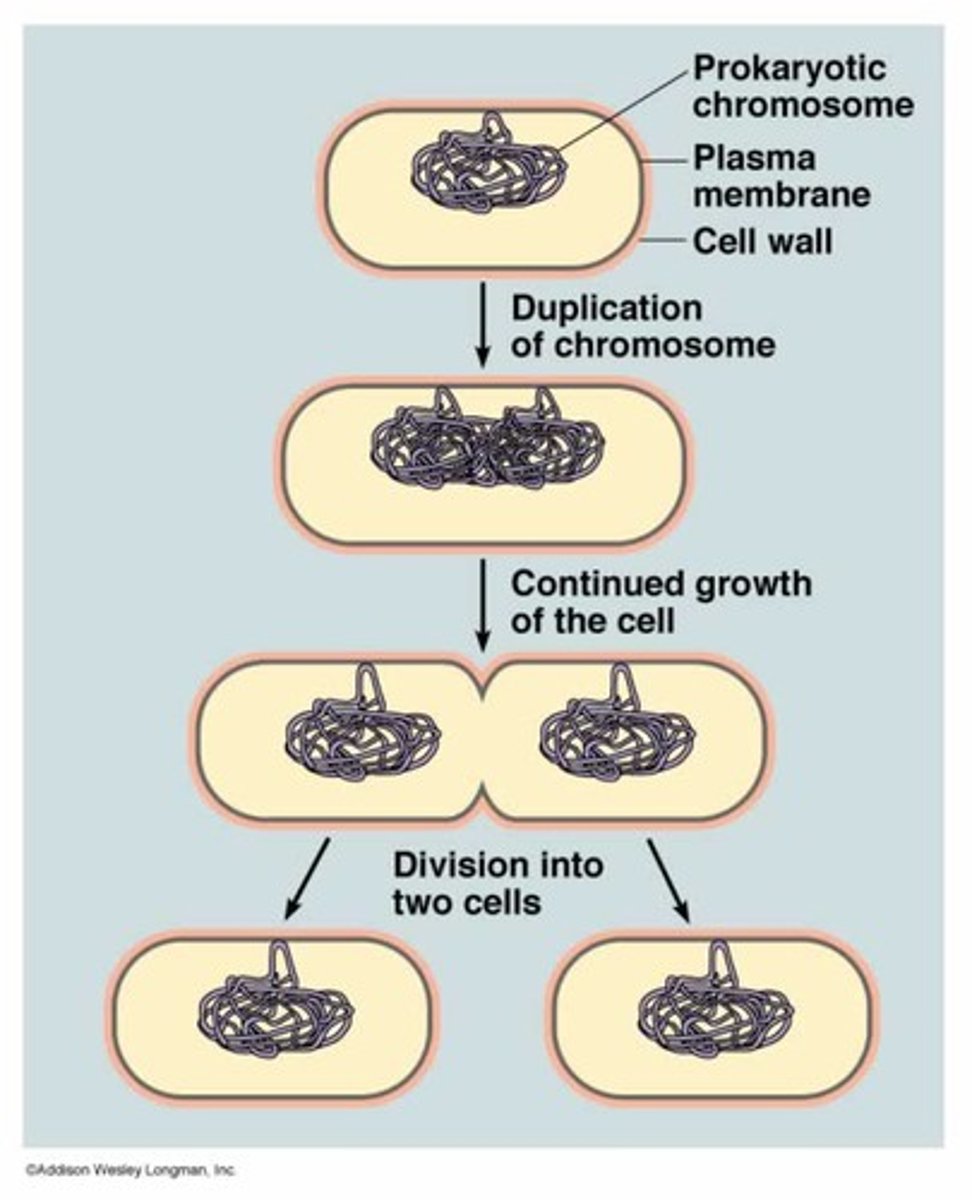
What is binary fission? How many chromosomes do most prokaryotes have? What are the two important regions? How does DNA separate?
1) It is cell division for prokaryotes, resulting in the reproduction of the entire single-celled organism.
2) One chromosome, a single molecule of DNA that is circular and folded.
3) ori: where replication originates
ter: where replications terminate
4) During cytokinesis, ori regions move to opposite ends of the cell, FtsZ protein fibers form a ring, and signal the cell to separate.
Where do cell division signals come from?
Outside factors like nutrient concentration and environmental conditions.