4.7 - Amino Acids, Peptides and Proteins
 Call Kai
 Learn
Learn Practice Test
 Spaced Repetition
 Match
Match Flashcards
 Knowt Play
1/35

There's no tags or description
Looks like no tags are added yet.
Name | Mastery | Learn | Test | Matching | Spaced | Call with Kai |
|---|
No analytics yet
Send a link to your students to track their progress
36 Terms
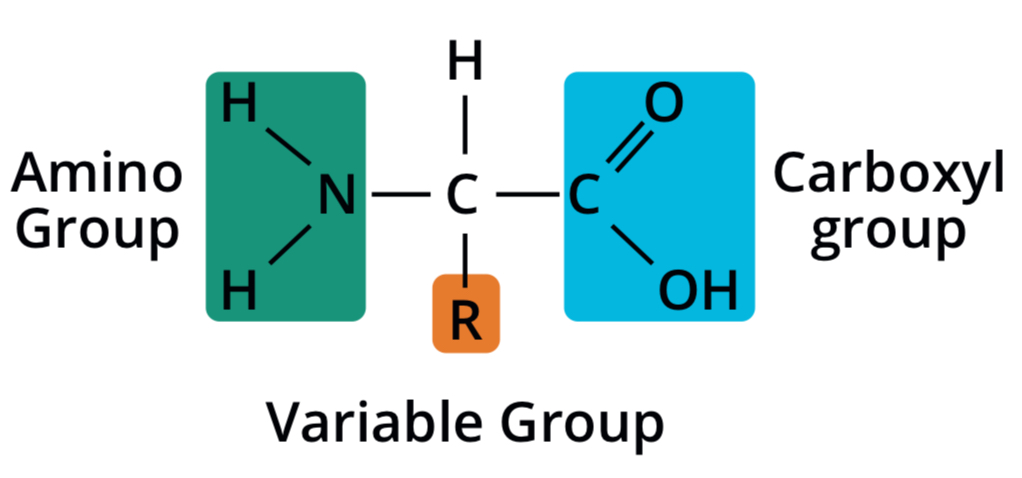
α-amino acids
Has the -NH2 group bonded to the carbon atom that is next to the -COOH group
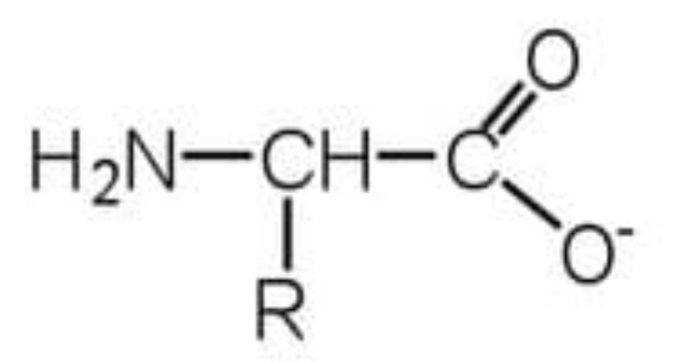
General formula of α-amino acids
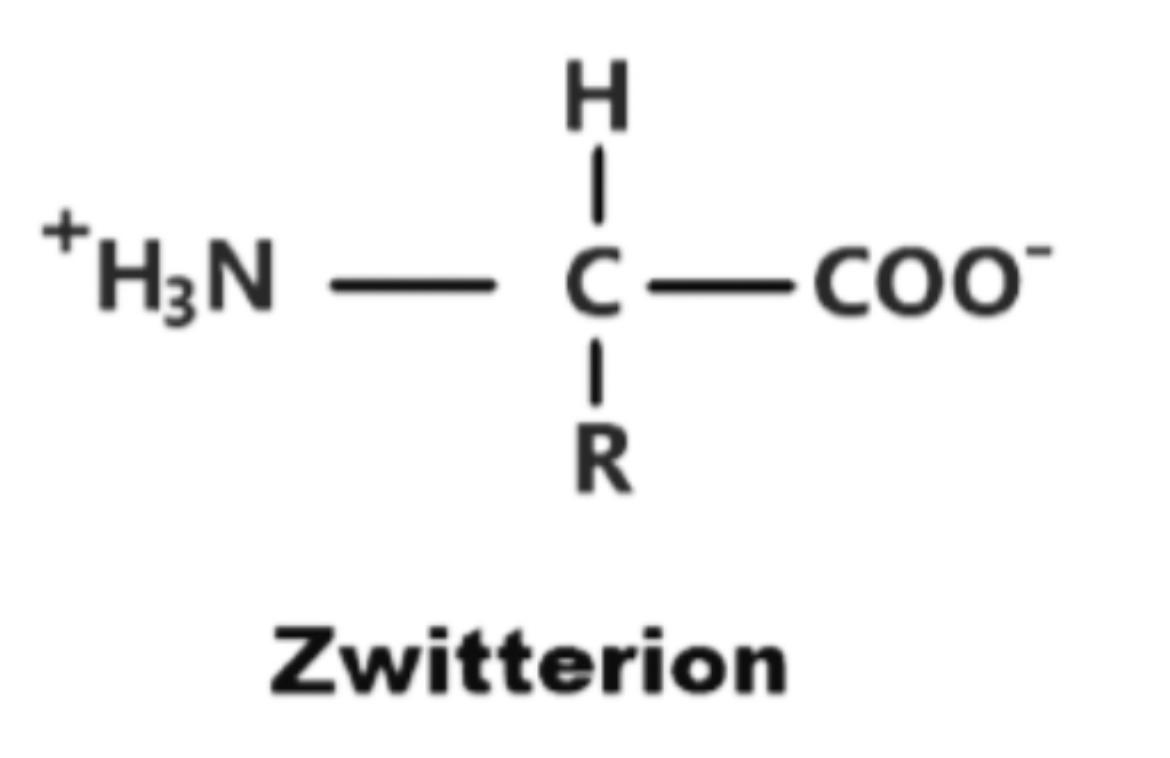
Zwitterions
Dipolar form of an amino acid where a H+ is lost from the carboxylic acid group and gained by the lone pair of electrons on the nitrogen of the amino group
State of α-amino acids at room temperature
White crystalline solids
General formula for a zwitterion
Amphoteric nature of α-amino acids
Due to zwitterionic nature, they can react as both an acid and a base
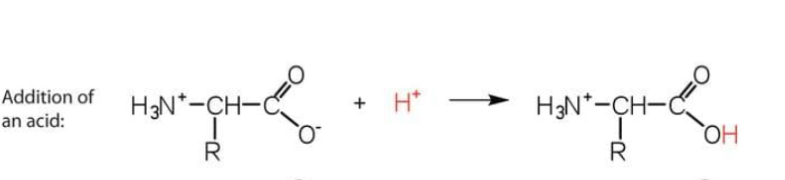
Dissolved in acidic solution —> gain a proton
Dissolved in alkali solution —> lose a proton
Isoelectric point
pH at which zwitterions exist. Value varies depending on the amino acid
Amino acids in acidic solution
pH of solution is lower that the amino acid’s isoelectric point
Acts as a base
Accepts a proton
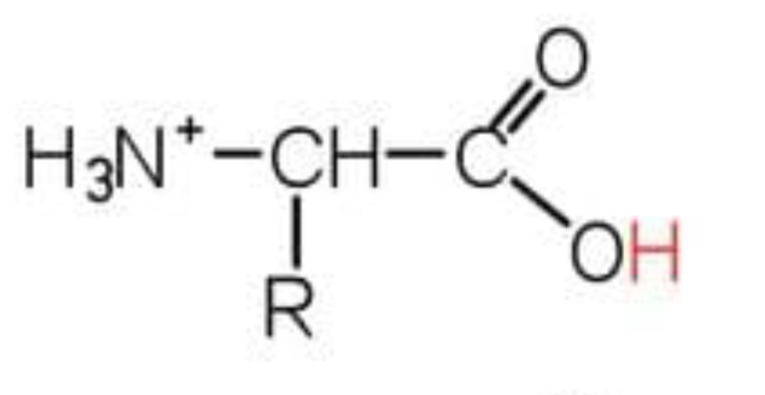
Formula for amino acid in acidic solution
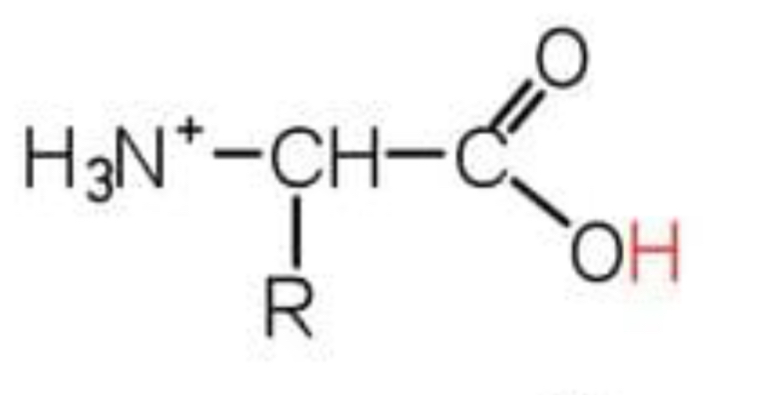
Amino acids in alkaline solution
pH is greater than the isoelectric point Acts as an acid
Loses a proton
Equation for amino acids in acidic solution
Equation for amino acid in alkaline solution

Bonding between zwitterions
Ionic nature so form strong ionic bonds between positive ion one one and negative ion on adjacent —> higher than expected melting point
Melting temperature of amino acids
Ionic nature so form strong ionic bonds between positive ion one one and negative ion on adjacent —> higher than expected melting point
Solubility of amino acids
Generally soluble in water
Insoluble in non-polar organic solvents
Reflects presence of zwitterions
Extent of solubility in water depends on size and nature of R group
Condensation reaction
a reaction in which two molecules are joined to form one molecule. A smaller molecule is lost in the reaction, often water.
Formation of a dipeptide
2 amino acid molecules join together in a condensation reaction. Can be the same one or different
Bond formed in dipeptides
Between carboxyl group of one and amino group on the other. Peptide bond/amide linkage
Product formed from condensation of two amino acids
Dipeptide/amide
Number of dipeptides formed from condensation of two of the same amino acid
One
Number of dipeptides formed from condensation of two different amino acids
Two
Reaction to produce a dipeptide
Condensation between two amino acids
Polypeptide
A long chain of many condensed amino acids joined together by peptide bonds. Can lead to protein formation
Formation of polypeptides
Combination of more than 2 amino acid molecules
Formation of proteins
From polypeptide chains
Primary structure of protein
Sequence of amino acids making up the protein chain
Secondary structure of protein
How parts of the protein can fold up to form an α-helix that is held in place by hydrogen bonds or a β-pleated sheet in which the amino acids form a shape like a piece of paper stabilised by hydrogen bonds between amino acids in different polypeptide chains
Bonds in secondary structure of protein
Hydrogen bonds between amino acids in different polypeptide chains
Tertiary structure
Refers to the protein as a whole. Way in which the α-coils or β-pleated sheets of the protein fold with respect to each other
Hydrogen bonds
Disulfide bridges (-S-S-)
Salt bridges/ionic interactions between RCOO- and RNH3+
Bonding in the tertiary structure
Hydrogen bonds
Disulfide bridges (-S-S-)
Salt bridges/ionic interactions between RCOO- and RNH3+
Role of proteins in living systems
Essential component of a healthy diet
Necessary for;
Structural functions (rigid structures)
Collagen in cartilage
Keratin in nails, hair and feathers
Enzymes + biological catalysts
Amylase in human salvia which catalyses the hydrolysis of starch into sugars
Hormones
Insulin
Examples of proteins in organisms
Structural functions (rigid structures)
Collagen in cartilage
Keratin in nails, hair and feathers
Enzymes + biological catalysts
Amylase in human salvia which catalyses the hydrolysis of starch into sugars
Hormones
Insulin
Examples of proteins in structures
Structural functions (rigid structures)
Collagen in cartilage
Keratin in nails, hair and feathers
Examples of proteins as enzymes
Enzymes + biological catalysts
Amylase in human salvia which catalyses the hydrolysis of starch into sugars
Examples of proteins as hormones
Insulin
Examples of proteins in commercial use
Rennin in cheese making
Protease in detergents to remove protein stains