4.2.2 Classification and Evolution
 Call Kai
 Learn
Learn Practice Test
 Spaced Repetition
 Match
Match Flashcards
 Knowt Play
1/37

There's no tags or description
Looks like no tags are added yet.
Name | Mastery | Learn | Test | Matching | Spaced | Call with Kai |
|---|
No analytics yet
Send a link to your students to track their progress
38 Terms
How are species classified
Taxonomy: The practice of biological classification - it attempts to take into account their supposed evolutionary descent
Biological classification system allows us to arrange species into groups based on their evolutionary origins and relationships/similar organisms together
No overlap between the groups
Each group is called a taxon
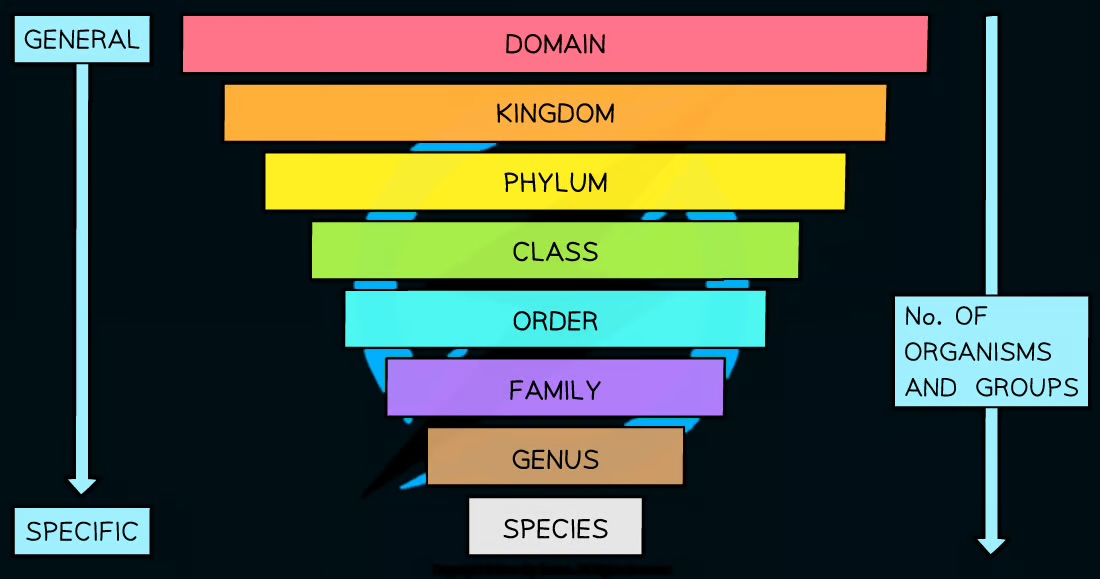
What is the classification system
Kingdom = similar phyla
Family = similar genera
Nemonic:
D*ckhead (3 domains are: Archea, Eubacteria and Eukaryotes)
Kings (5 kingdoms are: Plantae, Animalla, Fungi, Protocista and Prokaryote)
Play (Groups organisms according to body plan)
Chess (Groups organisms to do with general trait)
On (Groups organisms according to nature e.g. carnivore/herbivore)
Fancy (Groups of similar genera, based on reproductive characteristics)
Gold (Groups of similar species)
Squares (A group of organisms that can be interbred to give fertile offspring)
What is the domain of eukaryotes
eukarya
What is Phylogeny
The study of how organisms are related or their evolutionary relationships
What is the Binomial system
Organisms are given 2 latin names
Universal across countries and languages
Same organism may have different local names
Created by Carl Linnaeus
What features are used to classify Animalia
Eukaryotic
No cell wall
Multicellular
A nucleus and other membrane bound organelles
Heterotrophic (large organic molecules digested into smaller ones for absorption)
Food stored as glycogen
What features are used to classify plantae
Eukaryotic
Multicellular
Cellulose cell wall
Use light to produce food by photosynthesis (autotrophic - produce their own food)
Store food as starch
What features are use to classify Fungi
Eukaryotic
Chitin cell walls
Usually multicellular (can be unicellular, yeast) or have mycelium
No chloroplasts
Saprophytic feeders
Store food as glycogen
What features are used to classify Prokaryotes
Prokaryotic
Unicellular
Cells have no nucleus (circular DNA)
Absorb nutrients or produce internally by photosynthesis
What features are used to classify Protocista
Eukaryotic
Single cell organisms or a colony of single cells
Some have chloroplasts
Move using cilia/ flagellum/ amoeboid /mechanisms
Nutrients acquired using photosynthesis (autotrophic) or ingesting other organisms (heterotrophic) or both
What is the evidence that has led to new classification systems
Artificial classification
Natural classification
Using DNA sequences
Using amino acid sequences
Using antibodies
What is artificial classification
Based on observed characteristics
Organisms adapt to their environment
So they often look similar if they live in a similar habitat
What is natural classification
Natural relationships, internal and external features
Based on evolutionary relationships
Evidence used from DNA sequences and amino acid sequences
Mutations in DNA, alter proteins and therefore characteristics
What is natural classification: Using DNA sequences
Changes in DNA are caused by mutations
More differences = less closely related two species are as they have evolved separately for a long time
What is natural classification: DNA hybridisation
DNA from 2 species is extracted, purified & cut into small pieces
DNA is heated to about 90 degrees celsius to break H bonds
On cooling, the strands combine with others that have a complementary base sequence
The more similar, the more H bonds
To separate the strands again they are heated
The higher the temperature needed to break the strands apart = more H bonds
Therefore the more closely related the species
Used to aid in the classification of flowering plants
How have amino acid sequences led to the development of new classification systems e.g. Cytochrome C
A protein used for respiration
Isn’t identical in all species
We can compare the sequence of the amino acid sequence in the cytochrome C protein to find out how closely related organisms are
Similar sequence = closely related
How have antibodies led to new classification systems: Immunological comparisons of proteins
Antibodies of one species will respond to specific antigens on proteins in the blood serum of another (albumin = main protein in blood plasma)
Serum albumin from Sp.A injected into Sp.B
Sp.B produces antibodies specific to all the antigen sites on Sp.A albumin
Serum is extracted from Sp.B containing antibodies specific to antigens on So.A’s albumin
Serum from Sp.B is mixed with blood from a third species Sp.C
Antibodies respond to antigens on albumin of Sp.C - Response is the formation of a precipitate
More similar antigens = more precipitate formed = more closely related the species
What does evolution mean
The gradual development of organisms over time
What is Natural Selection
Theory proposed by Darwin as a mechanism to explain how evolution occurred
Natural selection keeps the characteristics of organisms the way they are for a particular environment which is called stabilising selection
What is selection pressure
Predation
Grazing
Food availability
Disease
Abiotic Factor
Physical
Chemical
How are plants adapted to get around grazing as a selection pressure
ability to grow from protected buds (grasses)
have prostrate crown to avoid grazing (daisy)
tough, spiny leaves to deter grazers (holly)
have toxic chemicals in leaves to put off grazers
Cyanide in clover and cherry laurel is released when tissue is damaged
How are plants adapted to get around predation
camouflage
warning colouration
behaviour that avoids being seen or allows escape
The larvae of cinnabar moth feed on ragwort
poison accumulates in tissues but does not harm the caterpillar
Poison remains in body of adult caterpillar and adults have warning colours
Next thing that eats it gets poisoned
How are plants adapted to get around food availability
ability to cope with the toxic chemicals in the food
alkaloids in ragwort do not kill cinnabar moth
ability to digest/gain nutrition from poor feed
koala on eucalyptus leaves
beak shape:
long pointed beak to get insects from crevices
short/stocky beak for cracking seeds/nuts
How are plants adapted to get around physical and chemical factors
Ability to withstand:
high temperatures
low temperatures
low water availability
high salt concentration
wave action
Barnacles resist wave action by being cemented onto rocks
How might plants be adapted to avoid disease
Mechanism to prevent entry of the pathogen
Thick cuticle
Anti-microbial chemical
Mechanism to remove pathogen once entered
red cell collapses under low O2 if malarial parasite - present in individuals with sickle cell trait
• Wild potatoes and tomatoes are resistant to late blight
How does the environment cause variation
Organisms can be affected by their environment but any variation this causes isn’t heritable so isn’t subject to natural selection
However, the ability of organisms to develop differently in different environments can be genetic. Meaning organisms can evolve to be flexible.
E.g. Plants - The number of leaves, growth pattern and size of any individual plant is dependent on the environment, e.g. availability of light and nutrients
What were Charlie’s Darwin’s Key observations:
All organisms are able to produce large numbers of offspring
Populations remain relatively constant over long periods of time
Offspring were similar to their parents
Variation exists within a population
What is speciation
The process in which new species could be produced from an existing one
Results from an accumulation of changes:
Morphological
Physiological
Behavioural
Genetic
How does speciation happen
There needs to be reproductive isolation
Thus selection pressure operates on the isolated group and results in gradual genetic change within the group which then accumulates over time
The 2 possibilities of this being:
Allopatric speciation: Populations are physically isolated by some sort of geographical separation or barrier such as mountains or islands
Sympatric speciation: Populations are reproductively isolated and prevent breeding by biochemical, physical or behavioural change or gamete incompatibility
What is Allopatric speciation
Populations are physically isolated by some sort of geographical separation or barrier such as mountains or islands
What is sympatric speciation
Populations are reproductively isolated and prevent breeding by biochemical, physical or behavioural change or gamete incompatibility
What is the different evidence for evolution
Fossil record
DNA
Molecular
How does the fossil record work as evidence for evolution
Fossil = the remains of organisms that are preserved in sedimentary rocks
Clearly show that change has happened over geographic time scale
Some species dies out
The new species that are present
The immediate or link forms that are present
Show the evolution of the horse from the Eohippus 54 million years ago
How does the DNA work as evidence for evolution
The human genome and that of other organisms have been sequenced and many show remarkable similarity
We share 98.8% of DNA with the chimpanzee
How do molecules work as evidence for evolution
Certain molecules are universally found in living organisms:
DNA polymerase
RNA polymerase
Cytochrome C
Related sequences have fewer differences in the amino acid sequences than more distantly related sequences
How does antibiotic resistance develop
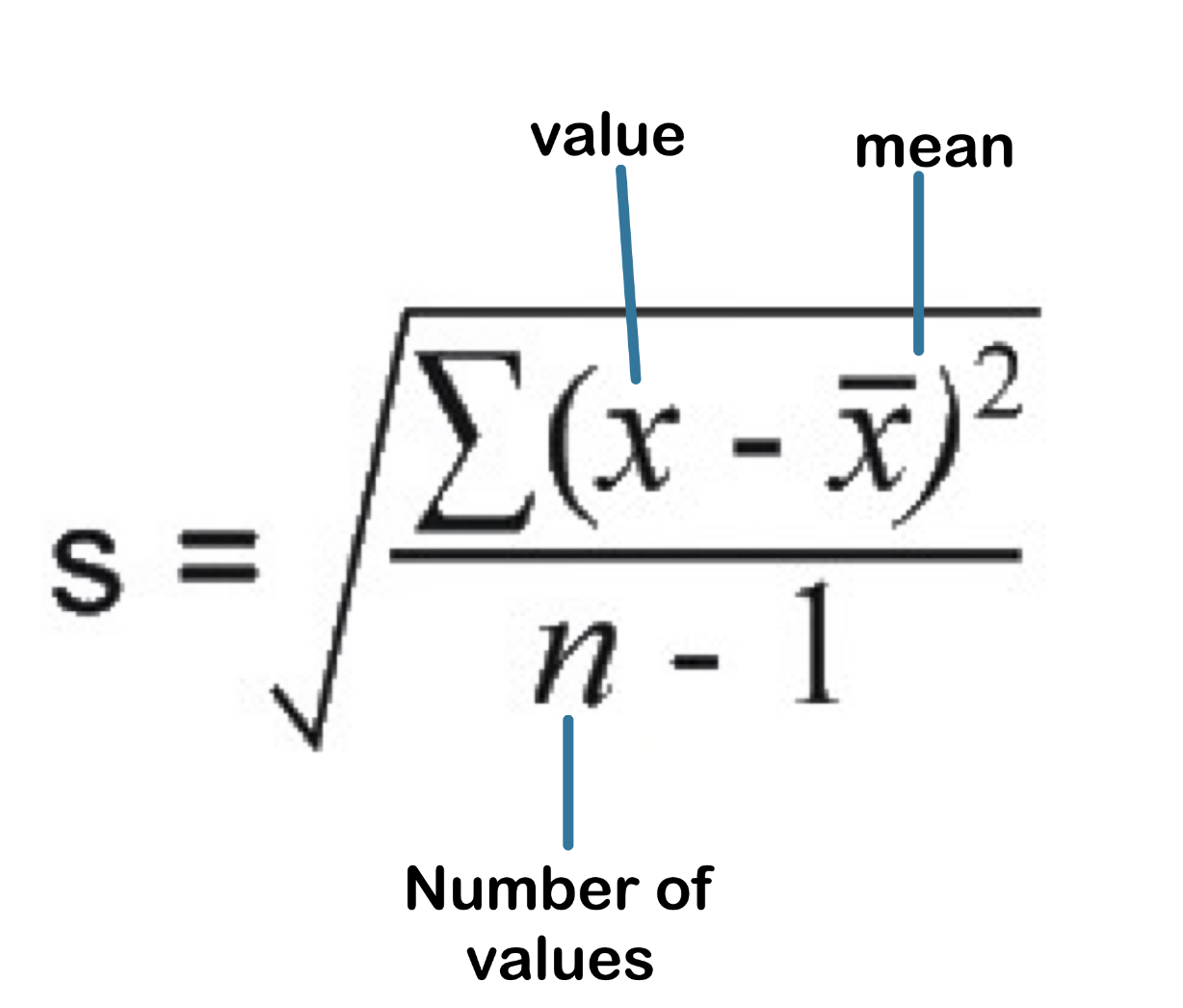
What is the standard deviation formula