Turtles Families- Lecture Exam II (Class Chelonia)
 Call Kai
 Learn
Learn Practice Test
 Spaced Repetition
 Match
Match Flashcards
 Knowt Play
1/7

There's no tags or description
Looks like no tags are added yet.
Name | Mastery | Learn | Test | Matching | Spaced | Call with Kai |
|---|
No analytics yet
Send a link to your students to track their progress
8 Terms
Family Cheloniidae and Dermochelyidea
The sea turtles, diets vary, NOT much nesting in AL, legs and feet are flippers, turtle excluder devices (TED)
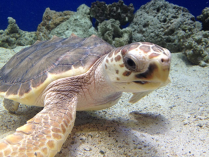
4 species in Alabama Waters
Loggerhead-MOST Common (clams, oysters, bottom foragers), Green Sea turtle (Grass beds), Kemp’s Ridley (clams, oysters, blue crabs (smaller prey items)), Leatherback-largest of the sea turtles (jellyfish)
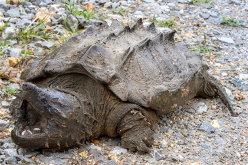
Family Chelydridae
Snapping turtles, THICK cardboard like shell (not hard, not flexible), big head and bulky legs, bottom dwellers (AQUATIC)(common snapping turtles forage, snapping turtles are a wait and eat), carnivorous, will SNAP if disturbed, some get large, used for turtle soup
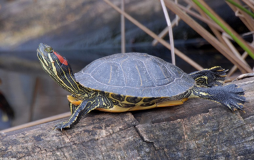
Family Emydidae
Water and Box Turtles (Sliders and Cooters, Yellow bellied is MOST common (3-stripes on carapace),tying their skeletal similarities, Red Belly turtle is state turtle), world’s LARGEST turtle family (most are found in AL), omnivores, basking is common, sexual dimorphism
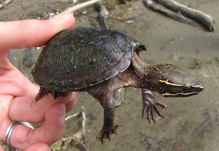
Family Kinosternidae
Musk and mud turtles (mud-triangular scute at hinge on plastron, musk- trapezoid scute at hinge on platron) releases “musk” during breeding season to attract females, Warrior River Basin in the ONLY place of Flattened Musk Turtle (pollution from Strip Mining and pet trade issues, small plain bottom-dwelling (looks like rocks), basking UNCOMMON, carnivorous
Family Testudinidae
Tortoises, land turtles; stumpy elephant feet, herbivorous
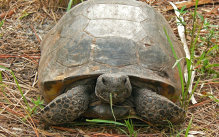
Gopher tortoise in AL
Burrower, Coastal Plain Dweller-sandy soil needed, keystone species in longleaf pine ecosystem (burrows are used during fire subclimax), development; predation; and pet trade destroyed family
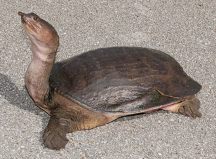
Family Trionychidae
Softshell turtle, cartilaginous turtle; leathery flexible, bottom-dweller (occasional basking), aquatic existence, carnivorous, will bite with long neck, sexual dimorphism