Phylum Echinoderma
 Call Kai
 Learn
Learn Practice Test
 Spaced Repetition
 Match
Match Flashcards
 Knowt Play
1/33

Earn XP
Description and Tags
Starfish
Name | Mastery | Learn | Test | Matching | Spaced | Call with Kai | Chat |
|---|
No analytics yet
Send a link to your students to track their progress
34 Terms
What is the phylum Echinodermata mean
Echino= spiny & Dermea: skin
Extra: The term "Echinodermata" refers to a phylum of marine animals characterized by their spiny skin and radial symmetry. Members include starfish, sea urchins, and sea cucumbers.
Examples of animal within the phylum
Sea star/ Starfish (what we dissected)
Sea Urchin -small, globular marine creatures that look like spiky pincushions
Sea cucumber -soft, elongated, and cylindrical bodies that often resemble a cucumber, pickle, or caterpillar
Brittle star:slender, flexible arms: (like a starfish)
Sea lily- Looks like a plant colorful, feathery underwater flowers rooted to the ocean floor
Body symmetry
Radial
Cephalization
none
Germ cell layers
3 (endo, ecto, meso)
How many digestive tract openings
2 (mouth and anus)
segmentation
none
circulatory system
closed (water vascular system)
Skeletal system
Endoskeleton, water tubal skelotion
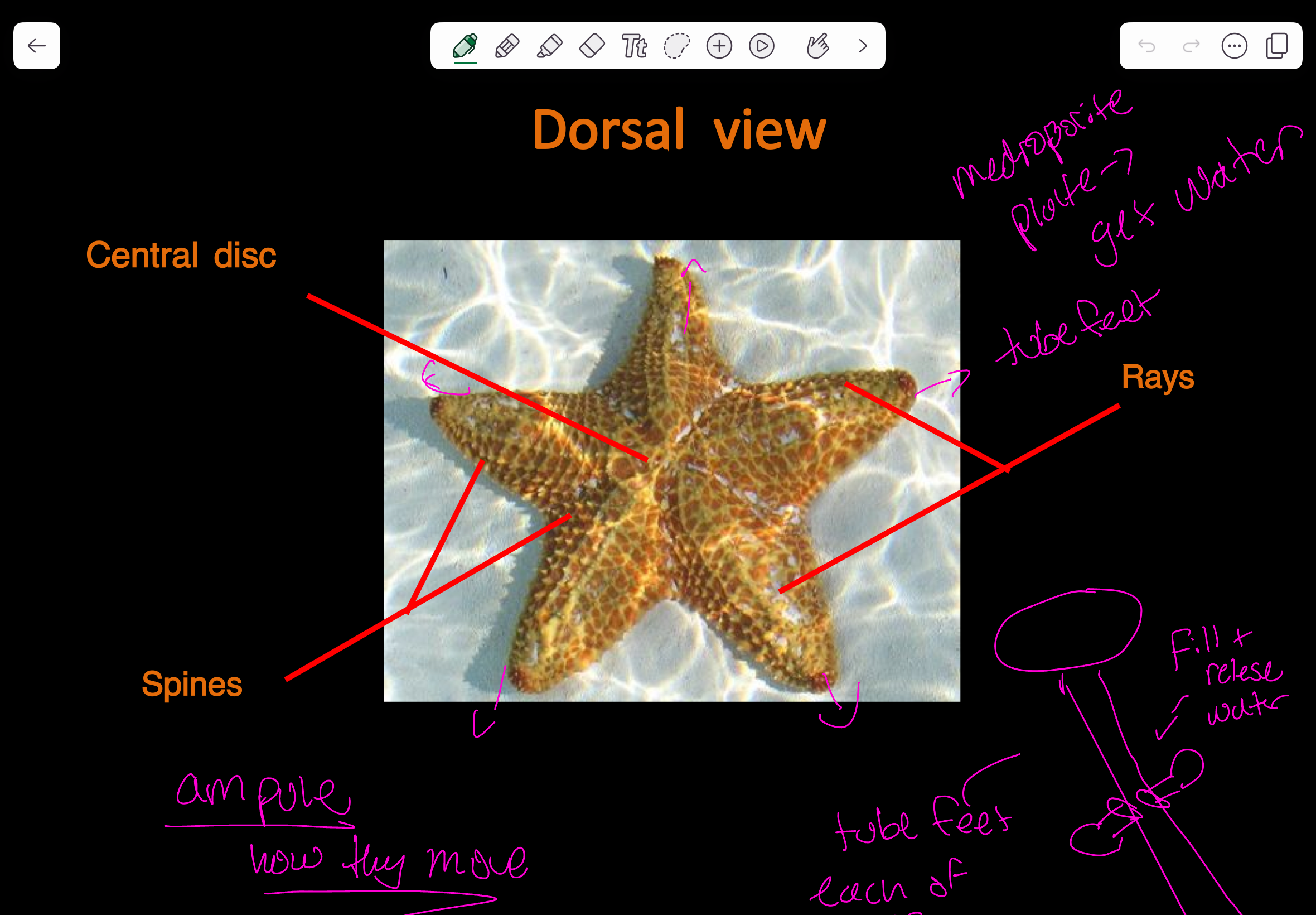
dorsal view (slides)
pic
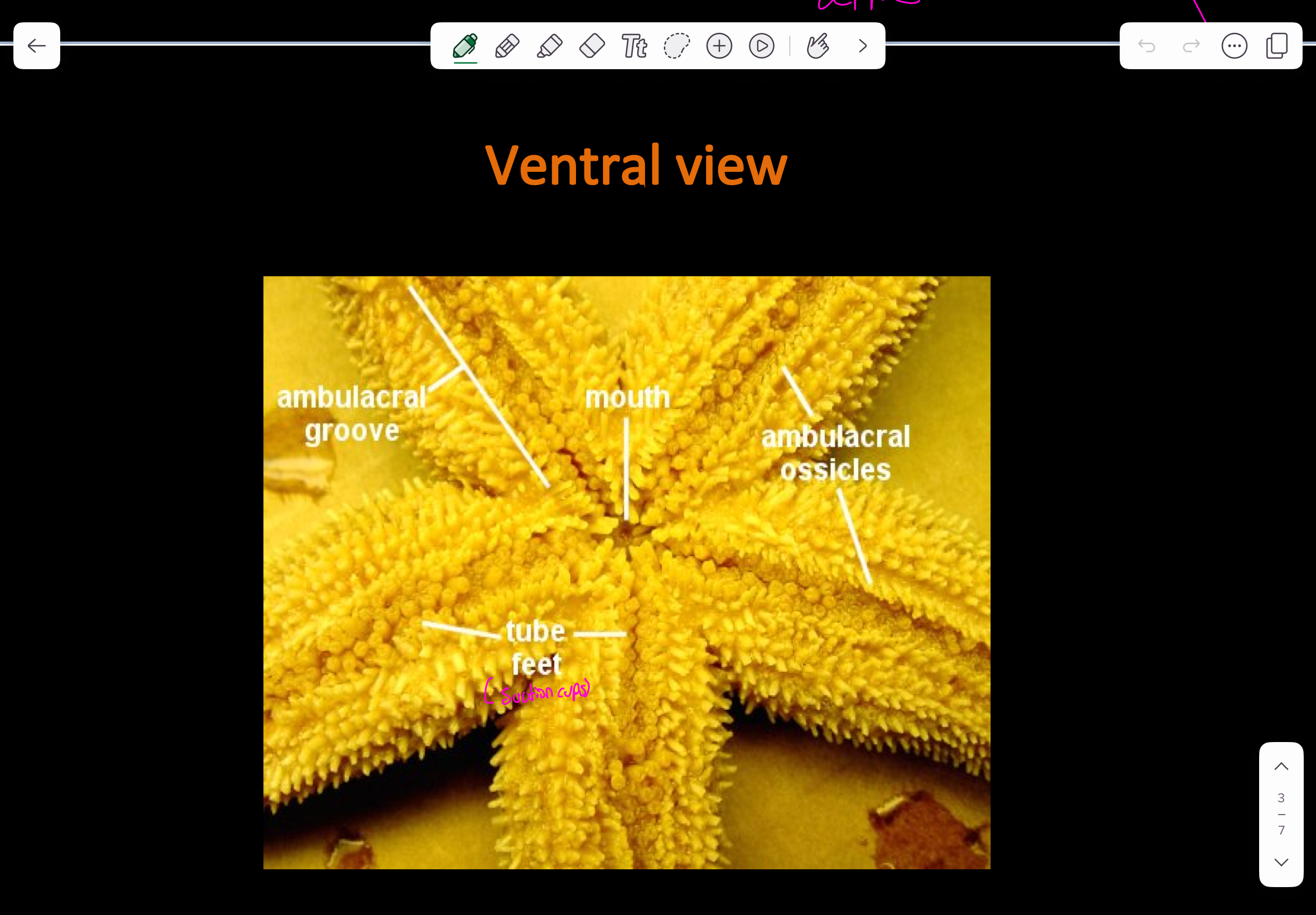
Vental view (sildes)
pic
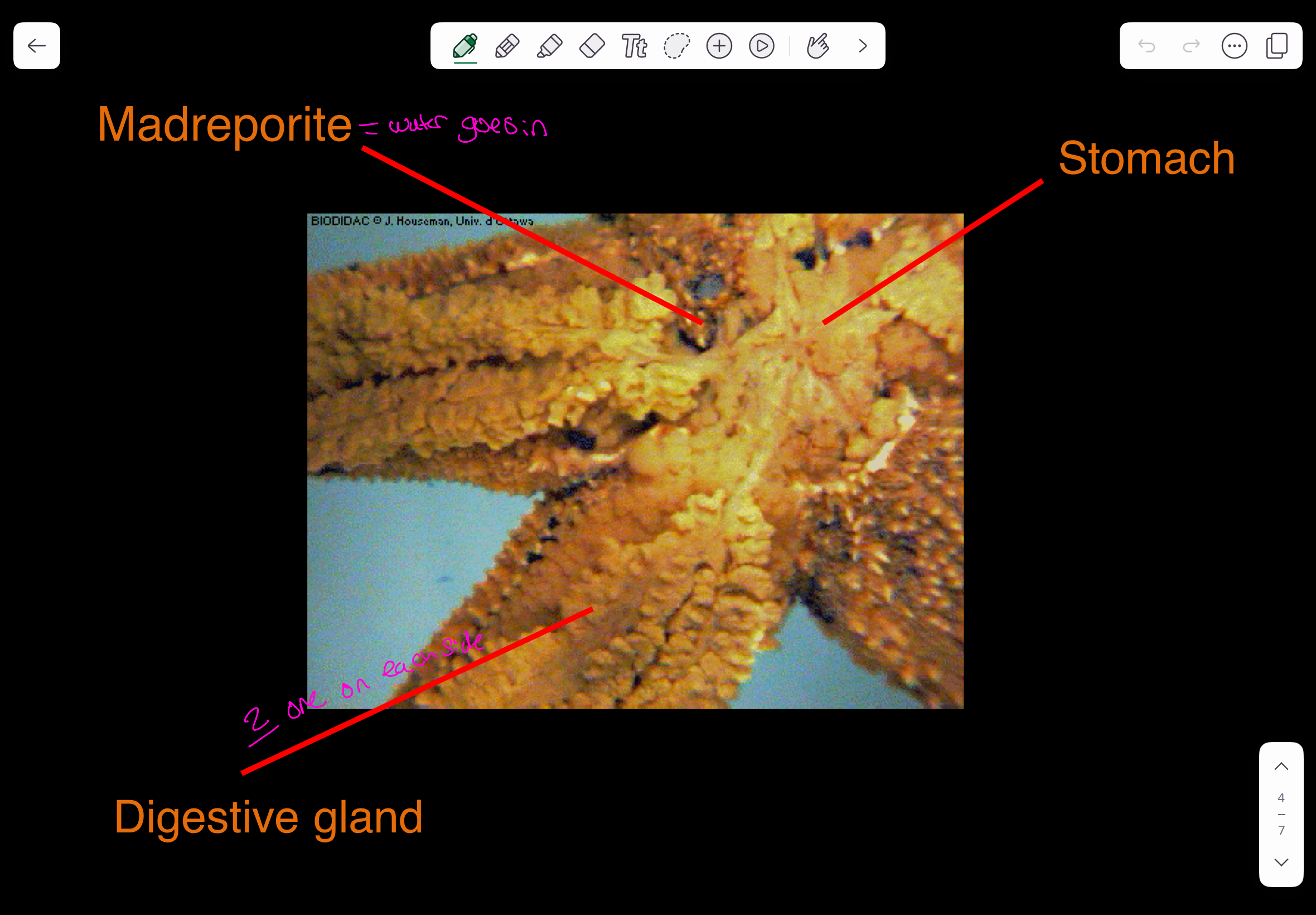
Vental view (sildes) pt.2
pic
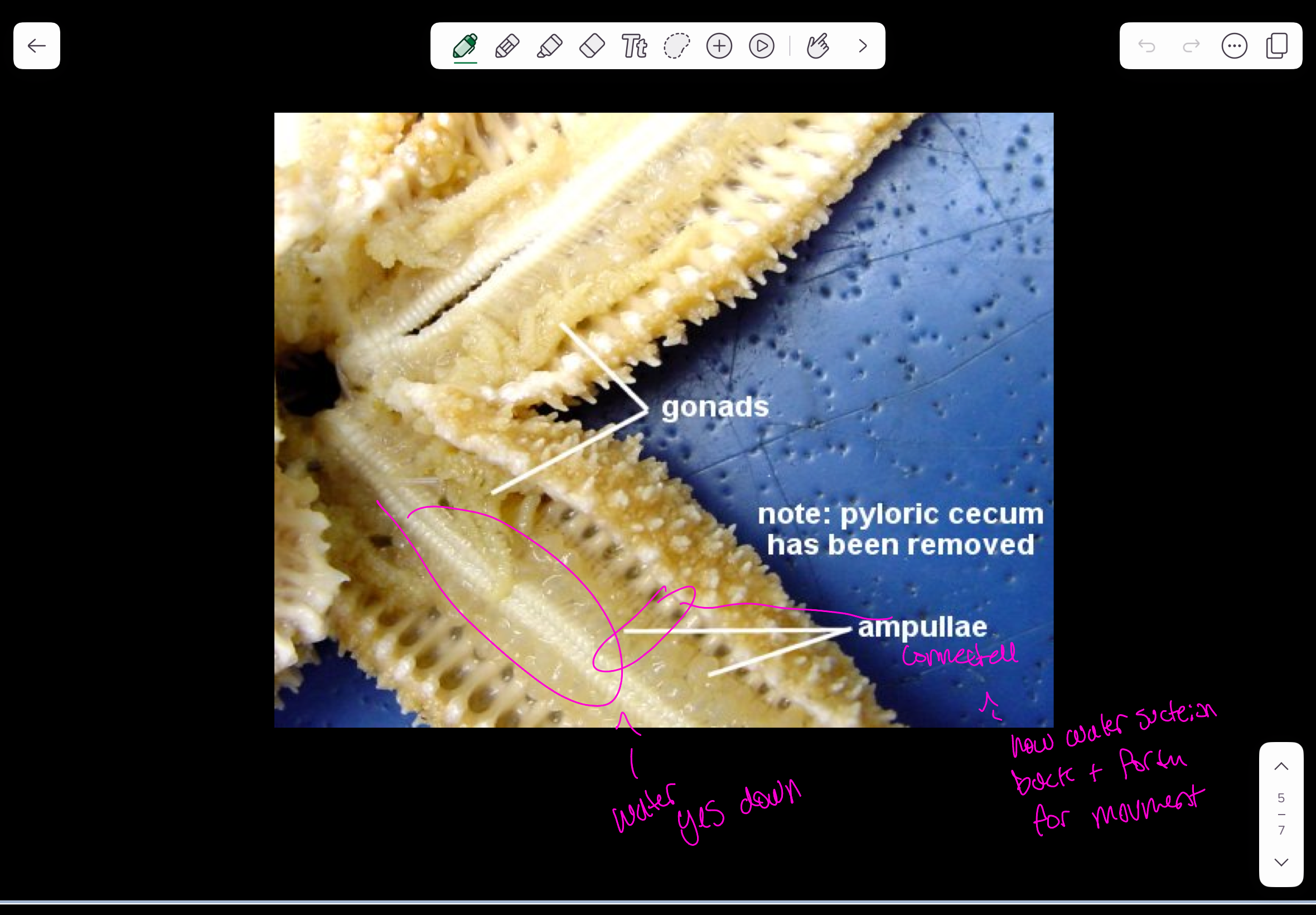
Vental view (sildes) pt.3
pic
exterior/dorsal lab
pic
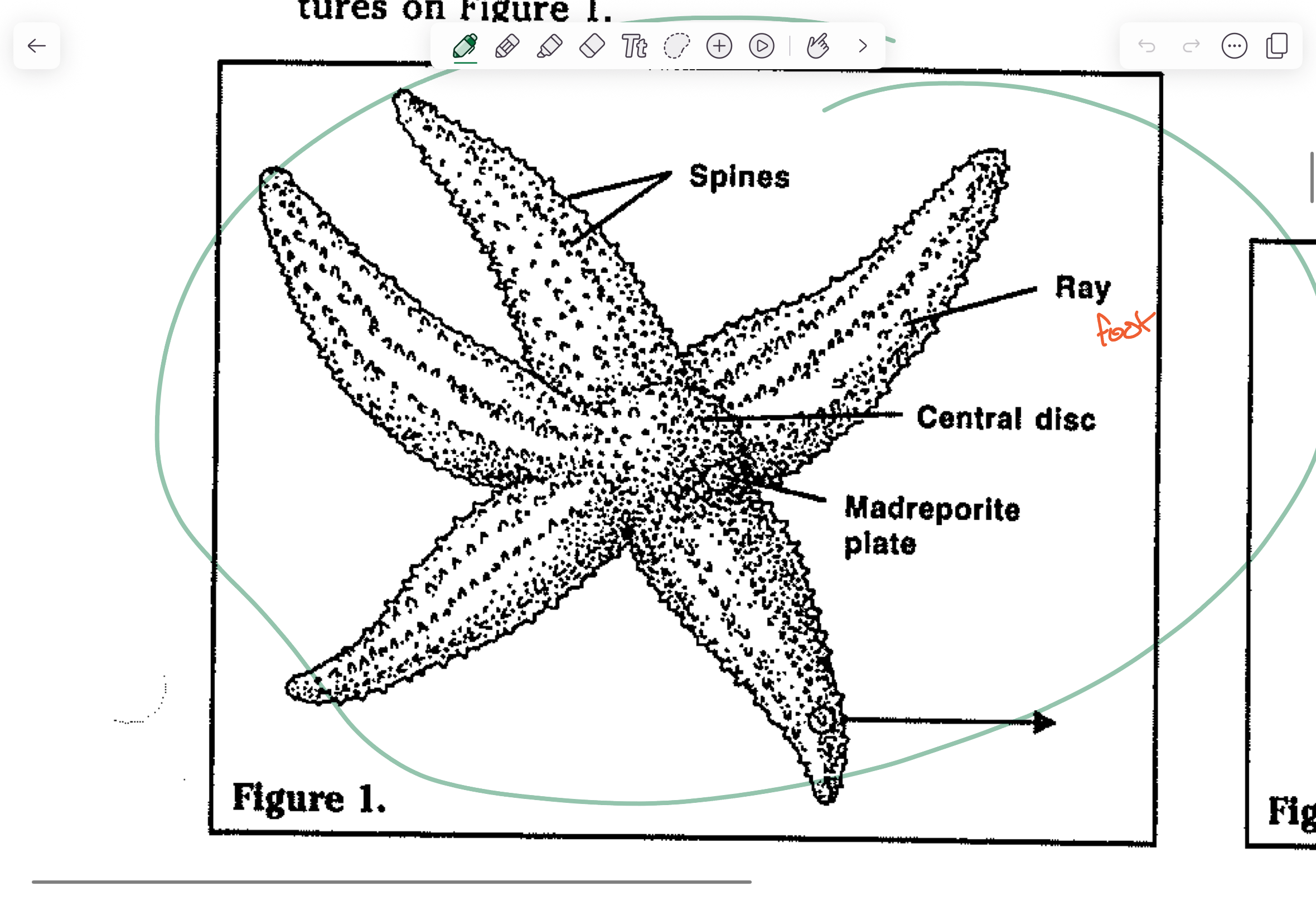
zoomed in (lab)
pic
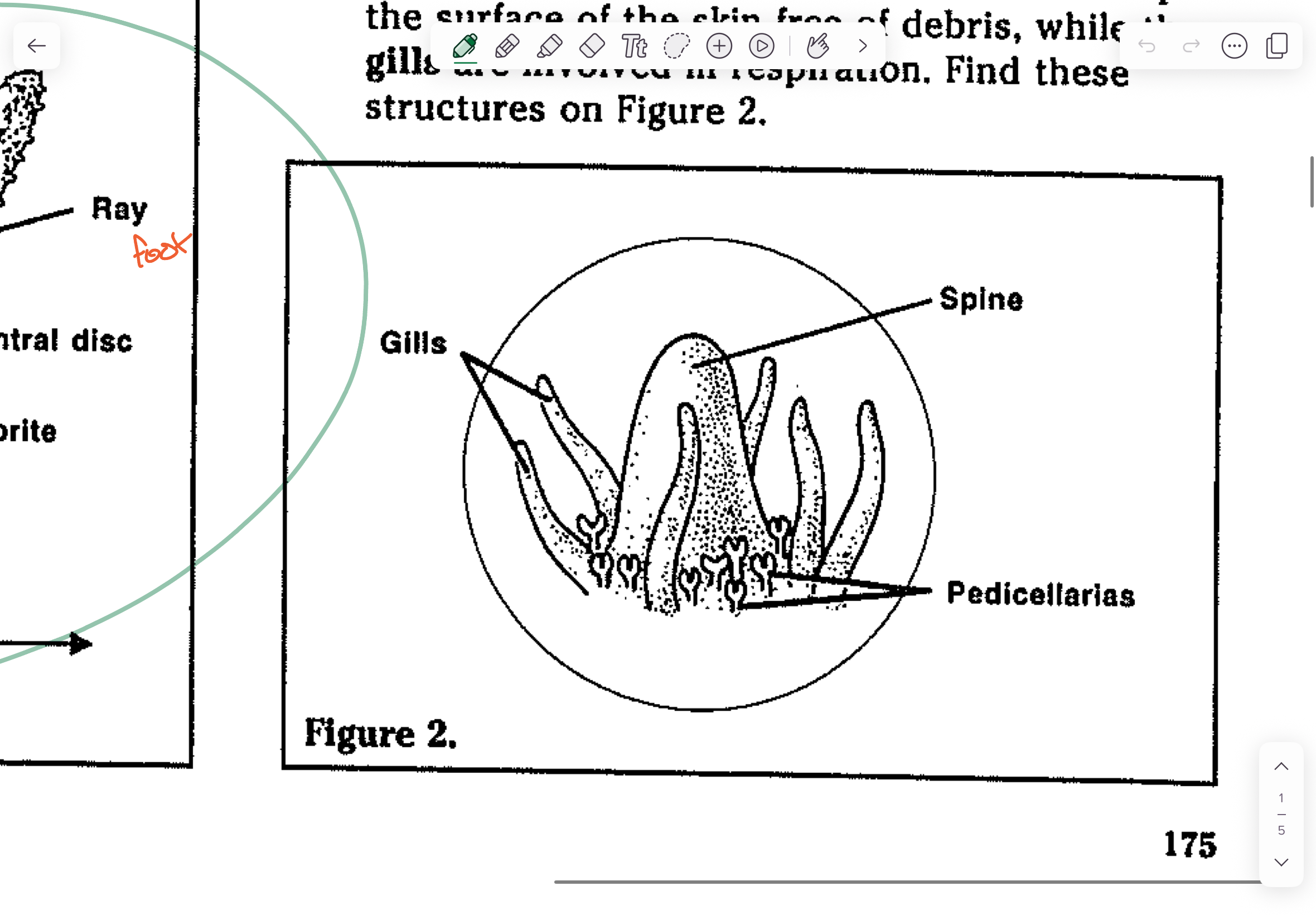
vental lab
pic
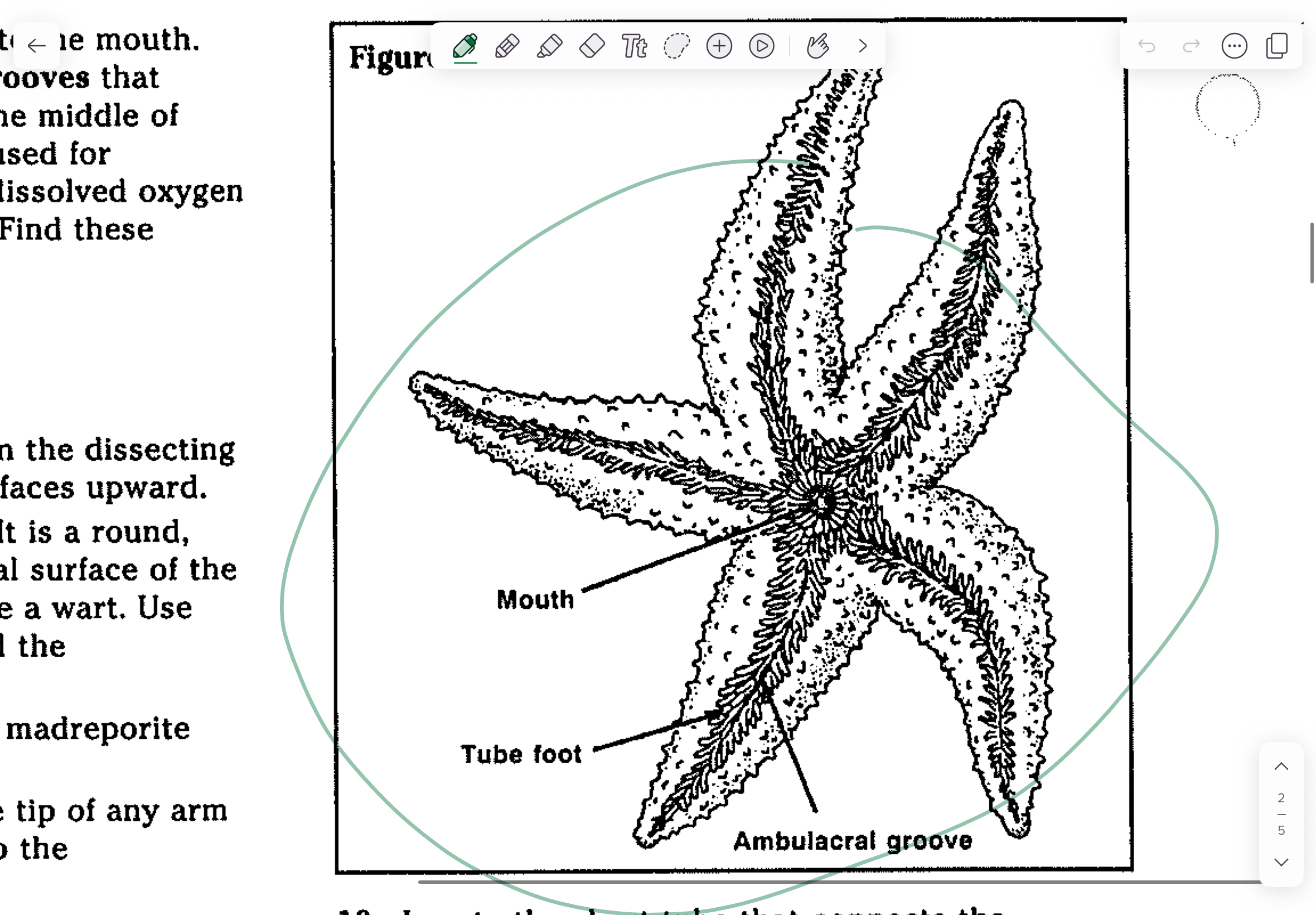
what is the difference between doral and ventral
dorsal: top
Vental: bottom—>mouth
Detailed arms and inside lab
pic
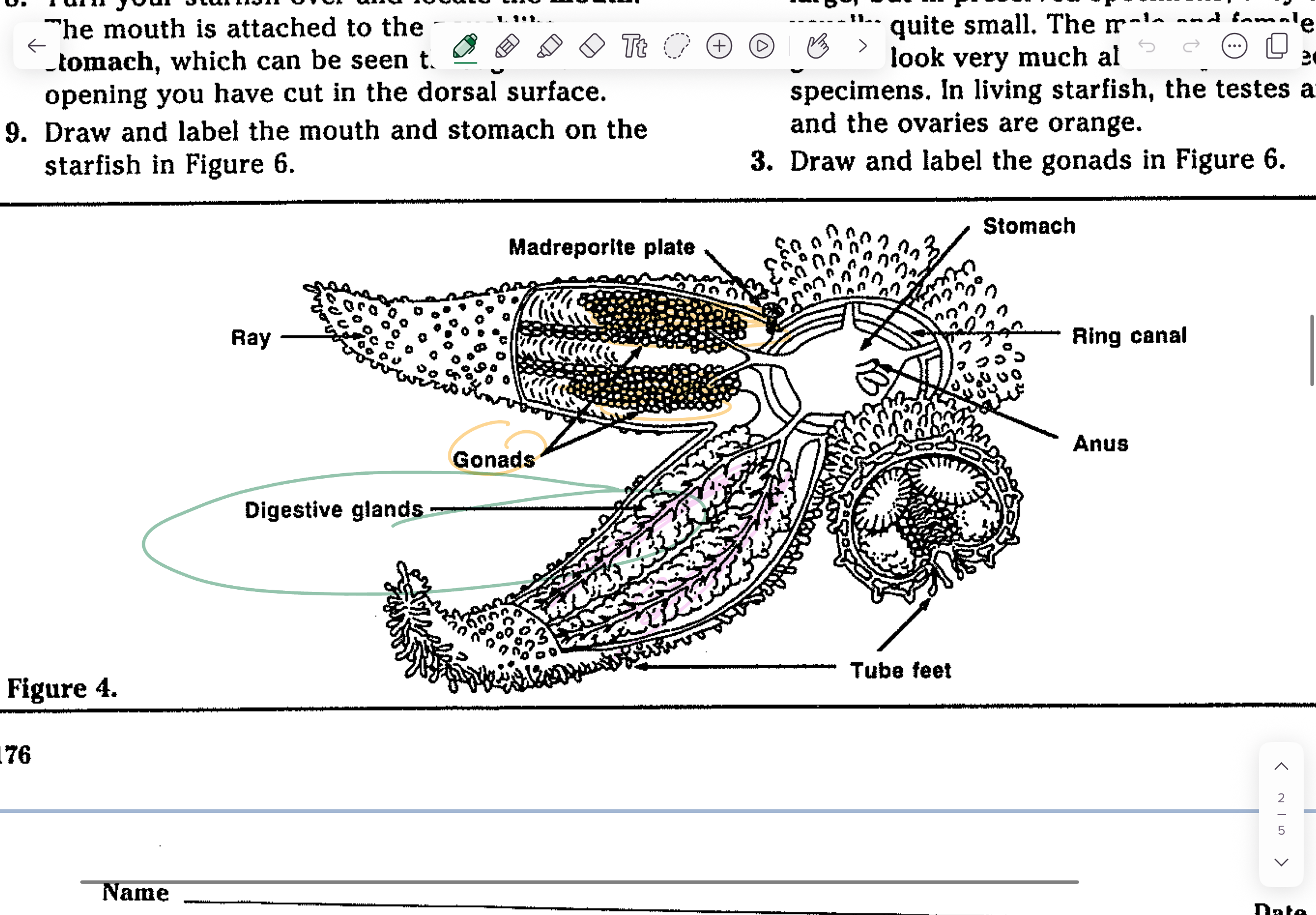
middle interior (water vascular system)
pic
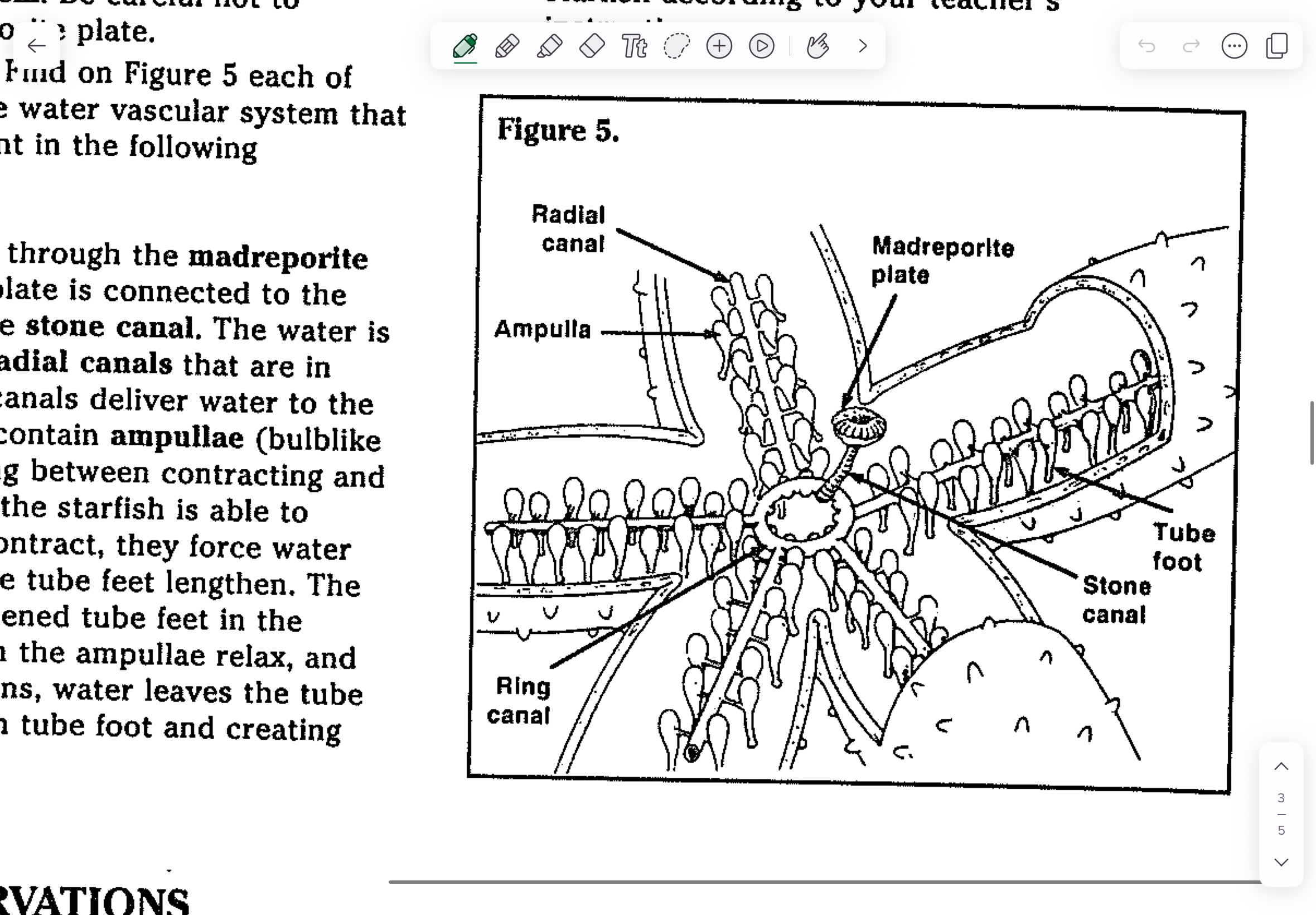
Function for the following… Madreporite plate
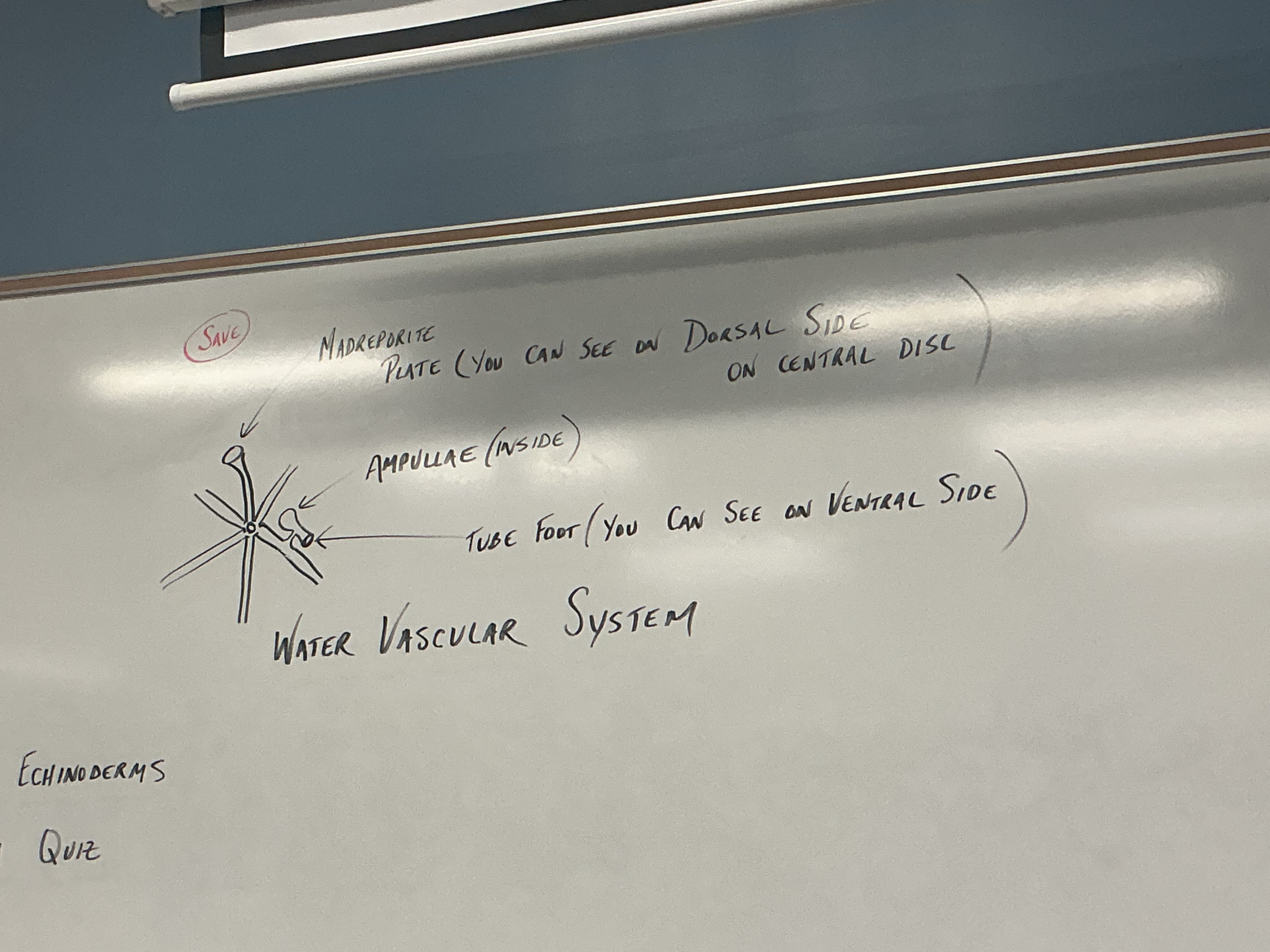
wart like opening to dorsal side on central disc- acts as a pressure-equalizing sieve, allowing seawater to enter the water vascular system. (locomotion, feeding and water transport)
spines
defensive armor against predators. These movable, skin-covered spines also aid in locomotion, provide structural support, and help protect delicate respiratory structures
Larson’s board- madreporite, ampulse, and tube foot (water vascular system)
pic
gills
skin gills, or papulae, for respiration and waste removal.
digestive glands
secreting digestive enzymes, absorbing nutrients, and storing food. They break down food, passing nutrients to the body (found in the indise of rays) 2 one each side
ray
the arms of a starfish (sea star), which typically number five, radiating from a central disc
pedicellarias
microscopic, pincer-like or forceps-like appendages on the skin used for protection, grooming, and sometimes food capture (keep surface of skin free form debris)
-both dorsal and ventral
Tube feet
-The water vascular system used primarily for locomotion, feeding, respiration, and sensory perception. These versatile tools allow sea stars, urchins, and cucumbers to crawl, climb, cling to surfaces, and manipulate prey
-Tube Feet Operation: The water flows into small sacs called ampullae connected to the tube feet.
-function like suction cup
gonads
tree-like reproductive organs located in each arm responsible for producing and releasing eggs or sperm.
radial canal
key components of a starfish's water vascular system, extending from the central ring canal along the length of each arm. They transport seawater to the tube feet through lateral canals, enabling hydraulic locomotion, feeding, and gas exchange. (vetal side)
how does water vascular system help starfish move around?
hydraulic network of canals, to power hundreds of tiny "tube feet" on their undersides. By drawing seawater in and pumping it into these tubes, the resulting water pressure forces the feet to extend, adhere to surfaces via suction, and pull the starfish forward(in the direction they want) —> shorten when relax
comes through the madreporite plate, stone canal, ring canal, readila canals, ampullle, tubes
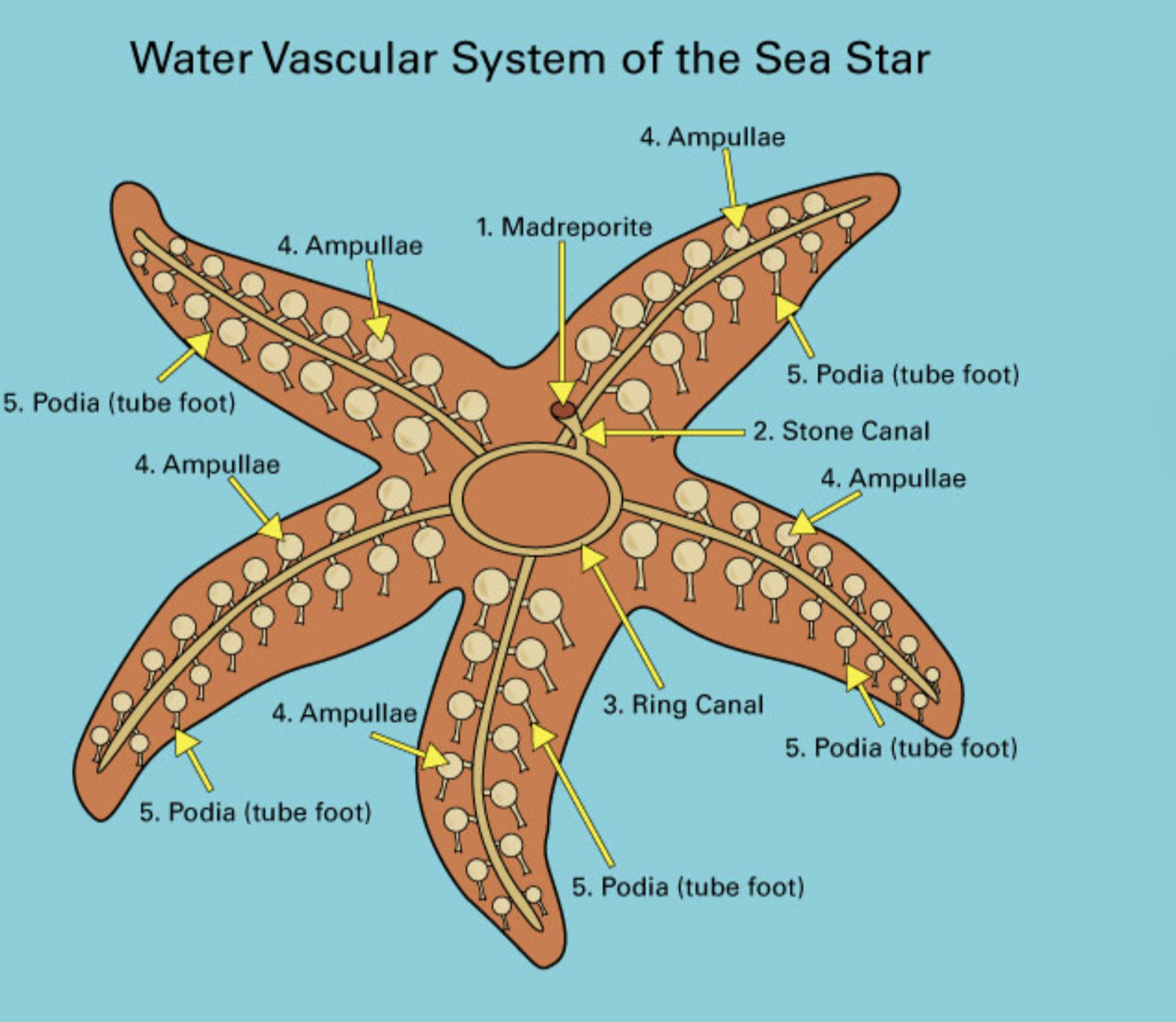
ampullae
a hydraulic reservoir for the water vascular system. By contracting, the ampulla forces fluid into the tube foot to extend it; by relaxing, it creates suction, allowing the starfish to move, anchor, and feed.
When the ampullae contract, they push water into the tube feet, causing them to extend.
What external and internal features indicate that starfish are orginished in patterns of 5?
External:
Five Arms: Most starfish have exactly five arms radiating from a central disc.
Oral Surface (Underside): The mouth is central, with ambulacral grooves extending down each of the five arms.
Tube Feet: Hundreds of tube feet are arranged in rows within the five ambulacral grooves.
Internal:
Five radial canals; five grooves
Water Vascular System: A ring canal in the central disc connects to five radial canals, one running down each arm.
Digestive System: The stomach often has five main pouches, and five pairs of pyloric caeca (digestive glands) extend into each arm.
Reproductive System: Two gonads (reproductive organs) are typically found in each of the five arms.
Nervous System: A central nerve ring connects to five radial nerves that run along each arm.
What parts of a starfish are involved in water vascular system
Madreporite: A porous plate on the top (aboral) surface where water enters.
Stone Canal: A tube leading from the madreporite to the central ring canal.
Ring Canal: A central ring surrounding the mouth (esophagus) that distributes water to the arms.
Radial Canals: Five canals running down the center of each arm.
Lateral Canals: Small, paired canals extending from the radial canals.
Ampullae: Bulb-like sacs at the base of each tube foot; they contract to force water into the tube feet.
Tube Feet (Podia): External, suction-tipped tentacles that use water pressure to walk and cling.
Polian Vesicles/Tiedemann's Bodies: Internal reservoirs and glands that help regulate water pressure and create defense cells.
(just know names)
how do starfish eat
Starfish eat by pushing their stomach out of their bodies through their mouth to digest food externally