AQA A Level Biology Year 1
 Call Kai
 Learn
Learn Practice Test
 Spaced Repetition
 Match
Match Flashcards
 Knowt Play
1/389

There's no tags or description
Looks like no tags are added yet.
Name | Mastery | Learn | Test | Matching | Spaced | Call with Kai |
|---|
No analytics yet
Send a link to your students to track their progress
390 Terms
What is the primary response?
Occurs when an antigen enters the body for the first time. Slow as there are not many B-cells with the required antibodies. Eventually enough of the antibody to overcome the infection but in the mean time there will be symptoms.
How do biological molecules provide evidence for evolution?
They all have similar molecules and use the same amino acids and DNA.
What are monomers of carbohydrates called?
Monosaccharides.
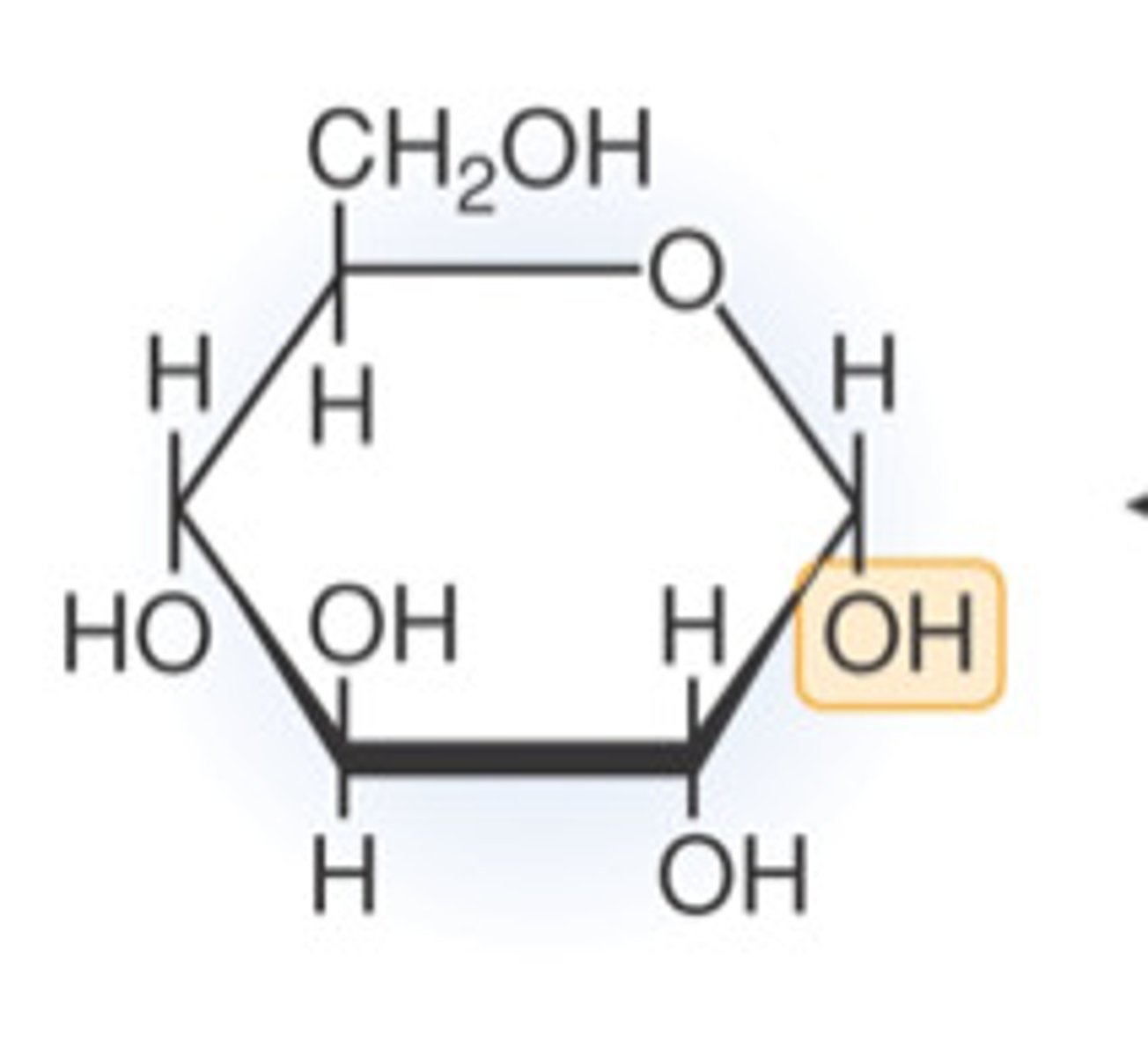
Beta Glucose
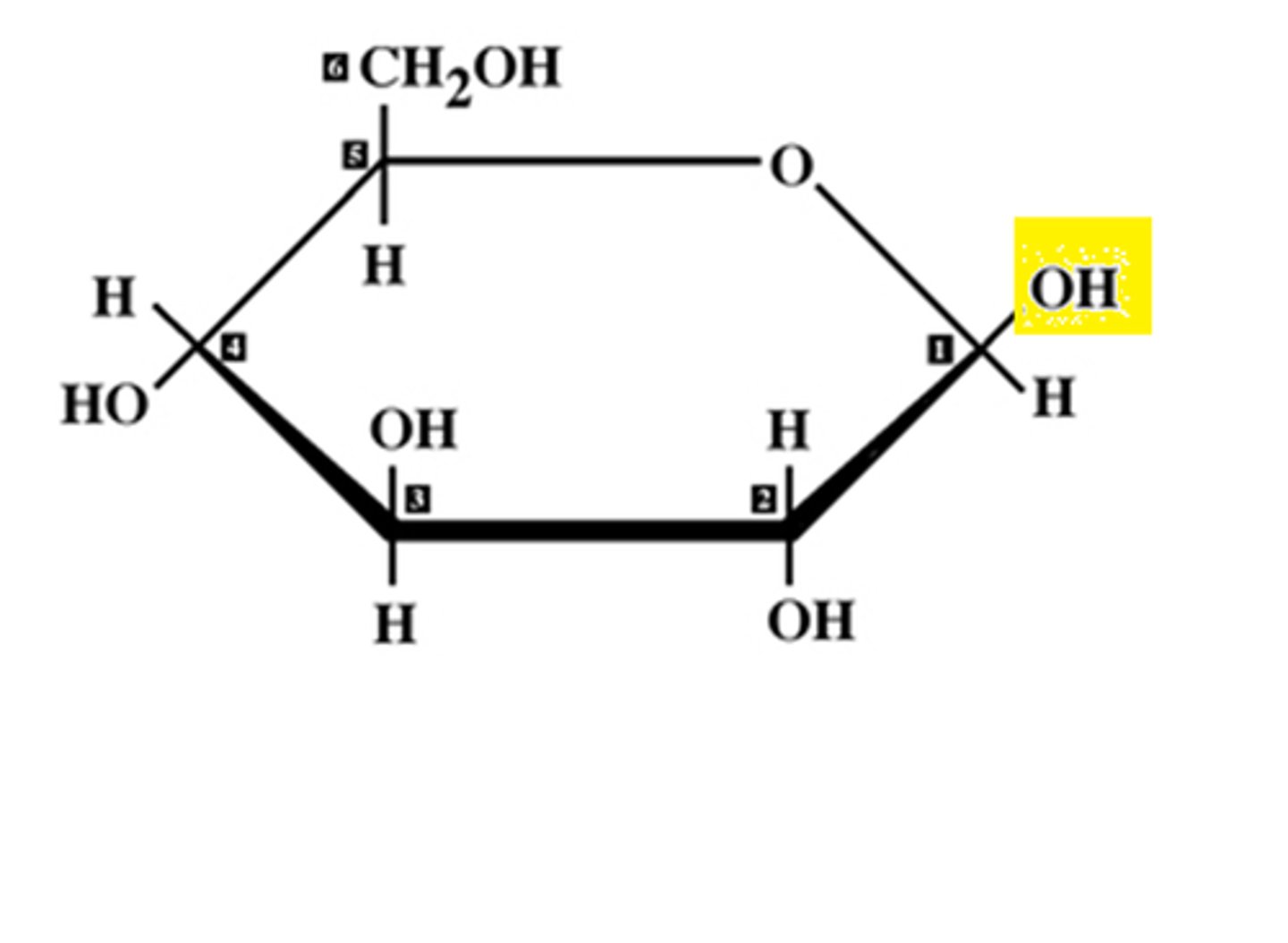
Alpha glucose
Glucose formula
C₆H₁₂O₆
Name of the bond between monosaccharides?
Glycosidic bond.
What is sucrose made from?
Glucose and fructose.
What is lactose made from?
Glucose and galactose.
What is maltose made from?
Two alpha glucose.
Testing for reducing sugars?
Add Benedict's reagent (blue) and heat in a water bath at a boil. If present: Green → yellow → orange → brick red
Test for non-reducing sugars?
Add dilute hydrochloric acid and heat, neutralise with Sodium Hydrogencarbonate and add Benedicts reagent.
What is the scientific name for carbohydrates?
Polysaccharides.
What is starch made of?
Starch is a mixture of two polysaccharides of alpha glucose: Amylose and amylopectin.
What is amylose?
A long, unbranched alpha glucose chain. The angles in it make it have a coiled shape which makes it compact and effective for storage.
What is amylopectin?
A long, braqnched alpha glucose chain. The side branches mean that enzymes can get to and hydrolise glycosidic bonds faster so glucose can be released quickly.
What is glycogen?
A polysaccharide of alpha glucose with a similar structure to starch except it is more branched, allowing even faster energy release. It is also very compact.
What is celluose?
it is made of long. straight chains of beta glucose. The chains are linked my hydrogen bonds to form microfibrils, a strong fibre. The strong fibres allow it to provide structural support in cells as cell walls.
How to test for starch.
Add iodine which is dissolved in potassium iodie ti the sample. Positive result: Turns blue-black. Negative result: stays browny-orange.
Which of proteins, polysaccharides and lipids are not a polymer.
Lipids.
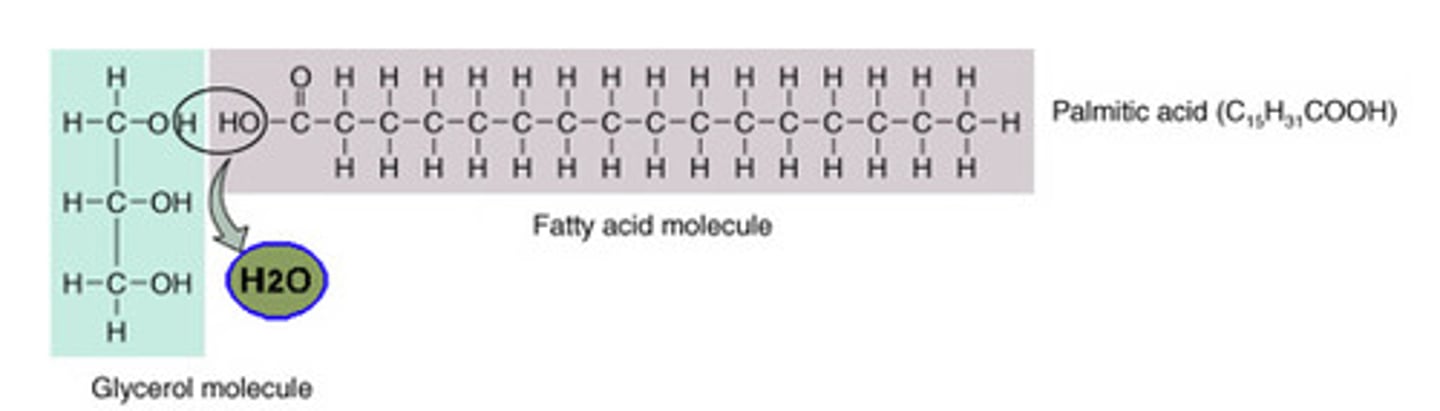
What are triglycerides made of?
Glycerol and fatty acids.
What causes lipids to be insoluble in water?
The hydrophobic fatty acid tails.
What is the structure of a fatty acid?
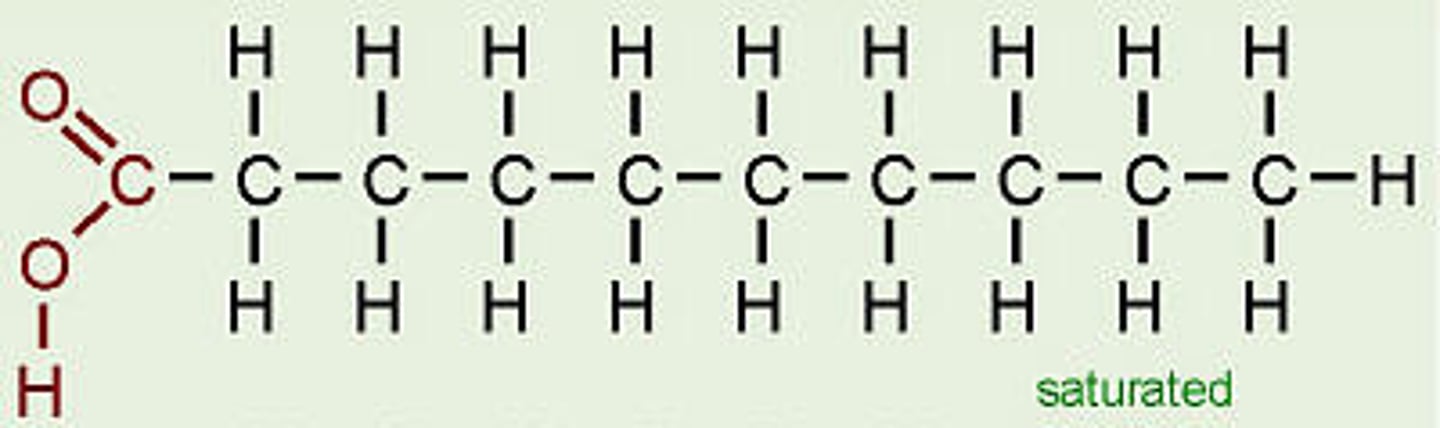
What do double bonds cause in fatty acids?
A kink in the chain.
Triglyceride formation?
What are phospholipids?
Similar to triglycerides, but one of the fatty acid tails is replaced by a phosphate group head.
Which part of a phospholipid is hydrophillic and which part is hydrophobic?
The phosphate group is hydrophillic and the fatty acid tail is hydrophobic.
What are triglycerides mainly used for?
To store energy, they are effective at this as the hydrocarbon tails contain a lot of energy. They are also insoluble so do not affect the water potential of cells, preventing swelling.
How much energy do lipids contain compared to carbohydrates?
Twice as much energy per gram.
Why do triglycerides bundle together in water?
The fatty acid tails are hydrophobic so face inwards, so are shielded by the glycerol heads.
What role do phospholipids perform?
They make up the bilayer in cell membranes.
Test for lipids?
The emulsion test: Shake substance with ethanol and pour into water. A white emulsion forms if it is present.
What are proteins made of?
Amino acids.
What is the bond between amino acids called?
Peptide bond.
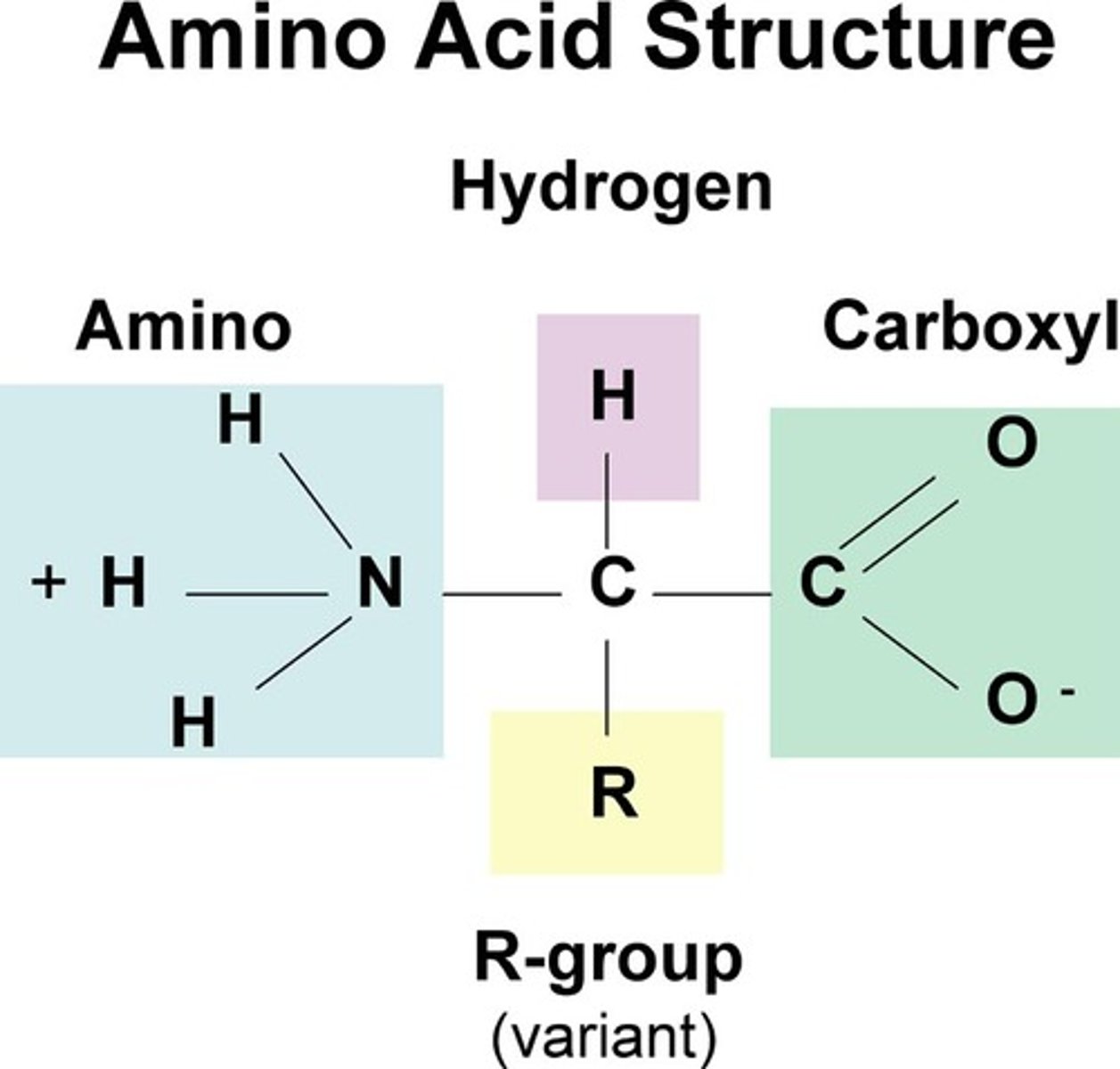
Amino acid structure.
Amino group, variable group, carboxyl group.
What is a primary structure?
Polypeptide chain.
What is a secondary structure?
Chain twists into alpha helix or folds in beta pleated sheet.
What is a tertiary structure?
Chain coils further, forming hydrogen bonds, ionic bonds and disulphide bridges.
When do disulphide bridges form?
When the sulphur atoms on the amino acid cysteine form sulphur bonds.
What is a Quaternary structure>
Like tertiary, but made of several chains.
Test for protein?
Biuret test. Add a few drops of Sodium Hydroxide, then add copper sulphate. Purple positive. Blue negative.
What is formed when catalysts join to substrates?
Enzyme-substrate complex.
What does DNA stand for?
Deoxyribonucleic acid.
What does RNA stand for?
Ribonucleic acid.
Nucleotide structure.
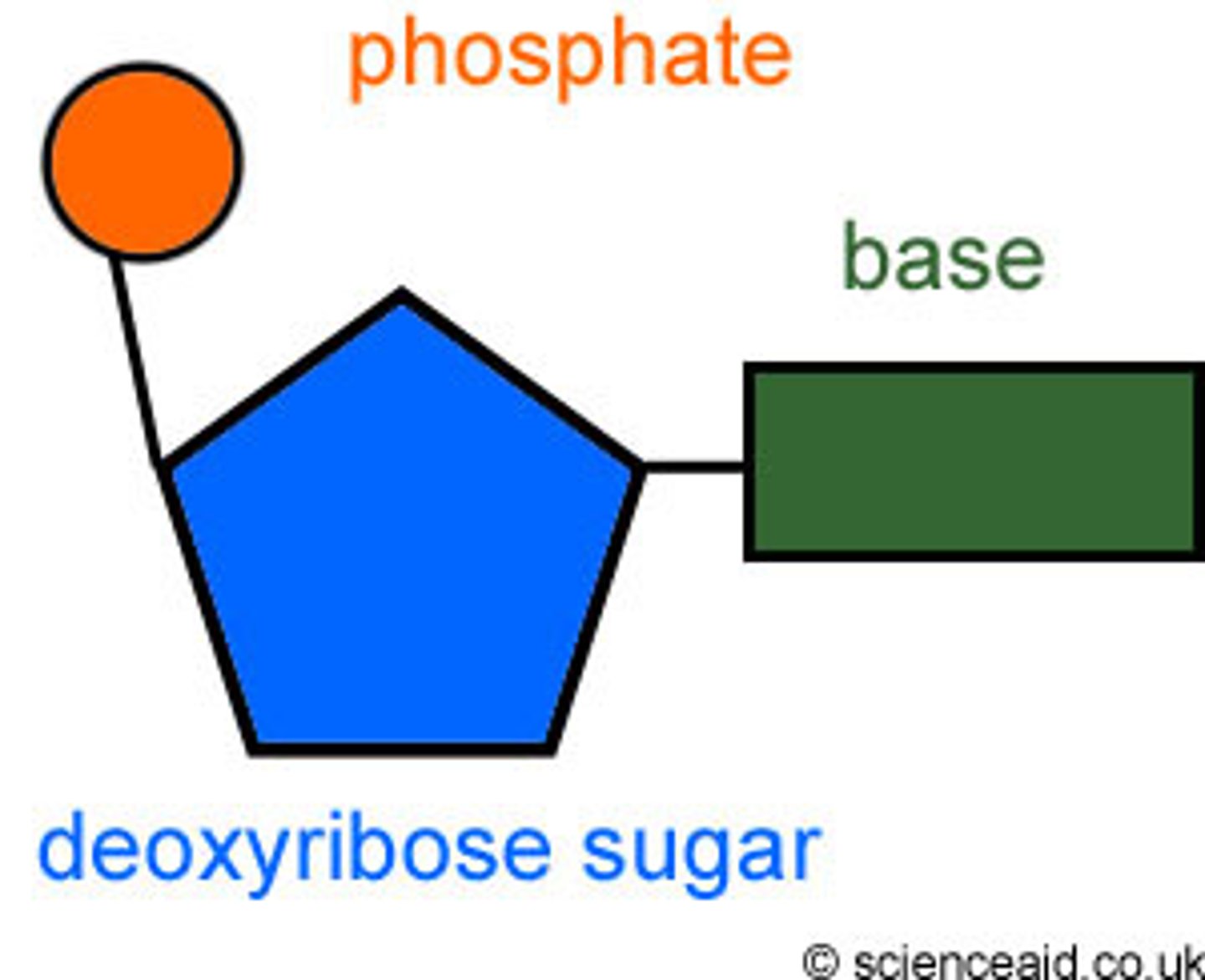
What is the monomer of DNA and RNA?
Nucleotides. The polymer is called Polynucleotide strands.
What are the sides of DNA and RNA called?
Sugar-phosphate backbone.
What is the name for the bond between the pentose sugar and phosphate group of nucleotides?
Phosphodiester bond.
Why can a lot of genetic information fit in the nucleus?
DNA molecules are long and coiled tightly.
What are the base pairings?
Adenine - thymine (two bonds)
Cytosine- Guanine (three bonds)
How are bases in DNA joined?
Hydrogen bonds.
How are the polynucleotide strands in DNA arranged?
They are antiparallel. One runs from 3' to 5' and the other 5' to 3'.
What did scientists originally think carried genetic information?
Proteins. They thought DNA was too simple.
How does DNA replicate?
Semi-conservatively. One original strand goes to each new cell.
What does semi-conservative replication result in?
Genetic continuity between generations of cells.
The process of DNA replication.
1) DNA helicase breaks hydrogen bonds, unravelling DNA.
2) Each strand acts as a template, complementary base pairing means nucleotides are attracted.
3) Condensation reactions join nucleotides of new strands. together, caused by DNA polymerase
4) Hydrogen bonds form between bases.
What is the difference between the 3' and 5' end of DNA?
3' has a hydroxyl (OH) group on the pentose sugar and 5' end is a phosphate group.
How does DNA polymerase move and add nucleotides?
It moves from a 3' to a 5' end as the active site is only complementary to the 3' end of the DNA strand. This means nucleotides are added in a 5' to 3' direction.
Details of the Meselson and Stahl experiment.
1) Two samples of bacteria grown in ¹⁵N and ¹⁴N nutrient broth. Bacteria took up N in replication.
2) DNA samples taken, spun in centrifuge. Heavy N settled further down.
3) DNA from ¹⁵N placed n ¹⁴N for one replication. and spun in centrifuge.
4) Only one line formed in middle so semi- conservative.
What does ATP stand for?
Adenosine triphosphate.
In what process is ATP produced?
Respiration, made from glucose.
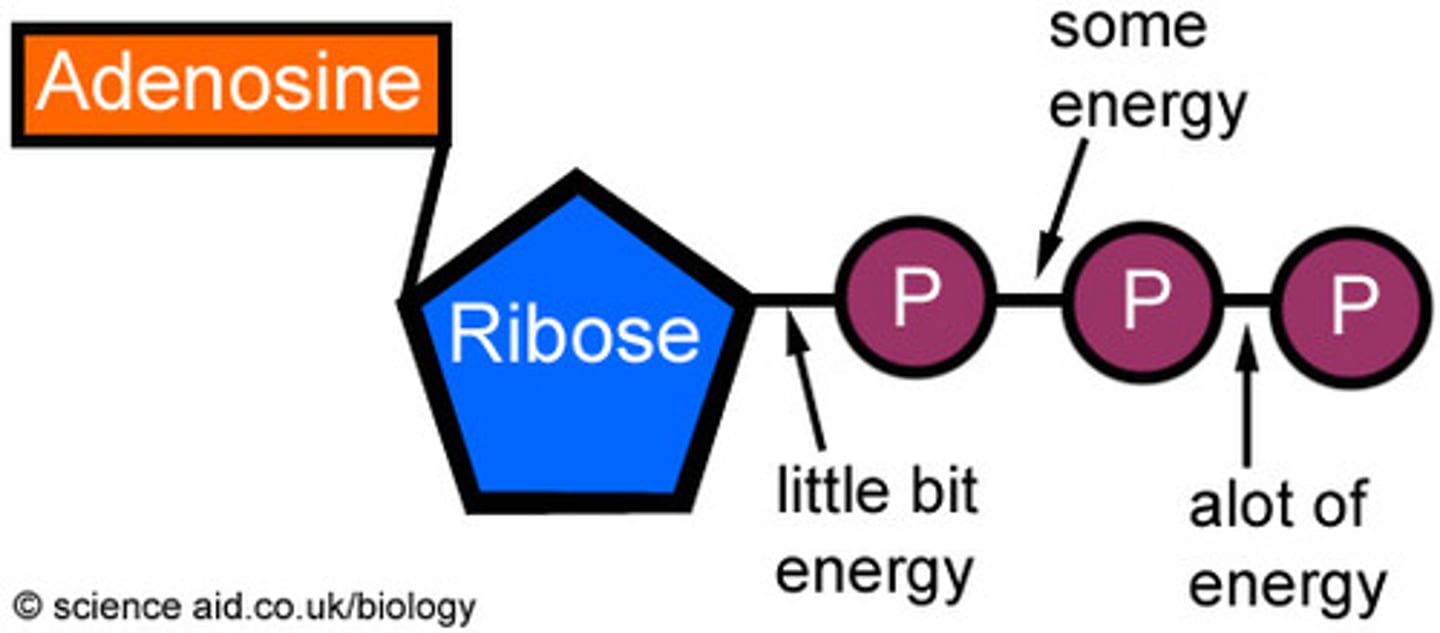
Structure of ATP.
How is ATP broken up?
Broken by hydrolysis, a phosphate bond (the end which has the most) is broken which releases energy. Produces ADP and an inorganic phosphate group. Catalysed by ATP hydrolase.
How can ATP hydrolysis be used?
Coupled to energy requiring reactions, meaning energy can be used to make reaction occur, rather than wasted as heat.
How can the inorganic phosphate produced in ATP hydrolysis be used?
Phosphorylation. This is adding it to another compound, making it more reactive.
How can the ADP produced in ATP hydrolysis be used?
Can be recycled by joining with inorganic phosphate in a condensation reaction to form ATP. Occurs in respiration and photosynthesis. Catalysed by ATP synthase.
What are important functions of H2O?
1) Important metabolite for condensation and hydrolysis.
2) Solvent, substances can dissolve, most reactions are in solution.
3) High specific heat capacity and latent heat of vaporisation, allows for temperature control.
4) Cohesive so stick together- useful for xylem.
What is an inorganic ion?
An ion with no carbon.
Nucleus structure.
Surrounded by a nuclear envelope (double membrane) which contains pores. It contains nucleoli which contain chromosomes.
Nucleus Function.
Control's the cells activities. DNA contains instructions on making proteins. The pores allow substances to enter and exit, the nucleus makes ribosomes.
Mitochondrion Structure:
Oval-shaped, double membrane. Inner membrane folded to form cristae. There is an enzyme containing substance called matrix.
Mitochondrion function.
The site of aerobic respiration which produces ATP.
Chloroplast Structure.
Small and flattened, found in plant and algal cells. Surrounded by double membrane and contains membrane discs called thylakoid membranes which stack to form Grana which are linked by lamallae (long thin, flat pieces of thylakoid membrane.) Contains stroma.
What is the singular of Grana?
Granum.
Where in the chloroplast does photosynthesis occur?
In the stroma and the Grana.
Golgi apparatus structure.
A group of fluid-filled membrane-bound flattened stacks. Vesicles often seen at edges.
Golgi apparatus function.
Processes and packages new lipids and proteins. Also make lysosomes.
Golgi vesicle structure.
Produced by Golgi apparatus, a small fluid-filled sac in the cytoplasm.
Golgi vesicle function.
Stores lipids and proteins made by the Golgi apparatus and transports them out the cell.
Lysosome structure.
A type of golgi vesicle, round and surrounded by a membrane, contains lysozymes.
Lysosome function.
Contains lysozymes, which are digestive enzymes that digest invading cells or to break down worn out components of the cell.
Ribosome structure.
Tiny organelle floating free in cytoplasm or attached to RER. Made of proteins and RNA, with a small and large subunit. No membrane.
Ribosome Function.
The site where proteins are made.
Rough Endoplasmic Reticulum (RER) Structure.
A system of membranes containing fluid. Covered in ribosomes.
Rough Endoplasmic Reticulum (RER) Function.
Folds and processes proteins made by ribosomes.
Smooth Endoplasmic Reticulum (SER) structure.
A system of membranes containing fluid, no ribosomes.
Smooth Endoplasmic Reticulum (SER) Function.
Synthesises and processes lipids.
Cell wall structure.
Rigid structure surrounding plants, algae and fungi. Cellulose in plants and fungi and chitin in algae.
Cell wall function.
Supports cell and prevents it from changing shape.
Cell Vacuole Structure.
Membrane-bound organelle found in cytoplasm, contains cell sap (weak solution of sugar and water) membrane is called tonoplast.
Cell Vacuole Function.
Maintains pressure in cell and keeps the cell rigid to prevent wilting. Involved in the isolation of unwanted chemicals.
What are microvilli?
Small projections that increase surface area.
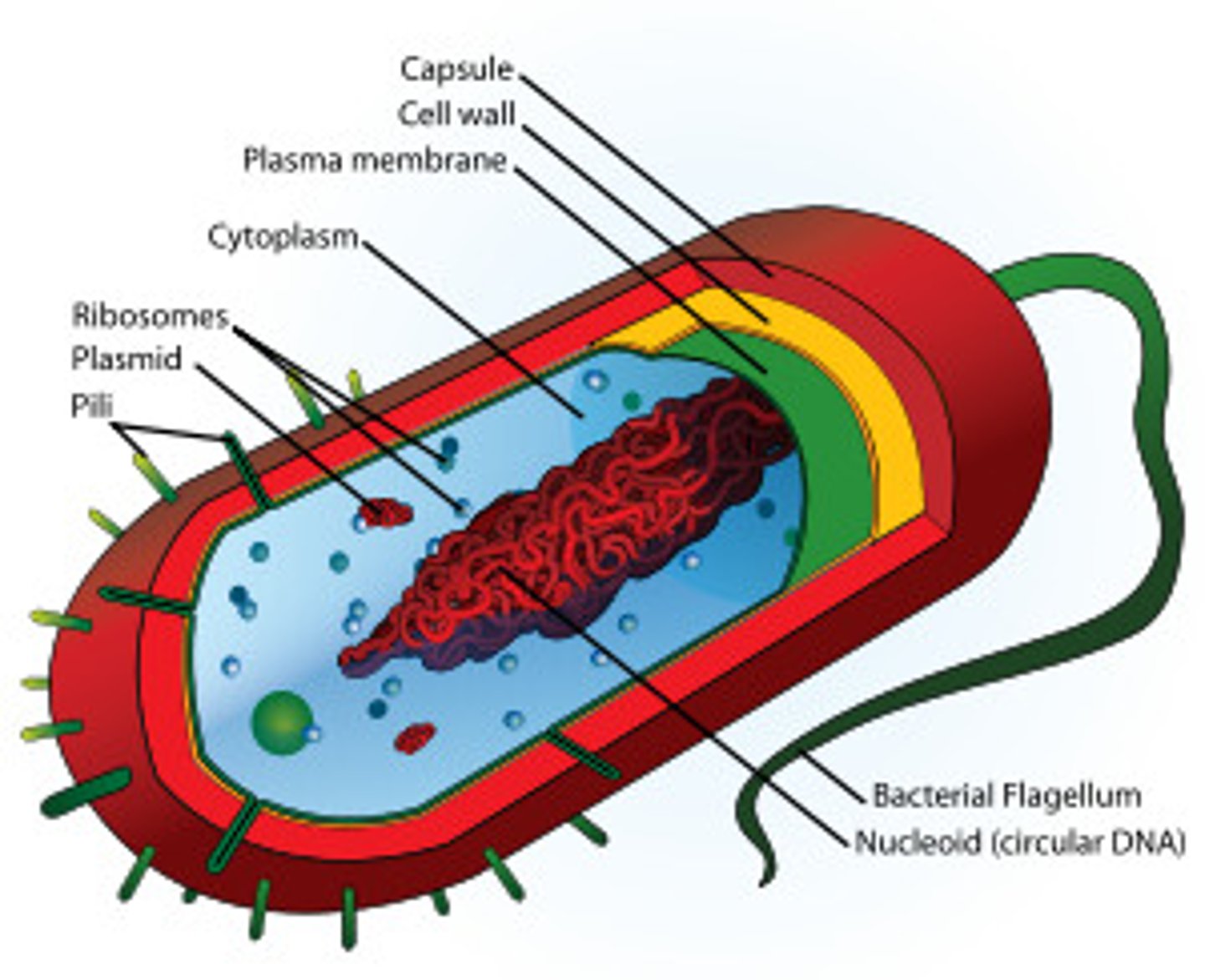
Prokaryotic cell structure.
DNA in Prokaryotes.
Circular DNA present as a long, coiled up strand, not attached to histones.
Plasmids.
Small loops of DNA which can be transferred between prokaryotes.
Gel Capsule.
Some prokaryotes secrete slime to form a capsule to help protect the cell.
Cell wall in prokaryotes.
Made of murein, which is a glycoprotein. Supports cell and stops it changing shape.
Ribosomes in prokaryotes.
Free floating in cytoplasm and smaller than Eukaryotes.
Flagellum.
A long, hair-like structure which rotates to make prokaryotes move.
How large are prokaryotes?
Smaller than two micrometers.